TLP:CLEAR · Disclosure is not limited.
Iran-Israel Conflict: Maritime Disruption and Regional Spillover
Time window: Last 1 day · Audience: General analyst · Type: Situation report · DTG: 2026-09-16 21:08Z · Overall confidence: HIGH
BLUF
Very likely, maritime traffic through the Strait of Hormuz will remain severely constrained over the next 0-14 days, while Houthi operations against Saudi Arabia widen the conflict's regional effects. Likely, US operational endurance and political freedom of action will face increasing pressure as base damage, munitions shortages and congressional opposition compound the military challenge.
Executive summary
The conflict is now producing linked pressure across the Strait of Hormuz, the Bab al-Mandab, southern Saudi Arabia and southern Lebanon. Preliminary data recorded only four Hormuz transits on 15 September, with no very large crude carriers or LNG tankers, while Houthi attacks and Saudi air operations continued around Yemen and Saudi Arabia. Reports of Iranian damage to US facilities and a US-contracted vessel add to the operational risk, although the vessel incident remains single-source and unconfirmed by US Central Command. China and Oman are pressing for de-escalation, but Iran's conditions, GCC objections and continued attacks indicate that diplomacy has not yet restored maritime security.
Change from previous assessment
Since the 15 September brief, the assessment has shifted from a primary focus on Hormuz disruption and US sustainment to a clearer multi-front regional picture. The Hormuz judgement is unchanged but is now reinforced by new data showing four daily transits and no very large crude carriers or LNG tankers. Confidence in sustained energy pressure is maintained, with added evidence of the East-West pipeline shutdown and delayed Yanbu deliveries. New judgements cover Houthi control and operations around Yemen's Red Sea coast, the Makkah incident, reported damage to US bases and the emerging Chinese diplomatic effort. The Lebanon judgement is retained at low confidence, while US political constraints and the difference between Saudi and Houthi accounts have been given greater weight.
Key judgments
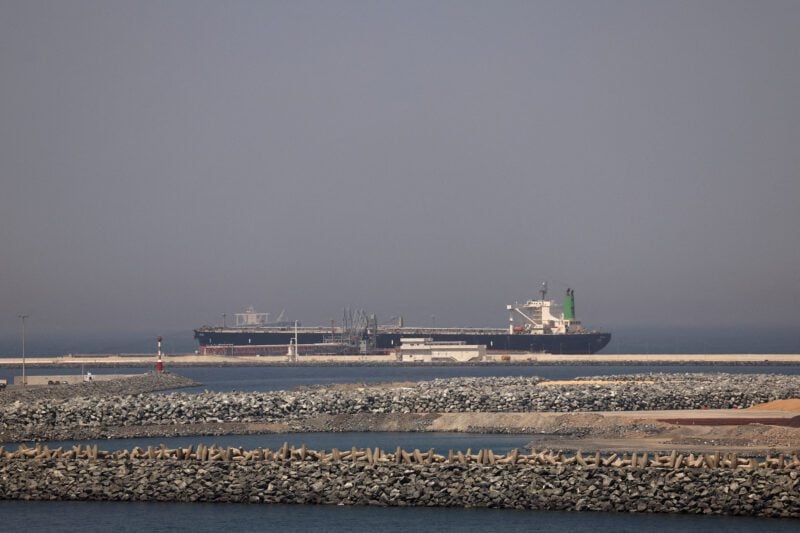
- Very likely, commercial shipping through the Strait of Hormuz will remain severely constrained rather than return to normal during the next 0-14 days. Preliminary data recorded four vessel transits on 15 September, down from seven the previous day and well below the 10-day average of 18. No very large crude carrier or LNG tanker transited, although some ships used the Iranian route and ships with transponders turned off were not counted. This is an assessed forward-looking judgement supported by consistent Reuters and maritime reporting. (Confidence: high · ASSESSED)
- I&W: Confirmation: daily Hormuz transits remain below 10 for three consecutive days, with no very large crude carriers or LNG tankers recorded. (0-14 days)
- I&W: Break: verified traffic reaches the 10-day average of 18 transits for three consecutive days and includes at least one very large crude carrier or LNG tanker. (0-14 days)
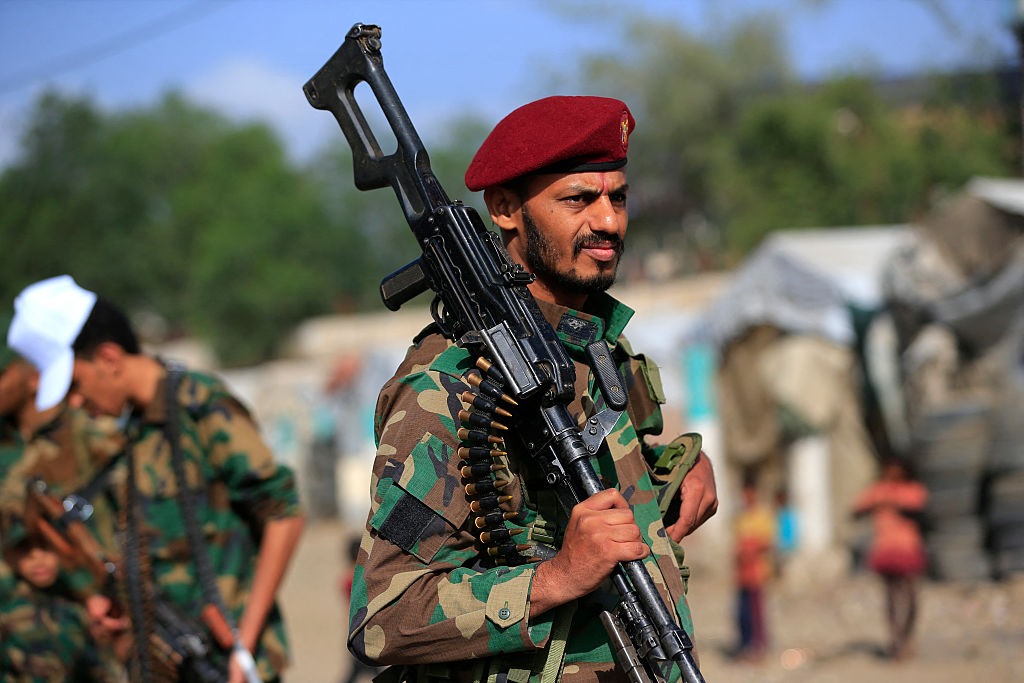
- Likely, the Yemen-Saudi front will remain active and continue to threaten maritime access through the Bab al-Mandab during the next 0-14 days. The Houthis have been reported to hold Yemen's Red Sea coast, including Mocha and Perim Island, while Saudi authorities reported drone and missile attacks that injured 13 civilians and a drone interception near Makkah. Saudi Arabia also faces a reported Houthi campaign of 52 airstrikes against Yemen. Confidence is medium because the Houthi leadership denies targeting Makkah, Saudi Arabia did not confirm some reported attacks, and the supplied reporting contains competing accounts of the escalation's triggers. (Confidence: medium · ASSESSED)
- I&W: Confirmation: another Houthi missile or drone attack is reported against Khamis Mushait, Abha, Taif, Makkah or a Saudi-linked vessel, followed by a Saudi military response. (0-14 days)
- I&W: Break: Saudi Arabia and the Houthis announce and observe a cessation of attacks, with Bab al-Mandab traffic returning to a stable pattern above 22 transits per day. (0-14 days)
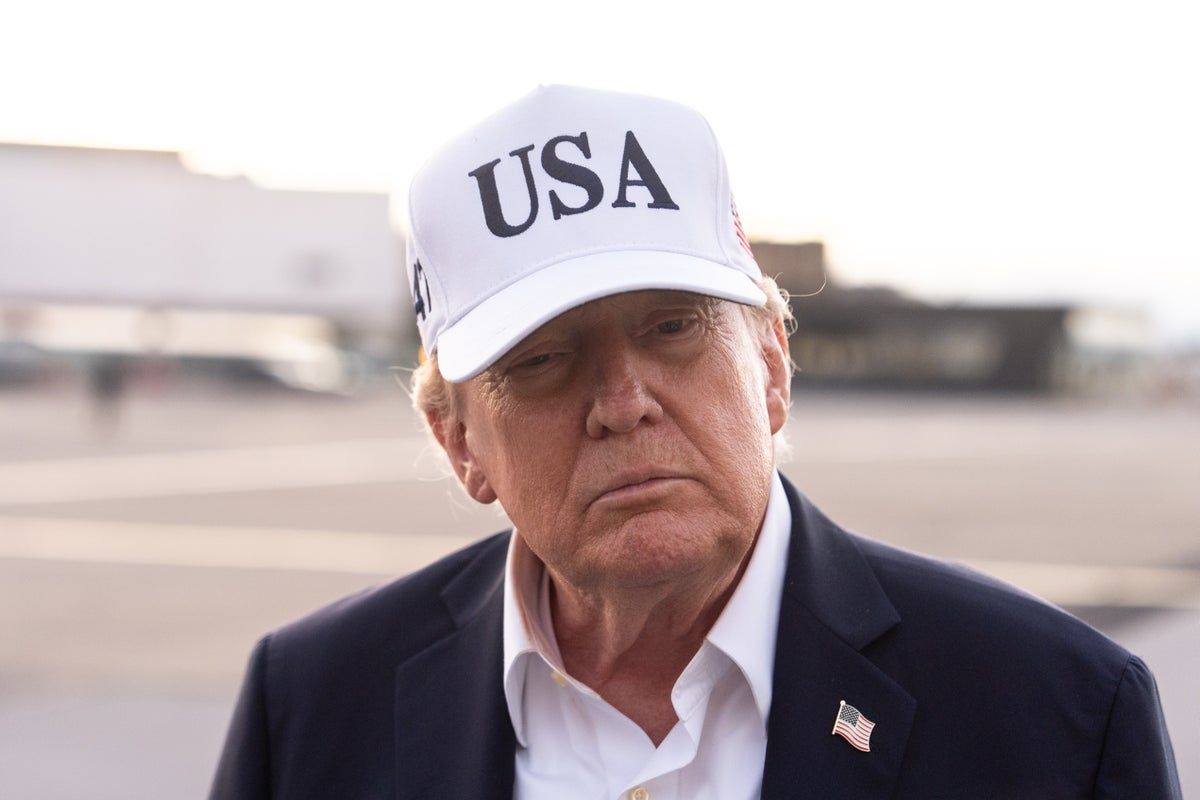
- Likely, US ability to sustain high-tempo military operations will remain under pressure over the next 1-3 months. A Department of Defense inspector general report recorded $33.4 billion in war costs during the first four months, including $22.3 billion in munitions spending and a resulting munitions shortfall. The same reporting identified damage to hundreds of buildings and structures at US bases and five US refuelling aircraft damaged or destroyed. The House of Representatives voted 220-204 for a third time to limit continued military action without congressional approval. Confidence is medium because official equipment-loss estimates conflict, with one report citing $3.7 billion and another $1.9 billion. (Confidence: medium · ASSESSED)
- I&W: Confirmation: the Pentagon reports additional munitions shortfalls, interceptor depletion or damaged US aircraft and facilities requiring operational reprioritisation. (0-3 months)
- I&W: Break: the Pentagon reports that munitions and interceptor stocks support current operations without additional restrictions, and Congress does not advance further limits on military action. (0-3 months)
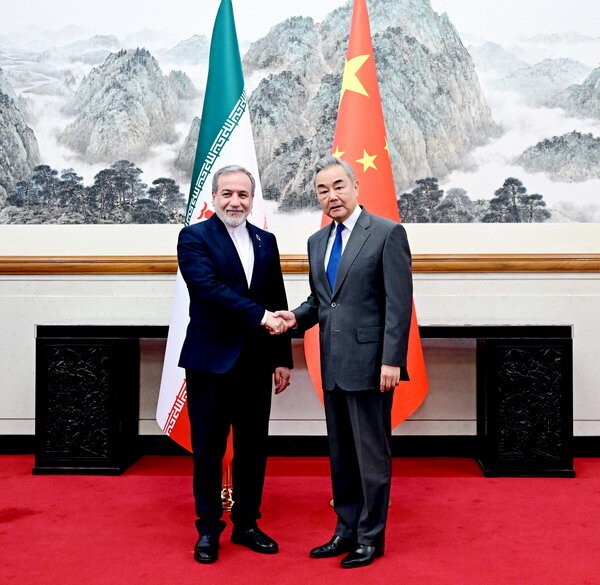
- Unlikely, Chinese and Omani diplomatic efforts will restore normal navigation through the Strait of Hormuz during the next 0-14 days. Wang Yi urged Iran to reopen the strait and return to the Islamabad memorandum, while Abbas Araghchi expressed support for Chinese peace proposals. Iran's representative for the supreme leader nevertheless ruled out talks until Iranian conditions are met, and GCC representatives reportedly rejected proposed arrangements that would have given Iran control over channel access. The low shipping count indicates that diplomatic statements have not yet produced an operational agreement. (Confidence: medium · ASSESSED)
- I&W: Break: Iran, Oman and the GCC announce an operational navigation agreement, and Hormuz traffic reaches at least 18 transits per day with a very large crude carrier or LNG tanker included. (0-14 days)
- I&W: Confirmation: the Salalah process remains stalled, Iran rejects the proposed terms, and Hormuz transits remain in single digits. (0-14 days)
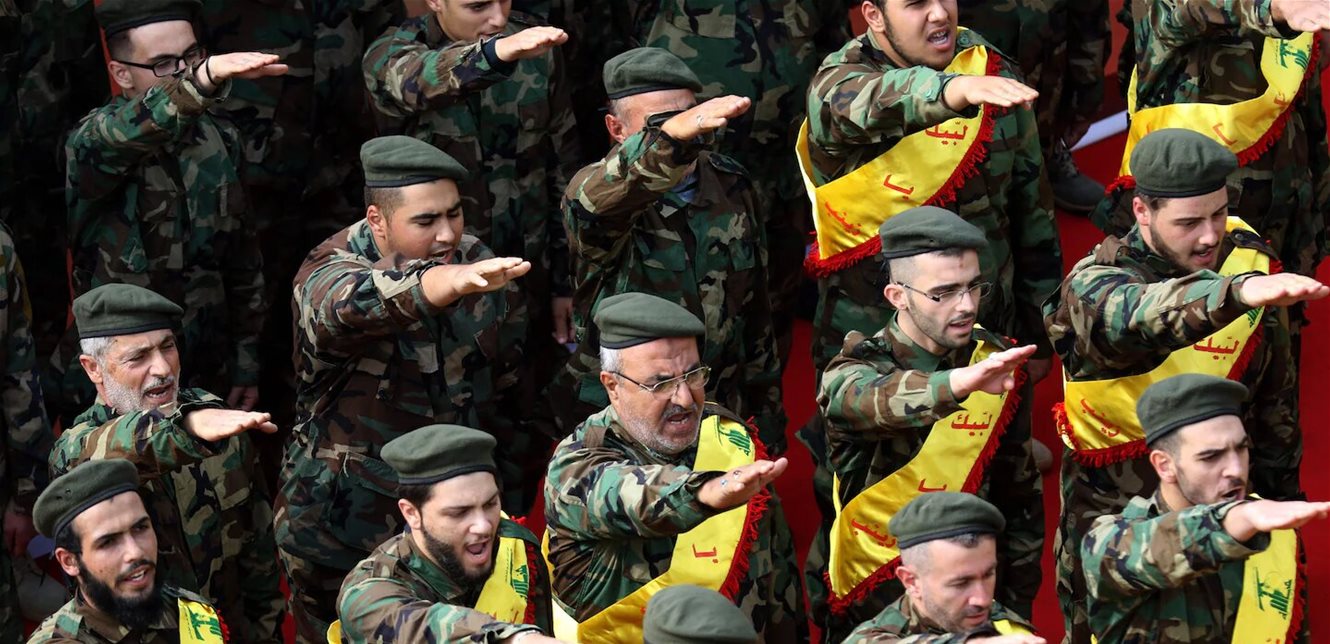
- Likely, Israel will maintain military pressure in southern Lebanon while Hezbollah relies increasingly on dispersed small-cell attacks during the next 0-14 days. Israeli forces have reported artillery fire, explosions and strikes on Hezbollah infrastructure, and Eyal Zamir said the agreement with the Lebanese government is insufficient to disarm Hezbollah. Israeli reporting assesses that Hezbollah is shifting towards guerrilla tactics, including explosive devices, anti-tank missiles and sniper attacks, while Israeli forces reinforce positions around Mansouri. This judgement rests largely on Israeli officials and local reporting, with no independent corroboration in the supplied claims, so confidence is low. (Confidence: low · ASSESSED)
- I&W: Confirmation: Israeli forces conduct additional artillery or infrastructure strikes in southern Lebanon, or reinforce positions around Mansouri, while Hezbollah claims a small-cell attack on an Israeli position or vehicle. (0-14 days)
- I&W: Break: the Rome talks proceed and are followed by a verified halt in Israeli strikes and Hezbollah attacks in southern Lebanon. (0-14 days)
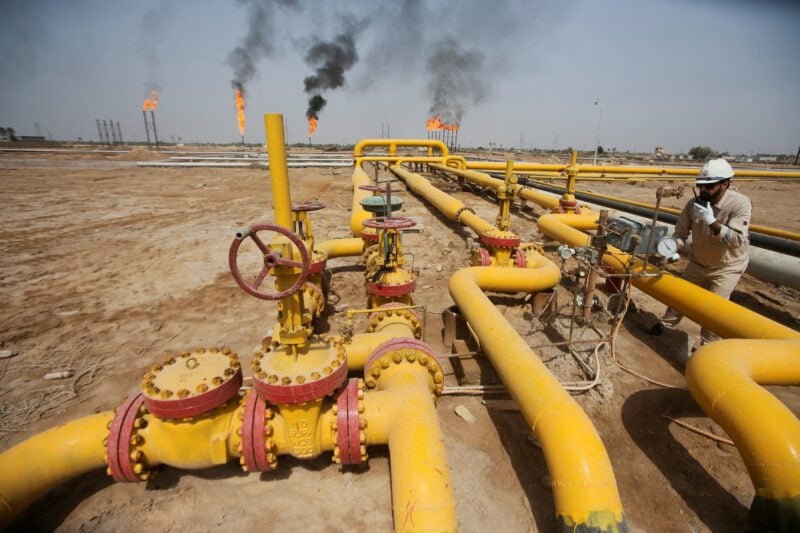
- Likely, energy supply disruption and tanker-freight pressure will remain elevated for the next 1-3 months. Saudi Arabia's East-West pipeline remains shut after attacks with no announced restart date, Saudi Aramco has delayed some Yanbu deliveries, and the company is arranging ship-to-ship loading from the Gulf of Oman. Brent crude was reported at $108 per barrel in one account and around $102 in another, compared with $60 in January. Rerouting around the Cape of Good Hope increases shipping distances on routes such as China to Israel by up to 114 percent. Confidence is medium because the reported causes of the price rise and pipeline attack differ, and Houthi responsibility for the pipeline remains unresolved. (Confidence: medium · ASSESSED)
- I&W: Confirmation: the East-West pipeline remains offline, Yanbu deliveries remain delayed, and Brent stays above $100 per barrel for four consecutive weeks. (1-3 months)
- I&W: Break: the pipeline resumes normal flows, Yanbu deliveries return to schedule, and Brent falls below $90 per barrel for two consecutive weeks. (1-3 months)
Outlook & scenarios
Prolonged multi-front conflict with constrained maritime traffic (50%)
Most likely, Iran, Israel, the United States, the Houthis, Saudi Arabia and Hezbollah continue parallel military activity without a decisive settlement. Hormuz traffic remains in single digits, Bab al-Mandab remains exposed to Houthi pressure, and Saudi and US defensive operations continue. Energy prices and freight costs stay elevated while diplomatic contacts produce limited tactical pauses rather than a durable ceasefire.
Partial maritime deconfliction without a wider political settlement (22%)
Unlikely, Chinese and Omani mediation produces a limited navigation arrangement covering selected commercial vessels. Iran accepts controlled passage on defined routes, while the Houthis maintain their stated restriction against attacking American vessels but continue pressure on Saudi-linked shipping. Traffic improves from current levels but remains below normal, and the Iran-Israel conflict continues.
Regional expansion through Yemen, Lebanon and Gulf targets (18%)
Unlikely, a further attack on Saudi territory, a confirmed strike on US personnel or a Hezbollah attack in southern Lebanon triggers retaliatory operations beyond current patterns. Saudi air operations intensify in Yemen, Israel expands action in Lebanon, and Iran-linked activity against shipping or US facilities increases. This scenario produces a sharper fall in maritime traffic and a faster rise in energy and humanitarian pressures.
US operational retrenchment under military and congressional pressure (10%)
Unlikely, continued base damage, munitions shortages and congressional action lead Washington to reduce exposed Gulf operations or shift forces to more defensible locations. The change weakens immediate US protection for maritime routes, increases pressure on Saudi Arabia and raises incentives for Iran and the Houthis to test the limits of the revised posture.
Recommendations
- Prioritise daily collection on Strait of Hormuz traffic. Separate verified AIS movements from suspected dark transits, track Iranian-route passages and record whether very large crude carriers or LNG tankers resume movement.
- Maintain separate attribution assessments for the Makkah drone incident, the US-contracted vessel attack, the El Gaia incident and the East-West pipeline shutdown. Seek official releases, satellite imagery, port data and independent vessel tracking before consolidating competing accounts.
- Track US operational endurance through Pentagon statements on munitions and interceptor stocks, aircraft and base repair activity, force posture decisions, and congressional action on war powers.
- Monitor Houthi activity around Mocha, Perim Island, Bab al-Mandab, Khamis Mushait, Abha, Taif, Makkah and Yanbu. Pair military reporting with displacement figures and access conditions in Yemen.
- Track whether Wang Yi, Abbas Araghchi and Oman produce an agreed navigation mechanism with clear enforcement terms. Treat public statements as diplomatic intent until traffic data confirms implementation.
- Monitor southern Lebanon for Israeli reinforcements around Mansouri, artillery or infrastructure strikes, Hezbollah small-cell attacks and any progress from the planned Rome talks.
- Update energy exposure assessments weekly using Brent prices, East-West pipeline status, Yanbu delivery schedules, Aramco ship-to-ship cargoes and rerouting activity around the Cape of Good Hope.
Confidence & uncertainty
Overall confidence is high because the central developments are supported by multiple reliable reporting streams, including Reuters shipping data, BBC imagery, Pentagon inspector general reporting, official statements and maritime trade reporting. Confidence is highest for the fall in Hormuz traffic, documented damage to US sites and continuing Saudi-Houthi activity. The main uncertainties concern attribution of the Makkah and pipeline incidents, the unconfirmed attack on the US-contracted vessel, conflicting equipment-loss estimates and whether Chinese or Omani diplomacy will produce an operational agreement.
Intelligence gaps
- [EEI 1.1 · PARTIAL] Detection and characterization of ballistic/cruise missile or rocket launches originating from Iranian territory or from Iran-controlled positions in Iraq/Syria (time, launch coordinates, missile type, flight trajectory/impact area). Recommended collection: satellite/imagery
- [EEI 1.2 · PARTIAL] Movements and posture changes of Iran-backed proxy forces (Hezbollah units in Lebanon, militias in Syria/Iraq): concentrations of personnel, transport of rocket/artillery launchers, visible logistics build-up within operational range of Israel. Recommended collection: human/intel
- [EEI 1.3 · PARTIAL] Israeli defensive and offensive posture changes: reservist call-ups, mobilization orders, sorties/airstrikes attributed to Israel, and domestic activation of missile-defense systems (locations and activation times). Recommended collection: open-source/media
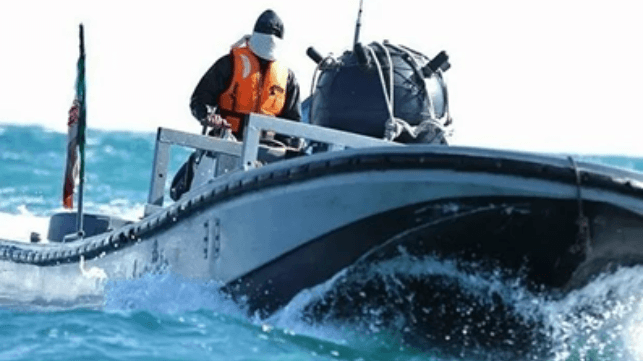
- [EEI 1.4 · PARTIAL] Evidence of pre-positioning or arming of naval mines, fast attack craft, or anti-ship missile systems in the Gulf of Oman, northern Arabian Sea, or off the Lebanese/Syrian coasts that could be used to interdict Israeli or allied shipping. Recommended collection: maritime/AIS
- [EEI 2.1 · PARTIAL] Movements and tasking changes of external military assets: carrier strike groups, amphibious ready groups, expeditionary air wings, or ballistic-missile defense units into the Eastern Mediterranean, Persian Gulf, or Red Sea (vessel/aircraft IDs, routing, on-station times). Recommended collection: maritime/AIS
- [EEI 2.3 · PARTIAL] Changes to force protection or alert levels at foreign bases in the region (e.g., US bases in Kuwait, Qatar, UAE; Russian bases in Syria): activation of additional air defenses, curfews, or reinforcement shipments (personnel/equipment manifests). Recommended collection: signals/intel
- [EEI 3.2 · PARTIAL] Changes in crude oil and refined product flows from key terminals (reported tanker loading delays, terminal closures, throughput volumes at Kharg, Mina al-Ahmadi, Ras Tanura, and major Gulf ports compared to baseline). Recommended collection: commercial/ports
- [EEI 3.3 · PARTIAL] Market and insurance indicators: sudden spikes in war-risk or hull insurance premiums for Middle East routes, large moves in regional FX/stock indices, and notable changes in commodity futures (oil, freight rates) tied to regional risk perceptions. Recommended collection: financial/transactional
Cited sources
[1] Reuters (republished by gCaptain) · Strait of Hormuz Ship Crossings Remain in Single Digits, Data Shows (A) · Wed Sep 16 2026 13:08:53 GMT+0000 (Coordinated Universal Time) · sha256:2589a9386c5e [2] gCaptain · Fox News: Iran Attack Hits U.S.-Contracted Ship Carrying American Personnel (C) · Wed Sep 16 2026 15:12:42 GMT+0000 (Coordinated Universal Time) · sha256:d7bc8427f059 [3] Reuters (republished by gCaptain) · U.S. Held Secret Talks With Houthis After Red Sea Offensive, Reuters Reports (A) · Wed Sep 16 2026 16:42:40 GMT+0000 (Coordinated Universal Time) · sha256:412b9fb4b71b [4] Jacobin · Ansar Allah’s Red Sea Advance Has Exposed Saudi Weakness (B) · sha256:c2c65062e1ef [5] Yeni Şafak (English edition) · Saudi coalition intercepts Houthi drone near Mecca (B) · Wed Sep 16 2026 04:46:34 GMT+0000 (Coordinated Universal Time) · sha256:f78c5eb93241 [6] BOL News · Pakistan condemns Houthi attacks on Saudi Arabia (B) · Wed Sep 16 2026 04:58:12 GMT+0000 (Coordinated Universal Time) · sha256:fc7f893933cf [7] Newswav (aggregator; content appears wire-sourced, likely AFP) · Saudi says Houthis target Mecca, warn of ‘red line’ (B) · Wed Sep 16 2026 06:54:35 GMT+0000 (Coordinated Universal Time) · sha256:6867a3406976 [8] Newswav (aggregator; original likely The Independent) · Iran-US war latest: Tehran vows to fight on ‘until the last drop of blood’ after Trump talks threat (B) · Wed Sep 16 2026 17:31:43 GMT+0000 (Coordinated Universal Time) · sha256:2bba763dab34 [9] The Independent (via inkl.com) · Iran-US war latest: Tehran vows to fight on ‘until the last drop of blood’ after Trump talks threat (B) · Wed Sep 16 2026 03:49:03 GMT+0000 (Coordinated Universal Time) · sha256:98553d95af2f [10] BBC · Photos show widespread damage at US sites from Iranian attacks (A) · Wed Sep 16 2026 15:23:03 GMT+0000 (Coordinated Universal Time) · sha256:bd8031528eb5 [11] The Maritime Executive · Report: U.S. Personnel Injured in Iranian Attack on Boat Near Hormuz (C) · sha256:f47fe75932ee [12] Tehran Times · Iran FM backs Xi’s four-point proposals, calls for greater Chinese role in Middle East peace (B) · Wed Sep 16 2026 15:09:24 GMT+0000 (Coordinated Universal Time) · sha256:81ce284101af [13] The Maritime Executive · Hormuz Route Negotiations Would Have Handed Substantial Control to Iran (C) · sha256:7bf62c69cb0c [14] Sky News Arabia · لبنان. إسرائيل تعلن ضرب "بنى تحتية عسكرية" لحزب الله (A) · sha256:34a205d97828 [15] Lebanon24 · ماذا كُشف في إسرائيل عن وضع حزب الله؟ تقارير تُجيب (D) · Wed Sep 16 2026 19:00:00 GMT+0000 (Coordinated Universal Time) · sha256:7c72ab0af3a6 [16] gCaptain · Saudis Pivot to Send More Oil Via Hormuz After Pipeline Shut (C) · Wed Sep 16 2026 16:48:55 GMT+0000 (Coordinated Universal Time) · sha256:9785af74bd73 [17] Ynetnews · Iran is moving West. Israel should be watching Africa (B) · Wed Sep 16 2026 03:27:24 GMT+0000 (Coordinated Universal Time) · sha256:4d9a5e8f92ff
Source content hashes were computed at collection time; the cited text is preserved unmodified for the life of this product.
Red cell review: CONCUR WITH COMMENT
TLP:CLEAR