TLP:CLEAR · Disclosure is not limited.
Iran-Israel Conflict: Maritime Pressure and Escalation Risks
Time window: Last 1 day · Audience: General analyst · Type: Situation report · DTG: 2026-10-06 13:15Z · Overall confidence: HIGH
BLUF
Very likely, shipping through the Strait of Hormuz will remain hazardous, while the US blockade continues to pressure Iran’s oil exports. Iranian statements on missile-range expansion and disputed reporting about production raise concern, but do not establish that longer-range missiles are operational. The reporting in this brief does not establish a new direct Iran-Israel exchange during the 5-6 October window.
Executive summary
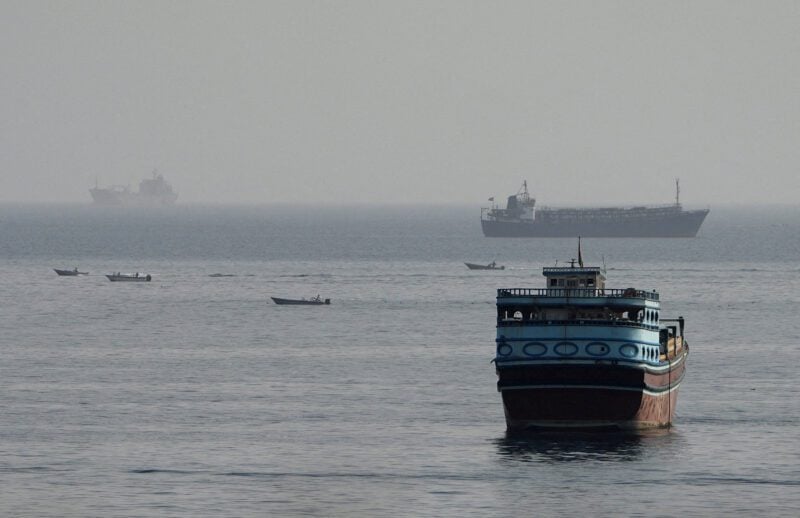
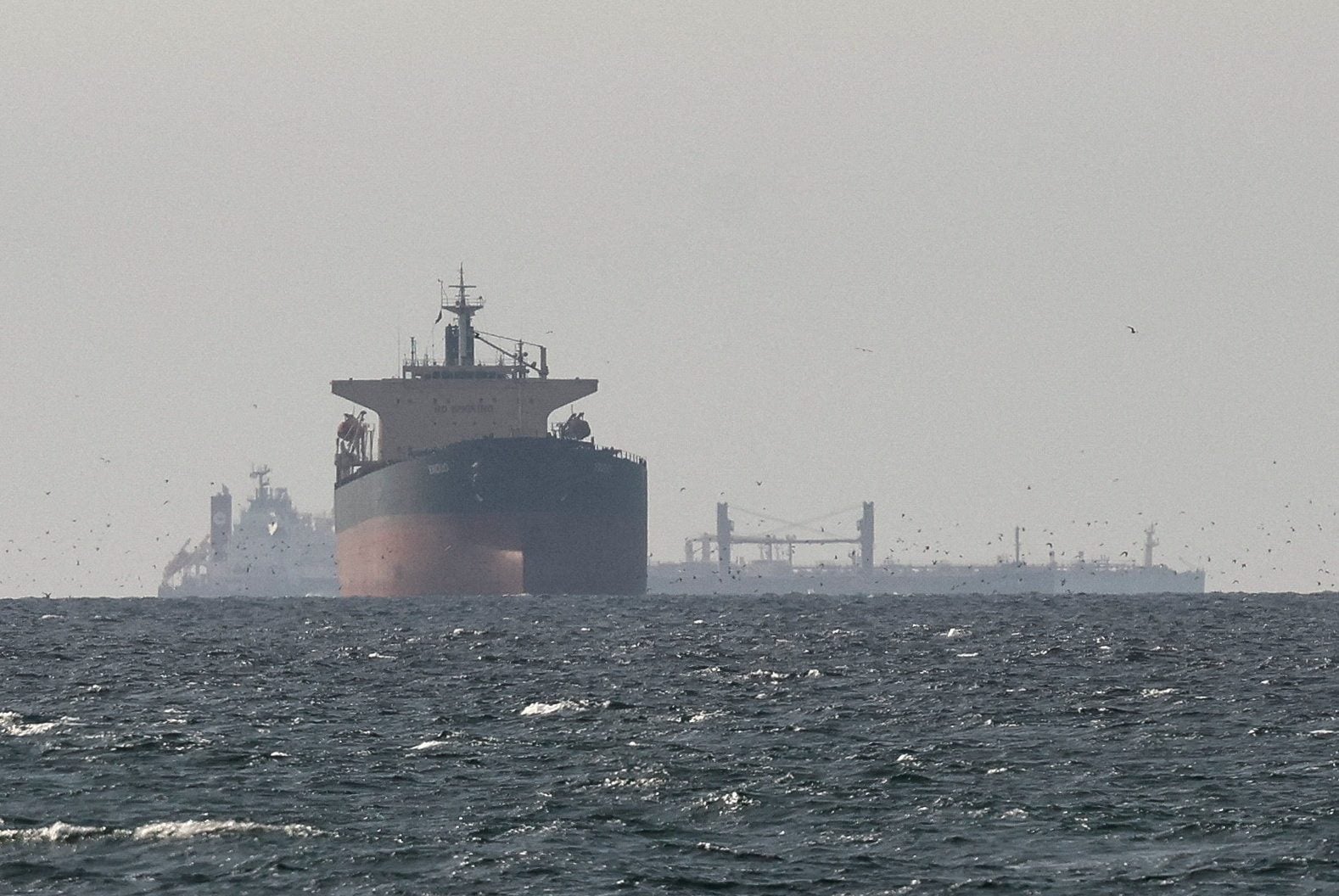
The clearest new developments are repeated attacks on commercial vessels in or near the Strait of Hormuz, an IRGC threat that forced an inbound tanker to turn back, and continued US enforcement of its blockade against Iranian ports. Shipping data indicate that the strait remains in use, so reports of disruption do not establish a continuous closure. Iranian military officials have called for longer-range missiles, while reporting that Iran has begun producing missiles beyond its previously stated range limit conflicts with accounts that describe plans or intentions. The removal of about a dozen B-1 bombers from RAF Fairford followed reported threats, but US and UK statements do not establish Iranian responsibility or a clear link between the Fairford incident and the bomber move.
Change from previous assessment
Since the 5 October brief, reporting has added five UKMTO shipping incidents on 5 October, including four tanker attacks and an IRGC threat, and a CENTCOM tally of 130 redirected vessels. This strengthens the evidence for immediate maritime pressure, while the forecast that Hormuz transit will remain hazardous stays at medium confidence because attackers remain unidentified and flow data show transit continues. This brief adds judgments on the blockade’s effect on Iranian oil exports, conflicting reports of longer-range missile production, and the RAF Fairford attribution dispute. The prior estimate of a roughly even chance of renewed US strikes is retained in broader form as a roughly even chance of a direct US-Iran kinetic exchange. The prior Yemen, Syria and UAE judgments are not updated here.
Key judgments
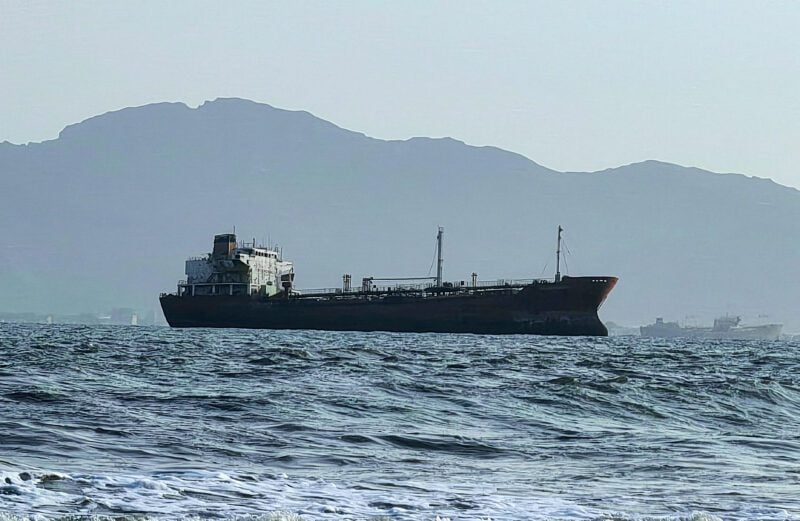
- Very likely, commercial transit through the Strait of Hormuz will remain hazardous and uneven over the next 0-14 days, but a continuous closure is unlikely. UKMTO reported five shipping incidents on 5 October, including four tanker attacks and an IRGC threat against another vessel; JMIC separately documented four confirmed tanker attacks on 2-3 October. The projectiles in the reported strikes remain unattributed. Kpler measured crude flows of 14.2 million barrels per day on a seven-day average on 26 September, nearly 80 per cent of pre-war levels. We assess that attacks and threats will deter some voyages without stopping all transit. The incident picture is supported by UKMTO and JMIC reporting, although overlapping incident counts and unknown attackers limit confidence in attribution. (Confidence: medium · ASSESSED)
- I&W: Confirmation: UKMTO or JMIC records another projectile strike or IRGC threat against a named vessel in the Strait. Break: both report no further incident during the period and Kpler records seven-day average crude flows at or above 14.2 million barrels per day. (0-14 days)
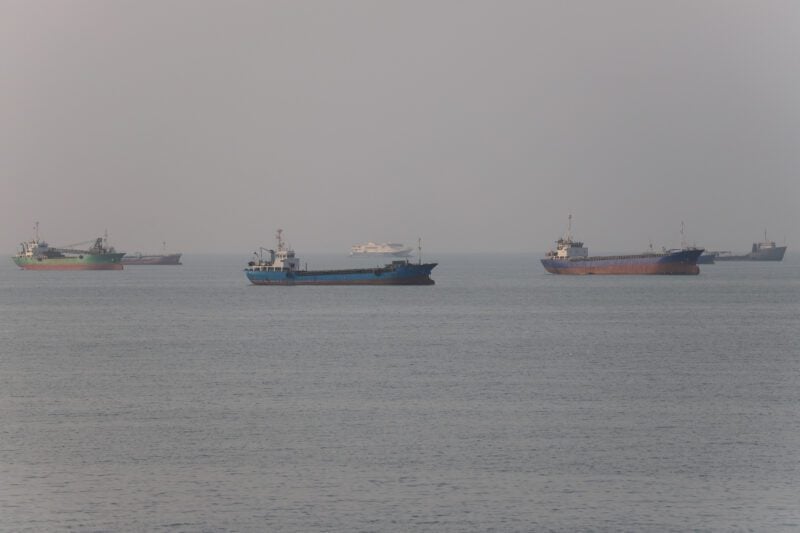
- Likely, US enforcement will continue to constrain Iranian seaborne crude exports over the next 0-14 days, but the available reporting does not support a claim that no Iranian oil remains afloat. CENTCOM said US forces had redirected 130 commercial vessels by 5 October and had disabled three vessels and destroyed 13 over the previous 12 weeks. Preliminary Bloomberg vessel-tracking estimates show no Iranian crude loadings in September, while UANI reported at least 50 laden tankers backed up near Iran, including 16 near Kharg Island. Treasury Secretary Scott Bessent’s statement that Iran would have no oil on the water conflicts with the tanker reports. Confidence is medium because CENTCOM provides an official enforcement tally, while the loading and queue estimates come from separate tracking and advocacy sources and do not align with Bessent’s claim. (Confidence: medium · ASSESSED)
- I&W: Confirmation: Bloomberg tracking shows another reporting period with no Iranian crude loadings and CENTCOM reports additional vessels redirected beyond the 130 recorded on 5 October. Break: tracking confirms renewed loadings at Kharg Island and UANI reports a clear reduction in the laden tanker queue. (0-1 months)
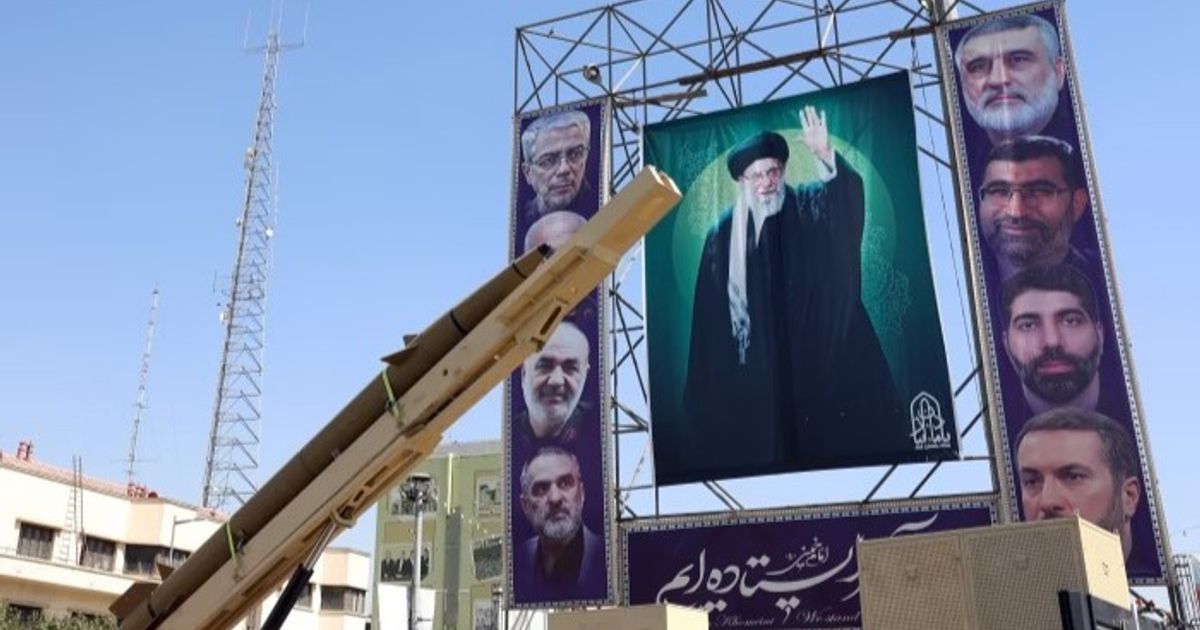
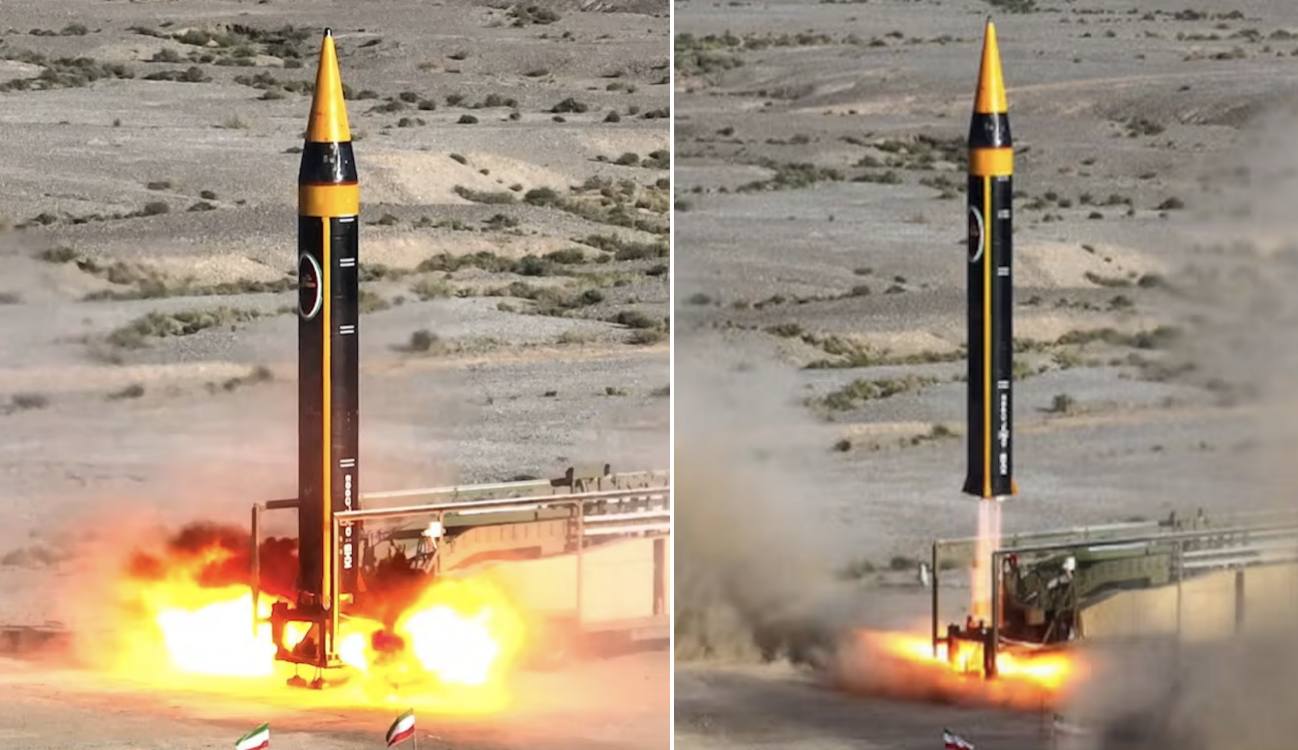
- Likely, Iranian Army and Artesh leaders will continue publicly advocating greater missile range, speed or accuracy over the next 1-3 months; reports that Iran has begun producing operational ballistic missiles beyond 2,000 kilometres remain unverified. Mohammad Akrami-Nia and other Iranian military statements describe range expansion, but reports differ on whether Iran is planning production, has begun production, or is pursuing missiles beyond 1,000 kilometres rather than beyond 2,000. The public statements support an assessment of stated intent, not confirmation of production or deployment. Confidence is low because reporting on production status is conflicting and draws partly on a trade publication rather than independently corroborated technical evidence. (Confidence: low · ASSESSED)
- I&W: Confirmation: Iranian Army or Artesh officials announce a named missile with a stated range beyond 2,000 kilometres, or report a test of such a system. Break: Iranian officials clarify that the reported programme remains a planning proposal and make no claim of production or testing. (1-3 months)
- Unlikely, the available reporting establishes Iranian responsibility for the RAF Fairford incident or proves that it caused the Pentagon to move about a dozen B-1 bombers from the base. Prime Minister Andy Burnham cited strong indications of Iranian involvement, while Tehran denied involvement; US officials gave differing accounts of whether the incident prompted the bomber move, and the BBC reported that US media claims of an Iranian drone plot were unconfirmed. The arrests of six men and the removal of the bombers are reported, but the attribution and causal link remain unresolved. Confidence is low because the key claims are contested and public evidence linking Iran to the incident is not provided. (Confidence: low · ASSESSED)
- I&W: Confirmation: UK police or prosecutors publish evidence or lay charges linking the Fairford suspects to Iranian state actors or the IRGC. Break: UK authorities publicly rule out an Iranian link or close the investigation without evidence of Iranian involvement. (0-30 days)
- Roughly even chance, the US-Iran maritime confrontation produces a direct kinetic exchange within 1-3 months, including a US strike on Iranian targets or an Iranian attack on US forces or vessels. CENTCOM says it is enforcing the blockade and will act against vessels attempting to run it; the IRGC has threatened an inbound tanker, and Ali Fadavi threatened US bases and vessels. These reports show active coercion and stated threats, but do not establish a decision to initiate a wider exchange. Confidence is low because the forecast rests on escalation indicators rather than reporting of an imminent strike decision. (Confidence: low · ASSESSED)
- I&W: Confirmation: CENTCOM confirms US forces fired on or disabled an Iranian or IRGC vessel, or Iran claims and independent reporting confirms an attack on a US base or vessel. Break: the US and Iran publicly announce a maritime deconfliction measure and no further IRGC threats or attacks are reported. (0-3 months)
Outlook & scenarios
Continued hazardous transit without a full closure (60%)
Most likely, tanker attacks and IRGC warnings continue to disrupt some voyages, while Gulf producers keep sending cargoes through the Strait of Hormuz. US blockade enforcement maintains pressure on Iranian exports. The reported flow levels and the incident pattern are consistent with a dangerous but operating waterway.
Direct US-Iran maritime escalation (25%)
A further attack on a vessel or an attempt to run the US blockade leads to a direct exchange between US forces and Iran or the IRGC. Such an exchange would raise the risk to commercial transit and increase pressure for a broader regional response. Current threats and enforcement activity make this a credible, but not the most likely, outcome.
Limited diplomatic pause (20%)
Indirect US-Iran negotiations resume and both sides reduce maritime pressure enough to lower the immediate risk to shipping. Late-September reporting described indirect negotiations, but subsequent statements and blockade enforcement do not establish that either side is ready to de-escalate.
Wildcard: confirmed long-range missile capability (5%)
Low probability, high impact: Iran confirms production or testing of an operational ballistic missile beyond 2,000 kilometres, strengthening concern raised by conflicting reports about missile expansion and the reported March attack on Diego Garcia. This would sharpen regional threat perceptions, but current reporting does not confirm the missile’s production status or operational performance.
Recommendations
- Maintain a daily incident log from UKMTO and JMIC that records vessel, location, time, incident number and stated attribution separately. Reconcile overlapping reports before using aggregate attack counts.
- For assessments of blockade effectiveness, distinguish CENTCOM vessel redirections from verified Iranian crude loadings. Compare Bloomberg vessel tracking, UANI tanker counts and official statements, with particular attention to Kharg Island.
- Treat Iranian range statements as evidence of declared intent, not proof of deployed capability. Seek independent technical confirmation before assessing that missiles beyond 2,000 kilometres are in production or operational service.
- Track UK police and prosecutorial statements on the RAF Fairford investigation. Keep Iranian attribution and the rationale for the B-1 move unresolved unless public evidence or an authoritative finding clarifies them.
- Use the direct-exchange scenario as a warning case for analysis of the blockade. Record any confirmed US firing or vessel disablement, Iranian attack on US forces or vessels, and public maritime deconfliction measures.
Confidence & uncertainty
Overall confidence is high in the core operational picture: UKMTO and JMIC reporting supports the pattern of recent Strait of Hormuz incidents, CENTCOM has publicly described blockade enforcement, and Bloomberg vessel tracking provides a separate measure of Iranian crude loading activity. Confidence is lower on who carried out the tanker strikes, whether Iran has begun producing missiles beyond 2,000 kilometres, and Iranian involvement in the RAF Fairford incident. Those uncertainties limit confidence in attribution and forecasts, not in the reported existence of shipping pressure and blockade activity.
Alternative analysis (red cell)
The confrontation may already have crossed the threshold of direct kinetic exchange if the reported IRGC strikes in e7182cff-f4d6-4b88-b57f-b74346820df1 are substantiated. In that case, the key uncertainty is not whether an exchange will occur, but whether existing hostilities will widen into sustained attacks on US forces or Iranian targets. The enforcement posture and threats in e22570b9-24f8-44b6-8975-e58e0a324f99 and 82623ce6-46e3-4b8b-82b0-245cbcca0f52 support that escalation remains plausible, but do not establish an imminent decision for wider war.
Intelligence gaps
- [EEI 1.1 · PARTIAL] Detection and characterization of ballistic/cruise missile or rocket launches originating from Iranian territory or from Iran-controlled positions in Iraq/Syria (time, launch coordinates, missile type, flight trajectory/impact area). Recommended collection: satellite/imagery
- [EEI 1.2 · UNCOVERED] Movements and posture changes of Iran-backed proxy forces (Hezbollah units in Lebanon, militias in Syria/Iraq): concentrations of personnel, transport of rocket/artillery launchers, visible logistics build-up within operational range of Israel. Recommended collection: human/intel
- [EEI 1.3 · UNCOVERED] Israeli defensive and offensive posture changes: reservist call-ups, mobilization orders, sorties/airstrikes attributed to Israel, and domestic activation of missile-defense systems (locations and activation times). Recommended collection: open-source/media
- [EEI 1.4 · PARTIAL] Evidence of pre-positioning or arming of naval mines, fast attack craft, or anti-ship missile systems in the Gulf of Oman, northern Arabian Sea, or off the Lebanese/Syrian coasts that could be used to interdict Israeli or allied shipping. Recommended collection: maritime/AIS
- [EEI 2.1 · PARTIAL] Movements and tasking changes of external military assets: carrier strike groups, amphibious ready groups, expeditionary air wings, or ballistic-missile defense units into the Eastern Mediterranean, Persian Gulf, or Red Sea (vessel/aircraft IDs, routing, on-station times). Recommended collection: maritime/AIS
- [EEI 2.2 · PARTIAL] Formal diplomatic/military actions: evacuation orders or embassy closures, public troop posture statements, bilateral/multilateral defense commitments announced, requests for overflight or basing rights in regional states. Recommended collection: diplomatic
- [EEI 2.3 · UNCOVERED] Changes to force protection or alert levels at foreign bases in the region (e.g., US bases in Kuwait, Qatar, UAE; Russian bases in Syria): activation of additional air defenses, curfews, or reinforcement shipments (personnel/equipment manifests). Recommended collection: signals/intel
- [EEI 3.3 · UNCOVERED] Market and insurance indicators: sudden spikes in war-risk or hull insurance premiums for Middle East routes, large moves in regional FX/stock indices, and notable changes in commodity futures (oil, freight rates) tied to regional risk perceptions. Recommended collection: financial/transactional
Cited sources
[1] gCaptain · Five Hormuz Incidents Reported Monday as Tanker Attacks Mount (C) · 5 October 2026 · sha256:7d29fb9ec75b [2] gCaptain · More Tankers Hit in Hormuz as IRGC Orders Ship to Turn Back (C) · 5 October 2026 · sha256:8314fbc59ea7 [3] Reuters (republished by gCaptain) · Opinion: Oil's New Problem Isn't Supply. It's Logistics (B) · 5 October 2026 · sha256:928c997559ab [4] Bloomberg (republished by gCaptain) · US Blockade Bottles Up Dozens of Iranian Tankers, Nonprofit Says (A) · 6 October 2026 · sha256:5d235cdcec4f [5] The Jerusalem Post · Iran plans to expand missile range to reach ‘enemy located at greater distance’, spokesperson says (B) · 5 October 2026 · sha256:2d1e7be1ad9e [6] Institute for the Study of War (ISW) and Critical Threats Project (CTP) at the American Enterprise Institute · Iran Update, October 5, 2026 (B) · 6 October 2026 · sha256:50e16ac7e445 [7] Asharq Al-Awsat (asharq.com) · تتجه لزيادة المدى. هل تستطيع إيران تطوير صواريخ عابرة للقارات؟ (B) · 5 October 2026 · sha256:7c01b6898388 [8] Military Watch Magazine · Iran Begins Production of First Ever Long-Range Missiles: Targets Across Europe Within Reach (C) · 6 October 2026 · sha256:b286957b11f1 [9] BBC News · Donald Trump says a 'threat' led US to move bombers from RAF Fairford (A) · 5 October 2026 · sha256:a7bd332ece0e [10] TV7 Israel News · Saudi Arabia Rethinks Its Alliances — Is Israel Back in the Equation? (B) · sha256:01335b9a6f9b
Source content hashes were computed at collection time; the cited text is preserved unmodified for the life of this product.
Red cell review: PARTIAL DISSENT
TLP:CLEAR