TLP:CLEAR · Disclosure is not limited.
Iran-Israel Conflict: Maritime Pressure, Sanctions and Diplomatic Openings
Time window: Last 1 day · Audience: General analyst · Type: Situation report · DTG: 2026-08-24 13:09Z · Overall confidence: HIGH
BLUF
Regional tensions are very likely to remain elevated through 6 September 2026. Iran's threats against Gulf oil exports and shipping, Israeli activity in Syria, Houthi attacks in the Red Sea and expanding US sanctions pressure are raising escalation risks, while diplomatic contacts are growing without evidence of a formal US-Iran de-escalation arrangement.
Executive summary
The latest reporting shows several reinforcing pressure points rather than a confirmed new direct Iran-Israel exchange. Iran is warning shipping and threatening Gulf oil exports as Washington prepares further sanctions. A tanker caught fire after an unidentified projectile struck it off Saudi Arabia, four sailors were reported killed in a Houthi missile attack, and a naval mine was detected near Bab al-Mandab. Israel's activity in Syria is sustaining friction with Türkiye, although Syrian-Israeli talks under US mediation offer a limited channel for deconfliction. Pakistan, China and Iraq are also pursuing diplomatic initiatives, but the reporting provides no agreed implementation terms.
Change from previous assessment
Since the 23 August 2026 brief, the planned Asim Munir visit is now reported as an arrival and meeting in Tehran, raising confidence in active mediation from low to medium without establishing a US-Iran agreement. The Iranian economic dimension is sharper, with new reporting on a record-low currency, inflation of about 69 per cent, threats to halt Gulf oil exports and an imminent US sanctions package. Maritime risk now includes the tanker fire off Saudi Arabia, the reported killing of four sailors in a Houthi attack and a mine report near Bab al-Mandab. The Syria-Israel channel is now reported as active, but conflicting accounts keep confidence in the Israel-Türkiye assessment low. The prior assessment of sustained regional escalation is retained, while the current brief narrows it by stating that the available reporting does not confirm a new direct Iran-Israel exchange during 23-24 August.
Key judgments
- Regional military and coercive escalation is very likely to persist through 6 September 2026, but the current reporting does not establish a new direct Iran-Israel exchange during 23-24 August. Iran has threatened to prevent or halt Persian Gulf oil exports, warned shipping in the Strait of Hormuz and threatened retaliation against states assisting Washington. Israel has conducted airstrikes in Syria, with Israeli officials linking one strike to efforts to block a Turkish presence. Houthi forces have been linked to a fatal attack on a commercial vessel in the Red Sea, while Yemeni government forces report continued clashes with Houthi forces. Confidence is medium because activity spans several theatres, but some Iranian intentions, attack attributions and event dates rely on single-source or undated reporting. (Confidence: medium · ASSESSED)
- I&W: Confirm: An independently verified Iranian action against a Gulf commercial vessel, an Israeli target or a state assisting Washington is reported. (0-14 days)
- I&W: Break: Iran rescinds its shipping warning and no new Israeli strike in Syria or Houthi attack on Red Sea shipping is reported through 6 September. (0-14 days)
- Disruption to commercial shipping in the Strait of Hormuz and the Red Sea is likely to persist through 6 September 2026. Iran has warned vessels not to pass through Hormuz without permission and threatened to halt oil exports from Persian Gulf countries. A tanker caught fire off Saudi Arabia after being struck by an unknown projectile, four sailors were reported killed in a Houthi missile attack on a commercial vessel, and the National Resistance reported detecting a naval mine near Bab al-Mandab. Confidence is medium because the Iranian warnings and Houthi attack are reported by major media, while the tanker attribution and mine report remain unresolved or single-source. (Confidence: medium · ASSESSED)
- I&W: Confirm: The UK Maritime Trade Operations or another maritime authority reports a named commercial vessel hit by a projectile, a mine alert or a forced route change in either strait. (0-14 days)
- I&W: Break: Iran rescinds its warning and reported commercial passages through both straits rise for two consecutive weeks without a further vessel incident. (1-3 months)
- The US-Iran economic confrontation is very likely to intensify within the next 14 days, and Iranian retaliation against states supporting US sanctions is likely. The US Treasury is preparing measures aimed at Iran's remaining economic lifelines, and the next major development is reported to be announcement of a new sanctions package. Donald Trump has threatened severe economic consequences for countries maintaining business ties with Tehran. Iranian officials have warned that Tehran will respond strongly, use diplomatic and economic relationships to counter the measures and treat states assisting sanctions as enemies. Iran's currency has reached a reported record low, while reporting also places inflation at about 69 per cent and records rising food prices. Confidence is medium because the sanctions package has not yet been announced and several economic figures lack dates or independent corroboration. (Confidence: medium · ASSESSED)
- I&W: Confirm: The US Treasury announces measures targeting Iran's remaining economic lifelines and Donald Trump identifies financial institutions, businesses, airports or governments supporting Tehran for penalties. (0-14 days)
- I&W: Break: No sanctions package is announced by 6 September, and Iranian officials stop warning of retaliation against states supporting the measures. (0-14 days)
- Diplomatic engagement is likely to expand over the next 14 days, but a formal US-Iran de-escalation arrangement is unlikely by 6 September 2026. Field Marshal Asim Munir has arrived in Tehran and met Iranian Interior Minister Eskandar Momeni, with reporting that he intends to convey US messages. China is urging dialogue, Iraq has proposed a joint security council between Iran and Saudi Arabia, and Masoud Pezeshkian continues to present a memorandum with Washington as a route out of the stalled conflict. Syrian and Israeli delegations have also met in Jordan under US mediation. Confidence is medium because the contacts are reported by several major-media sources, but no claim provides agreed implementation terms or evidence that Washington and Tehran have accepted them. (Confidence: medium · ASSESSED)
- I&W: Confirm: Pakistan publishes a roadmap, confirms delivery of US messages to Iranian officials or reports written implementation terms for a US-Iran memorandum. (0-14 days)
- I&W: Break: Washington announces the sanctions package, Tehran rejects the memorandum and no follow-up US-Iran contact is reported by 6 September. (0-14 days)
- An unintended direct Israel-Türkiye confrontation in Syria is unlikely through 6 September 2026, while Israeli-Turkish friction around Idlib is likely to continue. Benjamin Netanyahu indicated that an Israeli airstrike carried a message for Türkiye, Türkiye condemned the action and emphasised Syria's sovereignty, and Israeli officials stated that the strike was intended to prevent Türkiye from establishing a presence at an Idlib base. Syrian-Israeli talks have addressed mechanisms to halt Israeli attacks and tensions involving Türkiye. Confidence is low because reporting disagrees on whether the relevant strike was in Idlib or at Abu Al-Duhur, and on the date, participants and location of the Syrian-Israeli meeting. (Confidence: low · ASSESSED)
- I&W: Confirm: Israel conducts another strike on a Syrian site identified as a Turkish military position, or Türkiye announces military retaliation against Israel. (0-14 days)
- I&W: Break: US-mediated talks produce a practical mechanism to halt Israeli attacks in Syria or Israel and Türkiye issue a coordinated deconfliction statement. (0-14 days)
- Gaza's humanitarian pressure is very likely to remain severe through 30 November 2026, while current UK support does not demonstrate improved access for civilians. Stephen Doughty renewed calls for more humanitarian aid to reach Gaza, the UK government restarted support to UNWRA, and Israeli drone attacks were reported against southern Khan Younis and a tent sheltering displaced people at Al-Aqsa Martyrs Hospital. Confidence is medium rather than high because this reporting run provides limited current data on aid volumes, civilian casualties and access conditions. (Confidence: medium · ASSESSED)
- I&W: Confirm: A further Israeli strike on a shelter for displaced people or a hospital in Gaza is reported. (0-14 days)
- I&W: Break: The UK government or UNWRA reports a sustained increase in aid reaching Gaza and no further reported attack on displaced people for 14 consecutive days. (0-14 days)
Outlook & scenarios
Managed coercion and indirect conflict (52%)
Washington announces the new sanctions package, Iran sustains warnings against Gulf oil exports and shipping, Israel continues activity in Syria and Houthi attacks remain focused on Red Sea shipping. Pakistan, China, Iraq and the Syrian-Israeli channel continue diplomatic activity without agreed US-Iran implementation terms.
Maritime escalation (27%)
Iran acts on its oil-export threats or enforces its Strait of Hormuz warning, while a further projectile strike, mine incident or Houthi attack disrupts commercial traffic in Hormuz or Bab al-Mandab. Saudi waters and oil prices face additional pressure.
Limited diplomatic opening (18%)
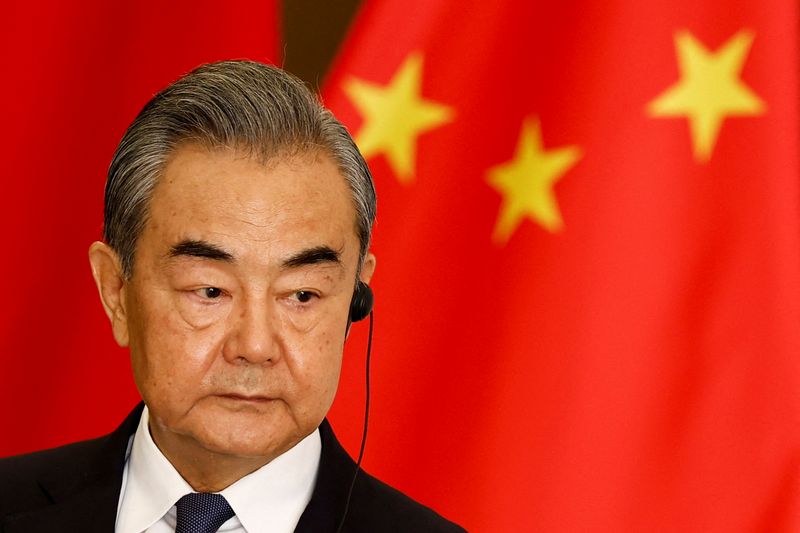
Asim Munir's Tehran meetings, Wang Yi's call for dialogue and Iraq's proposed security council produce a written roadmap or practical contact mechanism. Pezeshkian's memorandum position gains US engagement, and Syrian-Israeli talks reduce immediate strikes. This scenario does not require a comprehensive settlement.
Wildcard: cross-theatre strike (6%)
Iran targets a military base in Cyprus or Bulgaria, or a Gulf oil-export facility, in response to US sanctions or support from another state. Israel, the US and affected states respond, pushing the conflict beyond the current maritime and Syrian theatres.
Recommendations
- Prioritise collection on the Strait of Hormuz, Bab al-Mandab, Saudi waters, Idlib and the Syrian-Israeli contact channel. Record each new shipping warning, vessel incident, mine report, Israeli strike and Turkish military response against a dated event timeline.
- Do not attribute the tanker fire off Saudi Arabia to Iran, the Houthis or another actor until maritime authority reporting, vessel reporting and additional independent coverage identify the projectile's source.
- Track the US sanctions package for its announcement date, named targets and penalties against Iran's trade partners. Compare those measures with Iranian action against Gulf oil exports, shipping and states supporting Washington.
- Verify the outcome of Asim Munir's meetings with Eskandar Momeni, including whether US messages were delivered and whether Pakistan publishes a roadmap. Separately verify the date, location and participants of the Syrian-Israeli meeting and any practical mechanism agreed.
- Keep the question of a new direct Iran-Israel exchange separate from wider regional escalation. Raise that assessment only after confirming the launch, target and impact of an attack through at least two reliable sources.
- Monitor whether UK support to Gaza and resumed support to UNWRA produce a measurable increase in aid reaching civilians. Report separately any Israeli strike on a shelter for displaced people or a hospital.
Confidence & uncertainty
Overall confidence is high for the existence and direction of the main developments because the reporting contains multiple high-confidence event records supported by official government and major-media sources. Corroboration is strongest for the US sanctions preparation, Iran's public warnings, Pakistan's Tehran engagement, maritime incidents and UK humanitarian activity. The principal uncertainties concern Iranian operational intent, attribution of the Saudi tanker incident, the Bab al-Mandab mine report, and the exact date and participants in the Syrian-Israeli meeting. These uncertainties lower confidence in individual forecasts but do not overturn the broader assessment of sustained regional pressure.
Intelligence gaps
- [EEI 1.1 · PARTIAL] Number, type, launch times, and trajectories of ballistic missiles, cruise missiles, armed UAV strikes, and combat-air sorties launched by Iranian or Israeli forces toward the other's territory or forward bases within a 72-hour window. Recommended collection: signals/intel
- [EEI 1.2 · PARTIAL] Observable changes in Israeli and Iranian force posture: mobilization or reserve call-up orders, unit road/rail movements, dispersal or sortie rates of air squadrons, redeployment of air-defense batteries, and activation of civil-defense alerts or sirens in major population centers. Recommended collection: open-source/media
- [EEI 1.3 · PARTIAL] Indications of strike authorization or targeting preparations in Iranian or Israeli command chains: authenticated public orders by senior commanders, detected increases in encrypted communications consistent with targeting, or visible movement of strike munitions to launch/storage sites. Recommended collection: signals/intel
- [EEI 2.1 · PARTIAL] Counts, launch locations (coordinates), weapons types, and assessed damage from rocket/missile/drone strikes originating from Lebanon into northern Israel attributed to Hezbollah or allied groups. Recommended collection: open-source/media
- [EEI 2.2 · UNCOVERED] Reported attacks by Iranian-backed militias in Iraq and Syria: rocket/IED strikes on bases hosting US/coalition or Israeli personnel, documented militia unit movements toward borders, and captured movement or transfer of weapons systems to forward militia positions. Recommended collection: human
- [EEI 2.3 · PARTIAL] Maritime harassment or attacks by proxies (e.g., Houthis): incidents of missile/rocket strikes against commercial vessels, small-boat swarm attacks, discovery or detonation of naval mines, and corresponding AIS anomalies in the Red Sea, Gulf of Aden, or southern Arabian Gulf. Recommended collection: maritime/AIS
- [EEI 3.1 · UNCOVERED] Movements and arrival dates of foreign military assets into the region: carrier strike groups, amphibious ships, surface combatants, strategic airlift/tanker deployments, and air/sea patrol patterns by US, European, Russian, or regional militaries. Recommended collection: imagery/satellite
- [EEI 3.3 · PARTIAL] Immediate commercial and market indicators: rerouting of commercial tankers and container vessels (e.g., avoidance of Bab el-Mandeb or Strait of Hormuz), sudden spikes in war-risk insurance premiums for regional sea lanes, temporary port closures, and near-term price moves in regional benchmark crude tied to incidents. Recommended collection: financial/market
Cited sources
[1] open.kg · Iran threatened to halt oil exports from Persian Gulf countries for joining Trump's economic war. » News of Kyrgyzstan, Bishkek and Osh — latest events today (B) · sha256:f5e484c226ed [2] aol.com · China says Middle East at critical point, calls for cooling tensions and dialogue (B) · sha256:bf098cebec24 [3] Daily Sabah · Why are Türkiye-Israel tensions becoming structural? | Daily Sabah (B) · sha256:de00aae51e6b [4] India Today · Iran warns US sanctions will deepen tensions as Syria-Israel talks restart (B) · sha256:c7c082565419 [5] ena.et · Middle East Tensions, Ukraine War and Rising Pressure on Global Trade (B) · sha256:88715beb16c1 [6] قناة الحدث Al Hadath · القوات الحكومية اليمنية تصد هجمات الحوثيين في الحديدة والضالع ومأرب. وتقصف تجمعاتهم بعدة جبهات | قناة الحدث Al Hadath (B) · sha256:401cba3f5398 [7] sundayguardianlive.com · US-Israel-Iran War Live: Iran Vows to Use 'All Bilateral Capabilities' Against New US Sanctions, Calls Them 'Unlawful' - Tanker On Fire After 'Unknown Projectile' Strike (B) · sha256:b4ac53e5213e [8] ourouba22.com · 'المشهد اليوم'..واشنطن 'تخنق' إيران حتى ترفع 'الراية البيضاء'! اجتماع سوري - إسرائيلي لخفض التوترات. ومعركة 'كسر عظم' في 'علي الطاهر'. وإسرائيل تتوعّد غزّة (D) · sha256:a66c361437ff [9] Al Jazeera · الوقت أهم سلاح في حرب إيران. هل ينفد صبر ترمب قبل طهران؟ (A) · sha256:0619630c94e9 [10] english.aaj.tv · Field Marshal Asim Munir arrives in Tehran for high-level talks (B) · sha256:cd91c273c258 [11] Yenisafak · Iraq proposes joint security council for Iran-Saudi tensions (B) · sha256:9baedb170521 [12] Seemi Nazneen · Iran War Tensions Explode Again (B) · sha256:229782174b81 [13] South China Morning Post · Syria holds talks with Israel addressing de-escalation, Israel-Turkey tensions (B) · sha256:da2f5f173469 [14] Al Jazeera · Syria, Israel hold US-mediated talks in Jordan to de-escalate tensions (A) · sha256:fa00282474ea [15] gov.uk · Minister renews calls for Israel to allow more aid into Gaza on first visit to the region (A) · sha256:ba76e538e65a [16] Al Jazeera · Israel accused of using kites as pretext to justify escalating Gaza attacks (A) · sha256:e2c22a9398de
Source content hashes were computed at collection time; the cited text is preserved unmodified for the life of this product.
TLP:CLEAR