TLP:CLEAR · Disclosure is not limited.
Iran-Israel Conflict: Maritime Risk and Political Pressure
Time window: Last 1 day · Audience: General analyst · Type: Situation report · DTG: 2026-11-05 07:42Z · Overall confidence: HIGH
BLUF
Maritime disruption around the Strait of Hormuz is likely to remain elevated over the next 14 days, while the scale and cause of reported tanker fires remain disputed. There is a roughly even chance that Donald Trump authorises another US strike on Iran in that period: his public rhetoric and reports of military preparations are balanced by reporting that no final decision has been made.
Executive summary
Reported: US officials said US forces conducted limited strikes on Qeshm Island on 2 November. UKMTO reported a tanker struck by two projectiles near Limah, Oman, while IRGC accounts of tanker fires differ on the number of vessels and the cause. The IRGC also reported shooting down a US MQ-9 over the Strait of Hormuz, a claim not independently confirmed in the supplied reporting. Democrats are reported to have won control of both chambers of Congress; in Israel, President Isaac Herzog has accepted the 27 October election results and begun consultations after neither reported bloc secured a majority. Assessment: maritime disruption is likely to persist, and renewed US strikes remain a live risk despite uncertainty over the decision. The status of roughly 440 kilograms of Iran's previously declared highly enriched uranium remains unverified by the IAEA, leaving an important gap in the nuclear picture.
Change from previous assessment
Since the 4 November brief, Democratic control of both chambers is now reported as an election outcome rather than a projection, and Trump and JD Vance have publicly linked the Republican defeat to the Iran war. Herzog has accepted Israel's certified 27 October results and begun coalition consultations, adding a near-term 11 November decision point; the reported bloc totals and recommendations remain inconsistent. Reporting now gives 2 November as the date of the Qeshm strikes, raising confidence in the date from the prior brief's unresolved position to medium. New reporting adds an account of two oil tankers and a tugboat on fire, but does not resolve the earlier disagreement over vessel count or cause. The assessment of the chance of further US strikes remains roughly even.
Key judgments
- US forces almost certainly conducted limited strikes on Iranian targets on Qeshm Island on 2 November. US officials described the action as a response to IRGC fire on a US aircraft; a separate report gives the same date, but the supplied reporting does not identify the specific targets. (Confidence: medium · REPORTED)
- I&W: A DoD or CENTCOM statement confirming the 2 November date and naming the Qeshm targets, or verifiable imagery of strike damage there, would confirm this account. (0-14 days)
- I&W: An official US account placing the strike on a different date or denying that US forces struck Qeshm would break this account. (0-14 days)
- Maritime disruption in the Strait of Hormuz and the approaches to Oman is likely to remain elevated over the next 14 days. UKMTO reported a tanker struck by two unknown projectiles about 14 nautical miles north-east of Limah, with no casualties reported. The IRGC's accounts differ: one describes two oil tankers and a tugboat catching fire, while others report four tankers hit by mines and two additional vessels intercepted. The reported vessel count and cause are unresolved. (Confidence: medium · ASSESSED)
- I&W: A further UKMTO report of a named merchant vessel struck in the Strait of Hormuz or the Oman approaches would confirm continued disruption. (0-14 days)
- I&W: UKMTO and named vessel operators report no further incidents and routine transits resume through the Strait of Hormuz would break this assessment. (0-14 days)
- The IRGC's report that Iranian air defences shot down a US MQ-9 over the Strait of Hormuz is unverified in the supplied reporting. Major-media reporting relays the IRGC claim, while the more specific accounts of the aircraft's location and the assertion that it was the second shootdown in two days are carried in social-media claims; the reported loss should therefore be treated as unconfirmed. (Confidence: low · REPORTED)
- I&W: US military confirmation of the loss or verifiable wreckage imagery identifying a US MQ-9 would confirm the shootdown. (0-14 days)
- I&W: A US military statement that the aircraft returned safely or that no MQ-9 was lost in the incident would break the claim. (0-14 days)
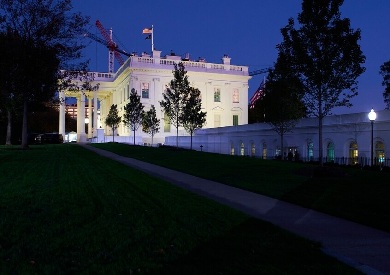
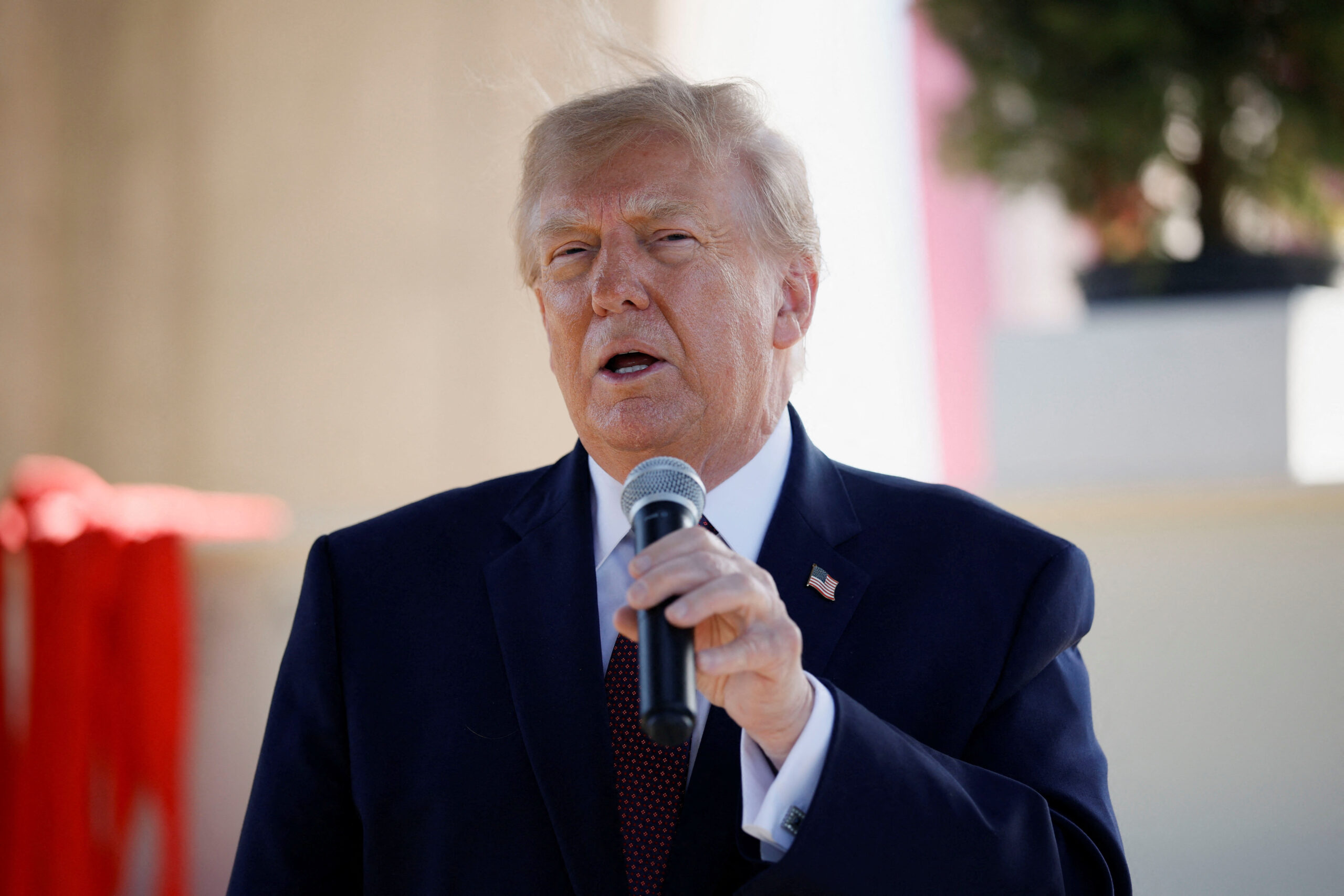
- There is a roughly even chance that Trump authorises renewed US strikes on Iran in the next 14 days. Trump has publicly suggested renewed action after the midterms, and reporting describes officials urging new strikes and preparations for potential operations. Other reporting says he has made no final decision, and coverage describes a split within his administration. The conflicting accounts of decision status and preparations keep confidence at medium. (Confidence: medium · ASSESSED)
- I&W: A US strike on a named Iranian target or an official White House or DoD announcement authorising renewed operations would confirm the assessment. (0-14 days)
- I&W: A formal White House statement ruling out US strikes through 19 November would break the assessment. (0-14 days)
- Democratic control of the House and Senate is likely to increase congressional and political pressure on Trump's Iran policy, but is unlikely to prevent him from ordering near-term military action. Chuck Schumer has said Democrats will work to end the war, while the supplied analysis assesses that Congress has limited ability to stop a president exercising commander-in-chief powers. (Confidence: medium · ASSESSED)
- I&W: Democratic committee leaders schedule an Iran-war oversight hearing or introduce a funding restriction tied to the conflict would confirm rising congressional pressure. (1-3 months)
- I&W: Congress takes no Iran-related oversight or funding action by 5 February 2027 would weaken this assessment of increased pressure. (1-3 months)
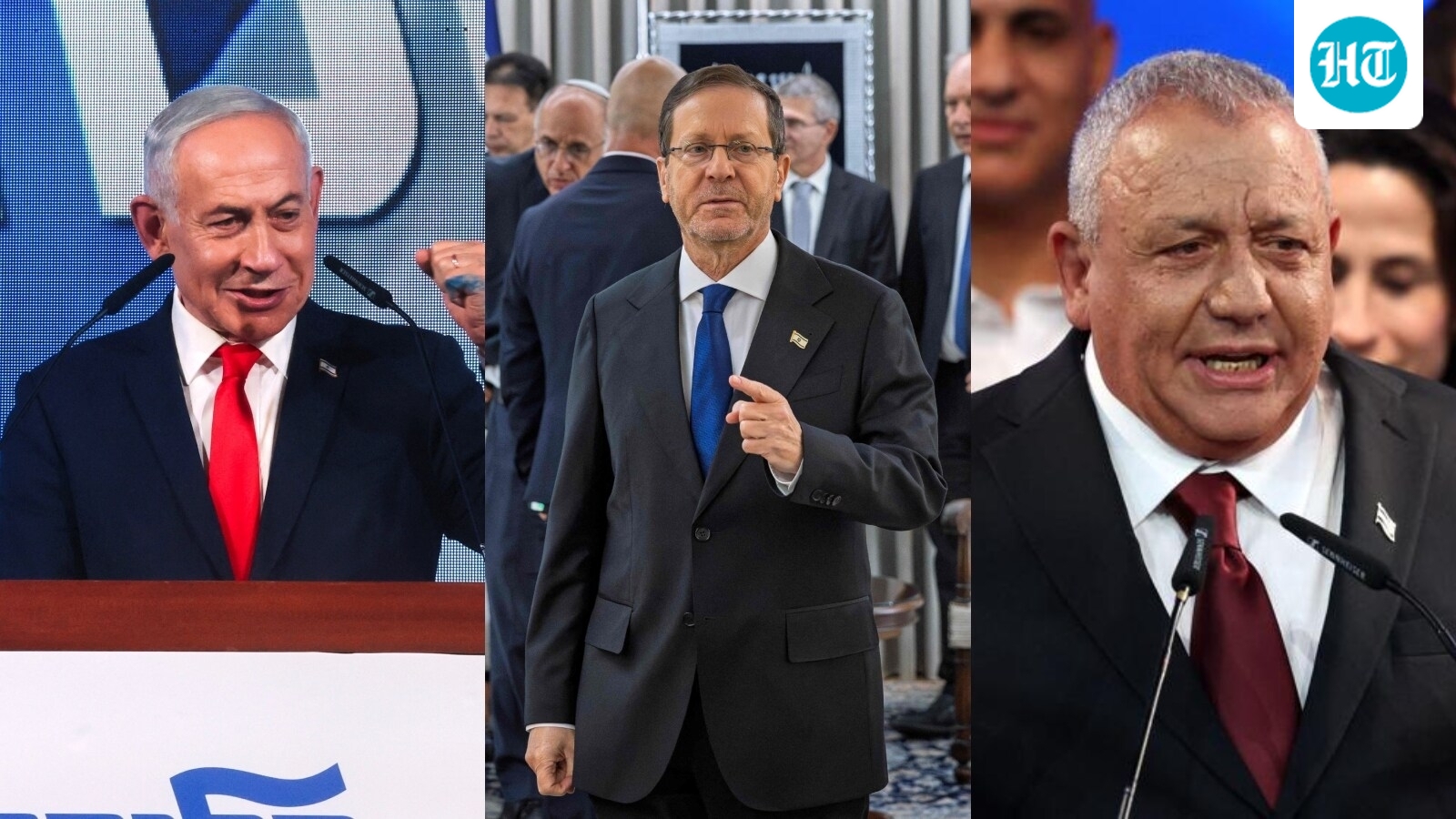
- Israeli government formation is likely to remain contested through Herzog's 11 November deadline to assign a mandate. One report gives Netanyahu's coalition 53 seats and Gadi Eisenkot's bloc 48, with neither reaching the 61 needed to govern; the reported bloc definitions and recommendations are not fully consistent, so the advantage between the two remains unclear. (Confidence: medium · ASSESSED)
- I&W: Herzog assigns a mandate by 11 November and the named candidate has public pledges from at least 61 lawmakers would break the assessment of continuing deadlock. (0-14 days)
- I&W: Herzog's consultations end without a candidate publicly able to command 61 lawmakers would confirm continued uncertainty. (0-14 days)
- The IAEA's reported inability to verify the status of roughly 440 kilograms of Iran's previously declared highly enriched uranium is likely to prolong uncertainty over Iran's nuclear position. This is a reported information gap, not evidence that the material has been moved or used. The reporting also says the agency has identified no repair or reconstruction activity at facilities damaged in the 2025 and 2026 attacks. (Confidence: medium · ASSESSED)
- I&W: An IAEA report confirms access to the relevant sites and an updated inventory of the declared highly enriched uranium would break the assessment of continuing verification uncertainty. (1-3 months)
- I&W: A subsequent IAEA report says access or information remains insufficient to verify the stockpile would confirm the assessment. (1-3 months)
Outlook & scenarios
Tense pause with indirect diplomacy (50%)
Washington holds off on further strikes while Iran remains open to discussions through mediators. Maritime incidents remain limited, but the conflicting accounts of tanker fires are not resolved and no broader settlement follows.
Renewed limited US strikes (35%)
Washington authorises additional strikes on Iranian targets. Iran retaliates, and maritime risk around the Strait of Hormuz rises as both sides seek to demonstrate resolve. Political pressure on the Trump administration increases, but does not stop the initial action.
Regional spillover wildcard (10%)
A new US or Israeli strike prompts Iran to widen its response beyond the immediate conflict area. Iranian officials have warned of a broader conflict and reporting says Iranian forces are updating their target bank. This is a low-probability, high-impact scenario; the supporting operational reporting is thin.
Recommendations
- Keep UKMTO's report of a tanker struck near Limah separate from IRGC claims about tanker fires, mines and interceptions. Seek updates from UKMTO and named vessel operators before using a vessel count or assigning a cause.
- Track official White House, DoD and CENTCOM statements alongside observable operations. Distinguish Trump's public rhetoric from a confirmed strike order or executed operation.
- Monitor Herzog's consultations and the 11 November mandate deadline. Record party recommendations and pledged lawmakers separately, and do not combine the reported bloc totals until their definitions are clear.
- Prioritise the next IAEA reporting on access, information and the inventory of Iran's previously declared highly enriched uranium. Do not infer movement or use of the material from the current verification gap.
- Treat the reported MQ-9 shootdown as unconfirmed until US military acknowledgement or verifiable evidence establishes the aircraft's loss and location.
Confidence & uncertainty
Overall confidence is high for the broad situation because multiple major-media reports describe the US election outcome and Israel's coalition consultations, while UKMTO reporting provides a specific account of a tanker incident near Oman. Confidence is lower for individual operational details: IRGC accounts of tanker fires conflict on vessel numbers and cause, the MQ-9 claim lacks independent confirmation, and reporting on a US decision to resume strikes is mixed. The IAEA verification gap is reported, but the supplied material does not establish the stockpile's current location or condition.
Alternative analysis (red cell)
The evidence supports continued uncertainty over renewed US action, but not a roughly even chance. Trump’s public warning in eb660591-7a4f-43f3-b889-cc31bd9e523f and the preparations described in f132f081-e1b2-4694-ada8-183baf503641 show intent and capability, while 770a64df-f0a0-4c80-990d-84a85f534611 and e98a31bd-f5a4-49c7-8e05-06fe82de14d2 show that authorisation remains unresolved. A materially different reading is that the reporting establishes an active but indeterminate policy process, rather than evidence supporting a specific 50 percent estimate.
Intelligence gaps
- [EEI 1.1 · UNCOVERED] Observed repositioning, sustained increases, or new forward basing of Iranian conventional or IRGC forces (armored units, missile batteries, aircraft, naval vessels) toward borders or regional launch points. Recommended collection: IMINT/satellite
- [EEI 1.2 · UNCOVERED] Hezbollah or other Iran-aligned proxy forces conducting mass mobilization, visible rocket/artillery emplacements, cross-border firing incidents, or preparations for cross-border operations from Lebanon, Syria, Iraq or Yemen. Recommended collection: HUMINT/ground ISR
- [EEI 1.3 · UNCOVERED] Detection of increased missile/rocket/torpedo launch events attributable to Iran, Israel, or proxies (launch signatures, trajectories, impact points) indicating a sustained campaign rather than isolated strikes. Recommended collection: SIGINT/IMINT/air-defense radar
- [EEI 1.4 · UNCOVERED] Interdicted or observed shipments (air, sea, land manifests, seizures, satellite imagery of transfers) of advanced weapons or missile components from Iran toward proxy groups or forward staging points. Recommended collection: maritime/AIS
- [EEI 2.1 · UNCOVERED] Satellite or on-the-ground imagery showing fires, damage, or operational shutdown at major oil export facilities, refineries, storage terminals, or key pipeline infrastructure in the Gulf and Red Sea. Recommended collection: IMINT/satellite
- [EEI 2.3 · PARTIAL] Significant and sustained reductions or rerouting of tanker transits through the Strait of Hormuz (ship traffic counts, pilot reports, port call cancellations) and announcements of closure or restricted navigation zones (NOTAMs, maritime advisories). Recommended collection: maritime/NOTAMs
- [EEI 2.4 · UNCOVERED] Rapid increases in war-risk insurance premiums for Middle East routes, shipping company advisories to avoid region, or major charter cancellations tied to the conflict. Recommended collection: financial/open-source
- [EEI 3.1 · UNCOVERED] Movement/arrival of major foreign military assets into the region: US carrier strike groups, amphibious ready groups, strategic bomber flights, Russian/Chinese naval taskings, or allied expeditionary units (visible in AIS, NOTAMs, satellite imagery, official releases). Recommended collection: IMINT/satellite
- [EEI 3.2 · UNCOVERED] Official expedited arms transfers, basing/overflight agreements, or declarations of operational support (formal government announcements, defense ministry releases, logistics flight manifests). Recommended collection: open-source/diplomatic
- [EEI 3.3 · UNCOVERED] Embassy evacuations, large-scale personnel movements, issuance of government travel bans/advisories, or multinational security alerts affecting foreign nationals and diplomatic posture in the region. Recommended collection: diplomatic/open-source
- [EEI 3.4 · UNCOVERED] High-level diplomatic/UN activity: scheduled or emergency Security Council meetings, published ceasefire proposals, or multilateral statements committing support/condemnation that precede changes in military posture. Recommended collection: open-source/diplomatic
Red cell review: PARTIAL DISSENT
TLP:CLEAR