TLP:CLEAR · Disclosure is not limited.
Iran-Israel Conflict: Maritime Threats and Yemen Spillover
Time window: Last 1 day · Audience: General analyst · Type: Situation report · DTG: 2026-10-07 12:41Z · Overall confidence: MEDIUM
BLUF
Very likely, commercial shipping risks in the Strait of Hormuz will persist over the next 14 days, while reported Houthi strikes at Aden International Airport and Saudi missile interceptions point to wider spillover. QatarEnergy’s empty LNG carriers indicate preparation for more exports, not evidence that loaded cargoes can transit safely. The new claims of an Israeli strike at Isfahan remain unverified.
Executive summary
Reporting from 6 to 7 October points to increased pressure on shipping and a broader Yemen front. The IMO reported 80 verified attacks on merchant vessels in and around the Strait of Hormuz since 28 February, while a trade publication attributed 12 tanker and gas carrier attacks in the past seven days to Iran. Specific recent incidents remain difficult to attribute. Yemen’s Transport Ministry reported a Houthi attack on Aden International Airport, and Saudi sources reported missile interceptions, although the reported locations and Houthi target claims do not align. Gulf crude and condensate exports rebounded in September, but refined fuel exports and LNG traffic remained below pre-war levels. QatarEnergy has at least 12 empty LNG carriers waiting near Qatar; their presence does not establish that loaded vessels will sail. Qatar says US-Iran mediation continues, but Iran’s reported proposal ties reopening Hormuz to lifting the US blockade of Iranian ports and sanctions on Iranian oil.
Change from previous assessment
Since the 6 October brief, confidence that Hormuz shipping risk will persist is reinforced by the IMO’s cumulative attack tally and reporting of 12 attacks in the past seven days, though confidence remains medium because incident attribution is incomplete. The reported Houthi attack affecting Aden International Airport and Saudi missile interceptions add a more immediate Yemen and Saudi spillover concern. New reporting also shows a September rebound in Gulf crude exports and QatarEnergy carriers waiting near Qatar, which distinguishes partial export recovery from safe or normalised transit. Low-reliability claims of an Isfahan strike are new but do not establish that a strike occurred or that the US participated.
Key judgments
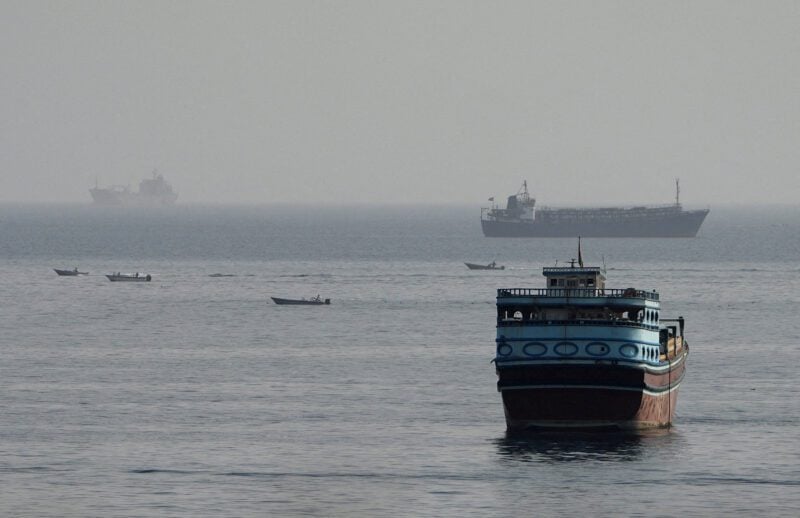
- Very likely, the Strait of Hormuz will remain a high-risk shipping corridor over the next 0-14 days. The IMO reported 80 verified merchant-vessel attacks in and around the Strait since 28 February, and a trade publication attributed 12 tanker and gas carrier attacks in the past seven days to Iran. UKMTO reported that an unknown projectile struck the On Peace on 5 October, injuring 12 crew members, while India did not identify the attacker. The aggregate reporting supports persistent danger, but it does not establish Iranian responsibility for every recent incident. (Confidence: medium · ASSESSED)
- I&W: Confirm: UKMTO issues another warning for a projectile strike or threat against a named commercial vessel transiting the Strait. (0-14 days)
- I&W: Break: UKMTO and IMO report no new attacks on merchant vessels in or near the Strait throughout the next 14 days. (0-14 days)
- Likely, Houthi operations will continue to threaten Aden and Saudi targets over the next 0-14 days. Yemen’s Transport Ministry reported a Houthi missile and drone attack on Aden International Airport, where a missile landed near the runway and a Cairo-bound flight was diverted to Jeddah. Saudi sources separately reported interceptions near Riyadh and Khamis Mushait. These accounts do not establish whether the interceptions were separate launches, and Saudi authorities did not immediately confirm Houthi claims of attacks on King Khalid and Abha airports. (Confidence: medium · ASSESSED)
- I&W: Confirm: Yemen’s Transport Ministry reports another strike affecting Aden International Airport, or Saudi sources report another Houthi missile interception. (0-14 days)
- I&W: Break: Aden airport resumes scheduled arrivals without reported attack-related diversion, and Saudi sources report no new Houthi missile interceptions during the period. (0-14 days)
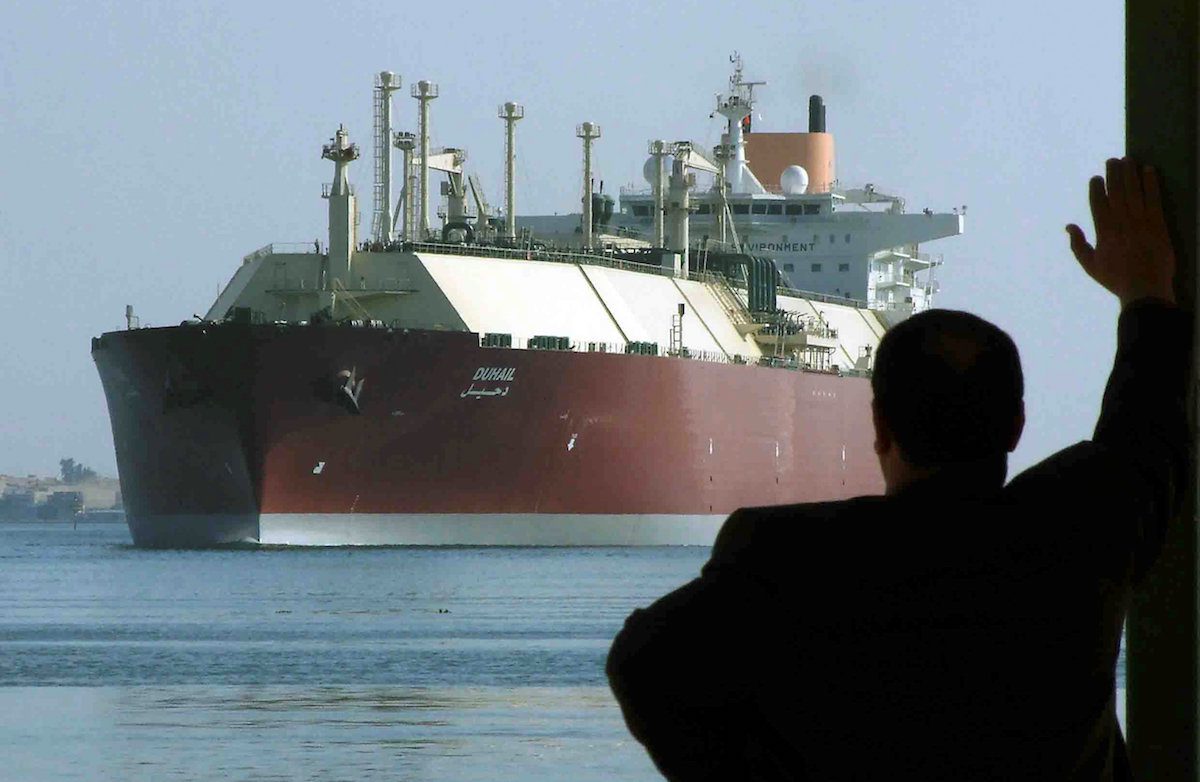
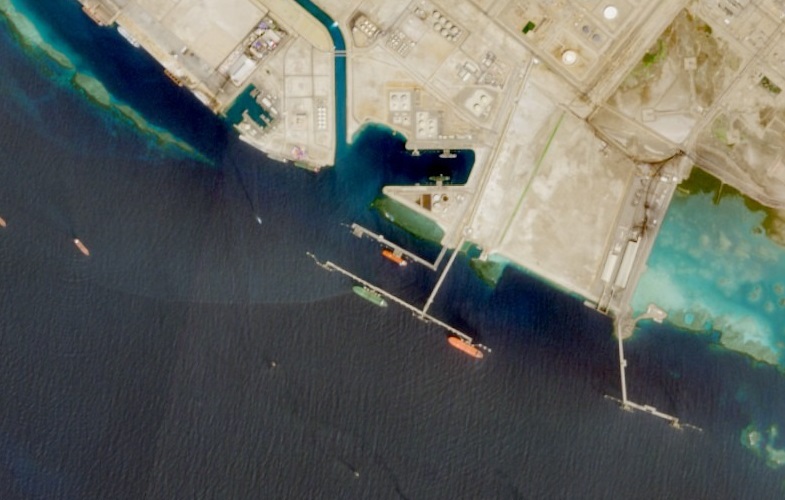
- Likely, QatarEnergy is positioning empty LNG carriers to support higher exports, but an increase in safely completed Hormuz transits is not yet established. A Bloomberg News analysis of satellite imagery and ship-tracking data identified at least 12 QatarEnergy-owned or chartered empty carriers waiting near Qatar, with capacity of about 1.1 million tonnes. September LNG traffic reached its highest level since the war began but remained about 75 per cent below February levels; reported cargo counts differ, and Italy’s Edison said it would not receive Qatari cargoes until early December. (Confidence: medium · ASSESSED)
- I&W: Confirm: satellite imagery or ship-tracking data show QatarEnergy carriers loading LNG near Qatar and a loaded Qatari carrier exiting the Strait. (0-14 days)
- I&W: Break: the identified empty carriers remain waiting near Qatar and no loaded Qatari LNG carrier is reported transiting Hormuz. (0-14 days)
- Very likely, Gulf crude and condensate exports recovered substantially in September, while refined fuel exports and LNG traffic remained more constrained. Vortexa placed crude and condensate flows at 91 per cent of pre-war levels and refined fuel exports, including LPG, at 60 per cent. Kpler separately reported combined crude and condensate exports of about 14.7 million barrels per day in September, up from 10.8 million in August. These provider figures measure different export baskets, but both indicate a substantial crude recovery rather than a return to normal conditions across all fuels. (Confidence: high · REPORTED)
- I&W: Confirm: October Kpler or Vortexa data show crude and condensate flows remain near September levels while refined fuel exports stay below their pre-war baseline. (1-3 months)
- I&W: Break: October export data show renewed declines in Gulf crude and condensate flows from September levels. (1-3 months)
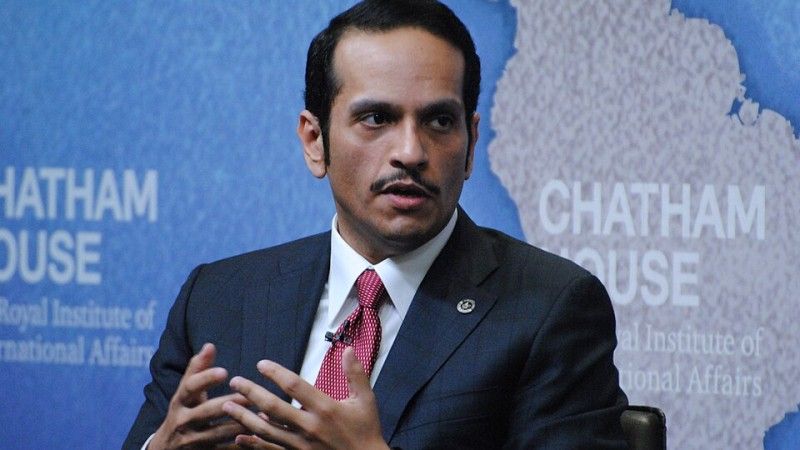
- Likely, Qatar’s mediation contacts with the US and Iran will continue, but a near-term agreement to reopen the Strait is unlikely. Qatar’s Foreign Ministry said meetings and exchanges of messages were continuing. Iran’s reported 28 September proposal linked reopening Hormuz to lifting the US blockade of Iranian ports and sanctions on Iranian oil, leaving a substantive condition unresolved in the available reporting. (Confidence: medium · ASSESSED)
- I&W: Confirm: Qatar publicly reports another US-Iran mediation meeting or exchange of messages without an announced agreement on the blockade and sanctions conditions. (0-14 days)
- I&W: Break: Qatar or either party announces an agreement that specifies steps to reopen Hormuz and addresses the blockade and oil-sanctions conditions. (0-14 days)
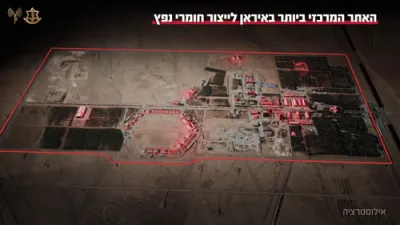
- Unlikely, the available reporting supports a confident conclusion that a new US or Israeli strike on Isfahan occurred or establishes which forces took part. Low-reliability blog posts claim an IDF strike on a primary explosives plant and other military sites, describe more than 120 precision munitions, and characterise the operation as part of a broader US-Israeli campaign. The claims are uncorroborated in the provided reporting and do not resolve US participation. (Confidence: low · REPORTED)
- I&W: Confirm: independently geolocated imagery shows damage at the reported Isfahan explosives plant or other named military sites. (0-14 days)
- I&W: Break: an on-record US or Israeli statement, or independently verifiable reporting, establishes that the reported operation did not occur or attributes it differently. (0-14 days)
Outlook & scenarios
Continued maritime attrition with partial export recovery (55%)
Over the next 1-3 months, attacks and threats keep commercial shipping through Hormuz risky. Gulf crude exports remain above their August levels, while LNG and refined fuel exports recover more slowly. QatarEnergy’s carrier positioning produces limited or delayed loaded transits rather than a rapid return to pre-war LNG volumes.
Managed shipping improvement through mediation (25%)
Qatar sustains US-Iran contacts and the parties reach limited arrangements that allow more commercial traffic. QatarEnergy carriers begin loaded voyages through Hormuz, and reported LNG departures rise. This scenario requires progress on the conditions Iran linked to reopening the Strait; current reporting does not show that agreement.
Houthi operations widen the Yemen and Saudi front (15%)
Houthi attacks affecting Aden International Airport and claims against Saudi targets continue as Yemeni government forces, with Saudi-led coalition air support, contest territory near Bab el-Mandeb and Mocha. Further airport disruption or missile interceptions add pressure to shipping and aviation in Yemen and Saudi Arabia.
High-impact wildcard: verified direct strikes on Iranian military sites (5%)
A verified US or Israeli strike on Iranian military infrastructure prompts further Iranian action against shipping or Gulf targets. This is a low-probability, high-impact scenario. The Isfahan claims remain uncorroborated, and the available reporting does not establish a new strike order.
Recommendations
- Maintain a single Hormuz incident log that separates incident date from report date. Keep the On Peace strike, the Greek-owned LNG carrier report and UKMTO’s other unknown-projectile warnings as separate events until vessel identity, casualty figures and timing are reconciled.
- For the next 14 days, track Yemen Transport Ministry reports of Aden airport disruption alongside Saudi reports of missile interceptions. Record the reported location, weapon and source for each incident, and do not treat Houthi target claims as confirmed Saudi impacts.
- Track the 12 QatarEnergy carriers by vessel and status. Report empty vessels waiting, LNG loading and completed Hormuz transits separately so that capacity positioned in the Gulf is not mistaken for delivered cargo.
- Monitor public statements from Qatar, the US and Iran for whether mediation addresses Iran’s stated linkage between reopening Hormuz, the US blockade of Iranian ports and sanctions on Iranian oil.
- Keep the Isfahan strike claims unverified in reporting until independently geolocated imagery or an on-record US or Israeli statement establishes the operation and attribution.
Confidence & uncertainty
Overall confidence is medium. IMO reporting, UKMTO incident notices and shipping data attributed to Kpler, Vortexa and Bloomberg support the scale of maritime risk and the September export rebound. Some reports are republished through the same reporting chain, and the recent attack count, responsibility for individual strikes, casualty details and Houthi target claims remain unsettled. The Isfahan claims come from low-reliability blogs and lack independent corroboration.
Alternative analysis (red cell)
The empty QatarEnergy carriers demonstrate preparedness for possible future LNG movements, but they do not by themselves establish an intention to increase exports. With LNG traffic still about 75 percent below February levels (4582dd46-c9e5-4782-a6ec-5d9014c2ea56) and the underlying claim describing the preparation only as potential (7c300011-5b0f-4587-ae49-2a0623cd7b55), the more defensible reading is that Qatar is preserving options rather than clearly positioning for higher near-term exports.
Intelligence gaps
- [EEI 1.1 · PARTIAL] Unusual long-range missile/rocket transporter-launcher (TEL) movements, storage activation, or assembly activity at known IRGC missile sites or forward staging areas. Recommended collection: satellite/imagery
- [EEI 1.2 · UNCOVERED] Orders, threat-alert messages, or changes in posture from IRGC, Quds Force, or senior Iranian military leadership indicating attack timelines or rules of engagement changes. Recommended collection: signals/ELINT and HUMINT
- [EEI 1.3 · UNCOVERED] Large-scale transfers, deliveries, or convoy movements of armed UAVs/drones, guided munitions, or spare parts from Iran into Lebanon (Hezbollah), Iraq, Syria, or Gaza. Recommended collection: air/aviation track and HUMINT
- [EEI 1.4 · UNCOVERED] Sustained changes in Israeli air-defense usage (SAM launches, radar activations), wide-area alerts, or NOTAMs indicating elevated imminent strike response. Recommended collection: air/aviation/NOTAMs and signals
- [EEI 2.1 · UNCOVERED] Concentration, repositioning, or sortie patterns of Iranian naval/IRGC patrol boats and fast-attack craft near shipping chokepoints or commercial lanes. Recommended collection: maritime/AIS and satellite/imagery
- [EEI 2.3 · PARTIAL] Insurance market indicators: sudden spikes in war-risk or hull insurance premiums for routes through the Red Sea, Suez corridor, or Persian Gulf, and major carriers announcing route changes. Recommended collection: financial/market and commercial shipping notices
- [EEI 2.4 · PARTIAL] Port closures, naval escorts requested by commercial operators, or formal rerouting advisories issued by major shippers (e.g., Maersk, Hapag-Lloyd) for regional transits. Recommended collection: commercial/OSINT
- [EEI 3.1 · UNCOVERED] Deployment of foreign military assets to the region (carrier strike groups, amphibious ships, combat aircraft deployments, or additional bases activated) from the US, UK, France, Russia, or GCC states. Recommended collection: maritime/AIS and air/aviation and satellite/imagery
- [EEI 3.2 · PARTIAL] Formal diplomatic actions: emergency UNSC votes, sanctions announcements, high-level ministerial visits, or public mediation offers by external powers or regional actors. Recommended collection: diplomatic/OSINT
- [EEI 3.3 · UNCOVERED] Confirmed arms transfers, expedited weapons shipments, or transfer authorizations to Israel, Iran, or their proxies (aircraft parts, munitions, air defenses). Recommended collection: customs/INTEL and HUMINT
- [EEI 3.4 · UNCOVERED] Issuance of travel warnings, embassy evacuations or reductions, and closure of diplomatic missions by major capitals indicating escalation risk or shifted threat assessments. Recommended collection: OSINT/diplomatic
Cited sources
[1] gCaptain · IMO Chief Decries Rising Toll on Seafarers Caught in Conflict (C) · 6 October 2026 · sha256:206e12392858 [2] The Maritime Executive · Saudi Bypass Pipeline Quickly Rebounded After Attack, Export Data Shows (C) · sha256:35f4b3aaa01d [3] gCaptain (republishing Bloomberg News) · Qatar Brings Empty LNG Ships Into Gulf in Potential Export Boost (A) · 7 October 2026 · sha256:6899ab11e3b4 [4] gCaptain · A Dozen Seafarers Injured in Strait of Hormuz Tanker Attack, India Says (C) · 6 October 2026 · sha256:629eca54ff54 [5] Reuters (republished by gCaptain) · Houthis Attack Aden Airport as Fighting Intensifies in Yemen (A) · 7 October 2026 · sha256:c4b134e799e6 [6] Defence24 · Gulf security with Iran: What is Qatar proposing? (C) · 7 October 2026 · sha256:bb87a9124cf2 [7] gCaptain (republishing Thomson Reuters reporting) · Gulf Oil Flows Rise to Average 81% of Pre-war Rate in September (B) · 6 October 2026 · sha256:6cde5a909a33 [8] Inter Press Service / Global Issues (featuring Open Society Foundations) · Prioritize Multilateralism to Resolve Iran War Deepening Humanitarian Crisis, Says OSF Vice President (C) · 6 October 2026 · sha256:b0c8ff2198f2 [9] ABL.news (ahblicklive.com) · IAF Hits Missile Sites and Weapons Factories With Precision Munitions oin Iran. - ABL.news (E) · sha256:871c01391ef7
Source content hashes were computed at collection time; the cited text is preserved unmodified for the life of this product.
Red cell review: PARTIAL DISSENT
TLP:CLEAR