TLP:CLEAR · Disclosure is not limited.
Iran-Israel Conflict: Renewed Strike Planning and Hormuz Risks
Time window: Last 1 day · Audience: General analyst · Type: Situation report · DTG: 2026-10-19 18:41Z · Overall confidence: MEDIUM
BLUF
Reports of US-Israeli planning for a new operation raise the near-term risk of strikes on Iran, but do not establish that an attack has been authorised. Disruption in the Strait of Hormuz and unresolved US-Iran negotiating conditions remain the clearest regional pressure points.
Executive summary
US media reports say the Pentagon has drawn up plans for renewed attacks on Iran and that Donald Trump and Benjamin Netanyahu discussed a major operation ahead of elections in both countries. This reporting establishes planning and discussion, not a decision. Sergei Lavrov arrived in Tehran on 19 October and met Abbas Araghchi, while Iran restated its conditional offer to reopen the Strait of Hormuz. The offer's reported six- or seven-day timetable differs across accounts, and US demands concerning Iran's nuclear programme remain at odds with Tehran's stated conditions. Reports also conflict over whether Hormuz is effectively shut or disrupted but still carrying some crude exports. The cause of a reported tanker fire is unresolved. GCC foreign ministers reported continuing Iranian missile and drone attacks on GCC states and Jordan; separately, the Houthis claimed a missile attack in Shabwa, Yemen.
Change from previous assessment
Since the 18 October brief, reporting that the Pentagon drew up plans for renewed attacks and that Trump and Netanyahu discussed a major operation raises the assessed risk of US-Israeli action before elections; it does not establish a decision. Lavrov's arrival in Tehran and Araghchi's renewed Hormuz offer add diplomatic activity, but no agreement is reported. The prior judgement that an Iranian attack on Israel was unlikely is not materially revised: the new Isfahan launch reports are uncorroborated and are assessed as likely drills.
Key judgments
- A renewed US-Israeli strike on Iran before the Israeli election on 27 October is roughly even chance. Several US media outlets report Pentagon planning, and Axios, citing US and Israeli officials, reports that Trump and Netanyahu discussed a major operation ahead of elections in both countries. Trump's 18 October warning adds public pressure, but the reporting establishes planning and discussion, not authorisation. Accounts also differ on whether the conflict is at a standstill or continues in other forms. (Confidence: medium · ASSESSED)
- I&W: Confirm: the White House, Pentagon or Israeli government publicly states that an operation against Iran has been authorised, or verified reporting records US or Israeli strikes in Iran. (0-14 days)
- I&W: Break: the White House or Israeli government publicly rules out action before 27 October and announces a dated US-Iran negotiating session. (0-14 days)
- The reported launches in western Isfahan are likely a continuation of IRGC missile drills, not evidence of an imminent attack. This judgement rests on low-reliability social-media reports: Iranian authorities have not confirmed the nature of the launches, and there is no independent corroboration. Confidence is low. (Confidence: low · ASSESSED)
- I&W: Confirm: Iranian authorities identify the western Isfahan launches as part of an IRGC drill. (0-14 days)
- I&W: Break: independently verified evidence links the launches to a missile flight directed at Israel or to an operational attack order. (0-14 days)
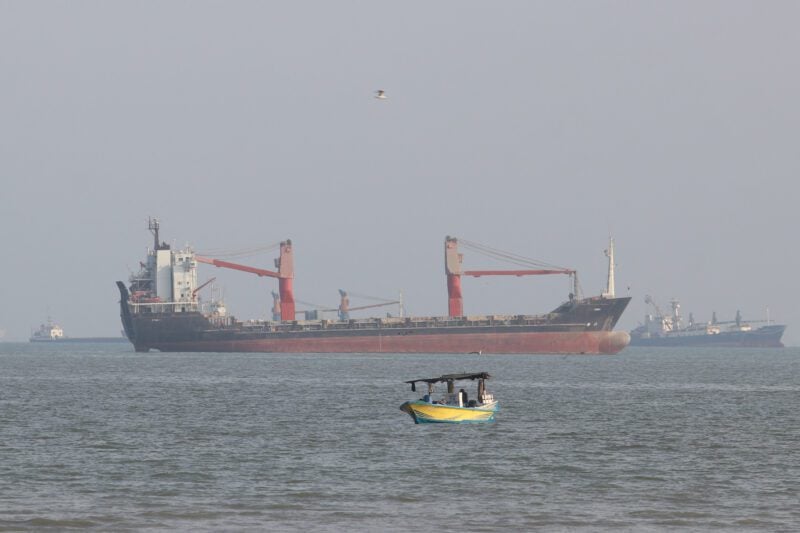
- Commercial access through the Strait of Hormuz is likely to remain severely disrupted over the next 30 days, but the evidence does not establish a complete closure. One account describes the strait as effectively shut, while another reports that Iranian attacks have again hit crude exports. Iran's reopening offer remains conditional on US concessions. The cause of a fire aboard an unnamed tanker is unresolved: the IRGC Navy attributed it to a naval mine, while a separate report described a strike; attribution remains unconfirmed. (Confidence: medium · ASSESSED)
- I&W: Confirm: ship-tracking data show continued interruptions to commercial Hormuz transits, or UKMTO reports another specific vessel incident in the strait. (0-30 days)
- I&W: Break: ship-tracking data show regular commercial transits through Hormuz for seven consecutive days and Iran or the US announces an end to the relevant restrictions. (0-30 days)
- A US-Iran agreement to reopen Hormuz or end hostilities is unlikely within 30 days. Tehran says negotiations have stalled and has conditioned reopening on lifting the US blockade on Iranian ports, sanctions on Iranian oil exports and hostilities on regional fronts. Washington has insisted on addressing Iran's nuclear programme and has demanded a reduction in uranium enrichment capacity. Lavrov's 19 October meetings in Tehran provide a diplomatic channel, but the reported visit produced no reported US-Iran agreement. (Confidence: medium · ASSESSED)
- I&W: Confirm: Tehran repeats its stated blockade, sanctions and regional-hostilities conditions while Washington reiterates its uranium-enrichment demand without announcing a compromise. (0-30 days)
- I&W: Break: Washington publicly accepts Tehran's stated reopening conditions and both sides publish a dated timetable for reopening Hormuz and resuming talks. (0-30 days)
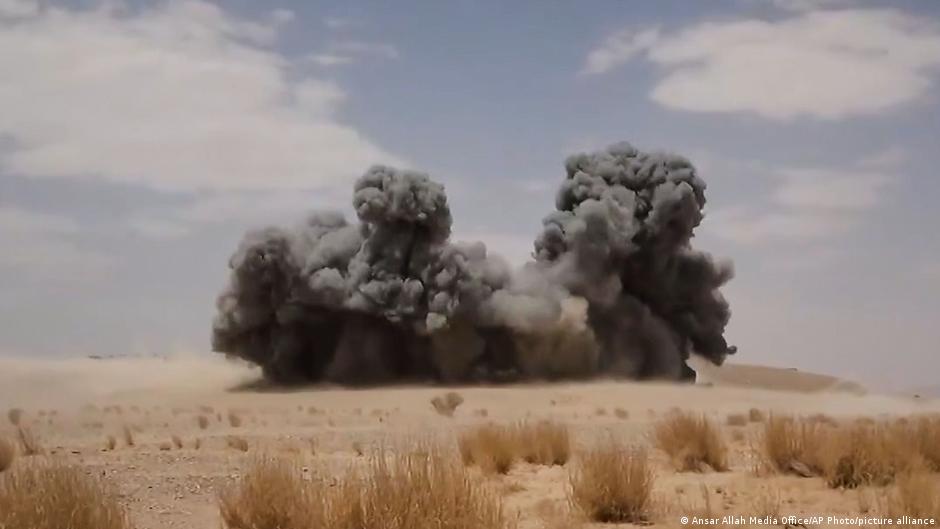
- Regional security spillover is likely to continue over the next 30 days. GCC foreign ministers on 18 October condemned what they described as continuing Iranian missile and drone attacks on GCC states and Jordan. Separately, the Houthis claimed responsibility for firing three ballistic missiles at Al-Alam camp in Shabwa on 19 October; local authorities reported more than 53 people killed and more than 200 wounded. These reports point to activity across several fronts but do not establish Iranian direction of the Houthi attack. (Confidence: medium · ASSESSED)
- I&W: Confirm: GCC foreign ministers or national authorities report another named missile or drone attack on a GCC state or Jordan, or local authorities report another Houthi missile attack in Yemen. (0-30 days)
- I&W: Break: GCC authorities report a halt in the attacks and no further named missile or drone incidents are reported in GCC states, Jordan or Yemen during the period. (0-30 days)
Outlook & scenarios
Operational standstill, continued maritime pressure (45%)
The US and Israel do not launch a new operation before the Israeli election. Public threats and negotiation over Hormuz continue, but the US-Iran positions remain incompatible and commercial access through the strait stays disrupted. This is likely given the absence of reported authorisation and the stated conditions on both sides.
Renewed US-Israeli strikes (40%)
The US and Israel launch a new operation against Iran before the Israeli election or US midterms. Iran responds with military action or renewed pressure on regional shipping, increasing the chance of further attacks affecting Gulf states. The reported Pentagon planning and Trump-Netanyahu discussion make this a roughly even chance, not a confirmed course of action.
Conditional diplomatic opening (10%)
The Lavrov-Araghchi meetings help establish a route to further talks, and Washington and Tehran accept a limited timetable for reopening Hormuz. A broader agreement remains unlikely because their stated positions on the blockade, regional hostilities and Iran's nuclear programme differ.
Wildcard: disputed tanker incident triggers escalation (5%)
A future investigation or official statement attributes the unnamed tanker fire to a deliberate attack, prompting direct retaliation or new restrictions on Hormuz shipping. This is unlikely on the present evidence, but it would have high regional impact because the cause and attribution of the reported fire remain contested.
Recommendations
- Maintain separate assessments for reported strike planning, confirmed authorisation and actual strike activity. Prioritise updates through the Israeli election on 27 October and continue monitoring ahead of the US midterms.
- Track Hormuz status using UKMTO reporting and ship-tracking data. Record confirmed vessel movements and incidents separately from claims by the IRGC Navy or other parties.
- Keep Iran's stated reopening conditions and US demands on uranium enrichment in a negotiation tracker. Update the outlook only when either side announces a change in position or a dated negotiating session.
- Separate GCC allegations of Iranian attacks from the Houthi claim concerning Al-Alam camp. Do not infer Iranian direction of that attack without corroborating evidence.
- Seek independent confirmation of the Isfahan launches and tanker-fire attribution before using either event to revise warning assessments.
Confidence & uncertainty
The reporting includes official government statements, major-media accounts and wire-service reporting, which support several core developments. Confidence is limited because reporting on US-Israeli strike planning does not establish authorisation, descriptions of the conflict and Hormuz status differ, and the tanker-fire attribution is unresolved. The Isfahan launch reports rely on low-reliability social media and lack official confirmation.
Intelligence gaps
- [EEI 1.1 · UNCOVERED] Observed repositioning, sustained increases, or new forward basing of Iranian conventional or IRGC forces (armored units, missile batteries, aircraft, naval vessels) toward borders or regional launch points. Recommended collection: IMINT/satellite
- [EEI 1.4 · UNCOVERED] Interdicted or observed shipments (air, sea, land manifests, seizures, satellite imagery of transfers) of advanced weapons or missile components from Iran toward proxy groups or forward staging points. Recommended collection: maritime/AIS
- [EEI 2.1 · UNCOVERED] Satellite or on-the-ground imagery showing fires, damage, or operational shutdown at major oil export facilities, refineries, storage terminals, or key pipeline infrastructure in the Gulf and Red Sea. Recommended collection: IMINT/satellite
- [EEI 2.4 · UNCOVERED] Rapid increases in war-risk insurance premiums for Middle East routes, shipping company advisories to avoid region, or major charter cancellations tied to the conflict. Recommended collection: financial/open-source
- [EEI 3.1 · UNCOVERED] Movement/arrival of major foreign military assets into the region: US carrier strike groups, amphibious ready groups, strategic bomber flights, Russian/Chinese naval taskings, or allied expeditionary units (visible in AIS, NOTAMs, satellite imagery, official releases). Recommended collection: IMINT/satellite
- [EEI 3.2 · UNCOVERED] Official expedited arms transfers, basing/overflight agreements, or declarations of operational support (formal government announcements, defense ministry releases, logistics flight manifests). Recommended collection: open-source/diplomatic
- [EEI 3.3 · PARTIAL] Embassy evacuations, large-scale personnel movements, issuance of government travel bans/advisories, or multinational security alerts affecting foreign nationals and diplomatic posture in the region. Recommended collection: diplomatic/open-source
Red cell review: CONCUR WITH COMMENT
TLP:CLEAR