TLP:CLEAR · Disclosure is not limited.
Iran-Israel Conflict: Reported Exchanges and Regional Spillover
Time window: Last 1 day · Audience: General analyst · Type: Situation report · DTG: 2026-10-14 12:39Z · Overall confidence: LOW
BLUF
Iran-Israel exchanges and regional spillover remain active in the reporting, but accounts of strikes on Tehran and a new US-Israeli attack plan are unverified or contested. The clearest immediate risks are further disruption to Strait of Hormuz shipping and continued Houthi-Saudi exchanges.
Executive summary
On 14 October, Israeli emergency services reported six injuries from an Iranian bombardment in central Israel, while Israeli media reported missile fragments at several locations. Iran's Fars news agency separately reported American-Israeli strikes in Tehran, without independent corroboration in the supplied reporting. In Riyadh, Saudi Civil Defense reported injuries and residential damage from missile debris; the Houthis also threatened further attacks on Saudi airports and oil facilities. UKMTO reported two merchant-shipping attacks in the Strait of Hormuz, and the reported fate of a cargo ship said to have struck a mine remains unclear. Reporting on possible US-Israeli strike discussions conflicts with an explicit White House denial.
Change from previous assessment
Since the 13 October brief, reporting adds claims of Iranian bombardment injuries in central Israel, reported American-Israeli strikes in Tehran, an Iranian claim that air defences destroyed an MQ-9 in Isfahan, and Saudi reports of missile debris injuries and residential damage in Riyadh. The Strait of Hormuz reporting now includes a cargo ship said to have struck a mine, but its final condition remains uncertain. The prior assessment of continued shipping risk remains. The assessment of a pre-midterm US-Israeli strike remains unlikely and low confidence; the explicit White House denial is a new counterclaim to reports of strike discussions.
Key judgments
- Iran-Israel exchanges are likely to remain active over the next 0-14 days. Israeli emergency services reported six injuries from an Iranian bombardment in central Israel, and Israeli media reported cluster-missile fragments at ten locations and in Bnei Brak. Iran's Fars news agency reported American-Israeli strikes in several areas of Tehran, but the supplied reporting does not independently corroborate that account. Iran also announced that its army air defence forces destroyed an MQ-9 drone in Isfahan. The likelihood assessment rests on separate reports, many based on official statements, rather than a verified chronology of the exchanges. (Confidence: low · ASSESSED)
- I&W: Confirm: Israeli emergency services or the Israeli military report a new, dated Iranian missile impact or injury in central Israel, or the UAE Defence Ministry reports another engagement with missiles or drones launched from Iran. (0-14 days)
- I&W: Break: Iranian and Israeli authorities announce a cessation of attacks, with no new missile or air-defence incident reported by either side for 14 consecutive days. (0-14 days)
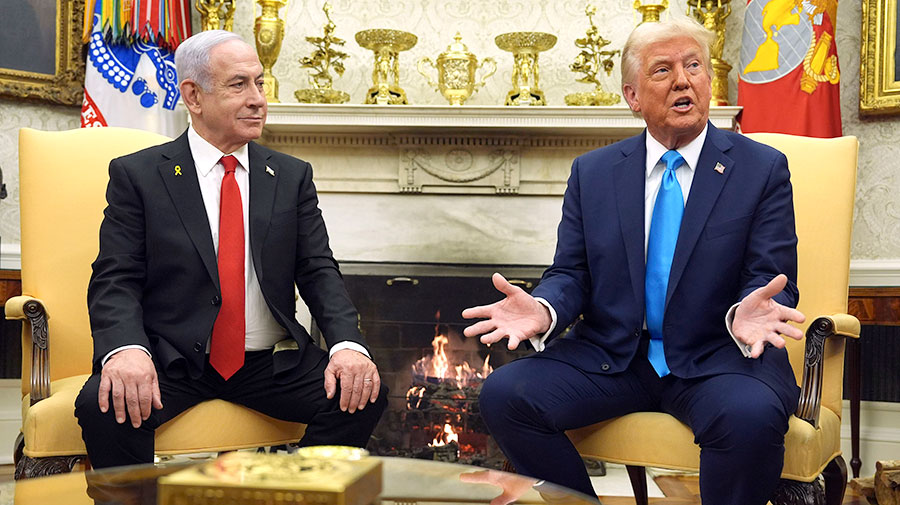
- A new US-Israeli strike on Iran before the US midterm elections is unlikely on the supplied evidence. Reports citing senior US and Israeli officials describe discussions about a possible joint strike, while a White House official called reports of renewed war discussions false and said Trump would not attack Iran before the midterms. Trump's warning that a decision on Iran was coming soon does not establish authorisation or an operational plan. The reporting is directly contested and includes anonymous-source and local-media accounts, so confidence remains low. (Confidence: low · ASSESSED)
- I&W: Confirm: The White House or Israeli government publicly authorises a strike on Iran, or US or Israeli forces officially confirm an operation against Iranian targets. (0-20 days, through 3 November)
- I&W: Break: The White House reiterates that the US will not attack before the midterms, and no US or Israeli strike on Iran is officially confirmed by 3 November. (0-20 days, through 3 November)
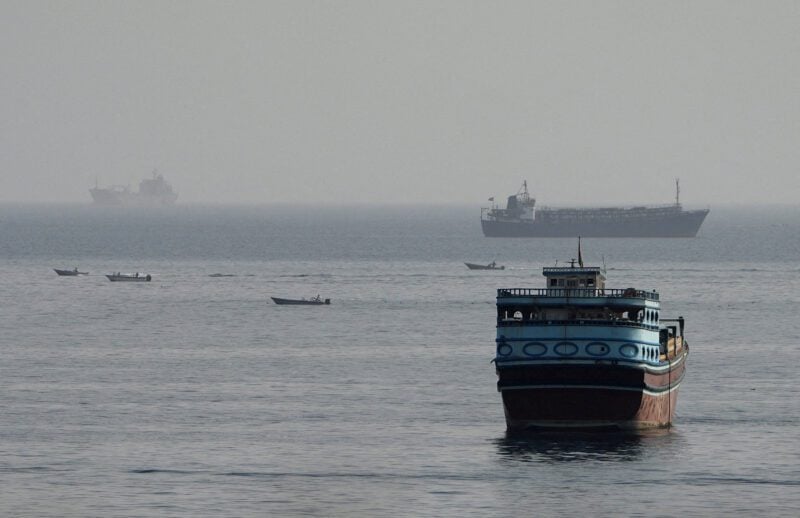
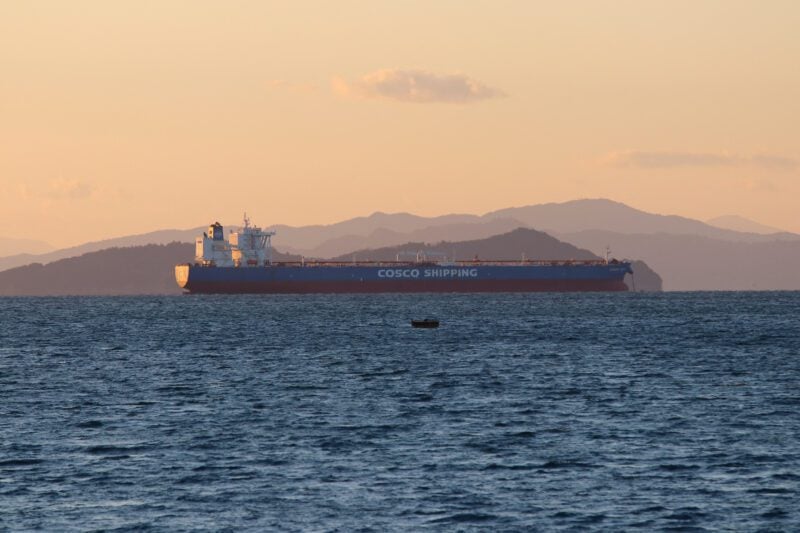
- Commercial shipping in the Strait of Hormuz is likely to face further attack and routing disruption over the next 0-14 days. UKMTO reported two attacks on merchant ships north of the Musandam Peninsula, and tanker-tracking data compiled by Bloomberg showed at least ten very large crude carriers and several Suezmax vessels stopping or reversing near Fujairah. Two Iranian officials told Reuters that Iran had changed its attack approach. Attribution of individual attacks remains unresolved, and the reports do not establish that every incident was part of the same campaign. UKMTO reporting, Reuters interviews and tanker-tracking data support the risk assessment, but do not settle attribution. (Confidence: medium · ASSESSED)
- I&W: Confirm: UKMTO reports another attack on a merchant vessel in the Strait of Hormuz, or tanker tracking shows additional large crude carriers stopping or reversing on approach to Fujairah. (0-14 days)
- I&W: Break: UKMTO reports no new Strait of Hormuz attacks for 14 days and tanker tracking shows at least ten very large crude carriers complete their approach to Fujairah without stopping or reversing. (0-14 days)
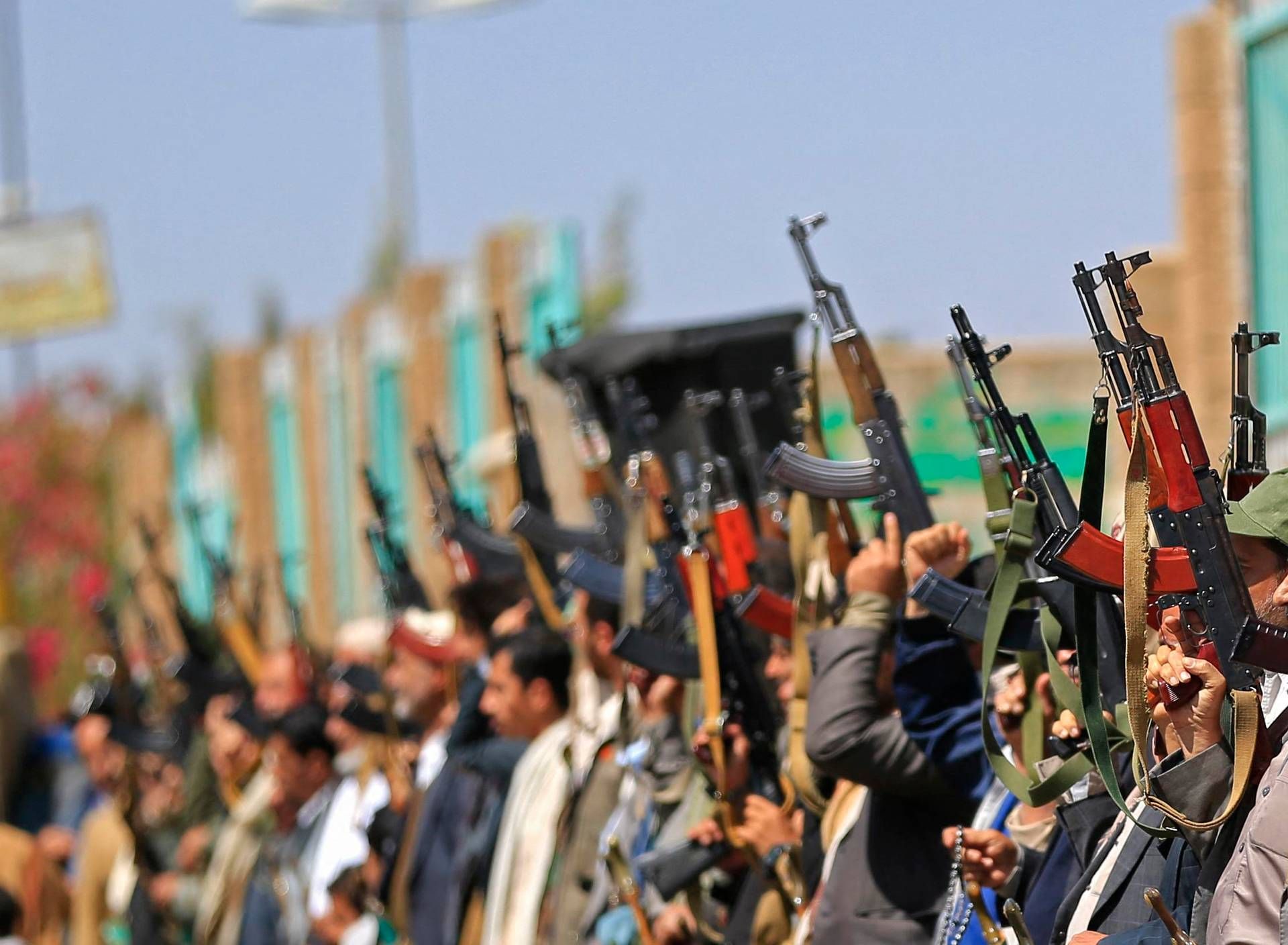
- The Houthis are likely to continue attacks on Saudi airports and oil infrastructure over the next 0-14 days. On 14 October, Saudi Civil Defense reported four injuries and damage to 15 residential buildings from debris after two cruise missiles were intercepted over Riyadh. The Saudi-led coalition separately said it intercepted a Houthi ballistic missile aimed at Riyadh. The Houthis claimed to target King Khalid International Airport and Aramco facilities in Dhahran and Riyadh, and threatened further attacks. The likelihood assessment draws on Saudi and Houthi statements and wire reporting; the separate accounts do not verify every claimed target or attribution. (Confidence: medium · ASSESSED)
- I&W: Confirm: Saudi authorities report a new missile interception or damage at King Khalid International Airport, or the Houthis issue a new claim of an attack on a named Saudi Aramco facility. (0-14 days)
- I&W: Break: Saudi authorities and Houthi channels report no new cross-border launch, interception or strike for 14 consecutive days. (0-14 days)
- The final condition of the cargo ship reported to have struck a mine in the Strait of Hormuz is unconfirmed. The IRGC Navy reported that the ship sank; Iranian state television reporting instead described a fire and said the vessel was carrying 2,500 containers. These accounts do not establish whether the ship sank after catching fire. Reporting from Iranian sources alone does not provide independent confirmation of the vessel's identity or final condition. (Confidence: low · REPORTED)
- I&W: Confirm: An independent maritime authority, flag-state authority or rescue operator identifies the vessel and confirms that it sank after striking a mine. (0-14 days)
- I&W: Break: A named authority identifies the vessel and confirms it remained afloat or was recovered after the reported fire. (0-14 days)
Outlook & scenarios
Continued exchanges with limited expansion (60%)
Iran-Israel missile and air-defence activity continues, alongside Houthi-Saudi exchanges and attacks or routing disruption in the Strait of Hormuz. No new US-Israeli strike on Iran is confirmed before the midterm elections.
High-impact strike and retaliation (15%)
A new US-Israeli strike on Iran is followed by Iranian ballistic-missile retaliation against Israel and Gulf targets. Shipping risk in the Strait of Hormuz rises as the conflict expands. This is a high-impact wildcard given the disputed reporting on strike discussions and the reported projection of a large Iranian missile response.
Diplomatic pause (30%)
Iran responds to the US proposal being discussed by Qatari mediators, and diplomatic engagement reduces the immediate risk of a new strike. Missile and shipping incidents decline, while the Saudi-Houthi confrontation remains unresolved.
Recommendations
- Maintain a dated incident log that separates official claims, third-party observation and confirmed physical effects. Keep the Strait of Hormuz cargo ship's identity and final condition marked as unconfirmed until an independent maritime authority or flag-state authority verifies them.
- Treat reports of US-Israeli strike discussions and the White House denial as competing evidence. Do not describe a new strike as decided without public authorisation or official confirmation of an operation.
- Track UKMTO incident reports north of the Musandam Peninsula alongside tanker movements approaching Fujairah. Record vessel counts, route reversals and any change in US military ship-routing guidance off Oman.
- Track Houthi claims about King Khalid International Airport and Aramco facilities separately from Saudi reports of missile interceptions and strikes in Yemen. Escalate confirmed damage to Saudi energy infrastructure or civilian casualties for regional-risk review.
- Monitor whether Iran responds to the US proposal through Qatari mediators, but do not treat a response alone as evidence that military activity has stopped.
Confidence & uncertainty
Overall confidence is low because several central claims rely on official statements or single reports, including Fars's account of strikes in Tehran and Iranian reporting on the cargo ship in the Strait of Hormuz. The White House denial directly conflicts with reports citing US and Israeli sources about strike discussions. Wire and maritime reporting supports the existence of shipping attacks and Houthi-Saudi exchanges, but attribution, incident sequence and some reported effects remain unresolved.
Alternative analysis (red cell)
The available reporting supports continued Iranian-Israeli activity, but the evidence is fragmentary and partly claims-based. For the US strike forecast, senior-level discussions and Trump's statement that a decision was imminent may indicate a live option rather than an unlikely one, despite the White House denial. The timing and probability of action remain unresolved because no evidence establishes authorization or an operational plan.
Intelligence gaps
- [EEI 1.1 · UNCOVERED] Number, type, launch times, and trajectories of ballistic missiles, cruise missiles, armed UAV strikes, and combat-air sorties launched by Iranian or Israeli forces toward the other's territory or forward bases within a 72-hour window. Recommended collection: signals/intel
- [EEI 1.2 · UNCOVERED] Observable changes in Israeli and Iranian force posture: mobilization or reserve call-up orders, unit road/rail movements, dispersal or sortie rates of air squadrons, redeployment of air-defense batteries, and activation of civil-defense alerts or sirens in major population centers. Recommended collection: open-source/media
- [EEI 1.3 · PARTIAL] Indications of strike authorization or targeting preparations in Iranian or Israeli command chains: authenticated public orders by senior commanders, detected increases in encrypted communications consistent with targeting, or visible movement of strike munitions to launch/storage sites. Recommended collection: signals/intel
- [EEI 2.1 · UNCOVERED] Counts, launch locations (coordinates), weapons types, and assessed damage from rocket/missile/drone strikes originating from Lebanon into northern Israel attributed to Hezbollah or allied groups. Recommended collection: open-source/media
- [EEI 2.2 · UNCOVERED] Reported attacks by Iranian-backed militias in Iraq and Syria: rocket/IED strikes on bases hosting US/coalition or Israeli personnel, documented militia unit movements toward borders, and captured movement or transfer of weapons systems to forward militia positions. Recommended collection: human
- [EEI 2.3 · PARTIAL] Maritime harassment or attacks by proxies (e.g., Houthis): incidents of missile/rocket strikes against commercial vessels, small-boat swarm attacks, discovery or detonation of naval mines, and corresponding AIS anomalies in the Red Sea, Gulf of Aden, or southern Arabian Gulf. Recommended collection: maritime/AIS
- [EEI 3.1 · UNCOVERED] Movements and arrival dates of foreign military assets into the region: carrier strike groups, amphibious ships, surface combatants, strategic airlift/tanker deployments, and air/sea patrol patterns by US, European, Russian, or regional militaries. Recommended collection: imagery/satellite
- [EEI 3.2 · PARTIAL] Concrete diplomatic and political actions: emergency UN/Arab League meetings called, official embassy evacuation orders, public declarations of intent to interpose or protect shipping/airspace, and newly announced sanctions or arms-transfer approvals tied to the conflict. Recommended collection: diplomatic
Cited sources
[1] Arabi21 · اليوم في صفحة - الصفحة (B) · sha256:4d8daf861ea9 [2] Online Khabar · चुनावअघि इरानमाथि पुनः ठूलो सैन्य हमला गर्ने विषयमा ट्रम्प र नेतान्याहुबीच छलफल भएको हो ? (D) · sha256:dcba13191e63 [3] The Maritime Executive · Iran Lodges IMO Protest Over US Use of Channel 16 for Military Intimidation (C) · sha256:7cd746b8874c [4] The Maritime Executive · Two More Ship Strikes Reported in the Strait of Hormuz (C) · sha256:3ccba7395f33 [5] gCaptain (republishing Bloomberg) · Supertankers Turn From Gulf Oil Transfer Hub Amid Iran’s Attacks (C) · 13 October 2026 · sha256:567c13e0856f [6] Adnkronos · Houthi, nuove minacce all'Arabia Saudita. I siti nel mirino e la denuncia: "Morti e feriti tra i civili per raid in Yemen" (B) · 14 October 2026 · sha256:6cb664d5e474 [7] Reuters (republished by gCaptain) · Saudi Arabia Strikes Houthi Targets as Red Sea War Escalates (A) · 13 October 2026 · sha256:10baa4722e3c [8] ClickOnDetroit (WSB, Graham Media Group), republishing Associated Press · Iran says a ship sank after striking a mine in Strait of Hormuz, and other Middle East developments (C) · 14 October 2026 · sha256:4913ba1884d9
Source content hashes were computed at collection time; the cited text is preserved unmodified for the life of this product.
Red cell review: PARTIAL DISSENT
TLP:CLEAR