TLP:CLEAR · Disclosure is not limited.
Iran-Israel Conflict: Retaliation Threat and Regional Spillover
Time window: Last 1 day · Audience: General analyst · Type: Situation report · DTG: 2026-10-16 17:10Z · Overall confidence: HIGH
BLUF
The latest reporting raises the risk of renewed direct Iran-Israel action: the IRGC announced a large-scale retaliatory operation, but the reporting does not confirm that it was carried out. Commercial shipping in the Strait of Hormuz remains under severe threat, while reporting on possible US MOAB plans does not establish authorisation.
Executive summary
A 16 October report said the IRGC announced a large-scale operation targeting Israel. Reporting also describes attacks on US military facilities in Bahrain, Jordan, Iraq, Qatar, Kuwait, the UAE, Saudi Arabia and Syria, but gives no incident dates or attribution. In the Strait of Hormuz, JMIC documented eight projectile attacks on 11 and 13 October; the Singapore-flagged GFS PRIDE sank after a projectile strike, and the PETRO DOLPHIN was attacked near Sohar, Oman, leaving two crew members missing. US MOAB strike reporting remains conditional and contested. Separate reports of West Bank violence also contain conflicting accounts of events near Abu Falah.
Change from previous assessment
Since the 15 October brief, reporting has added an IRGC announcement of a large-scale operation targeting Israel, raising the assessed likelihood of renewed direct action; no claim confirms that it was carried out. The MOAB issue has shifted from a thinly sourced report of Pentagon contingency planning to competing descriptions of conditional plans and an alleged post-3 November White House plan, but authorisation remains unestablished. Maritime concern is now supported by reporting of eight projectile attacks on 11 and 13 October and the 15 October attack on the PETRO DOLPHIN, alongside the earlier GFS PRIDE sinking.
Key judgments
- The IRGC announcement makes renewed direct Iran-Israel action likely within the next 14 days, but the reporting confirms an announced operation, not its launch or impact. Confidence is low because the announcement rests on a single wire-service report and no incident-level confirmation is provided. (Confidence: low · ASSESSED)
- I&W: The IRGC or Israeli military reports launches and impacts from a new Iran-Israel exchange. This would confirm that the announced operation was carried out. (0-14 days)
- I&W: The IRGC publicly withdraws or cancels its announced operation before any launch or impact is reported. This would weaken the assessment of near-term direct action. (0-14 days)
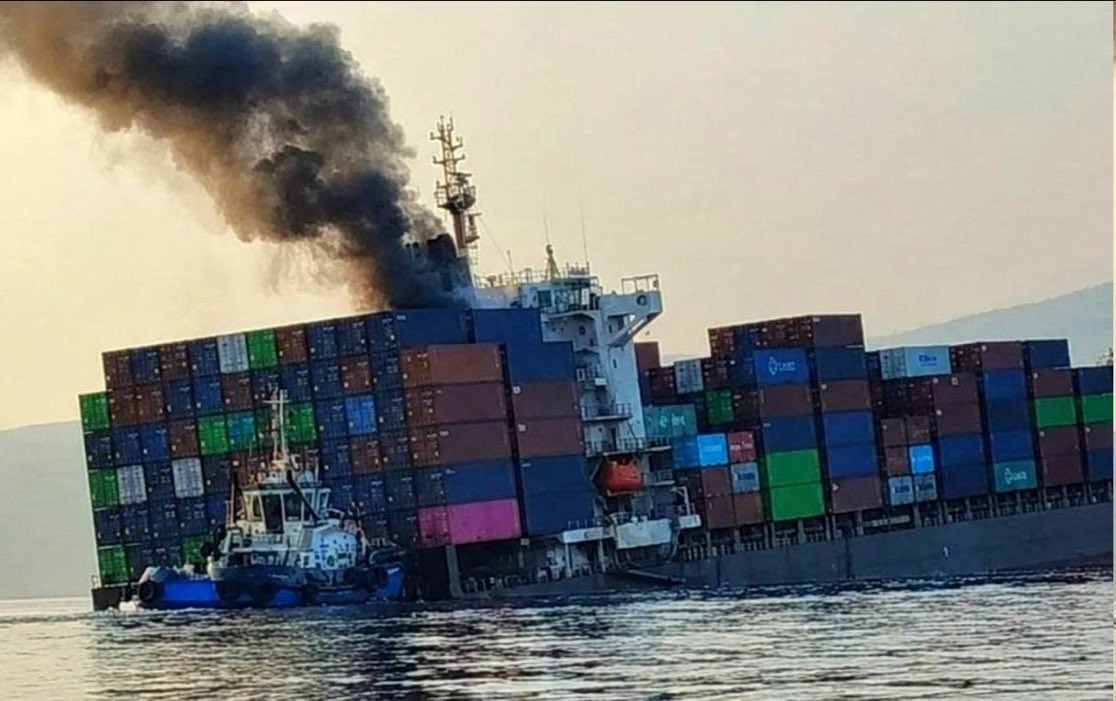
- Further deliberate attacks on commercial vessels in the Strait of Hormuz are likely within the next 14 days. JMIC documented eight projectile attacks on four tankers and four containerships on 11 and 13 October; the GFS PRIDE was struck on 13 October and sank on 14 October, and the PETRO DOLPHIN was attacked near Sohar on 15 October, leaving two crew members missing. JMIC maintained its SEVERE threat assessment, while CENTCOM said the US and regional partners controlled the strait and reported more than 40 commercial transits in 24 hours. Confidence is medium: reporting documents multiple incidents, but attacker attribution and the security picture remain contested. (Confidence: medium · ASSESSED)
- I&W: JMIC records another confirmed projectile attack on a commercial vessel in the Strait of Hormuz. This would confirm the near-term attack assessment. (0-14 days)
- I&W: JMIC downgrades the Strait of Hormuz threat below SEVERE and reports no further confirmed hostile vessel incidents. This would break the assessment. (0-14 days)
- A US-authorised MOAB strike against Iran is unlikely in the next 14 days, and the reporting does not establish that Trump has authorised one. One account describes Pentagon contingency plans for possible strikes on Iranian energy and nuclear infrastructure if Trump authorises renewed attacks; another describes a White House plan after 3 November. Trump did not clarify whether he had authorised MOAB use. Confidence is low because the accounts offer different descriptions of the planning and there is no reported authorisation. (Confidence: low · ASSESSED)
- I&W: The White House or Pentagon publicly confirms authorisation for GBU-43/B use or a strike on Iranian energy or nuclear infrastructure. This would break the assessment. (0-14 days)
- I&W: The White House or Pentagon explicitly states that no authorisation has been issued and that the reported plans remain contingent. This would support the assessment. (0-14 days)
- The conflict is likely to retain a wider regional footprint over the next 30 days. Reporting says US military facilities in Bahrain, Jordan, Iraq, Qatar, Kuwait, the UAE, Saudi Arabia and Syria came under attack; the Pentagon said around 50,000 US troops were deployed in the Middle East. Iranian Army spokesman Brigadier General Mohammad Akraminia made US troop withdrawal from Persian Gulf states a condition for reopening the Strait of Hormuz. The reports do not provide dates for the facility attacks or identify those responsible. Confidence is medium because the regional activity and Iranian position are reported, but attribution and timing remain unclear. (Confidence: medium · ASSESSED)
- I&W: A government or military authority confirms a new attack on a named US facility in one of the eight listed countries. This would confirm continued regional spillover. (0-30 days)
- I&W: Iran publicly rescinds the troop-withdrawal condition, while CENTCOM reports Strait of Hormuz traffic returning towards the pre-war average of roughly 138 daily transits. This would weaken the assessment. (0-30 days)
Outlook & scenarios
Continued pressure without a major US strike (55%)
The IRGC announcement remains declaratory or is followed by limited action. Iran and Israel avoid a sustained expansion of direct strikes, while vessel attacks and disruption in the Strait of Hormuz continue. Trump does not authorise a MOAB strike.
Regional exchange widens (25%)
Iran and Israel exchange further strikes, and attacks on US facilities in the region increase. The US responds with conventional military action, while shipping risks in the Strait of Hormuz rise further.
Mediation secures a pause (15%)
Egypt, Qatar or Oman open mediation channels. Iran refrains from carrying out the announced operation, Israel limits further strikes, and the parties pursue a pause that reduces immediate pressure on commercial shipping.
Wildcard: US-authorised MOAB strike (5%)
The US authorises a GBU-43/B strike against Iranian energy or nuclear infrastructure. This low-probability, high-impact scenario would sharply raise the risk of Iranian retaliation, attacks on US facilities and further disruption in the Strait of Hormuz.
Recommendations
- Track the IRGC announcement separately from evidence of an operation being launched. Raise the assessment only when an official launch or impact report is supported by incident-level reporting.
- Maintain a daily Strait of Hormuz incident picture using JMIC reporting and CENTCOM transit figures. Record vessel name, flag, location, date, damage and crew outcome, and keep attribution separate from confirmed incident details.
- Treat MOAB reporting as a conditional contingency unless the White House or Pentagon confirms authorisation. Flag any explicit authorisation or named strike order as a change in posture.
- For reported attacks on US facilities, seek confirmation of the site, incident date and responsible actor before assessing Iranian direction or treating separate incidents as part of one operation.
Confidence & uncertainty
Overall confidence is high in the broad picture of widening regional pressure because the reporting includes official statements and wire-service and maritime reporting on vessel incidents, regional attacks and declared positions. Confidence is lower on whether the IRGC operation was carried out, who attacked US facilities, and whether the US authorised MOAB use. Those uncertainties limit conclusions about specific actions and responsibility, but do not erase the corroborated pattern of military and maritime pressure.
Alternative analysis (red cell)
The reporting supports a broad regional exposure, but not necessarily a widening or sustained footprint. The undated and unattributed facility-attack claim in 20f1003a-38d0-466d-95eb-913eeff422ba, combined with the troop-presence data in 1ebc55b1-3f2b-4125-9336-360f63b535cf, may describe background vulnerability rather than a forecast of continued conflict. The conditional demand in ff54dbe4-817b-4d2b-ac3d-f6a50ed7ef3b is consistent with coercive messaging as well as preparations for further action.
Intelligence gaps
- [EEI 1.1 · UNCOVERED] Observed repositioning, sustained increases, or new forward basing of Iranian conventional or IRGC forces (armored units, missile batteries, aircraft, naval vessels) toward borders or regional launch points. Recommended collection: IMINT/satellite
- [EEI 1.2 · PARTIAL] Hezbollah or other Iran-aligned proxy forces conducting mass mobilization, visible rocket/artillery emplacements, cross-border firing incidents, or preparations for cross-border operations from Lebanon, Syria, Iraq or Yemen. Recommended collection: HUMINT/ground ISR
- [EEI 1.4 · UNCOVERED] Interdicted or observed shipments (air, sea, land manifests, seizures, satellite imagery of transfers) of advanced weapons or missile components from Iran toward proxy groups or forward staging points. Recommended collection: maritime/AIS
- [EEI 2.1 · PARTIAL] Satellite or on-the-ground imagery showing fires, damage, or operational shutdown at major oil export facilities, refineries, storage terminals, or key pipeline infrastructure in the Gulf and Red Sea. Recommended collection: IMINT/satellite
- [EEI 2.4 · PARTIAL] Rapid increases in war-risk insurance premiums for Middle East routes, shipping company advisories to avoid region, or major charter cancellations tied to the conflict. Recommended collection: financial/open-source
- [EEI 3.1 · UNCOVERED] Movement/arrival of major foreign military assets into the region: US carrier strike groups, amphibious ready groups, strategic bomber flights, Russian/Chinese naval taskings, or allied expeditionary units (visible in AIS, NOTAMs, satellite imagery, official releases). Recommended collection: IMINT/satellite
- [EEI 3.2 · PARTIAL] Official expedited arms transfers, basing/overflight agreements, or declarations of operational support (formal government announcements, defense ministry releases, logistics flight manifests). Recommended collection: open-source/diplomatic
- [EEI 3.3 · UNCOVERED] Embassy evacuations, large-scale personnel movements, issuance of government travel bans/advisories, or multinational security alerts affecting foreign nationals and diplomatic posture in the region. Recommended collection: diplomatic/open-source
- [EEI 3.4 · PARTIAL] High-level diplomatic/UN activity: scheduled or emergency Security Council meetings, published ceasefire proposals, or multilateral statements committing support/condemnation that precede changes in military posture. Recommended collection: open-source/diplomatic
Cited sources
[1] TASS (Russian News Agency) · Iranian ambassador says US withdrawal from Middle East is only way to resolve conflict (B) · 16 October 2026 · sha256:8cc0a0f6c287 [2] gCaptain · U.S. Claims Control of Hormuz as Ship Attacks Hit New High (C) · 15 October 2026 · sha256:6525fd62b6f6 [3] El Financiero · Trump promete no usar bombas nucleares ni desplegar tropas de EU en Irán: ‘No tenemos por qué hacerlo’ (B) · 16 October 2026 · sha256:1552f67de223
Source content hashes were computed at collection time; the cited text is preserved unmodified for the life of this product.
Red cell review: PARTIAL DISSENT
TLP:CLEAR