TLP:CLEAR · Disclosure is not limited.
Iran-Israel Conflict: Spillover Risks Rise Across Syria, Lebanon and Hormuz
Time window: Last 1 day · Audience: General analyst · Type: Situation report · DTG: 2026-08-21 14:38Z · Overall confidence: MEDIUM
BLUF
The conflict environment is widening beyond direct Iran-Israel confrontation, with Israeli strikes in Syria and Lebanon, heightened US economic pressure on Iran, and severe restrictions on shipping through the Strait of Hormuz. The most immediate risk is a cycle in which Israeli action against positions associated with Türkiye, Hezbollah retaliation, and Iranian maritime pressure produce simultaneous crises that are harder to contain.
Executive summary
Israel reportedly struck the runway and storage facilities at Abu al-Duhur air base in Idlib on 21 August, following eight strikes on the base during the week. Israel links its concern to possible Turkish military positioning, while Syria denies plans for a Turkish base and Türkiye says it will not be drawn into an Israeli trap. In southern Lebanon, UNIFIL reported 86 Israeli airspace violations, nine airstrikes and 265 projectiles from Monday to Wednesday. The Strait of Hormuz remains severely constrained, with Lloyd's List reporting an even split between vessels entering and leaving and Iranian parliament speaker Mohammad Bagher Ghalibaf stating that the Strait will remain closed until oil sanctions are removed. Washington is preparing further economic pressure, while Iran and Oman continue reported discussions on managing ship passage.
Change from previous assessment
Since the 19 August brief, the assessment has shifted from a general warning of multi-front conflict to a more specific focus on the Syria-Türkiye flashpoint, the reported 21 August strike on Abu al-Duhur, and the interaction between US economic pressure and Hormuz disruption. Confidence in the risk of continued maritime disruption remains medium, while the diplomatic assessment has been refined: a limited Iran-Oman passage arrangement now receives a roughly even chance, but a comprehensive US-Iran breakthrough remains unlikely. The assessment adds Gaza's humanitarian conditions as a continuing regional-stability pressure point and retains the prior concern over Hezbollah and Houthi-linked spillover.
Key judgments
- Israel's military activity in Syria is likely to raise the risk of a direct Israel-Türkiye crisis over the next 14 days, but a Turkish military response remains unlikely. Israel reportedly conducted eight strikes on Abu al-Duhur air base during the week and attacked its runway and storage facilities on 21 August. Israel believed the base was being prepared for Turkish forces, Prime Minister Benjamin Netanyahu warned against a Turkish military buildup extending southward, and Türkiye's presidential office said Ankara would not fall into the trap set by Israel. Syria's Foreign Minister Asaad al-Shaibani denied plans for a Turkish base or permanent Turkish troop presence. Confidence is medium because the strikes are supported by multiple reports, but the alleged Turkish deployment is contested and the reporting does not confirm Turkish military action. (Confidence: medium · ASSESSED)
- I&W: Türkiye announces troop deployments, air-defence activity or other military counter-measures linked to Abu al-Duhur or Idlib. (0-14 days)
- I&W: Syria and Türkiye publicly reaffirm that Abu al-Duhur has no permanent Turkish military presence and Israel reports no further strikes on the base. (0-14 days)
- Israeli operations in southern Lebanon are likely to sustain cross-border escalation risk, while settler violence in the occupied West Bank is likely to add a separate pressure point. UNIFIL reported 86 Israeli airspace violations, nine airstrikes and 265 projectiles in southern Lebanon from Monday to Wednesday. Hezbollah has vowed to respond to continued Israeli aggression, and Israeli commanders have warned that settler violence in the West Bank risks a major confrontation. Confidence is medium because UNIFIL provides strong reporting on activity in southern Lebanon, while the West Bank assessment relies mainly on major-media reporting and includes no confirmation of an imminent wider confrontation. (Confidence: medium · ASSESSED)
- I&W: UNIFIL reports additional Israeli airstrikes or airspace violations in southern Lebanon and Hezbollah claims or conducts a response. (0-14 days)
- I&W: Israeli authorities report new settler attacks in the West Bank causing deaths or injuries, alongside renewed warnings from senior Israeli commanders. (0-30 days)
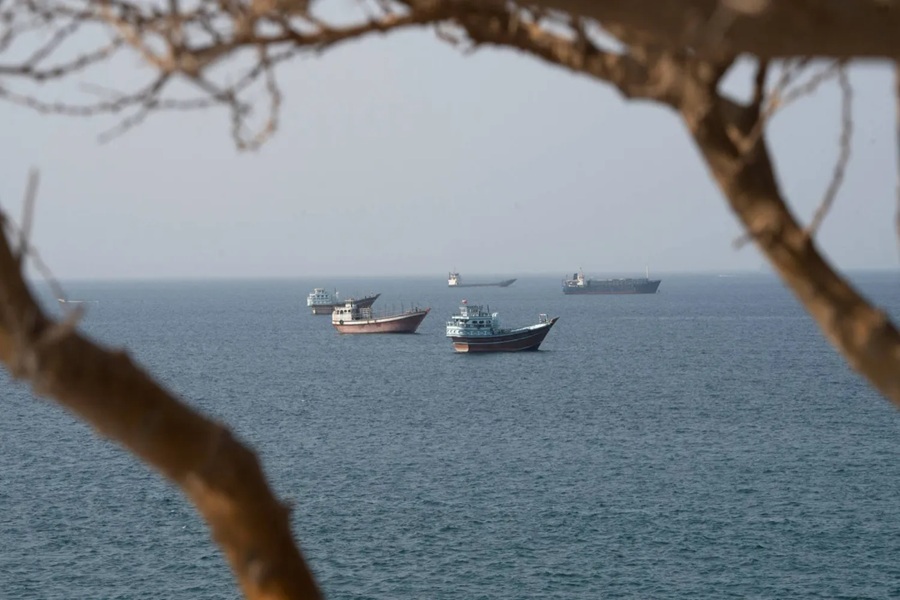
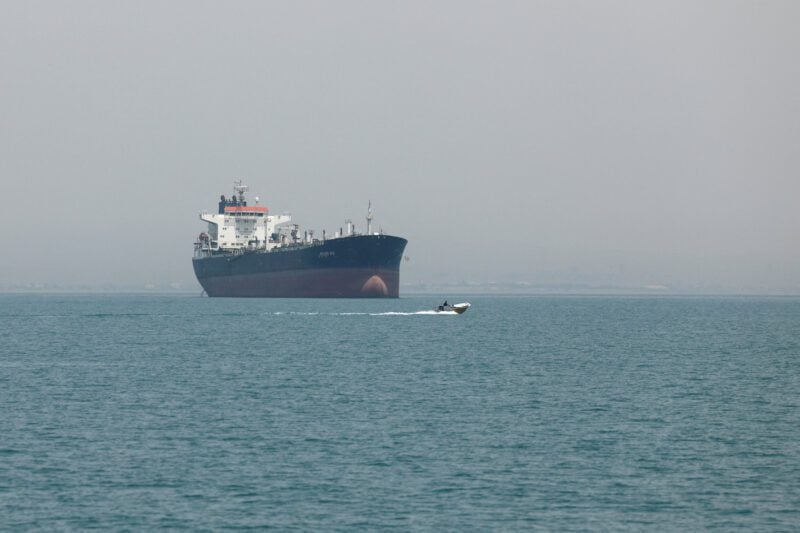
- Maritime disruption in the Strait of Hormuz is almost certainly acute and likely to remain elevated over the next 14 days. Lloyd's List reported an even split between vessels entering and leaving the Strait, while Mohammad Bagher Ghalibaf stated that the Strait will remain closed until oil sanctions are removed. Iran is also negotiating with Oman on management of the Strait, and China is reviewing its decision to stop sending tankers through it. Confidence is medium because the vessel-flow assessment comes from a maritime intelligence specialist and the closure statement comes from a senior Iranian official, but the reporting does not establish the full scale or duration of the disruption. (Confidence: medium · ASSESSED)
- I&W: Lloyd's List or equivalent maritime tracking records continued near-even vessel flows or a lower proportion of vessels entering the Strait. (0-14 days)
- I&W: Iran and Oman announce a written ship-passage arrangement, followed by a measurable increase in vessels entering the Strait. (0-30 days)
- US economic pressure on Iran is very likely to intensify in the coming days, and Iranian leaders are likely to sustain retaliatory rhetoric and preparations. President Donald Trump warned of an imminent escalation in economic pressure and a day of economic reckoning against Tehran. Treasury Secretary Scott Bessent said the US would impose the toughest sanctions in history and that the campaign would lead to the collapse of the Iranian government. The White House described upcoming measures as maximum pressure, while Iran's foreign ministry condemned the sanctions and Iranian reporting described Tehran as preparing to resist them. Confidence is medium because several major-media reports corroborate the policy direction, but the timing and content of the next measures remain unclear and one local report misattributes a related statement to Scott Pisent. (Confidence: medium · REPORTED)
- I&W: The US Treasury or another US authority publishes new Iran sanctions, including measures against trading partners or entities linked to maritime activity. (0-14 days)
- I&W: Iran announces a new closure, passage restriction or other maritime response in the Strait of Hormuz after the US measures. (0-14 days)
- A limited Iran-Oman arrangement on ship passage has a roughly even chance of emerging within one to three months, but an immediate comprehensive US-Iran settlement is unlikely. Reporting describes ongoing Iranian negotiations with Oman and possible consultations on limited passage, while US Ambassador Mike Huckabee said Washington is working on a plan to reduce regional tensions. Egypt and Qatar separately stressed the need for coordination on a sustainable agreement. The judgement rests mainly on single-source or lower-confidence reporting about the negotiations, and no claim confirms US participation or a concrete timetable. Confidence is low. (Confidence: low · ASSESSED)
- I&W: Iran and Oman announce agreed terms for commercial ship passage or establish a joint mechanism for managing the Strait. (0-90 days)
- I&W: Iran repeats that the Strait will remain closed until sanctions are removed, while Washington reports no diplomatic channel with Tehran. (0-30 days)
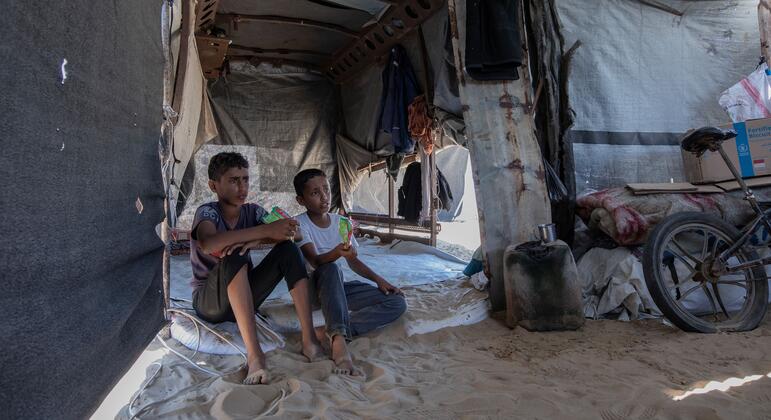
- Gaza's humanitarian crisis is very likely to remain a major regional-stability pressure point over the next one to three months. UN agencies and partners report that more than four out of five families face critical or catastrophic living conditions, 94 per cent of Gaza's 2.1 million residents need shelter, and $562 million is needed to improve living conditions. Confidence is medium because the core reporting comes from multilateral sources, but the figures describe different aspects of the crisis and do not establish how conditions will change. (Confidence: medium · ASSESSED)
- I&W: UN agencies continue to report shelter needs near 94 per cent and critical or catastrophic conditions for more than four out of five families. (0-30 days)
- I&W: UN reporting records a sustained reduction in shelter needs and improved entry of materials and equipment into Gaza. (1-3 months)
Outlook & scenarios
Contained coercive pressure (45%)
Israel continues limited strikes in Syria and southern Lebanon, the US expands economic pressure on Iran, and the Strait of Hormuz remains constrained without a confirmed Turkish military response or a new direct US-Iran channel. Hezbollah and Iranian-aligned actors continue threats without producing a sustained regional expansion.
Partial maritime de-escalation (30%)
Iran and Oman reach a limited understanding on ship passage, reducing pressure on selected commercial traffic. Washington maintains sanctions pressure while supporting a regional plan to reduce tensions. The arrangement does not resolve the wider conflict or the Israel-Türkiye dispute over Abu al-Duhur.
Multi-front widening (20%)
Further Israeli strikes in Idlib or southern Lebanon trigger a Hezbollah response and sharper Turkish military positioning. Iran intensifies pressure on shipping, the Houthis maintain a blockade-for-blockade posture, and the US responds with additional sanctions or military measures.
Hormuz closure shock (10%)
Iran enforces a broad closure of the Strait of Hormuz while US sanctions expand. China keeps tankers out, commercial traffic falls further, and the maritime crisis becomes the main driver of regional and global economic disruption. This is a low-probability, high-impact outcome.
Recommendations
- Prioritise daily collection on Abu al-Duhur air base and Idlib province. Separate confirmed Israeli strike activity from unverified claims about Turkish troop deployments, and track statements by Benjamin Netanyahu, Asaad al-Shaibani and Türkiye's presidential office.
- Establish a 24-hour maritime watch for the Strait of Hormuz. Compare Lloyd's List vessel-flow data with Iranian and Omani statements, and record any change in China's tanker policy or commercial passage arrangements.
- Track the next US sanctions package for measures against Iran's trading partners, shipping companies and maritime insurers. Assess each measure against Iranian statements or actions affecting the Strait of Hormuz.
- Request an updated UNIFIL incident series for southern Lebanon covering Israeli airspace violations, airstrikes and projectile launches. Pair it with verified Hezbollah activity rather than relying on threats alone.
- Maintain a separate West Bank escalation tracker covering settler attacks, Israeli military raids, deaths and injuries, and public warnings from Israeli commanders. Do not merge these incidents with southern Lebanon reporting.
- Validate the Abu al-Duhur chronology before wider dissemination. The reporting includes an attack dated 21 August 2026, a separate account of eight strikes during the same week, and an older record dated 3 October 2023.
- Use UN shelter, living-conditions and funding figures as the baseline for Gaza humanitarian monitoring. Flag any change in the reported 94 per cent shelter requirement or the $562 million funding estimate.
Confidence & uncertainty
Overall confidence is medium. UNIFIL and UN reporting provide high-reliability support for activity in southern Lebanon and the humanitarian situation in Gaza. Major-media reporting and maritime specialist assessments corroborate the broader pattern of Israeli strikes, US sanctions pressure and disruption in the Strait of Hormuz. Confidence is reduced by contested reporting on Turkish military preparations, limited detail on Iran-Oman negotiations, inconsistent dates in several records, and a number of single-source or lower-confidence assessments.
Intelligence gaps
- [EEI 1.1 · UNCOVERED] Observed repositioning, sustained increases, or new forward basing of Iranian conventional or IRGC forces (armored units, missile batteries, aircraft, naval vessels) toward borders or regional launch points. Recommended collection: IMINT/satellite
- [EEI 1.2 · PARTIAL] Hezbollah or other Iran-aligned proxy forces conducting mass mobilization, visible rocket/artillery emplacements, cross-border firing incidents, or preparations for cross-border operations from Lebanon, Syria, Iraq or Yemen. Recommended collection: HUMINT/ground ISR
- [EEI 1.3 · PARTIAL] Detection of increased missile/rocket/torpedo launch events attributable to Iran, Israel, or proxies (launch signatures, trajectories, impact points) indicating a sustained campaign rather than isolated strikes. Recommended collection: SIGINT/IMINT/air-defense radar
- [EEI 1.4 · UNCOVERED] Interdicted or observed shipments (air, sea, land manifests, seizures, satellite imagery of transfers) of advanced weapons or missile components from Iran toward proxy groups or forward staging points. Recommended collection: maritime/AIS
- [EEI 2.1 · UNCOVERED] Satellite or on-the-ground imagery showing fires, damage, or operational shutdown at major oil export facilities, refineries, storage terminals, or key pipeline infrastructure in the Gulf and Red Sea. Recommended collection: IMINT/satellite
- [EEI 2.2 · PARTIAL] Commercial vessel incidents: AIS transponder shutdowns, distress signals, reported hull/engine damage, boardings, or confirmed attacks on tankers/merchant ships transiting the Strait of Hormuz, Bab al-Mandeb, or eastern Mediterranean. Recommended collection: maritime/AIS
- [EEI 2.3 · PARTIAL] Significant and sustained reductions or rerouting of tanker transits through the Strait of Hormuz (ship traffic counts, pilot reports, port call cancellations) and announcements of closure or restricted navigation zones (NOTAMs, maritime advisories). Recommended collection: maritime/NOTAMs
- [EEI 2.4 · UNCOVERED] Rapid increases in war-risk insurance premiums for Middle East routes, shipping company advisories to avoid region, or major charter cancellations tied to the conflict. Recommended collection: financial/open-source
- [EEI 3.1 · UNCOVERED] Movement/arrival of major foreign military assets into the region: US carrier strike groups, amphibious ready groups, strategic bomber flights, Russian/Chinese naval taskings, or allied expeditionary units (visible in AIS, NOTAMs, satellite imagery, official releases). Recommended collection: IMINT/satellite
- [EEI 3.3 · UNCOVERED] Embassy evacuations, large-scale personnel movements, issuance of government travel bans/advisories, or multinational security alerts affecting foreign nationals and diplomatic posture in the region. Recommended collection: diplomatic/open-source
Cited sources
[1] jpost.com · Israel’s new Syria dilemma: Netanyahu’s Russia playbook faces 'Turkey test' (A) · sha256:36d647d6a178 [2] arabnews.com · Pakistan military chief, Syrian FM discuss regional security, defense cooperation (A) · sha256:d95373ccd558 [3] islamist-movements.com · إيران تتأهب لـ«الإنزال الاقتصادي»/الزوبي يطلق خريطة طريق لترتيب أوراق غرب ليبيا العسكرية/من جمع السلاح إلى تقليص النفوذ. هل تبدأ بغداد بإعادة ضبط الحشد؟ (D) · sha256:bbb399eb4579 [4] United Nations · Middle East: 94 per cent need shelter in Gaza, Israel ramps up demolitions in Lebanon (A) · sha256:aa5d2b0f402c [5] alwaght.net · Alwaght | News & Analysis Website (B) · sha256:26537889b62e [6] Yenisafak · Israeli commanders warn of West Bank 'eruption' amid settler attacks (B) · sha256:e5d09f2b307a [7] gcaptain.com · Maritime Markets Bracing for Long-term Disruption in the Middle East (B) · sha256:d28763ac913c [8] gcaptain.com · US Will Impose 'Toughest Sanctions in History' on Iran, Bessent Says (A) · sha256:f0cfb2f74f65 [9] المنتدى العربي لتحليل السياسات الإيرانية · كيف يمكن لإيران إغلاق مضيق هرمز من دون أن تدفع العالم للبحث عن طرق لتجاوزه؟! - المنتدى العربي لتحليل السياسات الإيرانية | AFAIP (C) · sha256:13f39483e5a8 [10] english.globalarabnetwork.com · Trump Threatens ‘Day of Economic Reckoning’ Against Iran (B) · sha256:20a579398890 [11] tribune.com.pk · You are either with us or against us on Iran economic isolation US treasury secretary to allies (B) · sha256:7458ddb9498e [12] gcaptain.com · Trump Threatens Economic Isolation for Iran and Its Trading Partners (B) · sha256:5810312d93a6 [13] moderndiplomacy.eu · China’s Iran Dilemma: What Happens If Tehran Quits the NPT—and War With the US Erupts? (C) · sha256:6296ff65bbfb
Source content hashes were computed at collection time; the cited text is preserved unmodified for the life of this product.
Red cell review: CONCUR WITH COMMENT
TLP:CLEAR