TLP:CLEAR · Disclosure is not limited.
Iran-Israel Conflict: Strike Planning, Missile Signalling and Maritime Risk
Time window: Last 1 day · Audience: General analyst · Type: Situation report · DTG: 2026-10-12 15:42Z · Overall confidence: MEDIUM
BLUF
A direct US strike on Iran is unlikely over the next 14 days, but reporting of unapproved Pentagon plans and conflicting signals from Israeli sources leave the risk unresolved. The IRGC's reported 30-missile drill and new attacks on commercial shipping add pressure, while responsibility for the latest tanker incidents remains disputed.
Executive summary
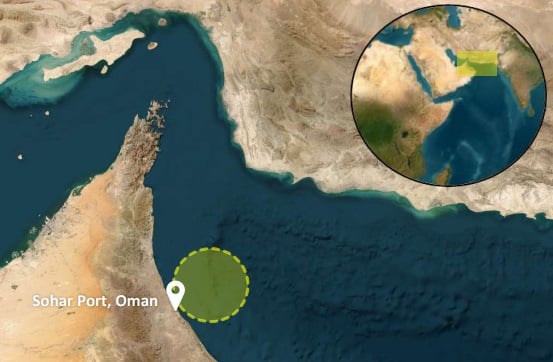
Reporting on 11 and 12 October describes a possible US campaign against Iran that President Donald Trump has not approved, alongside conflicting accounts of Israel's intentions before its 27 October election. Pro-regime Iranian media reported an IRGC drill involving 30 ballistic missiles. Separately, a drone attack on the Petro Dolphin at Sohar Anchorage left two seafarers missing, while reports of other tanker incidents include both attack claims and an Iranian account of a collision. Qatar and other mediators have relayed messages between Washington and Tehran over Iran's proposal to reopen the Strait of Hormuz, but Tehran has described the US response as insufficient and set conditions for reopening.
Change from previous assessment
Since the 11 October brief, the assessment adds reporting of an IRGC drill involving 30 ballistic missiles, unapproved Pentagon plans for a three-day campaign against Iran, and conflicting Israeli signals about whether to strike or conclude the war. Reporting of a drone attack on the Petro Dolphin at Sohar Anchorage, with two seafarers missing, adds a new maritime incident outside the Strait of Hormuz. The previous brief focused on Houthi attacks on Saudi Arabia, US blockade enforcement and shipping disruption; the current reporting does not resolve responsibility for the tanker incidents or the timing of any US or Israeli strike.
Key judgments
- A direct US strike on Iran is unlikely over the next 14 days. A report attributed to the New York Times says the Pentagon prepared a three-day campaign against Iranian missile and drone arsenals, energy facilities and IRGC sites, but President Trump has not approved it. Separate reporting says Washington asked Israel to strike Iran alone and that the Israeli military chief refused, leaving the proposed US role unclear. The planning report is single-source in the provided claims, so confidence is low. (Confidence: low · ASSESSED)
- I&W: President Trump publicly authorises strikes, or the White House, Pentagon or CENTCOM announces US attacks on Iranian missile, energy or IRGC targets. (0-14 days)
- I&W: The White House states that no Iran strike has been authorised, with no public announcement of US strikes by 26 October. (0-14 days)
- Whether Israel will strike Iran before 27 October remains unresolved, and a pre-emptive strike before that date has a roughly even chance. An unnamed Israeli official was reported to rule out a pre-election strike, while other Israeli reporting described security consultations, consideration of an independent or joint attack, and expectations of another round of strikes. A separate Channel 13 report said Benjamin Netanyahu and Eyal Zamir were preparing to conclude the war, with no final decision reported. The accounts rely on unnamed sources or social media and conflict on both timing and intent, so confidence is low. (Confidence: low · ASSESSED)
- I&W: The Israeli government or IDF announces or conducts a strike on Iranian targets before 27 October. (0-14 days)
- I&W: An Israeli government statement confirms that no pre-emptive strike will take place before the 27 October election. (0-14 days)
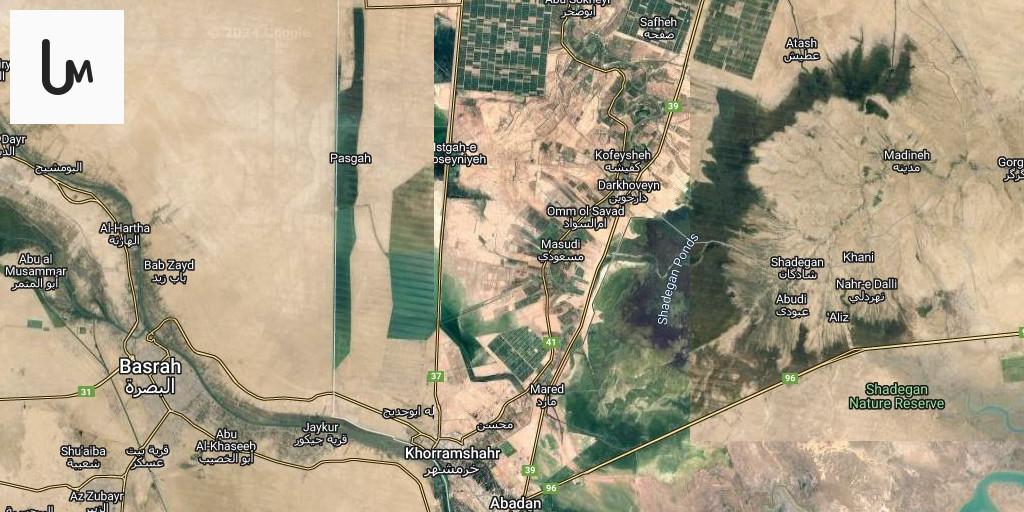
- The IRGC's reported drill of 30 ballistic missiles on 11 October is likely intended to signal readiness during the conflict, but it does not establish that Iran is preparing an imminent launch against Israel. Pro-regime Iranian media and a separate major-media report describe the exercise; the reporting does not independently verify the launches or state their purpose. Confidence is medium. (Confidence: medium · ASSESSED)
- I&W: Iranian media or officials report another IRGC ballistic-missile exercise, including launches of Emad, Kheibar Shekan or Khorramshahr missiles. (0-14 days)
- I&W: Iranian or Israeli officials report a missile launch against the other state, rather than a drill. (0-14 days)
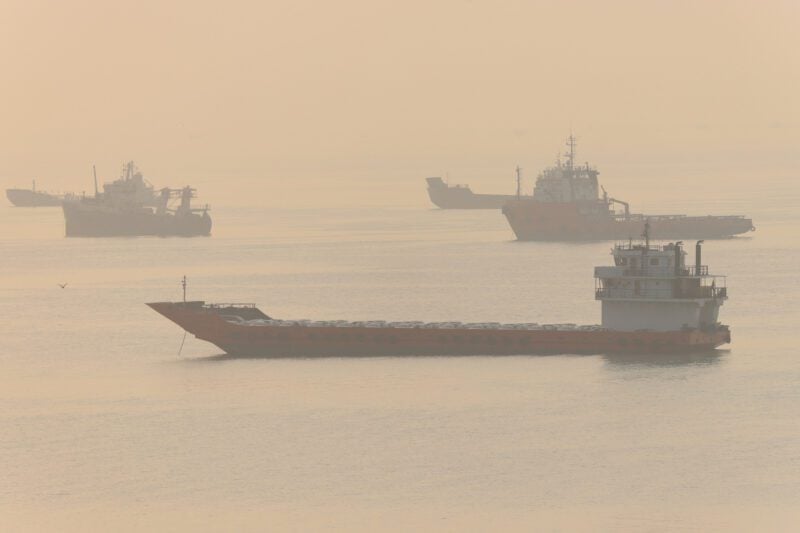
- Further attacks on commercial vessels in the Strait of Hormuz or Gulf of Oman are likely over the next 14 days, but Iranian responsibility for the incidents remains unestablished. UKMTO reporting describes a projectile strike north of the Musandam Peninsula on 10 October and another vessel hit near the eastern end of the Strait on 11 October; reporting also says a drone attacked the Petro Dolphin at Sohar Anchorage on 11 October, leaving two seafarers missing. UKMTO's attack account conflicts with the IRGC's claim that a tanker fire resulted from a collision while crossing an unauthorised route. Confidence is medium for continued incident risk and low for attribution. (Confidence: medium · ASSESSED)
- I&W: UKMTO reports another projectile or uncrewed aerial vehicle attack on a commercial vessel in the Strait of Hormuz or Gulf of Oman. (0-14 days)
- I&W: UKMTO reports no further vessel attack in those waters for 14 consecutive days and Omani authorities close the Petro Dolphin search operation without confirming another incident. (0-14 days)
- Indirect US-Iran contact through Qatar is likely to continue, but a near-term agreement to reopen the Strait of Hormuz is unlikely. Qatar and other mediators have relayed messages, and the United States replied to Iran's proposal; however, Mohsen Rezaei said the US response was insufficient and that Iran would not reopen the Strait or negotiate until its seven conditions were met. These claims describe different stages or characterisations of the exchange, which limits confidence in the current diplomatic status. (Confidence: medium · ASSESSED)
- I&W: Qatar or another named mediator confirms a new message exchange between Washington and Tehran, or either government publicly confirms renewed talks. (0-14 days)
- I&W: Iran announces that its seven conditions are met and confirms normal maritime passage through the Strait of Hormuz has resumed. (0-14 days)
Outlook & scenarios
Indirect contact contains the immediate escalation (45%)
Qatar continues relaying messages between Washington and Tehran, but Iran's seven conditions and its criticism of the US response prevent a near-term Hormuz agreement. The United States does not authorise the reported campaign, and Israel avoids a pre-emptive strike before its 27 October election. Commercial shipping incidents continue without confirmed attribution.
A new strike triggers direct retaliation (40%)
Israel or the United States strikes Iranian targets, ending the current restraint. Iran responds with ballistic missiles or attacks on commercial shipping in the Strait of Hormuz or Gulf of Oman. The reported Pentagon plans and Israeli security discussions provide warning of this pathway, but the available reporting does not establish that either government has made a final strike decision.
Maritime conflict widens beyond the Gulf (15%)
A further attack on shipping extends the conflict's maritime reach beyond the Strait of Hormuz and Gulf of Oman. This is a low-probability, high-impact scenario. Yahya Rahim Safavi, an adviser to Iran's Supreme Leader, previously threatened that the conflict could extend to the Red Sea and Indian Ocean; the statement is a threat, not evidence of an operational plan.
Recommendations
- Separate reported US campaign planning from authorisation. Track public statements by President Trump, the White House, the Pentagon and CENTCOM, and record any confirmed US strikes on Iranian missile, energy or IRGC targets.
- Maintain a dated record of Israeli statements and reported strike preparations through 27 October. Distinguish official government or IDF decisions from unnamed-source reporting and social-media claims.
- For the Petro Dolphin and other tanker incidents, compare UKMTO updates with statements from Omani authorities and Indian search-and-rescue officials. Keep attacker attribution unresolved until those accounts or other corroborating evidence establish it, and record the conflicting rescue counts separately.
- Track statements from Qatar, Washington and Tehran on the seven conditions and any change in Strait of Hormuz transit. Treat reports of message exchanges as evidence of contact, not evidence of an agreed ceasefire or reopening.
Confidence & uncertainty
Overall confidence is medium. Major-media and trade reporting, including accounts attributed to UKMTO, supports the missile-drill and shipping-incident reporting, while the diplomatic statements establish that messages have been exchanged. Confidence is lower on US and Israeli strike intentions because key claims rely on unnamed sources, single-source reporting or social media, and the accounts conflict. The tanker attack narrative also includes competing explanations, and the available reporting does not establish Iranian responsibility.
Alternative analysis (red cell)
The evidence does not establish that a direct US strike is unlikely: claim 0c4b6b4d-76f0-4dfe-96b8-c1c40dec16ee shows a developed US military option, while the Israeli refusal in claim 584da069-e128-4c67-a4b3-0cde48f41522 does not resolve the US decision. On Israel, claim fcbbab64-580a-4183-a7b0-83b07412ac36 provides a direct pre-election constraint, whereas the other reporting mainly shows consultations and longer-term intent. The better reading is that both strike questions remain unresolved, with the available evidence not supporting a roughly even pre-election probability.
Intelligence gaps
- [EEI 1.1 · UNCOVERED] Movement, dispersal, or emplacement of Iranian conventional or IRGC heavy assets (ballistic missile launchers, Khoramshahr/Toofan-class missile transporters, ground-to-ground TELs, air defense batteries, amphibious units) from garrison areas toward forward bases or coastal launch sites. Recommended collection: satellite/IMINT
- [EEI 1.2 · PARTIAL] Authenticated Iranian military orders, NSC/IRGC operations directives, or senior leadership statements explicitly directing strikes against Israel or US forces or authorizing cross-border operations. Recommended collection: human/diplomatic
- [EEI 1.3 · PARTIAL] Changes in Israeli and US force posture indicating anticipation of direct large-scale conflict, elevated readiness levels, mobilization notices, pre-positioning of munitions, or public/private orders to prepare offensive strikes. Recommended collection: open-source/diplomatic
- [EEI 2.1 · UNCOVERED] Observable pre-launch preparations for missile/rocket/cruise missile strikes (fueling, warhead mating, launcher orientation, support vehicle congregation) and abnormal munitions handling at known launch sites. Recommended collection: satellite/IMINT
- [EEI 2.2 · UNCOVERED] Indications of proxy arms shipments and weapons transfers (truck convoys, small boat transfers, container movements from Iran to proxies, new stockpiles in Lebanon, Iraq, Yemen, Syria). Recommended collection: maritime/AIS
- [EEI 2.3 · UNCOVERED] Evidence of cyber attack planning or active exploitation campaigns targeting Israeli or US military/critical infrastructure (emergence of new command-and-control servers, spear-phishing campaigns against defense personnel, successful intrusions). Recommended collection: cyber
- [EEI 3.1 · UNCOVERED] Movements and posture changes of US regional platforms (carrier strike groups, amphibious ready groups, B-52/B-1/B-2 or fighter deployments, missile defense assets repositioning) and associated armament loadouts. Recommended collection: satellite/IMINT
- [EEI 3.2 · PARTIAL] Official or leaked US government/diplomatic communications indicating thresholds for strikes, authorization for offensive operations, or limits on action (NSC/DoD statements, congressional notifications, diplomatic notes). Recommended collection: diplomatic/human
- [EEI 3.3 · UNCOVERED] Changes in US base force-protection measures and rules of engagement at regional facilities (base lockdowns, evacuation notices, flight restrictions, activation of Local Defense Forces or missile intercept systems). Recommended collection: open-source/local reporting
- [EEI 4.1 · UNCOVERED] Hezbollah-specific indicators: convoys and logistics movements toward Lebanon, Israel border, artillery/rocket emplacement in southern Lebanon, documented strikes-preparation activity, public mobilization orders or recruitment drives. Recommended collection: satellite/IMINT
- [EEI 4.2 · UNCOVERED] Houthi-attributed maritime attack indicators: AIS anomalies/loss of contact for commercial vessels, reports of missile/drone strikes or near-miss incidents in Bab al-Mandeb/Red Sea, Houthi claims paired with imagery of weapons launches. Recommended collection: maritime/AIS
- [EEI 4.3 · UNCOVERED] Militia cross-border attack evidence from Iraq/Syria: recorded rocket/mortar launch events into Israel or strikes against US facilities, movement of armed convoys toward border areas, and intercepted communications coordinating cross-border operations. Recommended collection: signals/ELINT
Cited sources
[1] LiveUAMap (iran.liveuamap.com) · Pro-regime Iranian media report that the IRGC fired 30 ballistic missiles a short while ago, including Khorramshahr and Emad types, as part of a large-scale missile drill Khorramshahr,Khuzestan Province - Iran news on live map in English - War in Iran - Conflict in the Gulf- iran.liveuamap.com (F) · sha256:918916d01d4d [2] alzaytouna.net · العدد (D) · sha256:b74a102ff576 [3] a7walrussia.com · إيران تهدد بتوسيع الحرب وتلوّح بتصعيد استباقي (E) · 25 September 2026 · sha256:c30c84a4d9cb [4] Al Hadath Lebanon (الحدث اللبناني) · تتضمن هجوماً مستقلاً أو مشتركاً مع واشنطن أو رداً إيرانياً محتملاً. 3 سيناريوهات على طاولة نتنياهو خلال اجتماع أمني رفيع لبحث ملف إيران #من_الحدث | Al Hadath Lebanon الحدث اللبناني (E) · sha256:77d1b433c482 [5] Banking News (bankingnews.gr) · Iran launches 30 ballistic missiles as US strikes merchant ship in Oman and Saudis seek Chinese mediation (B) · 11 October 2026 · sha256:399357dccb9f [6] The Maritime Executive · Two Seafarers Missing in Drone Attack on Product Tanker off Oman (B) · sha256:96cedc4ea135 [7] gCaptain (republishing Reuters wire content) · Iran Says US Response To Its Proposal To Reopen Hormuz Was 'Insufficient' (B) · 11 October 2026 · sha256:d6e9b7e6343b
Source content hashes were computed at collection time; the cited text is preserved unmodified for the life of this product.
Red cell review: PARTIAL DISSENT
TLP:CLEAR