TLP:CLEAR · Disclosure is not limited.
Iran-Israel Conflict: Strike Risk, Hormuz Uncertainty and Regional Strain
Time window: Last 1 day · Audience: General analyst · Type: Situation report · DTG: 2026-10-21 11:38Z · Overall confidence: MEDIUM
BLUF
There is a roughly even chance Israel will launch a renewed large-scale strike on Iran before the US midterm elections in November. New reporting points to Israeli preparations, but also says the Trump administration blocked a planned operation and opposed renewed hostilities at that time; Pete Hegseth’s meeting with Benjamin Netanyahu demonstrates consultation, not authorisation. Claims of tanker attacks and an IRGC drone shootdown remain unverified or disputed.
Executive summary
Reporting published on 21 October says Israel had prepared a multi-day campaign against Iranian nuclear facilities, government centres and power plants for 10 October, but the Trump administration intervened to block it. Other reporting says Benjamin Netanyahu directed preparations for a new attack and told Mossad and the Israeli military to pursue regime change. Pete Hegseth met Netanyahu at Ovda Airbase on 19 October, while a third US aircraft carrier is reported to be heading to the Middle East; neither development establishes US authorisation for an Israeli strike. Pakistan’s Asim Munir met Iranian officials in Tehran, but reports differ on whether Hormuz negotiations are stalled or whether a seven-day reopening proposal remains active. The IRGC’s claims about mines damaging tankers and its reported MQ-9 shootdown lack independent confirmation in the supplied reporting. Separately, Israeli activity in Quneitra and falling food assistance in Gaza add regional pressure: WFP says about 1.4 million people in Gaza face acute food insecurity, and its October caseload fell to 1.1 million from 1.6 million in September.
Change from previous assessment
Since the 20 October brief, reporting has added an alleged Israeli campaign planned for 10 October and blocked by the Trump administration, Netanyahu’s reported direction to prepare a new attack, and Hegseth’s visit to Israel and meeting with Netanyahu. These developments raise evidence of Israeli readiness but do not change the strike estimate from a roughly even chance, because the reported US intervention and opposition by senior US advisers temper it. The IRGC’s tanker and MQ-9 claims add detail to the maritime risk picture but do not resolve attribution; confidence in those claims remains low. Reporting on Pakistan’s mediation and the proposed seven-day Hormuz reopening adds a diplomatic pathway, but the status of talks remains contradictory.
Key judgments
- There is a roughly even chance Israel will launch a renewed large-scale strike on Iran before the US midterm elections in November. Reporting says an Israeli multi-day campaign against nuclear facilities, government centres and power plants was planned for 10 October and blocked by the Trump administration; other reporting describes Netanyahu directing preparations for a new, large attack and work towards regime change. Hegseth’s meeting with Netanyahu at Ovda Airbase on 19 October supports consultation, not a conclusion that Washington authorised an attack. The preparation and intervention accounts are not independently corroborated in the supplied reporting, while reports of US advisers’ opposition weigh against assuming a settled decision. (Confidence: medium · ASSESSED)
- I&W: A public Israeli military announcement or corroborated report of mobilisation for a multi-day operation against Iranian targets would support the assessment that strike preparations are advancing. (0-14 days)
- I&W: An Israeli announcement cancelling preparations, or a public US statement that Washington has secured a halt to renewed Israeli action, would weaken the assessment of a near-term strike. (0-14 days)
- Commercial shipping and energy-market risk around the Strait of Hormuz is likely to remain elevated over the next 30 days. Brent crude is reported near a five-month high and freight rates are still rising; Iran has also declared an intention to control the strait and to sanction ships without identification systems. These claims support concern about access and cost, but do not establish a complete closure or confirm that Iran attacked a tanker. (Confidence: medium · ASSESSED)
- I&W: Brent remaining near its reported five-month high while freight quotes continue to rise would support persistent market risk. (0-14 days)
- I&W: A sustained fall in Brent from that high alongside declining freight quotes would weaken the assessment of persistent market pressure. (1-3 months)
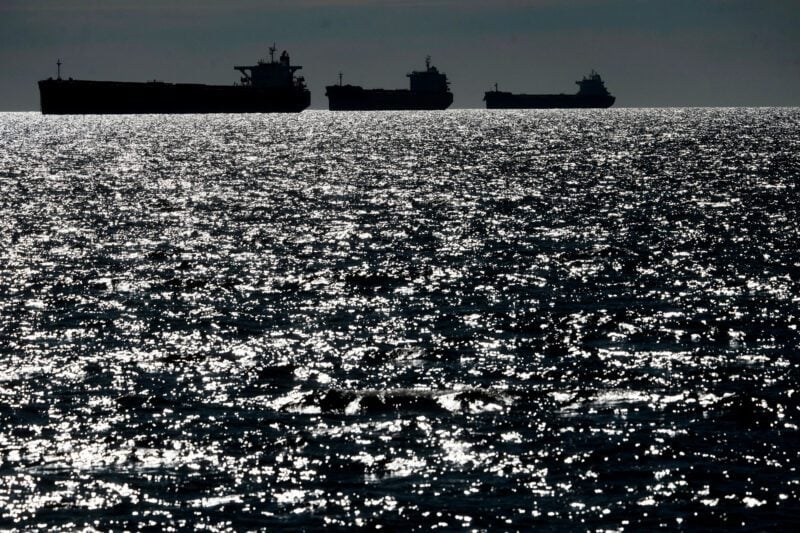
- It is unlikely that the available reporting establishes an Iranian attack on a tanker or confirms the reported tanker damage. A social-media account says Iran struck a tanker west of Oman; the IRGC instead says mines damaged two tankers south of the Strait of Hormuz, and another report says one tanker struck a mine. The reported number and cause conflict, the IRGC account gives no details about the vessels, and the supplied reporting does not independently confirm the incidents. The IRGC’s claim that it downed a US MQ-9 over the strait is also unconfirmed. (Confidence: low · ASSESSED)
- I&W: Publication of a vessel name and matching damage details by its operator or a relevant authority would help confirm an incident; independently corroborated accounts that identify different causes would keep attribution unresolved. (0-14 days)
- I&W: Independent confirmation of the MQ-9’s loss and location would support the IRGC claim; a US statement or other corroborated account that the aircraft was not lost would break it. (0-14 days)
- There is a roughly even chance Pakistan’s mediation produces a concrete Hormuz reopening step within the next month. Asim Munir met Mohammad Bagher Qalibaf in Tehran, and Abbas Araghchi says Iran’s proposal to reopen the strait within seven days remains on the table. Against this, Iranian officials describe the talks as stalled, and Mohsen Rezaei says negotiations with Washington will not resume until the US builds trust. These statements show diplomatic activity but not agreement; the reported status is contradictory and rests partly on single-source accounts. (Confidence: medium · ASSESSED)
- I&W: A public Iran-US agreement specifying a reopening schedule, followed by confirmation that the seven-day proposal is being implemented, would support a near-term step. (0-14 days)
- I&W: A new Iranian statement that talks are suspended, with no announced follow-up to Munir’s Tehran visit, would weaken the assessment that mediation will produce a near-term step. (0-14 days)
- Israeli military activity in Quneitra is likely to continue to strain regional stability over the next month. Israeli forces reportedly advanced from Hamidiyah base with two tanks and seven military vehicles on 20 October, then fired two artillery shells near Eastern Tal al-Ahmar on 21 October. OHCHR documented about 280 Israeli incursions into Syria in September. These reports indicate repeated activity, although they do not establish that the Iran-Israel conflict caused the operations in southern Syria. (Confidence: medium · ASSESSED)
- I&W: Further reported Israeli incursions or artillery fire in Quneitra or Daraa would support the assessment of continuing regional friction. (0-14 days)
- I&W: A Syrian Foreign Ministry statement reporting a halt to incursions, followed by no new incidents in Quneitra or Daraa, would weaken the assessment. (1-3 months)
- Food access in Gaza is likely to remain under severe pressure in the near term. WFP reduced its supported caseload from 1.6 million people in September to 1.1 million in October and halved food rations; WFP also warned that about 500,000 people would be deprived of food aid. OCHA reported more than 2,800 children admitted for malnutrition treatment in September, including more than 360 with severe acute malnutrition. WFP cited funding shortages, while other reporting also identifies restrictions, depleted food stocks and fuel shortages, so the causes are not reducible to funding alone. (Confidence: medium · ASSESSED)
- I&W: A new WFP distribution update showing the supported caseload remains at or below 1.1 million and rations remain at half would support continued pressure on food access. (0-14 days)
- I&W: WFP reporting that its caseload has risen above 1.1 million and rations have increased above half would weaken the assessment. (1-3 months)
Outlook & scenarios
Israel resumes a large-scale campaign (35%)
Israel renews strikes against Iranian targets, following the reported preparations for a multi-day campaign and Netanyahu’s statements on regime change. The Trump administration again presses for limits or a halt, leaving US authorisation and direct participation uncertain.
A coercive stand-off persists (40%)
No new large Israeli operation begins in the near term. Iran maintains its stated control posture around the Strait of Hormuz, while shipping costs and energy prices remain under pressure. Reports of tanker damage and the MQ-9 loss remain disputed rather than established.
Mediation produces a limited Hormuz step (30%)
Pakistan’s mediation leads to a defined reopening schedule based on Iran’s seven-day proposal. Tehran and Washington take limited steps without resolving the wider conflict or all of Iran’s stated conditions.
High-impact spillover into Gulf infrastructure (10%)
After strikes on Iranian civilian infrastructure, Iran follows through on its reported threat to target Gulf Arab civilian infrastructure, or acts on the IRGC spokesman’s warning about seven undersea cables crossing the Strait of Hormuz. This low-probability path would widen the conflict’s effects beyond Iran and Israel.
Recommendations
- Treat reporting about Israeli preparations as a warning indicator, not proof that an attack has been authorised. Track separately the status of Israeli preparations, US public statements, and any confirmed operational decision.
- Do not attribute tanker damage or the MQ-9 loss to Iran until reporting identifies the vessel or aircraft and provides independent confirmation. Record the competing tanker counts, locations and causes separately.
- Track Pakistan’s mediation against observable milestones: a confirmed Iran-US contact, a public response to Tehran’s conditions, and a stated schedule for reopening the Strait of Hormuz. Do not report the strait as reopened without confirmation that the proposed step occurred.
- Monitor reported Israeli incursions and artillery fire in Quneitra and Daraa alongside Syrian Foreign Ministry and OHCHR updates, to distinguish isolated incidents from continued activity.
- Track WFP’s monthly supported caseload and ration levels in Gaza, alongside OCHA’s child malnutrition admissions. Flag a further reduction in recipients or rations as evidence of worsening food access.
Confidence & uncertainty
Overall confidence is medium because major-media reporting and statements attributed to WFP and OHCHR support several developments, including the Hegseth-Netanyahu meeting, Gaza food-assistance figures and reported Israeli activity in Quneitra. The Israeli strike-plan accounts are not independently corroborated in the supplied reporting, and the tanker and MQ-9 claims rely on low-reliability or conflicting accounts. Reporting on the status of Hormuz negotiations also disagrees, leaving the prospects for a near-term agreement uncertain.
Alternative analysis (red cell)
For judgment 3, the available reporting may indicate that Iran has put forward a conditional proposal without securing agreement or implementation arrangements. Munir's visit demonstrates mediation activity, but the stalled-talks account and Rezaei's stated precondition suggest that the principal obstacle remains unresolved. On this reading, a concrete reopening step within a month is less likely than an even chance.
Intelligence gaps
- [EEI 1.1 · UNCOVERED] Observed repositioning, sustained increases, or new forward basing of Iranian conventional or IRGC forces (armored units, missile batteries, aircraft, naval vessels) toward borders or regional launch points. Recommended collection: IMINT/satellite
- [EEI 1.2 · UNCOVERED] Hezbollah or other Iran-aligned proxy forces conducting mass mobilization, visible rocket/artillery emplacements, cross-border firing incidents, or preparations for cross-border operations from Lebanon, Syria, Iraq or Yemen. Recommended collection: HUMINT/ground ISR
- [EEI 1.4 · UNCOVERED] Interdicted or observed shipments (air, sea, land manifests, seizures, satellite imagery of transfers) of advanced weapons or missile components from Iran toward proxy groups or forward staging points. Recommended collection: maritime/AIS
- [EEI 2.1 · UNCOVERED] Satellite or on-the-ground imagery showing fires, damage, or operational shutdown at major oil export facilities, refineries, storage terminals, or key pipeline infrastructure in the Gulf and Red Sea. Recommended collection: IMINT/satellite
- [EEI 2.3 · PARTIAL] Significant and sustained reductions or rerouting of tanker transits through the Strait of Hormuz (ship traffic counts, pilot reports, port call cancellations) and announcements of closure or restricted navigation zones (NOTAMs, maritime advisories). Recommended collection: maritime/NOTAMs
- [EEI 2.4 · UNCOVERED] Rapid increases in war-risk insurance premiums for Middle East routes, shipping company advisories to avoid region, or major charter cancellations tied to the conflict. Recommended collection: financial/open-source
- [EEI 3.2 · PARTIAL] Official expedited arms transfers, basing/overflight agreements, or declarations of operational support (formal government announcements, defense ministry releases, logistics flight manifests). Recommended collection: open-source/diplomatic
- [EEI 3.3 · UNCOVERED] Embassy evacuations, large-scale personnel movements, issuance of government travel bans/advisories, or multinational security alerts affecting foreign nationals and diplomatic posture in the region. Recommended collection: diplomatic/open-source
- [EEI 3.4 · PARTIAL] High-level diplomatic/UN activity: scheduled or emergency Security Council meetings, published ceasefire proposals, or multilateral statements committing support/condemnation that precede changes in military posture. Recommended collection: open-source/diplomatic
Red cell review: PARTIAL DISSENT
TLP:CLEAR