TLP:CLEAR · Disclosure is not limited.
Iran-Israel Conflict: US Pressure, Hormuz Paralysis and Houthi Escalation
Time window: Last 1 day · Audience: General analyst · Type: Situation report · DTG: 2026-09-22 22:44Z · Overall confidence: HIGH
BLUF
US pressure on Iran intensified on 22 September, but Tehran paired threats of wider retaliation with a conditional offer to reopen the Strait of Hormuz. Commercial traffic has fallen to two vessels, while Houthi attacks on Riyadh and Saudi energy infrastructure are widening the regional burden; a durable US-Iran de-escalation before 24 September is unlikely.
Executive summary
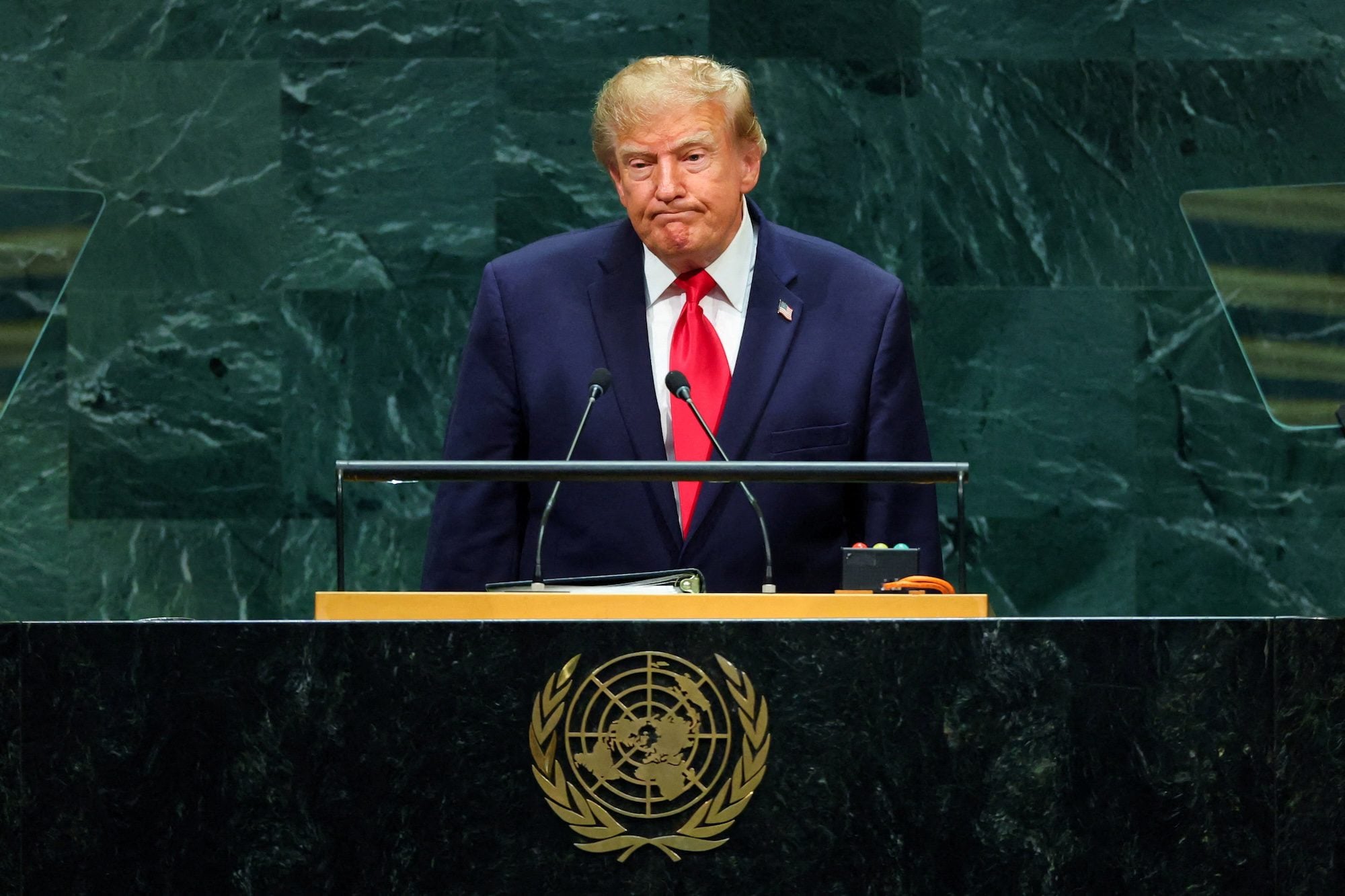
The confrontation remains coercive rather than decisively escalatory. Donald Trump called for Iran's complete economic isolation and repeated threats against Iran, while IRGC spokesperson Hossein Mohebi warned that further US attacks would produce a broader Iranian response. Tehran has nevertheless sent a proposal through mediators and offered to reopen the Strait of Hormuz within seven days if Washington eases military pressure and lifts its blockade. Houthi attacks on Riyadh, Yanbu and Red Sea shipping have increased pressure on Saudi Arabia, which is seeking external air-defence support. US aircraft losses, missile availability concerns and record domestic diesel prices add constraints to Washington's options.
Change from previous assessment
Since the 21 September brief, the assessment has shifted in four respects. Trump's UN General Assembly speech and call for complete economic isolation raise confidence that coercive economic pressure is active, even as Washington retains a limited diplomatic channel. Hormuz disruption is now assessed as more acute because traffic is reported at two vessels and Iran has offered reopening within seven days on explicit conditions. The Houthi attack on Riyadh and the UK's reported refuelling support sharpen the Saudi-Red Sea front. New reporting on US aircraft losses, missile availability and the diesel export debate adds force-sustainment and domestic fuel risks. The prior medium-confidence coercive-posture judgement remains, while the question of renewed US strikes remains unresolved. No prior judgement is retired.
Key judgments
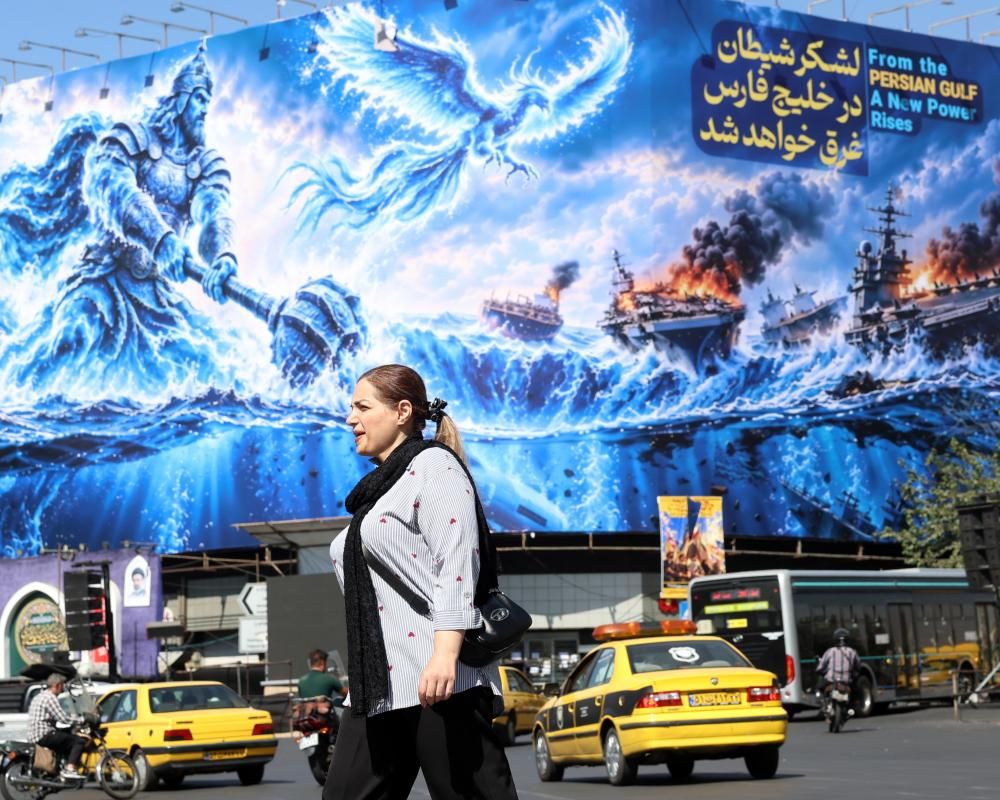
- Iran is very likely to maintain a coercive posture towards the US and Israel through 24 September while preserving limited diplomatic openings, but a US-Iran agreement before then is unlikely. On 22 September, Donald Trump called for complete economic isolation and repeated his threat to annihilate Iran. Hossein Mohebi said the IRGC would intensify retaliation and change the weapons and geography of the war if the US attacked again. Tehran has also sent a proposal through mediators, Marco Rubio said Washington remained open to talks with positive prospects, and Trump said he expected a deal after the November elections. This is an assessed posture, not proof of an Iranian decision to launch new attacks. The main uncertainty is the conflict between Trump's coercive public position and his stated expectation of a later agreement, with no known US-Iran face-to-face meeting since July. (Confidence: medium · ASSESSED)
- I&W: Confirm: the US or Israel conducts a new strike on Iranian territory, followed by an IRGC announcement of retaliation against named US or Israeli targets. (0-14 days)
- I&W: Break: Washington and Tehran announce a face-to-face meeting or signed interim terms that include a verifiable pause in military operations. (0-14 days)
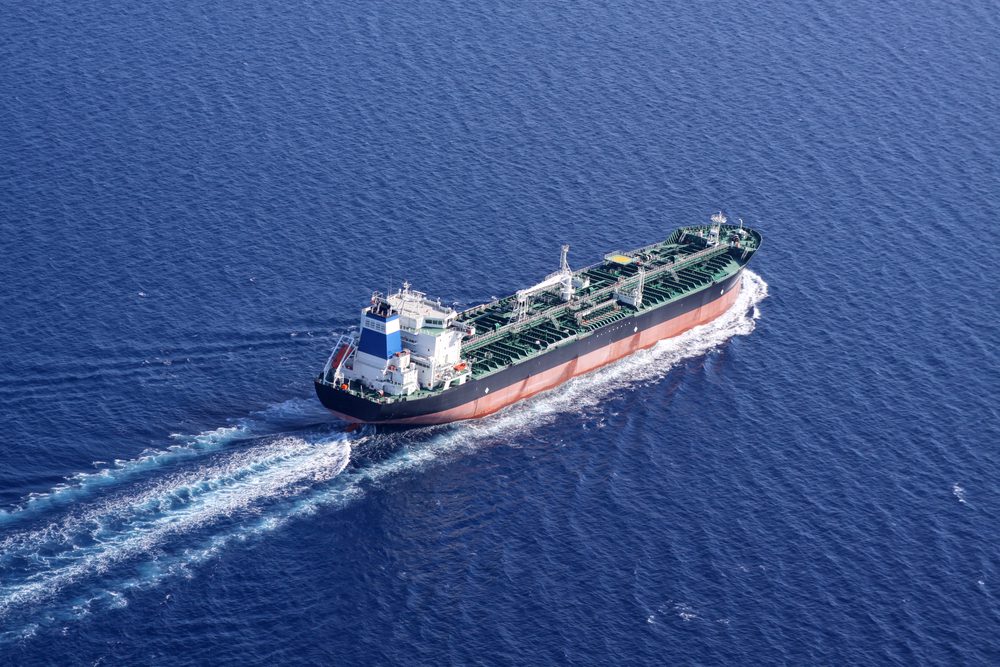
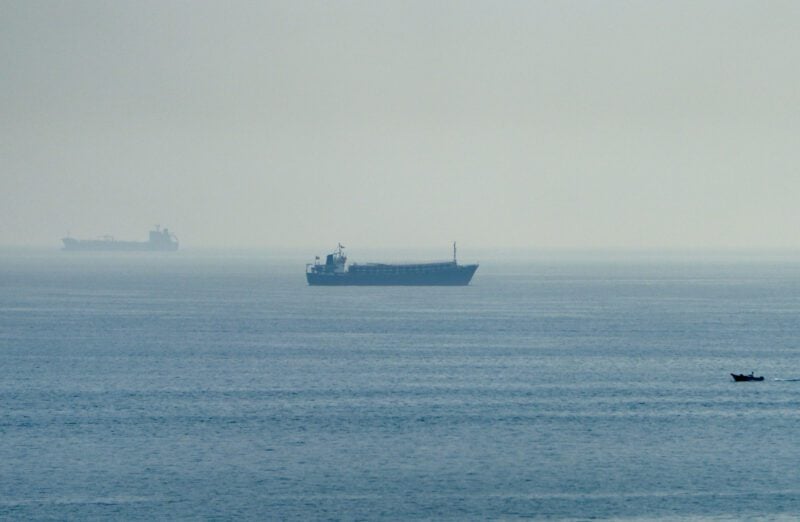
- Commercial traffic through the Strait of Hormuz is very likely to remain severely constrained over the next 14 days. Vessel traffic was reported at two ships on 22 September, while a senior Iranian official offered reopening within seven days only if the US eased military pressure and lifted its blockade. Brent crude briefly fell below $98 per barrel and Saudi Arabia restarted partial East-West Pipeline operations, but neither development establishes normal passage through Hormuz. This assessment rests partly on a single reported vessel count and on Iranian conditions that Washington has not accepted. (Confidence: medium · ASSESSED)
- I&W: Confirm: daily shipping data continue to record two or fewer vessels through Hormuz, with no verified Iranian reopening announcement. (0-14 days)
- I&W: Break: Iran announces reopening and vessel tracking records sustained commercial tanker transits through the Strait within seven days. (0-14 days)
- Houthi attacks on Riyadh, Yanbu and Red Sea shipping are very likely to continue over the next 14 days, while a new US strike on Houthi targets in Yemen is roughly even chance. Saudi Arabia confirmed that a Houthi ballistic missile targeted Riyadh and was intercepted, while Houthi statements claimed attacks on Riyadh and Aramco facilities in Yanbu. The Houthis have also declared a naval blockade against Saudi Arabia. Trump cancelled planned US strikes at the last minute but US officials separately said he ordered preparations for airstrikes, leaving the US response unresolved. Confidence is medium because the Saudi and Houthi attacks are multiply reported, whereas the timing of possible US action remains contested. (Confidence: medium · ASSESSED)
- I&W: Confirm: the Houthis launch another ballistic missile or drone attack against Riyadh, Yanbu, Saudi energy infrastructure or commercial shipping in the Red Sea. (0-14 days)
- I&W: Break: Washington publicly confirms continued restraint in Yemen and the Houthis record no new launch against Saudi Arabia or Red Sea shipping for 14 days. (0-14 days)
- Energy and supply-chain stress is very likely to persist through 4 October. US retail diesel prices have exceeded $6.50 per gallon, Brent crude has remained near or above $98 per barrel despite temporary declines, and commercial activity through Hormuz remains disrupted. Saudi Arabia's partial East-West Pipeline restart provides only limited alternative capacity. This is an assessed continuation of a directly reported market shock, with the main uncertainty being the pace at which Saudi exports and alternative routes offset the loss of normal Hormuz traffic. (Confidence: high · ASSESSED)
- I&W: Confirm: AAA reports another weekly US retail diesel average at or above $6.50 per gallon while Hormuz vessel traffic remains at two or fewer ships. (0-14 days)
- I&W: Break: Saudi Arabia reports restored East-West Pipeline operations at normal volume and vessel tracking shows sustained commercial movement through Hormuz. (0-14 days)
- Enactment of a full or partial US diesel export ban is unlikely over the next 14 days, despite political support for the measure. Donald Trump encouraged advisers to support a ban, Scott Bessent said officials were examining its feasibility, and Senators Chuck Grassley, Dan Sullivan and John Thune supported or entertained restrictions. Interior Secretary Doug Burgum and Energy Secretary Chris Wright opposed the measure, while Rapidan Energy Group assigned a 35 percent probability to enactment. The evidence is mixed and the probability estimate is single-source, so confidence is medium. (Confidence: medium · ASSESSED)
- I&W: Confirm: the White House or Treasury issues a formal order imposing full or partial restrictions on US diesel exports. (0-14 days)
- I&W: Break: Treasury declares the measure infeasible and no administrative or legislative action follows during the next 14 days. (0-14 days)
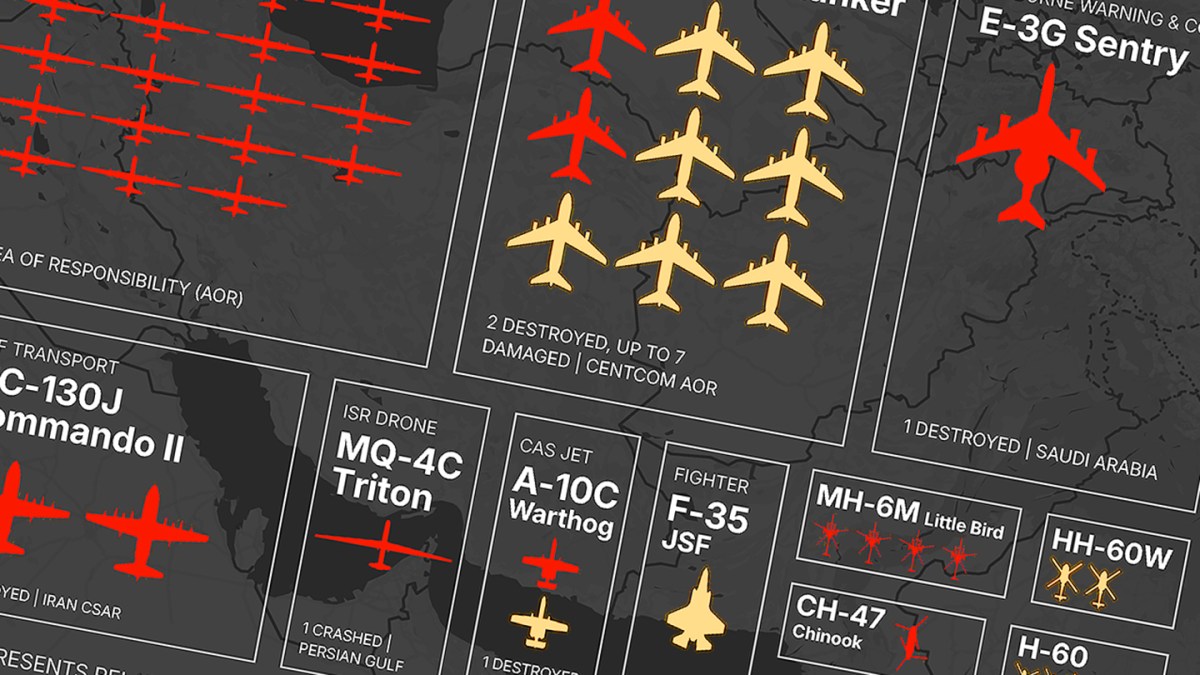
- US forces are likely to face increasing operational strain in sustaining simultaneous missions against Iran and the Houthis over the next one to three months, although the reporting does not establish an immediate inability to operate. The Washington Post, citing three US officials, reported at least 45 MQ-9 Reapers lost, while the Lead Inspector General reported as many as 30 MQ-9A Reapers destroyed. Additional reporting describes the loss of an MQ-4C Triton, an MQ-1, F-15Es and other aircraft, alongside concerns over shortages of strike and air-defence missiles. The exact loss totals and the reported damage to roughly eight F-15Es remain disputed, lowering confidence in the broader strain assessment. (Confidence: medium · ASSESSED)
- I&W: Confirm: the Pentagon or Lead Inspector General reports additional MQ-9, MQ-4C, MQ-1 or F-15E losses, or identifies missile shortages that limit operational planning. (0-3 months)
- I&W: Break: the Pentagon reports adequate strike and air-defence missile stocks, no operational restrictions and uninterrupted destroyer deployment schedules. (0-3 months)
Outlook & scenarios
Managed coercive stalemate (50%)
Washington maintains economic isolation and military pressure without launching a new major strike. Iran sustains retaliatory threats and keeps Hormuz traffic minimal while mediators continue contacts. Trump and Pezeshkian use UN General Assembly engagements for messaging rather than a ceasefire, and Houthi attacks on Saudi Arabia continue.
Conditional maritime bargain (30%)
Washington eases military pressure or modifies the blockade, and Iran begins reopening the Strait of Hormuz within seven days. Commercial tanker movements increase and oil prices ease, but the arrangement remains conditional. The Houthi-Saudi conflict continues as a separate source of regional and shipping risk.
Wider US-Iran and Yemen escalation (15%)
The US resumes strikes against Iran or Houthi targets. Iran responds by changing the weapons and geography of the conflict, while the Houthis launch further attacks against Riyadh, Yanbu or Red Sea shipping. Saudi Arabia requests additional external support and the UK, Turkey or other partners face pressure to expand their roles.
High-impact wildcard: maritime miscalculation (5%)
A disputed attribution involving a Chinese commercial vessel or a South Korean asset triggers an attempted interdiction or Iranian retaliation. The incident draws China into the crisis, hardens opposition to a Hormuz security mission and produces a wider confrontation despite the absence of an initial US decision to expand the war.
Recommendations
- Track Strait of Hormuz vessel counts daily and separate raw traffic data from broader categories such as naval or support vessels. Treat an Iranian reopening offer as implemented only after verified tanker movement follows.
- Maintain a dedicated warning file for Houthi launches against Riyadh, Yanbu, Saudi energy infrastructure and Red Sea shipping. Record separately any US authorisation, force preparation or confirmed strike in Yemen.
- Seek primary transcripts and mediator readouts for Trump's UN remarks, Rubio's comments, Pezeshkian's UN engagements and any Trump-Pezeshkian or Xi-Trump meeting. Do not infer a negotiating position from a single public statement.
- Keep the UK contribution split into separate categories: requested air-defence assistance, confirmed air-to-air refuelling and any direct deployment of air-defence systems. Do not treat the disputed air-defence commitment as established.
- Flag the Lamerd strike attribution, the reported damage to roughly eight F-15Es and the competing US Reaper loss totals as unresolved. Exclude them from confirmed casualty or capability counts until independent corroboration appears.
- Monitor US missile inventories, aircraft loss reporting and destroyer deployment schedules alongside Lockheed Martin's PrSM production expansion. Use these indicators to assess whether operational strain is limiting Washington's options.
- Model fuel and logistics exposure under three conditions: continued two-vessel Hormuz traffic, partial Iranian reopening within seven days and enactment of a US diesel export restriction.
Confidence & uncertainty
Overall confidence is high because the principal developments are supported by multiple independent source types, including major media, multilateral reporting, official US statements, market data and shipping reports. The strongest corroboration concerns Trump's economic pressure on Iran, the Houthi attack on Riyadh, disrupted Hormuz traffic, record US diesel prices and Saudi pipeline activity. The main uncertainties concern the timing of further US strikes, the scope of UK support to Saudi Arabia, disputed aircraft loss figures, the attribution of the Lamerd strike and single-source reporting on IRGC activity in Yemen.
Intelligence gaps
- [EEI 1.1 · UNCOVERED] Movement, dispersal, or emplacement of Iranian conventional or IRGC heavy assets (ballistic missile launchers, Khoramshahr/Toofan-class missile transporters, ground-to-ground TELs, air defense batteries, amphibious units) from garrison areas toward forward bases or coastal launch sites. Recommended collection: satellite/IMINT
- [EEI 1.2 · PARTIAL] Authenticated Iranian military orders, NSC/IRGC operations directives, or senior leadership statements explicitly directing strikes against Israel or US forces or authorizing cross-border operations. Recommended collection: human/diplomatic
- [EEI 1.3 · PARTIAL] Changes in Israeli and US force posture indicating anticipation of direct large-scale conflict, elevated readiness levels, mobilization notices, pre-positioning of munitions, or public/private orders to prepare offensive strikes. Recommended collection: open-source/diplomatic
- [EEI 2.1 · PARTIAL] Observable pre-launch preparations for missile/rocket/cruise missile strikes (fueling, warhead mating, launcher orientation, support vehicle congregation) and abnormal munitions handling at known launch sites. Recommended collection: satellite/IMINT
- [EEI 2.2 · UNCOVERED] Indications of proxy arms shipments and weapons transfers (truck convoys, small boat transfers, container movements from Iran to proxies, new stockpiles in Lebanon, Iraq, Yemen, Syria). Recommended collection: maritime/AIS
- [EEI 2.3 · UNCOVERED] Evidence of cyber attack planning or active exploitation campaigns targeting Israeli or US military/critical infrastructure (emergence of new command-and-control servers, spear-phishing campaigns against defense personnel, successful intrusions). Recommended collection: cyber
- [EEI 3.1 · PARTIAL] Movements and posture changes of US regional platforms (carrier strike groups, amphibious ready groups, B-52/B-1/B-2 or fighter deployments, missile defense assets repositioning) and associated armament loadouts. Recommended collection: satellite/IMINT
- [EEI 3.3 · PARTIAL] Changes in US base force-protection measures and rules of engagement at regional facilities (base lockdowns, evacuation notices, flight restrictions, activation of Local Defense Forces or missile intercept systems). Recommended collection: open-source/local reporting
- [EEI 4.1 · UNCOVERED] Hezbollah-specific indicators: convoys and logistics movements toward Lebanon, Israel border, artillery/rocket emplacement in southern Lebanon, documented strikes-preparation activity, public mobilization orders or recruitment drives. Recommended collection: satellite/IMINT
- [EEI 4.3 · UNCOVERED] Militia cross-border attack evidence from Iraq/Syria: recorded rocket/mortar launch events into Israel or strikes against US facilities, movement of armed convoys toward border areas, and intercepted communications coordinating cross-border operations. Recommended collection: signals/ELINT
Cited sources
[1] gCaptain · Trump Calls for Iran’s Economic Isolation at UN as Tehran Offers Hormuz Reopening (C) · Tue Sep 22 2026 16:05:08 GMT+0000 (Coordinated Universal Time) · sha256:5aea7be4dab2 [2] inkl.com · Middle East crisis: Trump says Iran will make a deal after US midterms – as it happened (B) · Tue Sep 22 2026 08:28:56 GMT+0000 (Coordinated Universal Time) · sha256:7980e267b66d [3] Suara Garut · Middle East War Escalates as US Weighs Options Against Iran (D) · Tue Sep 22 2026 10:47:31 GMT+0000 (Coordinated Universal Time) · sha256:1180611c932e [4] jpost.com · Live Updates: Latest from Israel, Iran, and the Middle East | The Jerusalem Post (F) · Tue Sep 22 2026 04:48:32 GMT+0000 (Coordinated Universal Time) · sha256:34a2b28c8275 [5] Business Insider Africa · The value of Africa’s most powerful military nation to the US comes into focus as the head of the CIA discusses some of the world’s most critical issues in Cairo (B) · Tue Sep 22 2026 15:10:14 GMT+0000 (Coordinated Universal Time) · sha256:85dc66ac26cc [6] NBC News · Middle East Conflict: Latest News, Breaking Headlines and Video (A) · sha256:26338e3d8e67 [7] The Jerusalem Post · Saudis may seek help from Israel as current alliances prove insufficient against Houthis - analysis (B) · Tue Sep 22 2026 08:24:34 GMT+0000 (Coordinated Universal Time) · sha256:6a1e894a7a74 [8] The Chosun Daily (chosun.com) · War-Torn Nations Win Medals Amid Asian Games Missile Strikes (A) · Tue Sep 22 2026 15:44:29 GMT+0000 (Coordinated Universal Time) · sha256:362e45aaaa32 [9] ABC News · Houthis' escalating attacks on Saudi Arabia give Iran leverage in the Middle East (A) · Mon Sep 21 2026 22:39:49 GMT+0000 (Coordinated Universal Time) · sha256:a1268675e2b1 [10] Institute for the Study of War (ISW) / Critical Threats Project (AEI) · Iran Update, September 21, 2026 (B) · Tue Sep 22 2026 02:21:01 GMT+0000 (Coordinated Universal Time) · sha256:c1381abab961 [11] gCaptain (republishing Bloomberg reporting) · Trump Pushing for Diesel Export Ban Amid Surging Fuel Prices (C) · Tue Sep 22 2026 19:49:05 GMT+0000 (Coordinated Universal Time) · sha256:1d5c4815da3a [12] gCaptain · France Mulls New UN Security Council Resolution on Hormuz (B) · Tue Sep 22 2026 16:34:46 GMT+0000 (Coordinated Universal Time) · sha256:08eb0524ebd4 [13] The Maritime Executive · Calls Grow for a U.S. Diesel Export Ban - But Economists Express Caution (C) · sha256:e7373dc51100 [14] TWZ (The War Zone) · Every American Aircraft Lost Or Damaged During The Iran War, Visualized (B) · Tue Sep 22 2026 20:38:59 GMT+0000 (Coordinated Universal Time) · sha256:aad95df40cce [15] Defense News · US Army awards Lockheed Martin $1.2B PrSM contract (B) · Tue Sep 22 2026 15:04:23 GMT+0000 (Coordinated Universal Time) · sha256:6bc9c64936b4 [16] Defense News · US Navy destroyers tested in Middle East as demands mount (B) · Tue Sep 22 2026 18:55:08 GMT+0000 (Coordinated Universal Time) · sha256:880751809959
Source content hashes were computed at collection time; the cited text is preserved unmodified for the life of this product.
TLP:CLEAR