TLP:CLEAR · Disclosure is not limited.
Iran-Israel Conflict: US Strikes Widen Regional and Shipping Risks
Time window: Last 1 day · Audience: General analyst · Type: Situation report · DTG: 2026-09-02 15:04Z · Overall confidence: HIGH
BLUF
The conflict has entered a wider retaliatory phase. US strikes on IRGC sites in Iran on 1 September were followed by Iranian attacks or reported attacks involving Jordan, Iraq, Bahrain and Kuwait on 2 September. It is very likely that military exchanges and regional disruption will continue over the next 14 days, while the Strait of Hormuz remains heavily constrained but not demonstrably closed.
Executive summary
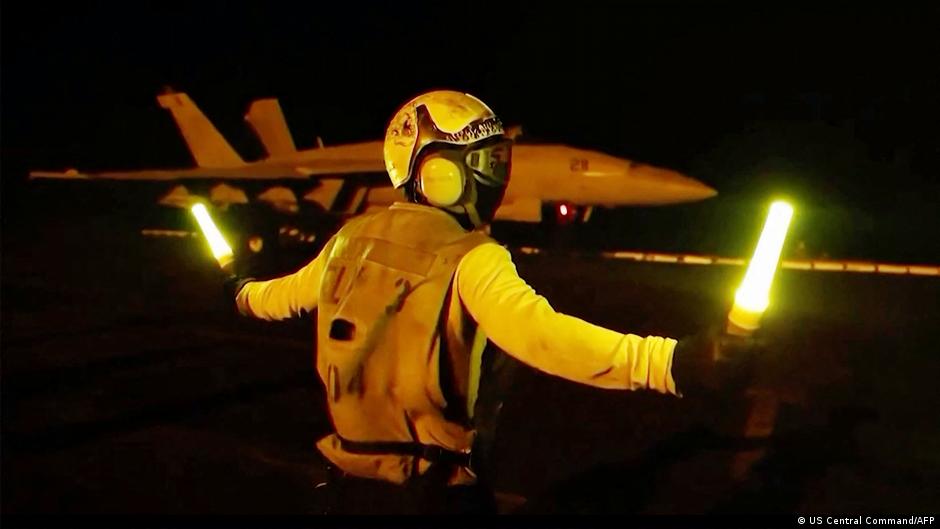
US Central Command reported strikes on IRGC air-defence, radar, naval, mining and communications sites in Iran on 1 September. The IRGC then announced attacks on US positions in Jordan, Iraq and Bahrain, while Jordan reported intercepting Iranian missiles and Kuwait reported missile and drone attacks, including an incident at a residential compound. Shipping remains disrupted: tankers were struck by unknown projectiles, mine risks remain contested and LNG operators are using ship-to-ship transfers outside the Strait of Hormuz. Washington is also expanding economic pressure, while Iranian, Qatari, Omani and UN diplomatic activity has not yet produced a verified ceasefire.
Change from previous assessment
Since the 31 August brief, the assessment has shifted from likely renewed US-Iran exchanges after the Larak Island strike to a higher-confidence judgement that the retaliation has widened across Jordan, Iraq, Bahrain and Kuwait. The near-term spillover judgement now gives greater weight to confirmed Jordanian interceptions and Kuwait's reported casualties, while treating Iranian claims about Erbil and Bahrain as unverified. The Hormuz assessment is unchanged in direction but is more precise: shipping remains heavily constrained, yet documented LNG transfers outside the Strait argue against treating it as fully closed. This brief adds a low-confidence judgement on mediation prospects and a mid-September Israeli-Iranian escalation wildcard.
Key judgments
- It is very likely that US-Iran military exchanges will remain active through 16 September 2026. US Central Command reported strikes on IRGC air-defence, radar, naval, mining and communications sites in Iran on 1 September, while the IRGC announced attacks on US positions in Jordan, Iraq and Bahrain on 2 September. Iranian officials and Jordanian authorities also reported missile activity involving Jordan. Donald Trump and Mohsen Rezaei have threatened further escalation. The existence of the exchange is well corroborated, but reported damage and the IRGC claim of US military deaths remain disputed. (Confidence: high · ASSESSED)
- I&W: CONFIRM: Within 0-14 days, CENTCOM or the IRGC announces another strike on the other's forces or facilities in Iran, Jordan, Iraq, Bahrain or Kuwait. (0-14 days)
- I&W: BREAK: Washington and Tehran announce a mutually observed halt, followed by seven consecutive days without reported launches or strikes. (0-14 days)
- It is likely that regional spillover will persist over the next 14 days, with Jordan and Kuwait facing the clearest immediate exposure and Iraq and Bahrain remaining at risk because the IRGC has claimed attacks on US positions there. Jordanian authorities reported 13 ballistic missiles entering Jordanian airspace, with 10 intercepted and three landing in remote areas. Kuwait reported missile and drone attacks, a fire at a residential compound and one death with 32 wounded. The IRGC claim of damage at the US base in Erbil and Iranian media reporting of a large-scale drone attack on a US base in Bahrain are not independently confirmed in the supplied reporting, lowering confidence. (Confidence: medium · ASSESSED)
- I&W: CONFIRM: Jordanian Armed Forces or the Kuwaiti government reports a new Iranian missile or drone salvo, air-defence engagement or casualties. (0-14 days)
- I&W: BREAK: Jordan, Kuwait, Iraq and Bahrain report no new Iranian-origin launches or air-defence engagements for 14 consecutive days. (0-14 days)
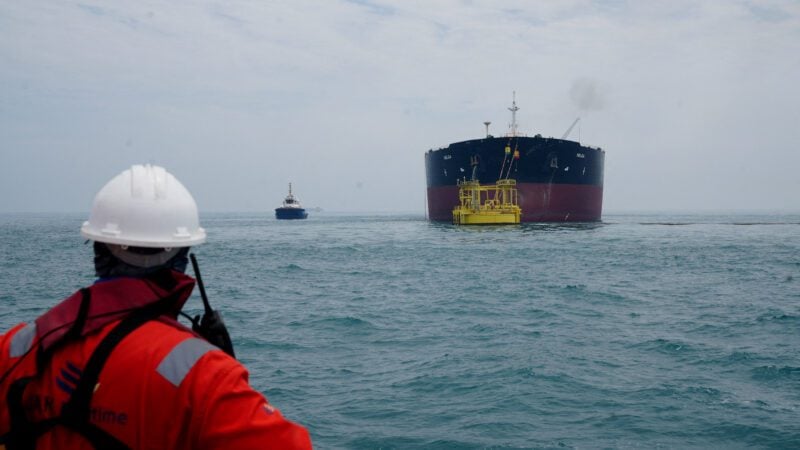
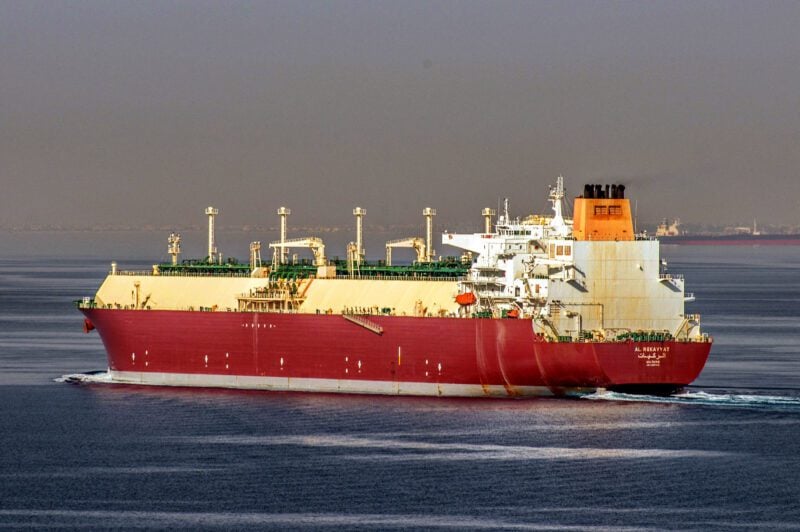
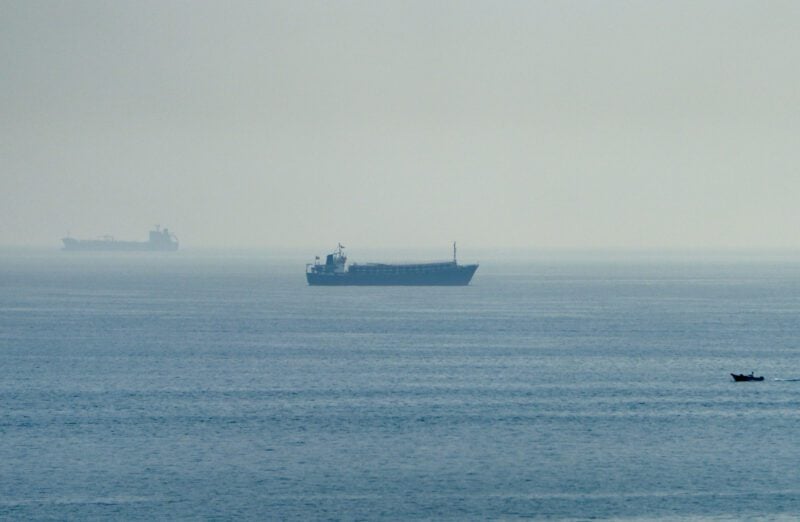
- It is very likely that commercial shipping through the Strait of Hormuz will remain heavily constrained rather than fully halted over the next 14 days, and it is unlikely that normal traffic will resume. Two oil tankers were struck by projectiles of unknown origin, while INTERTANKO reported continued attacks along the southern route off Oman and warned that mine clearance alone is insufficient for normal transit. CENTCOM announced clearance of mines from the Traffic Separation Scheme, but the Joint Maritime Information Center continued to warn about drifting or uncharted mines. At the same time, three LNG cargoes were transferred between ships outside the Strait for delivery to India and Japan, and the LNG Enugu remained en route to Futtsu, demonstrating continued movement through alternative arrangements. Attribution of the tanker incidents remains unconfirmed. (Confidence: medium · ASSESSED)
- I&W: CONFIRM: Within 0-14 days, Kpler or Vortexa records additional LNG ship-to-ship transfers outside the Strait and INTERTANKO continues to warn that vessels cannot transit without interference. (0-14 days)
- I&W: BREAK: Kpler records sustained, unrerouted tanker and LNG movements through the Traffic Separation Scheme while the Joint Maritime Information Center withdraws its warning on residual mine risks. (0-14 days)
- It is likely that economic and humanitarian pressure will persist over the next 1-3 months as Washington expands sanctions while energy prices remain elevated. Treasury Secretary Scott Bessent said bank sanctions against Iran were likely this week and next, and Washington is deploying secondary sanctions under Operation Economic Outcast. WTI crude exceeded 90 US dollars per barrel, Asian spot LNG reached 23.20 US dollars per million British thermal units and the 10-year US government yield reached 4.79 percent on 1 September. Iranian reporting on the Kuhestak and Sirik wedding strike gives a death toll of four to five and an injured toll of about 50 to 68, while Kuwait's Health Ministry reports one dead and 32 wounded. The market trend is well corroborated, but civilian casualty totals and attribution remain less certain. (Confidence: medium · ASSESSED)
- I&W: CONFIRM: The US Treasury announces the stated bank sanctions against Iran, followed by additional secondary-sanctions designations. (0-14 days)
- I&W: BREAK: Treasury suspends the announced sanctions sequence and Asian spot LNG and WTI crude return below their pre-escalation levels. (1-3 months)
- It is unlikely that current diplomatic activity will produce a durable US-Iran ceasefire within 14 days, although there is a roughly even chance that mediation contacts continue over 1-3 months. Qatar says it is holding talks with Oman and Pakistan, while another report attributes temporary-route talks with Oman to Iran. This unresolved attribution conflict reduces confidence in the scope of the mediation effort. Masoud Pezeshkian tied Iranian reciprocity to Washington's compliance with the June Memorandum of Understanding, while Donald Trump has threatened stronger strikes after further Iranian retaliation. The assessment is thin and partly single-source. (Confidence: low · ASSESSED)
- I&W: CONFIRM: Qatar, Oman, Pakistan, Turkey or Iran publicly announces named talks, a new mediator channel or an implementation step under the June Memorandum of Understanding. (0-14 days)
- I&W: BREAK: Washington or Tehran formally suspends mediation contacts, or either side announces that the June Memorandum of Understanding no longer constrains military action. (0-14 days)
Outlook & scenarios
Continued reciprocal strikes with contained spillover (55%)
This is the most likely outcome through 16 September. US and Iranian forces continue limited strikes and retaliatory missile or drone operations, with Jordan and Kuwait sustaining defensive interceptions. Iraq and Bahrain remain exposed, but the main exchanges stay linked to US positions and IRGC facilities rather than expanding into a wider state-on-state war involving additional regional governments.
Hormuz and Gulf escalation (25%)
It is unlikely but high impact that further tanker incidents, mine warnings or attacks on US facilities force longer rerouting and make the Strait of Hormuz effectively unavailable to most commercial traffic. LNG ship-to-ship transfers outside the Strait increase, while energy prices and maritime insurance pressure rise further.
Limited diplomatic pause (20%)
It is unlikely that Qatar, Oman, Pakistan and Turkey secure a short pause in strikes through the June Memorandum of Understanding or a related channel. A pause would reduce reported launches and allow limited shipping discussions, but the unresolved conditions set by Washington and Tehran would leave the arrangement fragile.
Israeli-Iranian expansion around the mid-September Jewish holidays (10%)
This is very unlikely but high impact. An Iranian attack during the Jewish holidays prompts Israel to respond with great force, while Hezbollah increases pressure on communities along Israel's northern border. The result would be a wider Israeli-Iranian confrontation alongside the existing US-Iran exchanges.
Recommendations
- Prioritise 0-14 day warning collection on further launches and impacts. Reconcile reporting from CENTCOM, the IRGC, the Jordanian Armed Forces, the Kuwaiti government and host authorities. Treat Iranian claims of US deaths and alleged damage at Erbil, Bahrain and Ali Al Salem Air Base as unverified until independently corroborated.
- Track the Strait of Hormuz daily through Kpler and Vortexa vessel movements, Joint Maritime Information Center warnings and INTERTANKO advisories. Separate confirmed Traffic Separation Scheme mine clearance from the continuing risk of attacks, interference and drifting mines.
- Distinguish normal through-Strait traffic from ship-to-ship transfers outside the Strait when assessing whether the waterway is reopening. Use the LNG movements involving Al Rekayyat, Tembek, Mraweh, LNG Enugu, GasLog Shanghai and GasLog Savannah as specific checks on rerouting behaviour.
- Monitor the US Treasury sanctions sequence and the three Iranian-linked entities named in the maritime warning. Flag new bank designations alongside movements in WTI crude, Asian spot LNG and 10-year US government yields.
- Maintain a dedicated watch window for the mid-September Jewish holidays. Track statements and force-readiness reporting from Israel's Defence Minister Israel Katz, Iranian leadership and Hezbollah, while separating warnings from confirmed launches.
- Verify the competing mediation accounts before assigning diplomatic credit or intent. Confirm whether Oman is engaging Qatar, Iran or both, and track whether Pezeshkian's conditions and Trump's retaliation warnings change.
Confidence & uncertainty
Overall confidence is high for the core assessment that US-Iran military exchanges have intensified, regional spillover has widened and commercial activity through the Strait of Hormuz is constrained. The assessment draws on corroborating reporting from CENTCOM, Jordanian authorities, Kuwait's Health Ministry and government, major media and trade data from Kpler, Vortexa and INTERTANKO. The main uncertainties concern the attribution and impact of tanker incidents, the extent of damage at US facilities, divergent Iranian casualty figures, inconsistent dates and the identity of Oman's mediation partner.
Intelligence gaps
- [EEI 1.1 · UNCOVERED] Number, type, launch times, and trajectories of ballistic missiles, cruise missiles, armed UAV strikes, and combat-air sorties launched by Iranian or Israeli forces toward the other's territory or forward bases within a 72-hour window. Recommended collection: signals/intel
- [EEI 1.2 · UNCOVERED] Observable changes in Israeli and Iranian force posture: mobilization or reserve call-up orders, unit road/rail movements, dispersal or sortie rates of air squadrons, redeployment of air-defense batteries, and activation of civil-defense alerts or sirens in major population centers. Recommended collection: open-source/media
- [EEI 1.3 · PARTIAL] Indications of strike authorization or targeting preparations in Iranian or Israeli command chains: authenticated public orders by senior commanders, detected increases in encrypted communications consistent with targeting, or visible movement of strike munitions to launch/storage sites. Recommended collection: signals/intel
- [EEI 2.1 · UNCOVERED] Counts, launch locations (coordinates), weapons types, and assessed damage from rocket/missile/drone strikes originating from Lebanon into northern Israel attributed to Hezbollah or allied groups. Recommended collection: open-source/media
- [EEI 2.2 · UNCOVERED] Reported attacks by Iranian-backed militias in Iraq and Syria: rocket/IED strikes on bases hosting US/coalition or Israeli personnel, documented militia unit movements toward borders, and captured movement or transfer of weapons systems to forward militia positions. Recommended collection: human
- [EEI 2.3 · UNCOVERED] Maritime harassment or attacks by proxies (e.g., Houthis): incidents of missile/rocket strikes against commercial vessels, small-boat swarm attacks, discovery or detonation of naval mines, and corresponding AIS anomalies in the Red Sea, Gulf of Aden, or southern Arabian Gulf. Recommended collection: maritime/AIS
- [EEI 3.1 · UNCOVERED] Movements and arrival dates of foreign military assets into the region: carrier strike groups, amphibious ships, surface combatants, strategic airlift/tanker deployments, and air/sea patrol patterns by US, European, Russian, or regional militaries. Recommended collection: imagery/satellite
- [EEI 3.3 · PARTIAL] Immediate commercial and market indicators: rerouting of commercial tankers and container vessels (e.g., avoidance of Bab el-Mandeb or Strait of Hormuz), sudden spikes in war-risk insurance premiums for regional sea lanes, temporary port closures, and near-term price moves in regional benchmark crude tied to incidents. Recommended collection: financial/market
TLP:CLEAR