TLP:CLEAR · Disclosure is not limited.
Iran-Israel Conflict: Yemen Front and Maritime Disruption Expand
Time window: Last 1 day · Audience: General analyst · Type: Situation report · DTG: 2026-09-15 20:09Z · Overall confidence: HIGH
BLUF
Iran-backed Houthi advances along Yemen's western coast have opened a more direct maritime flank of the US-Iran conflict, while shipping through the Strait of Hormuz and Bab el-Mandeb remains severely constrained. The United States is sustaining military involvement against Iran but has so far declined Saudi requests for strikes against Houthi positions, favouring intelligence support and direct contacts.
Executive summary
Reporting on 15 September indicates that Ansar Allah has captured Mocha and expanded its position in Hodeidah and near Bab al-Mandeb, followed by continued missile and drone attacks against Saudi Arabia. Commercial traffic remains sharply reduced, with UKMTO reporting Hormuz traffic about 90 per cent below pre-conflict levels and Kpler recording only 21 commodity vessels through Bab el-Mandeb on 14 September. Saudi Arabia's East-West pipeline remains impaired, and Yanbu has suspended oil loadings, although Saudi Arabia continues to export through Ras Tanura and reported dark shipments. Yemen's humanitarian situation is deteriorating rapidly, with recent displacement estimates ranging from 86,000 to 125,000 people and more than 2,400 arrivals in Djibouti. The main uncertainties concern the exact extent of Houthi territorial control, the cause of the El Gaia tanker incident, the pipeline repair timeline and the scale of Russian military support to Iran.
Change from previous assessment
Since the 14 September brief, the assessment has shifted from a primarily contested maritime and Yemen outlook to a more clearly connected multi-front escalation. New reporting adds the Houthi capture of Mocha on 10 September, reported control of Hays and Khokha in Hodeidah, attacks on Saudi Arabia, a severe reduction in Hormuz and Bab el-Mandeb traffic, Yanbu cargo cancellations and displacement estimates reaching 125,000 people. The assessment now distinguishes severe restriction from total closure in the Strait of Hormuz, retains medium confidence on Houthi territorial scope because reports conflict, and raises confidence in the scale and direction of Yemen's humanitarian deterioration. A new judgment assesses continued US restraint on overt strikes in Yemen, while a low-confidence judgment addresses reported Russian military support to Iran.
Key judgments
- Ansar Allah's offensive in Yemen is very likely to remain an active maritime flank of the US-Iran conflict over the next 30 days. Reporting places Houthi forces in control of Mocha on 10 September, Hays and Khokha in Hodeidah, and positions near Bab al-Mandeb. Houthi missiles and drones have struck Saudi Arabia, including a claimed attack on King Khalid Air Base. Reports that the Houthis control all of Yemen's Red Sea coast conflict with the narrower account of six districts covering 5,400 square kilometres. Confidence is medium on the extent of territorial control but higher on the continuation of the offensive and its relevance to maritime security. This assessed judgment draws on corroboration from major-media, multilateral and NGO reporting, alongside Houthi statements. (Confidence: medium · ASSESSED)
- I&W: Confirm: independent reporting places additional Houthi forces or administrative control beyond the six districts already reported, or records another missile or drone attack on a named Saudi site. (0-14 days)
- I&W: Break: Saudi-backed Yemeni Government forces and the National Resistance retake Mocha or Hays and Khokha, while no Houthi missile or drone attack on Saudi Arabia is reported for 14 consecutive days. (0-30 days)
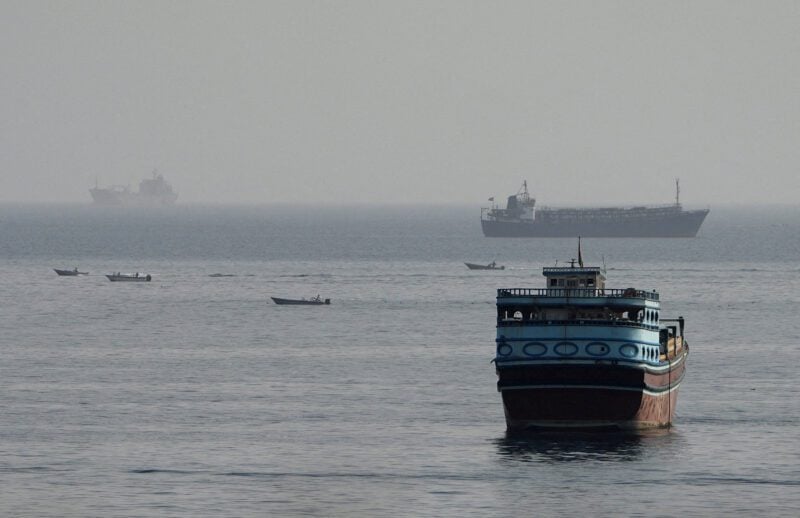
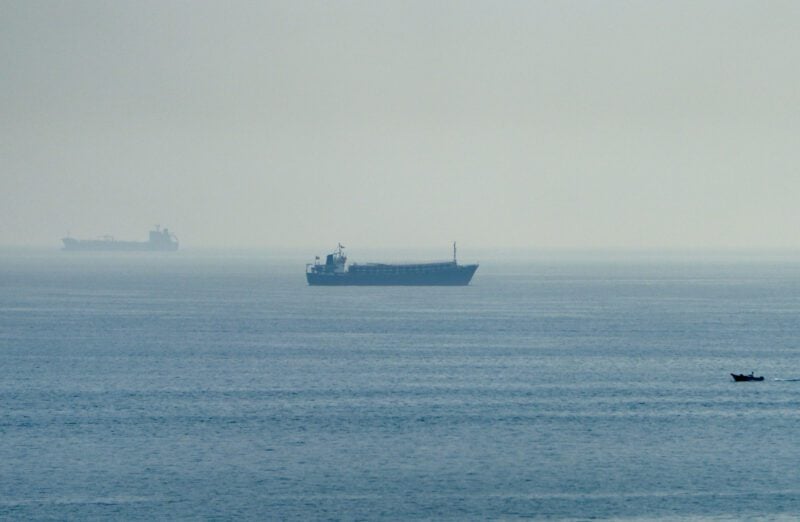
- Commercial shipping through the Strait of Hormuz and Bab el-Mandeb is very likely to remain severely constrained over the next 14 days, but the evidence does not establish a uniform total closure. UKMTO reported Hormuz traffic about 90 per cent below pre-conflict levels while recording 70 US-facilitated transits from 10 to 12 September, against a pre-conflict average of about 138 vessel movements per day. Kpler recorded 21 commodity vessels through Bab el-Mandeb on 14 September, and UNHCR warned that additional deterioration would force rerouting via the Cape of Good Hope, adding 25 to 30 days. JMIC rated the Hormuz threat severe and reported attacks on three vessels in 72 hours. The cause of the El Gaia incident remains directly disputed between Iran's IRGC Navy and US Central Command, lowering confidence in attribution while leaving the operational threat assessment intact. Confidence is medium because shipping data, maritime reporting and official accounts corroborate severe disruption, but dark shipping and the tanker attribution remain unresolved. (Confidence: medium · ASSESSED)
- I&W: Confirm: UKMTO records another three-day period with traffic about 90 per cent below pre-conflict levels, or JMIC reports another attack on commercial shipping in Hormuz. (0-14 days)
- I&W: Break: UKMTO records traffic returning towards the pre-conflict average of about 138 vessel movements per day and JMIC reduces its severe threat rating. (0-30 days)
- Saudi Arabia's East-West pipeline is likely to remain impaired for weeks, while Yanbu oil loadings and some September cargoes are likely to remain disrupted over the next 14 days. Saudi officials said repairs to the 1,200-kilometre pipeline might take weeks; Saudi Arabia has suspended Yanbu loadings, cancelled some September-loading crude cargoes and cut oil shipments to Europe. The disruption has not halted Saudi exports: 22 million barrels were loaded across 12 vessels at Ras Tanura and Juaymah during 7 to 13 September, while dark shipments were assessed at 7 to 9 million barrels per day. Attribution remains contested, with Saudi Arabia blaming Iraqi militia and separate reporting attributing the pipeline strike to the Houthis. Confidence is medium because the outage and Yanbu disruption are corroborated by wire and major-media reporting, but repair timing and responsibility remain unresolved. (Confidence: medium · ASSESSED)
- I&W: Confirm: Saudi officials report that repairs will extend beyond the next 14 days, or Saudi Arabia announces additional Yanbu suspensions and crude cargo cancellations. (0-14 days)
- I&W: Break: Saudi Arabia announces pipeline repair completion and resumes regular Yanbu loadings without further cargo cancellations. (0-30 days)
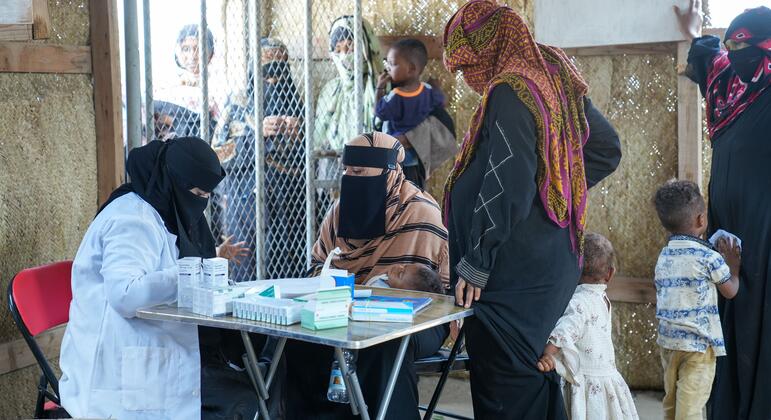
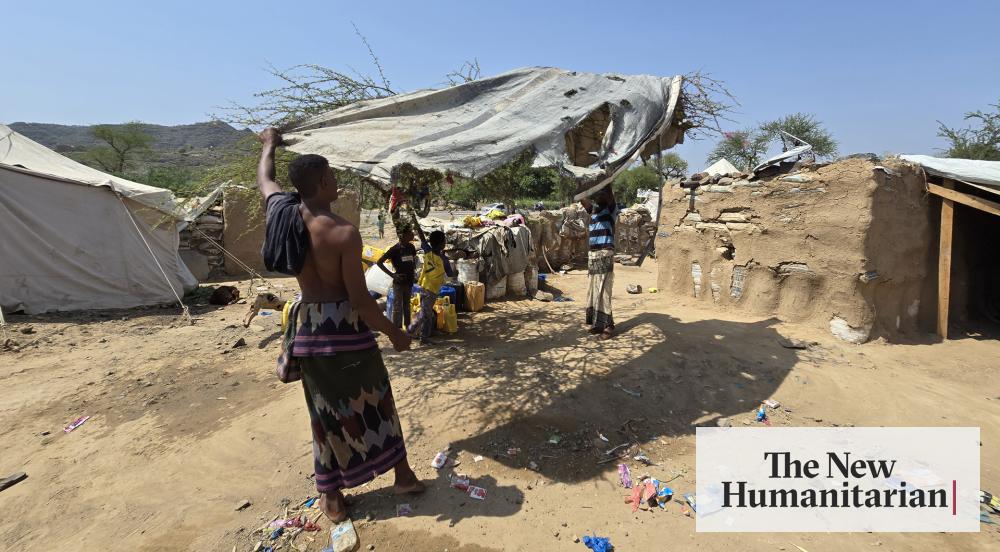
- Yemen's humanitarian crisis is very likely to worsen over the next 1 to 3 months. IOM reported 93,864 newly displaced people across Yemen, UNHCR reported more than 100,000 displaced by fighting along the western coast, and other reporting placed the recent total at 125,000. UNHCR also reported more than 2,400 people crossing to Djibouti in four days, while nearly half of Yemen's 41 million people require aid and FEWS NET projected 15 to 16 million people would need food aid through September. Damage to Al Makha port is constraining humanitarian logistics. UNHCR requested $14 million in new funding, while Tom Fletcher released $9 million from CERF. The precise displacement total remains unsettled because agencies use different geographic scopes and reporting periods, but the direction of deterioration is corroborated by UNHCR, IOM, the UN, FEWS NET and other humanitarian organisations. Confidence is high on the worsening trend and medium on any single total. (Confidence: high · ASSESSED)
- I&W: Confirm: IOM or UNHCR reports new displacement above 125,000 people, or arrivals from Yemen in Djibouti exceed the more than 2,400 recorded over four days. (0-14 days)
- I&W: Break: UN agencies record no new displacement across Aden, Al Hodeidah, Abyan and Ta'iz for 14 consecutive days and report restored humanitarian logistics through Al Makha. (0-30 days)
- US military involvement in the Iran conflict is very likely to continue over the next 14 days, while overt US strikes against Houthi positions in Yemen remain unlikely. The initial phase of Operation Epic Fury involved about 250 tactical aircraft, including roughly 90 aircraft from two carrier strike groups, and the United States is preparing a $2.8 billion munitions sale to Israel. In the Yemen theatre, Donald Trump declined Saudi requests for strikes, Washington offered intelligence support instead, and JD Vance confirmed direct conversations with the Houthis and regional partners. A separate report said the United States had sent advisers to support Saudi military efforts, indicating continued involvement below the threshold of publicly reported strikes. Confidence is medium because the pattern of repeated US refusals and direct talks is consistent across reporting, while the adviser deployment and future policy remain less firmly established. (Confidence: medium · ASSESSED)
- I&W: Confirm: Washington announces kinetic strikes against a named Houthi position in Yemen or acknowledges a sustained US combat deployment in support of Saudi operations. (0-14 days)
- I&W: Break: Trump again rejects a Saudi request for strikes while Vance confirms continued direct talks with the Houthis and Washington provides intelligence support without announcing US attacks. (0-14 days)
- Russia is likely to sustain and deepen military support to Iran over the next 1 to 3 months, but the scale and immediate battlefield effect are uncertain. Reporting states that Russia has begun sending Iran upgraded munitions, satellite imagery and targeting data, while Russian specialists are assisting Iran's development of supersonic and hypersonic cruise missiles under programme C430L. Satellite imagery reportedly shows at least ten new facilities at the Alabuga drone site, and Russian Geran-4 and Geran-5 systems are assessed to be expanding. This judgment rests mainly on one trade-publication report and public intelligence assessments, with no corroborated delivery volumes or direct evidence of battlefield use in the provided reporting. Confidence is low. (Confidence: low · ASSESSED)
- I&W: Confirm: new satellite imagery identifies additional facilities at Alabuga beyond the ten already reported, or official reporting identifies Russian munitions, targeting data or imagery in Iranian operations. (1-3 months)
- I&W: Break: no additional Russian deliveries or production expansion are reported by November, and Russia or Iran publicly rejects the reported military-support arrangements. (1-3 months)
Outlook & scenarios
Prolonged multi-front attrition (55%)
This is the most likely path. Ansar Allah retains its gains around Mocha, Hodeidah and Bab al-Mandeb, Saudi Arabia continues air operations and Houthi attacks continue against Saudi targets. Hormuz and Bab el-Mandeb traffic remains severely reduced, Yanbu exports stay disrupted and Yemen's displacement and food-aid needs rise. The United States maintains its Iran campaign, intelligence support and direct contacts with the Houthis without launching a sustained US strike campaign in Yemen.
Limited maritime deconfliction (25%)
An unlikely but contained diplomatic path produces a limited reduction in attacks on commercial shipping. US-Houthi contacts and Abbas Araghchi's visit to Beijing generate a practical shipping arrangement, restoring some transits through Hormuz and Bab el-Mandeb without ending the US-Iran conflict. Saudi Arabia and the Houthis retain opposing positions in Yemen, and the humanitarian situation improves only slowly.
US kinetic expansion and Saudi escalation (15%)
An unlikely widening scenario follows a further Houthi attack on Saudi Arabia, US forces or commercial shipping. Washington conducts strikes against Houthi positions, Saudi Arabia expands its air campaign and Houthi attacks intensify against Saudi military and energy sites. Shipping diversions lengthen, Yanbu disruption persists and the risk of conflict spreading into additional Israeli, Lebanese or Gulf theatres rises.
Russian-enabled Iranian escalation (5%)
A very unlikely, high-impact wildcard is the rapid operational use of Russian munitions, targeting data or missile assistance by Iran. Iranian attacks on US forces or shipping become more capable, prompting a sharper US and Israeli response. The result is a wider Iran-Israel-US confrontation, deeper Hormuz disruption and a severe shock to Saudi oil logistics.
Recommendations
- Maintain a daily maritime picture that separates UKMTO-confirmed transits, Kpler commodity-vessel counts and reported dark shipments. Do not describe the Strait of Hormuz as fully closed while US-facilitated transits continue to be reported.
- Track the El Gaia incident through three separate fields: vessel location, cause of damage and missing-person count. Report the IRGC mine account and the CENTCOM weapons account separately until an independent assessment resolves them.
- Update district-level mapping of Houthi positions around Mocha, Hays, Khokha, Hodeidah, Perim Island and the Hanish islands. Treat claims of control over the entire Red Sea coast as unconfirmed until they align with district-level reporting.
- Monitor Saudi pipeline repair statements, Yanbu loading activity, September cargo cancellations and Ras Tanura and Juaymah loadings. Use these indicators to distinguish a temporary pipeline outage from a broader Saudi export constraint.
- Use agency attribution and reporting windows when presenting Yemen displacement figures. Keep IOM, UNHCR, UN and Yemen government counts separate rather than combining 86,000, 93,864, more than 100,000 and 125,000 into a single total.
- Prioritise collection on humanitarian access through Al Makha, arrivals in Djibouti, diesel prices in Yemeni government-controlled areas and the gap between UNHCR's $14 million requirement and the $9 million CERF release.
- Track US policy tripwires in Yemen: a formal announcement of strikes against Houthi positions, additional Saudi requests, further intelligence or adviser support, and the continuation of direct US-Houthi talks.
- Treat Russian military support to Iran as a low-confidence warning line. Seek corroboration through additional imagery of Alabuga, confirmed deliveries of munitions or targeting data, and evidence of Iranian use of Russian-supported missile or drone systems.
Confidence & uncertainty
Overall confidence is high because the core developments are corroborated by independent multilateral, maritime, wire-service, major-media and official reporting. UNHCR, IOM, the UN, UKMTO and JMIC provide converging evidence of humanitarian deterioration and maritime disruption, while Saudi pipeline and export reporting is supported by officials, trade data and wire reporting. The main uncertainties are the precise extent of Houthi territorial control, the cause of the El Gaia incident, the repair timeline for the East-West pipeline, the exact displacement total and the scale of Russian military assistance to Iran.
Intelligence gaps
- [EEI 1.1 · UNCOVERED] Movement, dispersal, or emplacement of Iranian conventional or IRGC heavy assets (ballistic missile launchers, Khoramshahr/Toofan-class missile transporters, ground-to-ground TELs, air defense batteries, amphibious units) from garrison areas toward forward bases or coastal launch sites. Recommended collection: satellite/IMINT
- [EEI 1.2 · UNCOVERED] Authenticated Iranian military orders, NSC/IRGC operations directives, or senior leadership statements explicitly directing strikes against Israel or US forces or authorizing cross-border operations. Recommended collection: human/diplomatic
- [EEI 1.3 · PARTIAL] Changes in Israeli and US force posture indicating anticipation of direct large-scale conflict, elevated readiness levels, mobilization notices, pre-positioning of munitions, or public/private orders to prepare offensive strikes. Recommended collection: open-source/diplomatic
- [EEI 2.1 · PARTIAL] Observable pre-launch preparations for missile/rocket/cruise missile strikes (fueling, warhead mating, launcher orientation, support vehicle congregation) and abnormal munitions handling at known launch sites. Recommended collection: satellite/IMINT
- [EEI 2.2 · UNCOVERED] Indications of proxy arms shipments and weapons transfers (truck convoys, small boat transfers, container movements from Iran to proxies, new stockpiles in Lebanon, Iraq, Yemen, Syria). Recommended collection: maritime/AIS
- [EEI 2.3 · UNCOVERED] Evidence of cyber attack planning or active exploitation campaigns targeting Israeli or US military/critical infrastructure (emergence of new command-and-control servers, spear-phishing campaigns against defense personnel, successful intrusions). Recommended collection: cyber
- [EEI 3.1 · PARTIAL] Movements and posture changes of US regional platforms (carrier strike groups, amphibious ready groups, B-52/B-1/B-2 or fighter deployments, missile defense assets repositioning) and associated armament loadouts. Recommended collection: satellite/IMINT
- [EEI 3.2 · PARTIAL] Official or leaked US government/diplomatic communications indicating thresholds for strikes, authorization for offensive operations, or limits on action (NSC/DoD statements, congressional notifications, diplomatic notes). Recommended collection: diplomatic/human
- [EEI 3.3 · UNCOVERED] Changes in US base force-protection measures and rules of engagement at regional facilities (base lockdowns, evacuation notices, flight restrictions, activation of Local Defense Forces or missile intercept systems). Recommended collection: open-source/local reporting
- [EEI 4.1 · UNCOVERED] Hezbollah-specific indicators: convoys and logistics movements toward Lebanon, Israel border, artillery/rocket emplacement in southern Lebanon, documented strikes-preparation activity, public mobilization orders or recruitment drives. Recommended collection: satellite/IMINT
- [EEI 4.2 · PARTIAL] Houthi-attributed maritime attack indicators: AIS anomalies/loss of contact for commercial vessels, reports of missile/drone strikes or near-miss incidents in Bab al-Mandeb/Red Sea, Houthi claims paired with imagery of weapons launches. Recommended collection: maritime/AIS
- [EEI 4.3 · UNCOVERED] Militia cross-border attack evidence from Iraq/Syria: recorded rocket/mortar launch events into Israel or strikes against US facilities, movement of armed convoys toward border areas, and intercepted communications coordinating cross-border operations. Recommended collection: signals/ELINT
Cited sources
[1] The Jerusalem Post · How a Yemeni fishing city has become a second front in the US-Iran conflict - analysis (B) · Tue Sep 15 2026 10:21:02 GMT+0000 (Coordinated Universal Time) · sha256:e3ffe51e80bf [2] Al Jazeera · Saudi Arabia faces high-stakes choices as war with Houthis escalates (A) · Tue Sep 15 2026 14:33:29 GMT+0000 (Coordinated Universal Time) · sha256:3e99710b6404 [3] The National · Houthi gains test Trump’s limits on US military involvement and ties with Saudi Arabia (B) · Tue Sep 15 2026 19:33:22 GMT+0000 (Coordinated Universal Time) · sha256:3e8647628379 [4] i24NEWS · News Feed (B) · Tue Sep 15 2026 03:39:00 GMT+0000 (Coordinated Universal Time) · sha256:7e68598d28b3 [5] Al Jazeera · More than 100,000 displaced as they flee violence in Yemen: UN (A) · Tue Sep 15 2026 17:39:58 GMT+0000 (Coordinated Universal Time) · sha256:7d5eba607f8b [6] gCaptain · U.S. Rejects Iran’s Mine Claim as Hormuz Shipping Threat Remains Severe (C) · Mon Sep 14 2026 20:28:38 GMT+0000 (Coordinated Universal Time) · sha256:e7b203f25a2c [7] Deutsche Welle (DW) · Saudi Arabia faces hard choices as Houthis gain in Yemen (A) · Tue Sep 15 2026 14:03:58 GMT+0000 (Coordinated Universal Time) · sha256:9725611895c7 [8] United Nations News · Escalating conflict drives new displacement in Yemen (A) · Tue Sep 15 2026 15:07:34 GMT+0000 (Coordinated Universal Time) · sha256:27b204a1575c [9] The Maritime Executive · Oman Conducts SAR as US and Iran Argue Over Circumstances of Tanker Attack (C) · sha256:51c152901649 [10] Reuters (republished by gCaptain) · Oil Prices Surge as Saudi Red Sea Loadings Halt, Libya Shuts Fields (A) · Tue Sep 15 2026 19:11:06 GMT+0000 (Coordinated Universal Time) · sha256:893b27c1d5a7 [11] DevDiscourse · Mounting Tensions: Saudi Arabia Faces Escalating Attacks Amidst Regional Conflict | Politics (B) · sha256:9ffcd36289be [12] The New Humanitarian · Yemen’s latest escalation pushes millions deeper into crisis (B) · Tue Sep 15 2026 14:54:26 GMT+0000 (Coordinated Universal Time) · sha256:bc1694b7c3df [13] Sunday Guardian Live · US-Israel-Iran War Latest Live News: Houthis Claim 52 Saudi Air Strikes in Yemen in 24 Hours, Targeted Civilian Infrastructure Amid Gulf Security Crisis (B) · Tue Sep 15 2026 18:38:19 GMT+0000 (Coordinated Universal Time) · sha256:1c4ea6ffa4ea [14] Newsweek · GOP's Thomas Massie moves to impeach Pete Hegseth (A) · Tue Sep 15 2026 16:54:38 GMT+0000 (Coordinated Universal Time) · sha256:5256a044f3d8 [15] Defense News · Iran war has cost $38 billion, depleted two-thirds of US missile interceptors, CBO says (B) · Tue Sep 15 2026 19:52:56 GMT+0000 (Coordinated Universal Time) · sha256:8ff034d7dfb9 [16] Al Jazeera · Can China play peacemaker as Iran’s foreign minister heads to Beijing? (A) · Tue Sep 15 2026 16:15:13 GMT+0000 (Coordinated Universal Time) · sha256:a51600b0538b [17] Defense News · Russia and Iran deepen weapons partnership amid wars in Ukraine, Middle East (B) · Tue Sep 15 2026 13:42:46 GMT+0000 (Coordinated Universal Time) · sha256:30ef624b0f81
Source content hashes were computed at collection time; the cited text is preserved unmodified for the life of this product.
Red cell review: CONCUR WITH COMMENT
TLP:CLEAR