TLP:CLEAR · Disclosure is not limited.
Iran, Israel confrontation: volatile Lebanon front, high UAE threat, and strained Hormuz
Time window: Last 1 day · Audience: General analyst · Type: Situation report · DTG: 2026-07-05 12:51Z · Overall confidence: MEDIUM
BLUF
Hostilities remain active despite parallel diplomacy, with the risk to the UAE very likely elevated and shipping through Hormuz still strained. A contested Israel, Lebanon track and mass funeral events in Iran create short‑term escalation windows.
Executive summary
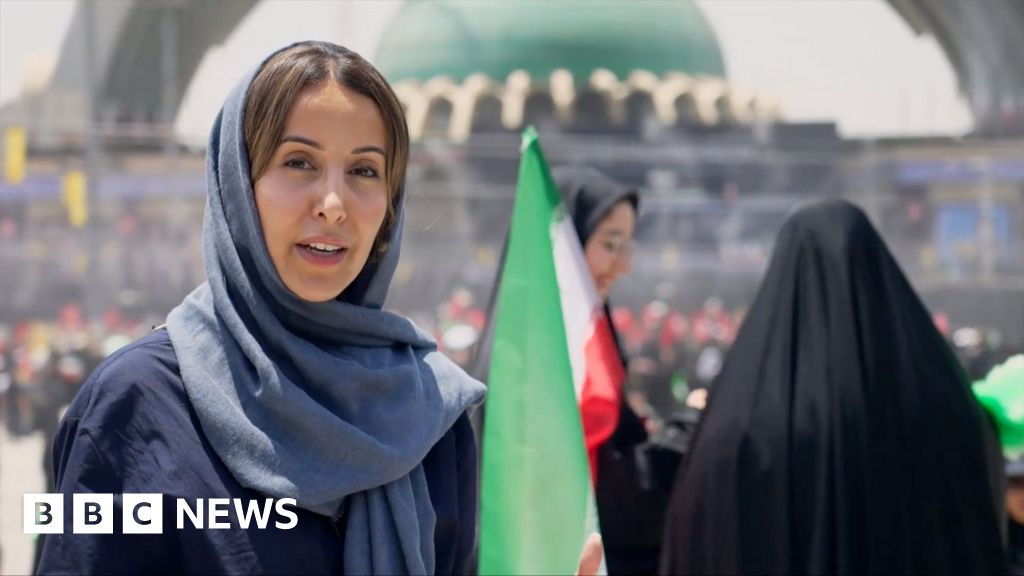
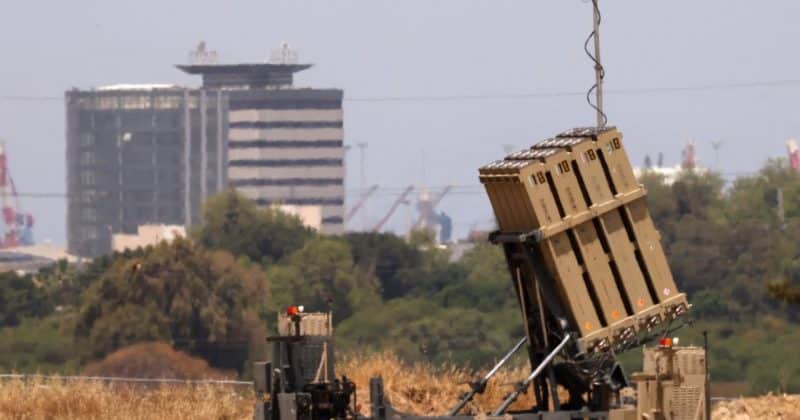
Reporting indicates the conflict triggered by 28 February strikes on Iran is still live, with the US and Iran trading attacks last week even as they pursue indirect talks and an MoU that envisages a 60‑day ceasefire, a deconfliction channel, and reopening Hormuz. Israel’s minister publicly confirmed an Iron Dome deployment to the UAE during the war, aligning with US government warnings and an Iranian threat to target US‑linked sites in the Emirates. Oil producers continue to struggle to move crude due to Hormuz disruptions and some carriers have kept ships out of the Gulf. In Lebanon, a new arrangement that grants Israel latitude near the border and seeks to bolster Lebanese sovereignty faces pushback from Hezbollah and competing narratives over Iranian influence. Large funeral gatherings for Ali Khamenei in Tehran and a burial planned in Mashhad next Thursday add a near‑term risk window and information‑access constraints.
Change from previous assessment
New ministerial confirmation that Israel deployed an Iron Dome battery to the UAE during the war strengthens the assessment of elevated threat to Emirati territory. Reporting now details a US, Iran understanding on a Lebanon deconfliction mechanism and an MoU that includes a 60‑day ceasefire concept and a communication channel, but continued tit‑for‑tat strikes last week indicate fragile implementation. Shipping and energy reporting adds texture on producer sales difficulties and past flow reductions through Hormuz. Funeral coverage now confirms mass gatherings in Tehran and a burial planned in Mashhad next Thursday, refining the near‑term escalation window. Initial assessment of this topic was provided in the prior brief; this update adjusts judgments to reflect the new diplomatic and air defence developments while keeping overall confidence at medium.
Key judgments
- The armed confrontation among Iran, Israel and the United States is active and very likely to persist in the near term, despite parallel talks, as shown by tit‑for‑tat strikes last week and earlier Iranian missile and drone attacks on Israel, US bases and Arab states after the 28 February airstrikes that opened the war. (Confidence: medium · ASSESSED)
- I&W: Public claims by Washington or Tehran of further reciprocal strikes within the next reporting cycle. (0-14 days)
- I&W: A verified two‑week lull in US, Iran kinetic exchanges acknowledged by both sides. (1-2 months)
- Iran‑linked threat to the United Arab Emirates is very likely to remain high, reflected in Tehran’s public intent to target US‑linked sites in the UAE, US government warnings to airlines and travellers, a 2 March departure order for US personnel, and Israel’s confirmed Iron Dome deployment to Emirati territory during the war. (Confidence: high · ASSESSED)
- I&W: Official Iranian claims of attempted attacks or Emirati arrests of cells targeting US‑associated locations in Abu Dhabi or Dubai. (0-1 month)
- I&W: US downgrades its UAE travel advisory or the FAA withdraws its Middle East caution to air carriers. (1-3 months)
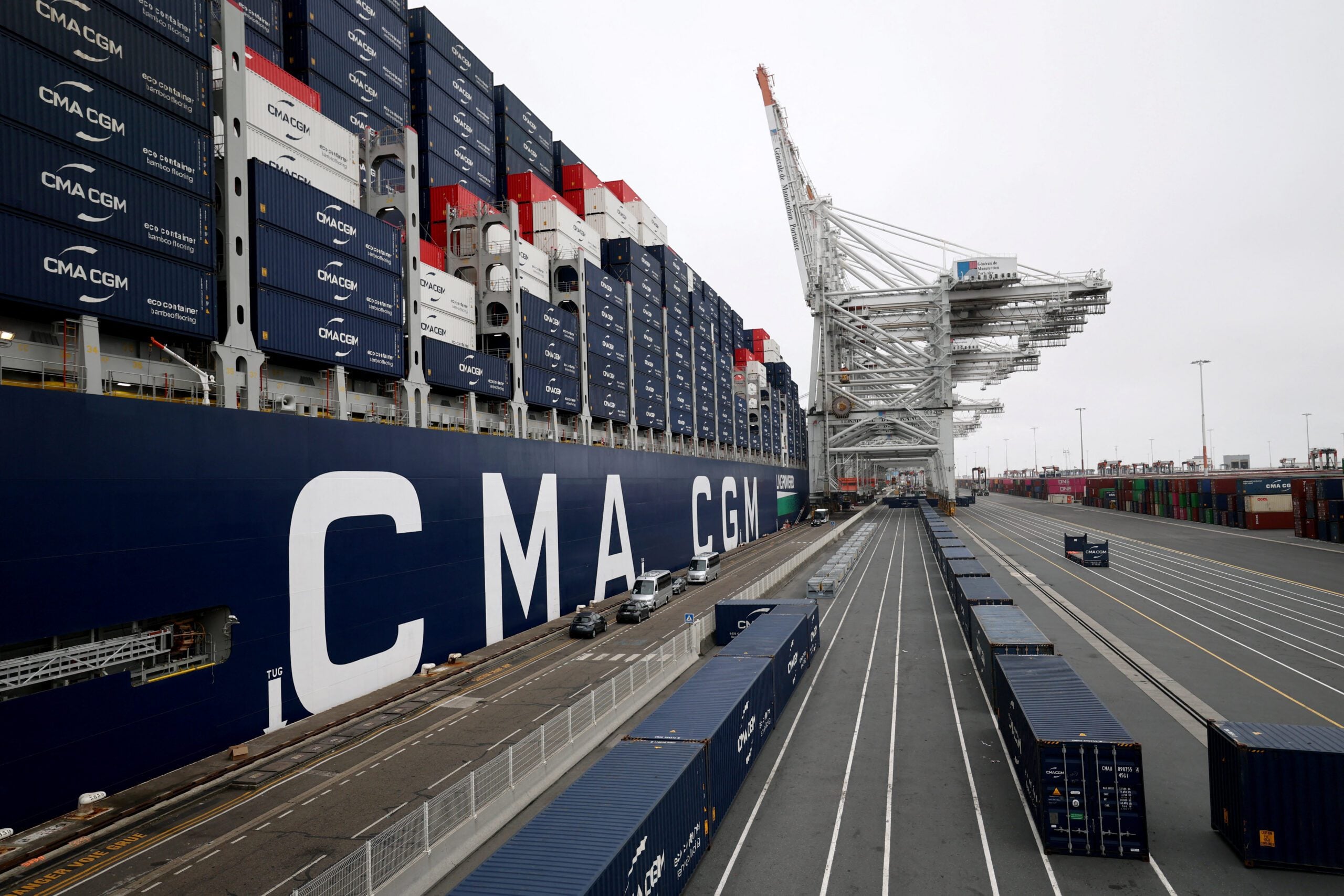
- Disruptions to oil and container shipping via the Strait of Hormuz are likely to persist for at least the next one to three months, with producers struggling to sell crude, throughput having fallen to around one‑third of pre‑war levels at times, and major carriers reducing Gulf exposure while opposing additional transit fees. (Confidence: medium · ASSESSED)
- I&W: AIS and port data show continued rerouting or extended anchorage times for tankers and boxships avoiding Hormuz. (1-3 months)
- I&W: Public announcements by multiple blue‑chip shippers of routine resumptions of Gulf port calls with observed traffic returning toward pre‑war baselines. (1-3 months)
- The new Israel, Lebanon track offers only limited short‑term de‑escalation, with a roughly even chance of renewed large‑scale Israel, Hezbollah clashes because Hezbollah is contesting implementation and key actors differ over whether the arrangement curbs or embeds Iranian influence, even as it grants Israel latitude near the border and seeks to bolster Lebanese sovereignty. (Confidence: medium · ASSESSED)
- I&W: Marked rise in cross‑border fires or deeper‑reach Hezbollah attacks followed by Israeli announcements of expanded operations in southern Lebanon. (0-30 days)
- I&W: Public acknowledgement by Washington and Tehran that a Lebanon deconfliction mechanism is operating, alongside a verified two‑week reduction in artillery exchanges along the Blue Line. (1-2 months)
- The Washington, Tehran diplomatic track is active and likely to deliver episodic deconfliction, but a durable ceasefire in the next month is unlikely given continued reciprocal strikes and contested interpretations of the MoU. (Confidence: medium · ASSESSED)
- I&W: After an incident, both sides reference using the agreed US, Iran communication channel with visible restraint measures. (0-1 month)
- I&W: Continuation of tit‑for‑tat strikes despite the deconfliction understanding. (0-14 days)
- Funeral ceremonies for Ali Khamenei in Tehran and the planned burial in Mashhad next Thursday are very likely to create a short‑lived escalation window and reduce transparency due to restrictions on international media operations in Iran. (Confidence: medium · ASSESSED)
- I&W: Iranian authorities announce heightened security measures or detentions along funeral routes. (0-7 days)
- I&W: Processions conclude without reported security incidents and with routine foreign media access. (0-14 days)
Outlook & scenarios
Fragile containment with contested implementation (40%)
US, Iran indirect talks in Qatar and the MoU’s communication channel produce episodic deconfliction in Lebanon. Border exchanges diminish but do not cease, as Hezbollah resists elements of the arrangement and Israel maintains a tactical presence near the frontier. Hormuz remains constrained but gradually improves from the worst weeks. The UAE stays on heightened alert with Iron Dome in place and continued US travel and aviation cautions.
Lebanon front reignites into a sharper confrontation (35%)
Hezbollah escalates under domestic and external pressure, triggering heavier Israeli fires and potential limited ground action despite the agreement. Competing views on Iranian influence and enforcement collapse the deconfliction effort. Iran signals support through regional missile and drone activity. Maritime risk increases, slowing crude sales and keeping carriers out of the Gulf.
Gulf flashpoint and aviation disruption (25%)
Iran, or proxies aligned with Tehran, target sites in the UAE associated with the United States. Intercepts and security operations limit damage but drive renewed US evacuation guidance and tighter flight cautions. Insurance premia rise and shipping schedules thin further as operators await clarity on the MoU’s security guarantees for Hormuz.
Recommendations
- Maintain an elevated watch on UAE‑based US‑linked facilities and aviation routes: fuse FAA notices, State Department guidance and Emirati reporting into a daily risk picture; pre‑brief mission stakeholders on diversion and shelter‑in‑place options.
- Task collection to verify the Iron Dome battery’s location, manning and rules for engagement in the UAE to inform deconfliction with US assets and host‑nation responses.
- Stand up a Hormuz shipping dashboard that tracks AIS movements, port congestion and line‑haul announcements from major carriers, while monitoring shipper positions on proposed transit fees.
- Build and maintain an indicator log for the Lebanon front: daily counts of cross‑border fires, official references to the US, Iran deconfliction channel, and any Hezbollah threats against Beirut authorities implementing the agreement.
- During the Khamenei funeral window, prioritise cross‑cueing of restricted‑environment sources and satellite imagery to mitigate media‑access limits; prepare rapid updates on any security measures or incidents along the funeral routes.
- Flag for leadership any use of uncorroborated figures on missile volumes or intercepts; where reporting is single‑source or contested, annotate products accordingly and seek corroboration before inclusion.
Confidence & uncertainty
Overall confidence is medium. Several core points rest on high‑reliability official and major‑media reporting that corroborate one another, including US travel and aviation cautions for the UAE, Iran’s stated intent to target US‑linked sites there, and Israel’s ministerial confirmation of an Iron Dome deployment. The diplomatic track is also well sourced via reporting on indirect talks, the MoU’s content, and a planned communication channel. However, assessments of persistence of hostilities, implementation risks in Lebanon, and the trajectory of Hormuz disruptions rely on mixed‑confidence claims, some with competing narratives or date discrepancies, and require inference about near‑term behaviour. Conflicting accounts around the Lebanon arrangement’s implications and contested operational details on missile interceptions further temper confidence.
Alternative analysis (red cell)
The source set contains multiple timing contradictions and relies on several medium‑graded operational claims without reconciled chronology or independent ISR/operational indicators. While diplomatic meetings, public threats, and political events are reported, the evidence supports divergent near‑term outcomes: temporary deconfliction under the MoU, episodic violence with localized deconfliction, or renewed escalation if implementation fails. Given unresolved attribution, timing, and operational corroboration gaps, a more cautious, probabilistic framing is warranted until additional corroborative collection resolves those uncertainties.
Intelligence gaps
- [EEI 1.3 · PARTIAL] Israeli defensive and offensive posture changes: reservist call-ups, mobilization orders, sorties/airstrikes attributed to Israel, and domestic activation of missile-defense systems (locations and activation times). Recommended collection: open-source/media
- [EEI 1.4 · UNCOVERED] Evidence of pre-positioning or arming of naval mines, fast attack craft, or anti-ship missile systems in the Gulf of Oman, northern Arabian Sea, or off the Lebanese/Syrian coasts that could be used to interdict Israeli or allied shipping. Recommended collection: maritime/AIS
- [EEI 2.1 · PARTIAL] Movements and tasking changes of external military assets: carrier strike groups, amphibious ready groups, expeditionary air wings, or ballistic-missile defense units into the Eastern Mediterranean, Persian Gulf, or Red Sea (vessel/aircraft IDs, routing, on-station times). Recommended collection: maritime/AIS
- [EEI 2.3 · PARTIAL] Changes to force protection or alert levels at foreign bases in the region (e.g., US bases in Kuwait, Qatar, UAE; Russian bases in Syria): activation of additional air defenses, curfews, or reinforcement shipments (personnel/equipment manifests). Recommended collection: signals/intel
- [EEI 3.2 · UNCOVERED] Changes in crude oil and refined product flows from key terminals (reported tanker loading delays, terminal closures, throughput volumes at Kharg, Mina al-Ahmadi, Ras Tanura, and major Gulf ports compared to baseline). Recommended collection: commercial/ports
- [EEI 3.3 · UNCOVERED] Market and insurance indicators: sudden spikes in war-risk or hull insurance premiums for Middle East routes, large moves in regional FX/stock indices, and notable changes in commodity futures (oil, freight rates) tied to regional risk perceptions. Recommended collection: financial/transactional
Cited sources
[1] aljazeera.com · Turkiye’s Erdogan says Israel must not be able to ‘dynamite’ US-Iran deal (A) · sha256:0d24fa5b98f3 [2] Wikipedia · Reactions to the 2026 Iran war (B) · sha256:6f2b9c9373d2 [3] U.S. Department of State · United Arab Emirates Travel Advisory (A) · sha256:7a0c71f2991b [4] haaretz.com · Netanyahu minister confirms Israel sent Iron Dome system to UAE during Iran war (A) · sha256:c076eea2b049 [5] cryptobriefing.com · Israel deploys Iron Dome battery to UAE amid Iran conflict, reshaping Middle East defense alliances (B) · sha256:6e7bae7231d4 [6] Energy News Beat · Middle East Oil Producers Face Export Hurdles Amid Hormuz Disruptions: Demand Destruction or Market Mispricing? Analyst Views on the Road Ahead for Oil Prices - Energy News Beat (B) · sha256:6b6e9030587c [7] gcaptain.com · CMA CGM Ship Hit By Missile In Hormuz Strait May Go For Scrapping (B) · sha256:a001b52c545d [8] jpost.com · How the new Israel-Lebanon agreement changes the rules of the game - opinion (B) · sha256:8e8187efa95f [9] haaretz.com · After 1,000 days of war, Israel's north is running out of resilience (A) · sha256:53eff3e94104 [10] BBC · BBC in Tehran as mourners gather for former supreme leader's funeral (A) · sha256:68e4947a1316
Source content hashes were computed at collection time; the cited text is preserved unmodified for the life of this product.
Red cell review: PARTIAL DISSENT
TLP:CLEAR