TLP:CLEAR · Disclosure is not limited.
Iran, Israel confrontation widens as fighting persists in Lebanon and the status of Hormuz remains contested
Time window: Last 1 day · Audience: General analyst · Type: Situation report · DTG: 2026-06-21 18:42Z · Overall confidence: LOW
BLUF
Hostilities between the IDF and Hezbollah continued despite talk of a ceasefire, while Iran, US talks in Switzerland opened under strain after public US threats. Iran claims the Strait of Hormuz is closed, but shipping data and US statements indicate traffic continues, keeping escalation and miscalculation risks elevated.
Executive summary
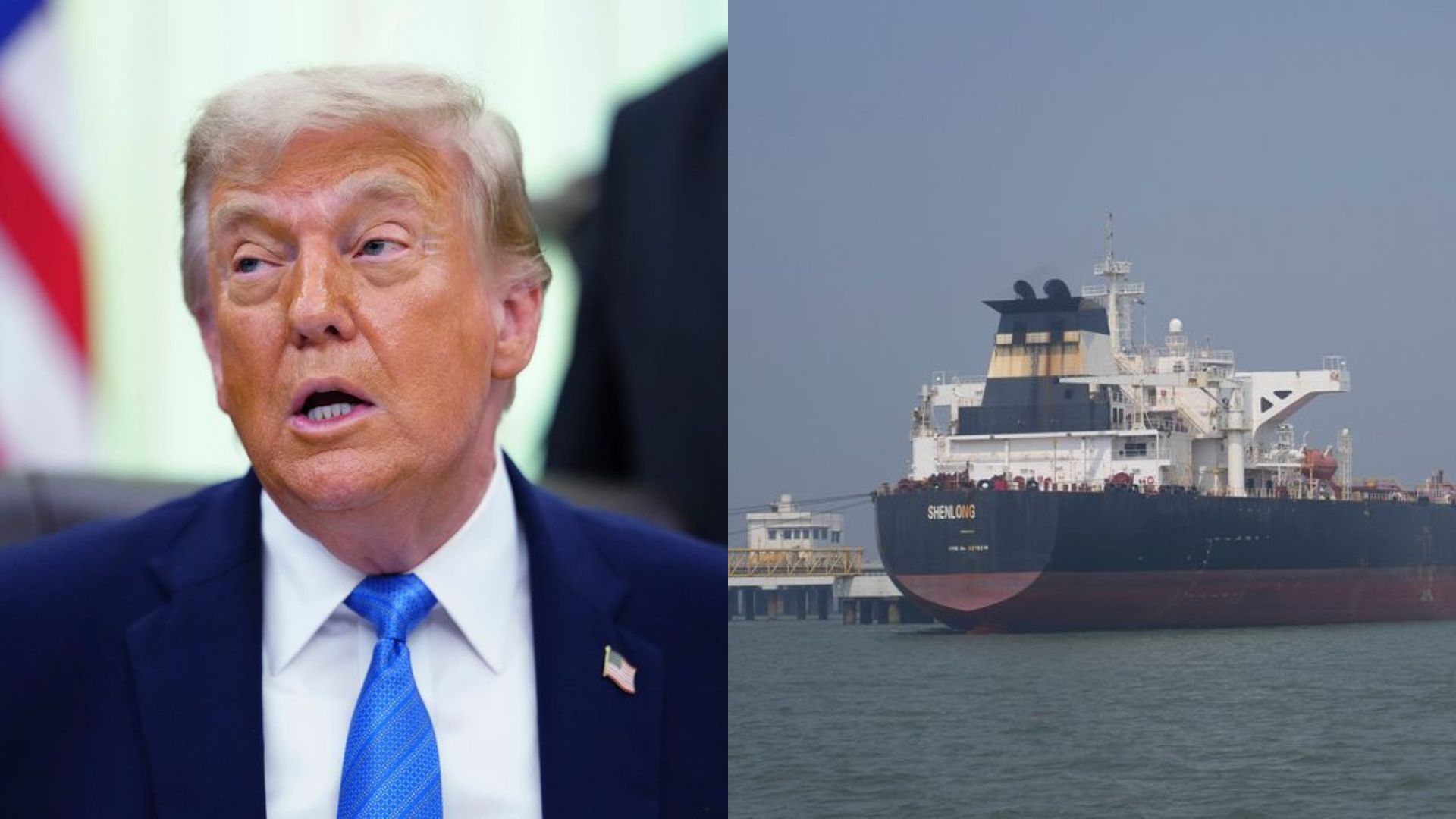
Israeli strikes and Hezbollah fire persisted around southern Lebanon with reported fatalities among Lebanese civilians and Israeli soldiers. Parallel Iran, US talks in Switzerland began but were disrupted by Donald Trump’s threats to strike Iran over Hezbollah, prompting an Iranian protest and a reported walkout, with both sides signalling possible resumption. Tehran and Iranian outlets asserted Hormuz was closed, yet commercial tracking and US military statements reported dozens of ship transits and ongoing traffic, suggesting a partial and contested operating picture. Reporting indicates Iran is leveraging both Hezbollah pressure and Strait access in negotiations centred on Lebanon. Lebanese sources cite a cumulative death toll exceeding 4,000 since March, with mass‑casualty incidents this week. The UAE remains under elevated threat advisories amid Iranian intent to target US‑linked sites, though some UK travel warnings have eased.
Change from previous assessment
Since the 20 June brief, Iran, US talks have begun in Switzerland but were immediately strained by Donald Trump’s public threats, prompting an Iranian protest and a reported walkout alongside indications of possible resumption. On the ground, additional reporting confirmed continued IDF strikes and Hezbollah fire with further Israeli and Lebanese casualties. On Hormuz, Iranian closure assertions persisted, but fresh data points showed dozens of transits and US statements that traffic continues, sharpening the contradiction noted previously. This update therefore raises the assessed fragility of the talks and keeps our judgment on the strait as contested, not shut.
Key judgments
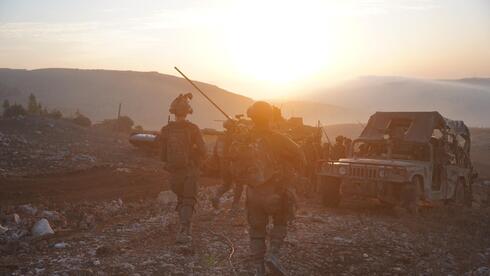
- Very likely the IDF, Hezbollah fight is continuing in southern Lebanon despite ceasefire language, producing ongoing fatalities on both sides. (Confidence: medium · ASSESSED)
- I&W: IDF communiqués naming additional soldiers killed in southern Lebanon or reports of new Hezbollah salvoes of 30+ projectiles overnight (0-14 days)
- I&W: Lebanon Civil Defence or health authorities reporting double‑digit fatalities from Israeli airstrikes in Nabatieh or adjacent districts (0-14 days)
- Likely Iran, US talks in Switzerland have begun but are fragile after Donald Trump’s public threats, which prompted an Iranian protest and a reported walkout; the opening agenda focused on Lebanon, not the nuclear file. (Confidence: medium · ASSESSED)
- I&W: Official Iranian or US readouts confirming a pause or adjournment tied to Trump’s statements (0-14 days)
- I&W: Formal confirmation that talks resumed with a published agenda addressing Lebanon (0-14 days)
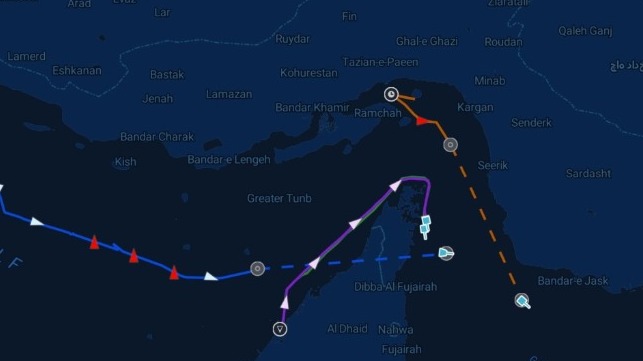
- Roughly even chance the Strait of Hormuz remains only partially restricted, with irregular but continuing traffic despite Iranian closure claims and pauses on the southern lane. (Confidence: medium · ASSESSED)
- I&W: Independent trackers log dozens of daily transits, including non‑Iranian‑flagged tankers, across both inbound and outbound lanes (0-14 days)
- I&W: Verified detentions or turn‑backs at the strait and a sustained drop to near‑zero third‑party transits for 24-48 hours (0-14 days)
- Likely Iran is linking de‑escalation in Lebanon to Strait of Hormuz access in negotiations, using Hezbollah pressure to constrain Israel’s room for manoeuvre. (Confidence: medium · ASSESSED)
- I&W: Negotiation communiqués or credible briefings explicitly tying a Lebanese ceasefire to reopening of Hormuz (1-3 months)
- I&W: Public Iranian announcement of Strait reopening without reference to Lebanon or Hezbollah activity (0-2 months)
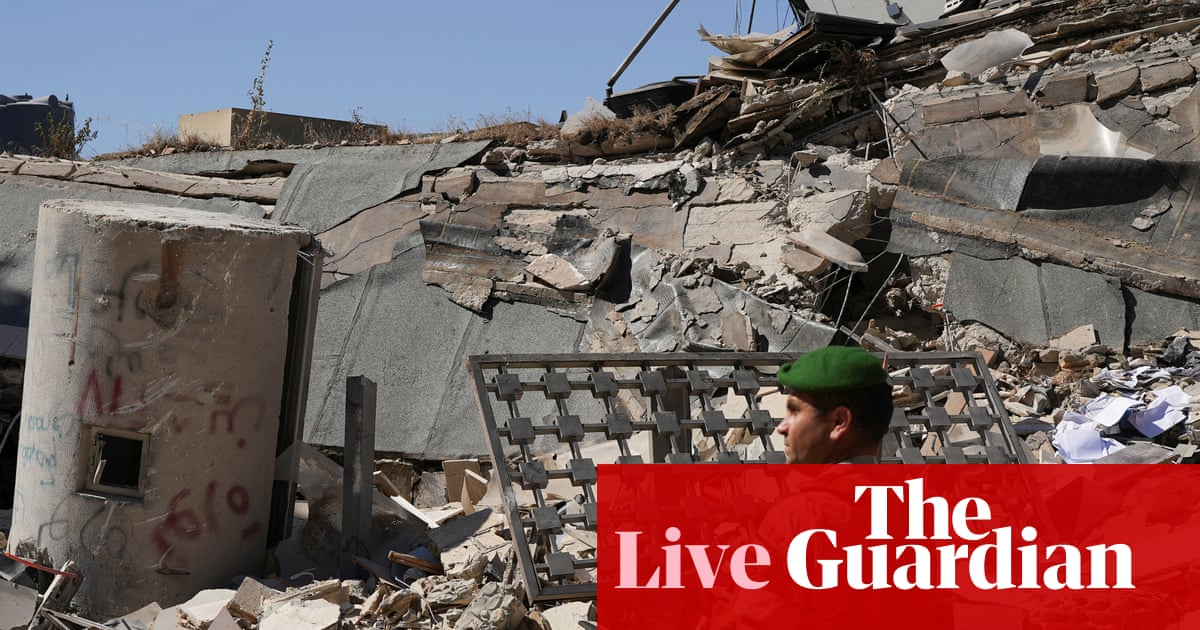
- Very likely civilian and responder casualties in Lebanon are mounting, with Lebanese authorities reporting cumulative deaths above 4,000 and daily strikes causing dozens of fatalities. (Confidence: medium · REPORTED)
- I&W: Lebanon health ministry updates maintaining high daily fatality counts or issuing a higher cumulative toll (0-14 days)
- I&W: Verified hospital intake logs from Nabatieh and surrounding districts showing sustained mass‑casualty admissions (0-14 days)
- Very likely the February 2026 US, Israel strikes on Iran and Iran’s subsequent missile and drone attacks against Israel, US bases and Arab countries have entrenched a multi‑front confrontation that elevates regional spillover risk. (Confidence: high · ASSESSED)
- I&W: New Iranian missile or drone strikes targeting Israel or US facilities reported by multiple outlets (0-3 months)
- I&W: Additional US or Israeli long‑range strikes into Iran publicly acknowledged (0-3 months)
- Likely the threat environment in the UAE remains elevated due to armed‑conflict and terrorism risks and Iranian intent to target US‑linked sites, despite some easing in UK travel advice. (Confidence: high · ASSESSED)
- I&W: Fresh US or allied drawdown or movement restrictions for personnel in the UAE, or Iranian statements naming specific UAE facilities (0-2 months)
- I&W: Sustained downgrading of both US and UK travel advisories without incident reporting (1-3 months)
Outlook & scenarios
Managed de‑escalation via a provisional understanding (35%)
Talks in Switzerland resume and yield a provisional understanding that centres on Lebanon. Hezbollah reduces fire if Israel does, and Tehran signals reopening of Hormuz, restoring more regular transits. Indicators would include official confirmation of talks resuming with a Lebanon‑first agenda, statements that an MOU is imminent, and reporting that the strait is reopening. Counter‑indicators would be renewed Iranian closure announcements and fresh salvos across the Blue Line.
Protracted standoff: low‑intensity conflict and contested maritime access (50%)
IDF, Hezbollah exchanges persist at a lower tempo, with periodic lulls and spikes. Iran keeps political pressure by asserting control of Hormuz, while traffic continues irregularly and southern‑lane pauses recur. Talks limp on without a durable breakthrough. Expect patchy reports of ‘cautious calm’ alongside continuing shelling and uneven shipping data.
Escalation spike triggered by talks failure and coercive signalling (25%)
Trump’s threats and an Iranian walkout harden positions. Hezbollah intensifies rocket and drone attacks, Israel broadens strikes in southern Lebanon, and Tehran enforces tighter constraints at Hormuz. The US contemplates or conducts further strikes against Iranian targets. Watch for explicit Iranian linkages of Hormuz to a Lebanese ceasefire, public orders to ‘hold fire’ being rescinded, and a sharp drop in third‑party transits at the strait.
Recommendations
- Maintain a daily ledger of IDF, Hezbollah kinetic activity, tracking reported Hezbollah projectile counts, Israeli strike locations, and announced IDF KIA and WIA to assess ceasefire compliance and escalation ladders.
- Task maritime OSINT to reconcile Iranian closure claims at Hormuz with observed transits by cross‑checking AIS counts and flag mix against reported figures, and track pauses on the southern lane.
- Brief policymakers on negotiation dynamics: log Iranian protests and walkouts, agenda focus on Lebanon, and any explicit linkage between a Lebanese ceasefire and Strait access to gauge prospects for an understanding.
- Validate Lebanese casualty reporting by collating Ministry of Health updates and hospital admissions from Nabatieh and surrounding districts to distinguish battlefield from civilian harm and refine protection‑of‑civilians estimates.
- Update UAE risk posture products to reflect concurrent US travel orders, terrorism advisories, FAA caution for Middle East airspace, and Iranian intent to target US‑linked sites, while noting UK advisory easing.
- Track Iranian oil logistics resilience by monitoring VLCC moorings off Kharg, tanker counts east of Kharg, and crude transfers off Chabahar to anticipate export flows under a contested strait regime.
- Monitor legal and political flanks that may shape escalation control, including Iran’s Hague filing against the US and Israel’s internal probes related to the war, and assess their potential impact on negotiating leverage.
Confidence & uncertainty
Overall confidence is low because several core elements are contested in near‑real time by credible actors. Iran’s assertion that Hormuz is closed is contradicted by shipping counts and US statements, and even supportive reporting notes uncertainty over implementation. Casualty figures from Lebanon vary by source and timeframe, with conflicting tallies for the same period. The negotiation track is reported by major media and officials, but signals diverge between Iranian protests and US optimism. While many claims come from reliable government or major‑media sources, the mix includes think tanks and blogs, and the situation is fluid with unresolved contradictions that preclude a higher confidence level.
Alternative analysis (red cell)
The ledger shows documented incidents, public threats, and maritime ambiguity, but much of the supporting evidence is declaratory or medium-admiralty and several key entries contradict one another. A defensible alternative reading is that the situation comprises episodic, localized violence, intensive diplomatic signaling, and unclear maritime enforcement rather than uniformly sustained multi‑front warfare or a confirmed Iran–U.S. negotiated linkage; greater caution and reliance on operational indicators are warranted.
Intelligence gaps
- [EEI 1.1 · PARTIAL] Observed repositioning, sustained increases, or new forward basing of Iranian conventional or IRGC forces (armored units, missile batteries, aircraft, naval vessels) toward borders or regional launch points. Recommended collection: IMINT/satellite
- [EEI 1.4 · UNCOVERED] Interdicted or observed shipments (air, sea, land manifests, seizures, satellite imagery of transfers) of advanced weapons or missile components from Iran toward proxy groups or forward staging points. Recommended collection: maritime/AIS
- [EEI 2.1 · UNCOVERED] Satellite or on-the-ground imagery showing fires, damage, or operational shutdown at major oil export facilities, refineries, storage terminals, or key pipeline infrastructure in the Gulf and Red Sea. Recommended collection: IMINT/satellite
- [EEI 2.2 · PARTIAL] Commercial vessel incidents: AIS transponder shutdowns, distress signals, reported hull/engine damage, boardings, or confirmed attacks on tankers/merchant ships transiting the Strait of Hormuz, Bab al-Mandeb, or eastern Mediterranean. Recommended collection: maritime/AIS
- [EEI 2.3 · PARTIAL] Significant and sustained reductions or rerouting of tanker transits through the Strait of Hormuz (ship traffic counts, pilot reports, port call cancellations) and announcements of closure or restricted navigation zones (NOTAMs, maritime advisories). Recommended collection: maritime/NOTAMs
- [EEI 2.4 · PARTIAL] Rapid increases in war-risk insurance premiums for Middle East routes, shipping company advisories to avoid region, or major charter cancellations tied to the conflict. Recommended collection: financial/open-source
- [EEI 3.1 · UNCOVERED] Movement/arrival of major foreign military assets into the region: U.S. carrier strike groups, amphibious ready groups, strategic bomber flights, Russian/Chinese naval taskings, or allied expeditionary units (visible in AIS, NOTAMs, satellite imagery, official releases). Recommended collection: IMINT/satellite
- [EEI 3.2 · UNCOVERED] Official expedited arms transfers, basing/overflight agreements, or declarations of operational support (formal government announcements, defense ministry releases, logistics flight manifests). Recommended collection: open-source/diplomatic
Cited sources
[1] The Guardian · Middle East live: US-Iran peace talks underway as strait of Hormuz remains closed (A) · sha256:d0e8bb8653ee [2] nypost.com · Conflict erupts in Lebanon between Israel, Hezbollah — just hours after 2 sides reach critical truce (B) · sha256:bba1c2299dbc [3] haaretz.com · How the Iranian Guards business empire will win big if U.S. sanctions are lifted (B) · sha256:fbb36947735b [4] Atlantic Council · What the US-Iran deal means for the rest of the Middle East (and beyond) (C) · sha256:5f93318fe142 [5] annahar.com · إيران ترفض تهديدات ترامب: قواتنا المسلحة مستعدة للرد | النهار في تغطية مستمرة (B) · sha256:eff6977937ef [6] i24news.tv · News Feed (B) · sha256:f5b1cf70b919 [7] haaretz.com · Will Israel's presence in Lebanon make a U.S-Iran deal impossible? (B) · sha256:a149e45df0b3 [8] wflx.com · Trump threatens to charge US tolls in Strait of Hormuz if final Iran deal not reached in 60 days (A) · sha256:a2aa02f557d9 [9] haaretz.com · Forget hard-liners vs. reformists: Inside the real battle shaping Iran's postwar leadership (B) · sha256:a306f1c6327a [10] maritime-executive.com · Hormuz Traffic Plummets as Shipowners Obey New Iranian Closure Order (B) · sha256:db1faee08020 [11] NPR · Iran claims Hormuz closure, U.S. says ships still passing (A) · sha256:b16396b9a422 [12] ynetnews.com · Lebanon is only the beginning: Iran’s real win is limiting Israel’s freedom to act (B) · sha256:b797d4de4347 [13] ynetnews.com · US-Iran talks in Switzerland to open with Lebanon crisis, reports say (B) · sha256:509976ebfebe [14] Wikipedia · 2025–2026 Iran–United States negotiations (B) · sha256:a9d105bc8d19 [15] Wikipedia · Reactions to the 2026 Iran war (B) · sha256:ab608b97e6b6 [16] Daily Q&A · What Risks Does the Recent US-Israel Attack on Iran Pose for Wider Middle East Stability? (B) · sha256:bde69673ab23 [17] U.S. Department of State · United Arab Emirates Travel Advisory (A) · sha256:7a0c71f2991b [18] arabic.euronews.com · كيف تجذب شركات الطيران الخليجية المسافرين مجددا للشرق الأوسط (B) · sha256:e6f6d4afb357
Source content hashes were computed at collection time; the cited text is preserved unmodified for the life of this product.
Red cell review: PARTIAL DISSENT
TLP:CLEAR