TLP:CLEAR · Disclosure is not limited.
Iran-Israel Crisis: Gulf Expansion and Hormuz Disruption
Time window: Last 1 day · Audience: General analyst · Type: Situation report · DTG: 2026-09-04 17:48Z · Overall confidence: HIGH
BLUF
Iran's missile and drone campaign has reached US-linked facilities in Kuwait, the United Arab Emirates, Jordan, Bahrain and Iraq, widening the operational footprint beyond Iran. Commercial traffic through the Strait of Hormuz is very likely to remain severely constrained, while continued US-Iran strikes and Israeli threats against Iranian infrastructure keep the risk of wider regional war elevated.
Executive summary
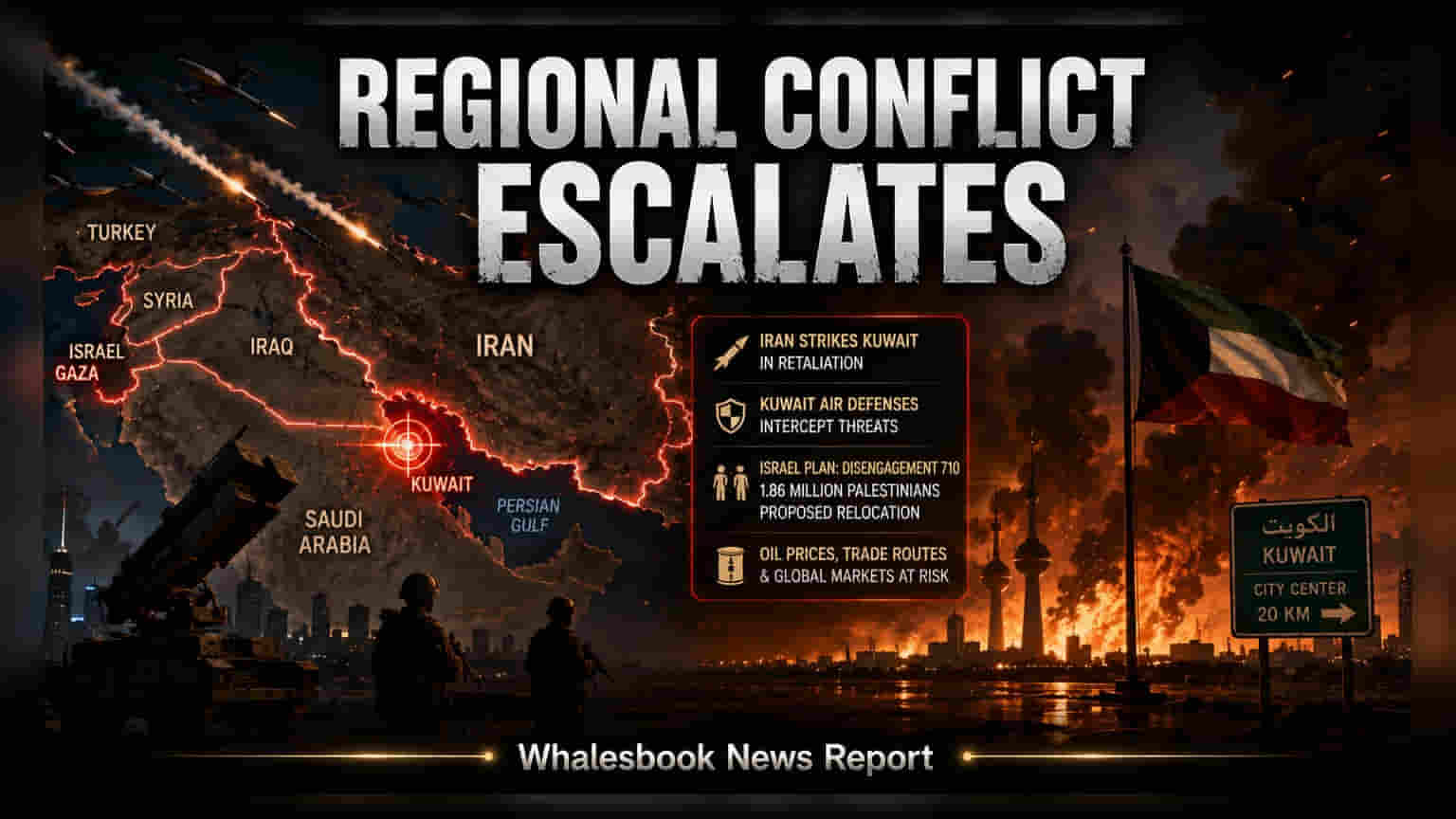
Iranian forces reported attacks on US bases in Kuwait and the United Arab Emirates on 3 September, while other reporting describes Iranian strikes on US facilities in Jordan, Bahrain and Iraq. The effectiveness of the Kuwait and UAE attacks remains disputed because Iranian claims of damage conflict with Kuwaiti and US statements that the projectiles were intercepted or caused no impact. Shipping through the Strait of Hormuz remains well below pre-war levels in Kpler data, despite a conflicting US claim that oil flows have returned to baseline. The US-Iran exchange is likely to continue, and Israeli leaders have threatened strikes on Iranian energy and civilian infrastructure if Tehran attacks Israel. China and Egypt are calling for a comprehensive agreement, but Washington has ruled out negotiations for now.
Change from previous assessment
Since the 3 September brief, the assessment has shifted towards a wider and more persistent regional conflict. Reporting now gives greater detail on Iranian Artesh strikes against Ahmad al Jaber in Kuwait and al Minhad in the United Arab Emirates, while Kuwaiti and US accounts continue to dispute their impact. Confidence that Hormuz traffic is severely disrupted has increased because new Kpler data show four commodity vessels on 3 September and only two very large crude carriers during the week, although the assessment remains medium because JD Vance reported a much higher oil-flow figure. The brief adds a stronger assessment of Israeli retaliation against Iranian energy infrastructure, China-Egypt diplomacy, possible South Korean maritime involvement and conflict spillover in Yemen. The earlier judgement on a direct Iranian attack against Israel has been narrowed to the more supportable assessment that an Israeli response is very likely if such an attack occurs.
Key judgments
- Iran is likely to sustain missile and drone attacks against US-linked facilities in Kuwait, the United Arab Emirates, Jordan, Bahrain and Iraq over the next 0-14 days, while the damage from the 3 September strikes on Ahmad al Jaber Air Base and al Minhad Air Base remains unresolved. The Iranian Artesh said it struck specified systems at both bases, but Kuwaiti air defences reported interception and no compromised military facilities, and an unspecified US defence official reported no impact on US bases. (Confidence: medium · ASSESSED)
- I&W: The Iranian Artesh or Islamic Revolutionary Guard Corps announces another missile or drone strike on a named US facility in Kuwait, the United Arab Emirates, Jordan, Bahrain or Iraq, with confirmation from the host government. (0-14 days)
- I&W: Iranian forces announce a pause in attacks and host-government or independent reporting records no further launches against the named facilities. (0-14 days)
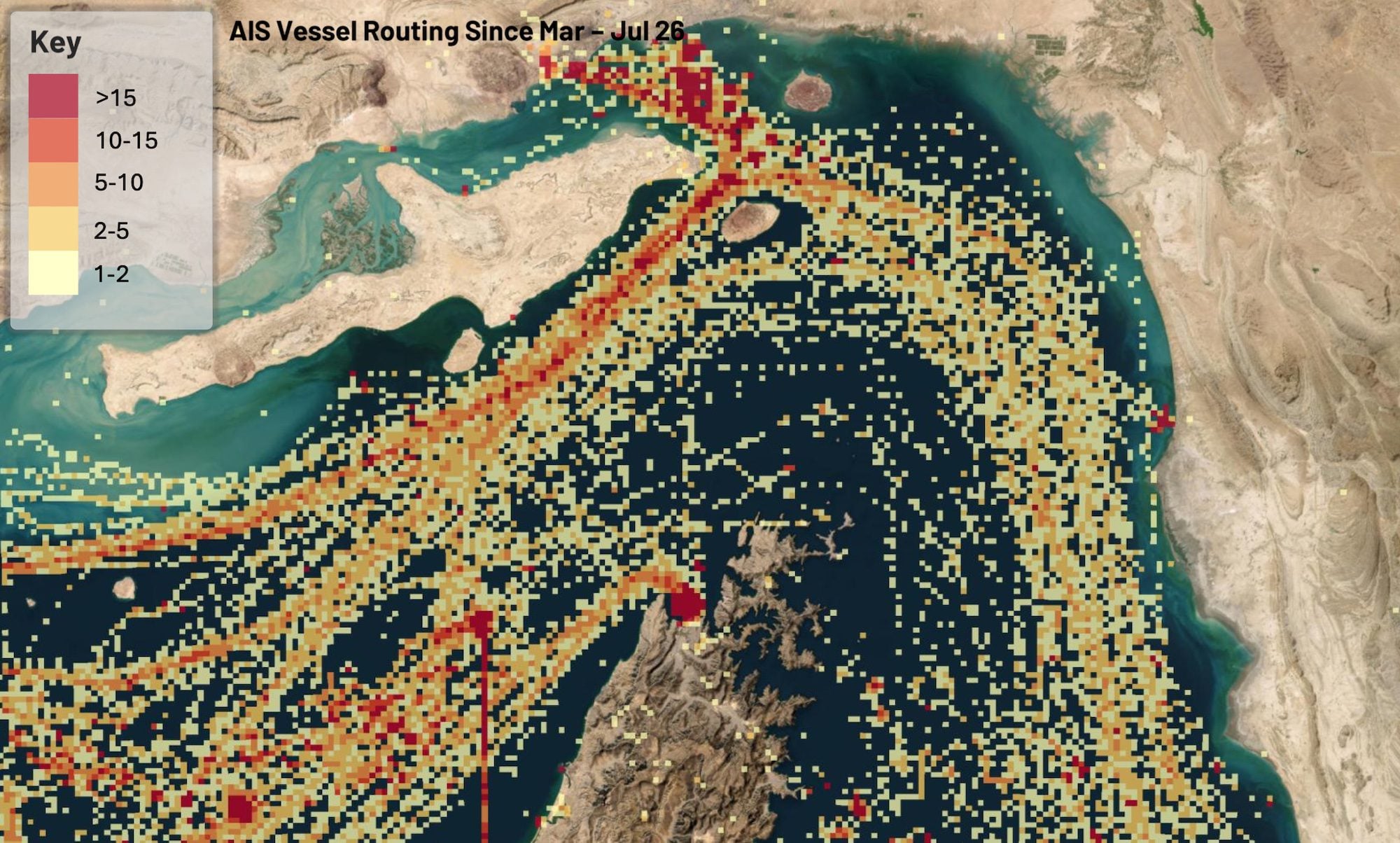
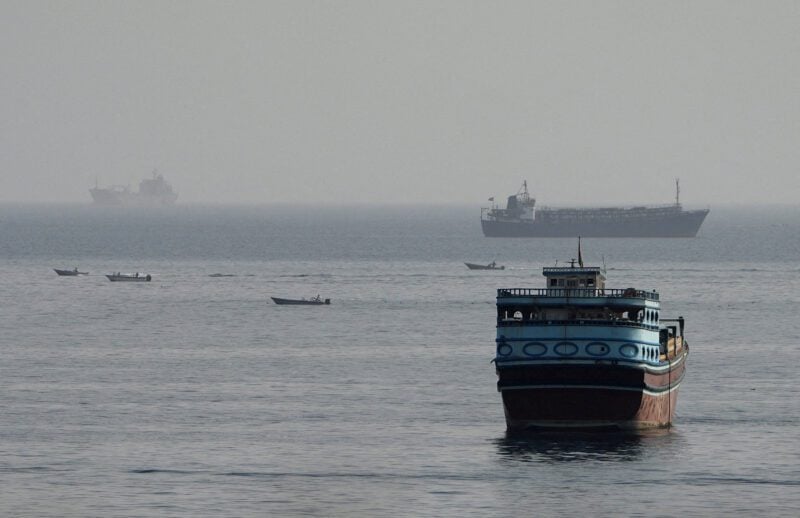
- Commercial shipping through the Strait of Hormuz is very likely to remain well below pre-war levels through November. Kpler recorded four commodity vessels on 3 September and four vessels by 0455 GMT on 4 September, while only two very large crude carriers crossed during the week; Rystad Energy expects flows to remain very low until November. A conflicting statement by JD Vance placed daily oil flows at 15 million barrels and described traffic as restored, but that claim conflicts with observed vessel counts and other reporting that Iran continues to limit passage. (Confidence: medium · ASSESSED)
- I&W: Kpler records daily commodity-vessel traffic below the recent 10-day average of about 15 vessels and very large crude carrier crossings remain near the current weekly level. (0-14 days)
- I&W: Kpler records sustained traffic approaching the pre-war level of about 125 large vessels per day and Rystad Energy withdraws its forecast of very low flows through November. (1-3 months)
- The US-Iran exchange of strikes is very likely to continue over the next 0-14 days, while a decisive end to hostilities is unlikely over the next 1-3 months. US attacks have targeted Islamic Revolutionary Guard Corps air-defence, radar, naval and communications facilities, Iran has retaliated against American bases across the Middle East, and JD Vance has ruled out negotiations or a timetable for ending the conflict. The assessment remains medium confidence because reporting conflicts over whether active shooting is occurring and whether the US deployment posture through 2027 has been formally extended. (Confidence: medium · ASSESSED)
- I&W: US forces conduct another strike on an Iranian or Islamic Revolutionary Guard Corps target and Iranian forces retaliate against a named US base or maritime target. (0-14 days)
- I&W: The United States and Iran announce a ceasefire and reporting records no further strikes for at least seven consecutive days. (0-14 days)
- An Israeli strike on Iranian energy or civilian infrastructure is very likely if Iran attacks Israel over the next 0-14 days. Defence Minister Israel Katz has threatened unrestricted strikes on Iranian infrastructure, including energy infrastructure, and Prime Minister Benjamin Netanyahu has reportedly described overthrowing Iran's leadership as his next main mission. This judgement rests on declared intent rather than observed Israeli action and therefore has medium confidence. (Confidence: medium · ASSESSED)
- I&W: Israel announces or conducts a strike against a named Iranian energy or civilian facility following an Iranian attack on Israel. (0-14 days)
- I&W: The Israeli government rescinds Katz's threat or Iran attacks Israel without an Israeli strike on Iranian energy or civilian infrastructure during the reporting period. (0-14 days)
- Broad US-Iran de-escalation is unlikely over the next 0-14 days, although diplomatic signalling by China, Egypt, Qatar and the United Arab Emirates is likely to continue. The June US-Iran memorandum expired without progress, Washington has ruled out negotiations, and the United States is applying renewed economic pressure. Xi Jinping and Abdel Fattah el-Sisi have called for a comprehensive agreement, while Qatar and the United Arab Emirates are maintaining direct contact with Iran. (Confidence: medium · ASSESSED)
- I&W: The United States and Iran conduct further strikes while Washington continues to rule out negotiations or a timetable. (0-14 days)
- I&W: Washington and Tehran announce an operating ceasefire or renewed direct negotiations, followed by an easing of Hormuz restrictions. (0-14 days)
- Conflict-related spillover in Lebanon, Yemen and Red Sea shipping is likely to persist over the next 0-14 days. The Israel Defense Forces have reported clearing a Hezbollah facility at Ali al Taher in the Nabatieh District, more than 100 people have reportedly died in recent Yemen clashes, and Houthi attacks continue to disrupt shipping through the Bab el-Mandeb and reduce Suez Canal revenues. The Hezbollah-linked and Iranian dimensions of some activity remain less certain than the reported incidents themselves. (Confidence: medium · ASSESSED)
- I&W: The IDF reports further operations around Ali al Taher, while Yemen reporting records additional clashes and casualties above the current reported toll. (0-14 days)
- I&W: Kpler records Bab el-Mandeb traffic below its recent 10-day average and maritime underwriters extend designated war-risk areas beyond the current Saudi Red Sea coverage. (0-14 days)
Outlook & scenarios
Prolonged US-Iran exchange with restricted Hormuz (60%)
The most likely path is continued US strikes on Islamic Revolutionary Guard Corps targets and Iranian retaliation against US-linked facilities, alongside sustained restrictions on commercial traffic through the Strait of Hormuz. Oil prices remain elevated and shipping diverts towards the Suez Canal while diplomatic contacts continue without an operating ceasefire.
Gulf expansion followed by Israeli retaliation (22%)
Iran expands attacks against named US facilities in the Gulf or conducts an attack on Israel. Israel then implements its stated threat to strike Iranian energy or civilian infrastructure. This path produces a sharper regional escalation, higher maritime insurance costs and further pressure on Saudi, Kuwaiti and Emirati infrastructure.
Managed pause through regional diplomacy (13%)
China-Egypt diplomacy, Qatar-UAE contacts and pressure from disrupted energy markets produce a limited US-Iran pause. Hormuz traffic begins to recover, but the expired memorandum and unresolved military issues prevent a durable settlement.
Direct Iran-Israel exchange and energy shock (5%)
A low-probability, high-impact path begins with a direct Iranian attack on Israel and an Israeli strike on Iranian energy infrastructure. The exchange extends beyond military facilities, deepens the shipping disruption and pushes the regional conflict into a broader energy crisis.
Recommendations
- Maintain a 0-14 day watch focused on Iranian missile and drone activity against Ahmad al Jaber Air Base, al Minhad Air Base and named US facilities in Jordan, Bahrain and Iraq. Seek paired confirmation from host-government statements, US reporting and observable strike effects before assessing damage.
- Treat the Strait of Hormuz as operationally disrupted until vessel counts and oil-volume reporting converge. Track AIS-visible vessel numbers, very large crude carrier crossings, daily barrels and vessels diverted towards the Suez Canal as separate measures.
- Separate reported claims from observed effects in all products. Present Iranian claims of damage at Ahmad al Jaber and al Minhad alongside Kuwaiti interception reporting and the US denial, rather than selecting one account as established fact.
- Monitor Israeli implementation rather than rhetoric. Prioritise evidence of authorisation or strikes against named Iranian energy and civilian infrastructure following any Iranian attack on Israel.
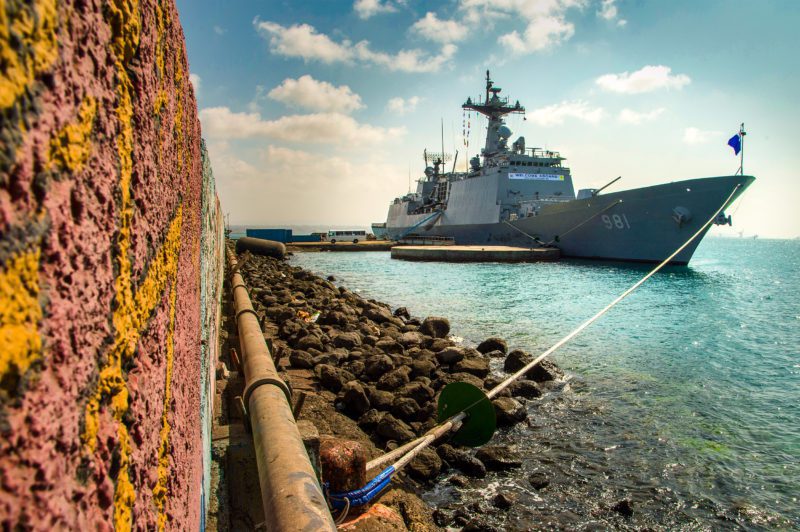
- Track the diplomatic tripwires separately from military activity: direct US-Iran talks, an operating ceasefire, China-Egypt follow-up, Qatar-UAE contacts and any change in the Blue House position on a South Korean Hormuz deployment.
- Assess regional spillover through three distinct indicators: IDF activity at Ali al Taher, casualty reporting from Yemen and daily vessel traffic through Bab el-Mandeb. Do not treat activity in one theatre as proof of Iranian direction in another.
Confidence & uncertainty
Overall confidence is high because the principal developments are supported by multiple high-reliability sources, including major media, trade publications, think tanks and official statements. The strongest corroboration concerns Iranian attacks on US-linked positions, reduced Hormuz traffic, renewed US-Iran strikes and the continuation of regional maritime risk. Important uncertainties remain over strike damage at Ahmad al Jaber and al Minhad, actual oil volumes through Hormuz, the formal status of US force extensions and conflicting casualty or policy statements.
Intelligence gaps
- [EEI 1.1 · PARTIAL] Detection and characterization of ballistic/cruise missile or rocket launches originating from Iranian territory or from Iran-controlled positions in Iraq/Syria (time, launch coordinates, missile type, flight trajectory/impact area). Recommended collection: satellite/imagery
- [EEI 1.2 · PARTIAL] Movements and posture changes of Iran-backed proxy forces (Hezbollah units in Lebanon, militias in Syria/Iraq): concentrations of personnel, transport of rocket/artillery launchers, visible logistics build-up within operational range of Israel. Recommended collection: human/intel
- [EEI 1.3 · PARTIAL] Israeli defensive and offensive posture changes: reservist call-ups, mobilization orders, sorties/airstrikes attributed to Israel, and domestic activation of missile-defense systems (locations and activation times). Recommended collection: open-source/media
- [EEI 1.4 · UNCOVERED] Evidence of pre-positioning or arming of naval mines, fast attack craft, or anti-ship missile systems in the Gulf of Oman, northern Arabian Sea, or off the Lebanese/Syrian coasts that could be used to interdict Israeli or allied shipping. Recommended collection: maritime/AIS
- [EEI 2.1 · PARTIAL] Movements and tasking changes of external military assets: carrier strike groups, amphibious ready groups, expeditionary air wings, or ballistic-missile defense units into the Eastern Mediterranean, Persian Gulf, or Red Sea (vessel/aircraft IDs, routing, on-station times). Recommended collection: maritime/AIS
- [EEI 2.3 · PARTIAL] Changes to force protection or alert levels at foreign bases in the region (e.g., US bases in Kuwait, Qatar, UAE; Russian bases in Syria): activation of additional air defenses, curfews, or reinforcement shipments (personnel/equipment manifests). Recommended collection: signals/intel
- [EEI 3.1 · PARTIAL] Incidents against commercial vessels: attacks, seizures, mine strikes, or forced rerouting of tankers and bulk carriers in the Strait of Hormuz, Bab al-Mandeb, Red Sea, or eastern Mediterranean (vessel names/IMO, location, damage/impairment). Recommended collection: maritime/AIS
- [EEI 3.2 · PARTIAL] Changes in crude oil and refined product flows from key terminals (reported tanker loading delays, terminal closures, throughput volumes at Kharg, Mina al-Ahmadi, Ras Tanura, and major Gulf ports compared to baseline). Recommended collection: commercial/ports
TLP:CLEAR