TLP:CLEAR · Disclosure is not limited.
Iran, Israel crisis: Gulf fronts flare, U.S. strikes persist, Hormuz traffic thins
Time window: Last 1 day · Audience: General analyst · Type: Situation report · DTG: 2026-07-12 15:15Z · Overall confidence: MEDIUM
BLUF
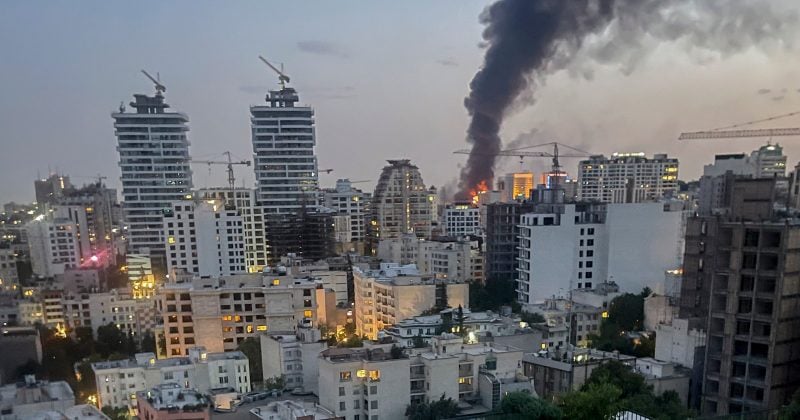
Iran fired missiles and drones at U.S.-linked sites and Gulf states as CENTCOM executed a third wave of strikes inside Iran. Commercial traffic through Hormuz has dropped sharply and markets now price heightened odds of Iranian and Israeli airspace closures by 31 July.
Executive summary
Overnight into Sunday, Iran targeted U.S.-linked sites and several Gulf states with missiles and drones, triggering air-defence engagements in Bahrain, the UAE, Qatar and Jordan and causing limited injuries. The U.S. military announced a third round of airstrikes inside Iran, with CENTCOM stating roughly 140 targets were hit across multiple waves, including air defences, radar and anti-ship capabilities. The maritime threat picture around the Strait of Hormuz has deteriorated: commercial transits via the southern route off Oman have fallen into single digits and traffic on the northern lane remains far below post-ceasefire levels. Diplomatically, Qatar condemned Iran’s attacks and raised its threat posture, Iran signalled it will not be bound by understandings if Washington continues violations, and President Trump declared the June ceasefire over, though Oman- and U.S.-facilitated technical channels continue. Markets reflect rising aviation risk with increased pricing for potential Iranian and Israeli airspace closures by 31 July, while the IEA’s outlook assumes de-escalation and a gradual recovery in Hormuz tanker traffic.
Change from previous assessment
Since the 11 July brief, Iran has expanded missile and drone attacks into Bahrain, Kuwait, Jordan, Qatar and the UAE with confirmed air-defence engagements and reported injuries, while the U.S. military announced a third round of strikes inside Iran hitting roughly 140 targets. Commercial transits via Hormuz’s southern route dropped into single digits and the northern route remains far below post-ceasefire levels. Qatar publicly condemned Iran’s attacks and raised its threat posture; Iran stated it will not adhere to understandings if Washington continues violations. Markets now price higher odds of Iranian and Israeli airspace closures by 31 July. We add judgments on aviation risk and nuclear monitoring gaps and lower confidence on Iranian claims of base damage pending independent verification.
Key judgments
- Iran very likely conducted coordinated missile and drone barrages against U.S.-linked targets and Gulf states, prompting air-defence engagements in Bahrain, the UAE, Qatar and Jordan and causing limited injuries. (Confidence: high · REPORTED)
- I&W: Official communiqués from Bahrain, the UAE, Qatar or Jordan reporting new intercepts with geolocated debris imagery. (0-14 days)
- I&W: A 72-hour period without missile or drone alerts in Bahrain, the UAE and Qatar. (0-14 days)
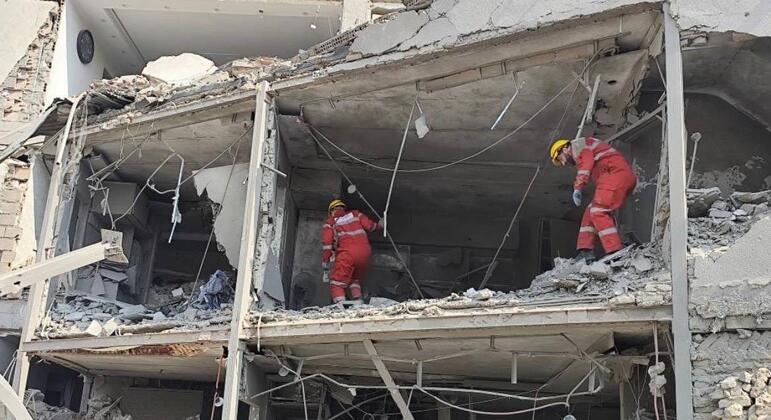
- CENTCOM very likely executed a third wave of strikes inside Iran, totalling roughly 140 targets across multiple rounds that hit air defence, radar, anti-ship capabilities and IRGC small boats, with Iranian authorities reporting 17 dead and 115 injured across six cities. (Confidence: high · REPORTED)
- I&W: New CENTCOM releases with post-strike imagery or target lists inside Iran. (0-14 days)
- I&W: Seven consecutive days without U.S. strike announcements or Iranian casualty updates. (0-14 days)
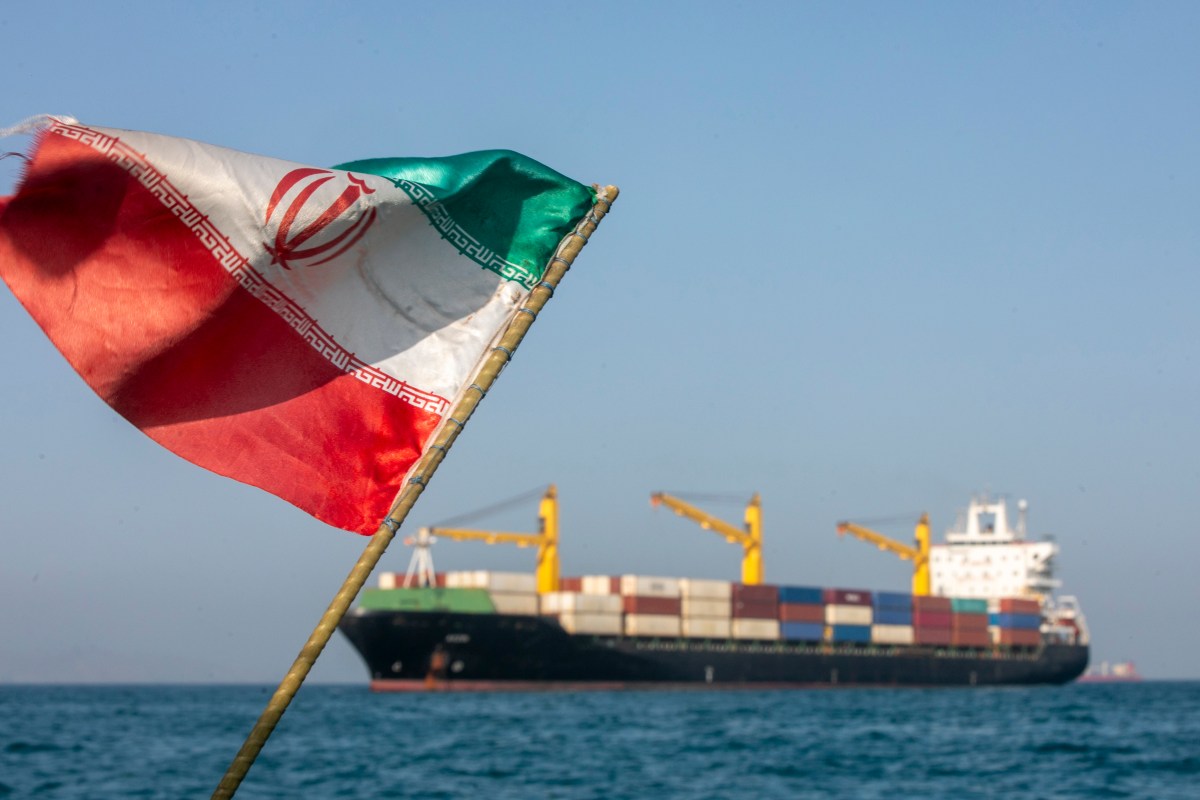
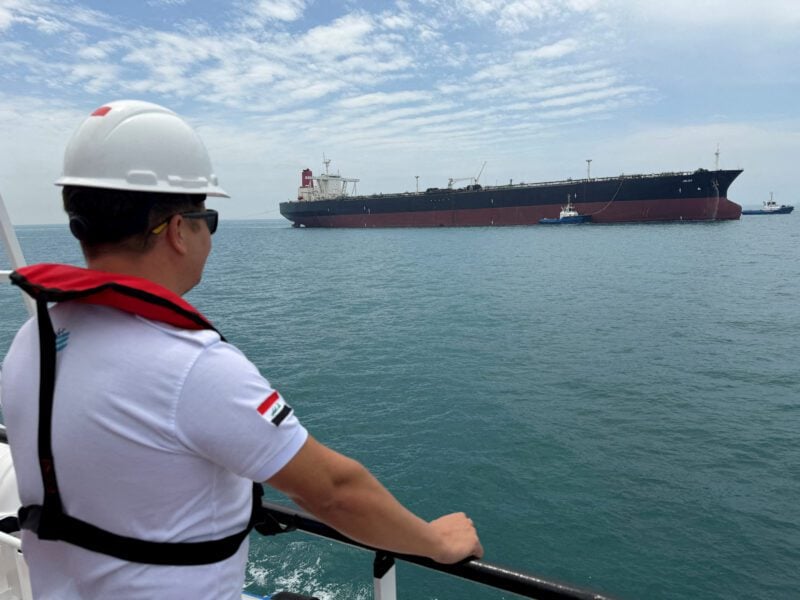
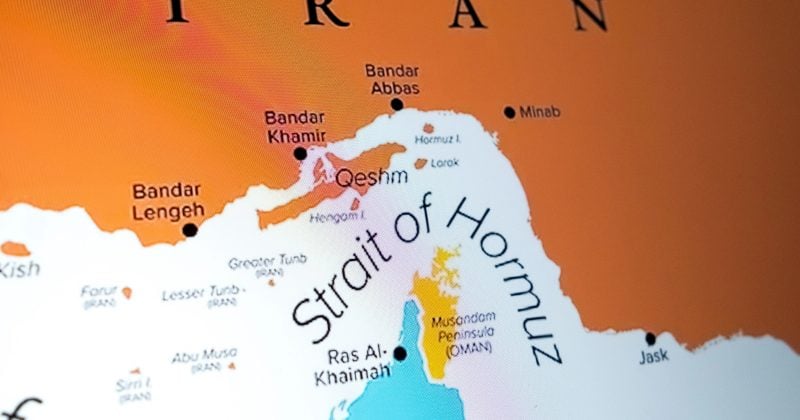
- Commercial shipping through the Strait of Hormuz is likely to remain sharply depressed in the near term, with southern-route transits already in single digits and northern-route traffic well below post-ceasefire levels amid persistent attacks and threats against shipping. (Confidence: medium · ASSESSED)
- I&W: INTERTANKO or AIS data showing southern-route transits remain in single digits for at least one week. (0-14 days)
- I&W: Daily northern-route transits rising back above the post-ceasefire benchmark reported in June. (1-3 months)
- The conflict is likely to persist at elevated tempo and expand geographically, including along Israel’s northern front, given Hezbollah rocket fire and Israeli preparations for potential unilateral action, while Gulf monarchies have already struck Iran after earlier Iranian strikes on their territory. (Confidence: medium · ASSESSED)
- I&W: Public Israeli announcement of independent strikes on Iranian territory or expanded IDF mobilisation on the northern front. (0-30 days)
- I&W: A verified 14-day lull in Hezbollah rocket fire into Israel. (0-30 days)
- Political space for de-escalation is narrowing but not closed: Iran says it will not be bound by understandings if Washington continues violations and President Trump declared the June ceasefire over, yet U.S., Iran technical talks and Oman, Iran discussions on safe passage continue. (Confidence: medium · REPORTED)
- I&W: Announcement of a formal safe-passage mechanism for Hormuz by Oman and Iran. (0-30 days)
- I&W: Public suspension of U.S., Iran technical channels by either side. (0-30 days)
- Aviation and energy market risk has increased: the FAA cautioned U.S. carriers operating in the Middle East, and prediction markets price higher odds of Iranian and Israeli airspace closures by 31 July, while oil market recovery remains contingent on rapid de-escalation and gradual Hormuz traffic normalisation. (Confidence: medium · ASSESSED)
- I&W: Issuance of NOTAMs by Iran or Israel announcing partial or full airspace closures. (0-21 days)
- I&W: Sustained decline in market-implied closure probabilities to pre-7 July levels. (0-21 days)
- UN officials report a lost continuity of knowledge on Tehran’s nuclear programme since the U.S., Israel attacks, heightening uncertainty around Iran’s nuclear activities. (Confidence: high · REPORTED)
- I&W: Public reporting of restored IAEA monitoring channels in Iran. (1-3 months)
- I&W: Further UN briefings citing additional monitoring gaps. (0-3 months)
Outlook & scenarios
Prolonged tit-for-tat with suppressed maritime and aviation activity (60%)
Iran continues intermittent missile and drone strikes against U.S.-linked targets and select Gulf states, while the U.S. sustains periodic strike packages inside Iran. Hormuz transits remain depressed, particularly on the southern route, and airlines maintain caution across Gulf airspace. Technical channels via Oman persist but do not yield a ceasefire.
Regional escalation and selective airspace closures (35%)
Escalation spreads along the Israel, Lebanon front as Israel prepares for unilateral action against Iran. Gulf states face additional salvos. Iran and/or Israel impose time-bound airspace restrictions by late July, further disrupting civil aviation and logistics.
Managed maritime de-escalation window (25%)
Oman-mediated arrangements for ship passage are formalised and U.S., Iran technical discussions produce limited understandings on maritime conduct. Hormuz traffic begins a measured recovery and market-implied closure risks ease, although broader hostilities persist at a lower tempo.
Hormuz enforced closure and sharp market shock (20%)
Iran attempts to enforce a de facto closure regime in Hormuz, sharply curtailing commercial transits. Additional strikes target U.S.-linked infrastructure in Gulf states. Prediction markets move towards high-probability airspace closures and the IEA’s recovery assumptions are invalidated.
Recommendations
- Prioritise time-dominant collection on Iranian launch sites and claimed target areas at Prince Hassan Air Base (Jordan), Al Udeid (Qatar) and Duqm (Oman); task commercial SAR and optical imagery for damage assessment within 24-48 hours of claims.
- Stand up a daily Hormuz mobility tracker using AIS and INTERTANKO reporting to quantify southern- and northern-route transits, with thresholds and seven-day moving averages to detect recovery or further deterioration.
- Establish an aviation risk watchfloor to ingest and alert on new NOTAMs across Iran, Israel, the UAE, Qatar, Bahrain and Kuwait; correlate with market-implied closure probabilities to anticipate rerouting decisions.
- Exploit official communiqués from Gulf interior and defence ministries for intercept data and debris imagery; geolocate and catalogue impact sites to refine threat mapping and air-defence performance assessments.
- Monitor CENTCOM and Iranian state-linked channels for strike and casualty reporting; maintain a structured log of target sets struck inside Iran to identify shifts towards energy, naval or C2 nodes.
- Track sanctions actions and statements from OFAC and Treasury linked to Iran’s shipping attacks; map sanctioned exchange houses and facilitators to anticipated evasion pathways through the UAE.
- Engage maritime insurers and shippers for corroborative indicators on routing decisions and premium changes tied to Hormuz transits; flag inflection points to energy market analysts.
- Prepare decision briefs on escalation indicators tied to Israeli unilateral action and Hezbollah activity, with clear tripwires and potential U.S. force protection implications across Gulf bases.
Confidence & uncertainty
Overall confidence is medium. Several core developments rest on multiple independent and credible sources: CENTCOM’s strike reporting, Iranian missile and drone activity across Gulf states, and shipping declines via INTERTANKO are corroborated by official or major media channels. Some elements rely on single-party claims, notably Iranian assertions of damage at U.S.-linked bases in Qatar, Kuwait, Bahrain and Oman, which are not yet independently verified. The status of a formal Hormuz ‘closure’ is contested, while market-based signals on airspace risk are indirect. These gaps and discrepancies constrain a high-confidence assessment.
Alternative analysis (red cell)
Reporting indicates elevated kinetic activity, alerts, and some localized casualties, but attribution, scale, and permanence of effects are less certain than presented. Several headline judgments rest on single-source or clustered reporting and unresolved contradictions, so alternative readings (proxy involvement, fewer strikes, or localized monitoring gaps) remain plausible. Independent imagery, forensic, ISR/SIGINT, and multilateral verification would be decisive in resolving these disputes.
Intelligence gaps
- [EEI 1.1 · UNCOVERED] Movement, dispersal, or emplacement of Iranian conventional or IRGC heavy assets (ballistic missile launchers, Khoramshahr/Toofan-class missile transporters, ground-to-ground TELs, air defense batteries, amphibious units) from garrison areas toward forward bases or coastal launch sites. Recommended collection: satellite/IMINT
- [EEI 1.3 · PARTIAL] Changes in Israeli and U.S. force posture indicating anticipation of direct large-scale conflict—elevated readiness levels, mobilization notices, pre-positioning of munitions, or public/private orders to prepare offensive strikes. Recommended collection: open-source/diplomatic
- [EEI 2.1 · UNCOVERED] Observable pre-launch preparations for missile/rocket/cruise missile strikes (fueling, warhead mating, launcher orientation, support vehicle congregation) and abnormal munitions handling at known launch sites. Recommended collection: satellite/IMINT
- [EEI 2.2 · UNCOVERED] Indications of proxy arms shipments and weapons transfers (truck convoys, small boat transfers, container movements from Iran to proxies, new stockpiles in Lebanon, Iraq, Yemen, Syria). Recommended collection: maritime/AIS
- [EEI 2.3 · UNCOVERED] Evidence of cyber attack planning or active exploitation campaigns targeting Israeli or U.S. military/critical infrastructure (emergence of new command-and-control servers, spear-phishing campaigns against defense personnel, successful intrusions). Recommended collection: cyber
- [EEI 3.1 · UNCOVERED] Movements and posture changes of U.S. regional platforms (carrier strike groups, amphibious ready groups, B-52/B-1/B-2 or fighter deployments, missile defense assets repositioning) and associated armament loadouts. Recommended collection: satellite/IMINT
- [EEI 3.3 · PARTIAL] Changes in U.S. base force-protection measures and rules of engagement at regional facilities (base lockdowns, evacuation notices, flight restrictions, activation of Local Defense Forces or missile intercept systems). Recommended collection: open-source/local reporting
- [EEI 4.1 · PARTIAL] Hezbollah-specific indicators: convoys and logistics movements toward Lebanon–Israel border, artillery/rocket emplacement in southern Lebanon, documented strikes-preparation activity, public mobilization orders or recruitment drives. Recommended collection: satellite/IMINT
- [EEI 4.2 · PARTIAL] Houthi-attributed maritime attack indicators: AIS anomalies/loss of contact for commercial vessels, reports of missile/drone strikes or near-miss incidents in Bab al-Mandeb/Red Sea, Houthi claims paired with imagery of weapons launches. Recommended collection: maritime/AIS
- [EEI 4.3 · UNCOVERED] Militia cross-border attack evidence from Iraq/Syria: recorded rocket/mortar launch events into Israel or strikes against U.S. facilities, movement of armed convoys toward border areas, and intercepted communications coordinating cross-border operations. Recommended collection: signals/ELINT
Cited sources
[1] Newsweek · US bombards Iran sites after Hormuz ship attack: 'Now they pay' (A) · sha256:15a7810916ae [2] Al Jazeera · Missiles and drones fired at Gulf states after night of US strikes on Iran (A) · sha256:d271abdf7e5e [3] cryptobriefing.com · Gulf states intercept Iranian missiles amid escalating regional tensions (B) · sha256:3599808cca0b [4] قناة الحدث Al Hadath · "بأوامر مباشرة من الرئيس دونالد ترمب". الجيش الأميركي يعلن شن جولة ثالثة من الضربات العسكرية ضد إيران | قناة الحدث Al Hadath (B) · sha256:467061b69242 [5] ynetnews.com · Iran attacks ship in Strait of Hormuz, declares waterway 'closed until further notice' (B) · sha256:a6ef492db3f4 [6] BBC News عربي · إيران تلوّح بـ"عدم التقيّد باتفاقيات مع الولايات المتحدة"، ووفد من الجيش الأمريكي يزور لبنان - BBC News عربي (A) · sha256:267408f1544b [7] gcaptain.com · INTERTANKO: Hormuz Tanker Transits Via Southern Route Fall to Single Digits After Renewed Fighting (C) · sha256:ec7edd5042d6 [8] cryptobriefing.com · US, Iran exchange fire over Strait of Hormuz amid escalating 2026 conflict (B) · sha256:a4c02f7dee9d [9] Wikipedia · Middle Eastern crisis (2023–present) (B) · sha256:0dd79b411c4a [10] cryptobriefing.com · Israel prepares for potential solo military action against Iran amidst 2026 conflict (B) · sha256:6bd02706a485 [11] Al Hadath · "يديعوت أحرونوت": إسرائيل تستعد لسيناريوهات التصعيد. وتقديرات باستبعاد التوصل إلى اتفاق أميركي إيراني | قناة الحدث Al Hadath (B) · sha256:fa91467171ee [12] Wikipedia · 2026 Iran war (B) · sha256:c7fea62581c3 [13] cryptobriefing.com · Iran strikes US positions in Middle East, escalating conflict (B) · sha256:d6334ff034ce [14] gcaptain.com · Trump Declares Iran Ceasefire Over as U.S. Unveils New Sanctions (B) · sha256:ca8b1833d031 [15] U.S. Department of State · United Arab Emirates Travel Advisory (A) · sha256:7a0c71f2991b [16] gcaptain.com · Oil Market Recovery Hinges on Hormuz Stability as IEA Warns Renewed Fighting Clouds Outlook (B) · sha256:9fb2249bf1e2 [17] United Nations · Security Council LIVE: ‘Lost continuity of knowledge’ on Iran’s nuclear programme since US-Israel attacks, top UN official warns (A) · sha256:fc21a388ea4b
Source content hashes were computed at collection time; the cited text is preserved unmodified for the life of this product.
Red cell review: PARTIAL DISSENT
TLP:CLEAR