TLP:CLEAR · Disclosure is not limited.
Iran, Israel crisis: Hormuz closure claims, Gulf interceptions, and mediation moves, 11-12 July 2026
Time window: Last 1 day · Audience: General analyst · Type: Situation report · DTG: 2026-07-12 15:11Z · Overall confidence: LOW
BLUF
Iran’s IRGC claims to have closed the Strait of Hormuz and has fired missiles and drones across multiple Gulf states, while the US struck Iranian targets after the IRGC attack on the Cyprus-flagged m/v GFS Galaxy. Israel is signalling readiness for independent action against Iran, even as Oman-led talks on navigation lanes offer a narrow path to de-escalation.
Executive summary
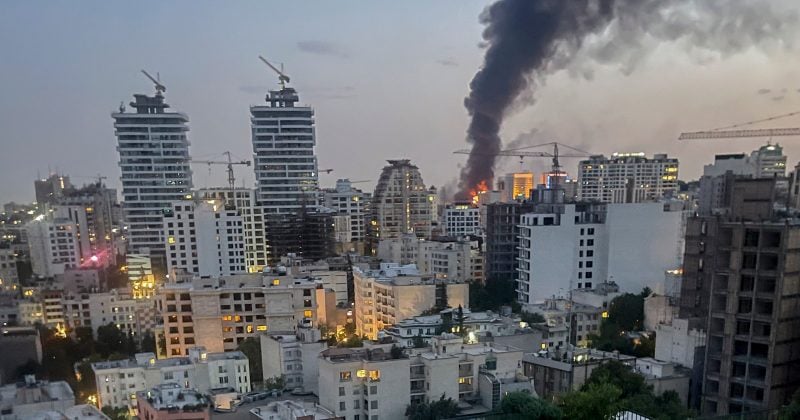
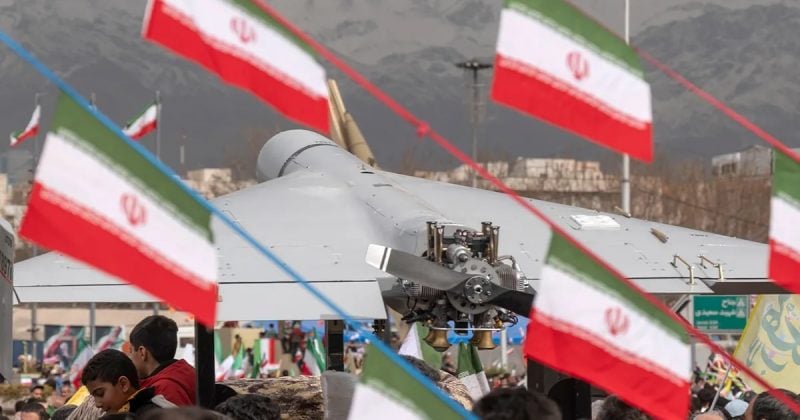
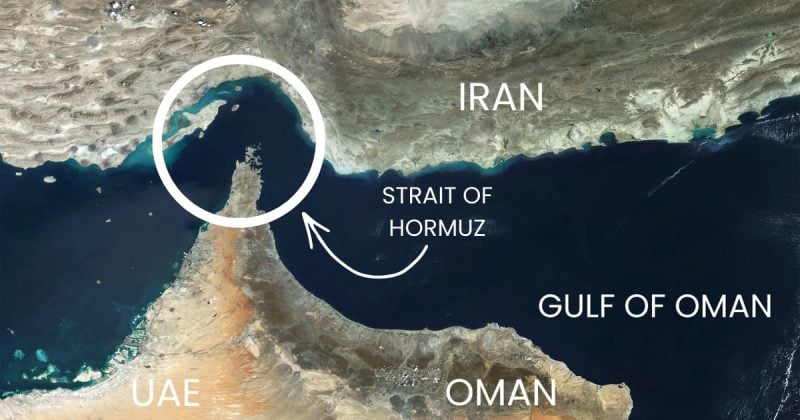
Iranian missiles and drones targeted several Gulf states with interceptions reported in Qatar, the UAE, Bahrain, Jordan and Kuwait, and injuries in Qatar. The IRGC announced the Strait of Hormuz was closed and said no vessels would pass, prompting US Central Command strikes on Iranian assets after the IRGC attack on the Cyprus-flagged m/v GFS Galaxy. Reporting on Hormuz is contradictory, with CENTCOM saying commercial vessels continue to transit even as Iran and Oman discuss a managed navigation scheme that includes a potential median lane. The UN’s Rosemary DiCarlo warned of a lost continuity of knowledge on Iran’s nuclear programme since US, Israeli strikes in February, and Israel’s defence minister has signalled preparations for potential unilateral action. US travel and aviation advisories for the UAE remain elevated amid Iranian threats to target US-linked sites there.
Change from previous assessment
New developments since the prior brief include the IRGC attack on the Cyprus-flagged m/v GFS Galaxy and subsequent US strikes; IRGC announcements that the Strait of Hormuz is closed and that no vessels may pass; GCC reports of interceptions and alerts across Bahrain, Qatar, the UAE, Jordan and Kuwait with injuries in Qatar; and visible Oman-led proposals for dual-route or median-lane navigation with Qatar’s participation. The UN warned of a lost continuity of knowledge on Iran’s nuclear programme. Israel’s defence minister signalled preparations for independent action. Confidence has been lowered by contradictory reporting on actual Hormuz transit conditions.
Key judgments
- Iran very likely expanded the conflict across the Gulf with missile and drone fire since 11-12 July, with interceptions and alerts reported in Qatar, the UAE, Bahrain, Jordan and Kuwait, and at least three people injured in Qatar. (Confidence: high · REPORTED)
- I&W: Additional public statements by Bahrain, the UAE, Qatar, Jordan or Kuwait reporting new interceptions of Iranian missiles or drones. (0-14 days)
- I&W: A two-week lull with no GCC reports of interceptions and an Iranian statement signalling a halt to cross-Gulf launches. (0-14 days)
- Iran is likely enforcing ad hoc restrictions in the Strait of Hormuz rather than maintaining a complete closure, given IRGC closure announcements alongside reports of continued transits and ongoing Oman-led talks on managed lanes. (Confidence: medium · ASSESSED)
- I&W: An Iran, Oman joint statement announcing a median lane or two-route scheme allowing free commercial passage. (0-14 days)
- I&W: Multiple verified instances of IRGC boarding or turning back tankers and a CENTCOM statement noting no commercial transits over several days. (0-14 days)
- US forces very likely resumed sustained strikes on Iranian military assets following the IRGC attack on the Cyprus-flagged m/v GFS Galaxy in the Strait of Hormuz. (Confidence: high · REPORTED)
- I&W: CENTCOM releases detailing additional strikes on IRGC naval assets, anti-ship missiles, or storage sites. (0-14 days)
- I&W: Public announcement of a pause in US strikes linked to Oman- or Qatar-brokered arrangements on ship safety. (0-14 days)
- Israel is likely preparing for a potential unilateral operation against Iran, heightening the risk of a direct Iran, Israel exchange if current trajectories persist. (Confidence: medium · ASSESSED)
- I&W: Israel issues a nationwide NOTAM restricting or closing airspace or publicly elevates IDF readiness tied to Iran. (0-14 days)
- I&W: Senior Israeli officials publicly commit to rely on US-led diplomacy and rule out unilateral action through end-July. (0-14 days)
- The UN’s reported loss of continuity of knowledge on Iran’s nuclear programme almost certainly increases escalation risk by obscuring timelines and intent after February’s US, Israeli strikes. (Confidence: high · ASSESSED)
- I&W: A UN or IAEA statement confirming continued inability to verify key elements of Iran’s nuclear programme. (1-3 months)
- I&W: A formal announcement restoring access and data continuity for inspectors. (1-3 months)
- Omani- and Qatari-led diplomacy is likely to persist on navigation and de-escalation, but near-term outcomes will probably stop short of Tehran committing to unrestricted passage. (Confidence: medium · ASSESSED)
- I&W: Public detail from Muscat on a two-route or median-lane scheme, with Iranian statements avoiding a pledge of unrestricted transit. (0-14 days)
- I&W: Iran issues a directive conditioning passage on permits or withdraws from talks. (0-14 days)
- Threats to US personnel and civil aviation in the UAE are very likely elevated, given ordered departure, FAA advisories, and Iranian intent to target US-linked sites. (Confidence: high · ASSESSED)
- I&W: Further US government security posture changes or additional ordered departure directives affecting the UAE. (0-14 days)
- I&W: Rescission of the ordered departure and cancellation of FAA advisories for UAE airspace. (1-3 months)
Outlook & scenarios
Managed navigation with continued limited strikes (45%)
Iran and Oman announce a practical scheme for traffic management, possibly a median lane or dual routes, while Tehran avoids committing to fully unrestricted passage. Sporadic Iranian launches and US response strikes continue at a lower tempo. Commercial transits proceed with delays and higher risk premia. This aligns with ongoing technical talks and proposals for lane management and the US push for Iran to halt ship attacks.
Direct Iran, Israel exchange triggered by Israeli unilateral action (35%)
Israel proceeds with an independent operation against Iranian targets, consistent with Israeli signalling of preparations and strategic autonomy. Iran answers with missile and drone salvos toward Israel and US-linked sites, while GCC states attempt interceptions. Airspace restrictions around Israel become likely as markets price higher closure risk.
Acute maritime showdown and de facto Hormuz closure (30%)
The IRGC escalates enforcement at the Strait of Hormuz, turning back or boarding multiple tankers after reaffirming closure and no-passage edicts. CENTCOM intensifies strikes on Iranian coastal and naval assets, and shipping disruption worsens despite mediation attempts.
Short de-escalation window via talks before end-July (25%)
Mediators from Oman and Qatar facilitate limited commitments that enable a pause in maritime attacks and a narrowly scoped US, Iran engagement by late July. Market-implied probabilities of a meeting remain modest but improve from mid-July levels, reflecting constrained diplomatic headroom.
Recommendations
- Prioritise maritime situational awareness: assemble a daily cross-INT digest on Hormuz that tracks IRGC enforcement statements, any reported boardings, CENTCOM strike releases, and Iran, Oman navigation announcements.
- Prepare decision support on Israeli unilateral action risk: monitor Israeli NOTAMs and readiness signalling and track market indicators on potential Israeli airspace closure through end-July to inform contingency planning.
- Backstop mediator efforts: coordinate with interagency to support Oman’s two-route and median-lane discussions, align with US demands that Iran halt ship attacks, and maintain opposition to proposed transit fees in diplomatic messaging.
- Reassess posture for US personnel and civil aviation in the UAE: review evacuation triggers, update travel and flight risk guidance consistent with FAA advisories and prior ordered departure, and pre-position options for rapid posture adjustments.
- Update energy and shipping risk assessments: model short-term disruption scenarios that assume constrained but not fully halted transits through Hormuz, and map exposure of US and allied shipping to IRGC anti-ship capabilities.
- Enhance Gulf air and missile warning monitoring: incorporate GCC reports of interceptions and alerts into a real-time dashboard to flag any clustering of strikes or degradation in interception rates.
Confidence & uncertainty
Overall confidence is low because several central elements rely on sources with conflicting claims and mixed reliability. Reporting on the status of the Strait of Hormuz is contradictory, with IRGC closure announcements and shipping disruption claims set against CENTCOM assertions of continued transits and concurrent Iran, Oman lane talks. Some timelines are contested across sources, and parts of the narrative rest on single-source or medium-confidence media. Where multilateral or official statements exist, such as the UN’s warning on nuclear monitoring gaps and official advisories for the UAE, confidence is higher, but these do not resolve key uncertainties on maritime access and immediate escalation dynamics.
Alternative analysis (red cell)
The cited record documents missile/drone incidents, IRGC closure statements, CENTCOM strike actions, and diplomatic talks, but the briefing’s stronger temporal and causal claims (region‑wide escalation since 11–12 July, sustained US strikes, near‑certain escalation from monitoring gaps) are not sufficiently grounded in the mix of medium‑admiralty reporting and political statements. Defensible alternative readings include episodic/limited attacks rather than a coordinated expansion, contested or de‑facto localized Hormuz closures rather than routine ad hoc restrictions, and discrete retaliatory strikes rather than a sustained US campaign. High‑confidence ISR, forensic attribution, and authoritative operational logs are needed to substantiate the brief’s stronger judgments.
Intelligence gaps
- [EEI 1.1 · UNCOVERED] Detection and characterization of ballistic/cruise missile or rocket launches originating from Iranian territory or from Iran-controlled positions in Iraq/Syria (time, launch coordinates, missile type, flight trajectory/impact area). Recommended collection: satellite/imagery
- [EEI 1.2 · UNCOVERED] Movements and posture changes of Iran-backed proxy forces (Hezbollah units in Lebanon, militias in Syria/Iraq): concentrations of personnel, transport of rocket/artillery launchers, visible logistics build-up within operational range of Israel. Recommended collection: human/intel
- [EEI 1.3 · UNCOVERED] Israeli defensive and offensive posture changes: reservist call-ups, mobilization orders, sorties/airstrikes attributed to Israel, and domestic activation of missile-defense systems (locations and activation times). Recommended collection: open-source/media
- [EEI 1.4 · UNCOVERED] Evidence of pre-positioning or arming of naval mines, fast attack craft, or anti-ship missile systems in the Gulf of Oman, northern Arabian Sea, or off the Lebanese/Syrian coasts that could be used to interdict Israeli or allied shipping. Recommended collection: maritime/AIS
- [EEI 2.1 · UNCOVERED] Movements and tasking changes of external military assets: carrier strike groups, amphibious ready groups, expeditionary air wings, or ballistic-missile defense units into the Eastern Mediterranean, Persian Gulf, or Red Sea (vessel/aircraft IDs, routing, on-station times). Recommended collection: maritime/AIS
- [EEI 2.2 · UNCOVERED] Formal diplomatic/military actions: evacuation orders or embassy closures, public troop posture statements, bilateral/multilateral defense commitments announced, requests for overflight or basing rights in regional states. Recommended collection: diplomatic
- [EEI 2.3 · UNCOVERED] Changes to force protection or alert levels at foreign bases in the region (e.g., US bases in Kuwait, Qatar, UAE; Russian bases in Syria): activation of additional air defenses, curfews, or reinforcement shipments (personnel/equipment manifests). Recommended collection: signals/intel
- [EEI 3.1 · UNCOVERED] Incidents against commercial vessels: attacks, seizures, mine strikes, or forced rerouting of tankers and bulk carriers in the Strait of Hormuz, Bab al-Mandeb, Red Sea, or eastern Mediterranean (vessel names/IMO, location, damage/impairment). Recommended collection: maritime/AIS
- [EEI 3.2 · UNCOVERED] Changes in crude oil and refined product flows from key terminals (reported tanker loading delays, terminal closures, throughput volumes at Kharg, Mina al-Ahmadi, Ras Tanura, and major Gulf ports compared to baseline). Recommended collection: commercial/ports
- [EEI 3.3 · UNCOVERED] Market and insurance indicators: sudden spikes in war-risk or hull insurance premiums for Middle East routes, large moves in regional FX/stock indices, and notable changes in commodity futures (oil, freight rates) tied to regional risk perceptions. Recommended collection: financial/transactional
Cited sources
[1] Al Jazeera · Missiles and drones fired at Gulf states after night of US strikes on Iran (A) · sha256:d271abdf7e5e [2] cryptobriefing.com · Gulf states intercept Iranian missiles amid escalating regional tensions (B) · sha256:3599808cca0b [3] ynetnews.com · Iran attacks ship in Strait of Hormuz, declares waterway 'closed until further notice' (A) · sha256:a6ef492db3f4 [4] cryptobriefing.com · US airstrikes target Iran's energy infrastructure amid 2026 conflict (B) · sha256:0c58e1512af0 [5] Wikipedia · Economic impact of the 2026 Iran war (B) · sha256:5ae6bc5cd289 [6] Jerusalem Post · Iran says talks with Oman focused on Strait of Hormuz traffic (B) · sha256:f416671bd135 [7] jpost.com · Oman seeks dual-route Strait of Hormuz deal as Trump demands Iran admit ship attacks (B) · sha256:c4fdb189a486 [8] cryptobriefing.com · CENTCOM launches strikes after IRGC attack on Cyprus-flagged ship (B) · sha256:3930eb4c7b36 [9] cryptobriefing.com · Israel prepares for potential solo military action against Iran amidst 2026 conflict (B) · sha256:6bd02706a485 [10] United Nations · Security Council LIVE: ‘Lost continuity of knowledge’ on Iran’s nuclear programme since US-Israel attacks, top UN official warns (A) · sha256:fc21a388ea4b [11] Wikipedia · Reactions to the 2026 Iran war (B) · sha256:625c4f452002 [12] cryptobriefing.com · Qatar joins Iran-Oman talks in Muscat amid Strait of Hormuz crisis (B) · sha256:fef56e2328c6 [13] U.S. Department of State · United Arab Emirates Travel Advisory (A) · sha256:7a0c71f2991b
Source content hashes were computed at collection time; the cited text is preserved unmodified for the life of this product.
Red cell review: PARTIAL DISSENT
TLP:CLEAR