TLP:CLEAR · Disclosure is not limited.
Iran, Israel crisis: U.S., Iran strikes intensify as missile alerts ripple across the Gulf; maritime and energy risks widen
Time window: Last 1 day · Audience: General analyst · Type: Situation report · DTG: 2026-07-16 10:40Z · Overall confidence: MEDIUM
BLUF
U.S. blockade enforcement and multi‑day strikes inside Iran have entered a sustained phase, while Iranian missile and drone activity has triggered alerts and intercepts in Bahrain and Kuwait. Maritime and energy risks around Hormuz remain acute, and Israeli signalling of possible escalation keeps the Levant on edge.
Executive summary
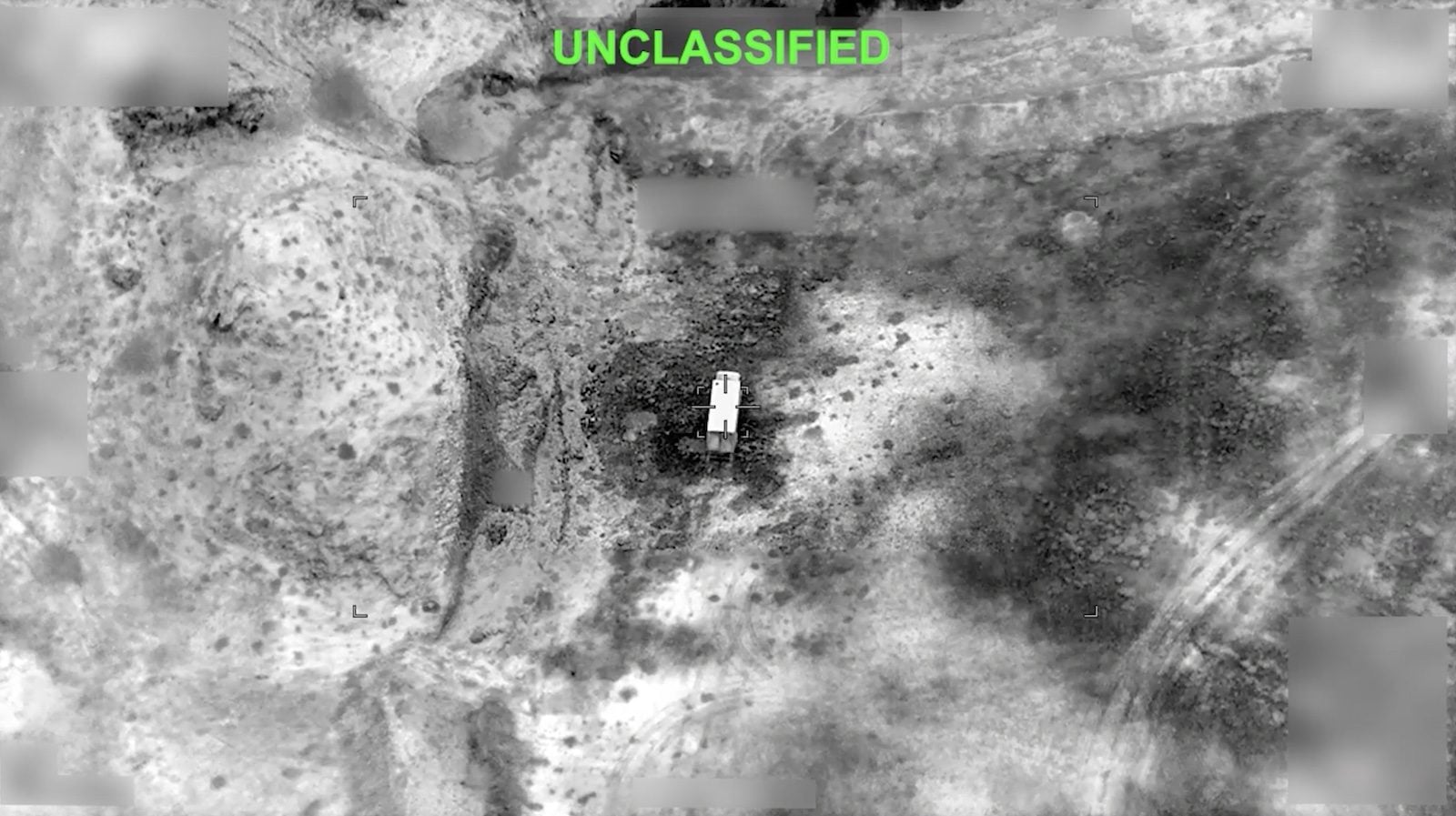
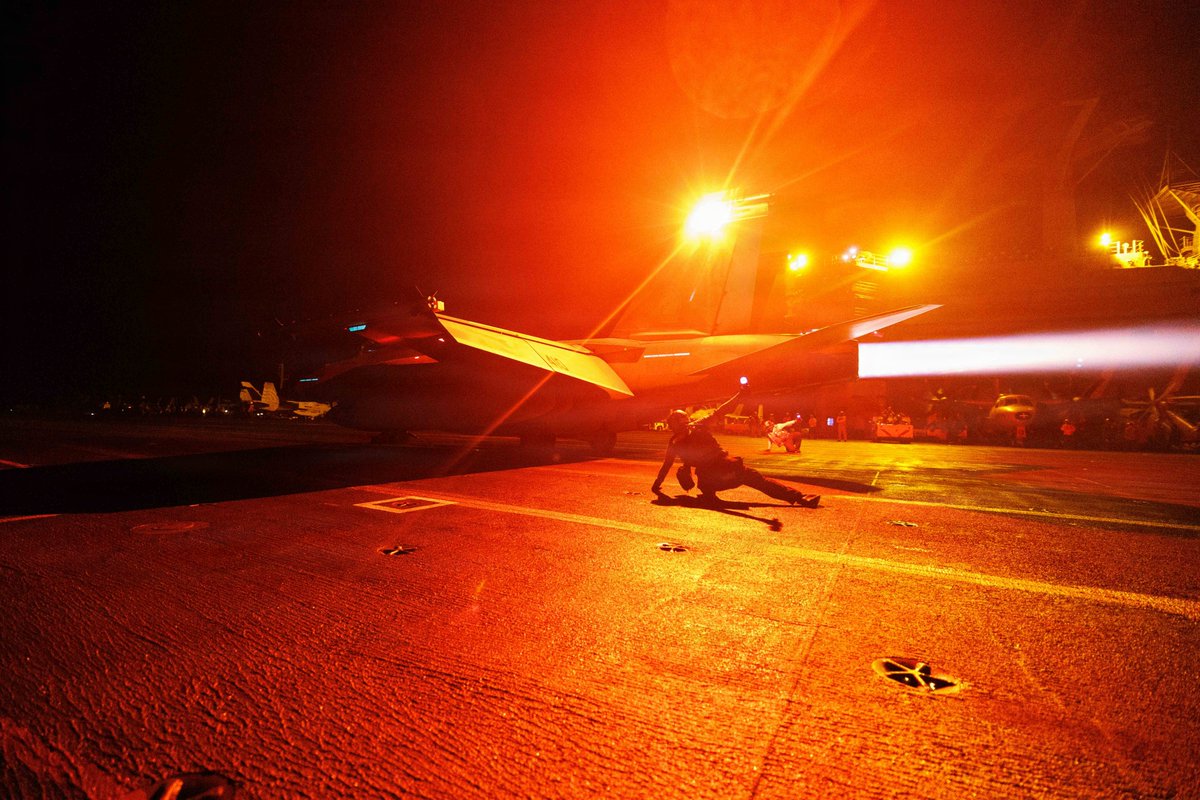
Since 13 July, Washington has reimposed a naval blockade on Iran and conducted repeated strikes, including daylight operations, attacks on coastal defences and missile sites at Greater Tunb, strikes along Iran’s southern coast, and actions disabling a tanker and redirecting blockade runners. Iran has fired missiles and drones at Gulf states, with alerts and interceptions reported in Bahrain and Kuwait and the IRGC claiming strikes on U.S. targets in Bahrain, Kuwait and Jordan. Merchant shipping and aviation are disrupted around Hormuz, with a concentration of recent attacks on very large crude carriers, U.S. disabling of the Belma, and airlines suspending routes. Iranian officials report dozens killed and hundreds wounded from U.S. strikes, and CENTCOM reports U.S. fatalities. Israel’s defence minister has hinted at escalation, reporting suggests possible Israeli re‑engagement with Iran, Beirut has publicly moved to circumscribe Hezbollah, and weapons bound for Hezbollah were interdicted in Syria. Tehran and its network threaten to expand energy pressure to the Red Sea, while oil prices and Saudi routing decisions reflect a stressed market. The UN has called for de‑escalation and restoration of navigational rights.
Change from previous assessment
Since the 15 July brief, the conflict has shifted from sporadic exchanges to sustained U.S. operations: the naval blockade was reimposed and enforced; U.S. strikes expanded in tempo and geography, including daylight operations, attacks on Greater Tunb, strikes along Iran’s southern coast, and reports of strikes reaching areas around Tehran. Iran’s missile and drone activity triggered public alerts and reported interceptions in Bahrain and Kuwait, and the IRGC asserted strikes on U.S. targets in Bahrain, Kuwait and Jordan. Maritime and aviation risks widened, with a concentration of attacks on very large crude carriers and airlines suspending Middle East routes. Reported casualties in Iran increased into the dozens killed and hundreds wounded. Iranian rhetoric escalated on energy coercion, and Israeli signalling of potential escalation persisted alongside interdiction of weapons bound for Hezbollah. Initial assessment of reported U.S. fatalities has been added.
Key judgments
- It is very likely the United States has reimposed a naval blockade on Iran and is prosecuting a sustained, expanding strike campaign, including daylight operations from 13 July, two waves of attacks on 15-16 July that hit coastal defences and missile sites such as on Greater Tunb Island, strikes along Iran’s southern coast, and blockade enforcement actions that disabled the tanker Belma and redirected two merchant vessels. (Confidence: high · REPORTED)
- I&W: CENTCOM announces another wave of strikes and releases evidence of additional daylight attacks, including targets near Tehran. (0-14 days)
- I&W: Official U.S. announcement suspending or lifting the blockade of Iranian ports. (0-14 days)
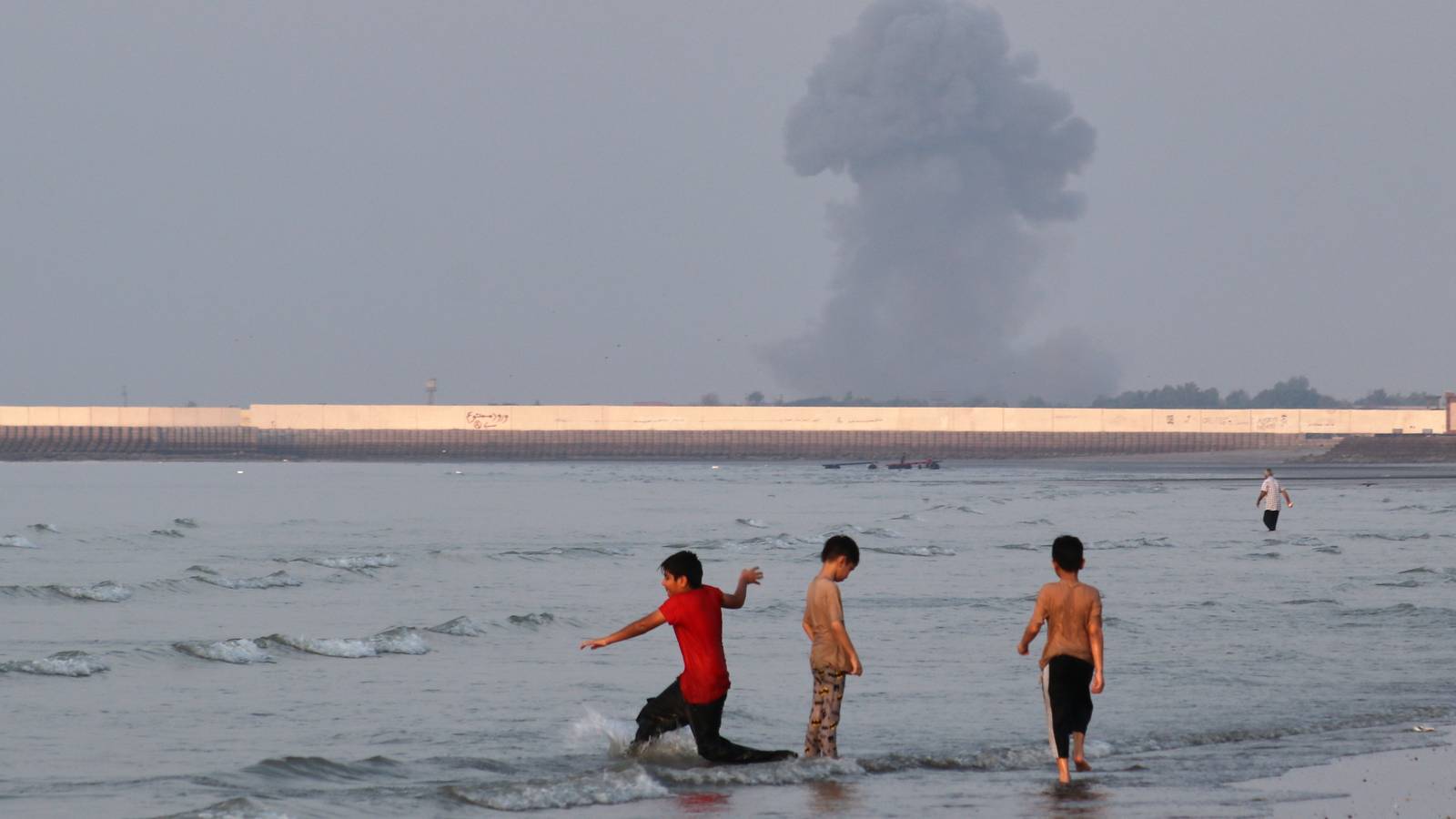
- It is likely Iran has responded with coordinated missile and drone fire toward Bahrain and Kuwait, with local alerts and interceptions reported and the IRGC asserting strikes on U.S. targets in Bahrain, Kuwait and Jordan. (Confidence: medium · REPORTED)
- I&W: Bahrain, Kuwait or Jordan publish imagery or debris forensics attributing downed missiles or drones to Iranian manufacture or launch points. (0-14 days)
- I&W: A sustained lull in missile alerts and official interception reports across Bahrain and Kuwait. (0-14 days)
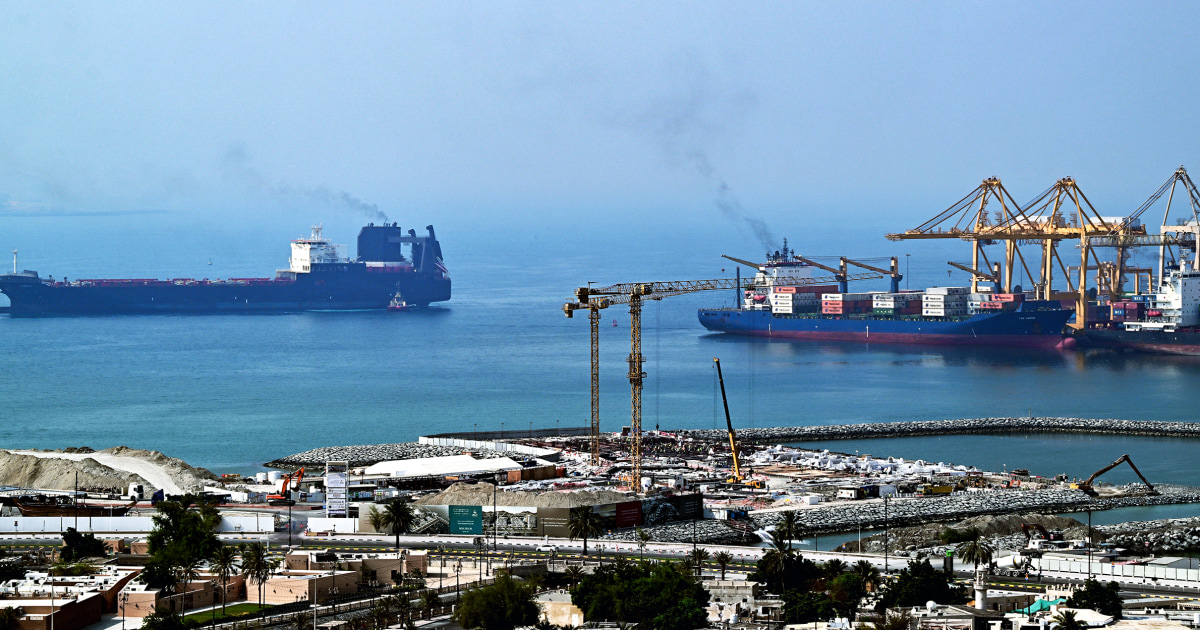
- It is very likely maritime and aviation risk around the Strait of Hormuz remains acute, with repeated attacks on commercial ships, a focus on very large crude carriers since June, U.S. disabling of the tanker Belma and redirection of blockade runners, and multiple airlines suspending Middle East routes. (Confidence: high · REPORTED)
- I&W: UKMTO or other maritime advisories report additional attacks or boardings targeting VLCCs transiting Hormuz. (0-14 days)
- I&W: AIS data show a rebound in laden VLCC transits via Hormuz approaching pre‑escalation levels. (1-3 months)
- It is likely the risk of a broader Israel, Iran confrontation and proxy spillover persists across Lebanon, Syria and Yemen, given Israeli signalling of escalation, reports of possible Israeli re‑engagement with Iran, Beirut’s stated intent to curtail Hezbollah’s armed role, interdiction of weapons bound for Hezbollah, and Tehran‑linked threats to extend pressure to the Red Sea. (Confidence: medium · ASSESSED)
- I&W: Publicly acknowledged Israeli strikes on Iranian or Hezbollah‑linked assets in Syria or Lebanon. (0-14 days)
- I&W: Houthi announcements or actions enforcing a ban on Israel‑linked shipping in the Red Sea. (0-14 days)
- It is likely the humanitarian toll is mounting, with Iranian officials reporting more than 35 killed and over 300 wounded from U.S. strikes, at least seven Iranian troops and over 30 civilians reported killed in separate incidents, and CENTCOM reporting 13 U.S. soldiers killed. (Confidence: medium · REPORTED)
- I&W: Independent medical reporting or satellite imagery corroborates large casualty events at named sites in Sistan and Baluchestan and other strike locations. (1-3 months)
- I&W: Official casualty totals are revised materially downward by Iranian authorities or contradicted by third‑party monitors. (0-14 days)
- It is likely energy‑market and supply risks will remain elevated as Iran threatens to halt regional energy exports and expand pressure to the Red Sea, with oil pricing and Saudi routing decisions reflecting contingency postures. (Confidence: medium · ASSESSED)
- I&W: Official Iranian statements or proxy actions reference choking flows beyond Hormuz, including Red Sea threats. (0-14 days)
- I&W: Brent crude sustained below 80 dollars per barrel with reported rebalancing of Saudi exports away from Yanbu. (1-3 months)
Outlook & scenarios
Managed confrontation under a reimposed blockade (60%)
U.S. forces continue limited but persistent strikes focused on Iranian air defences, coastal surveillance, and missile units, paired with blockade enforcement against non‑compliant shipping. Washington keeps the target set short of Iran’s missile bases and nuclear facilities while signalling that strikes are intended to force Tehran back to negotiations. Maritime risk remains high, but Israel stays just short of direct large‑scale action.
Wider regional war across the Gulf and Levant (35%)
A successful Iranian attack causing casualties in the Gulf or a high‑profile incident at a U.S. site prompts a harsh Israeli response against Iranian or proxy assets. Hezbollah activity intensifies despite Beirut’s stated intent to curb its military role, and the Houthis step up threats or interdictions. Merchant shipping and aviation face broader disruption.
Short diplomatic pause (30%)
Back‑channel mediation leverages the UN’s de‑escalation push and U.S. statements that Tehran wants a settlement. Strikes taper as talks open on navigation and rules of the blockade. Alerts in Bahrain and Kuwait decrease, and airlines cautiously restore some routes while maritime risk remains elevated.
Wildcard: Red Sea front opens (15%)
Iran and aligned groups extend pressure to the Red Sea. The Houthis attempt to enforce announced restrictions on Israel‑linked shipping, raising the risk of a Bab el‑Mandeb disruption, compounding energy flows already stressed by Hormuz.
Recommendations
- Maintain a geospatial strike log mapping U.S. target locations named in reporting, including Bandar Abbas, Khormuj, Ahvaz, Qeshm, Bushehr, Kuh‑e Stak, and Greater Tunb, to track target‑set evolution and potential escalation ladders.
- Stand up a daily Gulf air and missile activity watch: capture official alerts and interception claims from Bahrain and Kuwait, with open‑source corroboration of debris and impact sites where available.
- Task the maritime watch to flag AIS‑dark behaviour and attempted blockade runs near Hormuz and to track reports of attacks on very large crude carriers alongside airline route suspensions.
- Coordinate with energy analysts to monitor Brent pricing and reported Saudi crude flows via Yanbu, and prepare impact notes if Iranian rhetoric or proxy actions reference Red Sea escalation.
- Build a casualty cross‑check matrix that separately tracks Iranian official claims and U.S. announcements, with location‑specific entries for hospitals and bases named in reporting.
- Monitor Hezbollah supply lines by logging state media interdiction claims and related arrests or seizures along the Iraq, Syria corridor, and watch for Israeli signalling or declared strikes tied to these routes.
- Catalogue blockade enforcement incidents, including vessel diversions or disablements like Belma, to assess compliance trends and escalation risk in maritime interdictions.
- Track statements from Israeli leadership on escalation thresholds and from Lebanese officials on curbing Hezbollah’s armed role, to refine triggers for Levant spillover.
Confidence & uncertainty
Overall confidence is medium. Multiple independent major‑media and multilateral sources corroborate the U.S. blockade decision and multi‑day strike activity, the strike locations and target types, and the presence of missile alerts and interceptions in Bahrain and Kuwait. Maritime disruption around Hormuz and airline suspensions are also well sourced. Casualty figures rely heavily on Iranian official statements with limited independent verification, and claims of IRGC strikes across several countries are partly self‑attributed. Energy‑market and Saudi routing signals are reported but not uniformly corroborated. These gaps and contested elements warrant a medium, not high, confidence rating.
Alternative analysis (red cell)
While the dossier contains multiple reports of strikes, missile/drone launches, and related threats, the available claims are a mixture of political statements, party‑sourced casualty tallies, and medium/low admiralty operational reports. Absent corroborating IMINT/AIS/DoD consolidated releases and independent forensic evidence, alternative interpretations—limited or targeted U.S. strikes rather than a sustained formal blockade; intermittent proxy/air‑defense activity rather than coordinated regional strikes; and disputed casualty and energy‑market impacts—remain plausible and should be weighed alongside the presented judgments.
Intelligence gaps
- [EEI 1.1 · PARTIAL] Number, type, launch times, and trajectories of ballistic missiles, cruise missiles, armed UAV strikes, and combat-air sorties launched by Iranian or Israeli forces toward the other's territory or forward bases within a 72-hour window. Recommended collection: signals/intel
- [EEI 1.2 · PARTIAL] Observable changes in Israeli and Iranian force posture: mobilization or reserve call-up orders, unit road/rail movements, dispersal or sortie rates of air squadrons, redeployment of air-defense batteries, and activation of civil-defense alerts or sirens in major population centers. Recommended collection: open-source/media
- [EEI 1.3 · PARTIAL] Indications of strike authorization or targeting preparations in Iranian or Israeli command chains: authenticated public orders by senior commanders, detected increases in encrypted communications consistent with targeting, or visible movement of strike munitions to launch/storage sites. Recommended collection: signals/intel
- [EEI 2.1 · UNCOVERED] Counts, launch locations (coordinates), weapons types, and assessed damage from rocket/missile/drone strikes originating from Lebanon into northern Israel attributed to Hezbollah or allied groups. Recommended collection: open-source/media
- [EEI 2.2 · PARTIAL] Reported attacks by Iranian-backed militias in Iraq and Syria: rocket/IED strikes on bases hosting US/coalition or Israeli personnel, documented militia unit movements toward borders, and captured movement or transfer of weapons systems to forward militia positions. Recommended collection: human
- [EEI 3.1 · PARTIAL] Movements and arrival dates of foreign military assets into the region: carrier strike groups, amphibious ships, surface combatants, strategic airlift/tanker deployments, and air/sea patrol patterns by US, European, Russian, or regional militaries. Recommended collection: imagery/satellite
- [EEI 3.2 · PARTIAL] Concrete diplomatic and political actions: emergency UN/Arab League meetings called, official embassy evacuation orders, public declarations of intent to interpose or protect shipping/airspace, and newly announced sanctions or arms-transfer approvals tied to the conflict. Recommended collection: diplomatic
Cited sources
[1] military.com · US Expands Strikes into Northern Iran and Disables Ship Trying to Run Blockade (A) · sha256:d163948467de [2] NBC News · U.S. reimposes blockade and steps up strikes as Iran threatens to halt Mideast energy exports (A) · sha256:77f7344c17f7 [3] gcaptain.com · Trump Vows Strikes on Iran's Power Plants and Bridges Unless Hormuz Reopens (B) · sha256:52f7913efe18 [4] jpost.com · Iran claims 'existential war' with US after new wave of strikes, threatens wider energy disruption (B) · sha256:4e1418a85a94 [5] NBC News · U.S. expands strikes into northern Iran and disables ship trying to run blockade (A) · sha256:2977d8226b6f [6] haaretz.com · U.S. strikes around Tehran for first time since Trump declared end of cease-fire (B) · sha256:b6a82928d6d4 [7] maritime-executive.com · U.S. Launches New Wave of Strikes on Targets in Iran (B) · sha256:796929424140 [8] haaretz.com · The fight for Hormuz shows how far U.S.-Iran war strayed from its original goals (B) · sha256:69dbf4e50bd5 [9] cryptobriefing.com · Bahrain intercepts Iranian missile, drone attacks amid 2026 Iran war escalation (B) · sha256:7234dfe73cb6 [10] The Jerusalem Post · Live Updates: Latest from Israel, Iran, and Middle East | The Jerusalem Post (A) · sha256:c55d5f77e647 [11] gcaptain.com · Supertankers Increasingly Bear Brunt in Hormuz Ship Attacks (B) · sha256:fb2565b23738 [12] haaretz.com · Syria foils attempt to smuggle weapons to Hezbollah from Iraq, state news says (A) · sha256:eb236d1e152f [13] cryptobriefing.com · VP JD Vance claims some in Israel want Iran war to continue indefinitely (B) · sha256:3aaace2eac2b [14] aljazeera.com · Yemen is edging closer to renewed confrontation (A) · sha256:c9584d58ff26 [15] gcaptain.com · After Hormuz, Here's Why the Red Sea Is Now the World's Most Vulnerable Shipping Route (A) · sha256:d2cbc4b9542e [16] gcaptain.com · Iran Threatens Wider Energy Chokepoints After Fresh U.S. Strikes (A) · sha256:8247a9b795dc
Source content hashes were computed at collection time; the cited text is preserved unmodified for the life of this product.
Red cell review: PARTIAL DISSENT
TLP:CLEAR