TLP:CLEAR · Disclosure is not limited.
Iran, Israel Crisis: US, Iran Strikes, Gulf Intercepts, and Constrained Hormuz Transit
Time window: Last 1 day · Audience: General analyst · Type: Situation report · DTG: 2026-07-16 15:14Z · Overall confidence: LOW
BLUF
US, Iran hostilities have intensified with multi‑day US strikes, a reimposed blockade and a disabled tanker near Kharg, while Iran has launched missiles and drones at Kuwait, Jordan and Bahrain. Hormuz remains partially open but high risk; Israel signals a harder line yet remains indirectly involved as Washington seeks to keep it out.
Executive summary
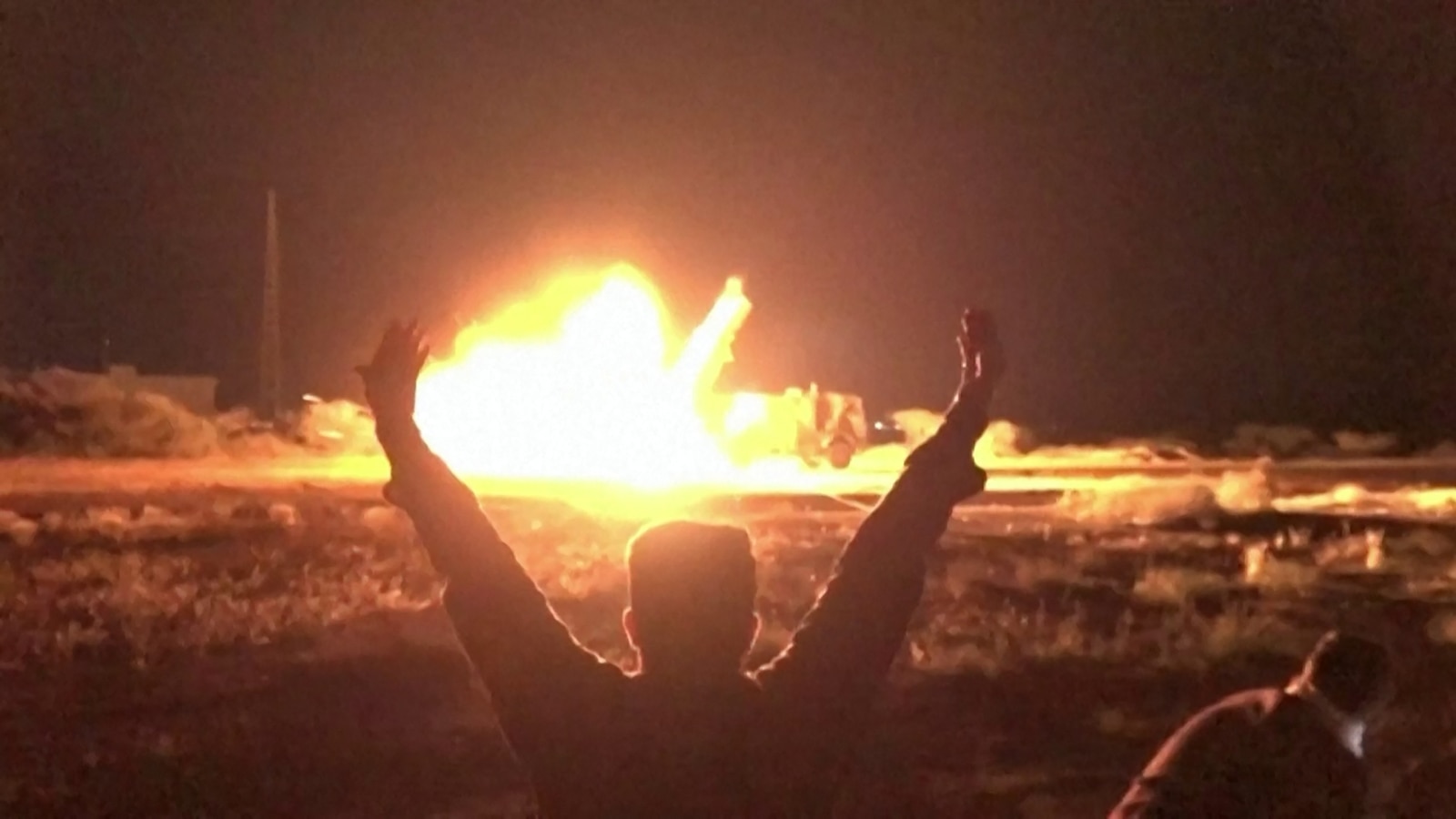
Since 15 July, US Central Command has reported multiple waves of strikes on Iranian targets including coastal defences, air defence, drone and missile units, command centres and sites around Tehran. Iran and the IRGC have answered with missiles and drones against Kuwait, Jordan and Bahrain, with official intercepts reported in Kuwait and Jordan and condemnation from Qatar. The US has reimposed a naval blockade and publicly disabled the Curacao‑flagged tanker Belma near Kharg Island as part of enforcement, while assisting more than 10 ships through Hormuz. Shipping faces repeated attacks near Hormuz and off Oman, operators are avoiding the southern Omani lane, and India has ordered no deployment of Indian seafarers through the strait. Iranian officials report fatalities and hundreds wounded from US strikes, and 211 chemotherapy patients were evacuated from a hospital in Ahvaz after a nearby strike. The UN Secretary‑General urged de‑escalation and restoration of navigational freedoms; Jerusalem’s defence minister has hinted at escalation, but US messaging seeks to keep Israel from direct participation. Iran has threatened wider energy disruption, including signalling a potential Red Sea front via Houthi partners, while Brent crude traded above 85 dollars.
Change from previous assessment
Since the 15 July brief, US strikes have extended to areas around Tehran and continued in waves; the US publicly disabled the tanker Belma near Kharg under a reimposed blockade and reported assisting more than 10 ships through Hormuz. Kuwait and Jordan reported additional intercepts of Iranian missiles and drones, with discrepancies in Jordanian counts. Qatar condemned Iranian attacks on Bahrain, Kuwait and Jordan. Guterres renewed calls to restore navigational freedoms. Reporting added granular shipping impacts, including operators avoiding the southern Omani lane and India ordering no deployment of Indian seafarers via Hormuz. We introduced an explicit assessment on likely Red Sea spillover risk and lowered confidence on precise missile intercept tallies.
Key judgments
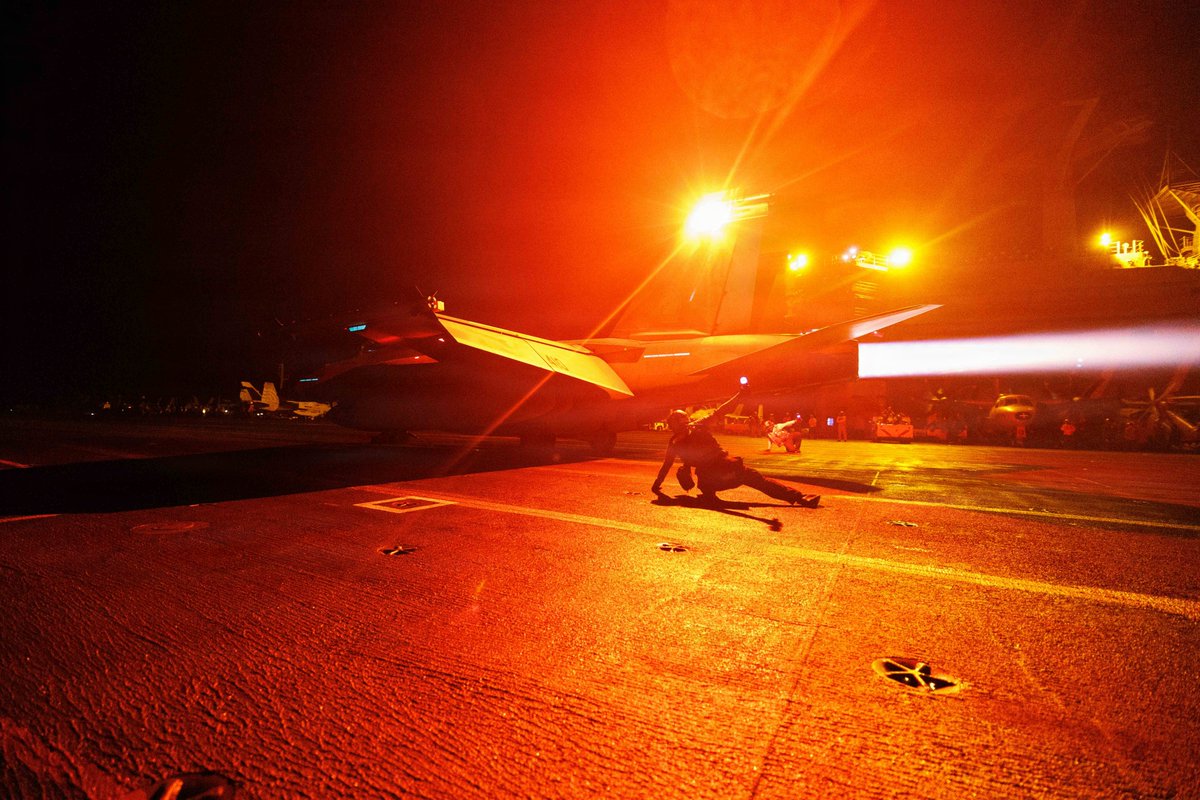
- Very likely US Central Command is sustaining a multi‑day strike campaign across Iran, including coastal defences, air defence, missile and drone units, command centres and sites around Tehran, with multiple waves reported and dozens of targets hit. (Confidence: high · REPORTED)
- I&W: CENTCOM releases another tranche of strike imagery or battle damage claims inside Iran within the next reporting cycle. (0-14 days)
- I&W: A sustained pause in US strike announcements or independent reporting for at least seven consecutive days. (0-14 days)
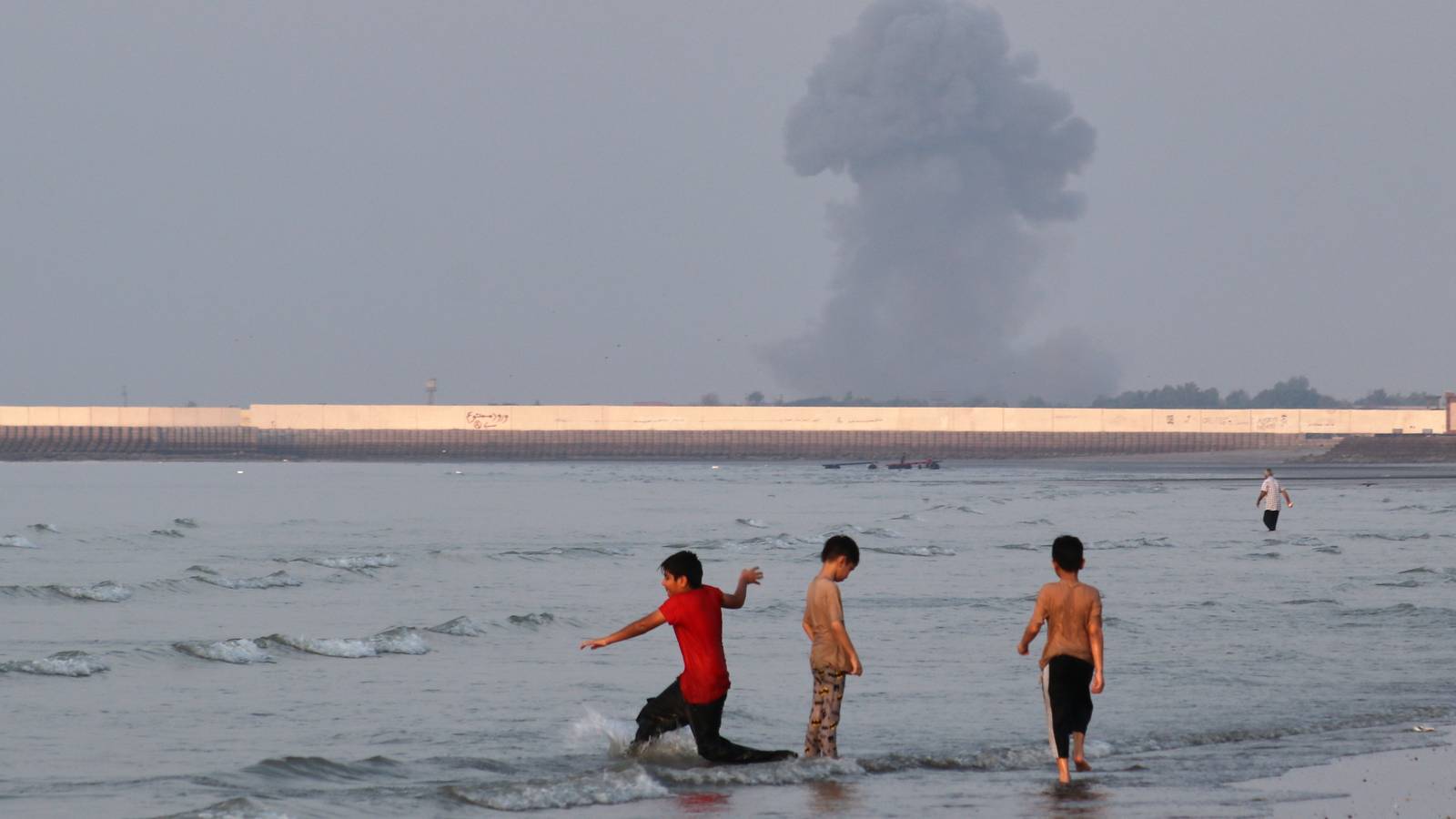
- Likely Iran and the IRGC have expanded cross‑border attacks with missiles and drones against Kuwait, Jordan and Bahrain, with multiple official intercepts reported and allied condemnation. (Confidence: medium · REPORTED)
- I&W: Further official statements from Kuwait, Jordan or Bahrain detailing new intercept counts or debris recovery linked to Iranian launches. (0-14 days)
- I&W: A 14‑day period without new intercept reports from Gulf capitals or IRGC strike claims. (0-14 days)
- Roughly even chance the Strait of Hormuz remains partially open but materially constrained, despite Tehran’s claim it closed the waterway, given US assistance to transiting ships, operators’ avoidance of the southern Omani lane and continued, limited commercial passages. (Confidence: medium · ASSESSED)
- I&W: UKMTO and AIS reporting show steady but reduced north‑lane transits past Qeshm with minimal use of the southern Omani lane. (0-14 days)
- I&W: A full week with zero recorded commercial transits coupled with formal closure advisories from maritime authorities. (0-14 days)
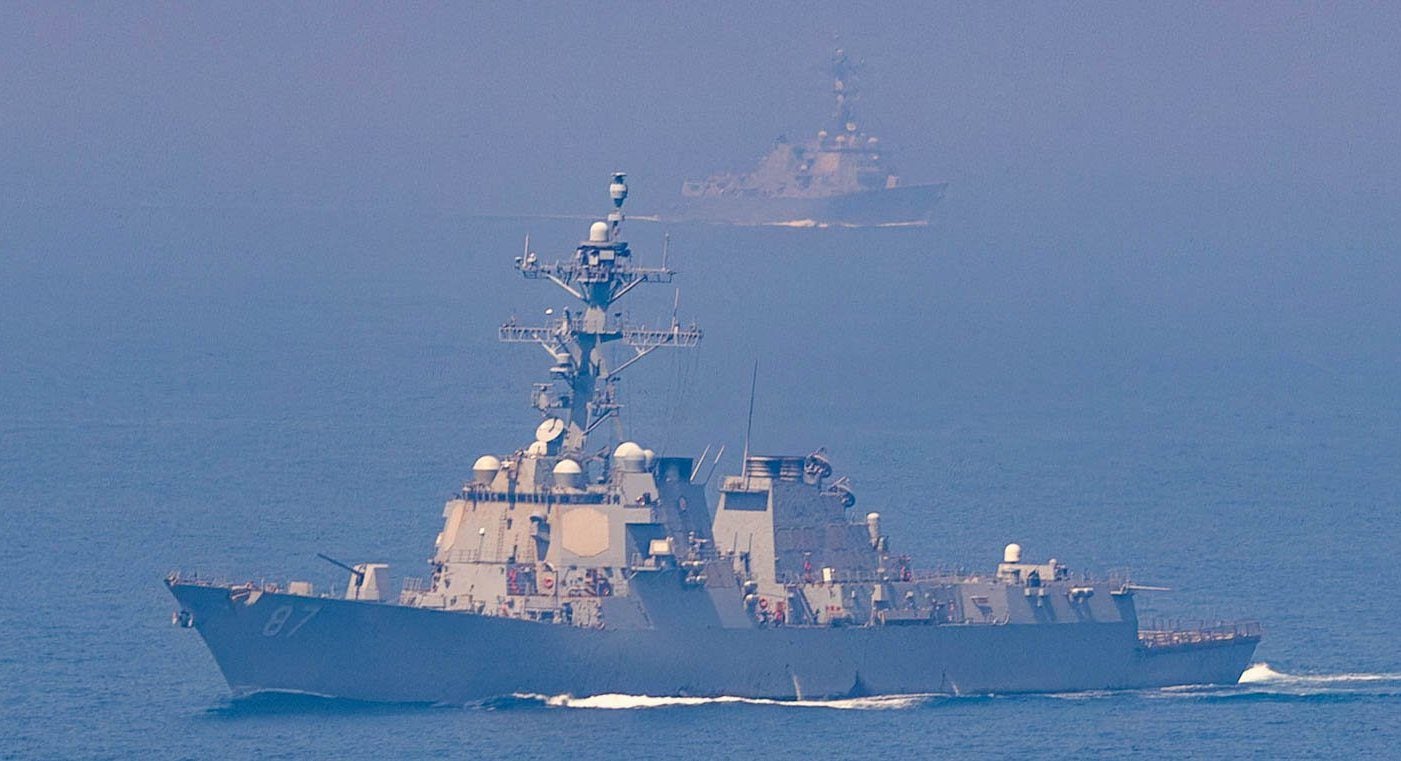
- Likely the United States has reimposed and is enforcing a naval blockade on Iran’s ports, redirecting non‑compliant traffic and disabling the tanker Belma near Kharg Island. (Confidence: medium · REPORTED)
- I&W: Additional publicised redirections or disabling actions against vessels attempting to call at Iranian export terminals. (0-14 days)
- I&W: Multiple foreign‑flag tankers complete loadings at Kharg without reported interdiction. (0-14 days)
- Likely US strikes have inflicted fatalities and placed strain on civilian medical infrastructure in Iran, with Iranian officials reporting at least seven troops killed, over 35 overall fatalities and hundreds wounded, and the evacuation of 211 chemotherapy patients in Ahvaz after a nearby strike. (Confidence: medium · REPORTED)
- I&W: Further hospital or health‑ministry statements corroborating evacuations or casualty figures tied to specific strike locations. (0-14 days)
- I&W: Independent casualty assessments that materially revise reported Iranian figures downward. (1-3 months)
- Almost certainly the June US, Iran interim truce has collapsed, with both sides returning to intense exchanges as the UN calls for de‑escalation and restoration of navigational freedoms. (Confidence: high · REPORTED)
- I&W: No public scheduling of further US, Iran talks and continuing strike claims by both sides. (0-14 days)
- I&W: A joint US, Iran statement announcing a verified pause in operations and steps to restore maritime passage. (1-3 months)
- Likely Tehran intends to extend pressure beyond Hormuz, including threats to halt Middle East energy exports and to expand disruption towards the Red Sea via Houthi partners, raising Bab el‑Mandeb risk. (Confidence: medium · ASSESSED)
- I&W: Houthi announcements or actions targeting Israel‑linked or Gulf energy shipping in the Red Sea tied to escalatory Iranian messaging. (1-3 months)
- I&W: Iranian public signalling that explicitly rules out Red Sea disruption while strikes continue in the Gulf. (1-3 months)
- Likely Israel will remain indirectly involved rather than enter overt combat with Iran in the near term, given US opposition to direct Israeli involvement and only signalling of escalation by Israeli officials. (Confidence: low · ASSESSED)
- I&W: Continued absence of official Israeli claims of strikes inside Iran alongside US statements discouraging Israeli entry. (0-14 days)
- I&W: Official IDF confirmation of kinetic strikes on Iranian territory or large‑scale mobilisation explicitly directed at Iran. (0-14 days)
Outlook & scenarios
Managed escalation around Hormuz with constrained shipping (60%)
US, Iran exchanges persist at a high tempo, with periodic waves of US strikes on Iranian military infrastructure and continued Iranian missile and drone launches at Gulf states. The US blockade is enforced selectively, further vessels are redirected, and occasional enforcement actions occur near Kharg. Hormuz remains partially open via the northern lane with limited but ongoing commercial passages; operators avoid the southern Omani route. Oil prices remain elevated, and additional UN appeals for de‑escalation continue.
Regional spillover into the Red Sea and energy infrastructure pressure (35%)
Tehran follows through on threats to widen the pressure campaign, enabling Houthi actions that raise Bab el‑Mandeb risk and signalling strikes against regional energy infrastructure. Gulf capitals report renewed intercepts, and shipping insurance and routing for Red Sea transits deteriorate. Brent prices trend higher as Saudi export flows continue to favour Red Sea routing via Yanbu.
Short, fragile de‑escalation under diplomatic pressure (25%)
Washington’s stated aim of coercing a return to talks yields a limited pause following public UN appeals and humanitarian optics, including detainee releases. Strike tempo drops, maritime assistance increases, and some operators resume cautious use of established lanes. The truce remains brittle given unresolved grievances and prior breakdown of the June understanding.
Wildcard: Israeli entry into overt combat with Iran (15%)
Despite US opposition, Jerusalem escalates from indirect involvement to overt strikes on Iranian territory following domestic signalling and a triggering incident. Iranian retaliation expands targeting across the Gulf, heightening risks to US basing and to maritime traffic. Markets price in a broader war and maritime choke points face acute disruption.
Recommendations
- Maintain a daily collection log of CENTCOM releases and Iranian official outlets to track strike waves, target sets, and claimed effects; geotag reported strike locations including around Tehran, Ahvaz, Konarak and Greater Tunb.
- Build a reconciled ledger of Gulf intercepts by Kuwait, Jordan and Bahrain, noting discrepancies in counts and munitions types; prioritise official communiqués and debris imagery.
- Task maritime OSINT to map Hormuz transits by lane: fuse AIS tracks, UKMTO advisories and satellite cues to quantify use of the Iranian‑administered northern lane versus the southern Omani route.
- Monitor blockade enforcement at Kharg Island: watch tanker Belma’s status and any follow‑on interdictions; track redirections announced by US Navy within the blockade area.
- Compile a humanitarian impact brief for policymakers: cross‑reference Iranian casualty reports with hospital statements from Ahvaz and other strike‑affected cities; flag high‑confidence incidents like forced evacuations.
- Track Indian maritime labour directives and casualties: archive Directorate General of Shipping orders, union statements on stranded seafarers and repatriation movements.
- Stand up an indicators dashboard for Red Sea spillover: follow Houthi channels and coalition reporting for any shift towards interdicting Israel‑linked or Gulf energy shipping; tag incidents to Iranian signalling.
- Provide a weekly energy risk note: integrate Brent pricing, observed throughput changes via Yanbu and estimates of flows through Hormuz, with explicit assumptions and data provenance.
- Establish a watch on Israeli signalling and US messaging: log statements by Israeli defence officials and US leaders on Israel’s role; flag any move toward overt Israeli operations.
Confidence & uncertainty
Overall confidence is low because several key elements rest on single‑side or partially conflicting reports. Intercept counts over Jordan differ across official statements, blockade timelines carry date inconsistencies, and some enforcement details for the Belma rely on a limited set of public releases. While core strike activity and Gulf intercepts are well reported across multiple outlets, the precise scope of maritime closure, Israeli involvement beyond signalling and the durability of any diplomatic track are uncertain and unevenly corroborated.
Alternative analysis (red cell)
Multiple high‑admiralty reports show U.S. strikes and Iranian retaliatory launches occurred, and that the June truce has been broken. However, the available evidence does not uniformly support the most consequential specific claims about campaign scale, detailed target sets (especially strikes around Tehran), a formal U.S. blockade, or operational direction of proxy escalation. A cautious alternative estimate is that repeated U.S. strikes and Iranian attacks took place, but the scale, precise targeting, and degree of coordination with proxies remain insufficiently corroborated.
Intelligence gaps
- [EEI 1.1 · UNCOVERED] Unusual long-range missile/rocket transporter-launcher (TEL) movements, storage activation, or assembly activity at known IRGC missile sites or forward staging areas. Recommended collection: satellite/imagery
- [EEI 1.3 · UNCOVERED] Large-scale transfers, deliveries, or convoy movements of armed UAVs/drones, guided munitions, or spare parts from Iran into Lebanon (Hezbollah), Iraq, Syria, or Gaza. Recommended collection: air/aviation track and HUMINT
- [EEI 1.4 · UNCOVERED] Sustained changes in Israeli air-defense usage (SAM launches, radar activations), wide-area alerts, or NOTAMs indicating elevated imminent strike response. Recommended collection: air/aviation/NOTAMs and signals
- [EEI 2.1 · UNCOVERED] Concentration, repositioning, or sortie patterns of Iranian naval/IRGC patrol boats and fast-attack craft near shipping chokepoints or commercial lanes. Recommended collection: maritime/AIS and satellite/imagery
- [EEI 2.3 · PARTIAL] Insurance market indicators: sudden spikes in war-risk or hull insurance premiums for routes through the Red Sea, Suez corridor, or Persian Gulf, and major carriers announcing route changes. Recommended collection: financial/market and commercial shipping notices
- [EEI 3.1 · PARTIAL] Deployment of foreign military assets to the region (carrier strike groups, amphibious ships, combat aircraft deployments, or additional bases activated) from the US, UK, France, Russia, or GCC states. Recommended collection: maritime/AIS and air/aviation and satellite/imagery
- [EEI 3.2 · PARTIAL] Formal diplomatic actions: emergency UNSC votes, sanctions announcements, high-level ministerial visits, or public mediation offers by external powers or regional actors. Recommended collection: diplomatic/OSINT
- [EEI 3.3 · UNCOVERED] Confirmed arms transfers, expedited weapons shipments, or transfer authorizations to Israel, Iran, or their proxies (aircraft parts, munitions, air defenses). Recommended collection: customs/INTEL and HUMINT
- [EEI 3.4 · UNCOVERED] Issuance of travel warnings, embassy evacuations or reductions, and closure of diplomatic missions by major capitals indicating escalation risk or shifted threat assessments. Recommended collection: OSINT/diplomatic
Cited sources
[1] Los Angeles Times · U.S. reimposes blockade and steps up strikes as Iran threatens to halt Mideast energy exports - Los Angeles Times (A) · sha256:5938aa02099d [2] jpost.com · Iran claims 'existential war' with US after new wave of strikes, threatens wider energy disruption (B) · sha256:4e1418a85a94 [3] maritime-executive.com · U.S. Launches New Wave of Strikes on Targets in Iran (B) · sha256:796929424140 [4] military.com · US Expands Strikes into Northern Iran and Disables Ship Trying to Run Blockade (B) · sha256:d163948467de [5] haaretz.com · U.S. strikes around Tehran for first time since Trump declared end of cease-fire (A) · sha256:b6a82928d6d4 [6] abcnews.com · Iran live updates: Jordan intercepts Iranian missiles, Kuwait reports drone attack (A) · sha256:67e0c4455d01 [7] haaretz.com · The fight for Hormuz shows how far U.S.-Iran war strayed from its original goals (B) · sha256:69dbf4e50bd5 [8] gcaptain.com · Iran-US Skirmishes Worsen as Hormuz Shipping Traffic Dwindles (A) · sha256:d6c57666a101 [9] The Guardian · Iran accuses US of ‘barbaric’ strike near hospital as Kuwait says it is under attack – Middle East crisis live (A) · sha256:5a553d24f43f [10] cryptobriefing.com · Bahrain intercepts Iranian missile, drone attacks amid 2026 Iran war escalation (B) · sha256:7234dfe73cb6 [11] Fox News Digital · Iran threatens to lash out at Arab neighbors as US ramps up strikes | Live Updates from Fox News Digital (B) · sha256:97104d36c5d6 [12] gcaptain.com · Supertankers Increasingly Bear Brunt in Hormuz Ship Attacks (B) · sha256:fb2565b23738 [13] maritime-executive.com · Video: U.S. Disables Iran-Linked Tanker With Hellfire Missiles (A) · sha256:2f66b8a1d0e9 [14] NBC News · U.S. expands strikes into northern Iran and disables ship trying to run blockade (A) · sha256:4c5a1e998b17 [15] United Nations · Gulf crisis: Guterres calls for de-escalation, warns against return to full-on war (A) · sha256:4f8cc42070b2 [16] gcaptain.com · After Hormuz, Here's Why the Red Sea Is Now the World's Most Vulnerable Shipping Route (A) · sha256:d2cbc4b9542e [17] haaretz.com · Israel isn't attacking Iran, <b>but it's deeply involved in this war</b> (B) · sha256:9a4b7b57d595 [18] cryptobriefing.com · VP JD Vance claims some in Israel want Iran war to continue indefinitely (B) · sha256:3aaace2eac2b [19] haaretz.com · Netanyahu's delusional Iran campaign damaged Israel as deeply as October 7 (B) · sha256:24ac6fc68714
Source content hashes were computed at collection time; the cited text is preserved unmodified for the life of this product.
Red cell review: PARTIAL DISSENT
TLP:CLEAR