TLP:CLEAR · Disclosure is not limited.
Iran, Israel escalation: contested Hormuz closure, live fire in Lebanon, talks inch forward
Time window: Last 1 day · Audience: General analyst · Type: Situation report · DTG: 2026-06-22 08:39Z · Overall confidence: MEDIUM
BLUF
Tehran’s claimed closure of the Strait of Hormuz has not fully halted maritime traffic, though transits are down and mine alerts keep risk high. Israeli, Hezbollah fighting continues as Jerusalem signals a sustained presence in southern Lebanon. US, Iran talks in Switzerland show progress toward a 60‑day roadmap but leave core security gaps, including Hezbollah disarmament.
Executive summary
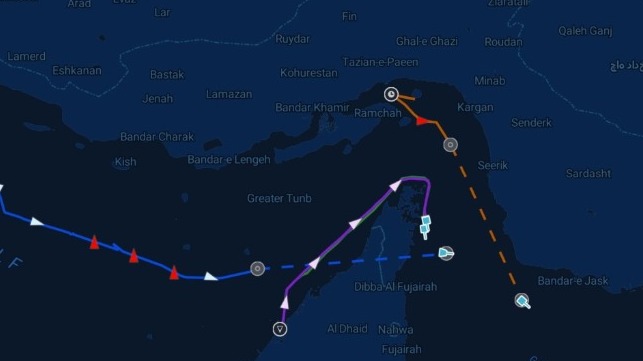
Since 20-22 June, Iran announced a closure of the Strait of Hormuz while commercial shipping continued via the Omani corridor at reduced volumes under naval guidance, amid warnings about mines and volatile security. The Israel, Hezbollah front remains active: Israeli strikes in southern Lebanon caused at least 16 fatalities on 20 June and a Hezbollah anti‑armour strike killed Israeli soldiers near Tebnit, as Israel’s leadership said forces would remain in southern Lebanon. Israel lifted war‑related restrictions on its northern border on 22 June after a Home Front Command assessment, which may reduce immediate disruption for civilians but does not equal a durable ceasefire. In Switzerland, the first round of US, Iran talks ended with mediators touting a 60‑day roadmap and US officials citing progress, yet the public text lacks enforceable measures on Hezbollah disarmament and drew political and market scepticism in Israel.
Change from previous assessment
Since the prior brief, Tehran has publicly re‑asserted a Hormuz closure while traffic data and naval guidance show continued but reduced transits via the Omani corridor, alongside a mine alert that raises maritime risk. The first round of US, Iran talks in Switzerland concluded with mediators touting a 60‑day roadmap and US claims of progress, yet the public text lacks enforceable Hezbollah disarmament. On the ground, Israeli strikes killed at least 16 people in southern Lebanon and a Hezbollah strike killed Israeli soldiers near Tebnit; Israel lifted northern‑area restrictions but leaders stated forces would remain in southern Lebanon. Initial assessment of prospective Israeli naval access at Berbera has been added, with host‑nation denial noted.
Key judgments
- Closure of the Strait of Hormuz is not fully enforced: commercial traffic is very likely continuing at reduced levels via the Omani corridor, with at least five vessels and multiple laden supertankers observed on 21 June and US Central Command reporting 55 transits and 17 million barrels on 20 June, while mine alerts and insurer warnings keep risk high. (Confidence: high · ASSESSED)
- I&W: US Central Command daily updates continue to cite large merchant‑ship transits and multi‑million‑barrel oil throughput through Hormuz while the Joint Military Information Center keeps the southern route advisory active. (0-14 days)
- I&W: Verified mine incident against a merchant hull on the Omani side of the strait or a formal notice withdrawing southern‑route passage guidance. (0-14 days)
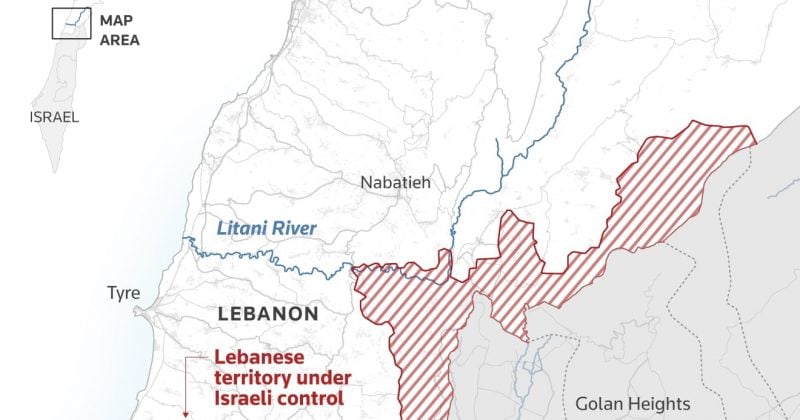
- Active hostilities on the Israel, Lebanon front are very likely to persist in the near term, with Israel signalling it will keep forces in southern Lebanon while Hezbollah rejects any Israeli security zone. (Confidence: high · ASSESSED)
- I&W: Official Israeli statements or briefings confirm continued IDF positions such as at Beaufort castle and ongoing operations south of the border. (0-14 days)
- I&W: Public announcement of an IDF pullback from southern Lebanon positions or Hezbollah’s acceptance of a monitored buffer arrangement. (1-3 months)
- Israel’s lifting of all war‑related restrictions on its northern border on 22 June likely reflects a reduced immediate threat to civilians rather than a durable ceasefire or near‑term withdrawal from southern Lebanon. (Confidence: medium · ASSESSED)
- I&W: Home Front Command keeps northern‑area restrictions lifted while IDF statements continue to affirm a presence in southern Lebanon. (0-14 days)
- I&W: Formal announcement of an IDF redeployment out of southern Lebanon tied to a verified security architecture. (1-3 months)
- US, Iran talks in Switzerland have likely produced a 60‑day roadmap and a political understanding to end the latest round of fighting, but enforcement on Hezbollah remains thin and the deal faces scepticism in Israel’s politics and markets. (Confidence: medium · ASSESSED)
- I&W: Publication of detailed enforcement measures and verification for Hezbollah disarmament and Israeli acknowledgement of sufficient guarantees. (1-3 months)
- I&W: Iranian or US principals suspend participation or publicly repudiate the 60‑day roadmap amid renewed large‑scale fire in Lebanon. (0-14 days)
- Israel is likely exploring expanded naval access at Somaliland’s Port of Berbera to improve monitoring of Iranian activity near Bab el‑Mandeb, although host‑nation officials deny any basing arrangement. (Confidence: medium · ASSESSED)
- I&W: Public confirmation of Israeli naval access rights or a port call by Israeli vessels at Berbera. (1-3 months)
- I&W: Somaliland authorities reiterate denial and explicitly state no foreign military access agreements will be signed. (1-3 months)
Outlook & scenarios
Managed containment: partial Hormuz flow and fragile de‑escalation hold (50%)
Commercial traffic continues via the Omani corridor under guidance, insurers backstop transits, and the Swiss talks sustain a 60‑day roadmap. Israel keeps northern restrictions lifted while retaining a forward posture in southern Lebanon. The result is elevated but manageable risk to shipping and a shaky calm on the Lebanon front.
Lebanon escalates and talks stall; Iran tightens Hormuz enforcement (35%)
Renewed lethal exchanges in southern Lebanon and Israeli declarations about remaining in theatre collide with Hezbollah’s rejection of any security zone. Tehran cites violations to justify stricter enforcement at Hormuz, with mine warnings increasing and political cover for maritime harassment. The Swiss channel loses momentum amid hard public rhetoric from Washington and Tehran.
Maritime shock: mine incident disrupts Omani corridor, premiums spike (30%)
A mine event along the southern route forces a temporary pause in laden transits, driving up war risk pricing and re‑routing. Navies expand escort and guidance, restoring flows within weeks, but risk tolerance drops and insurers become more selective on cover.
Red Sea widens: Israeli access at Berbera becomes public (15%)
Jerusalem secures overt access at Berbera to monitor Iranian supply lines and Houthi deployments. Tehran and aligned actors respond with sharper messaging and probes in the Red Sea, adding a new axis of friction even if Lebanon combat remains limited.
Recommendations
- Task a daily watch on CENTCOM shipping tallies and Joint Military Information Center advisories for Hormuz, logging transits, oil volumes and any changes to southern‑route guidance.
- Prioritise collection on mine threats: track Pakistan and regional maritime safety alerts and compile a running log of reported mine sightings, detections or neutralisations along the Omani corridor.
- Engage with maritime insurance interlocutors to monitor uptake and terms of the Lloyd’s, Chubb $400 million war‑risk consortium and any complementary reinsurance, flagging shifts in coverage that affect US‑linked shipping.
- Maintain a Lebanon theatre feed: map confirmed IDF positions in southern Lebanon, including references such as Beaufort castle, and collate official Israeli and Hezbollah claims of engagements and casualties.
- Request the latest Swiss‑talks documentation: capture the 60‑day roadmap milestones, enforcement language, and any provisions related to Hezbollah disarmament or verification, then build a timeline of deliverables and risk points.
- Set an OSINT tripwire for Israeli naval activity at Berbera: monitor port‑call reporting, ship‑tracking patterns indicative of submarine tenders or ISR platforms, and public statements by Somaliland officials.
- Produce a standing advisory for commercial masters transiting Hormuz to favour the Omani route with AIS active in line with naval guidance and to maintain heightened watch for small‑craft approaches consistent with mine or boarding threats.
Confidence & uncertainty
Overall confidence is medium. Multiple high‑confidence reports corroborate that Iran announced a closure while traffic continued via the Omani corridor, with quantified transits and oil volumes and explicit naval guidance. Reporting on lethal exchanges in southern Lebanon and Israeli intent to remain is also consistent across independent outlets. Uncertainty remains due to contradictory claims on the exact status of any ceasefire, casualty counts on specific incidents, and whether the Swiss process produced a binding agreement versus a roadmap with limited enforcement detail. The Hormuz picture also contains conflicting figures on traffic reduction versus continued large flows, and the Somaliland access issue is partly denied by host‑nation officials, meriting caution.
Alternative analysis (red cell)
Alternative readings of the evidence are plausible across multiple judgments. For the Strait of Hormuz, time‑stamped AIS, CENTCOM logs, and the closure order could show transits occurred outside the period or corridor of a declared closure, making intermittent enforcement a reasonable interpretation. On Israel–Lebanon and US‑Iran talks, diplomatic signals of progress and the absence of verifiable enforcement details support reading the situation as one of preliminary agreements and conditional de‑escalation rather than definitive, enforceable settlements.
Intelligence gaps
- [EEI 1.1 · UNCOVERED] Unusual long-range missile/rocket transporter-launcher (TEL) movements, storage activation, or assembly activity at known IRGC missile sites or forward staging areas. Recommended collection: satellite/imagery
- [EEI 1.2 · PARTIAL] Orders, threat-alert messages, or changes in posture from IRGC, Quds Force, or senior Iranian military leadership indicating attack timelines or rules of engagement changes. Recommended collection: signals/ELINT and HUMINT
- [EEI 1.3 · UNCOVERED] Large-scale transfers, deliveries, or convoy movements of armed UAVs/drones, guided munitions, or spare parts from Iran into Lebanon (Hezbollah), Iraq, Syria, or Gaza. Recommended collection: air/aviation track and HUMINT
- [EEI 1.4 · UNCOVERED] Sustained changes in Israeli air-defense usage (SAM launches, radar activations), wide-area alerts, or NOTAMs indicating elevated imminent strike response. Recommended collection: air/aviation/NOTAMs and signals
- [EEI 2.1 · UNCOVERED] Concentration, repositioning, or sortie patterns of Iranian naval/IRGC patrol boats and fast-attack craft near shipping chokepoints or commercial lanes. Recommended collection: maritime/AIS and satellite/imagery
- [EEI 2.4 · PARTIAL] Port closures, naval escorts requested by commercial operators, or formal rerouting advisories issued by major shippers (e.g., Maersk, Hapag-Lloyd) for regional transits. Recommended collection: commercial/OSINT
- [EEI 3.1 · PARTIAL] Deployment of foreign military assets to the region (carrier strike groups, amphibious ships, combat aircraft deployments, or additional bases activated) from the US, UK, France, Russia, or GCC states. Recommended collection: maritime/AIS and air/aviation and satellite/imagery
- [EEI 3.3 · UNCOVERED] Confirmed arms transfers, expedited weapons shipments, or transfer authorizations to Israel, Iran, or their proxies (aircraft parts, munitions, air defenses). Recommended collection: customs/INTEL and HUMINT
- [EEI 3.4 · UNCOVERED] Issuance of travel warnings, embassy evacuations or reductions, and closure of diplomatic missions by major capitals indicating escalation risk or shifted threat assessments. Recommended collection: OSINT/diplomatic
Cited sources
[1] The Guardian · Middle East crisis live: US talks with Iran set to continue despite Iranian walkout (A) · sha256:598796691e48 [2] haaretz.com · Forget hard-liners vs. reformists: Inside the real battle shaping Iran's postwar leadership (B) · sha256:a306f1c6327a [3] gcaptain.com · Oil Keeps Flowing Through Hormuz Despite Iran Saying It’s Shut (B) · sha256:8d8089594578 [4] maritime-executive.com · Strait of Hormuz Traffic Plummets After Renewed Iranian Blockade Threats (B) · sha256:e5c635a08b8c [5] gcaptain.com · Hormuz Transit Security Is ‘Hour to Hour’ (B) · sha256:4a322a6244d2 [6] The Guardian · Middle East live: US-Iran peace talks underway as strait of Hormuz remains closed (A) · sha256:ead62a8704d0 [7] jpost.com · Israel’s security cannot hinge on unfinished US-Iran diplomacy - editorial (B) · sha256:0aeb17953899 [8] Fox News · Israeli ambassador warns Iran's grip on Lebanon is a 'warning sign' for Middle East peace (B) · sha256:0fc3f95b9bfb [9] cryptobriefing.com · Israel lifts war-related restrictions on northern border areas (B) · sha256:7bb24cb45734 [10] aljazeera.com · Iran war live: Tehran negotiators leave Switzerland as ‘hard work’ begins (B) · sha256:91f42aa035b5 [11] jpost.com · Israel’s long-term challenge requires strategy beyond military power in Iran rivalry - opinion (B) · sha256:e82249d36ed6 [12] ynetnews.com · Trump's confusing strategy on Iran and what's behind the president's change of direction (B) · sha256:e2fbbebbef46 [13] defencesecurityasia.com · Israel Eyes Strategic Dolphin-Class Submarine Base in Somaliland as Red Sea Tensions Threaten Global Shipping Routes - Defence Security Asia (B) · sha256:1ebe2a76e22e
Source content hashes were computed at collection time; the cited text is preserved unmodified for the life of this product.
Red cell review: PARTIAL DISSENT
TLP:CLEAR