TLP:CLEAR · Disclosure is not limited.
Iran-Israel Escalation Following US Blockade Reinstatement
Time window: Last 1 day · Audience: General analyst · Type: Situation report · DTG: 2026-07-14 15:46Z · Overall confidence: MEDIUM
BLUF
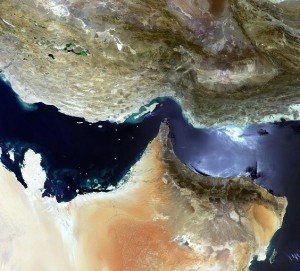
The United States has reinstated its naval blockade of Iranian ports on 14 July 2026 and conducted multiple strike operations against Iranian targets, prompting Iran to launch coordinated missile attacks against Bahrain, Jordan, and two Emirati oil tankers in the Strait of Hormuz that killed an Indian crew member. Israel is likely to escalate its posture significantly following Prime Minister Netanyahu's explicit warnings, raising the risk of direct conflict between the two nations. Oil prices have risen to $86 per barrel as insurers declare the southern traffic lane through Omani territorial waters unsafe for commercial shipping.
Executive summary
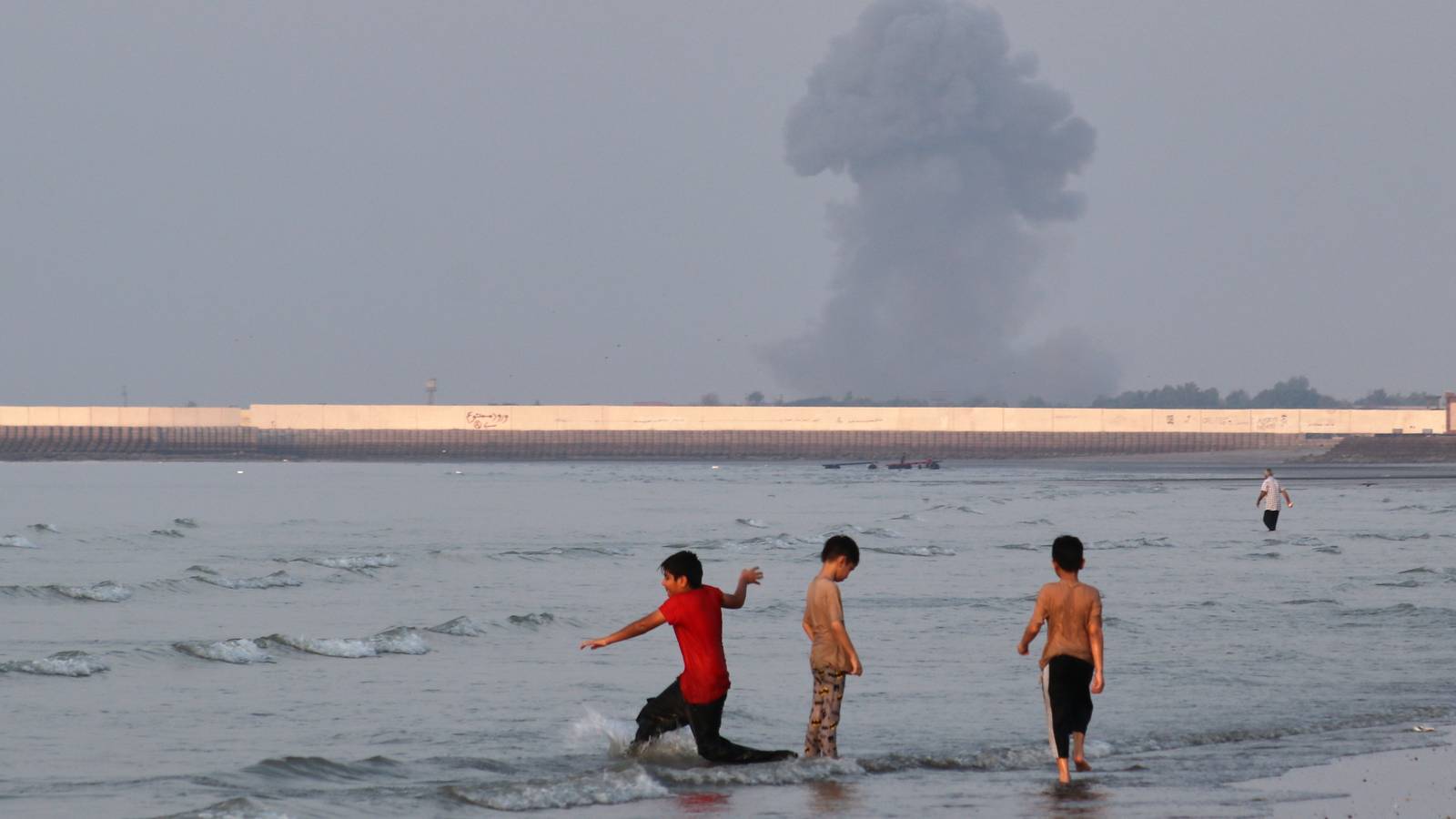
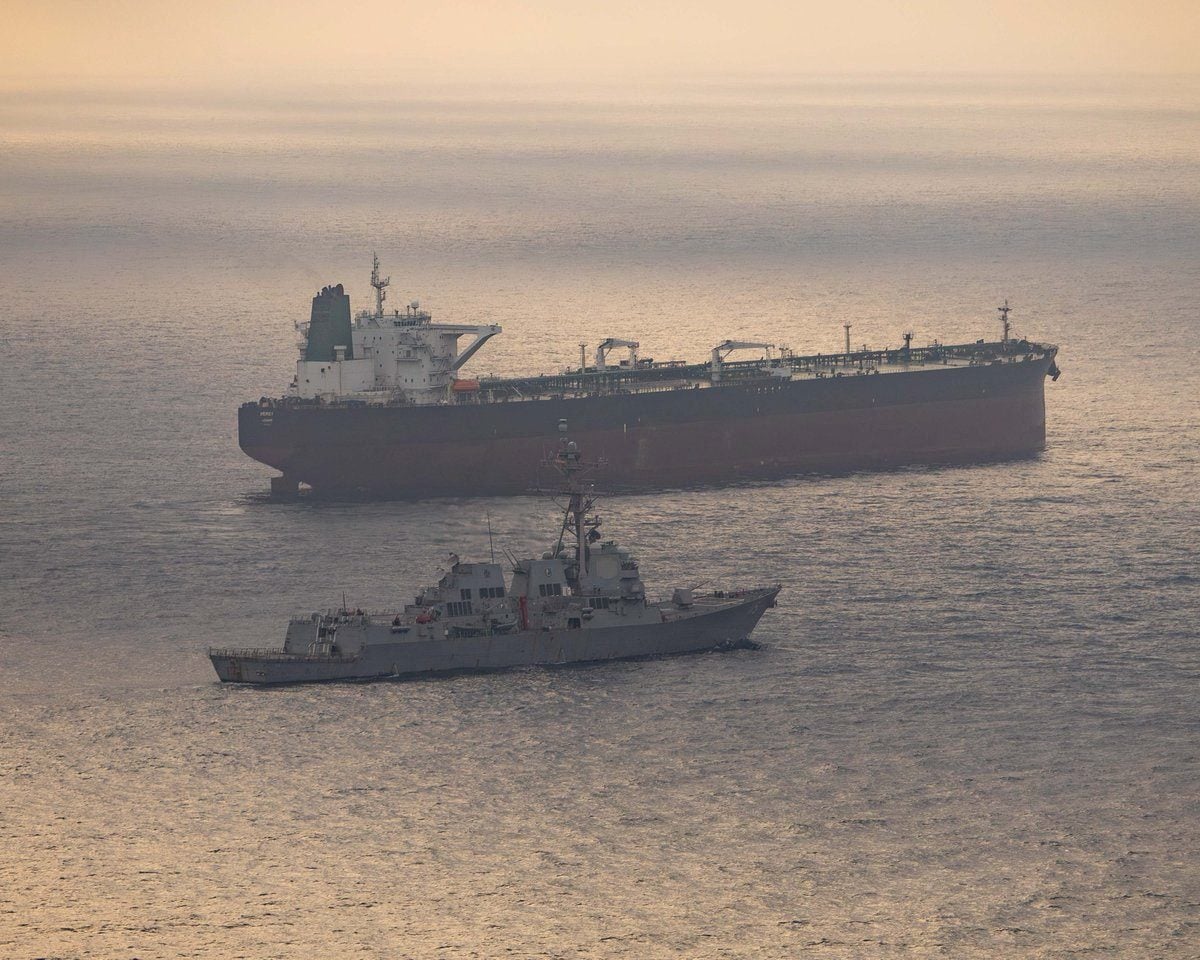
On 14 July 2026, President Trump announced the reinstatement of the US naval blockade of Iranian ports to take effect at 2000 UTC, followed by U.S. Central Command launching multiple wave strikes across Iran. Iran responded with missile attacks targeting Jordanian military sites, Bahraini territory, and the United Arab Emirates oil tankers Mombasa and Al Bahiyah in Omani territorial waters, killing one Indian crew member and injuring eight others. Jordanian forces intercepted four Iranian missiles while Bahrain activated missile alert sirens three times. International insurers now consider the southern corridor of the Strait of Hormuz unsafe for transit, leading to a rise in Brent crude oil prices to $86 per barrel. Amid these developments, US-mediated negotiations between Israeli and Lebanese delegations began in Rome with Israel expressing readiness to withdraw from two pilot areas in southern Lebanon.
Change from previous assessment
US formalised blockade reinstatement with specific implementation timing and social media announcement, whereas prior brief noted only 'repeated strikes'. Iranian attacks have now resulted in verified civilian casualties among seafarer populations, with one fatality confirmed on Mombasa tanker. Insurers have moved from reporting reduced traffic to actively declaring southern Strait of Hormuz corridor unsafe, rather than merely contested status. Oil prices have risen to $86 per barrel with specific war risk premium assessments noted, compared to prior 'clandestine levels' of Strait traffic. Prime Minister Netanyahu has issued explicit direct warnings to Iran's leadership from Dimona, moving beyond Israel's previously 'high alert' but non-confrontational posture noted in prior brief.
Key judgments
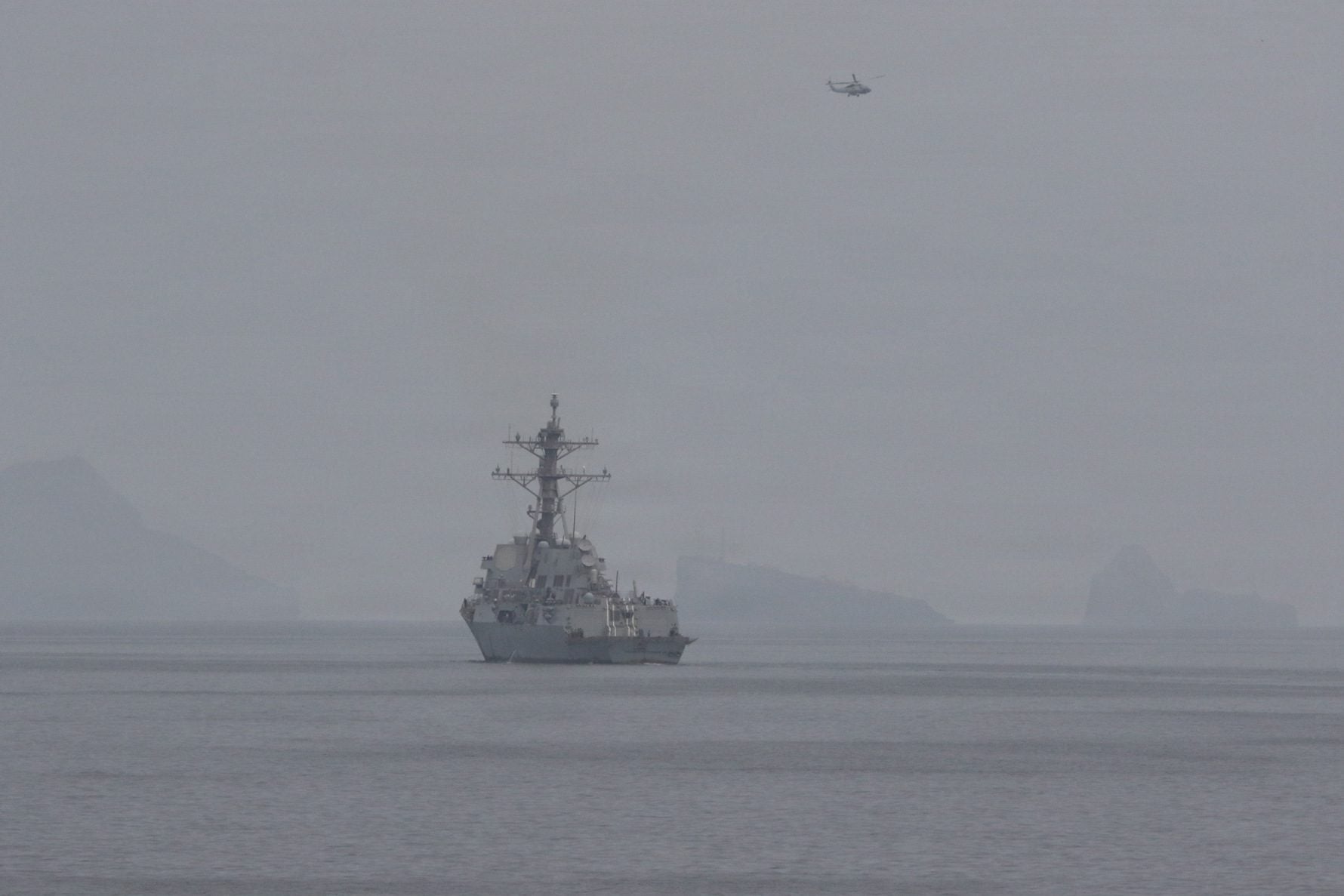
- The United States almost certainly reinstated its naval blockade of Iranian ports effective 2000 UTC on 14 July 2026, with U.S. Central Command announcing implementation timing and President Trump explicitly vowing to reinstate the blockade on social media platform Truth Social. (Confidence: high · REPORTED)
- I&W: CENTCOM issuing detailed operating instructions to naval forces regarding blockade enforcement within 0-48 hours (0-48 hours)
- I&W: Iranian-flagged vessels attempting to transit Strait of Hormuz being intercepted and diverted within 72 hours (0-72 hours)
- Iran very likely executed coordinated missile strikes against Jordanian and Bahraini territory as well as the Emirati oil tankers Mombasa and Al Bahiyah in Omani territorial waters on 14 July 2026, resulting in one Indian crew member fatality and eight injured seafarers, including four with serious injuries. (Confidence: high · REPORTED)
- I&W: Iranian Islamic Revolutionary Guard Corps publicly claiming responsibility for these specific attacks within 48 hours (0-48 hours)
- I&W: UAE Ministry of Defence publishing specific forensic details about attack methods within 72 hours (0-72 hours)
- The risk of direct military confrontation between Israel and Iran is very likely increasing, with Prime Minister Benjamin Netanyahu issuing explicit warnings to Iran's leadership from Dimona about Israeli responses to attacks while Israeli military posture remains at highest alert levels. (Confidence: high · REPORTED)
- I&W: Israeli Air Force scrambling fighter jets in response to missile alerts within 24 hours (0-24 hours)
- I&W: Israeli military personnel detected moving significant forces toward northern border with Lebanon within 48 hours (0-48 hours)
- The southern traffic lane through Omani territorial waters in the Strait of Hormuz is almost certainly no longer considered safe for commercial shipping, with maritime insurance markets effectively closing this corridor due to attack risks. (Confidence: high · REPORTED)
- I&W: Major international insurers refusing to provide coverage for vessels transiting the southern lane within 24 hours (0-24 hours)
- I&W: AIS data showing more than 90 per cent reduction in commercial vessel traffic through the southern corridor within 72 hours (0-72 hours)
- Oil prices are likely to remain elevated for the next several weeks due to reduced shipping capacity through the Strait of Hormuz and increased war risk premiums imposed by insurers, with Brent crude exceeding $86 per barrel. (Confidence: medium · ASSESSED)
- I&W: Brent crude prices remaining above $85 per barrel for five consecutive trading days (0-7 days)
- I&W: Oil majors like Saudi Aramco and ADNOC redirecting shipments via Cape of Good Hope instead of Strait of Hormuz within 10 days (1-2 weeks)
Outlook & scenarios
Full escalation to direct Iran-Israel conflict (25%)
Iranian attacks escalate to directly target Israeli territory, prompting Israel to launch overt military strikes against Iranian targets with US support. This would trigger wider regional conflict as Iranian proxies in Lebanon and Gaza intensify attacks against Israeli positions. Coalition forces would likely increase military presence in the Gulf while oil prices surge beyond $100 per barrel and global shipping routes undergo significant rerouting.
Sustained but controlled regional tensions (50%)
The current pattern of exchange continues with measured Iranian strikes against US allies followed by US counterstrikes, while Israel remains on high alert without direct intervention. US-mediated negotiations between Israel and Lebanon would make limited progress on pilot area withdrawals without resolving border disputes. Oil prices would stabilise around $90 per barrel as alternative shipping corridors establish and insurers develop new risk assessment frameworks for the region.
Diplomatic breakthrough through US mediation (20%)
The Rome negotiations between Israeli and Lebanese delegations yield unexpected progress as Foreign Minister Gideon Sa'ar's openness to piloting two withdrawal areas creates momentum. Iran demonstrates restraint in further attacks after initial retaliation, allowing diplomatic channels to facilitate a de-escalation formula that addresses core concerns about Strait of Hormuz security. Oil prices would drop to pre-crisis levels around $75 per barrel as maritime insurance rates return to normal.
Major humanitarian crisis in Gaza from renewed hostilities (5%)
Israeli military operations resume in Gaza following an Iranian proxy attack, triggering Hamas to violate remaining cease-fire provisions. This would severely disrupt humanitarian aid operations with reported aid truck numbers falling below 30 per cent of required levels while casualty figures rise sharply. The UN Security Council would convene emergency sessions but fail to achieve consensus on humanitarian access measures.
Recommendations
- Direct CENTCOM to maintain heightened readiness for further Iranian retaliation while coordinating closely with Israeli defence authorities to prevent unintended escalation
- Accelerate US-led diplomatic initiatives in Rome to translate pilot withdrawals into broader confidence-building measures between Israel and Lebanon
- Coordinate with major shipping insurers to develop immediate risk mitigation protocols for vessels transiting the Strait of Hormuz while planning alternative shipping corridors
- Monitor humanitarian impact in Gaza closely, particularly aid truck access through agreed crossing points, to identify early signs of deteriorating conditions requiring international intervention
Confidence & uncertainty
Overall assessment confidence is medium based on multiple corroborating major media sources with 'high' reliability scores, though some economic indicators rely on less proximate trade publications. Key military events are supported by CENTCOM statements, Jordanian military reports, and UAE defence ministry confirmations with consistent details across sources. Confidence is reduced by unconfirmed claims about Trump's 'mixed messaging' on conflict scope and some inconsistencies regarding tanker attack dates in secondary reporting. The humanitarian impact numbers from Hamas-run entities cannot be independently verified with current sources, introducing minor uncertainty to those assessments.
Intelligence gaps
- [EEI 1.2 · UNCOVERED] Movements and posture changes of Iran-backed proxy forces (Hezbollah units in Lebanon, militias in Syria/Iraq): concentrations of personnel, transport of rocket/artillery launchers, visible logistics build-up within operational range of Israel. Recommended collection: human/intel
- [EEI 1.4 · UNCOVERED] Evidence of pre-positioning or arming of naval mines, fast attack craft, or anti-ship missile systems in the Gulf of Oman, northern Arabian Sea, or off the Lebanese/Syrian coasts that could be used to interdict Israeli or allied shipping. Recommended collection: maritime/AIS
- [EEI 2.3 · UNCOVERED] Changes to force protection or alert levels at foreign bases in the region (e.g., US bases in Kuwait, Qatar, UAE; Russian bases in Syria): activation of additional air defenses, curfews, or reinforcement shipments (personnel/equipment manifests). Recommended collection: signals/intel
- [EEI 3.2 · UNCOVERED] Changes in crude oil and refined product flows from key terminals (reported tanker loading delays, terminal closures, throughput volumes at Kharg, Mina al-Ahmadi, Ras Tanura, and major Gulf ports compared to baseline). Recommended collection: commercial/ports
Cited sources
[1] military.com · US Attacks Iran and Tehran Retaliates Across the Middle East, Threatening a Return to All-Out War (B) · sha256:aa6f2b403991 [2] gcaptain.com · U.S. to Resume Maritime Blockade of Iran on Tuesday as Hormuz Tensions Escalate (B) · sha256:07d9f638ba61 [3] gcaptain.com · Iranian Missile Attacks Hit Three More Tankers as U.S. Expands Strikes, Seafarer Death Toll Rises (B) · sha256:aac2389d932a [4] gcaptain.com · UAE Says Iranian Missiles Struck Oil Tankers in Strait of Hormuz, One Sailor Killed (A) · sha256:2f9e5030762b [5] insurancejournal.com · Iran and US launch New Missile Attacks, Battle Over Control of Strait of Hormuz (B) · sha256:a87016d2c4bf [6] maritime-executive.com · Iran Attacks Two Emirati Tankers Off Oman, Killing One Crewmember (B) · sha256:646dd25a6e9e [7] gcaptain.com · Rescuers Search for Crew Member After Container Ship Attack in Strait of Hormuz (B) · sha256:3f0b780d92fe [8] haaretz.com · Israel ready to withdraw from two areas in southern Lebanon as talks with Beirut resume (A) · sha256:376c0c9506a3 [9] bbc.co.uk · Wife of man nearly sucked out of Ryanair plane speaks of ordeal (A) · sha256:189748dfb0ca [10] ynetnews.com · Iran fires missiles at Jordan, then appeals to ‘the Jordanian people’ (B) · sha256:e3c1c339a660 [11] gcaptain.com · The Southern Route Through Hormuz Is No Longer Safe, Regardless of What Trump Says (B) · sha256:9186f99baf24 [12] bbc.co.uk · Sudan conflict: EU bans gold imports to curb war financing (A) · sha256:6f3fe5f03a86
Source content hashes were computed at collection time; the cited text is preserved unmodified for the life of this product.
TLP:CLEAR