TLP:CLEAR · Disclosure is not limited.
Iran, Israel flashpoints: Hormuz risks, Lebanese front, and funeral‑period warnings
Time window: Last 1 day · Audience: General analyst · Type: Situation report · DTG: 2026-07-03 01:45Z · Overall confidence: LOW
BLUF
Tehran and Washington exchanged strikes linked to the Strait of Hormuz on 2 July 2026 as Iran warned the United States and Israel during the funeral period for Ayatollah Ali Khamenei, keeping escalation risks high. Israel continued strikes in southern Lebanon, while flows through Hormuz have resumed at scale but remain exposed to Iranian threats and drone attacks.
Executive summary
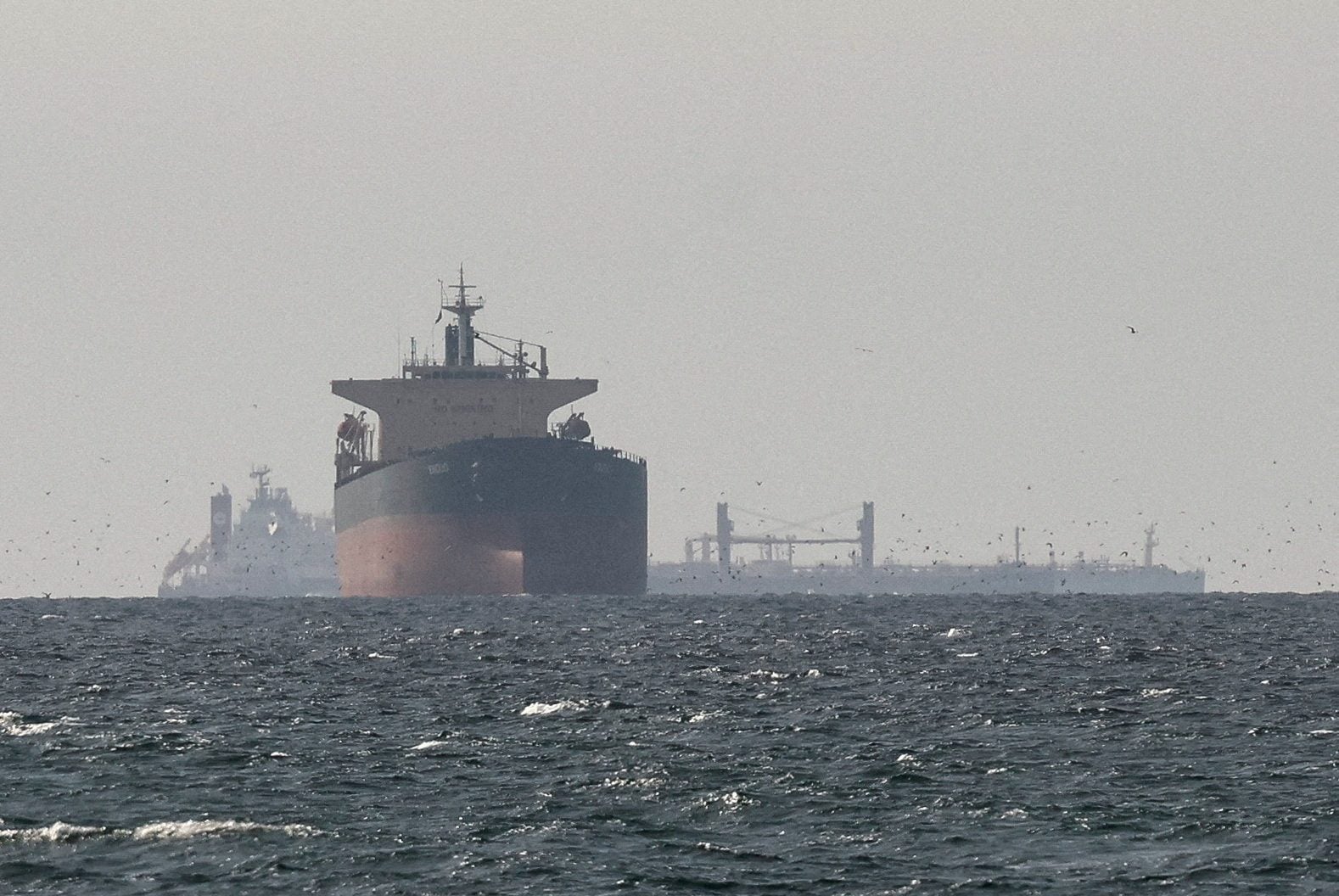
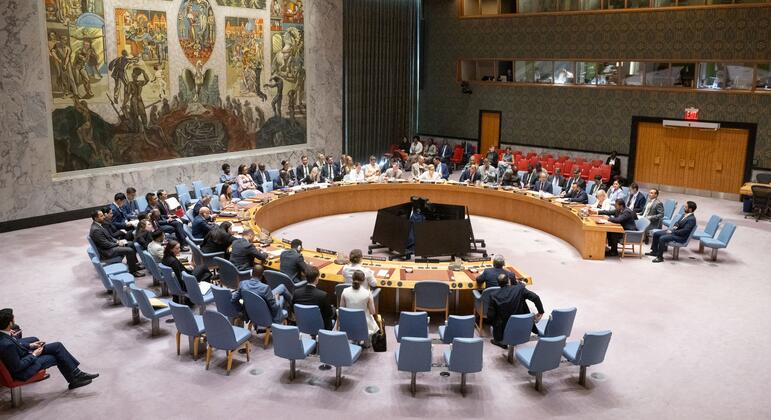
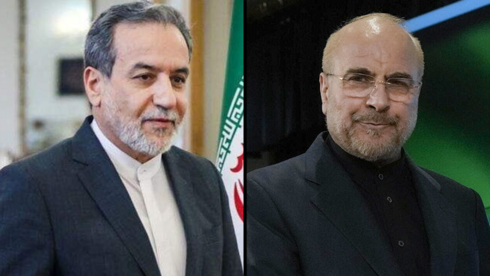
Iran conducted attacks in Bahrain and Kuwait, with Tehran claiming it struck US infrastructure, prompting an emergency meeting of the UN Security Council. Despite a US assertion of a stand‑down, reporting indicates continued Iran, US exchanges over the Strait of Hormuz and explicit Iranian threats to ships that transit outside Iranian‑approved routes, including during the Khamenei funeral period with airspace restrictions in place. Commercial traffic through Hormuz has picked up, reportedly above 10 million barrels per day, and US officials are pressing a longer‑term transit guarantee while offering sanctions relief via unfreezing overseas funds as part of talks in which Iran has agreed, conditionally, to unobstructed passage. The operating picture remains brittle after an Iranian drone attack on a Singapore‑flagged container ship, a stranded tanker in the strait, and a UN pause of an evacuation plan after a cargo ship attack. In the north, the Israel Defense Forces struck targets in southern Lebanon, killing at least one person, as Prime Minister Benjamin Netanyahu stated Israel will not leave southern Lebanon until the Hezbollah threat is eliminated. Inside Israel, marches marking 1,000 days since 7 October raised over one million shekels and demanded a commission of inquiry, while police and prosecutors advanced a case alleging Iranian‑directed espionage by a Tajik national who documented missile impact sites. Gaza’s health authorities report at least 300 deaths among patients referred for treatment abroad since the ceasefire began. US officials feared Israel might target Iran’s chief negotiators Abbas Araghchi and Mohammad Bagher Ghalibaf, as Iranian and Pakistani measures reportedly included fighter escorts and emergency routing to mitigate perceived assassination risks.
Change from previous assessment
Since the prior brief, Iran is reported to have struck in Bahrain and Kuwait, triggering a UN Security Council emergency session, and explicit Iranian threats to shipping routes have been publicised during the Khamenei funeral period. Maritime flows through Hormuz are now reported above 10 million barrels per day even as incident risk persists after a drone attack on a Singapore‑flagged ship and a UN pause of an evacuation plan. In Lebanon, the IDF continues strikes with declared intent to remain until Hezbollah is neutralised. Domestic Israeli protests escalated with funding milestones, and Gaza’s authorities reported 300 deaths among referred patients. Confidence is lowered by fresh contradictions between a reported US ‘stand‑down’ and evidence of ongoing exchanges, and by divergent shipping metrics. Initial assessment of this topic.
Key judgments
- Reported: Iran conducted attacks in Bahrain and Kuwait on 2 July 2026, with Tehran claiming it struck US infrastructure, prompting an emergency UN Security Council meeting. (Confidence: high · REPORTED)
- I&W: Official Bahraini, Kuwaiti or US battle damage assessments naming specific sites hit by Iranian weapons (0-14 days)
- I&W: UN Security Council readout attributing responsibility for the Bahrain and Kuwait incidents (0-14 days)
- Assessed: Despite a US claim of a stand‑down, the Iran, US confrontation over the Strait of Hormuz is likely to remain live and volatile in the near term, given ongoing exchanges of strikes and explicit Iranian warnings to the United States, Israel and commercial shipping during the Khamenei funeral period. (Confidence: medium · ASSESSED)
- I&W: Another Iranian drone or missile attack on a flagged merchant vessel, or a declared US strike on IRGC assets linked to Hormuz control (0-14 days)
- I&W: Public activation of a US, Iran violation‑monitoring mechanism with no reported strikes for two weeks (0-14 days)
- Assessed: Maritime risk in the Strait of Hormuz is likely to remain elevated but manageable in the short term, with resumed flows reported above 10 million barrels per day and continued transits, offset by discrete incidents including an Iranian drone strike on a Singapore‑flagged container ship, Iranian threats against non‑approved routes, a stranded tanker, and a UN pause of an evacuation plan. (Confidence: medium · ASSESSED)
- I&W: Sustained daily AIS‑visible tanker transits near or above reported levels without major security advisories (0-14 days)
- I&W: Renewed shipping advisories to avoid Hormuz or a UN decision to reinstate evacuation measures (0-14 days)
- Assessed: Israel is likely to sustain operations in southern Lebanon in the near term, given ongoing Israel Defense Forces strikes and Prime Minister Benjamin Netanyahu’s public pledge not to withdraw until the Hezbollah threat is eliminated. (Confidence: high · ASSESSED)
- I&W: Continued IAF strike reports in southern Lebanon and claimed Hezbollah fatalities (0-14 days)
- I&W: Official Israeli notice of withdrawals or acceptance of expanded Lebanese Armed Forces deployments south of the Litani (1-3 months)
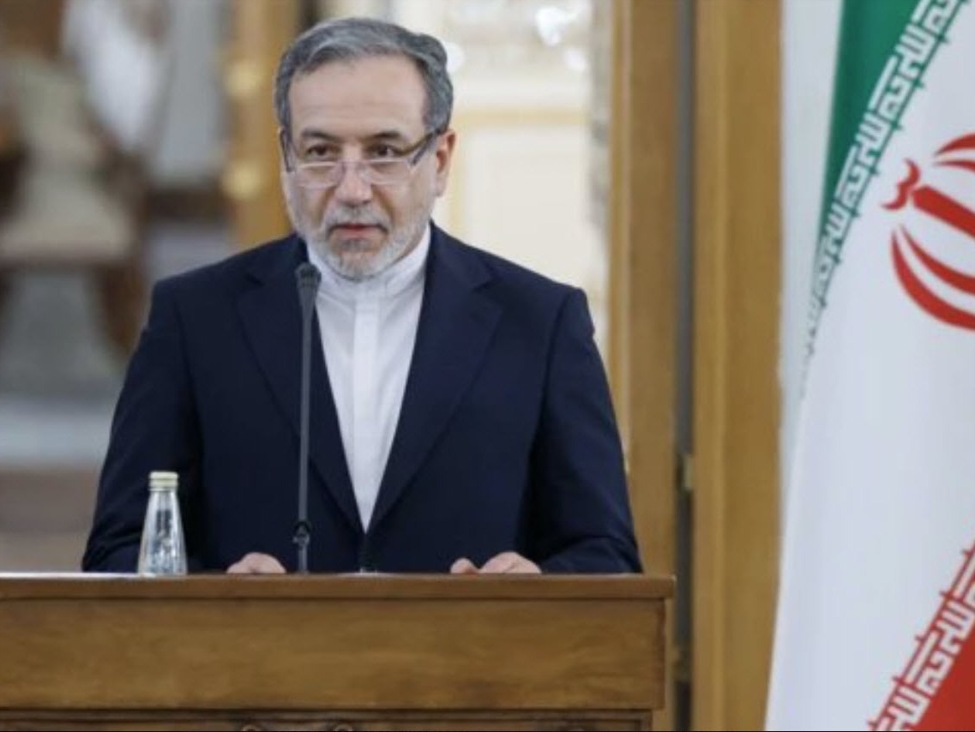
- Assessed: Targeted threats to senior Iranian officials very likely constrain and complicate indirect diplomacy, as indicated by US concern over potential Israeli targeting of Abbas Araghchi and Mohammad Bagher Ghalibaf and Iranian accounts of attempted attacks and extraordinary flight security measures. (Confidence: medium · ASSESSED)
- I&W: Publicly reported route changes, escorts or emergency landings for Araghchi or Ghalibaf during travel to talks (0-14 days)
- I&W: Explicit US, Israel assurances not to target negotiators during ceasefire or maritime talks (0-14 days)
- Reported: Gaza’s humanitarian situation is very likely severe under the current ceasefire, with at least 300 patients referred for treatment abroad reported to have died since the truce began. (Confidence: medium · REPORTED)
- I&W: Third‑party humanitarian reporting corroborating cumulative deaths among referred patients (1-3 months)
- I&W: Documented openings of outbound medical evacuation corridors and reductions in reported patient deaths (0-3 months)
Outlook & scenarios
Managed containment around Hormuz with brittle calm (45%)
The interim transit understandings hold sufficiently to keep oil flows elevated and deter major attacks. Washington continues to press Tehran to codify maritime provisions and to exchange limited sanctions relief for compliance, while Iran maintains high‑tempo rhetoric but limits actions to calibrated signalling. Isolated incidents occur, but insurers and shippers keep transiting, and no large‑scale kinetic exchange materialises.
Funeral‑period spike and tit‑for‑tat resurgence (35%)
Security conditions around Ayatollah Khamenei’s funeral and related ceremonies trigger an Iranian action or a perceived provocation that restarts a cycle of short‑notice strikes. Iranian threats to unauthorised Hormuz transits are enforced more aggressively, another merchant vessel is hit, and US retaliatory strikes follow. Talks stall and shipping risk premia rise, though traffic does not fully halt.
Northern front intensifies while talks drag (30%)
Israel escalates operations in southern Lebanon in line with the stated objective of neutralising Hezbollah threats. Daily cross‑border strikes persist, with periodic targeted killings. Maritime negotiations remain frozen amid persistent assassination concerns around Iranian negotiators, and the risk of miscalculation between Israel and Iran remains elevated.
Recommendations
- Fuse AIS, satellite and insurer advisory data to build a day‑by‑day ground‑truth of Hormuz tanker flows against reported volumes and incident locations; publish a standing dashboard for decision‑makers.
- Prioritise collection on Khatam al‑Anbiya Central Headquarters directives to shipping, including any changes to ‘designated routes’ and enforcement rules of engagement.
- Task liaison channels in Manama, Kuwait City and US CENTCOM to obtain damage assessments and imagery for the reported Iranian strikes in Bahrain and Kuwait and any follow‑on measures.
- Maintain a 0-14 day watch on Israeli Air Force strike patterns in Nabatieh, Marjayoun and the coastal belt of southern Lebanon to assess whether operations are intensifying or stabilising.
- Track security arrangements and travel patterns for Abbas Araghchi and Mohammad Bagher Ghalibaf during any announced rounds of talks, noting escorts, reroutings and venue shifts as indicators of threat and trust levels.
- Prepare a decision memo mapping the policy contradiction between a reported US ‘stand‑down’ and continued mutual strike accusations, with options to clarify US messaging and de‑conflict maritime enforcement signals to industry.
- Update the humanitarian risk outlook for Gaza with cross‑checks on outbound medical referral mechanisms and mortality among referred patients; identify verifiable data series for ongoing monitoring.
Confidence & uncertainty
Overall confidence is low because several core strands rest on partially conflicting or single‑source reporting. The status of a US ‘stand‑down’ versus continued mutual strike accusations, and differing depictions of Hormuz traffic and risk, introduce unresolved contradictions. Some high‑impact elements, such as assassination risks to Iranian negotiators and the origins of reported Bahrain and Kuwait strikes against US infrastructure, rely on limited corroboration or indirect sourcing. While multiple reputable outlets and the UN report key events, gaps and inconsistencies across dates, volumes and policy status constrain confidence.
Alternative analysis (red cell)
An alternative, defensible interpretation is that recent exchanges between the US and Iran may be episodic and containable rather than continuously high‑intensity: the 'stand down' claim (de11eaa4) alongside continued but limited vessel transits suggests partial de‑escalatory dynamics even as discrete incidents and Iranian warnings sustain localized risk. Similarly, maritime throughput claims (3945e99f) are contradicted elsewhere in the ledger and lack high-confidence volumetric verification; it is reasonable to estimate that flows are fragile and conditional rather than broadly 'resumed' at surge levels. Gathering time-stamped operational incident logs and verified commercial movement data would materially clarify whether the environment is truly persistently volatile or oscillating between containment and short-lived escalations.
Intelligence gaps
- [EEI 1.1 · UNCOVERED] Observed repositioning, sustained increases, or new forward basing of Iranian conventional or IRGC forces (armored units, missile batteries, aircraft, naval vessels) toward borders or regional launch points. Recommended collection: IMINT/satellite
- [EEI 1.2 · PARTIAL] Hezbollah or other Iran-aligned proxy forces conducting mass mobilization, visible rocket/artillery emplacements, cross-border firing incidents, or preparations for cross-border operations from Lebanon, Syria, Iraq or Yemen. Recommended collection: HUMINT/ground ISR
- [EEI 1.4 · UNCOVERED] Interdicted or observed shipments (air, sea, land manifests, seizures, satellite imagery of transfers) of advanced weapons or missile components from Iran toward proxy groups or forward staging points. Recommended collection: maritime/AIS
- [EEI 2.1 · UNCOVERED] Satellite or on-the-ground imagery showing fires, damage, or operational shutdown at major oil export facilities, refineries, storage terminals, or key pipeline infrastructure in the Gulf and Red Sea. Recommended collection: IMINT/satellite
- [EEI 2.4 · UNCOVERED] Rapid increases in war-risk insurance premiums for Middle East routes, shipping company advisories to avoid region, or major charter cancellations tied to the conflict. Recommended collection: financial/open-source
- [EEI 3.1 · UNCOVERED] Movement/arrival of major foreign military assets into the region: U.S. carrier strike groups, amphibious ready groups, strategic bomber flights, Russian/Chinese naval taskings, or allied expeditionary units (visible in AIS, NOTAMs, satellite imagery, official releases). Recommended collection: IMINT/satellite
- [EEI 3.2 · PARTIAL] Official expedited arms transfers, basing/overflight agreements, or declarations of operational support (formal government announcements, defense ministry releases, logistics flight manifests). Recommended collection: open-source/diplomatic
- [EEI 3.3 · PARTIAL] Embassy evacuations, large-scale personnel movements, issuance of government travel bans/advisories, or multinational security alerts affecting foreign nationals and diplomatic posture in the region. Recommended collection: diplomatic/open-source
Cited sources
[1] United Nations · Security Council LIVE: Emergency meeting on Iranian attack in Bahrain (A) · sha256:8a0d2c085c67 [2] BBC News · Middle East | Latest News & Updates | BBC News (A) · sha256:27514f1e8d15 [3] maritime-executive.com · Iran Threatens to Attack Ships for Using Non-Iranian Routes Through Hormuz (B) · sha256:d30c5cd80618 [4] haaretz.com · Iran warns U.S., Israel against attacks ahead of Khamenei funeral (A) · sha256:1be03f7f1ec1 [5] foxnews.com · Tehran warns of 'harsh retaliation' against US before Khamenei funeral as Waltz blasts late leader | Live Updates from Fox News Digital (B) · sha256:f6aced59a6ca [6] gcaptain.com · US Sees 10 Million Barrels Via Hormuz Sapping Iran Oil Leverage (B) · sha256:7d80dfdade04 [7] gcaptain.com · Global Container Spot Rates Jump 9% as Transpacific, Asia-Europe Trades Tighten (C) · sha256:bd72e36725d9 [8] haaretz.com · Trump hails 'denuking of Iran,' claims Tehran has agreed to all U.S. demands (B) · sha256:7b7cd51e78a2 [9] jpost.com · Can Netanyahu’s strength-first strategy guide Israel through the new Middle East? - analysis (B) · sha256:76015f47cdf1 [10] ynetnews.com · Report: US feared Israel would kill Iran negotiators during peace talks (A) · sha256:bba04bd5db6e [11] investinglive.com · US officials believed Israel might have been plotting to assassinate Iran's negotiators (B) · sha256:18c51573bebc [12] Jerusalem Post · US officials believed Israel planned to kill Iranian negotiators amid peace talks - report (B) · sha256:3fd41871a26c
Source content hashes were computed at collection time; the cited text is preserved unmodified for the life of this product.
Red cell review: PARTIAL DISSENT
TLP:CLEAR