TLP:CLEAR · Disclosure is not limited.
Iran, Israel: fragile de-escalation on the Lebanon front as Hormuz stays hazardous and UAE threat remains high
Time window: Last 1 day · Audience: General analyst · Type: Situation report · DTG: 2026-07-05 12:45Z · Overall confidence: LOW
BLUF
An Israel, Lebanon arrangement and a parallel US, Iran deconfliction understanding have eased some Lebanon border fire but remain fragile, while the Strait of Hormuz is still unsafe and the threat to US personnel and sites in the UAE remains high. Spoilers around Hezbollah and contested maritime rules very likely complicate any US, Iran deal implementation.
Executive summary
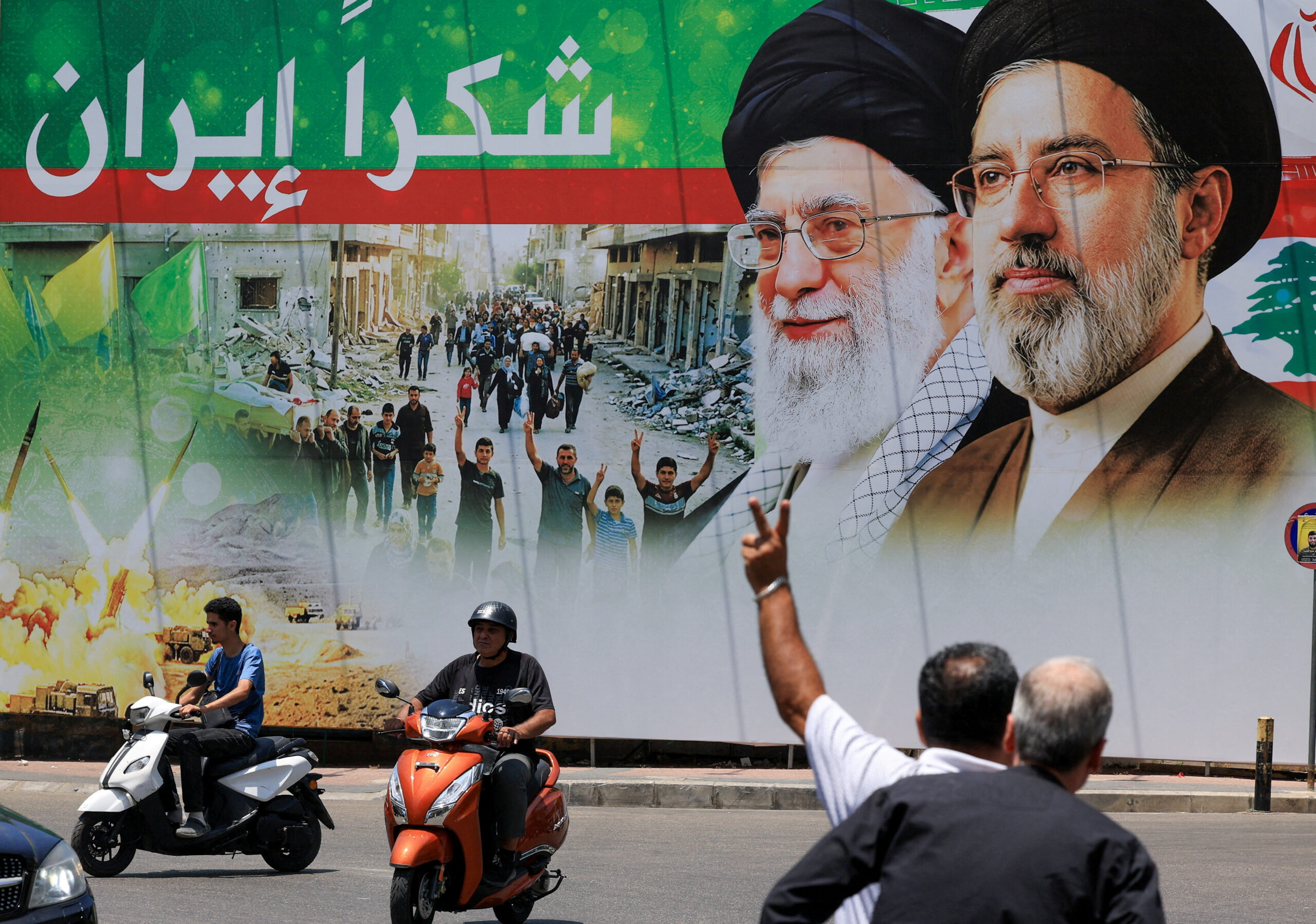
On 5 July, Israel and Lebanon reached their first agreement since 1983, alongside a reported US, Iran understanding on a Lebanon deconfliction mechanism that grants Israel international cover to retain a tactical presence near the border until set conditions are met. Hezbollah temporarily paused attacks, yet Israeli shelling continued in southern Lebanon and Hezbollah has threatened violence in Beirut if the deal is implemented, while the agreement also calls for Arab and international aid to Lebanon. In parallel, reporting points to a US, Iran memorandum of understanding expected to reopen the Strait of Hormuz, but ship passage remains far from safe after a recent container‑ship attack, with China urging unimpeded transit, European powers apparently accepting fees to Iran and Oman, and the US with Gulf partners rejecting any such charges. The threat environment in the UAE is elevated: Washington ordered departure of non‑emergency staff in March, the FAA urged air‑carrier caution, Tehran signalled intent to target US‑linked locations there, and Israel confirmed sending an Iron Dome battery and personnel to the UAE after Iran fired large missile salvos, with interceptions reported. Israeli estimates also suggest a roughly two‑month window risk for renewed fighting in Gaza, while humanitarian conditions there continue to deteriorate under a contested ceasefire framework.
Change from previous assessment
Initial assessment of this topic for this reporting line and time window.
Key judgments
- The Israel, Lebanon agreement and a US, Iran deconfliction understanding have very likely reduced some cross‑border fire, but the southern Lebanon front remains volatile and prone to relapse. (Confidence: medium · ASSESSED)
- I&W: Sustained reduction in Hezbollah rocket launches and Israeli artillery reports along the Blue Line for two consecutive weeks. (0-14 days)
- I&W: Resumption of large Hezbollah salvoes or Israeli ground incursions across the Blue Line. (0-14 days)
- Hezbollah is likely to coerce or destabilise Beirut to block implementation of the Israel, Lebanon agreement in the near term. (Confidence: medium · ASSESSED)
- I&W: Public threats or mobilisation in Beirut by Hezbollah or aligned groups warning of civil strife tied to deal milestones. (0-14 days)
- I&W: Lebanese authorities announce concrete steps to implement border terms without major Hezbollah pushback. (1-3 months)
- Maritime risk in the Strait of Hormuz remains high and commercial passage is unlikely to normalise quickly even if a US, Iran MOU is signed. (Confidence: medium · ASSESSED)
- I&W: Publication of MOU terms detailing transit deconfliction and clearance, followed by a measurable restoration of scheduled liner calls via Hormuz. (1-3 months)
- I&W: Additional interdictions or attacks in or near Hormuz, or authorities demanding fees or pre‑clearance for transits. (0-14 days)
- The threat to US personnel and facilities in the United Arab Emirates is very likely to remain high over the next 1-3 months. (Confidence: high · ASSESSED)
- I&W: Claimed or foiled plots against US‑linked facilities in Abu Dhabi or Dubai, or renewed large Iranian missile or drone salvos toward the UAE. (0-14 days)
- I&W: Downgrade of US travel advisory levels for the UAE and rescission of departure orders for US government staff. (1-3 months)
- Without a timely extension of the US sanctions waiver and clear navigation arrangements, any ceasefire architecture is likely to remain fragile through August, with a roughly even chance that fighting in Gaza resumes within two months. (Confidence: medium · ASSESSED)
- I&W: US announces an extension of the oil‑exports waiver beyond 21 August and publishes navigation deconfliction protocols. (0-14 days)
- I&W: Israeli force posture and Cabinet decisions signalling a new Gaza campaign window. (1-2 months)
- Competing regional narratives about the US, Iran deal and Hormuz fee regime will likely impede implementation and empower spoilers. (Confidence: medium · ASSESSED)
- I&W: Formal EU or flag‑state guidance endorsing fee payments to Iran and Oman for Hormuz transits. (0-14 days)
- I&W: US‑GCC joint statement reiterating rejection of any Iranian or Omani charges and warning of countermeasures. (0-14 days)
- Humanitarian conditions in Gaza are very likely deteriorating under the contested ceasefire framework, increasing public health risks and external pressure on Israel. (Confidence: medium · ASSESSED)
- I&W: Updated UN and Gaza health reports showing rising rates of pregnancy complications and communicable diseases in displacement areas. (0-30 days)
- I&W: Sustained increases in documented aid truck entries coinciding with reduced adverse health reporting. (0-30 days)
Outlook & scenarios
Managed de‑escalation window with contested implementation (35%)
US and Iran sign an MOU, the Israel, Lebanon arrangement holds at the border with intermittent incidents, and Hormuz traffic begins a gradual, uneven recovery under ad hoc practices while disputes over fees and compliance persist. Spoilers test red lines but major actors avoid decisive escalation.
Lebanon spoiler escalation (30%)
Hezbollah rejects implementation milestones and reignites heavy fire along the border, coupled with intimidation in Beirut. Israel answers with intensified strikes in southern Lebanon and maintains forward positions, raising the risk of broader confrontation.
Maritime limbo at Hormuz (50%)
Attacks and interdictions persist, insurers keep war‑risk premiums elevated, and carriers largely avoid the waterway despite diplomatic signalling. Disagreements over any fee regime and pre‑clearance demands prevent normal scheduling from resuming.
Gaza front reignites by early September (45%)
Ceasefire compliance frays and Israel resumes large‑scale operations in Gaza within the two‑month window flagged by Israeli estimates. Humanitarian conditions worsen further and regional diplomacy focuses on limiting spillover to Lebanon and the Gulf.
Recommendations
- Track implementation of the Israel, Lebanon arrangement: maintain a daily log of cross‑border incidents, Hezbollah public messaging, and Lebanese government steps tied to the agreement’s milestones.
- Set up a Hormuz risk dashboard collating reported attacks, seizures, advisories, and any public statements on transit fees or pre‑clearance to support near‑term routing and risk decisions.
- Establish specific tripwires for the UAE threat picture: attempted or claimed attacks on US‑linked sites, large missile or drone salvos, and any change in US travel advisories or evacuation guidance.
- Monitor the oil‑exports waiver timeline and signals of an extension beyond 21 August; map dependencies between waiver status, the deconfliction mechanism, and shipowner or insurer behaviour.
- Follow Israel, UAE air‑defence cooperation reporting for indications of persistent missile‑interception activity, which would shape risk to US personnel and logistics nodes in the UAE.
- Build an indicators set for possible Gaza resumption: Israeli mobilisation orders, Cabinet authorisations, and changes in ceasefire compliance, cross‑referenced against humanitarian reporting.
- Maintain watch on divergent partner narratives: log official statements from European capitals, GCC states, Turkey, and Israel on the US, Iran deal and Hormuz practices to anticipate spoiler moves and diplomatic friction.
Confidence & uncertainty
Overall confidence is low because several central points rely on a mix of major‑media, think tank and single‑source reporting, with notable contradictions that affect policy interpretation. The Lebanon track rests on high‑confidence agreement reporting but uses think‑tank accounts for operational pauses. Hormuz assessments blend credible incident reporting with forward‑looking expectations of an MOU and conflicting claims over fee acceptance versus rejection. The UAE threat environment is better corroborated by official advisories, though some missile‑targeting figures remain medium‑confidence. These gaps and contested narratives reduce corroboration and keep analytic confidence below medium even though discrete elements are well sourced.
Alternative analysis (red cell)
The record supports viable alternative readings: imminent MOUs and diplomatic steps could enable faster normalisation in the Strait and localized pauses in Lebanon may reflect tactical arrangements rather than durable ceasefires. Given contradictions and several mid/low‑grade sources, faster de‑escalation and more limited, localized effects are defensible contingencies and should be treated as plausible outcomes.
Intelligence gaps
- [EEI 1.1 · UNCOVERED] Movement, dispersal, or emplacement of Iranian conventional or IRGC heavy assets (ballistic missile launchers, Khoramshahr/Toofan-class missile transporters, ground-to-ground TELs, air defense batteries, amphibious units) from garrison areas toward forward bases or coastal launch sites. Recommended collection: satellite/IMINT
- [EEI 1.2 · UNCOVERED] Authenticated Iranian military orders, NSC/IRGC operations directives, or senior leadership statements explicitly directing strikes against Israel or U.S. forces or authorizing cross-border operations. Recommended collection: human/diplomatic
- [EEI 1.3 · UNCOVERED] Changes in Israeli and U.S. force posture indicating anticipation of direct large-scale conflict—elevated readiness levels, mobilization notices, pre-positioning of munitions, or public/private orders to prepare offensive strikes. Recommended collection: open-source/diplomatic
- [EEI 2.1 · UNCOVERED] Observable pre-launch preparations for missile/rocket/cruise missile strikes (fueling, warhead mating, launcher orientation, support vehicle congregation) and abnormal munitions handling at known launch sites. Recommended collection: satellite/IMINT
- [EEI 2.2 · UNCOVERED] Indications of proxy arms shipments and weapons transfers (truck convoys, small boat transfers, container movements from Iran to proxies, new stockpiles in Lebanon, Iraq, Yemen, Syria). Recommended collection: maritime/AIS
- [EEI 2.3 · UNCOVERED] Evidence of cyber attack planning or active exploitation campaigns targeting Israeli or U.S. military/critical infrastructure (emergence of new command-and-control servers, spear-phishing campaigns against defense personnel, successful intrusions). Recommended collection: cyber
- [EEI 3.1 · UNCOVERED] Movements and posture changes of U.S. regional platforms (carrier strike groups, amphibious ready groups, B-52/B-1/B-2 or fighter deployments, missile defense assets repositioning) and associated armament loadouts. Recommended collection: satellite/IMINT
- [EEI 3.2 · UNCOVERED] Official or leaked U.S. government/diplomatic communications indicating thresholds for strikes, authorization for offensive operations, or limits on action (NSC/DoD statements, congressional notifications, diplomatic notes). Recommended collection: diplomatic/human
- [EEI 3.3 · UNCOVERED] Changes in U.S. base force-protection measures and rules of engagement at regional facilities (base lockdowns, evacuation notices, flight restrictions, activation of Local Defense Forces or missile intercept systems). Recommended collection: open-source/local reporting
- [EEI 4.1 · UNCOVERED] Hezbollah-specific indicators: convoys and logistics movements toward Lebanon–Israel border, artillery/rocket emplacement in southern Lebanon, documented strikes-preparation activity, public mobilization orders or recruitment drives. Recommended collection: satellite/IMINT
- [EEI 4.2 · UNCOVERED] Houthi-attributed maritime attack indicators: AIS anomalies/loss of contact for commercial vessels, reports of missile/drone strikes or near-miss incidents in Bab al-Mandeb/Red Sea, Houthi claims paired with imagery of weapons launches. Recommended collection: maritime/AIS
- [EEI 4.3 · UNCOVERED] Militia cross-border attack evidence from Iraq/Syria: recorded rocket/mortar launch events into Israel or strikes against U.S. facilities, movement of armed convoys toward border areas, and intercepted communications coordinating cross-border operations. Recommended collection: signals/ELINT
- [EEI 4.4 · UNCOVERED] Attacks or credible threats against energy infrastructure and shipping (damage to terminals, pipeline sabotage, oil tanker seizures, war-risk insurance premium spikes for regional routes). Recommended collection: financial/open-source
Cited sources
[1] jpost.com · How the new Israel-Lebanon agreement changes the rules of the game - opinion (B) · sha256:8e8187efa95f [2] Atlantic Council · What the US-Iran deal means for the rest of the Middle East (and beyond) (C) · sha256:5f93318fe142 [3] The Jerusalem Post · Live Updates: Latest from Israel, Iran, and Middle East | The Jerusalem Post (A) · sha256:f951c5220729 [4] gcaptain.com · Japan Weighs Return to Iranian Oil as Shipping Risks Cloud Sanctions Waiver (B) · sha256:63397f5b5fb1 [5] Wikipedia · 2024 Iran–Israel conflict (B) · sha256:b616ed0bf253 [6] Atlantic Council · A network of corridors is the only reliable hedge against Middle East chokepoint disruptions (B) · sha256:ed6453550f3a [7] gcaptain.com · China Urges ‘Unimpeded Passage’ of Hormuz as Fee Chatter Mounts (B) · sha256:0b7ee978af2a [8] U.S. Department of State · United Arab Emirates Travel Advisory (A) · sha256:7a0c71f2991b [9] The Jerusalem Post · Israel sent dozens of IDF soldiers, Iron Dome system to UAE during Iran war, minister confirms (A) · sha256:8b1a13be50ff [10] haaretz.com · Netanyahu minister confirms Israel sent Iron Dome system to UAE during Iran war (A) · sha256:c076eea2b049 [11] Al Jazeera · أخبار إسرائيل | إسرائيل | الجزيرة نت (A) · sha256:0c632940b992 [12] jpost.com · 'Massive surrender to Iran': Former Israeli ambassador to US Danny Ayalon admonishes US-Iran MoU (B) · sha256:a65ceb0b0f27 [13] Al Jazeera · Turkiye’s Erdogan says Israel must not be able to ‘dynamite’ US-Iran deal (A) · sha256:0d24fa5b98f3 [14] CNN · Bodies lie unclaimed and rats run rampant as months on Gaza’s ceasefire remains unfulfilled | CNN (A) · sha256:4d8483e287d0
Source content hashes were computed at collection time; the cited text is preserved unmodified for the life of this product.
Red cell review: PARTIAL DISSENT
TLP:CLEAR