TLP:CLEAR · Disclosure is not limited.
Iran-Israel: Funeral-period flashpoint and Hormuz risk
Time window: Last 1 day · Audience: General analyst · Type: Situation report · DTG: 2026-07-03 12:03Z · Overall confidence: LOW
BLUF
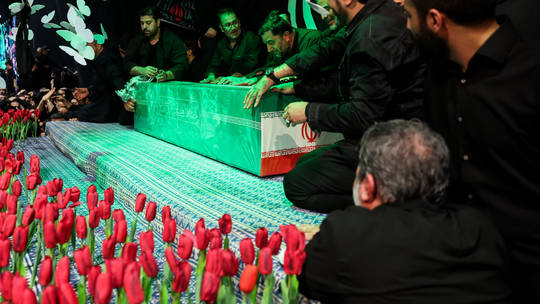
Tehran has warned of a harsh response to any Israeli or U.S. move during Ayatollah Ali Khamenei’s funeral period, while maritime risk in the Strait of Hormuz remains elevated under Iranian threats despite mixed signs on traffic. U.S. anxieties about Israeli targeting of Iranian negotiators persist, and the Israel-Lebanon track looks brittle on the ground.
Executive summary
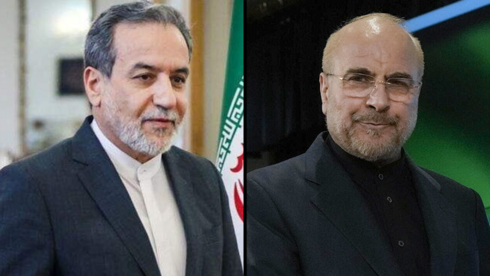
Iranian officials have issued explicit warnings to Israel and the United States not to act during Khamenei’s funeral period, with tightened security and airspace controls. Reporting points to sustained Israeli interest in decapitation strikes on senior Iranian figures, including negotiators Abbas Araghchi and Mohammad Bagher Ghalibaf, spurring U.S. deconfliction steps and multiple flight-security incidents for Ghalibaf. In the Strait of Hormuz, Iran is asserting control and threatening force against non-compliant shipping even as a U.S.-backed recovery in flows and interim arrangements are reported; the picture is mixed, with both anchored queues and ongoing passages. In Lebanon, Hezbollah-aligned politicians have rejected the Israel-Lebanon accord outright and IDF contact continues near Bint Jbail, suggesting limited near-term ground effect. Indirect U.S.-Iran talks are reportedly paused until after Khamenei’s burial, and Iranian leaders have set a high bar for any final deal.
Change from previous assessment
New since the prior brief: explicit Iranian warnings of a harsh response during Khamenei’s funeral period and tightened security; detailed reporting on U.S. concern over Israeli targeting of Abbas Araghchi and Mohammad Bagher Ghalibaf, including an emergency diversion and fighter escorts; Khatam al‑Anbiya threats against non‑compliant shipping in Hormuz alongside mixed data on flows and anchorage; an IDF reservist severely wounded near Bint Jbail; and reporting that indirect U.S.-Iran talks are paused until after the burial. Assessment emphasis shifts toward funeral‑period flashpoints and continued maritime risk. Confidence is lowered due to timeline discrepancies in negotiator‑targeting reports. If no prior brief exists on this exact topic, treat this as the initial assessment.
Key judgments
- Iranian retaliation during the funeral period is very likely if Israel or the United States conducts any attack, given repeated official warnings and tightened security. (Confidence: high · ASSESSED)
- I&W: Confirming: New NOTAMs extending airspace restrictions over Tehran and other funeral venues, and public orders raising air-defence alert status in the funeral window. (0-14 days)
- I&W: Breaking: Announcement that indirect U.S.-Iran talks have resumed before the burial concludes. (0-14 days)
- Israel very likely prioritised decapitation strikes against senior Iranian officials during the conflict, and U.S. concerns prompted steps to protect negotiators Abbas Araghchi and Mohammad Bagher Ghalibaf; multiple flight-security incidents around Ghalibaf point to a credible threat environment, though reporting on dates is inconsistent. (Confidence: medium · ASSESSED)
- I&W: Confirming: Additional Israeli public statements or credible leaks naming Iranian principals for removal, or another diverted or escorted flight carrying Iranian leaders. (0-3 months)
- I&W: Breaking: Credible reporting that Israel has accepted explicit redlines protecting negotiators, with no further flight diversions or security-driven route changes for Iranian principals. (1-3 months)
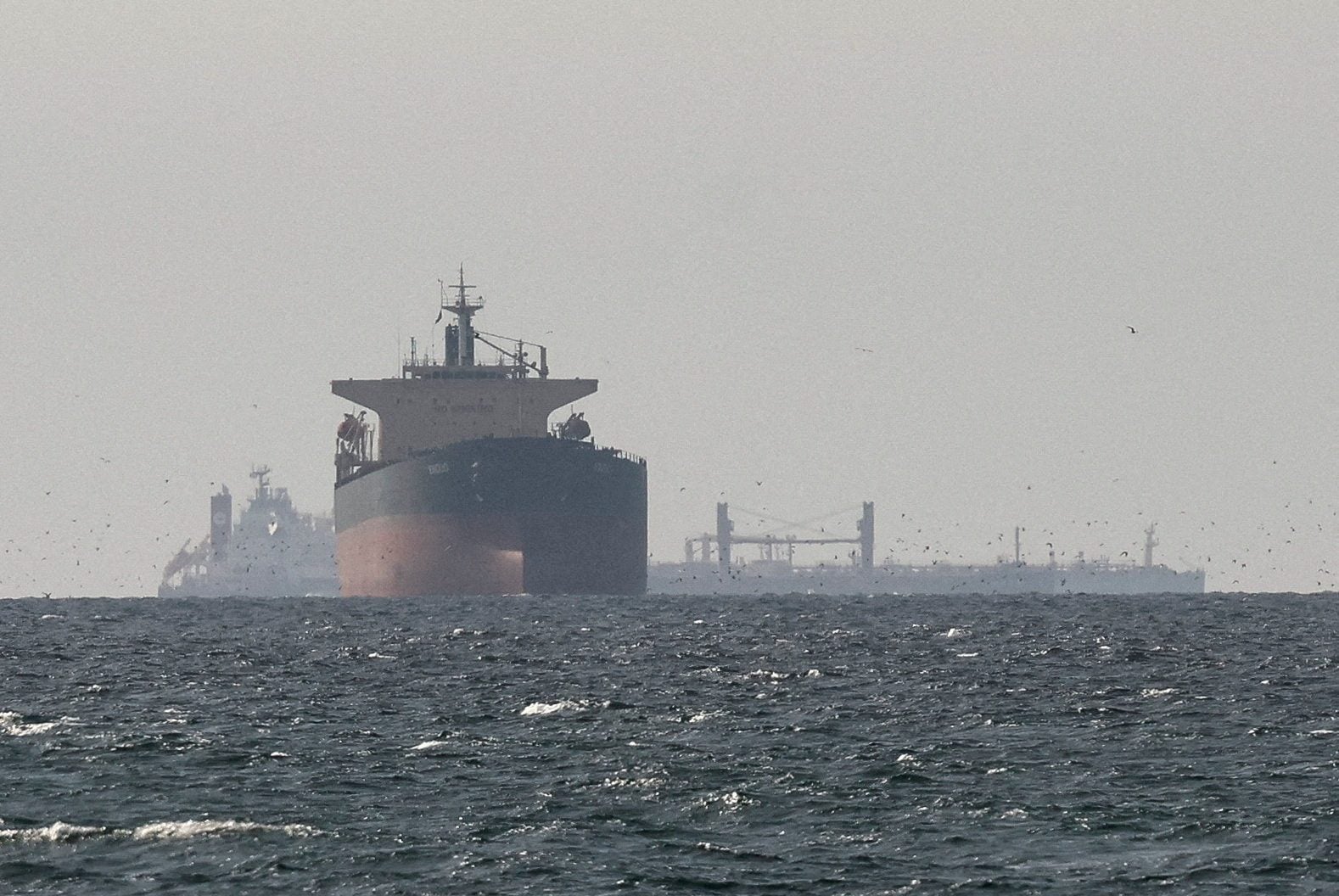
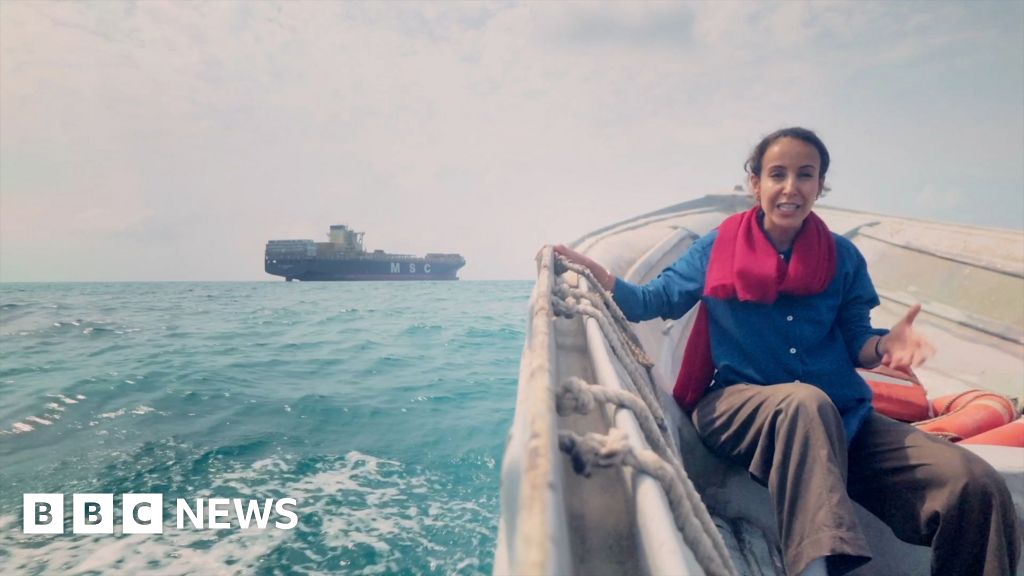
- Maritime risk in the Strait of Hormuz is likely to remain elevated despite partial recovery in flows, as Iran asserts control and threatens force against non‑compliant shipping while the United States presses for compliance with interim passage arrangements. (Confidence: medium · ASSESSED)
- I&W: Confirming: IRIB or official statements publicising an IRGCN boarding or detention for route non‑compliance in Hormuz. (0-14 days)
- I&W: Breaking: Publication of a joint Iranian‑Omani navigation protocol for Hormuz and a visible reduction in vessels holding at anchor before transit. (1-3 months)
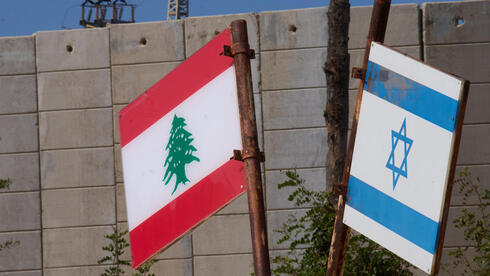
- The Israel‑Lebanon agreement is unlikely to have practical effect on the ground in the near term, given outright rejection by the Loyalty to the Resistance Bloc and continued IDF contact near Bint Jbail; Israel is expected to remain in a security zone for a long time while Hezbollah retains substantial capability. (Confidence: medium · ASSESSED)
- I&W: Confirming: Additional Hezbollah‑linked attacks or clashes reported around Bint Jbail or along the Blue Line. (0-14 days)
- I&W: Breaking: Verified Lebanese Army deployments replacing IDF positions in pilot areas with visible U.S.‑supported equipment. (1-3 months)
- Near‑term diplomatic de‑escalation is unlikely as indirect U.S.‑Iran talks are reportedly paused until after Khamenei’s burial and Iranian leaders condition any final deal on a full Israeli withdrawal. (Confidence: medium · ASSESSED)
- I&W: Confirming: Iranian officials restate the full‑withdrawal precondition and no new Swiss‑hosted session is scheduled publicly before the burial concludes. (0-14 days)
- I&W: Breaking: Announcement of a new indirect or in‑person U.S.‑Iran meeting scheduled before the end of the funeral period. (0-14 days)
Outlook & scenarios
Tense containment through the funeral period (50%)
Israel and the United States avoid kinetic action inside Iran during the funeral period. Tehran maintains deterrent rhetoric and security measures, then allows indirect talks to resume after the burial. In Hormuz, a mix of anchored queues and continued passages persists under U.S. backing and interim arrangements, with periodic Iranian warnings but no high‑profile interdictions.
Funeral‑day escalation and regional spillover (25%)
A strike or attempted assassination of an Iranian principal during the funeral triggers Iranian retaliatory attacks across the Middle East, including fire at Gulf states and U.S. facilities. Khatam al‑Anbiya enforces threats in Hormuz, leading to boardings and a sharp rise in vessels holding at anchor. Missile fire into Israel continues, with new casualties reported.
Lebanon front deteriorates (40%)
Hezbollah‑aligned actors actively undermine the Israel‑Lebanon accord. IDF remains in the security zone around southern Lebanon for an extended period, with recurring clashes near Bint Jbail. The Lebanese Army struggles to expand deployments without additional U.S. support, and the accord shows little change on the ground.
Maritime off‑ramp, political stalemate (30%)
U.S. pressure and incentives, including discussion of unfreezing funds, yield a narrow technical arrangement that sustains commercial passage under Iranian‑defined protocols, easing queues without resolving broader disputes. Iran continues to assert control of Hormuz and demands a full Israeli withdrawal for any final deal, leaving the political track frozen.
Recommendations
- Maintain a continuous watch on Iranian funeral‑period security measures: track civil aviation NOTAMs, public air‑defence alerts and any Khatam al‑Anbiya guidance; circulate changes to regional posts within hours.
- Prioritise HUMINT and SIGINT collection on Israeli deliberations about targeting Iranian principals; specifically seek corroboration of any updated ‘kill‑list’ and named individuals.
- Expand maritime domain awareness in the Strait of Hormuz: fuse AIS with commercial satellite imagery to quantify anchored versus transiting vessels daily; flag any IRGCN boardings or detentions within 6 hours to interagency maritime desks.
- Prepare a rapid advisory template for U.S.-linked commercial operators transiting Hormuz that reflects Iranian routing demands and threat language; coordinate with MARAD for timely dissemination if boardings occur.
- On the Lebanon file, step up geolocation and incident logging around Bint Jbail and the Blue Line; provide a weekly roll‑up on clashes, LAF deployments and Hezbollah‑aligned political messaging.
- Support the diplomatic track by cataloguing Iranian public preconditions and U.S. incentive signals, including offers to unfreeze assets, to inform options papers on sequencing post‑funeral engagement.
- Review force‑protection posture for U.S. regional facilities in light of reporting that Iran has fired at U.S. bases during recent retaliations; validate alerting and shelter procedures with host‑nation interlocutors.
- Establish a single timeline of flight‑security incidents for Ghalibaf and Araghchi, noting date discrepancies across sources, to guide senior briefings and deconfliction messaging.
Confidence & uncertainty
Overall confidence is low because several central elements rest on single‑source or again‑contested reporting with timeline inconsistencies. Reporting on Israeli targeting of Iranian negotiators spans spring 2025 and April 2026 and is not fully aligned. The maritime picture in Hormuz is mixed, with credible claims of both anchored queues and sustained flows under U.S. backing. While Iranian warnings around the funeral are well sourced, broader inferences about near‑term escalation and diplomatic prospects rely on indirect indicators. Additional multi‑source corroboration would allow an upgrade, but for now the evidence base is uneven.
Alternative analysis (red cell)
The reporting documents warnings, protective measures, and political conditions, but it is internally inconsistent and largely lacks operational corroboration for high‑probability outcomes. A sober alternative estimate is that Iran’s statements and protective actions indicate heightened caution and deterrent signaling, while actual kinetic retaliation, systematic decapitation campaigns, durable maritime interdiction, or the practical collapse of the Israel‑Lebanon agreement remain plausible but not definitively likely without additional operational evidence.
Intelligence gaps
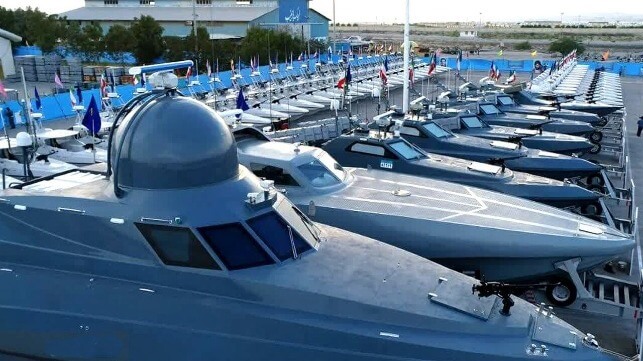
- [EEI 1.1 · UNCOVERED] Movement, dispersal, or emplacement of Iranian conventional or IRGC heavy assets (ballistic missile launchers, Khoramshahr/Toofan-class missile transporters, ground-to-ground TELs, air defense batteries, amphibious units) from garrison areas toward forward bases or coastal launch sites. Recommended collection: satellite/IMINT
- [EEI 1.2 · PARTIAL] Authenticated Iranian military orders, NSC/IRGC operations directives, or senior leadership statements explicitly directing strikes against Israel or U.S. forces or authorizing cross-border operations. Recommended collection: human/diplomatic
- [EEI 1.3 · PARTIAL] Changes in Israeli and U.S. force posture indicating anticipation of direct large-scale conflict—elevated readiness levels, mobilization notices, pre-positioning of munitions, or public/private orders to prepare offensive strikes. Recommended collection: open-source/diplomatic
- [EEI 2.1 · UNCOVERED] Observable pre-launch preparations for missile/rocket/cruise missile strikes (fueling, warhead mating, launcher orientation, support vehicle congregation) and abnormal munitions handling at known launch sites. Recommended collection: satellite/IMINT
- [EEI 2.2 · UNCOVERED] Indications of proxy arms shipments and weapons transfers (truck convoys, small boat transfers, container movements from Iran to proxies, new stockpiles in Lebanon, Iraq, Yemen, Syria). Recommended collection: maritime/AIS
- [EEI 2.3 · UNCOVERED] Evidence of cyber attack planning or active exploitation campaigns targeting Israeli or U.S. military/critical infrastructure (emergence of new command-and-control servers, spear-phishing campaigns against defense personnel, successful intrusions). Recommended collection: cyber
- [EEI 3.1 · PARTIAL] Movements and posture changes of U.S. regional platforms (carrier strike groups, amphibious ready groups, B-52/B-1/B-2 or fighter deployments, missile defense assets repositioning) and associated armament loadouts. Recommended collection: satellite/IMINT
- [EEI 3.2 · PARTIAL] Official or leaked U.S. government/diplomatic communications indicating thresholds for strikes, authorization for offensive operations, or limits on action (NSC/DoD statements, congressional notifications, diplomatic notes). Recommended collection: diplomatic/human
- [EEI 3.3 · UNCOVERED] Changes in U.S. base force-protection measures and rules of engagement at regional facilities (base lockdowns, evacuation notices, flight restrictions, activation of Local Defense Forces or missile intercept systems). Recommended collection: open-source/local reporting
- [EEI 4.1 · PARTIAL] Hezbollah-specific indicators: convoys and logistics movements toward Lebanon–Israel border, artillery/rocket emplacement in southern Lebanon, documented strikes-preparation activity, public mobilization orders or recruitment drives. Recommended collection: satellite/IMINT
- [EEI 4.2 · PARTIAL] Houthi-attributed maritime attack indicators: AIS anomalies/loss of contact for commercial vessels, reports of missile/drone strikes or near-miss incidents in Bab al-Mandeb/Red Sea, Houthi claims paired with imagery of weapons launches. Recommended collection: maritime/AIS
- [EEI 4.3 · UNCOVERED] Militia cross-border attack evidence from Iraq/Syria: recorded rocket/mortar launch events into Israel or strikes against U.S. facilities, movement of armed convoys toward border areas, and intercepted communications coordinating cross-border operations. Recommended collection: signals/ELINT
- [EEI 4.4 · PARTIAL] Attacks or credible threats against energy infrastructure and shipping (damage to terminals, pipeline sabotage, oil tanker seizures, war-risk insurance premium spikes for regional routes). Recommended collection: financial/open-source
Cited sources
[1] The Jerusalem Post · Live Updates: Latest from Israel, Iran, and Middle East | The Jerusalem Post (A) · sha256:ec33d96da1f6 [2] haaretz.com · Iran warns U.S., Israel against attacks ahead of Khamenei funeral (A) · sha256:1be03f7f1ec1 [3] globalvillagespace.com · Iran warns US and ‘Zionist regime’ against attacks on Khamenei funeral (B) · sha256:530f842c83b5 [4] Jerusalem Post · US officials believed Israel planned to kill Iranian negotiators amid peace talks - report (B) · sha256:a3dd433a226c [5] ynetnews.com · Report: US feared Israel would kill Iran negotiators during peace talks (A) · sha256:bba04bd5db6e [6] nypost.com · US officials feared Israel was plotting to kill head Iranian negotiators: report (B) · sha256:4b879b484d78 [7] maritime-executive.com · Iran Threatens to Attack Ships for Using Non-Iranian Routes Through Hormuz (B) · sha256:d30c5cd80618 [8] haaretz.com · The Iran War has become Israel's Icarus Moment (A) · sha256:c7251b5a4d15 [9] BBC · BBC reports from the Strait of Hormuz during fragile ceasefire (A) · sha256:aa59749076a5 [10] gcaptain.com · US Sees 10 Million Barrels Via Hormuz Sapping Iran Oil Leverage (B) · sha256:3aff126bf140 [11] gcaptain.com · Global Container Spot Rates Jump 9% as Transpacific, Asia-Europe Trades Tighten (C) · sha256:ba382447ab97 [12] ynetnews.com · Israel-Lebanon agreement touted as success but now it depends on Iran (B) · sha256:b80563dbbb46
Source content hashes were computed at collection time; the cited text is preserved unmodified for the life of this product.
Red cell review: PARTIAL DISSENT
TLP:CLEAR