TLP:CLEAR · Disclosure is not limited.
Iran, Israel: hostilities persist, Hormuz risk elevated as Khamenei funeral proceeds
Time window: Last 1 day · Audience: General analyst · Type: Situation report · DTG: 2026-07-04 11:13Z · Overall confidence: MEDIUM
BLUF
Hostilities between Iran, Israel and the United States are very likely to persist in the near term, and maritime risk in the Strait of Hormuz remains high amid attacks on shipping and competing control claims. Funeral events for Ali Khamenei add short‑term uncertainty inside Iran but are unlikely to moderate Tehran’s external posture.
Executive summary
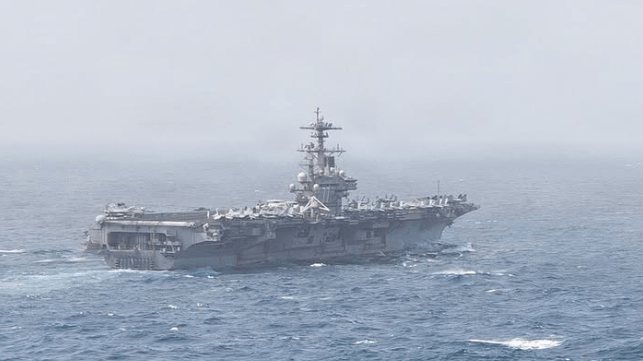
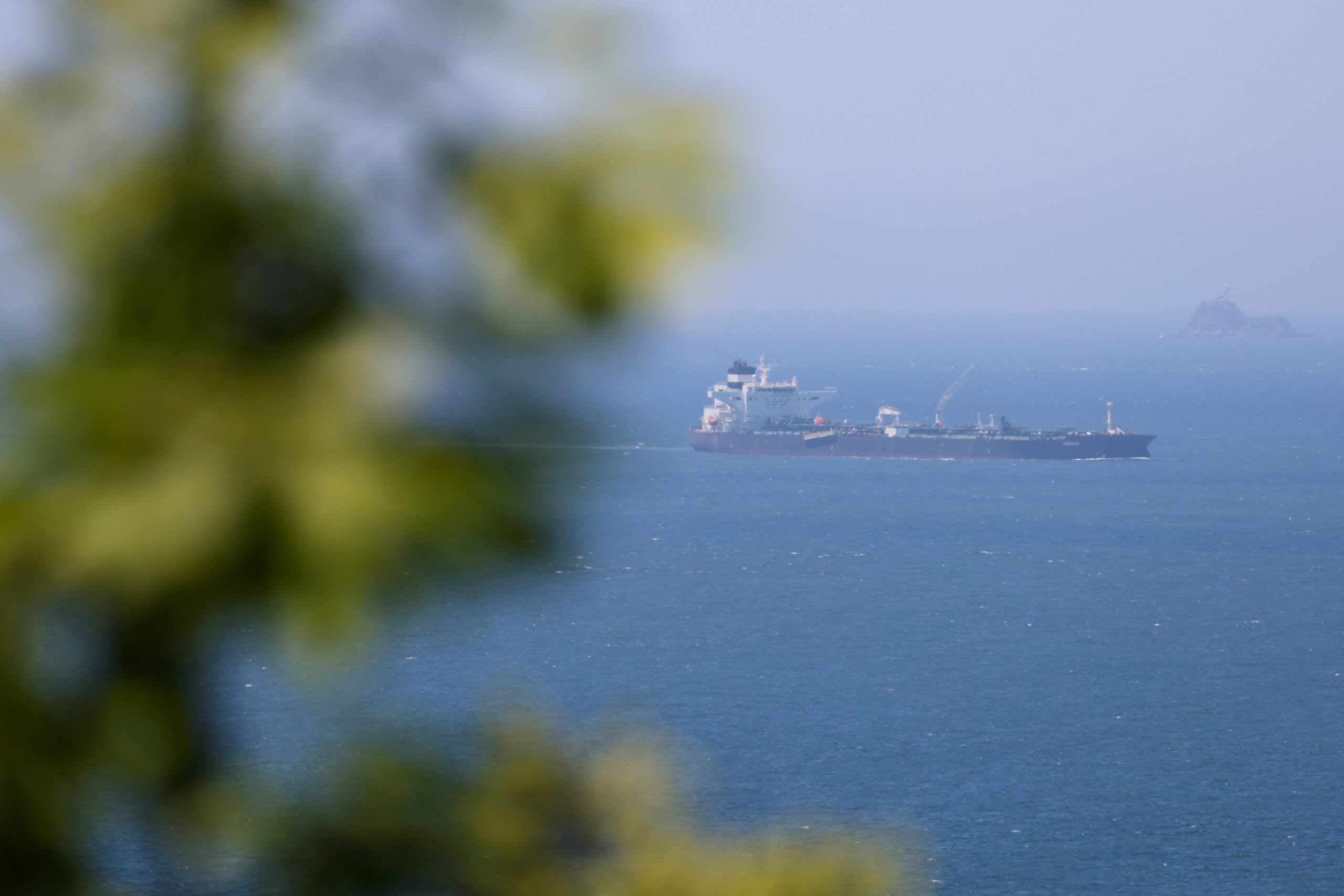
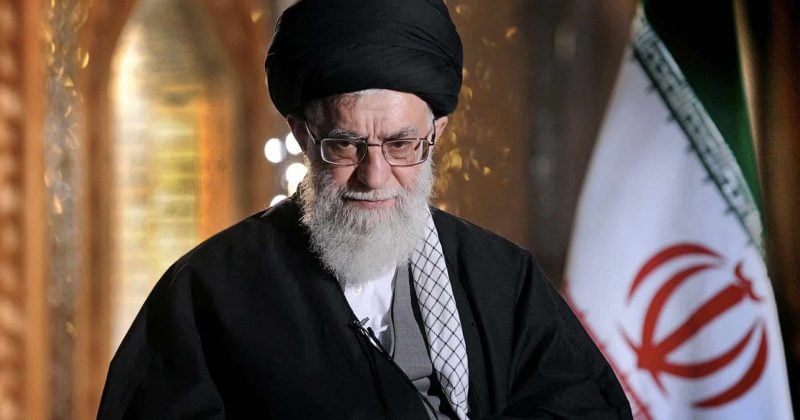
The 2026 war’s tempo has not eased. The United States struck Iran’s southern coastal facilities on 27 June 2026, after US, Israeli airstrikes began the war on 28 February and Iran responded with missiles and drones. US naval forces, including the 11th Marine Expeditionary Unit with USS Boxer, and two carrier strike groups, are in theatre. In Hormuz, Iranian forces attacked a container ship last week and have fired on ships, while Iran warns against foreign military displays even as it engages Oman and cites an Islamabad MoU on strait management. Britain and France signalled readiness to deploy a multinational mission and China urged unimpeded shipping. Ali Khamenei’s funeral is under way with mass commemorations; Mojtaba Khamenei’s public role remains uncertain. US officials say they warned Tehran that Israel might target Iranian negotiators during ceasefire talks, a claim Israel’s Prime Minister’s Office disputes. A reported US, Iran 60‑day ceasefire MoU exists, but current activity indicates limited traction.
Change from previous assessment
Since the 2 July brief, new reporting includes US airstrikes on Iran’s southern coastal facilities on 27 June, a container ship attack in the Strait of Hormuz, and Britain and France signalling readiness for a multinational mission in the strait. US naval posture is clearer, with USS Boxer’s arrival alongside two carrier strike groups and Apache presence over Hormuz. Ali Khamenei’s funeral has moved from preparation to commencement with mass commemorations, and Mojtaba Khamenei’s public role remains uncertain. Allegations that Israel intended to target Iranian negotiators surfaced alongside denials from the Prime Minister’s Office, complicating the reported US, Iran ceasefire MoU. Initial assessment of the Islamabad MoU and Oman technical channel suggests limited immediate risk relief for shipping.
Key judgments
- Very likely reciprocal hostilities among Iran, Israel and the United States will persist over the next fortnight, given continued strikes and forward US posture. (Confidence: high · ASSESSED)
- I&W: Additional overt air or missile strikes by either side inside Iran, Israel or on US regional facilities. (0-14 days)
- I&W: Sustained verified cessation of strikes paired with visible drawdown of US naval aviation in theatre. (1-3 months)
- Maritime risk in the Strait of Hormuz is likely to remain elevated for at least the next month as Iran enforces transit claims and foreign navies increase presence. (Confidence: high · ASSESSED)
- I&W: Further IRGC enforcement actions, such as boardings or fires on commercial vessels, and public orders requiring transit pre‑clearance. (0-30 days)
- I&W: Publicly announced Iran, Oman navigation protocol with verified decline in naval escorts and no boarding incidents. (1-3 months)
- Iran’s leadership transition is likely to create short‑term uncertainty that sustains a hardline external posture despite mass funeral events. (Confidence: medium · ASSESSED)
- I&W: Mojtaba Khamenei makes a prominent public appearance asserting continuity of Iran’s external policies. (0-14 days)
- I&W: Iranian authorities signal operational restraint externally during the funeral period, reflected in a pause in missile or drone activity. (0-14 days)
- Allegations that Israel intended to target senior Iranian negotiators are contested, leaving a roughly even chance that mistrust hampers near‑term ceasefire progress. (Confidence: medium · ASSESSED)
- I&W: Security upgrades or venue changes announced for US, Iran talks and continued media leaks naming threatened individuals. (0-30 days)
- I&W: Publicly affirmed joint de‑escalation track with verifiable milestones under a ceasefire MoU and no reported threats to negotiators. (1-3 months)
Outlook & scenarios
Protracted standoff with periodic strikes (65%)
Air and missile exchanges and covert action continue at a lower tempo, with the United States sustaining a high‑readiness naval air presence and Iran conducting limited regional attacks. Shipping through Hormuz proceeds under heavy escort with intermittent disruptions; rhetoric remains hardline as Iran’s leadership consolidates during and after funeral events.
Maritime flare‑up triggers multinational patrol surge (30%)
A new attack on a merchant vessel in Hormuz prompts expanded US escort operations and an accelerated British, French‑led multinational mission. Iran issues stricter transit demands and stages visible fast‑boat and drone patrols. Insurance premia rise and some shippers reroute temporarily.
Narrow de‑escalation via Oman, Islamabad track (40%)
Technical talks with Oman and reference to an Islamabad MoU yield a limited navigation protocol, while a reported 60‑day US, Iran ceasefire framework holds sufficiently to reduce cross‑border fire. Naval readiness remains but boarding incidents decline and diplomatic messaging shifts to implementation details.
Funeral‑period shock event (15%)
A security incident tied to mass commemorations or leadership appearances inside Iran sparks a sharp retaliatory cycle, briefly expanding the geographic scope of strikes. Domestic control tightens, external operations intensify, and Hormuz traffic slows for days.
Recommendations
- Prioritise maritime ISR over the Strait of Hormuz to detect IRGC fast‑boat staging, helicopter lift, and boarding patterns; fuse AIS, VTMS, and naval aviation feeds to flag pre‑incident tripwires for commercial partners.
- Engage UK and French defence contacts on rules of the road and deconfliction if a multinational mission deploys; coordinate with Oman on any announced navigation protocols to validate compliance and enforcement mechanisms.
- Task energy and shipping analysts to model 0-30 day impacts from additional boarding or attack incidents, incorporating insurer stances and reported Japanese buyer and insurer concerns tied to sanctions waivers and ship safety.
- Track the Khamenei funeral cycle for leadership signalling: log Mojtaba Khamenei’s visibility, clerical endorsements, and IRGC public messaging; prepare a short assessment on how the transition affects Iran’s external operations in the next month.
- For the ceasefire track, prepare talking points acknowledging contested assassination reports while emphasising protective measures for negotiators; set collection requirements on meeting security changes, venue shifts, and intermediary traffic.
Confidence & uncertainty
Multiple high‑reliability sources corroborate continued strikes, elevated US naval posture, and a recent attack on shipping in Hormuz. Official statements from Iran, plus major media and maritime reporting, align on risk to navigation and competing control claims. Uncertainty remains on the ceasefire MoU’s status and the assassination‑threat allegations, which are contested by Israel’s Prime Minister’s Office. Reporting on Iran’s internal dynamics around the funeral and leadership visibility includes medium‑confidence and social media elements. On balance, the mix of strong corroboration in military and maritime domains and contested political reporting supports an overall medium confidence assessment.
Alternative analysis (red cell)
An alternative, defensible reading of the package is that multiple diplomatic and force‑protection measures (the Islamabad MoU, technical talks with Oman, multinational naval readiness, and intermediary warnings) create credible pathways to stabilize the situation over coming weeks. While incidents and a forward US posture raise risk, the reporting does not uniformly demonstrate irrevocable momentum toward continued reciprocal strikes or a month‑long maritime crisis; internal Iranian security preoccupations tied to the leadership transition could further constrain external kinetic activity.
Intelligence gaps
- [EEI 1.1 · UNCOVERED] Unusual long-range missile/rocket transporter-launcher (TEL) movements, storage activation, or assembly activity at known IRGC missile sites or forward staging areas. Recommended collection: satellite/imagery
- [EEI 1.2 · UNCOVERED] Orders, threat-alert messages, or changes in posture from IRGC, Quds Force, or senior Iranian military leadership indicating attack timelines or rules of engagement changes. Recommended collection: signals/ELINT and HUMINT
- [EEI 1.3 · UNCOVERED] Large-scale transfers, deliveries, or convoy movements of armed UAVs/drones, guided munitions, or spare parts from Iran into Lebanon (Hezbollah), Iraq, Syria, or Gaza. Recommended collection: air/aviation track and HUMINT
- [EEI 1.4 · UNCOVERED] Sustained changes in Israeli air-defense usage (SAM launches, radar activations), wide-area alerts, or NOTAMs indicating elevated imminent strike response. Recommended collection: air/aviation/NOTAMs and signals
- [EEI 2.1 · PARTIAL] Concentration, repositioning, or sortie patterns of Iranian naval/IRGC patrol boats and fast-attack craft near shipping chokepoints or commercial lanes. Recommended collection: maritime/AIS and satellite/imagery
- [EEI 2.2 · PARTIAL] Reported attacks, mine sightings, close-approach incidents, or damage to commercial tankers/merchant vessels operating in the Red Sea, Persian Gulf, or eastern Mediterranean. Recommended collection: maritime/AIS and OSINT/incident reports
- [EEI 2.3 · UNCOVERED] Insurance market indicators: sudden spikes in war-risk or hull insurance premiums for routes through the Red Sea, Suez corridor, or Persian Gulf, and major carriers announcing route changes. Recommended collection: financial/market and commercial shipping notices
- [EEI 2.4 · PARTIAL] Port closures, naval escorts requested by commercial operators, or formal rerouting advisories issued by major shippers (e.g., Maersk, Hapag-Lloyd) for regional transits. Recommended collection: commercial/OSINT
- [EEI 3.3 · UNCOVERED] Confirmed arms transfers, expedited weapons shipments, or transfer authorizations to Israel, Iran, or their proxies (aircraft parts, munitions, air defenses). Recommended collection: customs/INTEL and HUMINT
- [EEI 3.4 · UNCOVERED] Issuance of travel warnings, embassy evacuations or reductions, and closure of diplomatic missions by major capitals indicating escalation risk or shifted threat assessments. Recommended collection: OSINT/diplomatic
Cited sources
[1] islamtimes.com · Iran Raps US Aggression, Defends Right to Self-Defense - Islam Times (A) · sha256:fa17432e4cf6 [2] Wikipedia · Reactions to the 2026 Iran war (B) · sha256:6f2b9c9373d2 [3] CNN · US officials attempted to warn Iran of fears that Israel would assassinate mediators | CNN Politics (A) · sha256:ecc65241aec5 [4] maritime-executive.com · US Forces Still Poised in the Arabian Gulf Area (B) · sha256:bc323b87762b [5] gcaptain.com · Japan Weighs Return to Iranian Oil as Shipping Risks Cloud Sanctions Waiver (A) · sha256:422058aef7bb [6] skynewsarabia.com · محادثات أميركا وإيران. آخر الأخبار (B) · sha256:e8d039c13e7e [7] Bloomberg News · China Urges ‘Unimpeded Passage’ of Hormuz as Fee Chatter Mounts (A) · sha256:0c6f2badd924 [8] CNN · Iran bids farewell to slain supreme leader | CNN (A) · sha256:0855cafd8c77 [9] cryptobriefing.com · Khamenei funeral in Tehran sees absence of major world leaders, security concerns (B) · sha256:2ad31c09499d [10] CNN · The hidden abuse networks CNN exposed are facing a major crackdown | CNN (A) · sha256:432a63a43966 [11] Shams TV · زوايا الخبر | بعد توقف المواجهة مع #إسرائيل و #الولايات_المتحدة، انتقل الصراع إلى الداخل الإيراني، حيث تتصاعد المواجهة بين الحكومة والتيار المتشدد في معركة جديدة على مستقبل البلاد. #إيران | قناة شمس Shams TV (E) · sha256:6e6f56cf8c5d [12] haaretz.com · Netanyahu denies report that Israel was plotting to kill Iran's top negotiators (A) · sha256:727883fb3a73 [13] nbcnews.com · U.S. was concerned Israel might try to kill Iran negotiators, sources say (A) · sha256:c469126ba3e2
Source content hashes were computed at collection time; the cited text is preserved unmodified for the life of this product.
Red cell review: PARTIAL DISSENT
TLP:CLEAR