TLP:CLEAR · Disclosure is not limited.
Iran-Israel Regional Risk: Hormuz, Lebanon and Yemen | 8 October 2026
Time window: Last 1 day · Audience: General analyst · Type: Situation report · DTG: 2026-10-08 14:06Z · Overall confidence: MEDIUM
BLUF
Likely, commercial tanker traffic in the Strait of Hormuz and the adjacent Gulf will remain exposed to attacks or harassment over the next 14 days. A tanker was struck by multiple projectiles north of Qatar on 8 October, but the attacker has not been identified. The reporting in this window does not establish a new direct Iran-Israel strike.
Executive summary
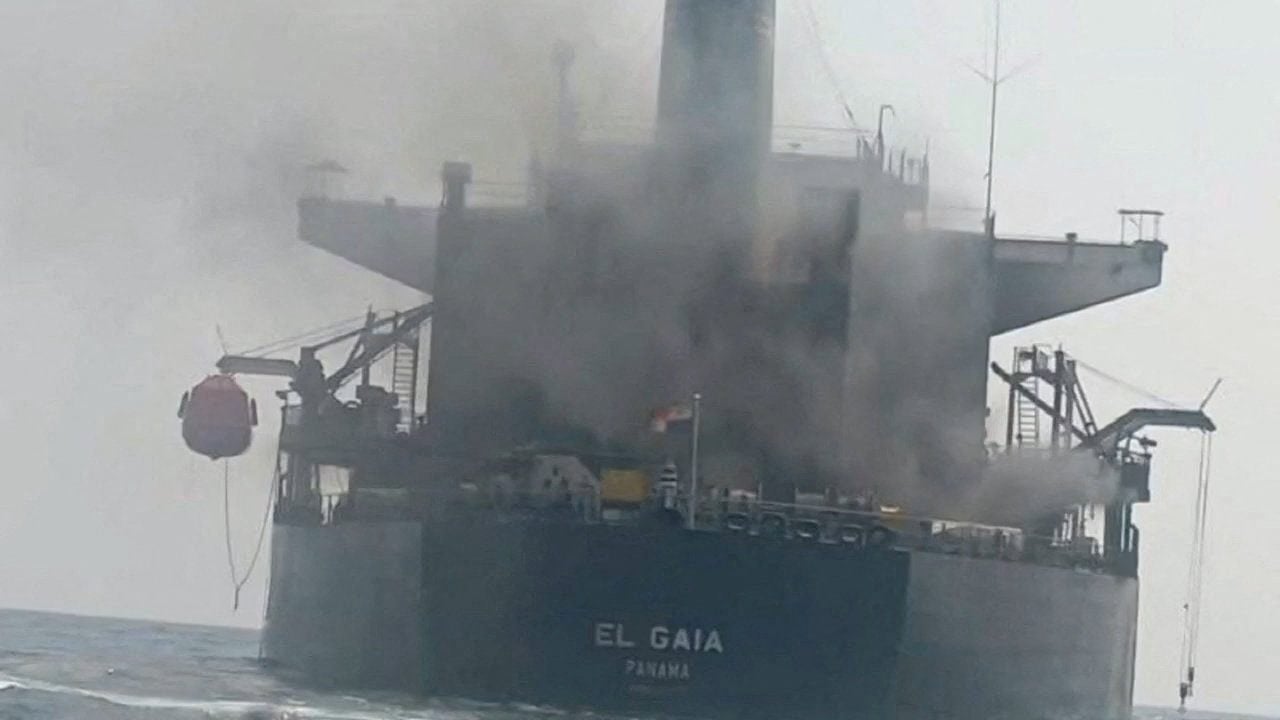
UKMTO reported that the tanker Acers was hit by multiple projectiles 51 nautical miles from Madinat al-Shamal, Qatar, with casualties reported. India’s foreign ministry separately said 12 crew members were injured when the tanker On Peace was struck in the Strait of Hormuz on 6 October. The IMO’s cumulative count stands at 93 confirmed incidents and at least 24 seafarer deaths, while the reported number of incidents for the week of 28 September to 5 October differs between maritime security sources and the IMO. In southern Lebanon, reporting describes the IDF preparing winter positions and maintaining a forward posture. Yemeni Armed Forces announced attacks on Saudi airports and military sites, but this reporting does not independently confirm those claimed results. Crude flows have recovered from lower levels, although estimates of their recovery against pre-war levels conflict.
Change from previous assessment
Since the 7 October prior brief, the main change is the 8 October UKMTO report of a tanker struck by multiple projectiles north of Qatar, with casualties reported. The IMO cumulative figure has also risen to 93 confirmed incidents and at least 24 seafarer deaths, compared with 80 incidents and at least 22 deaths in the prior brief. The weekly count remains contested, with IMO data showing nine vessel incidents and maritime security sources reporting at least 12 tanker attacks for 28 September to 5 October. This brief adds reporting on the IDF’s winter posture in southern Lebanon and more detailed Yemeni Armed Forces claims against Saudi targets. The prior assessment that a direct Iran-Israel exchange was unlikely is not strengthened or reversed: this window provides no specific evidence of a direct strike or preparations, so the likelihood remains unassessed from the current material.
Key judgments
- Likely, commercial tanker traffic in the Strait of Hormuz and the Gulf north of Qatar will face further attacks or harassment in the next 14 days. UKMTO reported that the Antigua and Barbuda-flagged tanker Acers was hit by multiple projectiles 51 nautical miles from Madinat al-Shamal on 8 October, with casualties reported. India’s foreign ministry said 12 crew members were injured when the Panama-flagged On Peace was struck in the Strait on 6 October. The IMO reports 93 confirmed incidents and at least 24 seafarer deaths since the war began in February. Reporting describes persistent IRGC harassment and increasing Iranian attacks, but UKMTO has not identified the attacker responsible for the Acers strike. The weekly incident count is also disputed: maritime security sources report at least 12 tanker attacks, while the IMO records nine vessel incidents. Confidence is medium because UKMTO, the IMO and India’s foreign ministry support the incident and casualty reporting, while attribution and the weekly count remain unresolved. (Confidence: medium · ASSESSED)
- I&W: Confirm: UKMTO reports another attack or attempted attack on a named commercial vessel in the Strait of Hormuz or the Gulf north of Qatar. (0-14 days)
- I&W: Break: UKMTO and JMIC report no further attacks or harassment in their updates, while vessel transits continue, through the next 14 days. (0-14 days)
- The reporting in this window does not establish a direct Iran-Israel exchange during 7-8 October. It records Iranian-linked maritime pressure and Israeli military activity against Hezbollah in southern Lebanon, but no sourced report of a direct Iranian strike on Israel or an Israeli strike on Iran. This is a limit of the available reporting, not evidence that no such exchange occurred. Confidence is insufficient to estimate the likelihood of a new direct exchange from this material. (Confidence: insufficient · ASSESSED)
- I&W: Confirm the information gap: subsequent reporting through 22 October still contains no independently corroborated direct strike or publicly acknowledged direct exchange. (0-14 days)
- I&W: Break: Israeli or Iranian authorities acknowledge a direct strike, or two independent reports identify a strike on a target in either country. (0-14 days)
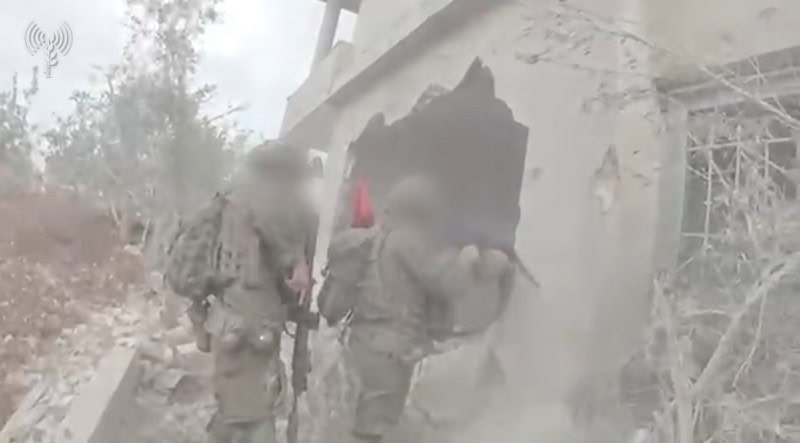
- Likely, the IDF will retain a forward presence in southern Lebanon into the winter rather than withdraw its forces from the area in the next 1-3 months. Israeli security officials were reported as describing a shift to a forward and offensive defence posture and preparation of winter positions. The 55th Reserve Paratroopers Brigade completed a 100-day mobilisation, including 80 days of operations in Lebanon; the IDF said it had destroyed more than 600 Hezbollah sites and eight underground routes during the deployment. A separate report cited an unnamed Israeli military source saying forces could remain for years. Confidence is low because much of the detail comes through Israeli statements or single-source reporting, including an unnamed source. (Confidence: low · ASSESSED)
- I&W: Confirm: Israeli officials report winter deployments continuing in the southern Lebanon security zone, including in the 55th Brigade sector near Majdal Zoun. (0-3 months)
- I&W: Break: the IDF announces a full withdrawal from its southern Lebanon positions or a defined end to the forward posture. (0-3 months)
- Likely, Yemen-related military claims will remain an additional regional security concern over the next 14 days, but the reported results of the 7 October operations remain unverified in this reporting. Yemeni Armed Forces announced strikes on King Khalid Airport in Riyadh, Abha International Airport, Khamis Mushayt air base and military camps in Jizan and Asir, as well as an attack on supplies at Badr camp near Aden International Airport. They also announced that they had shot down a Saudi CH-4 armed reconnaissance drone over Al-Jawf. The claims were carried in a report with low source reliability, and the supplied reporting contains no independent confirmation of the claimed impacts. Confidence is low. (Confidence: low · ASSESSED)
- I&W: Confirm: Saudi authorities acknowledge damage or disruption at King Khalid Airport, Abha International Airport, Khamis Mushayt air base or the named camps. (0-14 days)
- I&W: Break: no claimed strike is independently confirmed and no further Yemeni Armed Forces announcement identifies a Saudi target during the next 14 days. (0-14 days)
- Middle Eastern crude flows have partially recovered, but the available reporting does not establish a single reliable level against the pre-war baseline. Kpler analysts put crude exports through the Strait of Hormuz at an average of 12 million barrels per day, about 80 per cent of pre-war levels, over the past two weeks; Shell’s chief executive also described flows as about 80 per cent recovered. Separate shipping data says Gulf exporters exceeded pre-war export levels for about half of September. Confidence is medium because the estimates come from reported data and an industry executive, but their scopes and time periods are not reconciled. (Confidence: medium · REPORTED)
- I&W: Confirm partial recovery near 80 per cent: new Kpler or Shell figures for Hormuz crude flows remain near that level and specify the same measurement period. (0-1 month)
- I&W: Break the current uncertainty: a new monthly tanker-tracking estimate defines its scope and reconciles the September claim of above-baseline exports with the recent 80 per cent estimates. (0-1 month)
Outlook & scenarios
Continued maritime pressure, contained regional fronts (55%)
Likely, tanker attacks and IRGC harassment continue to disrupt confidence in Strait of Hormuz transits, while the IDF maintains positions in southern Lebanon. The reporting does not establish a direct Iran-Israel strike, and Yemen-related strike claims remain unverified.
Verified spillover from Lebanon or Yemen (25%)
Yemen-related claims gain independent confirmation through acknowledged damage or airport disruption in Saudi Arabia, or fighting along the IDF-Hezbollah front intensifies. This would widen the regional security burden without, by itself, establishing a direct Iran-Israel exchange.
A short-lived reduction in incidents (15%)
Unlikely but plausible, UKMTO and JMIC record a lull in attacks and harassment, while commercial transits continue and no new Yemeni strike claims are independently confirmed. Conflicting crude-flow figures remain unresolved.
Direct Iran-Israel strike cycle, low-probability high-impact wildcard (5%)
A direct strike by Iran or Israel would sharply widen the conflict and place the current maritime and Lebanon risks in a broader interstate confrontation. The claims in this reporting window do not establish an imminent decision or preparation for such a strike.
Recommendations
- For the next 14 days, maintain a daily incident log that separates confirmed vessel strikes, attempted attacks and harassment. Record the vessel name, location, casualties, source and whether an attacker has been identified.
- Reconcile the nine IMO incidents with the maritime security sources’ count of at least 12 tanker attacks for 28 September to 5 October before using either figure as a trend baseline.
- Track UKMTO and JMIC updates for incidents involving the Strait of Hormuz and the Gulf north of Qatar. Treat attribution to Iran separately from confirmation that a vessel was struck.
- Check Saudi official statements and airport or base status reporting against the Yemeni Armed Forces’ 7 October claims before assessing whether King Khalid Airport, Abha International Airport, Khamis Mushayt or the named camps were hit.
- Monitor Israeli reporting on winter positions in southern Lebanon and any announced withdrawal or rotation from the 55th Brigade sector. Keep Israeli military claims about Hezbollah sites distinct from independently verified activity.
- Do not use the current reporting to assign a confident likelihood to a direct Iran-Israel exchange. Update that estimate only if reporting establishes a direct strike, specific preparations or an authoritative change in public posture.
- Label crude-flow figures by source, measurement and time period. Avoid combining the recent 80 per cent estimates with September claims of above-baseline exports until their scopes are reconciled.
Confidence & uncertainty
Overall confidence is medium. UKMTO, the IMO and India’s foreign ministry provide corroborating reporting on tanker incidents and casualties. Confidence is lower on attacker attribution, the disputed weekly incident count and the scale of crude-flow recovery. The southern Lebanon picture relies partly on Israeli statements and single-source reporting, while the Yemen strike claims lack independent confirmation in this reporting window. The available material does not establish whether a new direct Iran-Israel exchange occurred or is being prepared.
Intelligence gaps
- [EEI 1.1 · UNCOVERED] Detection and characterization of ballistic/cruise missile or rocket launches originating from Iranian territory or from Iran-controlled positions in Iraq/Syria (time, launch coordinates, missile type, flight trajectory/impact area). Recommended collection: satellite/imagery
- [EEI 1.2 · UNCOVERED] Movements and posture changes of Iran-backed proxy forces (Hezbollah units in Lebanon, militias in Syria/Iraq): concentrations of personnel, transport of rocket/artillery launchers, visible logistics build-up within operational range of Israel. Recommended collection: human/intel
- [EEI 1.4 · UNCOVERED] Evidence of pre-positioning or arming of naval mines, fast attack craft, or anti-ship missile systems in the Gulf of Oman, northern Arabian Sea, or off the Lebanese/Syrian coasts that could be used to interdict Israeli or allied shipping. Recommended collection: maritime/AIS
- [EEI 2.1 · UNCOVERED] Movements and tasking changes of external military assets: carrier strike groups, amphibious ready groups, expeditionary air wings, or ballistic-missile defense units into the Eastern Mediterranean, Persian Gulf, or Red Sea (vessel/aircraft IDs, routing, on-station times). Recommended collection: maritime/AIS
- [EEI 2.2 · UNCOVERED] Formal diplomatic/military actions: evacuation orders or embassy closures, public troop posture statements, bilateral/multilateral defense commitments announced, requests for overflight or basing rights in regional states. Recommended collection: diplomatic
- [EEI 2.3 · UNCOVERED] Changes to force protection or alert levels at foreign bases in the region (e.g., US bases in Kuwait, Qatar, UAE; Russian bases in Syria): activation of additional air defenses, curfews, or reinforcement shipments (personnel/equipment manifests). Recommended collection: signals/intel
- [EEI 3.2 · PARTIAL] Changes in crude oil and refined product flows from key terminals (reported tanker loading delays, terminal closures, throughput volumes at Kharg, Mina al-Ahmadi, Ras Tanura, and major Gulf ports compared to baseline). Recommended collection: commercial/ports
- [EEI 3.3 · UNCOVERED] Market and insurance indicators: sudden spikes in war-risk or hull insurance premiums for Middle East routes, large moves in regional FX/stock indices, and notable changes in commodity futures (oil, freight rates) tied to regional risk perceptions. Recommended collection: financial/transactional
Cited sources
[1] BBC News · Tanker hit by multiple projectiles in Gulf off Qatar, UKMTO says (A) · 8 October 2026 · sha256:488002e19097 [2] Reuters (republished by gCaptain) · Attacks on Tankers in Hormuz Hit Highest of Any Week Since Start of Iran War, Sources Say (A) · 7 October 2026 · sha256:6c73f80819aa [3] Bloomberg (republished by gCaptain) · India Shuns Costly Russian Oil as Middle East Flows Recover (A) · 8 October 2026 · sha256:d78d8379c5a6 [4] Foundation for Defense of Democracies (Long War Journal) · IDF shifts southern Lebanon forces toward ‘forward-defense’ posture as troops prepare for winter (C) · 7 October 2026 · sha256:54b7c886de45 [5] Tasnim News Agency · من طوفان الأقصى إلى تصعيد العدوان على اليمن. السيد عبدالملك الحوثي يكشف أدوار واشنطن وتل أبيب والرياض (C) · 7 October 2026 · sha256:f9db29efd4a5
Source content hashes were computed at collection time; the cited text is preserved unmodified for the life of this product.
Red cell review: CONCUR
TLP:CLEAR