TLP:CLEAR · Disclosure is not limited.
Iran, Israel risk rises as US, Iran strikes intensify and Hormuz shipping slows
Time window: Last 1 day · Audience: General analyst · Type: Situation report · DTG: 2026-07-11 04:40Z · Overall confidence: MEDIUM
BLUF
US airstrikes across Iran and Iranian missile fire toward U.S.-linked sites in Jordan, Bahrain and Kuwait mark a sharp escalation, while shipping through the Strait of Hormuz has slowed. Israel is signalling readiness but has not re-entered direct combat, and diplomacy is active yet uncertain.
Executive summary
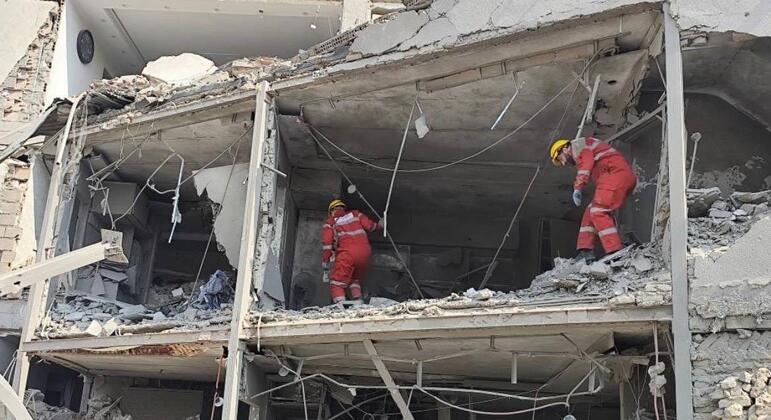
CENTCOM strikes hit about 90 targets in Iran on 10 July, followed by Iranian missile activity targeting a U.S. base in Jordan, air-raid sirens in Bahrain and interceptions over Kuwait. Iran reports at least 14 killed and 78 wounded from recent U.S. strikes. Commercial transits through the Strait of Hormuz have dropped, with tanker associations reporting southern-route traffic down to single digits and overall crossings falling to 22 on 9 July. Qatari envoys are in Tehran and U.S. officials are demanding a public Iranian commitment to keep Hormuz open, but Washington has declared the June ceasefire ‘over’. Israel’s defence minister has renewed threats of readiness to confront Iran, while Tehran warns Israel will not be spared, yet Israel has not struck Iran since June. The IEA warns the oil market recovery is contingent on rapid de-escalation.
Change from previous assessment
Compared with the 10 July brief, we now have high-confidence reporting that CENTCOM hit about 90 targets across Iran on 10 July and that Iran targeted a U.S. base in Jordan, with sirens in Bahrain and successful interceptions over Kuwait. Quantified humanitarian impacts inside Iran have been updated to at least 14 killed and 78 wounded. Shipping data show confirmed crossings through Hormuz fell to 22 on 9 July and southern-route tanker traffic dropped to single digits, reinforcing earlier assessments of disruption. Diplomacy remains active with Qatari negotiators in Tehran and explicit U.S. demands for an Iranian public assurance on Hormuz, while Washington has publicly stated the ceasefire is ‘over’. Israel has renewed public threats but, consistent with the prior brief, has not struck Iran since June.
Key judgments
- The United States very likely struck roughly 90 targets across Iran on 10 July, and Iran likely retaliated the same day against U.S.-linked facilities in Jordan, with sirens in Bahrain and interceptions by Kuwait’s air defences. (Confidence: high · REPORTED)
- I&W: Jordan issues an official communique confirming IRGC missile launches at a U.S. base and associated interceptions (0-14 days)
- I&W: CENTCOM or Jordan publicly refutes reports of IRGC missile fire at a U.S. base in Jordan (0-14 days)
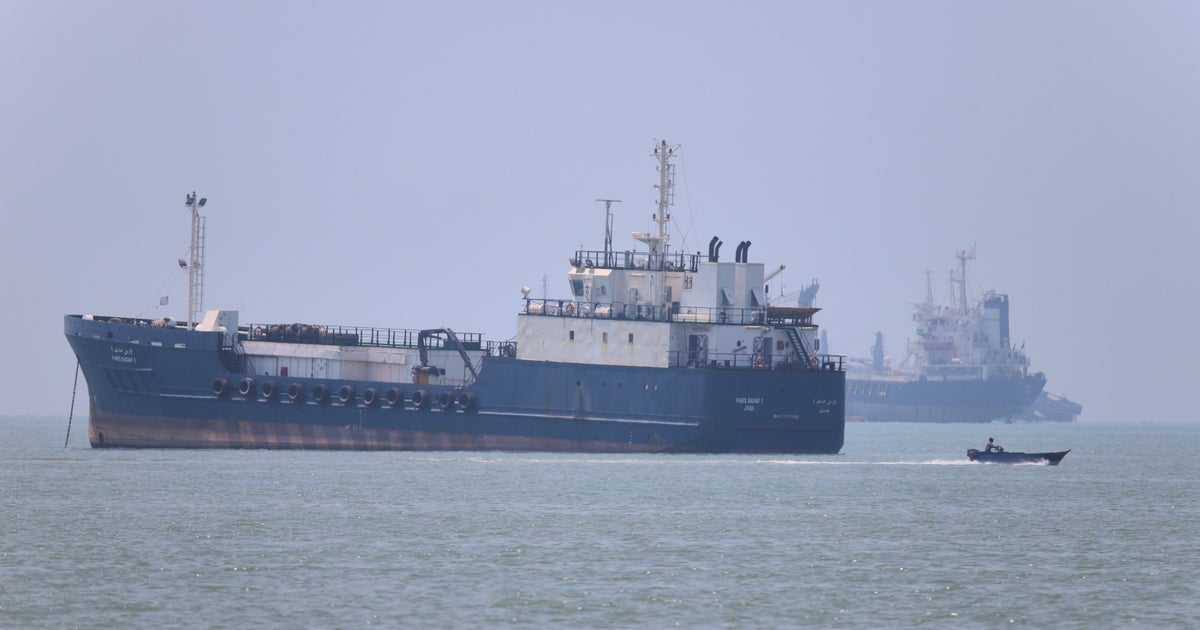
- Maritime traffic through the Strait of Hormuz has very likely slowed sharply since 7-10 July and is likely to remain irregular in the near term. (Confidence: medium · ASSESSED)
- I&W: Confirmed Strait of Hormuz crossings remain at or below 30 per day for seven consecutive days (0-14 days)
- I&W: Crossings rebound to 60 per day for seven consecutive days and the Joint Maritime Information Center eases its southern-route guidance (0-14 days)
- Civilian and military casualties in Iran from U.S. strikes are mounting, with at least 14 killed and 78 wounded reported so far. (Confidence: medium · REPORTED)
- I&W: Iran’s Health Ministry publishes an updated casualty bulletin maintaining or increasing totals (0-14 days)
- I&W: Official Iranian channels revise earlier casualty figures significantly downward (0-14 days)
- Israel is likely to remain on the sidelines of the U.S., Iran exchange in the immediate term, despite public signals of readiness to strike Iran and Tehran’s warnings that Israel will not be spared. (Confidence: medium · ASSESSED)
- I&W: No Israeli strike claims or acknowledged IDF operations inside Iran for 14 consecutive days (0-14 days)
- I&W: Israel publicly acknowledges new strikes inside Iran, or Tehran attributes attacks to Israel without denial from Jerusalem (0-14 days)
- Active de-escalation diplomacy is under way but a near-term breakthrough has a roughly even chance given hardened public positions and U.S. conditions on Hormuz and nuclear issues. (Confidence: medium · ASSESSED)
- I&W: Joint U.S., Iran or mediated statement that the Strait of Hormuz is open, followed by a verified pause in U.S. and Iranian strikes for at least seven days (0-14 days)
- I&W: Announcement of further U.S. strikes in Iran or an Iranian declaration asserting exclusive control over Hormuz (0-14 days)
- The global oil market outlook is likely to remain fragile and very likely to weaken further if Hormuz disruption persists, with the IEA warning that renewed fighting clouds or could upend surplus expectations. (Confidence: medium · ASSESSED)
- I&W: IEA’s next monthly report downgrades 2026-27 balances citing sustained Hormuz risk (1-3 months)
- I&W: Sustained rebound in Hormuz crossings and IEA commentary affirming a return to surplus trajectory (1-3 months)
Outlook & scenarios
Managed escalation: US, Iran tit-for-tat continues, Israel stays out (60%)
CENTCOM conducts intermittent strikes inside Iran and Tehran targets U.S. basing in Jordan, Bahrain and Kuwait with sporadic barrages and limited damage due to regional air defences. Shipping through Hormuz remains depressed but does not halt. Qatari-facilitated contacts keep channels open without restoring a ceasefire.
Direct Iran, Israel confrontation (35%)
Prompted by an Iranian strike linked to Israel or by proxy activity, Jerusalem launches overt or acknowledged strikes against Iranian assets. Tehran attempts to include Israel in retaliation, raising the risk of wider missile exchanges and further depressing Hormuz traffic.
Maritime de-escalation without a full ceasefire (40%)
Under pressure from Washington, Tehran issues a public assurance that the Strait of Hormuz is open and refrains from targeting commercial shipping, while limited U.S., Iran strikes continue elsewhere. Traffic along the northern route rises first, with gradual normalisation on the southern corridor.
Wildcard: Assassination plot triggers regional surge (10%)
An attempted or foiled plot against a senior U.S. or Israeli figure is attributed to Iran, collapsing diplomatic channels and prompting a broader coalition response, including Israeli strikes inside Iran and expanded Iranian attacks on U.S. facilities.
Recommendations
- Maintain a daily log of confirmed Strait of Hormuz crossings by route, using consistent AIS sources, and flag any sustained rise above 50 crossings per day for leadership within 24 hours.
- Task GEOINT to validate reported strike locations in Iran associated with the approximately 90-target set and produce a before-and-after visual pack for interlocutors.
- Set up a standing watch on missile alerting in Bahrain and formal statements from Kuwait’s military to detect renewed launches or interceptions in near real time.
- Track outputs from Qatari engagements in Tehran and any U.S., Iran statements on Hormuz; prepare a readout template that captures concessions, sequencing and verification mechanisms.
- Coordinate with energy market analysts to run sensitivity cases linking Hormuz throughput ranges to IEA supply-demand trajectories, and brief policymakers on thresholds that would force a revision.
- Advise U.S. missions and contractors in Jordan, Bahrain and Kuwait to review shelter-in-place and notification procedures against the pattern of alerts and interceptions observed this week.
- Cue diplomatic channels to test Tehran’s willingness to issue a narrowly framed public assurance on freedom of navigation through Hormuz, as demanded by U.S. officials.
- Reinforce aviation risk guidance to stakeholders by circulating the FAA advisory to U.S. carriers operating in the Middle East, and log operator compliance and deviations.
Confidence & uncertainty
Multiple judgments rest on mutually reinforcing major-media reporting and official statements, including CENTCOM strikes, Iranian missile activity affecting Jordan, Bahrain and Kuwait, and Iran’s reported casualty figures. Shipping disruption indicators are supported by trade publications and AIS-derived counts but vary by route and day. Diplomatic prospects and Israel’s immediate posture require inference from mixed-source, sometimes single-source reporting. These mixed sourcing levels and some unresolved contradictions on timing and scope justify an overall medium confidence.
Alternative analysis (red cell)
Reports of large-scale U.S. strikes and same-day regional reprisals are plausible but rest heavily on a single reporting cluster for operational details; independent CENTCOM statements or ISR imagery are needed to confirm the scale and attributions. Maritime traffic and oil-market signals are heterogeneous and sometimes contradictory — episodic disruption and rerouting are clearly occurring, but persistence and macroeconomic impact remain uncertain without consolidated AIS, port, and agency data. Diplomacy appears active, yet public hardening of positions and inconsistent timelines increase the likelihood that talks will falter rather than rapidly resolve the disputes.
Intelligence gaps
- [EEI 1.1 · UNCOVERED] Observed repositioning, sustained increases, or new forward basing of Iranian conventional or IRGC forces (armored units, missile batteries, aircraft, naval vessels) toward borders or regional launch points. Recommended collection: IMINT/satellite
- [EEI 1.2 · UNCOVERED] Hezbollah or other Iran-aligned proxy forces conducting mass mobilization, visible rocket/artillery emplacements, cross-border firing incidents, or preparations for cross-border operations from Lebanon, Syria, Iraq or Yemen. Recommended collection: HUMINT/ground ISR
- [EEI 1.4 · UNCOVERED] Interdicted or observed shipments (air, sea, land manifests, seizures, satellite imagery of transfers) of advanced weapons or missile components from Iran toward proxy groups or forward staging points. Recommended collection: maritime/AIS
- [EEI 2.1 · UNCOVERED] Satellite or on-the-ground imagery showing fires, damage, or operational shutdown at major oil export facilities, refineries, storage terminals, or key pipeline infrastructure in the Gulf and Red Sea. Recommended collection: IMINT/satellite
- [EEI 2.4 · UNCOVERED] Rapid increases in war-risk insurance premiums for Middle East routes, shipping company advisories to avoid region, or major charter cancellations tied to the conflict. Recommended collection: financial/open-source
- [EEI 3.2 · UNCOVERED] Official expedited arms transfers, basing/overflight agreements, or declarations of operational support (formal government announcements, defense ministry releases, logistics flight manifests). Recommended collection: open-source/diplomatic
Cited sources
[1] UALR Public Radio · U.S. and Iran exchange intensifying fire across Mideast, threatening ceasefire deal (A) · sha256:ed61d83f57af [2] wkms.org · U.S. and Iran exchange intensifying fire across Mideast, threatening ceasefire deal (A) · sha256:c66a99211b36 [3] gcaptain.com · UAE’s Oil Output Surged to Record High in June, IEA Says (A) · sha256:1175802f246c [4] HuffPost · U.S. Demands Iran Publicly State That Strait Of Hormuz Is Open And Tehran Won't Attack Ships Anymore (B) · sha256:3ba07d801cc2 [5] gcaptain.com · INTERTANKO: Hormuz Tanker Transits Via Southern Route Fall to Single Digits After Renewed Fighting (C) · sha256:caa60cd7dc03 [6] maritime-executive.com · Dark Transits of Hormuz and Spoofing Increase as Ships Avoid Omani Route (B) · sha256:3f7e1d57fd2d [7] gcaptain.com · More LNG, Japan-Linked Vessels Transit Hormuz Despite Renewed Mideast Tensions (B) · sha256:c7994dce4cf0 [8] theguardian.com · Iran + Middle East and north Africa (A) · sha256:5532ad25c0be [9] Jerusalem Post · Iran: Israel will 'not be spared' in future attacks, Qatari negotiators in Iran to defuse tensions (B) · sha256:399fb0caee2a [10] military.com · Unclaimed Airstrikes Target Iran After US Attacks, Raising Questions of Who Launched Them (A) · sha256:df082be40e79 [11] Jerusalem Post · Push for diplomacy continues even as strikes in Iran, Hormuz intensify, US official says (B) · sha256:fd87a232a333 [12] United Nations · Security Council LIVE: ‘Lost continuity of knowledge’ on Iran’s nuclear programme since US-Israel attacks, top UN official warns (A) · sha256:fc21a388ea4b [13] Al Jazeera · US-Iran escalation threatens oil supply recovery, warns IEA (A) · sha256:5e927b52209f [14] gcaptain.com · Oil Market Recovery Hinges on Hormuz Stability as IEA Warns Renewed Fighting Clouds Outlook (B) · sha256:b448c5eceb59 [15] oilandgas360.com · Iran escalation could threaten 2027 oil market surplus, IEA says - Oil & Gas 360 (B) · sha256:8deea3c13f84
Source content hashes were computed at collection time; the cited text is preserved unmodified for the life of this product.
Red cell review: PARTIAL DISSENT — KJ-3 downgraded HIGH→MEDIUM (kj_single_origin)
TLP:CLEAR