TLP:CLEAR · Disclosure is not limited.
Iran-Israel: Strike Planning, Diplomacy and Hormuz Uncertainty
Time window: Last 1 day · Audience: General analyst · Type: Situation report · DTG: 2026-10-29 13:24Z · Overall confidence: HIGH
BLUF
A renewed US or joint US-Israeli strike on Iran after the 3 November US midterms remains roughly even chance: reporting describes pressure and preparations, but no approval for an attack. JD Vance's reported outreach to Iran and conflicting accounts of Tehran's response leave a diplomatic channel open, while the status of Strait of Hormuz shipping remains disputed.
Executive summary
Reporting on 29 October describes an unapproved bombing campaign, a White House statement ruling out US attacks before the 3 November midterms, and a separate warning from Donald Trump to Gulf allies to prepare for a brief campaign after the vote. JD Vance reportedly sent Iran's security chief, Mohsen Rezaei, a letter proposing direct talks with Iran's nuclear programme on the agenda. Accounts differ on whether Tehran is still considering a Qatari proposal or has accepted a framework in principle. Reports also differ on whether Iran has closed the Strait of Hormuz or imposed restrictions; QatarEnergy's export outlook is contested. In Israel, partial election results leave government formation unresolved, while allegations of foreign funding have prompted a Shin Bet investigation. The supplied reporting does not establish renewed direct Israel-Iran fire; one account says the two countries have not exchanged direct fire since 8 April.
Change from previous assessment
Since the prior brief on 29 October, the strike assessment remains roughly even chance, but new reporting adds that Trump did not approve the planned campaign and that the White House ruled out attacks before 3 November. The reported warning about a campaign after the midterms and Vance's letter to Mohsen Rezaei strengthen the competing strike and diplomacy tracks without resolving the decision. The Israeli election assessment now includes the Shin Bet inquiry and the dispute over foreign-interference allegations; the projected 53, 48 and 19 seat distribution remains unresolved. The MQ-1 claim remains unverified, and the reported Strait of Hormuz disruption remains disputed.
Key judgments
- A renewed US strike or joint US-Israeli campaign against Iran after the 3 November midterms is roughly even chance. Donald Trump did not approve a planned bombing campaign, and the White House said US forces would not attack before the midterms. Separate reporting says Trump warned Gulf allies to prepare for a brief, high-intensity campaign after the vote, while reports describe Netanyahu pressing for US involvement. The campaign's timing and participants remain unresolved, and the supplied reporting does not establish renewed direct Israel-Iran fire. (Confidence: medium · ASSESSED)
- I&W: Confirm: the White House or Israeli government publicly announces approval for a strike after 3 November. Break: officials publicly rule out post-midterm action and confirm a US-Iran meeting instead. (0-14 days)
- I&W: Confirm: US or Israeli officials identify the participants and timing of a campaign. Break: the reported warning to Gulf allies is publicly disavowed and no strike order is announced. (0-14 days)
- Iran-US diplomatic contact is likely to continue through mediator channels in the near term, but Tehran's response to the proposed framework remains unsettled. Reports say Vance's letter proposed direct talks and put Iran's nuclear programme on the agenda. Iranian sources quoted by Reuters said Tehran was considering a Qatari proposal; a separate report citing Al-Akhbar sources said Iran had accepted a framework in principle while rejecting its nuclear requirements. (Confidence: medium · ASSESSED)
- I&W: Confirm: Iran, the US or Qatar publicly confirms a date for direct talks or a mediator meeting. (0-14 days)
- I&W: Break: Tehran publicly rejects direct nuclear talks, or US officials report that the Vance-Rezaei channel has ended. (0-14 days)
- Commercial transit through the Strait of Hormuz is likely to remain disrupted in the near term, but the supplied reporting does not establish whether Iran has fully closed the strait or imposed restrictions. One report describes a closure since early March; another describes restrictions. QatarEnergy has reportedly reduced exports and extended force majeure, while BloombergNEF analysis reported higher Qatari LNG shipments in October than in September. (Confidence: medium · ASSESSED)
- I&W: Confirm: published vessel-transit data or QatarEnergy statements show continuing restrictions, reduced exports or force majeure. (0-14 days)
- I&W: Break: Iran announces that commercial transit is open and published vessel-transit data shows normal passage resuming. (0-14 days)
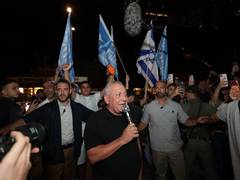
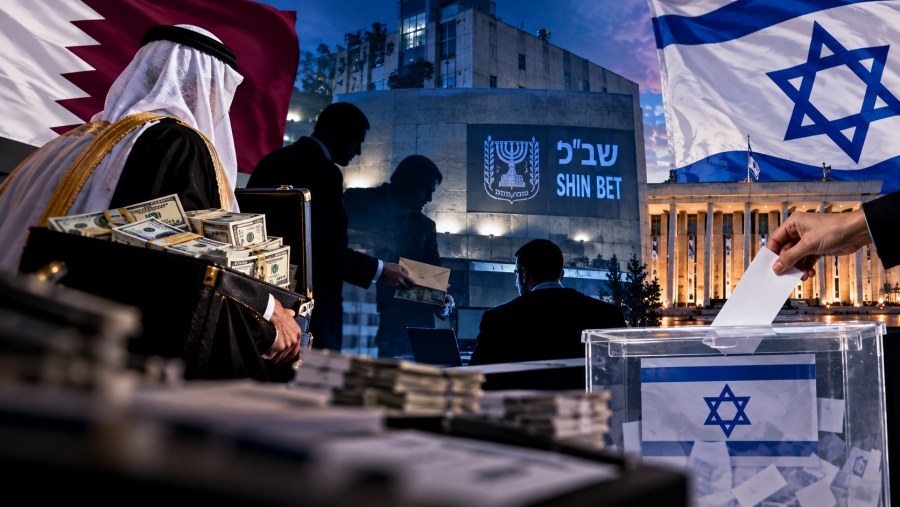
- Israeli government formation is likely to remain contested through the final vote count and Shin Bet inquiry. Partial results put Benjamin Netanyahu's bloc at 53 seats, Gadi Eisenkot's bloc at 48 and the Joint List and Ra'am together at 19, short of the 61 seats required for a majority. Noam Sohlberg directed the Shin Bet to investigate suspected foreign funding and requested findings within a week. The allegations remain contested: Netanyahu has alleged foreign interference, while Eisenkot warned against using unverified suspicions to undermine results or delay the 26th Knesset's inauguration. (Confidence: medium · ASSESSED)
- I&W: Confirm: final results due by 4 November leave both major blocs short of 61 seats and coalition talks remain unresolved. (0-14 days)
- I&W: Break: the Shin Bet reports findings within Sohlberg's one-week deadline and the parties publicly accept the final results without further challenge. (0-14 days)
- The IRGC's claim that it shot down a US MQ-1 near the Strait of Hormuz remains unverified. The supplied accounts are social-media reports repeating Iranian or IRGC claims; they include no independent US confirmation or independently verified evidence of wreckage. This assessment rests on thin, single-source reporting. (Confidence: low · REPORTED)
- I&W: Confirm: the Pentagon or US Central Command acknowledges the specific MQ-1 loss, or independently verified imagery identifies wreckage near the reported area. (0-14 days)
- I&W: Break: US officials explicitly deny the reported loss and no independently verified wreckage or other corroborating evidence appears. (0-14 days)
Outlook & scenarios
Mediation keeps strikes on hold (45%)
Through the week after 3 November, the US and Iran continue contact through Qatar and other mediators. No strike approval is announced, and the Vance-Rezaei proposal remains under discussion. Disagreement over nuclear requirements and Hormuz terms prevents a broader agreement.
Post-midterm strikes resume (40%)
After 3 November, Trump approves a limited US or joint US-Israeli campaign against Iran. The reported planning describes strikes on nuclear facilities, regime assets and civilian infrastructure, including power plants. Iran's stated warnings about retaliation raise the prospect of a wider confrontation.
Retaliation widens to Gulf infrastructure (15%)
A very unlikely but high-impact path follows a renewed strike with Iranian action against Gulf oil sites, undersea cables, data centres or AI facilities, targets Tehran has named in its warnings. The supplied reporting also includes a much more extreme IRGC-linked threat against neighbouring countries, but that claim comes from low-reliability social-media reporting and is not independently confirmed.
Recommendations
- Keep separate assessments for strike preparation and strike authorisation. Track official US and Israeli statements before revising the estimated timing or identifying whether a campaign would be US-only or joint.
- Seek primary US confirmation of the reported MQ-1 loss before treating it as established. Do not count social-media reposts of the IRGC claim as independent corroboration.
- Track Strait of Hormuz vessel-transit data separately from Qatari LNG production, export volumes and force majeure notices. Do not treat a report of lower exports as proof of a full closure.
- Track the Israeli Central Elections Committee's final count, the Shin Bet findings requested by Noam Sohlberg, and public positions from Netanyahu and Eisenkot. Keep allegations of foreign funding separate from established findings.
- Monitor whether the Vance-Rezaei channel produces a confirmed meeting and record the stated positions on nuclear talks and Hormuz separately. The current accounts differ on Tehran's response to the proposed framework.
Confidence & uncertainty
Overall confidence is high for the reported developments: election figures and the Shin Bet directive appear across wire, major-media and local reporting, while reporting on diplomatic outreach and US strike signals comes from major-media accounts. Confidence is lower on operational intent, the status of the Strait of Hormuz and Tehran's response to mediation. The alleged MQ-1 loss remains low confidence because the supplied accounts are social-media reports without independent confirmation.
Intelligence gaps
- [EEI 1.1 · UNCOVERED] Observed repositioning, sustained increases, or new forward basing of Iranian conventional or IRGC forces (armored units, missile batteries, aircraft, naval vessels) toward borders or regional launch points. Recommended collection: IMINT/satellite
- [EEI 1.2 · UNCOVERED] Hezbollah or other Iran-aligned proxy forces conducting mass mobilization, visible rocket/artillery emplacements, cross-border firing incidents, or preparations for cross-border operations from Lebanon, Syria, Iraq or Yemen. Recommended collection: HUMINT/ground ISR
- [EEI 1.3 · PARTIAL] Detection of increased missile/rocket/torpedo launch events attributable to Iran, Israel, or proxies (launch signatures, trajectories, impact points) indicating a sustained campaign rather than isolated strikes. Recommended collection: SIGINT/IMINT/air-defense radar
- [EEI 1.4 · UNCOVERED] Interdicted or observed shipments (air, sea, land manifests, seizures, satellite imagery of transfers) of advanced weapons or missile components from Iran toward proxy groups or forward staging points. Recommended collection: maritime/AIS
- [EEI 2.1 · PARTIAL] Satellite or on-the-ground imagery showing fires, damage, or operational shutdown at major oil export facilities, refineries, storage terminals, or key pipeline infrastructure in the Gulf and Red Sea. Recommended collection: IMINT/satellite
- [EEI 2.2 · PARTIAL] Commercial vessel incidents: AIS transponder shutdowns, distress signals, reported hull/engine damage, boardings, or confirmed attacks on tankers/merchant ships transiting the Strait of Hormuz, Bab al-Mandeb, or eastern Mediterranean. Recommended collection: maritime/AIS
- [EEI 2.4 · UNCOVERED] Rapid increases in war-risk insurance premiums for Middle East routes, shipping company advisories to avoid region, or major charter cancellations tied to the conflict. Recommended collection: financial/open-source
- [EEI 3.1 · UNCOVERED] Movement/arrival of major foreign military assets into the region: US carrier strike groups, amphibious ready groups, strategic bomber flights, Russian/Chinese naval taskings, or allied expeditionary units (visible in AIS, NOTAMs, satellite imagery, official releases). Recommended collection: IMINT/satellite
- [EEI 3.2 · UNCOVERED] Official expedited arms transfers, basing/overflight agreements, or declarations of operational support (formal government announcements, defense ministry releases, logistics flight manifests). Recommended collection: open-source/diplomatic
- [EEI 3.3 · UNCOVERED] Embassy evacuations, large-scale personnel movements, issuance of government travel bans/advisories, or multinational security alerts affecting foreign nationals and diplomatic posture in the region. Recommended collection: diplomatic/open-source
Red cell review: CONCUR WITH COMMENT
TLP:CLEAR