TLP:CLEAR · Disclosure is not limited.
Iran-Israel Tensions: Readiness, Hormuz Attacks and Regional Pressure
Time window: Last 1 day · Audience: General analyst · Type: Situation report · DTG: 2026-10-05 12:07Z · Overall confidence: HIGH
BLUF
Very likely, military readiness and shipping interference around the Strait of Hormuz will remain elevated over the next 0-14 days. Current reporting shows preparations and deployments, but does not establish a decision for a new Israeli or US strike on Iran. Houthi gains on the Taiz-Aden route add pressure, while Kpler data show regional crude exports recovering to pre-war levels despite vessel attacks.
Executive summary
Reporting on 4 and 5 October described Israeli military planning for a broad attack contingency against Iran and continued coordination with US Central Command on Iranian missile defence. Reports also put about 3,000 US troops in Israel and described additional US naval and personnel deployments to the Persian Gulf. In the Strait of Hormuz, UKMTO and maritime reporting recorded vessel attacks and an IRGC order for a tanker to turn back, but the projectile attacks remain unattributed. Kpler data show regional crude exports above the pre-war average on several days in late September. In Yemen, Houthi forces reportedly captured al Turbah and the Taiz-Aden supply route; the Houthis' claims of successful attacks on Saudi Aramco facilities remain contested. Israeli earthworks in Quneitra drew condemnation from Syria, Qatar, Jordan and Kuwait. We assess that pressure will persist, while the timing of any direct Iran-Israel exchange and the status of a proposed Hormuz reopening arrangement remain uncertain.
Change from previous assessment
Since the 23 September 2026 brief, the assessment has shifted from a broad warning about active US-Iran confrontation and Houthi maritime threats to a more specific picture of force movements, vessel attacks and territorial change in Yemen. New reporting describes at least six vessels struck in or around the Strait of Hormuz since 28 September, an IRGC order for a tanker to turn back, US carrier and personnel deployments, and Houthi capture of al Turbah and the Taiz-Aden supply route. Kpler data also show regional crude exports above the pre-war average on several late-September days, lowering confidence in a simple picture of sustained regional export collapse. The prior concern that an enforceable Iran-US arrangement was unlikely remains, but current reporting conflicts on whether Washington rejected or is still considering the seven-day reopening proposal. Reports of Israeli construction in Quneitra add a Syria-Israel friction point not covered in the prior judgments. The Houthi claims of successful attacks on Saudi Aramco facilities remain unverified and are treated as a competing account, not a confirmed change in Saudi infrastructure status.
Key judgments
- Very likely, Israel will sustain preparations for a direct confrontation with Iran over the next 0-14 days. Israeli security reporting describes contingency planning for a broad attack, including selection of targets intended to affect the Iranian regime, and continued coordination with US CENTCOM on defence against Iranian missile attacks. These reports show readiness, not a decision or order to strike. (Confidence: medium · ASSESSED)
- I&W: The IDF announces new Iran-specific operational measures, such as an additional missile-defence alert or an expanded readiness posture. (0-14 days)
- I&W: The Israeli government or IDF publicly announces a stand-down from Iran contingency planning and ends the reported coordination with CENTCOM on Iranian missile defence. (0-14 days)
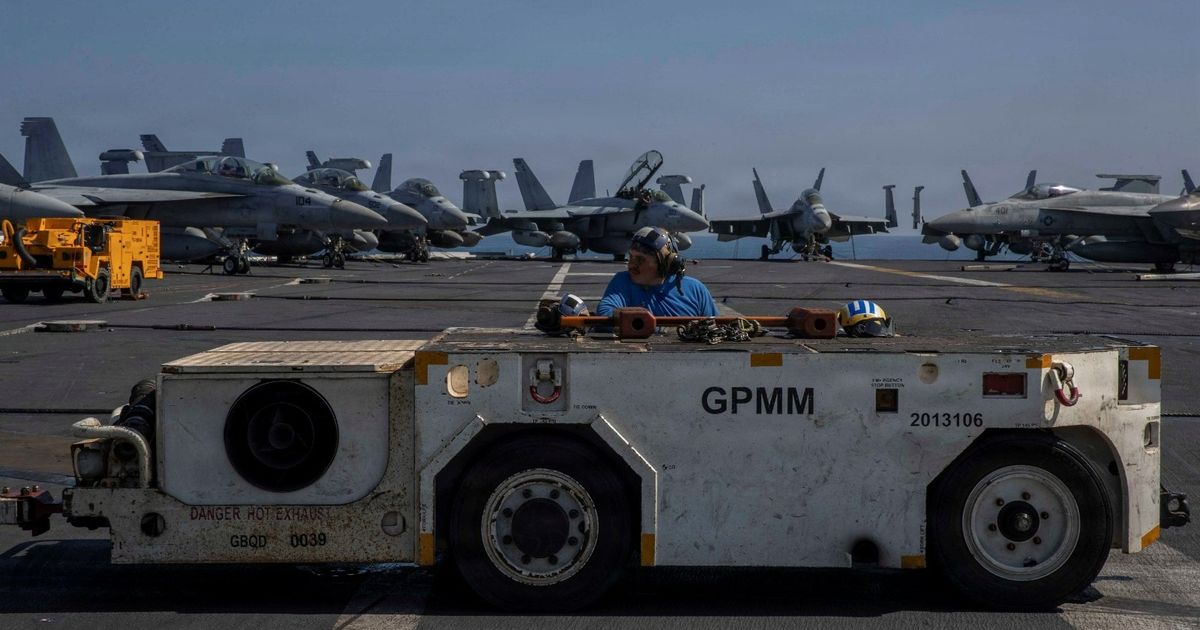
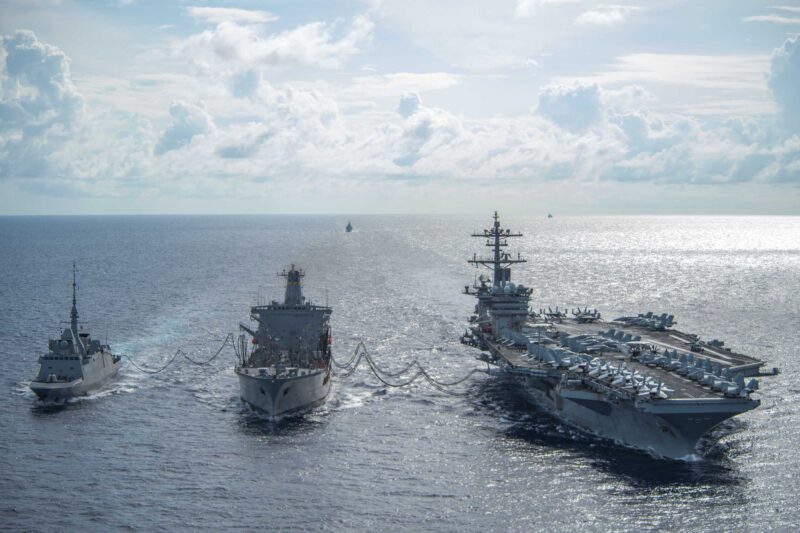
- US forces are expanding their reported posture in Israel and the Persian Gulf, but the deployments do not by themselves establish an imminent US strike decision. Reports put about 3,000 US troops in Israel, including personnel operating air-defence systems, and describe an additional carrier and 10,000 sailors and Marines deploying to the Persian Gulf. The USS Theodore Roosevelt and USS Makin Island amphibious readiness groups were also reported underway for the region, the latter with 2,200 Marines. The troop figure and deployment details rely partly on official or security-source reporting, and the mission and arrival schedule remain unclear. (Confidence: medium · REPORTED)
- I&W: The US Navy or CENTCOM confirms the USS Theodore Roosevelt's arrival in the Middle East or the arrival of the announced additional carrier and personnel. (0-14 days)
- I&W: The Pentagon or CENTCOM announces cancellation or diversion of the reported carrier deployment and planned additional forces or aircraft for Israel. (0-14 days)
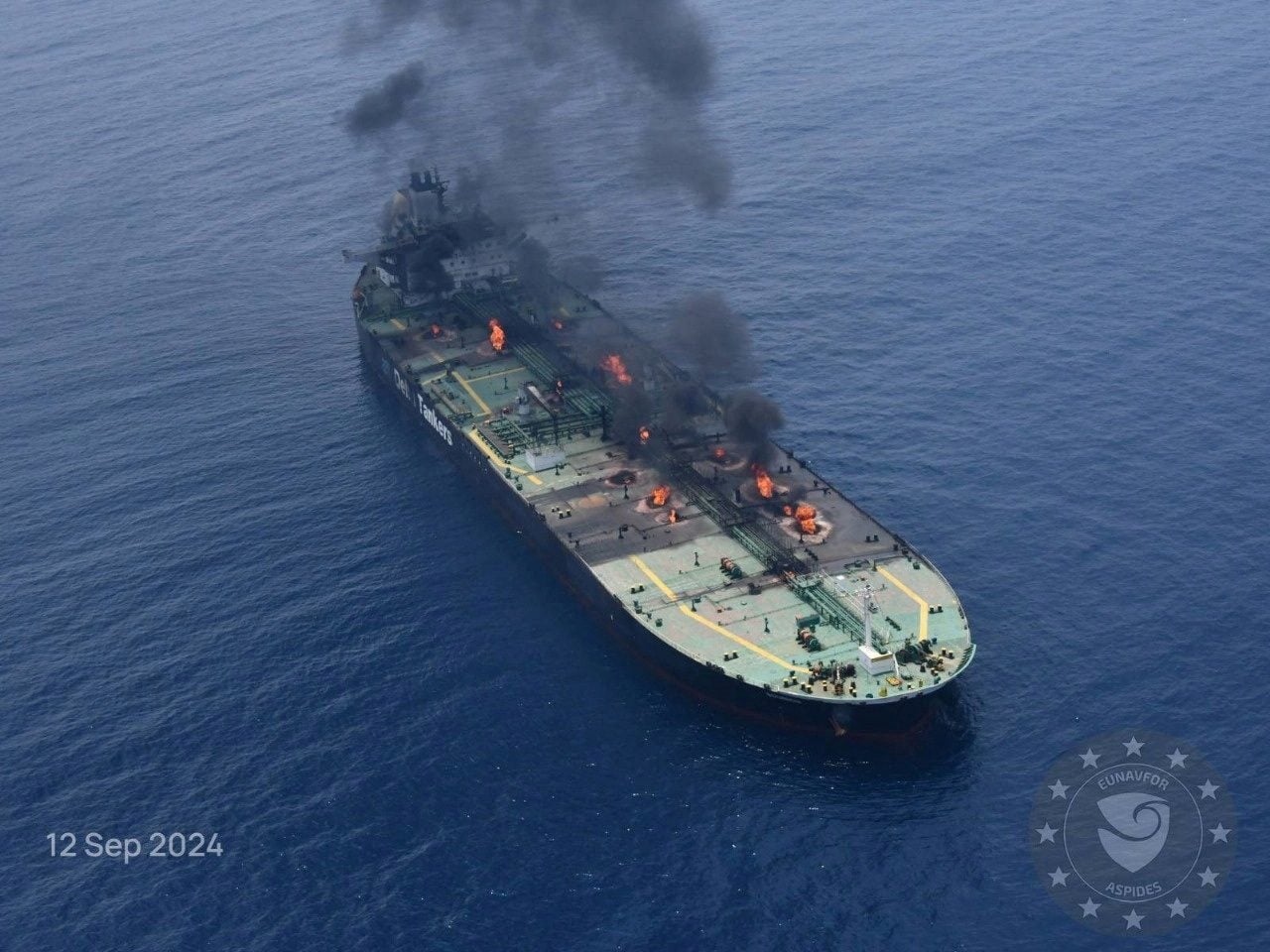
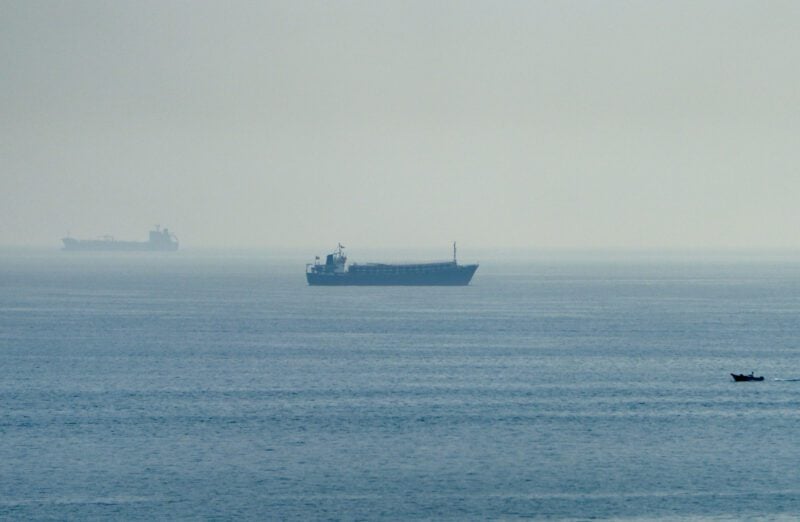
- Very likely, interference with shipping in the Strait of Hormuz will continue over the next 0-14 days, while a sustained total blockage is unlikely. Maritime reporting counted at least six vessels struck since 28 September, while Marisks separately reported at least seven tanker attacks. UKMTO also reported an IRGC order for a tanker to turn back on 5 October; the projectile strikes remain unattributed. Kpler reported a seven-day regional crude-export average of 18.5 million barrels per day on 1 October, including flows through the Strait of Hormuz, the Red Sea, terminals and ship-to-ship transfers in the Gulf of Oman. The regional total exceeded the pre-war average of 18 million barrels per day on several late-September days. These regional export figures do not measure Hormuz-only traffic, and Iranian commander Ali Fadavi's lower estimate is not directly comparable. (Confidence: medium · ASSESSED)
- I&W: UKMTO reports another projectile strike or IRGC order to turn back a vessel in the Strait of Hormuz. (0-14 days)
- I&W: The assessment is weakened if UKMTO records no further interference by 19 October and Kpler's seven-day regional crude-export average remains at or above 18 million barrels per day. (0-14 days)
- Likely, Houthi forces will retain pressure on the Taiz-Aden corridor over the next 0-14 days. Geolocated imagery and Yemeni sources reported Houthi captures of al Safiyah, al Mansora and al Turbah, as well as the Taiz-Aden supply route, on 4 October. Rashad al Alimi announced a counter-offensive, but ISW-CTP had not observed Yemeni government offensive operations at that time. Separately, Houthi claims of successful missile and drone attacks on Saudi Aramco facilities in Riyadh and Khurais remain unverified: the Saudi-led coalition disputed successful attacks near Riyadh, and reported fires do not establish that the 4 October attacks caused damage. (Confidence: medium · ASSESSED)
- I&W: Time-stamped geolocated imagery shows Houthi forces or checkpoints still controlling al Turbah or the Taiz-Aden supply route. (0-14 days)
- I&W: Yemeni government forces retake al Turbah and reopen the Taiz-Aden route, with the change confirmed by geolocated imagery or ISW-CTP reporting. (0-14 days)
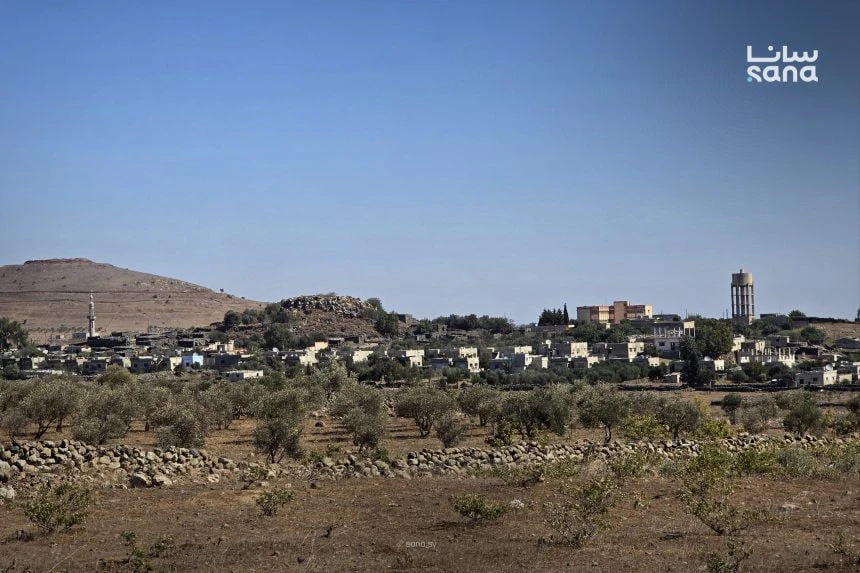
- Likely, Israeli earthworks and military positions along the Sufa 53 project near Al-Asha and Al-Rafid in Quneitra will sustain diplomatic friction between Israel and Syria over the next 1-3 months. Syria, Qatar, Jordan and Kuwait have condemned the project, and Syrian reporting describes continued excavation and observation posts. Most detail on the physical works comes from Syrian reporting, and accounts differ in how they locate the project; confidence in its precise footprint is low. (Confidence: low · ASSESSED)
- I&W: Damascus, Qatar, Jordan or Kuwait issues a new formal protest tied to additional Israeli excavation or positions at Al-Asha or Al-Rafid. (1-3 months)
- I&W: Syria or UNDOF reports that Israeli forces have halted the earthworks or removed positions along the reported route. (1-3 months)
- Unlikely, the United States and Iran will reach agreement on Tehran's seven-day Hormuz reopening plan within the next 0-14 days, although mediated contact is reported. Mohammad Bagher Ghalibaf said the Strait would remain closed until Washington accepted the plan, and Iranian Deputy Foreign Minister Kazem Gharibabadi said Tehran was studying Washington's response through mediators. Another report said Donald Trump had already rejected the proposal in late September. The conflicting accounts do not establish whether Washington's response was final. (Confidence: low · ASSESSED)
- I&W: Iran and the United States announce a specific reopening timetable, followed by UKMTO reports of regular commercial transits through the Strait. (0-14 days)
- I&W: Iran restates that the Strait will remain closed pending US acceptance, without a public US acceptance or joint timetable. (0-14 days)
Outlook & scenarios
Continued pressure with no new direct strike (55%)
Israel maintains Iran-focused readiness while US forces continue reported deployments and air-defence support. Vessel attacks and IRGC interference persist around the Strait of Hormuz, but regional crude exports continue through a mix of routes. Houthi forces retain pressure on the Taiz-Aden corridor, and the US-Iran reopening proposal remains unresolved.
Renewed direct Iran-Israel exchange (25%)
An Israeli strike on Iranian targets prompts Iranian retaliation against Israel or US interests. US forces in Israel and the Persian Gulf shift from reinforcement and defence to active protection of personnel and facilities. Shipping risks in the Strait of Hormuz rise as both sides signal resolve.
Limited Hormuz accommodation (15%)
Washington and Tehran settle on a defined sequence for the seven-day reopening plan. Commercial transits increase, but the agreement does not resolve the wider Iran-Israel confrontation or the disputes over sanctions and military pressure.
Multi-front shock (5%)
Independent evidence confirms damage to Saudi Aramco facilities at Riyadh or Khurais, followed by a Saudi military response in Yemen. A separate direct Israeli-Iranian exchange then widens the crisis. This low-probability, high-impact path places shipping, Saudi energy infrastructure and US forces at simultaneous risk.
Recommendations
- Maintain separate daily watchlists for Israeli-Iranian readiness, US force movements, Strait of Hormuz incidents, Houthi control around al Turbah and the Taiz-Aden route, and Israeli earthworks in Quneitra.
- Record UKMTO projectile-strike reports separately from reports of IRGC orders to turn vessels back. Do not attribute unidentified attacks to Iran without corroborating evidence.
- Track Kpler's regional crude-export totals separately from estimates of Hormuz-only traffic. Flag the route coverage and measurement period alongside each figure.
- Treat Houthi claims of successful attacks on the Riyadh and Khurais Aramco facilities as unverified until independent geolocated imagery or Saudi reporting confirms damage. Keep the coalition's denial and the reported fires' uncertain timing in the assessment.
- Distinguish Rashad al Alimi's announced counter-offensive from observed Yemeni government operations. Update the Taiz-Aden route assessment only when time-stamped imagery or reporting confirms a change in control.
- Assess the Hormuz proposal through observable terms and behaviour: a joint US-Iran timetable, changes to Iranian transit restrictions and UKMTO-confirmed commercial movements.
Confidence & uncertainty
Overall confidence is high for the situation-level picture because maritime reporting, UKMTO notices, Kpler shipping data, US deployment reporting and ISW-CTP's account of Houthi advances converge on continuing pressure across several fronts. Confidence is lower on specific claims: projectile-strike attribution remains unresolved, the Houthi claims of damage to Saudi Aramco sites are disputed, the US response to Iran's reopening proposal is inconsistently reported, and details of the Sufa 53 works rely heavily on Syrian reporting. The high headline confidence reflects corroboration of the broad pattern, not equal confidence in every event or forecast.
Intelligence gaps
- [EEI 1.1 · UNCOVERED] Unusual long-range missile/rocket transporter-launcher (TEL) movements, storage activation, or assembly activity at known IRGC missile sites or forward staging areas. Recommended collection: satellite/imagery
- [EEI 1.2 · PARTIAL] Orders, threat-alert messages, or changes in posture from IRGC, Quds Force, or senior Iranian military leadership indicating attack timelines or rules of engagement changes. Recommended collection: signals/ELINT and HUMINT
- [EEI 1.3 · UNCOVERED] Large-scale transfers, deliveries, or convoy movements of armed UAVs/drones, guided munitions, or spare parts from Iran into Lebanon (Hezbollah), Iraq, Syria, or Gaza. Recommended collection: air/aviation track and HUMINT
- [EEI 1.4 · UNCOVERED] Sustained changes in Israeli air-defense usage (SAM launches, radar activations), wide-area alerts, or NOTAMs indicating elevated imminent strike response. Recommended collection: air/aviation/NOTAMs and signals
- [EEI 2.1 · UNCOVERED] Concentration, repositioning, or sortie patterns of Iranian naval/IRGC patrol boats and fast-attack craft near shipping chokepoints or commercial lanes. Recommended collection: maritime/AIS and satellite/imagery
- [EEI 2.3 · UNCOVERED] Insurance market indicators: sudden spikes in war-risk or hull insurance premiums for routes through the Red Sea, Suez corridor, or Persian Gulf, and major carriers announcing route changes. Recommended collection: financial/market and commercial shipping notices
- [EEI 2.4 · PARTIAL] Port closures, naval escorts requested by commercial operators, or formal rerouting advisories issued by major shippers (e.g., Maersk, Hapag-Lloyd) for regional transits. Recommended collection: commercial/OSINT
- [EEI 3.2 · PARTIAL] Formal diplomatic actions: emergency UNSC votes, sanctions announcements, high-level ministerial visits, or public mediation offers by external powers or regional actors. Recommended collection: diplomatic/OSINT
- [EEI 3.3 · UNCOVERED] Confirmed arms transfers, expedited weapons shipments, or transfer authorizations to Israel, Iran, or their proxies (aircraft parts, munitions, air defenses). Recommended collection: customs/INTEL and HUMINT
- [EEI 3.4 · UNCOVERED] Issuance of travel warnings, embassy evacuations or reductions, and closure of diplomatic missions by major capitals indicating escalation risk or shifted threat assessments. Recommended collection: OSINT/diplomatic
Cited sources
[1] Asharq Al-Awsat (asharq.com) · 3 آلاف جندي أميركي في إسرائيل. واستعدادات لتعزيز القوات تحسباً لتصعيد مع إيران (B) · Sun Oct 04 2026 22:15:37 GMT+0000 (Coordinated Universal Time) · sha256:784698da8954 [2] gCaptain (republishing Bloomberg content) · US Adds Carrier And 10,000 Troops To Mideast (B) · Sat Oct 03 2026 17:49:24 GMT+0000 (Coordinated Universal Time) · sha256:c8f797b2f59c [3] arabic.rt.com · تقرير: 3000 جندي أمريكي في إسرائيل واستعدادات لتصعيد محتمل مع إيران (F) · Mon Oct 05 2026 07:49:53 GMT+0000 (Coordinated Universal Time) · sha256:7ba6bcb56e33 [4] gCaptain · Six Vessels Hit in Strait of Hormuz Since Sunday (C) · Fri Oct 02 2026 19:02:06 GMT+0000 (Coordinated Universal Time) · sha256:0ec7b6b82396 [5] gCaptain (republishing Reuters content) · Middle East Crude Oil Exports Exceed Pre-War Levels But Attacks Increase (B) · Mon Oct 05 2026 01:26:11 GMT+0000 (Coordinated Universal Time) · sha256:50308fa04adc [6] The Jerusalem Post · Live Updates: Latest from Israel, Iran, and the Middle East | The Jerusalem Post (A) · Mon Oct 05 2026 04:56:12 GMT+0000 (Coordinated Universal Time) · sha256:be01f05fb3ee [7] Al Jazeera · Middle East oil exports surpass pre-war levels despite tensions, data shows (A) · Mon Oct 05 2026 05:20:57 GMT+0000 (Coordinated Universal Time) · sha256:b9b6447f69e1 [8] Institute for the Study of War (ISW) / Critical Threats Project (CTP) at the American Enterprise Institute · Iran Update, October 4, 2026 (B) · Sun Oct 04 2026 20:45:37 GMT+0000 (Coordinated Universal Time) · sha256:c2ac3a1ced1d [9] Sunday Guardian Live · US-Israel-Iran War Latest Live News: Houthis Claim Attacks on Saudi Aramco Sites in Riyadh and Khurais as Iran’s ‘Porcupine Strategy’ Seeks to Deter New US Strikes Amid Rising Military Tensions (B) · Sun Oct 04 2026 14:00:52 GMT+0000 (Coordinated Universal Time) · sha256:03c6d64f422b [10] Arab News · Arab states condemn Israeli expansion of ‘Sufa 53 Line’ in Syria (A) · Mon Oct 05 2026 01:33:10 GMT+0000 (Coordinated Universal Time) · sha256:9b9b12680b3c [11] Yeni Şafak (English edition) · Syria condemns Israeli 'Sofa 53' project in Golan buffer zone (B) · Sun Oct 04 2026 19:59:32 GMT+0000 (Coordinated Universal Time) · sha256:861b411f3e6c
Source content hashes were computed at collection time; the cited text is preserved unmodified for the life of this product.
Red cell review: CONCUR WITH COMMENT
TLP:CLEAR