TLP:CLEAR · Disclosure is not limited.
Iran-Israel Tensions: Yemen Offensive and Hormuz Shipping Risks Intensify
Time window: Last 1 day · Audience: General analyst · Type: Situation report · DTG: 2026-10-06 10:11Z · Overall confidence: HIGH
BLUF
Repeated tanker attacks and an IRGC warning keep Strait of Hormuz shipping risk acute, while commercial vessels continue to transit. Saudi-backed forces have launched Operation Yemen Dawn near Bab al-Mandeb, but claims of territorial control and Houthi strikes inside Saudi Arabia remain contested or unverified. Israeli preparations and reports of additional US forces in Israel indicate heightened readiness, not a decision to strike Iran.
Executive summary
From 4 to 6 October 2026, Saudi-backed Yemeni forces reported advances near Bab al-Mandeb, Dhubab and Mokha during Operation Yemen Dawn. The Saudi-led coalition said about 100 fighter jets supported the operation and 324 high-value targets had been destroyed. The Houthis deny government gains and report advances near Taiz. In the Strait of Hormuz, maritime authorities and trade reporting describe repeated tanker strikes by unknown projectiles and an IRGC warning that forced a tanker to turn back near Khasab, Oman. Some incident dates differ across reports, and commercial transits continue. The Houthis claim attacks on King Khalid International Airport, an Aramco refinery in Rabigh and Abha Airport, but damage has not been independently confirmed. Israeli media report preparations for possible action against Iran and additional US deployments to Israel; these reports do not establish a decision to strike.
Change from previous assessment
Since the 5 October brief, reporting places Operation Yemen Dawn in an active Saudi-backed offensive phase, with claims of about 100 fighter jets, 324 targets struck and advances near Dhubab, Bab al-Mandab and Mokha. Houthi denials and reported gains near Taiz make the control picture more contested; new Houthi claims name King Khalid International Airport, Rabigh and Abha, but damage remains unverified. The Hormuz assessment now includes reports of five shipping incidents on 5 October and an IRGC order that turned a tanker back near Khasab, alongside continued transit and high freight costs. New reporting also describes US blockade enforcement against Iranian ports and about 3,000 US personnel in Israel, with possible additional forces and aircraft. The prior assessment already treated Hormuz shipping as dangerous and Houthi claims of Saudi damage as unconfirmed; those judgments remain, with additional evidence and continued uncertainty over dates, attribution and territorial control.
Key judgments
- Israel's military is likely maintaining preparations for renewed action against Iran, but an Israeli or US strike before the November US midterm elections is unlikely on current reporting. Israeli media report IDF work to identify targets in Iran and close coordination with US Central Command. Walla reports about 3,000 US personnel in Israel and preparations to add forces and aircraft. These are reports of readiness, not a decision to strike. The assessment of low likelihood before November conflicts with the preparations reporting, and much of the detail relies on Israeli media, limiting confidence. (Confidence: medium · ASSESSED)
- I&W: Confirm: reports or official statements document additional US aircraft or personnel arriving in Israel as part of preparations for a possible Iran confrontation. (0-14 days)
- I&W: Break: Israeli or US officials state that the reported deployments and Iran-related preparations have been cancelled, with no strike planning continuing through the end of October. (0-14 days)
- Saudi-backed Yemeni forces are likely to sustain Operation Yemen Dawn around Bab al-Mandab and Dhubab over the next 0-14 days, but current reporting does not establish government control of the strait or Mokha. Rashad al-Alimi announced the offensive on 4 October; the Saudi-led coalition reported about 100 fighter jets and 324 targets struck, while Yemeni government forces claimed advances near Bab al-Mandab, Dhubab and Mokha. The Houthis deny losing ground and report gains near Taiz. These opposing battlefield accounts are largely claims by parties to the fighting, which limits confidence in the territorial picture. (Confidence: medium · ASSESSED)
- I&W: Confirm: independent reporting verifies that government forces hold Dhubab airport and the Dhubab-Mokha road, and retain Mokha. (0-14 days)
- I&W: Break: independent reporting verifies a Houthi recapture of Dhubab, Mokha or positions controlling access to Bab al-Mandab. (0-14 days)
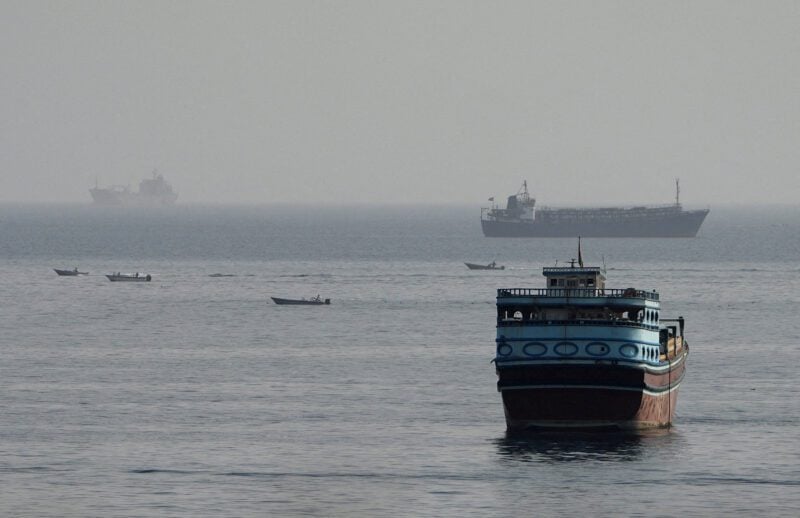
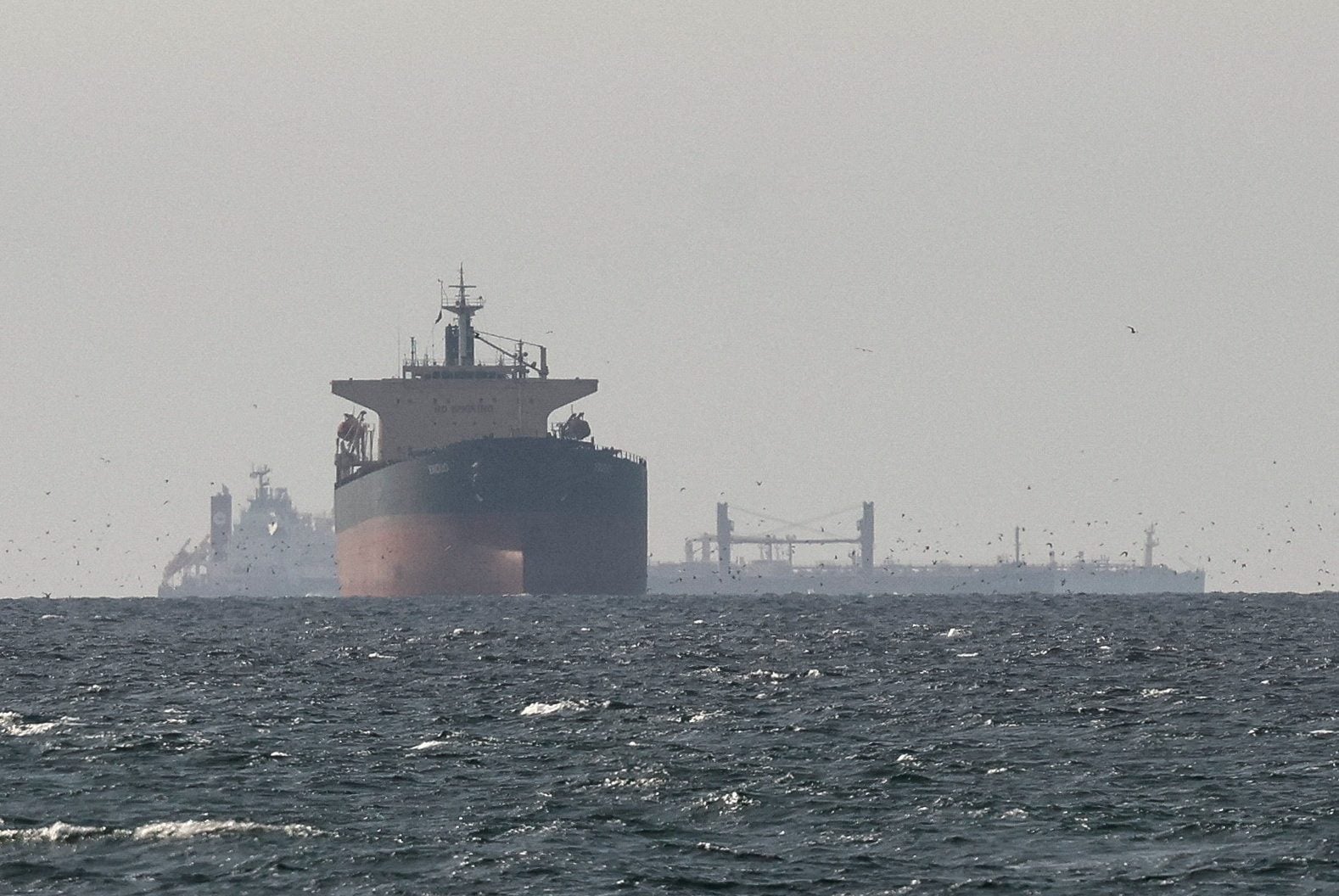
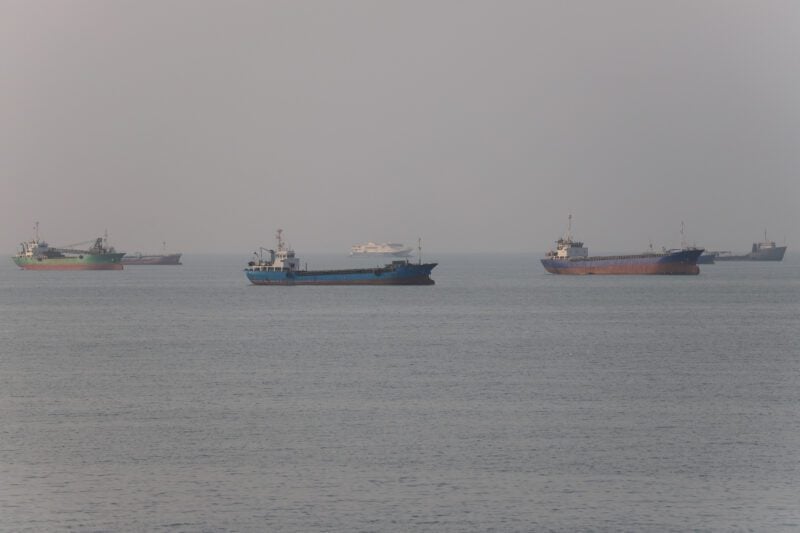
- Commercial vessels are very likely to remain exposed to attack or coercion in the Strait of Hormuz over the next 0-14 days, although current reporting does not support describing the strait as fully closed. UKMTO and JMIC reporting, alongside trade reports, document repeated tanker strikes by unknown projectiles and an IRGC order that turned a tanker back near Khasab. Reported crude flows and continued Gulf exports show that vessels are still transiting. Incident dates vary across some reports, and responsibility for the projectile attacks remains unresolved. (Confidence: medium · ASSESSED)
- I&W: Confirm: UKMTO or JMIC reports another tanker strike or an IRGC-directed turn-back in the Strait of Hormuz. (0-14 days)
- I&W: Break: UKMTO and JMIC report no new attacks or harassment for 14 consecutive days, while Kpler's seven-day flow estimate returns to pre-war levels. (0-14 days)
- It is likely that maritime risk premiums and transport costs will remain elevated over the next 1-3 months despite partial recovery in crude exports. Brent was reported above $100 per barrel, the Brent-WTI spread above $11, and VLCC rates for Middle East-to-Asia transport above $1.2 million per day. Kpler data also report substantial Hormuz flows and Saudi exports through the strait, while other reporting says regional exports briefly exceeded pre-war levels. The different measures cover different routes and dates, which limits confidence in the scale and duration of the cost pressure. (Confidence: medium · ASSESSED)
- I&W: Confirm: Brent remains above $100 per barrel, the Brent-WTI spread remains above $11, and Middle East-to-Asia VLCC rates remain above $1.2 million per day. (1-3 months)
- I&W: Break: Kpler reports Hormuz flows at pre-war levels for seven consecutive days and VLCC rates fall materially below the reported $1.2 million per day. (1-3 months)
- It is unlikely that current public reporting independently establishes damage at King Khalid International Airport, the Aramco refinery in Rabigh or Abha Airport from Houthi attacks. The Houthis claim to have targeted these sites, but Saudi authorities have not confirmed the extent of damage and reporting says the attack claims remain unverified. The damage assessment rests on claims by a party to the conflict and an absence of independent confirmation, so confidence is low. (Confidence: low · REPORTED)
- I&W: Confirm: Saudi authorities or independent imagery document physical damage at King Khalid International Airport, the Rabigh refinery or Abha Airport. (0-14 days)
- I&W: Break: Saudi authorities state that the named sites were not damaged, with independent reporting corroborating that assessment. (0-14 days)
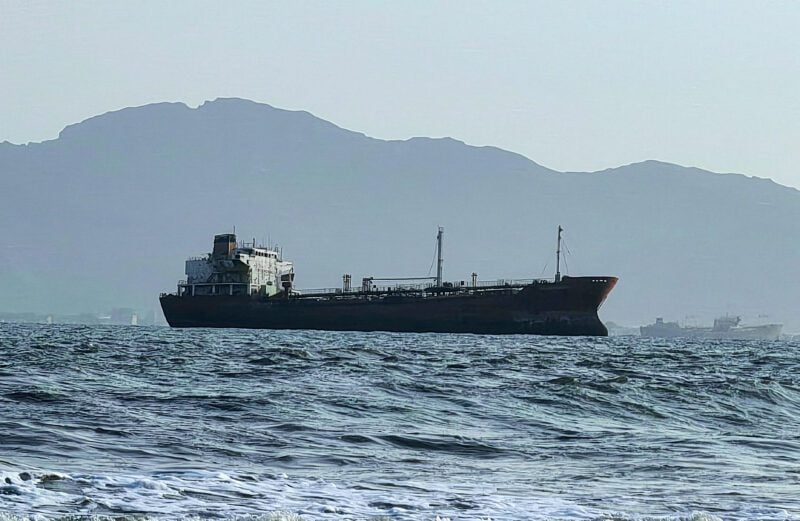
- US forces are very likely continuing to enforce the blockade against vessels attempting to enter or leave Iranian ports, while the claim that no Iranian oil remains on the water is not established. CENTCOM reported redirecting its 130th commercial vessel on 5 October. Preliminary Bloomberg vessel-tracking estimates put Iranian crude loadings at zero for September, but UANI reports at least 50 laden tankers near Iran, including vessels near Kharg Island. The enforcement reporting is direct, while the tanker counts come from a trade report citing UANI and the zero-loadings estimate is preliminary, so confidence is medium. (Confidence: medium · ASSESSED)
- I&W: Confirm: CENTCOM reports further vessel redirections and shipping intelligence continues to record no crude loadings at Kharg Island. (0-14 days)
- I&W: Break: shipping intelligence reports tankers loading Iranian crude at Kharg Island and departing Iranian ports. (0-14 days)
Outlook & scenarios
Sustained pressure across Yemen and Hormuz (55%)
Likely: Saudi-backed Yemeni forces continue Operation Yemen Dawn near Dhubab and Bab al-Mandab, while the Houthis contest reported government gains and continue issuing claims of attacks on Saudi sites. Commercial vessels keep transiting the Strait of Hormuz but remain exposed to strikes and IRGC coercion. Oil prices and shipping costs remain elevated.
Renewed direct Iran-Israel confrontation (25%)
Unlikely: Israeli preparations for action against Iranian targets lead to renewed strikes, independently or with US coordination, followed by an Iranian response. Reports of additional US forces in Israel increase the regional stakes, but current reporting does not establish a decision to strike.
Reduced maritime pressure without a Yemen settlement (15%)
Unlikely: tanker attacks and IRGC harassment decline, allowing Hormuz transits and crude flows to recover further, while fighting between Saudi-backed Yemeni forces and the Houthis continues around Bab al-Mandab, Dhubab and Taiz. US-Iran talks remain deadlocked.
Verified Houthi damage triggers a wider Saudi response (5%)
Very unlikely, high impact: independent confirmation of serious damage at King Khalid International Airport or the Rabigh Aramco refinery turns current Houthi claims into a verified attack. Saudi Arabia's announced collective deterrence under the Mecca Alliance expands into a broader response, increasing pressure on Saudi sites and commercial shipping near Bab al-Mandab.
Recommendations
- In reporting on maritime restrictions, distinguish the US blockade enforcement against Iranian ports from Iran's asserted restrictions on Hormuz. Do not describe Hormuz as fully closed while reporting continues to show commercial transits and crude flows.
- Maintain a daily Yemen control map that separates government claims, Houthi denials and independently verified positions. Track Dhubab airport, the Dhubab-Mokha road, Mokha and access to Bab al-Mandab; do not treat control as established from a single party's statement.
- Keep the claimed Houthi strikes on King Khalid International Airport, Rabigh and Abha in an unverified category until Saudi confirmation or independent evidence establishes damage. Record separately any confirmed disruption to airport or refinery operations.
- Track UKMTO and JMIC incident notices alongside Kpler Hormuz flow estimates. Report attacks, coercive turn-backs and transit volumes as separate measures, and flag the disputed incident dates.
- Monitor Brent, the Brent-WTI spread and Middle East-to-Asia VLCC rates alongside export-flow data. This will help distinguish continuing maritime cost pressure from a complete loss of crude transit.
- For Iran-related military warning, report confirmed US deployments and Israeli preparations separately from assessments of a strike decision. Reassess if additional US aircraft or personnel arrive in Israel or if official statements change.
Confidence & uncertainty
Overall confidence is high in the broad picture of repeated Hormuz incidents, continued commercial movement, the launch of Operation Yemen Dawn and elevated oil and freight costs. Maritime incidents are reported through UKMTO and JMIC and appear in multiple trade reports; market reporting provides specific price and freight figures. Confidence is lower on Yemen's territorial control, the scale of claimed Houthi damage in Saudi Arabia and whether Israeli preparations will lead to a strike, because combatant claims conflict, some reports are unverified and several posture details rely on limited media sourcing.
Intelligence gaps
- [EEI 1.1 · UNCOVERED] Number, type, launch times, and trajectories of ballistic missiles, cruise missiles, armed UAV strikes, and combat-air sorties launched by Iranian or Israeli forces toward the other's territory or forward bases within a 72-hour window. Recommended collection: signals/intel
- [EEI 1.2 · PARTIAL] Observable changes in Israeli and Iranian force posture: mobilization or reserve call-up orders, unit road/rail movements, dispersal or sortie rates of air squadrons, redeployment of air-defense batteries, and activation of civil-defense alerts or sirens in major population centers. Recommended collection: open-source/media
- [EEI 1.3 · PARTIAL] Indications of strike authorization or targeting preparations in Iranian or Israeli command chains: authenticated public orders by senior commanders, detected increases in encrypted communications consistent with targeting, or visible movement of strike munitions to launch/storage sites. Recommended collection: signals/intel
- [EEI 2.1 · UNCOVERED] Counts, launch locations (coordinates), weapons types, and assessed damage from rocket/missile/drone strikes originating from Lebanon into northern Israel attributed to Hezbollah or allied groups. Recommended collection: open-source/media
- [EEI 2.2 · UNCOVERED] Reported attacks by Iranian-backed militias in Iraq and Syria: rocket/IED strikes on bases hosting US/coalition or Israeli personnel, documented militia unit movements toward borders, and captured movement or transfer of weapons systems to forward militia positions. Recommended collection: human
- [EEI 2.3 · PARTIAL] Maritime harassment or attacks by proxies (e.g., Houthis): incidents of missile/rocket strikes against commercial vessels, small-boat swarm attacks, discovery or detonation of naval mines, and corresponding AIS anomalies in the Red Sea, Gulf of Aden, or southern Arabian Gulf. Recommended collection: maritime/AIS
- [EEI 3.1 · PARTIAL] Movements and arrival dates of foreign military assets into the region: carrier strike groups, amphibious ships, surface combatants, strategic airlift/tanker deployments, and air/sea patrol patterns by US, European, Russian, or regional militaries. Recommended collection: imagery/satellite
- [EEI 3.2 · PARTIAL] Concrete diplomatic and political actions: emergency UN/Arab League meetings called, official embassy evacuation orders, public declarations of intent to interpose or protect shipping/airspace, and newly announced sanctions or arms-transfer approvals tied to the conflict. Recommended collection: diplomatic
- [EEI 3.3 · PARTIAL] Immediate commercial and market indicators: rerouting of commercial tankers and container vessels (e.g., avoidance of Bab el-Mandeb or Strait of Hormuz), sudden spikes in war-risk insurance premiums for regional sea lanes, temporary port closures, and near-term price moves in regional benchmark crude tied to incidents. Recommended collection: financial/market
Cited sources
[1] World Israel News · Escalation ahead? US to bolster troops, military assets in Israel (D) · 6 October 2026 · sha256:ebb491b36c6a [2] Qatar Tribune · Israel prepares for military action against Iran: Report (B) · 6 October 2026 · sha256:4a318bf3f323 [3] BBC · Yemeni military says it has retaken Mokha and 'secured' Red Sea waterway (A) · 5 October 2026 · sha256:ed6cabf000bf [4] sundayguardianlive.com · US-Israel-Iran War Latest Live News: Iran Executes 2 Men Over Police Deaths, Hormuz Tensions Rise; Check Latest Middle East Updates (F) · 5 October 2026 · sha256:def6b6d640d9 [5] Al-Qabas (الكويت) · تحرِّر المخا و»باب المندب«. وتنفِّذ هجوماً إستراتيجياً عل (B) · sha256:368fce0ade2c [6] Sunday Guardian Live · US-Israel-Iran War Latest Live News: Two Saudi Airports Targeted As Houthi Tensions Escalate, Riyadh, Abha Strikes Reported Amid Yemen Conflict (B) · 6 October 2026 · sha256:2c8e4da62a18 [7] gCaptain (reprinting Reuters) · Saudi-Backed Forces Claim Control of Bab el-Mandeb Strait (A) · 5 October 2026 · sha256:13a171d6d7bc [8] gCaptain · Five Hormuz Incidents Reported Monday as Tanker Attacks Mount (C) · 5 October 2026 · sha256:7d29fb9ec75b [9] gCaptain · More Tankers Hit in Hormuz as IRGC Orders Ship to Turn Back (C) · 5 October 2026 · sha256:8314fbc59ea7 [10] Sunday Guardian Live · US-Israel-Iran War Latest Live News: Tanker Turns Back in Strait of Hormuz After IRGC Warning as US Senator Blames ‘Trump’s Economy’ for Squeezed Budgets Ahead of Midterms (B) · 5 October 2026 · sha256:bed662788d94 [11] gCaptain · Opinion: Oil's New Problem Isn't Supply. It's Logistics (C) · 5 October 2026 · sha256:928c997559ab [12] gCaptain (republishing Bloomberg) · Kuwait Oil Output at 75% of Prewar as Hormuz Transits Rise (B) · 5 October 2026 · sha256:5957bc21d3a0 [13] Sunday Guardian Live · US-Israel-Iran War Live News: Oil Price Rises as Traders Weigh Middle East Tensions; Brent Crude Up 27 Cents or 3% at $100 Barrel & US West Texas Intermediate Crude 30 Cents or 0.3 % to $89 Barrel (B) · 6 October 2026 · sha256:c8aee7da9a5c [14] gCaptain (republishing Bloomberg) · US Blockade Bottles Up Dozens of Iranian Tankers, Nonprofit Says (C) · 6 October 2026 · sha256:5d235cdcec4f
Source content hashes were computed at collection time; the cited text is preserved unmodified for the life of this product.
TLP:CLEAR