TLP:CLEAR · Disclosure is not limited.
Iran-Israel-US Conflict Escalation: Direct Strikes and Blockade Enforcement Intensify on 17 July 2026
Time window: Last 1 day · Audience: General analyst · Type: Situation report · DTG: 2026-07-17 16:43Z · Overall confidence: MEDIUM
BLUF
Iran directly targeted US bases in Kuwait, Qatar, and Bahrain, and announced the closure of the Strait of Hormuz on 17 July. The United States responded with strikes against bridges, airports, and communications infrastructure in Iran while enforcing a naval blockade, with both sides reporting casualties and economic disruption. Overall confidence remains medium due to corroborated military actions but conflicting casualty assessments.
Executive summary
Military exchanges between Iran and the United States escalated on 17 July with confirmed Iranian strikes against US bases in Gulf states and reciprocal US actions against Iranian infrastructure. Iran announced closure of the Strait of Hormuz while US forces boarded a tanker and conducted multiple airstrike waves targeting bridges and communications facilities. Both sides reported casualties with Iranian authorities claiming 224 civilian deaths and Israeli sources reporting 21 Israeli fatalities. Shipping disruptions intensified with transit volumes through Hormuz cut by more than half, and Brent crude rose to approximately $86 per barrel. Diplomatic statements indicate Israel remains outside the immediate conflict zone as Tehran focuses its retaliation on US assets.
Change from previous assessment
Several critical developments have occurred since yesterday's brief. Confirmed Iranian strikes now include Qatar as an additional Gulf state on 17 July, expanding from the three countries cited in prior reporting. Iran announced closure of the Strait of Hormuz, a significant policy shift from the previous day's 'threats' to do so. The United States expanded its strikes to include infrastructure targets in Semnan Province, Iranshahr Airport in Sistan and Baluchestan, and communications towers in Bandar Abbas. Most notably, both sides have provided updated casualty figures with Iranian authorities reporting higher civilian fatalities. Transits through the Strait of Hormuz have decreased by more than half as measured by vessel-tracking data. Confidence in the assessment of military exchanges has increased from low to medium due to corroboration from multiple sources, while confidence regarding casualty figures remains lower due to persistent discrepancies.
Key judgments
- Very likely Iran targeted US military installations in Kuwait, Qatar, and Bahrain on 17 July 2026, including a power and desalination plant in Kuwait and causing explosions in Doha. (Confidence: high · REPORTED)
- I&W: New damage assessments from Kuwaiti or Qatari authorities confirming specific installations hit (0-3 days)
- I&W: Satellite imagery showing damage to confirmed power generation or water desalination facilities in Kuwait (0-3 days)
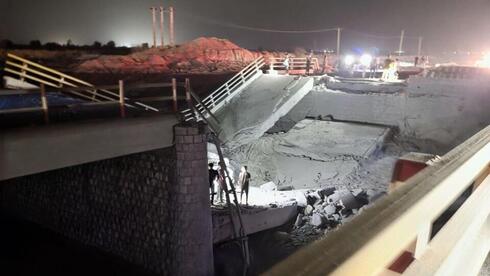
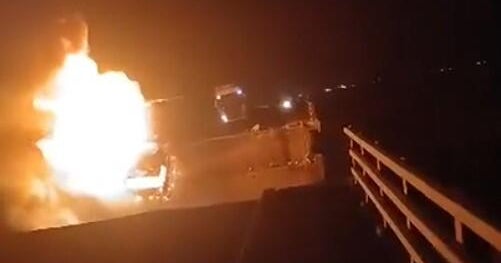
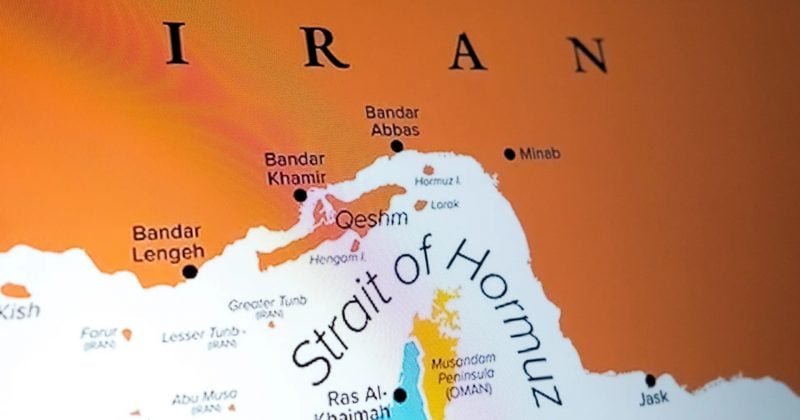
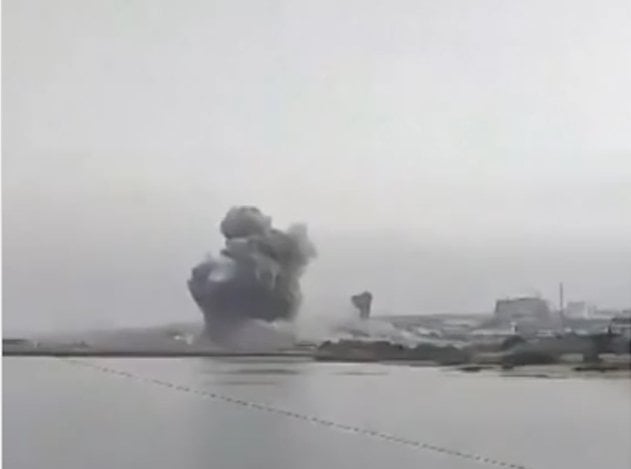
- Very likely US forces conducted multiple strike waves against Iranian infrastructure on 17 July, targeting bridges, Iranshahr Airport in Sistan and Baluchestan, and a communications tower in Bandar Abbas. (Confidence: high · REPORTED)
- I&W: Commercial satellite imagery showing visible damage to bridge structures or airport facilities in specified locations (0-3 days)
- I&W: Iranian official statements confirming specific infrastructure damage in Sistan and Baluchestan or Bandar Abbas (0-14 days)
- Almost certainly Iran announced closure of the Strait of Hormuz effective immediately on 17 July 2026 as retaliation for US military actions. (Confidence: high · REPORTED)
- I&W: Verified Iranian maritime notifications to international shipping organisations regarding closure (0-24 hours)
- I&W: Zero commercial vessel transits through Strait of Hormuz reported in vessel-tracking data for 24-hour period (0-3 days)
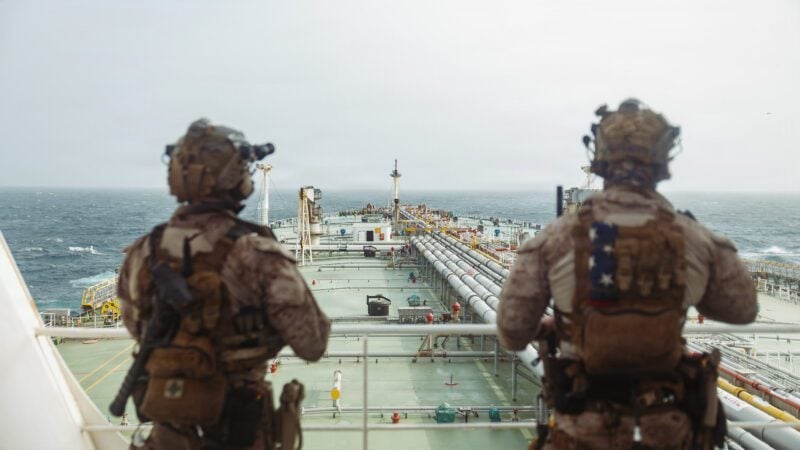
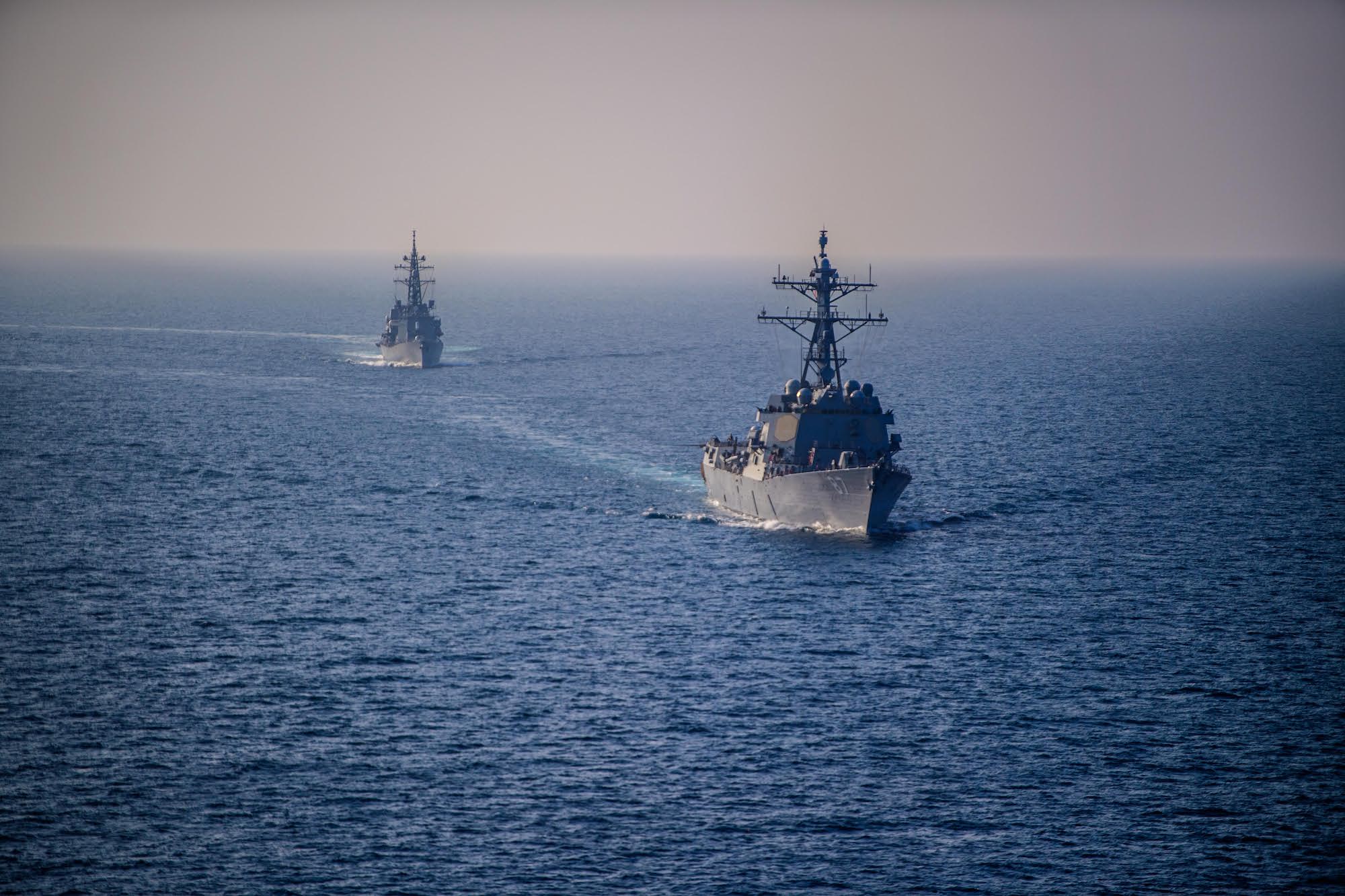
- Very likely US forces boarded the Iranian-linked tanker Wen Yao in the Gulf of Oman on 17 July and have redirected or disabled vessels attempting to bypass the naval blockade. (Confidence: high · REPORTED)
- I&W: Maritime satellite imagery showing US naval vessels alongside Wen Yao with boarding team visible (0-3 days)
- I&W: Shipping company reports of additional vessel diversions or seizures in Gulf of Oman (0-7 days)
- Almost certainly transits through the Strait of Hormuz have decreased by more than 50 percent since the conflict resumed, with confirmed crossings falling to eight on 16 July. (Confidence: high · REPORTED)
- I&W: Vessel-tracking data showing transits remaining below previous baseline for 7 consecutive days (0-14 days)
- I&W: Saudi Arabian officials confirming diversion of 70 percent of energy exports to Red Sea port of Yanbu (0-3 days)
- Israeli officials assess that Tehran is highly likely to continue avoiding direct strikes against Israel as long as the United States does not significantly escalate attacks on Iranian energy infrastructure. (Confidence: high · ASSESSED)
- I&W: Iranian military statements specifically threatening Israeli targets (0-14 days)
- I&W: New Israeli air defence alerts triggered without corresponding Iranian missile launches toward Israel (0-7 days)
- Unlikely Iran and the United States will achieve a quick de-escalation as both sides have signalled continued military operations with Tehran warning of 'effective and targeted strikes' until calm is restored. (Confidence: medium · ASSESSED)
- I&W: Joint statement from US and Iranian diplomatic channels agreeing to immediate cease-fire (0-14 days)
- I&W: Iranian announcement withdrawing threats targeting Bab al-Mandeb or Red Sea shipping routes (0-7 days)
- Almost certainly Iran has suffered significant casualties with Iranian authorities reporting 224 deaths, over 90 percent civilian, while Israeli sources report 21 Israeli fatalities from Iranian attacks. (Confidence: medium · REPORTED)
- I&W: International Committee of Red Cross verification of hospitalised casualties in Iranian border provinces (1-3 months)
- I&W: United Nations mission reporting independently verified civilian casualty figures (1-3 months)
- Highly likely Iran has coordinated with Yemen's Houthis to prepare for potential closure of Red Sea oil routes should US strikes expand to Iranian power infrastructure. (Confidence: medium · ASSESSED)
- I&W: Satellite imagery showing Houthi missile and drone assets deployed near Bab al-Mandeb (0-14 days)
- I&W: Confirmed Houthi announcement preparing to target international shipping in Bab al-Mandeb (0-7 days)
Outlook & scenarios
Continued Asymmetric Escalation (45%)
Both sides maintain current patterns of retaliation without Israel entering the conflict. Iran focuses attacks on US military assets in the Gulf while avoiding direct strikes on Israeli territory, and the United States continues limited precision strikes against Iranian military infrastructure. The Strait of Hormuz remains functionally closed to commercial traffic with shipping diverted via the Red Sea, maintaining Brent crude above $85 per barrel through October 2026. Diplomatic channels between regional mediators and the United States continue but produce no significant de-escalation.
Limited Wider Conflict (30%)
Iran significantly escalates after additional US strikes against energy infrastructure, directing Houthi forces to close the Bab al-Mandeb Strait and targeting Israeli commercial shipping in the Mediterranean. Israel responds with covert action against Iranian nuclear facilities. Russian forces increase strikes against Ukrainian Black Sea ports to divert Western attention, raising global oil prices to over $100 per barrel. Qatar suspends mediation efforts while European nations impose additional sanctions on Iran.
US-Iran Negotiated Pause (15%)
Growing international pressure coupled with domestic political concerns in both countries leads to a tacit understanding where Iran limits attacks to US bases in third countries while the United States halts strikes against Iranian infrastructure. Commercial traffic through Hormuz gradually resumes at reduced capacity, allowing Brent crude to stabilise around $80 per barrel. Qatar mediates a 48-hour 'cooling off period' during which both sides agree to limit military actions while keeping diplomatic channels open for potential negotiations.
Israeli Involvement Triggers Regional Escalation (10%)
Israel launches a major strike against Iranian facilities, prompting Tehran to directly attack Israeli civilian infrastructure with ballistic missiles. Hezbollah opens a northern front with Israel while Iranian proxies intensify attacks against US forces in Iraq and Syria. The United States responds with significantly expanded strikes, including against the Kharg Island oil terminal. This scenario triggers a broader regional conflict with Brent crude exceeding $120 per barrel and international shipping rerouted via the Cape of Good Hope for months.
Recommendations
- Monitor maritime satellite traffic patterns daily for signs of Iranian or Houthi force concentrations near Bab al-Mandeb
- Track US Central Command releases regarding naval operations in the Gulf of Oman as indicators of ongoing blockade enforcement
- Verify Iranian health ministry casualty reports against local hospital and municipal sources in Hormozgan province
- Analyse vessel-tracking data to identify patterns indicating attempts to circumvent the Hormuz blockade
- Monitor social media from Iranian border provinces for grassroots reactions to US strikes as indicators of long-term political impact
Confidence & uncertainty
Overall confidence is assessed as medium primarily because numerous high-confidence claims corroborate military activities on both sides including specific strikes, locations, and dates. Multiple major media outlets reporting consistent military actions across the Iran-US axis strengthen confidence in reported events. However, confidence is moderated by significant contradictions regarding casualty figures between Iranian and US-linked sources, and the lack of independent verification for claims about Iranian civilian casualties. Diplomatic statements from various actors show consistency but represent official positions rather than independently verifiable facts. The absence of satellite imagery verification for most damage claims and some conflicting reports about the exact number of transits through Hormuz further reduce confidence from high to medium.
Intelligence gaps
- [EEI 1.1 · PARTIAL] Movement, dispersal, or emplacement of Iranian conventional or IRGC heavy assets (ballistic missile launchers, Khoramshahr/Toofan-class missile transporters, ground-to-ground TELs, air defense batteries, amphibious units) from garrison areas toward forward bases or coastal launch sites. Recommended collection: satellite/IMINT
- [EEI 1.2 · PARTIAL] Authenticated Iranian military orders, NSC/IRGC operations directives, or senior leadership statements explicitly directing strikes against Israel or U.S. forces or authorizing cross-border operations. Recommended collection: human/diplomatic
- [EEI 2.1 · UNCOVERED] Observable pre-launch preparations for missile/rocket/cruise missile strikes (fueling, warhead mating, launcher orientation, support vehicle congregation) and abnormal munitions handling at known launch sites. Recommended collection: satellite/IMINT
- [EEI 2.2 · PARTIAL] Indications of proxy arms shipments and weapons transfers (truck convoys, small boat transfers, container movements from Iran to proxies, new stockpiles in Lebanon, Iraq, Yemen, Syria). Recommended collection: maritime/AIS
- [EEI 2.3 · UNCOVERED] Evidence of cyber attack planning or active exploitation campaigns targeting Israeli or U.S. military/critical infrastructure (emergence of new command-and-control servers, spear-phishing campaigns against defense personnel, successful intrusions). Recommended collection: cyber
- [EEI 3.1 · PARTIAL] Movements and posture changes of U.S. regional platforms (carrier strike groups, amphibious ready groups, B-52/B-1/B-2 or fighter deployments, missile defense assets repositioning) and associated armament loadouts. Recommended collection: satellite/IMINT
- [EEI 3.2 · PARTIAL] Official or leaked U.S. government/diplomatic communications indicating thresholds for strikes, authorization for offensive operations, or limits on action (NSC/DoD statements, congressional notifications, diplomatic notes). Recommended collection: diplomatic/human
- [EEI 3.3 · UNCOVERED] Changes in U.S. base force-protection measures and rules of engagement at regional facilities (base lockdowns, evacuation notices, flight restrictions, activation of Local Defense Forces or missile intercept systems). Recommended collection: open-source/local reporting
- [EEI 4.1 · PARTIAL] Hezbollah-specific indicators: convoys and logistics movements toward Lebanon–Israel border, artillery/rocket emplacement in southern Lebanon, documented strikes-preparation activity, public mobilization orders or recruitment drives. Recommended collection: satellite/IMINT
- [EEI 4.2 · PARTIAL] Houthi-attributed maritime attack indicators: AIS anomalies/loss of contact for commercial vessels, reports of missile/drone strikes or near-miss incidents in Bab al-Mandeb/Red Sea, Houthi claims paired with imagery of weapons launches. Recommended collection: maritime/AIS
- [EEI 4.3 · PARTIAL] Militia cross-border attack evidence from Iraq/Syria: recorded rocket/mortar launch events into Israel or strikes against U.S. facilities, movement of armed convoys toward border areas, and intercepted communications coordinating cross-border operations. Recommended collection: signals/ELINT
Cited sources
[1] insurancejournal.com · US, Iran Each Attack Infrastructure in Risky Escalation of Conflict (A) · sha256:f00153a2305e [2] ynetnews.com · Iran’s calculated gamble: Keep Israel out, turn Hormuz into the battlefield (B) · sha256:caf5ac3ad6f2 [3] cryptobriefing.com · US-Iran tensions escalate with strikes amid Strait of Hormuz conflict (B) · sha256:17ccc3bb84b7 [4] gcaptain.com · US, Iran Each Attack Infrastructure in Risky Escalation (B) · sha256:b9c67f2f7073 [5] ynetnews.com · US expands Iran strikes, hitting airport, bridges and communications tower (B) · sha256:ff814907c01f [6] theguardian.com · US intensifies attacks on Iran as Tehran hits back at Gulf states (A) · sha256:59dbbdecadcf [7] haaretz.com · U.S. hits bridges, airport in expanded Iran strikes; Seven killed, Iranian media says (A) · sha256:04ea08e9e16c [8] gcaptain.com · INTERTANKO Warns Threat to Shipping Now Extends Across Gulf Region as Hormuz Transits Continue to Fall (C) · sha256:28fdd0e7ea33 [9] gcaptain.com · Iran-Linked Tankers U-Turn, Zig-Zag as US Enforces Blockade (A) · sha256:d77c878bc21a [10] maritime-executive.com · U.S. Intensifies Attacks on Iranian Ports in Sixth Day of Bombing Campaign (B) · sha256:20f8e1c381bf [11] Jerusalem Post · Trump expected to expand Iran military campaign as Tehran warns of broader retaliation (A) · sha256:88f1b36ba8e3 [12] CBS News · Iran War Updates: Strait of Hormuz "back to the worst case scenario" amid escalating attacks, analyst says (A) · sha256:aeac1ed482cf [13] vietnam.vn · تغطية مباشرة للصراع الإسرائيلي الإيراني في 17 يونيو: إيران تطلق صواريخ انتقامية جديدة ضد إسرائيل، وإسقاط طائرة مسيرة إسرائيلية بالقرب من منشأة نطنز النووية الإيرانية. (B) · sha256:a9386b46e8fb [14] marinelink.com · Trump risks making the same mistakes by threatening a new escalation of Iran's nuclear program (D) · sha256:719fa705e8f8 [15] military.com · US Strikes Bridges and Collapses a Tower at a Key Port as Its Iran Campaign Expands (B) · sha256:03d98babccb2 [16] gcaptain.com · Suspected Pirates Seize Tanker Off Yemen Coast in Gulf of Aden, Sources Say (A) · sha256:8ad6579ea697 [17] Institute for the Study of War (ISW) and The Critical Threats Project (CTP) at the American Enterprise Institute · Iran Update Special Report, July 16, 2026 (B) · sha256:c0237b6d10d8
Source content hashes were computed at collection time; the cited text is preserved unmodified for the life of this product.
TLP:CLEAR