TLP:CLEAR · Disclosure is not limited.
Iran-Israel War: Hormuz Pressure and Regional Spillover
Time window: Last 1 day · Audience: General analyst · Type: Situation report · DTG: 2026-08-29 17:07Z · Overall confidence: MEDIUM
BLUF
The conflict is likely to remain active over the next 0-14 days, with southern Lebanon, Iraqi Kurdistan, Gulf bases and the Strait of Hormuz presenting the clearest routes to wider instability. Limited maritime passage and diplomatic contacts provide constraints, but conflicting reporting on control of Hormuz and Iran's economic position limits confidence in the outlook.
Executive summary
The record reports continuing US-Israeli strikes against Iran, Iranian missile and drone attacks against Israel, US bases and Arab countries, Israeli strikes in southern Lebanon, and missile interceptions by Qatar. The Strait of Hormuz remains operationally contested: US authorities report mine clearance and protected shipping, while the IRGC claims complete control and other reporting records very low daily traffic. Iran is combining arrests and economic messaging with calls for negotiations, while Iraqi militia disarmament disputes and pressure on the Peshmerga create an additional escalation vector. Humanitarian risks remain acute in Gaza and the Gulf.
Change from previous assessment
Since the 28 August brief, the assessment broadens from a primary focus on Israeli activity in Syria and the Strait of Hormuz to a wider set of active spillover vectors. Current reporting adds Israeli strikes in southern Lebanon, fresh Iranian internal arrests and economic messaging, the reported US rejection of a two-year militia pause, and continued pressure involving Iraqi Kurdistan and the Peshmerga. The Syria judgment is retired as the lead widening vector in this cycle because no new Syria claim is supplied. Confidence in the Hormuz assessment remains medium rather than low because additional official reporting describes protected vessel movement and mine clearance, but the competing control claims and traffic figures remain unresolved.
Key judgments
- The conflict is very likely to remain active and regionally distributed over the next 0-14 days. The record reports joint US-Israeli airstrikes in Iran, Iranian missile and drone strikes against Israel, US bases and Arab countries, Israeli strikes at Al-Mansouri and around Wadi al-Hujeir in southern Lebanon, and missile interceptions by Qatar. This is an assessed continuation judgment rather than a directly reported forecast. Confidence is medium because several major-media reports describe parallel activity, but the supplied record lacks a consistent operational chronology. (Confidence: medium · ASSESSED)
- I&W: Additional Israeli airstrikes at Al-Mansouri or Wadi al-Hujeir, or Iranian missile or drone launches against Israel, US bases or Arab countries, are reported within 0-14 days. (0-14 days)
- I&W: US, Israeli and Iranian forces report a sustained halt in strikes across the named locations for seven consecutive days. (0-14 days)
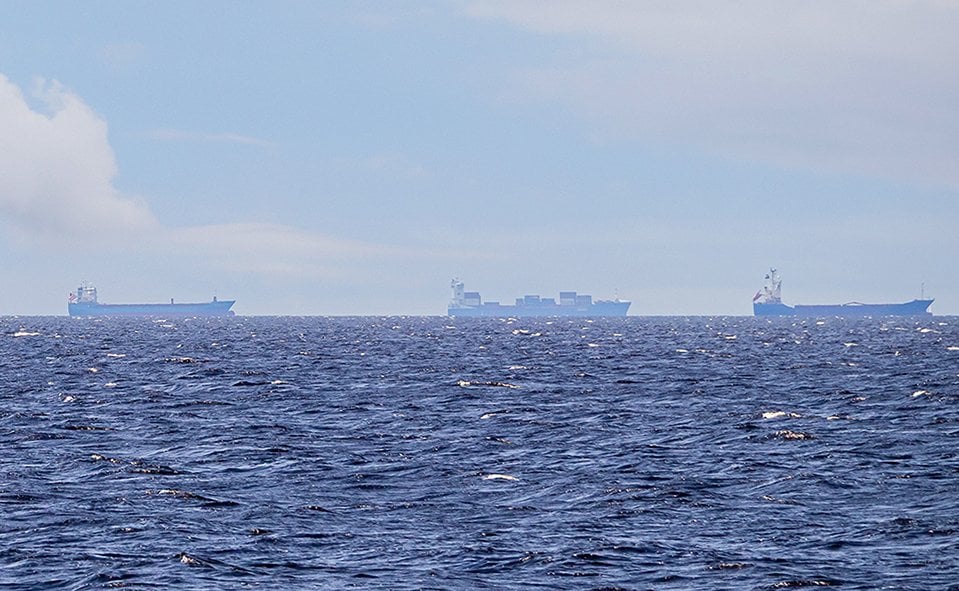
- Normal commercial traffic through the Strait of Hormuz is unlikely to return over the next 0-14 days, while limited, escorted passage is likely to continue. US authorities claim control of the Strait and report that mines have been cleared and nearly 1,500 commercial vessels have transited under protection. The IRGC claims complete control, Iran has threatened unauthorised vessels, and separate reporting records traffic at only seven commodity ships per day. Confidence is medium because official and major-media reporting corroborates severe disruption and some protected movement, but the competing control claims and inconsistent timeframes remain unresolved. (Confidence: medium · ASSESSED)
- I&W: Documented US-protected transits rise above seven commodity vessels per day for seven consecutive days without a new mine warning or vessel turn-back. (0-14 days)
- I&W: A new mine incident, vessel attack or Iranian order closing the Strait is reported after the stated US mine-clearance effort. (0-14 days)
- Iran is likely to combine intensified internal control with conditional diplomatic outreach over the next 1-3 months. The Iranian Intelligence Ministry reported the arrest of 30 alleged protest leaders and participants, while Mojtaba Khamenei instructed officials to avoid highlighting worsening economic conditions. Abbas Araqchi called for negotiations, Iran prepared conditions for talks, and Qatar and Pakistan continued efforts focused on de-escalation and freedom of navigation. Confidence is low because the arrests and internal messaging rely partly on single-source or think-tank reporting, while the record conflicts over zero Iranian oil exports, a roughly one-third fall in foreign trade and the scope of restrictions. (Confidence: low · ASSESSED)
- I&W: Iranian authorities announce further arrests linked to the December-January protest networks or impose new restrictions on official economic messaging. (0-14 days)
- I&W: Abbas Araqchi, Qatar or Pakistan announces a specific negotiating agenda, meeting date or shipping-corridor arrangement. (0-14 days)
- Iraq is likely to remain a secondary but immediate escalation vector over the next 1-3 months. Five factions, including Kata’ib Hezbollah, have refused to surrender their weapons; the United States reportedly rejected a two-year pause proposal from five Iranian-backed militias and continues to insist on disarmament. Iran has fired hundreds of missiles and drones into Iraqi Kurdistan, while the Pentagon has proposed ending security aid to the Peshmerga. Confidence is medium because several major-media claims support the pattern, but reporting conflicts over whether 30 September concerns militia disarmament or the departure of the international coalition. (Confidence: medium · ASSESSED)
- I&W: Kata’ib Hezbollah, Sayyid al-Shuhada or Harakat al-Nujaba conducts a confirmed attack on US or Iraqi targets, or Iran conducts further missile or drone strikes in Iraqi Kurdistan. (0-14 days)
- I&W: Iraq announces a new weapons-handover timetable and the United States confirms continued security support after the 30 September transition. (0-14 days)
- Humanitarian pressure is likely to amplify regional political and security risks over the next 1-3 months. The record reports that 59% of Gaza's population faces crisis-level food insecurity or worse, that the Gaza war has killed at least 80,820 Palestinians and 2,041 Israelis as of 23 August, and that blocked Gulf ports are affecting food supplies for more than 50 million people. It also reports Iranian strikes on desalination plants supplying 99% of drinking water in Kuwait and Qatar. Confidence is medium because the underlying humanitarian reporting is direct and comes from official and major-media sources, but the record mixes different reporting periods and casualty methodologies. (Confidence: medium · ASSESSED)
- I&W: A new Iranian strike on a desalination plant serving Kuwait or Qatar, or a new closure of a major Gulf port, is reported. (0-14 days)
- I&W: Gulf port access is restored and Gaza receives fuel, engine oil and other aid predictably and at scale for four consecutive weeks. (1-3 months)
Outlook & scenarios
Contained but active conflict (55%)
The conflict remains active through continued US-Israeli strikes in Iran, Iranian missile and drone responses, Israeli activity in southern Lebanon and controlled passage through the Strait of Hormuz. Qatar and Pakistan continue mediation efforts without producing a durable ceasefire.
Limited diplomatic and maritime arrangement (25%)
Iran, Qatar and Pakistan reach a time-limited arrangement for selected shipping movements through the Strait of Hormuz. Iran retains conditional control over access, while US and Israeli military operations continue at a lower tempo.
Wider regional escalation (15%)
Iranian-backed Iraqi factions reject disarmament, attacks expand in Iraqi Kurdistan or against US-linked targets, and Iran or its partners strike additional Gulf infrastructure. The United States increases pressure on the Strait and regional governments reinforce defence coordination.
Maritime shock and humanitarian cascade (5%)
A new mine incident, vessel attack or closure of the Strait of Hormuz halts the limited maritime movement that remains. Gulf port disruption and attacks on desalination infrastructure then deepen food and water pressure in Kuwait, Qatar and other import-dependent states.
Recommendations
- Maintain a daily 24-hour tracker that separates confirmed operational activity from official claims by the US, Iran, Israel and regional governments.
- Treat the Strait of Hormuz as contested until traffic counts, mine-clearance claims and vessel-safety reporting converge. Record daily commodity transits, protected passages, turn-backs, mine warnings and Iranian authorisation demands separately.
- Prioritise warning collection on Al-Mansouri and Wadi al-Hujeir in southern Lebanon, Iraqi Kurdistan, Qatar, US bases, Tel Aviv and Jerusalem, and desalination plants serving Kuwait and Qatar.
- Track Iran's internal security measures alongside diplomatic activity. Flag new arrests, restrictions on official economic messaging, negotiation dates, mediator visits and any shipping-corridor terms.
- Build separate 0-14 day and 1-3 month watchlists. The short-term list should emphasise strikes, maritime incidents and militia activity. The longer-term list should cover Iraqi disarmament, Peshmerga security support, Iranian economic pressure and humanitarian access.
- Reconcile contradictory reporting before using casualty, trade or oil-export figures in further assessments. Preserve the competing figures and their source types rather than selecting one without additional corroboration.
Confidence & uncertainty
Overall confidence is medium. Official government reporting and major-media coverage provide corroboration for continuing strikes, severe disruption in the Strait of Hormuz, Iranian arrests, militia disarmament disputes and humanitarian pressure. Confidence is reduced by conflicting claims over control of Hormuz, Iranian oil exports and foreign trade, inconsistent event dates, and several single-source or think-tank reports. The supplied record also mixes 2026 reporting with older entries, limiting confidence in chronology and trend comparisons.
Intelligence gaps
- [EEI 1.1 · UNCOVERED] Observed repositioning, sustained increases, or new forward basing of Iranian conventional or IRGC forces (armored units, missile batteries, aircraft, naval vessels) toward borders or regional launch points. Recommended collection: IMINT/satellite
- [EEI 1.2 · UNCOVERED] Hezbollah or other Iran-aligned proxy forces conducting mass mobilization, visible rocket/artillery emplacements, cross-border firing incidents, or preparations for cross-border operations from Lebanon, Syria, Iraq or Yemen. Recommended collection: HUMINT/ground ISR
- [EEI 1.4 · UNCOVERED] Interdicted or observed shipments (air, sea, land manifests, seizures, satellite imagery of transfers) of advanced weapons or missile components from Iran toward proxy groups or forward staging points. Recommended collection: maritime/AIS
- [EEI 2.1 · UNCOVERED] Satellite or on-the-ground imagery showing fires, damage, or operational shutdown at major oil export facilities, refineries, storage terminals, or key pipeline infrastructure in the Gulf and Red Sea. Recommended collection: IMINT/satellite
- [EEI 2.2 · PARTIAL] Commercial vessel incidents: AIS transponder shutdowns, distress signals, reported hull/engine damage, boardings, or confirmed attacks on tankers/merchant ships transiting the Strait of Hormuz, Bab al-Mandeb, or eastern Mediterranean. Recommended collection: maritime/AIS
- [EEI 2.3 · PARTIAL] Significant and sustained reductions or rerouting of tanker transits through the Strait of Hormuz (ship traffic counts, pilot reports, port call cancellations) and announcements of closure or restricted navigation zones (NOTAMs, maritime advisories). Recommended collection: maritime/NOTAMs
- [EEI 2.4 · UNCOVERED] Rapid increases in war-risk insurance premiums for Middle East routes, shipping company advisories to avoid region, or major charter cancellations tied to the conflict. Recommended collection: financial/open-source
- [EEI 3.1 · UNCOVERED] Movement/arrival of major foreign military assets into the region: US carrier strike groups, amphibious ready groups, strategic bomber flights, Russian/Chinese naval taskings, or allied expeditionary units (visible in AIS, NOTAMs, satellite imagery, official releases). Recommended collection: IMINT/satellite
- [EEI 3.2 · PARTIAL] Official expedited arms transfers, basing/overflight agreements, or declarations of operational support (formal government announcements, defense ministry releases, logistics flight manifests). Recommended collection: open-source/diplomatic
- [EEI 3.3 · UNCOVERED] Embassy evacuations, large-scale personnel movements, issuance of government travel bans/advisories, or multinational security alerts affecting foreign nationals and diplomatic posture in the region. Recommended collection: diplomatic/open-source
- [EEI 3.4 · PARTIAL] High-level diplomatic/UN activity: scheduled or emergency Security Council meetings, published ceasefire proposals, or multilateral statements committing support/condemnation that precede changes in military posture. Recommended collection: open-source/diplomatic
Cited sources
[1] newsonair.gov.in · Conflict in West Asia escalates as several countries are becoming involved; Fighting is spreading across different parts of region (B) · sha256:6826947addba [2] Wikipedia · Reactions to the 2026 Iran war (B) · sha256:9e483c76f25f [3] businessupturn.com · Israeli airstrikes hit southern Lebanon as tensions remain high near border (B) · sha256:bf3b862421e9 [4] whitehouse.gov · President Trump Was Right: America Controls the Strait of Hormuz (A) · sha256:40f1437904ad [5] annahar.com · حرب إيران: طهران تؤكد مواصلة تعزيز قدراتها الدفاعية وتُكذّب بيسنت بشأن هرمز | تغطية متواصلة لـالنهار (B) · sha256:141a561b5c33 [6] sundayguardianlive.com · US-Israel-Iran War Live News: Govt Seeks Victory in 'Economic War' Says Iranian Minister After Military Conflict (B) · sha256:16104f068011 [7] gcaptain.com · Iran Urges Countries Not to Implement New U.S. Sanctions as Mediators Focus on Reopening Strait (A) · sha256:153a0115ab1b [8] maritime-executive.com · IMO: 400 Ships and 6,000 Seafarers Are Still Unable to Depart Persian Gulf (B) · sha256:3bd74a41bdbe [9] Institute for the Study of War · Iran Update, August 28, 2026 (B) · sha256:f607fe2c74eb [10] thefridaytimes.com · From Security Talks To Strategic Mediation: The Munir Mission In Tehran (B) · sha256:45c626991be4 [11] سكاي نيوز عربية · التصعيد بين أميركا وإيران. آخر الأخبار (B) · sha256:3736a7c638b2 [12] longwarjournal.org · Iranian-backed Iraqi militias may seek to delay disarmament (B) · sha256:1ebd98deea80 [13] BBC · US plans to cut off military aid to key Middle East ally, BBC told (A) · sha256:285edb031228 [14] UK Government · Both parties must fulfil their commitments under Resolution 2803 and refrain from actions that undermine peace: UK statement at the UN Security Council (A) · sha256:22593220c0b4 [15] Wikipedia · Israeli–Palestinian conflict (B) · sha256:bc0170204e4f [16] Wikipedia · Economic impact of the 2026 Iran war (B) · sha256:ef0033339360
Source content hashes were computed at collection time; the cited text is preserved unmodified for the life of this product.
TLP:CLEAR