TLP:CLEAR · Disclosure is not limited.
Iran-Israel War: Hormuz Shipping Risks and Yemen Spillover
Time window: Last 1 day · Audience: General analyst · Type: Situation report · DTG: 2026-10-07 13:43Z · Overall confidence: HIGH
BLUF
Commercial traffic through the Strait of Hormuz is very likely to remain hazardous and well below pre-war levels over the next 14 days, although reported transits show the waterway is not closed. The latest reporting adds injuries to 12 crew members on the tanker On Peace, sharply higher shipping costs and new Houthi activity around Yemen; it does not establish a new direct Iran-Israel strike during this reporting period.
Executive summary
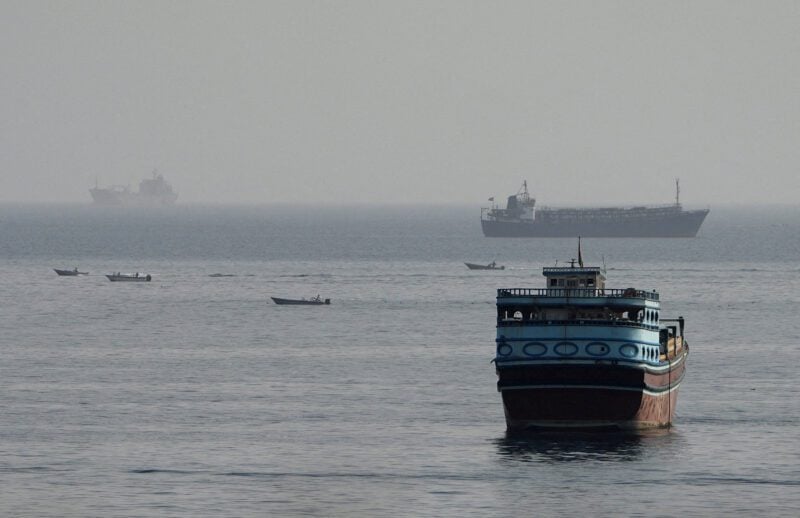
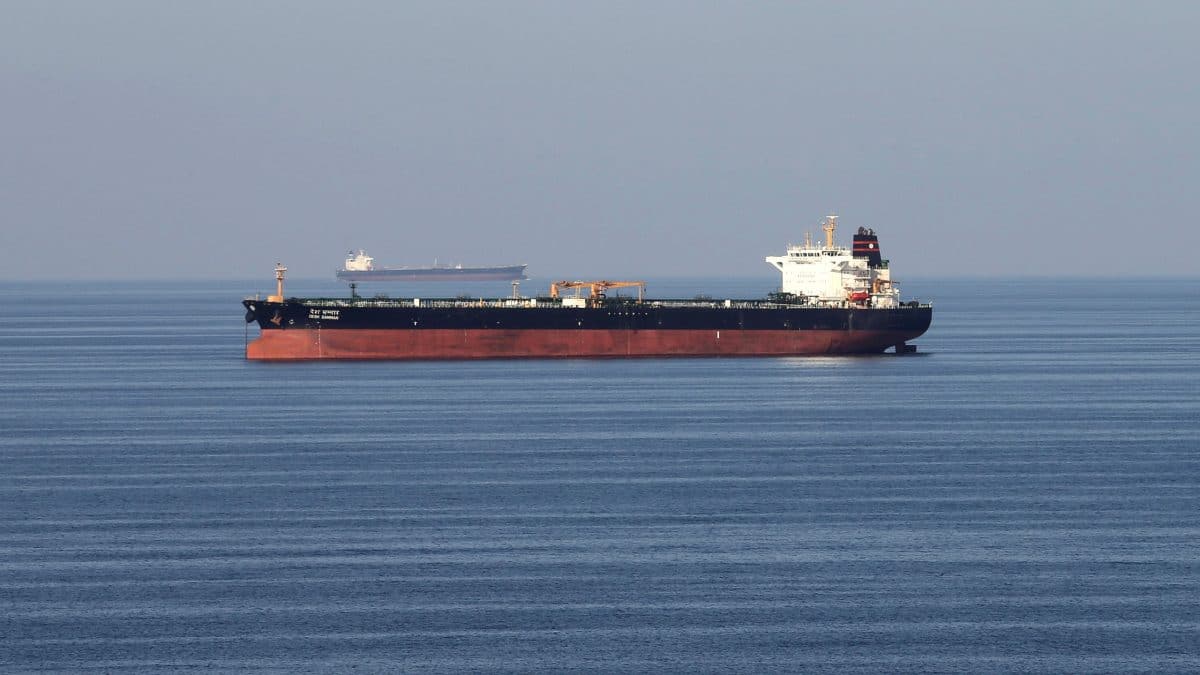
India’s Ministry of External Affairs said 12 crew members, including 11 Indian nationals, were injured when the Panama-flagged On Peace was struck by a projectile in the Strait of Hormuz on 5 October. Oman assisted their evacuation to Khasab. UKMTO separately reported a 5 October projectile strike that caused an engine-room fire and another strike on an outbound tanker; the attackers were not identified. Windward estimated that 13 vessels crossed Hormuz on 4 October, down from 24 a week earlier and about 135 daily before the conflict. Gulf oil flows excluding Iran recovered to more than 81 per cent of pre-war levels in September, but Hormuz oil flows remained about one-third below pre-war levels. Freight rates reached $1.3 million per day this week, while war-risk insurance premiums were reported at 6 to 10 per cent of a vessel’s hull value. In Yemen, fighting continued around Dhubab and the Yemeni Transport Ministry reported a Houthi attack on Aden International Airport; a missile landed near the runway and a Cairo flight was diverted to Jeddah. Houthi claims of attacks on Saudi airports remain distinct from Saudi-led coalition reports of intercepted missiles and are not independently confirmed in the supplied reporting.
Change from previous assessment
Initial assessment of this reporting period builds on the 6 October brief. The earlier assessment described Hormuz shipping as exposed but not demonstrably stopped; current reporting adds 12 injured crew members on the On Peace, a separate reported 5 October tanker strike that caused an engine-room fire, and a Windward estimate of 13 crossings on 4 October. The reported freight rate has also risen from the prior brief’s figure above $1.2 million per day to $1.3 million per day. Yemen reporting now includes the reported attack affecting Aden International Airport and new Houthi claims about Saudi targets, alongside coalition reports of missile interceptions. The assessment of individual tanker attribution remains unresolved. The supplied claims still do not establish a new direct Iran-Israel strike during this period.
Key judgments
- Commercial traffic through the Strait of Hormuz is very likely to remain hazardous and well below pre-war levels over the next 0-14 days. India’s Ministry of External Affairs reported that the On Peace was struck on 5 October and 12 crew members were injured; UKMTO reported a separate projectile strike that caused an engine-room fire. Windward estimated 13 vessel crossings on 4 October, compared with 24 a week earlier and about 135 daily before the conflict. These reports establish continuing danger and reduced traffic, not a complete closure. (Confidence: medium · ASSESSED)
- I&W: UKMTO reports another tanker attack or an IRGC order for a vessel to turn around, while Windward records no more than 24 Hormuz crossings on at least three days in a seven-day period. (0-14 days)
- I&W: Windward records more than 40 daily crossings for seven consecutive days and UKMTO issues no strike or turn-around warning during that period. (0-14 days)
- It is likely that responsibility for the individual 5 October tanker strikes will remain unverified in the near term. India’s Ministry of External Affairs and UKMTO described the On Peace and other tanker strikes as involving unknown projectiles or attackers; a trade-publication claim attributes a wider campaign of attacks to Iran, but does not establish who carried out each reported strike. (Confidence: medium · ASSESSED)
- I&W: New UKMTO warnings continue to list unknown attackers, with no independent reporting identifying the perpetrators of the On Peace or outbound-tanker strikes. (0-30 days)
- I&W: A maritime authority publishes an evidence-based attribution for either 5 October strike and a second independent source corroborates it. (0-30 days)
- Yemen’s western front is very likely to remain active over the next 0-14 days, adding risk to regional transport and infrastructure. The Yemeni Transport Ministry reported a Houthi attack on Aden International Airport, where a missile landed near the runway and a Cairo flight was diverted to Jeddah. Fighting was reported around Dhubab. Houthi claims of attacks on airports in Riyadh, Abha and Khamis Mushait are not confirmation that those attacks succeeded; the Saudi-led coalition reported intercepting missiles, and Saudi authorities did not immediately confirm the claimed airport strikes. (Confidence: medium · ASSESSED)
- I&W: The Yemeni Transport Ministry reports another airport interruption or flight diversion at Aden, or the Saudi-led coalition reports another missile interception directed towards Riyadh or Khamis Mushait. (0-14 days)
- I&W: Reporting records no airport interruption or missile interception for 14 consecutive days and reports that fighting around Dhubab has stopped. (0-14 days)
- Gulf energy flows are likely to remain partly recovered overall while shipments through Hormuz remain impaired over the next 1-3 months. Kpler reported that Gulf oil flows excluding Iran exceeded 81 per cent of pre-war levels in September, while Vortexa put refined-fuel exports at 60 per cent of pre-war levels and Kpler reported Hormuz oil flows about one-third below pre-war levels. These measures use different coverage and do not indicate a full recovery of the route. (Confidence: medium · ASSESSED)
- I&W: Kpler continues to report Hormuz oil flows about one-third below pre-war levels while Gulf flows excluding Iran remain above 81 per cent of pre-war levels. (1-3 months)
- I&W: Kpler reports Hormuz oil flows at or above pre-war levels in two consecutive weekly updates, with LNG traffic no longer about 75 per cent below its February level. (1-3 months)
- Hormuz-related shipping costs are likely to remain elevated over the next 0-30 days if attacks and transit disruption continue. Freight rates reached $1.3 million per day this week, compared with $20,000 to $50,000 per day last year; reported war-risk insurance premiums are 6 to 10 per cent of a vessel’s hull value, reaching as much as $20 million for a supertanker voyage into the Gulf. (Confidence: medium · ASSESSED)
- I&W: A new market report records Hormuz freight rates at or above $1 million per day or war-risk premiums at or above 6 per cent of hull value. (0-30 days)
- I&W: Freight rates fall below $100,000 per day and reported war-risk premiums fall below 1 per cent of hull value. (0-30 days)
Outlook & scenarios
Continued hazardous, reduced Hormuz traffic (55%)
The most likely course is further attacks or warnings around Hormuz alongside continued, but low, commercial transits. Unknown attribution for individual strikes keeps the risk of miscalculation elevated, while freight and insurance costs remain high. Fighting around Dhubab and reported Houthi activity affecting Aden add a separate source of regional disruption.
Partial shipping recovery without a security settlement (30%)
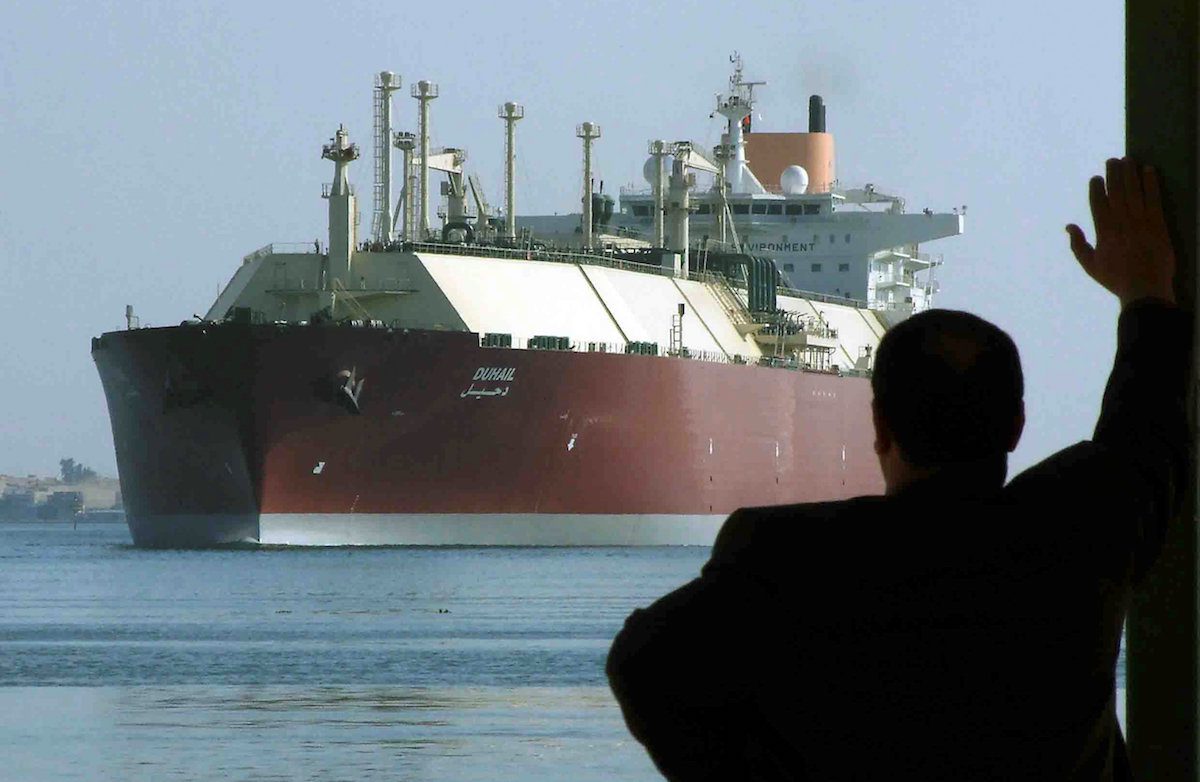
Hormuz crossings and Gulf energy shipments recover in stages, but the route remains exposed to attacks and Iranian enforcement threats. QatarEnergy’s waiting LNG carriers provide a possible basis for increased cargo movements, but their presence alone does not show that the vessels will load or transit. Costs ease only gradually while operators continue to price in attack risk.
High-impact regional shock (10%)
A fatal attack on a commercial vessel or renewed direct Iran-Israel strikes coincide with further Houthi missile activity around Saudi Arabia. Retaliatory action then disrupts shipping or aviation beyond the current incidents. This is an unlikely but high-impact outcome; the supplied reporting does not establish that it is imminent.
Recommendations
- Maintain a daily Hormuz incident log that separates UKMTO and government reporting from claims by Iran, the Houthis or other parties. Record vessel name, flag, position, time, damage, casualties and whether attribution is independently confirmed.
- Track Windward vessel counts alongside Kpler oil-flow data. Flag a further decline below the 13 crossings estimated for 4 October, and separately flag a sustained recovery above 24 crossings per day; do not treat transit counts and oil volumes as interchangeable measures.
- Reconcile the conflicting IMO cumulative attack and casualty totals before using a single figure in assessments or briefings. Label the source and date for each figure until the discrepancy is resolved.
- Monitor Aden airport service interruptions, flight diversions, Dhubab front-line reporting and Saudi-led coalition interception statements. Do not treat Houthi claims of successful strikes on Riyadh, Abha or Khamis Mushait as confirmed without independent evidence.
- For energy and trade analysis, report freight rates and war-risk premiums separately from oil prices. Track whether QatarEnergy’s waiting LNG carriers depart, whether Qatari cargoes resume, and whether India or Italy revises its reported LNG purchasing plans.
Confidence & uncertainty
Overall confidence is high in the broad picture of continuing Hormuz shipping danger and disruption because maritime warnings, reporting by India’s Ministry of External Affairs, IMO reporting, vessel-tracking estimates and energy-flow data provide corroboration from several source types. Confidence is lower on attribution for individual attacks, the success of some Houthi claims and precise cumulative maritime casualty totals; the supplied IMO figures do not fully align, and some regional attack claims remain unconfirmed.
Intelligence gaps
- [EEI 1.1 · UNCOVERED] Observed repositioning, sustained increases, or new forward basing of Iranian conventional or IRGC forces (armored units, missile batteries, aircraft, naval vessels) toward borders or regional launch points. Recommended collection: IMINT/satellite
- [EEI 1.4 · UNCOVERED] Interdicted or observed shipments (air, sea, land manifests, seizures, satellite imagery of transfers) of advanced weapons or missile components from Iran toward proxy groups or forward staging points. Recommended collection: maritime/AIS
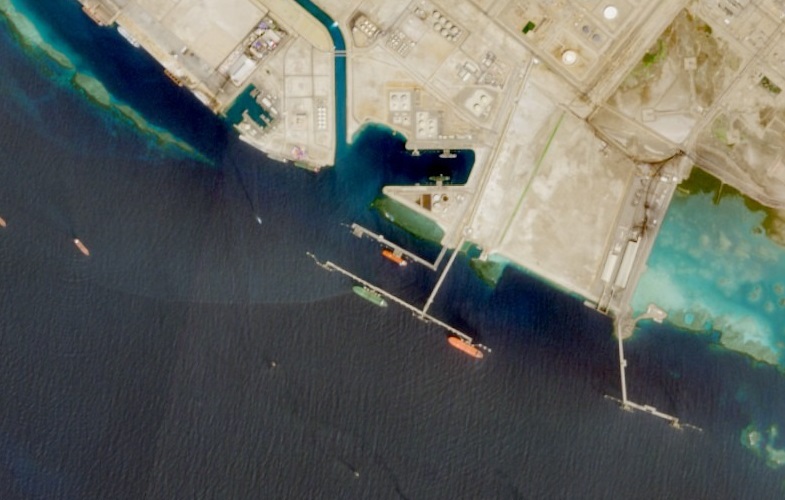
- [EEI 2.1 · PARTIAL] Satellite or on-the-ground imagery showing fires, damage, or operational shutdown at major oil export facilities, refineries, storage terminals, or key pipeline infrastructure in the Gulf and Red Sea. Recommended collection: IMINT/satellite
- [EEI 2.4 · PARTIAL] Rapid increases in war-risk insurance premiums for Middle East routes, shipping company advisories to avoid region, or major charter cancellations tied to the conflict. Recommended collection: financial/open-source
- [EEI 3.1 · PARTIAL] Movement/arrival of major foreign military assets into the region: US carrier strike groups, amphibious ready groups, strategic bomber flights, Russian/Chinese naval taskings, or allied expeditionary units (visible in AIS, NOTAMs, satellite imagery, official releases). Recommended collection: IMINT/satellite
- [EEI 3.2 · UNCOVERED] Official expedited arms transfers, basing/overflight agreements, or declarations of operational support (formal government announcements, defense ministry releases, logistics flight manifests). Recommended collection: open-source/diplomatic
- [EEI 3.3 · UNCOVERED] Embassy evacuations, large-scale personnel movements, issuance of government travel bans/advisories, or multinational security alerts affecting foreign nationals and diplomatic posture in the region. Recommended collection: diplomatic/open-source
- [EEI 3.4 · PARTIAL] High-level diplomatic/UN activity: scheduled or emergency Security Council meetings, published ceasefire proposals, or multilateral statements committing support/condemnation that precede changes in military posture. Recommended collection: open-source/diplomatic
Cited sources
[1] gCaptain · A Dozen Seafarers Injured in Strait of Hormuz Tanker Attack, India Says (C) · 6 October 2026 · sha256:629eca54ff54 [2] firstpost.com · $100,000 salary, $50,000 bonus: Hormuz risk sends tanker captains’ pay to new highs (F) · 7 October 2026 · sha256:74e94704f81a [3] The Maritime Executive · Saudi Bypass Pipeline Quickly Rebounded After Attack, Export Data Shows (C) · sha256:35f4b3aaa01d [4] Reuters (republished by gCaptain) · Houthis Attack Aden Airport as Fighting Intensifies in Yemen (A) · 7 October 2026 · sha256:c4b134e799e6 [5] Al Jazeera · Hormuz ship attacks surge: Are increased oil exports sustainable? (A) · 6 October 2026 · sha256:034696b7f791 [6] gCaptain (republishing Thomson Reuters) · Gulf Oil Flows Rise to Average 81% of Pre-war Rate in September (C) · 6 October 2026 · sha256:6cde5a909a33 [7] The Economic Times · Oil tanker captains are being offered over $100,000, plus bonuses, to cross Hormuz (B) · 7 October 2026 · sha256:8bda13b1aa7c [8] gCaptain (republishing Bloomberg News) · Qatar Brings Empty LNG Ships Into Gulf in Potential Export Boost (A) · 7 October 2026 · sha256:6899ab11e3b4
Source content hashes were computed at collection time; the cited text is preserved unmodified for the life of this product.
Red cell review: CONCUR WITH COMMENT
TLP:CLEAR