TLP:CLEAR · Disclosure is not limited.
Iran-Israel War: Maritime Chokepoints and Proxy Pressure Intensify
Time window: Last 1 day · Audience: General analyst · Type: Situation report · DTG: 2026-09-13 19:06Z · Overall confidence: HIGH
BLUF
It is very likely that the conflict will remain a multi-front regional war over the next 14 days, with the Strait of Hormuz, Bab al-Mandeb and Iraq-based attacks on Saudi infrastructure serving as the main escalation channels. Maritime disruption is likely to remain severe, while the 14 September Oman meeting offers only a roughly even chance of producing a temporary shipping arrangement.
Executive summary
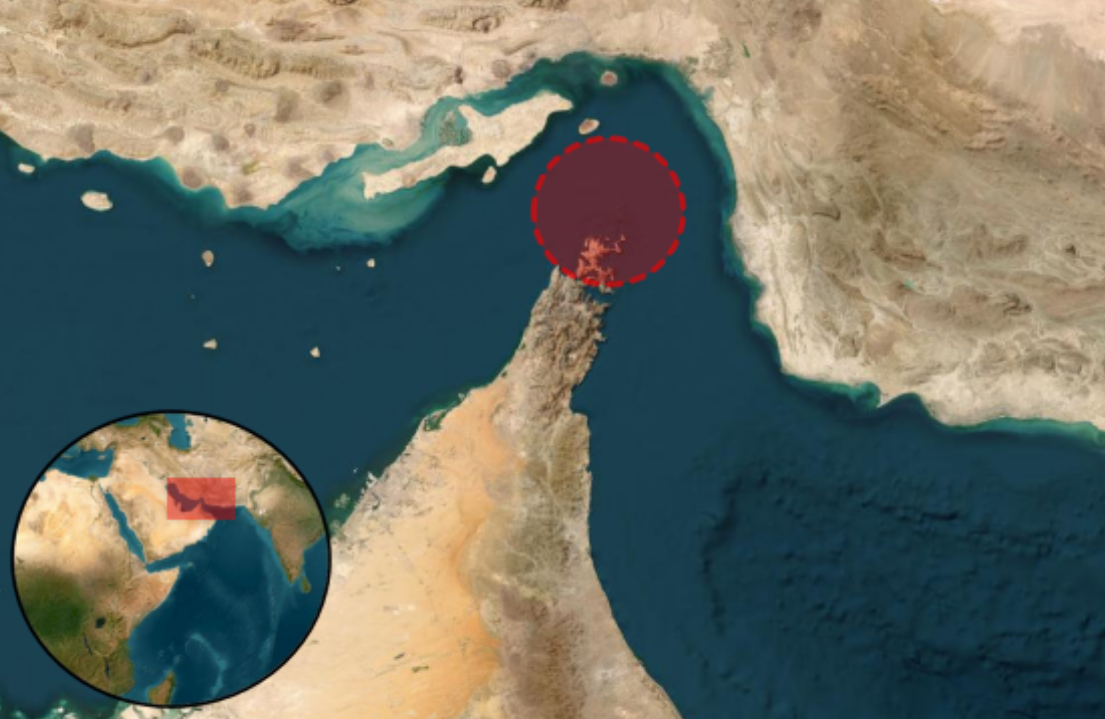
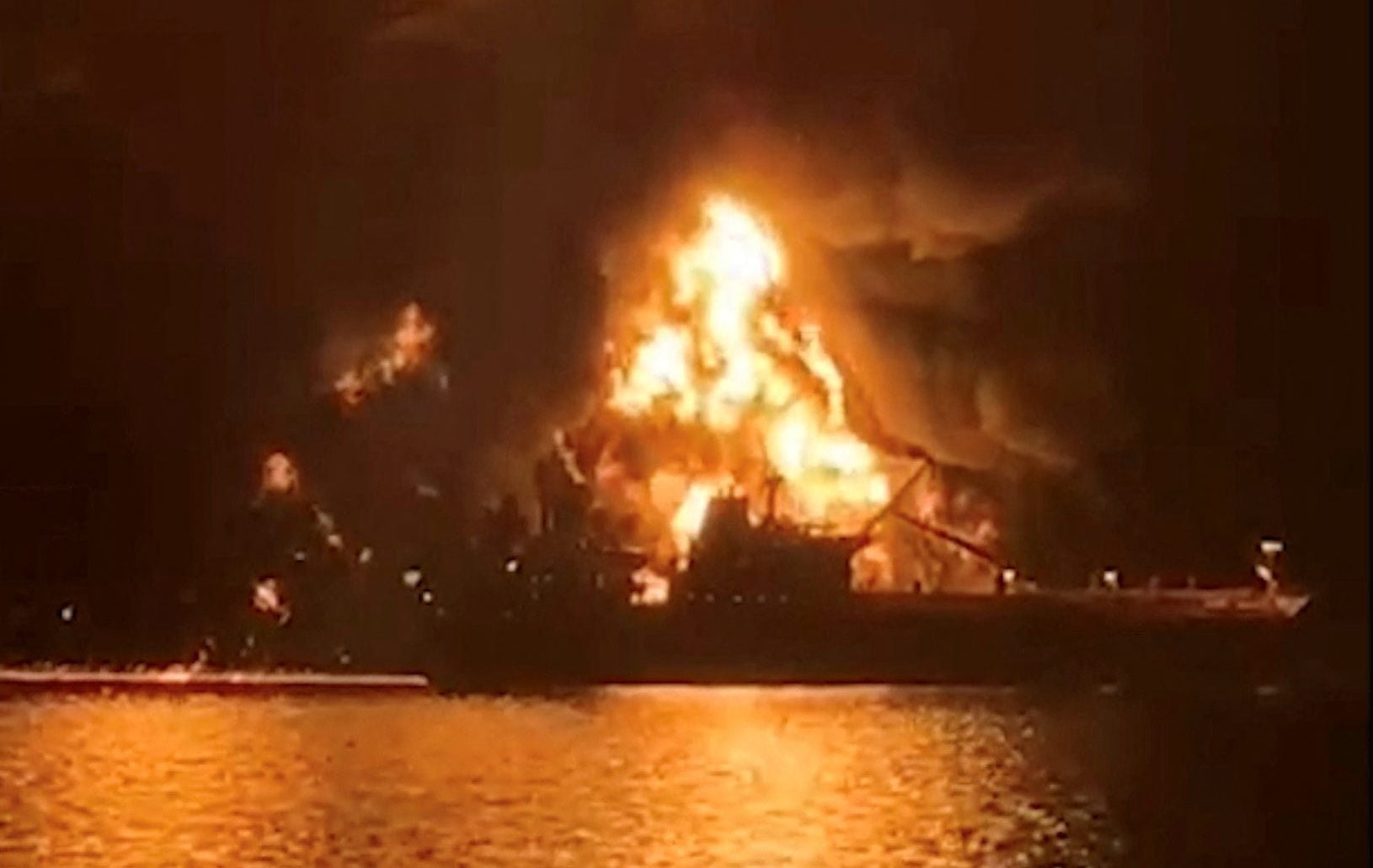
Military and proxy-linked pressure increased across the Gulf and Red Sea on 13 September. UK Maritime Trade Operations reported that a vessel was struck by an unknown projectile in the Strait of Hormuz and that its crew was evacuated after a fire. Houthi forces were reported to have seized Mokha and a Red Sea island, while Saudi Arabia continued to face attacks and disruption to its energy routes. Iraq reopened two crossings with Iran but continued investigations into drone launches from Maysan after the East-West pipeline shutdown. Iran and Iraq confirmed attendance at an Oman meeting on 14 September, but Tehran has linked any reopening of Hormuz to US concessions and Bahrain will not attend.
Change from previous assessment
Since the 12 September brief, the assessment gives greater weight to maritime escalation. UK Maritime Trade Operations has now reported a vessel strike, fire and crew evacuation in the Strait of Hormuz, while Iranian reporting describes a separate or potentially overlapping attack on an Iranian commercial vessel with casualties. Houthi reporting has advanced from control gains around Mocha, Hanish and Perim to claims of effective control near Bab al-Mandeb, although the extent of that control remains contested. Iraq has reopened al-Sheeb and Shalamcheh while continuing investigations and security changes in Maysan. The assessment of severe Hormuz disruption is strengthened by the reported 95 percent traffic decline and Tehran's explicit conditions for reopening, but confidence remains medium because traffic measurements and control narratives differ. The Oman meeting remains a roughly even chance for temporary shipping measures, while the prospect of durable de-escalation is assessed more negatively because Tehran has linked reopening to US compliance with the June memorandum of understanding.
Key judgments
- It is very likely that the Iran-Israel conflict will remain a multi-front regional conflict over the next 14 days, involving Iran, Israel, the United States, the Houthis, Saudi Arabia and Iraq through direct attacks, maritime incidents and proxy-linked pressure. On 13 September, UK Maritime Trade Operations reported a projectile strike and fire aboard a vessel in the Strait of Hormuz. Houthi forces were reported to have seized Mokha and a Red Sea island, while Saudi Arabia shut the East-West pipeline after drones were reportedly launched from Iraq. This is an assessed synthesis rather than evidence of a single command structure. Confidence is high because UK Maritime Trade Operations, wire services and major media separately corroborate the principal incidents, although responsibility for the pipeline attack and the full extent of Houthi territorial control remain unresolved. (Confidence: high · ASSESSED)
- I&W: Confirm: UK Maritime Trade Operations reports another vessel strike in the Strait of Hormuz, or Saudi Arabia reports another Houthi attack on Jizan, Abha or Khamis Mushait. (0-14 days)
- I&W: Break: Saudi Arabia, Iraq and Iran report a verified cessation of attacks across the maritime and Iraq-Saudi fronts, with no new incident reports over a continuous seven-day period. (0-14 days)
- It is very likely that commercial transit through the Strait of Hormuz will remain severely constrained through 27 September, while it is unlikely that the waterway will fully reopen during that period. Reported traffic has fallen from roughly 130-140 vessels a day before the war to about five to seven. The United States has restricted tanker movements to protected time slots and has offered air-based defence along the Omani coast route. Iran says it will maintain the blockade until the United States accepts seven conditions, while Abbas Araghchi said an expected Iran-Oman arrangement will not reopen the waterway until Washington honours the June memorandum of understanding. Confidence is medium because traffic counts, protection arrangements and blockade descriptions come from different reporting methods, and the current accounts do not establish whether Iran or the United States has effective control of all traffic. (Confidence: medium · ASSESSED)
- I&W: Confirm: daily traffic remains near five to seven vessels, or the US naval co-ordination centre retains only two protected sailing windows. (0-14 days)
- I&W: Break: Iran and Oman announce a signed operating arrangement followed by sustained traffic above the reported five to seven vessel daily level. (0-14 days)
- It is likely that Houthi forces will retain their recent gains around Mokha and the Red Sea island they seized and sustain pressure on Saudi shipping and energy routes over the next one to three months. Houthi forces were reported to be about 20 kilometres from the African coast and to essentially control Bab al-Mandeb. Their attacks have coincided with a Saudi oil export decline from about 3.4 million barrels per day in June to 128,000 in August, with a recovery to 700,000 in September. The stronger claim that the Houthis have taken Yemen's entire Red Sea coastline conflicts with reporting that they are still advancing, so confidence in the extent of control is medium rather than high. (Confidence: medium · ASSESSED)
- I&W: Confirm: Houthi forces hold Mokha and the seized Red Sea island while reporting another attack on Saudi shipping, Jizan or a Saudi energy site. (0-30 days)
- I&W: Break: verified Bab al-Mandeb traffic resumes without Houthi attacks and Saudi oil exports to Asia return towards the June level of about 3.4 million barrels per day. (1-3 months)
- It is likely that Baghdad will face increased pressure before 30 September to restrain Iran-aligned Iraqi armed groups, while immediate Saudi retaliation remains unlikely unless another attack occurs. Iraq has dismissed senior Maysan security officials, found a rocket launch platform in the governorate and expanded its investigation after the East-West pipeline attack. Saudi Arabia said it would not retaliate at this stage following a request from the Iraqi prime minister. The deadline for bringing Kata'ib Hizbollah, Harakat al-Nujaba and Kata'ib Sayyid al-Shuhada under state authority coincides with the planned withdrawal of the final US troops from Iraq. Confidence is medium because the launch origin is better supported than perpetrator attribution, the scope of the Maysan dismissals is disputed, and the Islamic Resistance in Iraq denies responsibility. (Confidence: medium · ASSESSED)
- I&W: Confirm: Iraqi authorities report another launch platform or drone attack from Maysan, or a named Iran-aligned group rejects the 30 September disarmament deadline. (0-17 days)
- I&W: Break: the joint Iraqi investigation identifies the perpetrators, militia leaders accept state control, and Saudi Arabia publicly maintains its decision not to retaliate. (0-30 days)
- There is a roughly even chance that the 14 September Oman meeting produces a limited, temporary shipping arrangement, but it is very unlikely to produce durable regional de-escalation within 14 days. Iran, Iraq and Gulf states have announced or confirmed participation, yet Bahrain will not attend. Tehran has tied any reopening of the Strait of Hormuz to US concessions after the June memorandum of understanding collapsed, and Abbas Araghchi has said the expected Iran-Oman agreement will not itself reopen the waterway. The Iran-UAE meeting at the BRICS Summit and the joint restraint statement provide a diplomatic channel, but no verified ceasefire mechanism. Confidence is medium because the meeting and its broad purpose are corroborated, while attendance details, the precise date in some accounts and the outcome remain contested. (Confidence: medium · ASSESSED)
- I&W: Confirm: Iran, Oman and the participating Gulf or Iraqi delegations announce a signed mechanism covering routes, mine clearance or protected sailing windows, followed by increased vessel movements. (0-14 days)
- I&W: Break: the meeting is cancelled or produces no signed arrangement, while Iran maintains the blockade or another vessel is struck in the Strait of Hormuz. (0-14 days)
- It is likely that the conflict's economic and humanitarian effects will remain elevated over the next one to three months. Brent futures were trading at about 105 dollars per barrel after approaching 110 dollars, tanker rates were reported at unprecedented levels, and the Saudi East-West pipeline had previously carried between four and five million barrels per day while also reaching a reported seven million barrel-per-day capacity earlier in 2026. More than 2,000 people fled Yemen to Djibouti in 24 hours, and Gaza's health ministry reported 1,369 Palestinian deaths from Israeli airstrikes since the October ceasefire. Confidence is medium because the pipeline throughput figures conflict and several economic indicators come from trade or local reporting, although the price, shipping and displacement trends are reported by multiple sources. (Confidence: medium · ASSESSED)
- I&W: Confirm: Brent remains above 100 dollars per barrel, tanker rates continue rising, and Saudi oil exports to Asia remain below the June level of about 3.4 million barrels per day. (0-30 days)
- I&W: Break: the East-West pipeline resumes normal operations, Saudi exports return towards 3.4 million barrels per day, and tanker day rates stop doubling weekly. (1-3 months)
Outlook & scenarios
Sustained maritime disruption with limited diplomatic management (55%)
This is the most likely near-term path. Iran maintains restricted access through the Strait of Hormuz, Houthi forces retain their recent Red Sea gains, and attacks continue at a level that constrains shipping without producing a verified full closure of every route. The 14 September Oman meeting produces contacts or a temporary operating arrangement, but not a durable ceasefire.
Wider proxy escalation through Iraq and Yemen (30%)
A further drone attack from Maysan, a renewed Houthi strike on Saudi infrastructure or another vessel strike in Hormuz increases pressure on Saudi Arabia and the United States. Baghdad responds with additional dismissals or border closures, while Saudi Arabia faces pressure to move beyond its current decision not to retaliate.
Temporary maritime deconfliction (30%)
Iran, Oman, Iraq and participating Gulf states agree protected routes, limited mine-clearance measures or time-bound navigation rules. Vessel movements increase, but the arrangement remains fragile because Bahrain is absent, the June memorandum of understanding collapsed and Iran continues to link reopening to US concessions.
Direct US-Iran maritime retaliation (10%)
An additional strike on an Iranian or US-linked vessel produces a verified retaliatory action. This low-probability, high-impact path would sharply reduce the prospects for the Oman meeting and place US forces, commercial shipping and Gulf infrastructure under immediate additional pressure.
Recommendations
- Maintain a 24-hour watch on UK Maritime Trade Operations notices, vessel fires, crew evacuations and AIS-derived traffic through the Strait of Hormuz. Record daily traffic totals separately from US-protected movements to avoid mixing incompatible measures.
- Track the 14 September Oman meeting against three concrete outputs: attendance, a signed navigation mechanism and a measurable increase in commercial vessel movements. Treat public calls for restraint as diplomatic signalling unless accompanied by those outputs.
- Separate launch origin, perpetrator attribution and command responsibility in all reporting on the Saudi pipeline attack. Prioritise Iraqi investigation results, Maysan security actions and statements from named Iran-aligned groups before assigning responsibility.
- Track Houthi control claims against specific locations, especially Mokha, the seized Red Sea island and Bab al-Mandeb. Use port activity, vessel movements and Saudi incident reporting to test the stronger claim of control over Yemen's entire Red Sea coastline.
- Monitor Saudi East-West pipeline operating status, Saudi oil exports to Asia, Brent prices and tanker day rates as a single warning set. A continued export shortfall alongside rising freight rates would indicate that maritime disruption is becoming a sustained economic constraint.
- Prioritise reporting on the 30 September Iraqi militia deadline and the planned final US troop withdrawal. Flag any militia rejection, new attack from Maysan, additional Iraqi border closure or Saudi declaration of retaliation for immediate senior review.
- Include Yemen-Djibouti displacement and Gaza casualty reporting in the regional impact picture, while distinguishing government or health-ministry counts from independently corroborated incident reporting.
Confidence & uncertainty
Overall confidence is high for the core situation picture because the principal developments are corroborated by UK Maritime Trade Operations, wire services, major media and official statements. The evidence independently supports a vessel strike and fire in the Strait of Hormuz, Houthi territorial gains, the Saudi pipeline shutdown, Iraqi security measures and scheduled diplomacy in Oman. The main uncertainties concern attribution of the Saudi pipeline attack, the identity and casualty count of the Iranian vessel incident, the extent of Houthi control, conflicting East-West pipeline throughput figures and the outcome of the Oman meeting. Those uncertainties reduce confidence in individual forward-looking judgements without materially changing the assessment that regional tensions and maritime disruption have intensified.
Intelligence gaps
- [EEI 1.1 · UNCOVERED] Number, type, launch times, and trajectories of ballistic missiles, cruise missiles, armed UAV strikes, and combat-air sorties launched by Iranian or Israeli forces toward the other's territory or forward bases within a 72-hour window. Recommended collection: signals/intel
- [EEI 1.2 · UNCOVERED] Observable changes in Israeli and Iranian force posture: mobilization or reserve call-up orders, unit road/rail movements, dispersal or sortie rates of air squadrons, redeployment of air-defense batteries, and activation of civil-defense alerts or sirens in major population centers. Recommended collection: open-source/media
- [EEI 1.3 · UNCOVERED] Indications of strike authorization or targeting preparations in Iranian or Israeli command chains: authenticated public orders by senior commanders, detected increases in encrypted communications consistent with targeting, or visible movement of strike munitions to launch/storage sites. Recommended collection: signals/intel
- [EEI 2.1 · UNCOVERED] Counts, launch locations (coordinates), weapons types, and assessed damage from rocket/missile/drone strikes originating from Lebanon into northern Israel attributed to Hezbollah or allied groups. Recommended collection: open-source/media
- [EEI 2.2 · UNCOVERED] Reported attacks by Iranian-backed militias in Iraq and Syria: rocket/IED strikes on bases hosting US/coalition or Israeli personnel, documented militia unit movements toward borders, and captured movement or transfer of weapons systems to forward militia positions. Recommended collection: human
- [EEI 2.3 · PARTIAL] Maritime harassment or attacks by proxies (e.g., Houthis): incidents of missile/rocket strikes against commercial vessels, small-boat swarm attacks, discovery or detonation of naval mines, and corresponding AIS anomalies in the Red Sea, Gulf of Aden, or southern Arabian Gulf. Recommended collection: maritime/AIS
- [EEI 3.1 · PARTIAL] Movements and arrival dates of foreign military assets into the region: carrier strike groups, amphibious ships, surface combatants, strategic airlift/tanker deployments, and air/sea patrol patterns by US, European, Russian, or regional militaries. Recommended collection: imagery/satellite
Cited sources
[1] Al Jazeera · Red Sea nations watch as Houthis seize Bab al-Mandeb strait (A) · Sun Sep 13 2026 15:00:47 GMT+0000 (Coordinated Universal Time) · sha256:1c781cf70bdc [2] WHDH 7News · Saudi Arabia has few options as it faces mounting threats from Iran and its allies - Boston News, Weather, Sports | WHDH 7News (B) · Sat Sep 12 2026 22:39:30 GMT+0000 (Coordinated Universal Time) · sha256:6b678191c041 [3] Reuters (republished by gCaptain) · Crew Of Vessel Attacked In Hormuz Strait Evacuated (A) · Sun Sep 13 2026 14:46:08 GMT+0000 (Coordinated Universal Time) · sha256:b31229b45bac [4] The Maritime Executive · U.S. Shows More Restraint After Latest Iranian Tanker Strike (C) · sha256:10b7ff3bfb76 [5] Bloomberg (republished by gCaptain) · Iraq Under Pressure After Drone Strikes Close Key Saudi Pipeline (A) · Sun Sep 13 2026 15:19:32 GMT+0000 (Coordinated Universal Time) · sha256:13e849f83813 [6] BBC News Arabic · هجوم على سفينة تجارية إيرانية في مضيق هرمز، وترامب يرجّح وقوف إيران خلف استهداف السعودية - BBC News عربي (A) · Sat Sep 12 2026 06:11:40 GMT+0000 (Coordinated Universal Time) · sha256:545eb9366c48 [7] Al Jazeera · Iran-GCC summit: What’s behind the meeting, why is Bahrain not attending? (A) · Sun Sep 13 2026 13:59:27 GMT+0000 (Coordinated Universal Time) · sha256:984591e20c9f [8] gCaptain · US Limits Air Defense Time Slots For Tankers Sailing Through Hormuz (C) · Sun Sep 13 2026 14:20:18 GMT+0000 (Coordinated Universal Time) · sha256:f4be381706cc [9] Haaretz · Saudi Arabia says Houthi attack wounds two, damages mosque (A) · Sat Sep 12 2026 01:12:00 GMT+0000 (Coordinated Universal Time) · sha256:6c14de6dd5fa [10] India Today · Strait of Hormuz strike kills one as West Asia violence flares (B) · Sun Sep 13 2026 13:54:37 GMT+0000 (Coordinated Universal Time) · sha256:fbea5b73b3c4 [11] Atlantic Council · Ten questions (and expert answers) on the final withdrawal of US troops from Iraq (C) · Wed Sep 09 2026 19:51:43 GMT+0000 (Coordinated Universal Time) · sha256:c1791fbcdafb [12] قناة شمس Shams TV · العراق يوسع تحقيقاته في الهجمات التي استهدفت خط أنابيب في السعودية، بعد العثور على منصات لإطلاق المسيّرات قرب الحدود العراقية الإيرانية في محافظة ميسان، فيما اتخذت بغداد إجراءات أمنية وأحالت قيادة عمليات ميسان للتحقيق، بالتزامن مع تحركات دبلوماسية مع السعودية وإيران لمنع اتساع تداعيات الهجوم. تقرير: مينا مكرم #العراق #السعودية #بغداد #العراق #إيران | قناة شمس Shams TV (E) · sha256:48a02cb78073 [13] Business Upturn · UAE diplomatic advisor: Abu Dhabi Crown Prince–Iran president meeting at BRICS reflects “deterrence and diplomacy” approach (B) · Sun Sep 13 2026 10:15:21 GMT+0000 (Coordinated Universal Time) · sha256:a6ee227dc46d [14] i24NEWS · UAE's Crown Prince meets Putin at BRICS summit as bloc navigates Iran-UAE divide (B) · Sun Sep 13 2026 00:00:00 GMT+0000 (Coordinated Universal Time) · sha256:eebfbf2e9300 [15] DevDiscourse · Tensions Surge as Maritime Strikes Disrupt Global Oil Routes (B) · sha256:29ec4f8d235a
Source content hashes were computed at collection time; the cited text is preserved unmodified for the life of this product.
TLP:CLEAR