TLP:CLEAR · Disclosure is not limited.
Iran-Israel War: Maritime Disruption and Regional Spillover
Time window: Last 1 day · Audience: General analyst · Type: Situation report · DTG: 2026-08-23 14:37Z · Overall confidence: MEDIUM
BLUF
Very likely the US-Israel-Iran conflict will remain active over the next 14 days, with Iranian attacks and Israeli-US strikes continuing to expose US facilities and regional states to further escalation. Maritime disruption through the Strait of Hormuz and severe humanitarian pressure in Gaza will persist, while Egyptian and Pakistani diplomatic contacts offer roughly even chance of only a temporary restraint.
Executive summary
The supplied reporting describes continuing US-Israeli air strikes against Iran and Iranian missile and drone attacks against Israel, US facilities in Jordan, Bahrain and Kuwait, and Arab states including Qatar. The Islamic Revolutionary Guard Corps also claimed to have launched Khorramshahr-4 missiles against Israel. Shipping through the Strait of Hormuz remains heavily disrupted, but the scale is disputed: seven commercial vessels reportedly passed on 20 August, Kpler counted 95 confirmed crossings last week, social-media reporting claimed 200 ships in one week, and US officials reported oil flows above 8 million and over 15 million barrels in separate accounts. Egypt and Iran discussed de-escalation on 22 August, while Pakistan's Asim Munir and Iran's Abbas Araghchi discussed regional stability, but reporting conflicts over the timing of Munir's Tehran visit and US-Iran talks remain stalled. Humanitarian conditions in Gaza remain severe, with 94 per cent of 2.1 million residents needing shelter and up to 70 per cent unable to collect the minimum six litres of water per person per day.
Change from previous assessment
Compared with the 22 August brief, no core judgment has been retired. The assessment now gives greater weight to the reported Islamic Revolutionary Guard Corps Khorramshahr-4 launch claim, Iranian attacks affecting Qatar and US positions, and the conflicting Hormuz figures covering seven commercial vessels, 95 confirmed crossings, 200 ships in one week and oil flows above 8 million and over 15 million barrels. Egyptian-Iranian and Pakistani-Iranian contacts add diplomatic activity, but the conflicting timing of Munir's visit and the reported US-Iran implementation dispute keep confidence in a temporary pause low. Humanitarian severity remains a high-confidence judgment and is reinforced by new reporting on water access, water prices and continued Israeli activity in Lebanon. The Israel-Türkiye assessment remains low confidence and retains direct armed conflict as unlikely because the central Turkish activity claim remains contradicted by Turkish and US reporting.
Key judgments
- Very likely the US-Israel-Iran conflict will remain active over the next 14 days, with Iran retaining the ability to strike Israel, US facilities in Jordan, Bahrain and Kuwait, and Arab states including Qatar. The reported Islamic Revolutionary Guard Corps claim concerning Khorramshahr-4 missiles, Iranian missile and drone strikes, and Qatar's report of intercepted missiles indicate continuing direct and regionalised exchanges. Reported US losses exceed 750 injuries in one account and total 774 casualties in another, but the figures are not directly reconcilable. This is an assessed forecast rather than confirmation of a specific imminent launch. Confidence is medium because several major-media reports describe the exchanges, while launch claims, casualty figures and parts of the chronology remain contested. (Confidence: medium · ASSESSED)
- I&W: Confirming indicator: Iranian state or Islamic Revolutionary Guard Corps reporting of another missile or drone launch against Israel, Qatar, Jordan, Bahrain or Kuwait, accompanied by an independently reported impact or interception. (0-14 days)
- I&W: Breaking indicator: a publicly announced halt in Iranian and US-Israeli strikes accompanied by no further reported missile or drone alerts in Israel, Qatar, Jordan, Bahrain and Kuwait. (0-14 days)
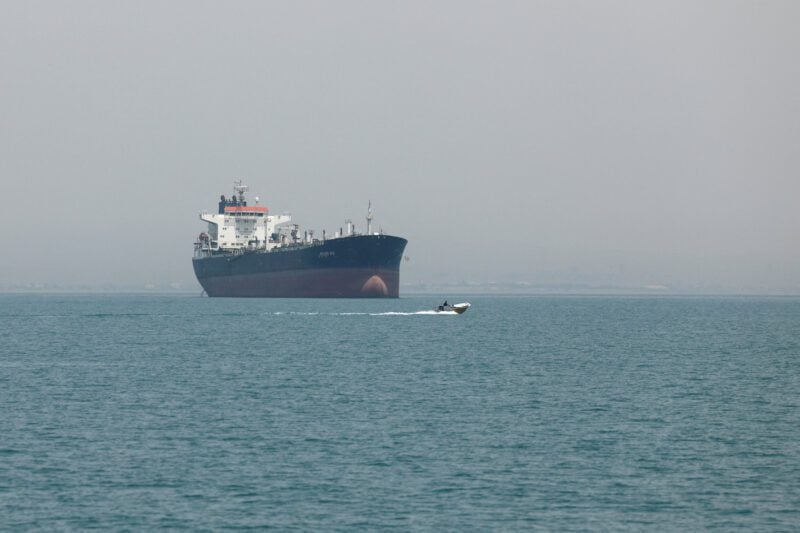
- Very likely ordinary commercial traffic through the Strait of Hormuz will remain materially reduced over the next 14 days, although Iran will continue permitting selected Iraqi oil tankers to transit. The disruption assessment is supported by reports of seven commercial vessels passing on 20 August, 95 confirmed crossings during the previous week, lower ordinary commercial traffic and a JMIC threat rating of SEVERE. The reported scale remains uncertain because other accounts cite 200 ships in one week, oil flows above 8 million barrels per day and more than 15 million barrels moved with US military assistance. Confidence is medium because the broad disruption is corroborated, but vessel counts, oil volumes and transit categories conflict. (Confidence: medium · ASSESSED)
- I&W: Confirming indicator: JMIC or Kpler reports that confirmed commercial crossings remain below 95 per week, with ordinary traffic still substantially below reported pre-conflict levels or the Omani route still unused. (0-14 days)
- I&W: Breaking indicator: independently reconciled vessel-tracking data show sustained commercial traffic at 200 or more vessels per week alongside sustained oil flows above 8 million barrels per day. (0-14 days)
- Roughly even chance Egyptian and Pakistani mediation will secure a temporary US-Iran restraint within 14 days, while a durable settlement is unlikely. Egyptian Foreign Minister Badr Abdelatty and Iranian Foreign Minister Abbas Araghchi discussed de-escalation on 22 August, and Asim Munir and Araghchi discussed regional peace and stability. Reporting conflicts over whether Munir's Tehran visit and talks are forthcoming or already occurred. Against these contacts, Iran-US talks reportedly remain stalled over implementation and navigation through the Strait of Hormuz, and another account reports no sign of renewed peace talks. This is an assessed judgment with low confidence because the mediation evidence is largely statement-based, the chronology is contested and the sanctions posture points in the opposite direction. (Confidence: low · ASSESSED)
- I&W: Confirming indicator: Munir arrives in Tehran and a joint Iranian-Pakistani or Egyptian-Iranian statement records an implementation schedule or temporary restraint involving Washington and Tehran. (0-14 days)
- I&W: Breaking indicator: Washington announces new economic sanctions while Iranian officials reject them and military exchanges or Strait of Hormuz restrictions continue. (0-14 days)
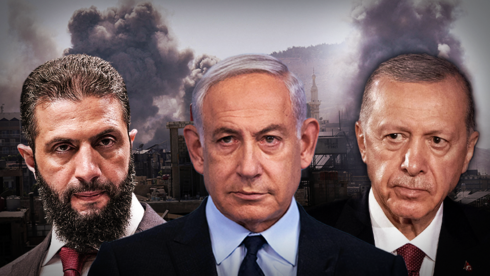
- Likely Israel-Türkiye tensions centred on Abu al-Duhur airbase and wider Israeli operations in Syria will remain an escalation vector over the next 1-3 months, while direct Israel-Türkiye armed conflict remains unlikely. Israel has been reported to have attacked Abu al-Duhur and resumed strikes at Beit Jinn. Israeli officials cite intelligence on Turkish military movement and planned radar deployment, whereas Türkiye's Defence Ministry and US intelligence report no Turkish mission or evidentiary basis for the claim. Thomas Barrack's warning and Washington's stated preference to avoid a direct Ankara-Jerusalem confrontation provide an off-ramp, but the evidence remains contested. Confidence is low because the core Turkish activity claim is single-source and contradicted by Turkish and US reporting. (Confidence: low · ASSESSED)
- I&W: Confirming indicator: Israel reports or conducts another strike on Abu al-Duhur, Beit Jinn or another Syrian site while Türkiye issues a military response or reports movement of relevant forces. (0-14 days)
- I&W: Breaking indicator: Ankara and Jerusalem announce a deconfliction arrangement and no further Israeli strike in Syria is reported. (1-3 months)
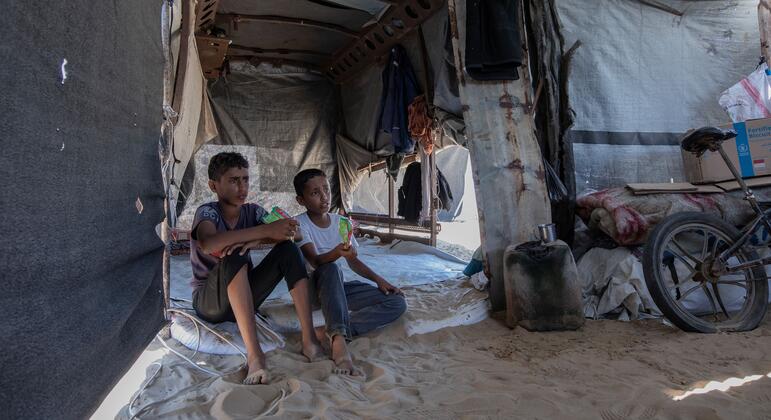
- Very likely humanitarian pressure will remain severe in Gaza and Lebanon over the next 14 days, with shelter, water access and aid delivery the clearest warning indicators. UN agencies report that 94 per cent of Gaza's 2.1 million residents need shelter and that more than four out of five families face critical or catastrophic living conditions. Up to 70 per cent cannot collect six litres of water per person per day, water prices have risen by up to 500 per cent, and UN partners estimate that $562 million is needed to improve living conditions. Israeli restrictions reportedly impede aid and services, while UNIFIL recorded 86 Israeli airspace violations and Israeli airstrikes and demolitions continue in Lebanon. Confidence is high for the severity of current conditions because UN agencies and partners provide repeated corroboration, although some water and infrastructure figures rely on major-media reporting of humanitarian sources. (Confidence: high · ASSESSED)
- I&W: Confirming indicator: UN agencies report that the proportion of Gaza residents needing shelter or unable to collect six litres of water per person per day has increased, alongside continued restrictions on shelter, waste collection or other essential services. (0-14 days)
- I&W: Breaking indicator: UN reporting shows the water-access shortfall has fallen below 70 per cent and restrictions on essential aid services have been lifted or materially reduced. (0-14 days)
Outlook & scenarios
Continued exchanges with constrained regional spillover (45%)
Likely Iranian missile and drone attacks and US-Israeli strikes continue over the next 14 days. Iran maintains pressure on Israel, US facilities and selected Arab states, while the Strait of Hormuz remains restricted. Egypt and Pakistan sustain diplomatic contacts, but no durable restraint follows.
Temporary diplomatic restraint (35%)
A temporary pause follows Egyptian and Pakistani engagement, with Washington and Tehran reaching an interim understanding on implementation or navigation. The pause does not resolve sanctions disputes, and maritime traffic recovers only partially.
Regional expansion through a trigger incident (15%)
Low-probability, high-impact escalation follows a strike on Qatar, Jordan, Bahrain or Kuwait, a major incident involving US forces, or an Israeli-Türkiye confrontation in Syria. The result is wider regional military involvement, deeper Hormuz disruption and additional pressure on Gulf states.
Partial maritime reopening without political settlement (25%)
Iran continues granting passage to selected Iraqi tankers and US-supported movements increase, producing a partial rise in oil flows. Ordinary commercial traffic remains below normal because the military confrontation and JMIC's SEVERE threat rating persist.
Recommendations
- Maintain a daily escalation ledger for the next 14 days covering Iranian missile and drone activity, US and Israeli strikes, and reported incidents in Israel, Qatar, Jordan, Bahrain and Kuwait. Record claimed attacks separately from independently reported impacts or interceptions.
- Reconcile Strait of Hormuz reporting by maintaining separate measures for commercial vessel crossings, confirmed Kpler crossings, Iraqi tanker permissions, military-facilitated transits and oil volumes. Do not combine the seven-vessel, 95-vessel, 200-vessel, 8-million-barrel and 15-million-barrel figures into a single traffic estimate.
- Prioritise verification of the diplomatic sequence by tracking Munir's reported Tehran visit, further Egyptian-Iranian contacts, implementation discussions between Washington and Tehran, and any formal US sanctions announcement.
- Keep a dedicated Syria warning file on Abu al-Duhur, Beit Jinn and other reported Israeli strike locations. Track Turkish statements, evidence of Turkish military movement or radar deployment, and any announced Ankara-Jerusalem deconfliction mechanism.
- Treat Gaza shelter and water access as standing regional-stability indicators. Update the 94 per cent shelter requirement, the 70 per cent water-access shortfall, the reported 500 per cent rise in water prices and the $562 million funding requirement separately from assessments of future deterioration.
Confidence & uncertainty
Overall confidence is medium. UN agencies and partners provide high-reliability corroboration for the severity of conditions in Gaza and continued activity in Lebanon, while several major-media reports corroborate the broad pattern of US-Israeli and Iranian military exchanges. Confidence is lower on the scale of Strait of Hormuz traffic, reported US casualty totals, the timing of Pakistani mediation and the evidence for Turkish military activity at Abu al-Duhur. These contradictions prevent a higher headline confidence.
Intelligence gaps
- [EEI 1.1 · UNCOVERED] Unusual long-range missile/rocket transporter-launcher (TEL) movements, storage activation, or assembly activity at known IRGC missile sites or forward staging areas. Recommended collection: satellite/imagery
- [EEI 1.2 · PARTIAL] Orders, threat-alert messages, or changes in posture from IRGC, Quds Force, or senior Iranian military leadership indicating attack timelines or rules of engagement changes. Recommended collection: signals/ELINT and HUMINT
- [EEI 1.3 · UNCOVERED] Large-scale transfers, deliveries, or convoy movements of armed UAVs/drones, guided munitions, or spare parts from Iran into Lebanon (Hezbollah), Iraq, Syria, or Gaza. Recommended collection: air/aviation track and HUMINT
- [EEI 1.4 · UNCOVERED] Sustained changes in Israeli air-defense usage (SAM launches, radar activations), wide-area alerts, or NOTAMs indicating elevated imminent strike response. Recommended collection: air/aviation/NOTAMs and signals
- [EEI 2.1 · UNCOVERED] Concentration, repositioning, or sortie patterns of Iranian naval/IRGC patrol boats and fast-attack craft near shipping chokepoints or commercial lanes. Recommended collection: maritime/AIS and satellite/imagery
- [EEI 2.2 · UNCOVERED] Reported attacks, mine sightings, close-approach incidents, or damage to commercial tankers/merchant vessels operating in the Red Sea, Persian Gulf, or eastern Mediterranean. Recommended collection: maritime/AIS and OSINT/incident reports
- [EEI 2.3 · UNCOVERED] Insurance market indicators: sudden spikes in war-risk or hull insurance premiums for routes through the Red Sea, Suez corridor, or Persian Gulf, and major carriers announcing route changes. Recommended collection: financial/market and commercial shipping notices
- [EEI 2.4 · UNCOVERED] Port closures, naval escorts requested by commercial operators, or formal rerouting advisories issued by major shippers (e.g., Maersk, Hapag-Lloyd) for regional transits. Recommended collection: commercial/OSINT
- [EEI 3.1 · UNCOVERED] Deployment of foreign military assets to the region (carrier strike groups, amphibious ships, combat aircraft deployments, or additional bases activated) from the US, UK, France, Russia, or GCC states. Recommended collection: maritime/AIS and air/aviation and satellite/imagery
- [EEI 3.3 · UNCOVERED] Confirmed arms transfers, expedited weapons shipments, or transfer authorizations to Israel, Iran, or their proxies (aircraft parts, munitions, air defenses). Recommended collection: customs/INTEL and HUMINT
- [EEI 3.4 · UNCOVERED] Issuance of travel warnings, embassy evacuations or reductions, and closure of diplomatic missions by major capitals indicating escalation risk or shifted threat assessments. Recommended collection: OSINT/diplomatic
Cited sources
[1] newsonair.gov.in · Conflict in West Asia escalates as several countries are becoming involved; Fighting is spreading across different parts of region (B) · sha256:6826947addba [2] Wikipedia · Reactions to the 2026 Iran war (B) · sha256:32d813375717 [3] en.yenisafak.com · Pakistan army chief, Iranian FM discuss reviving stalled US talks (B) · sha256:4d6bd75e4a0d [4] sundayguardianlive.com · US-Israel-Iran War Latest Live News: Egypt & Iran Push for Regional De-escalation as Strait of Hormuz Oil Flows Fall to 8M Barrels a Day After 60-Day MoU (B) · sha256:9194c3681e52 [5] gcaptain.com · Trump Administration Claims Massive Oil Flows Through Hormuz But Industry Data Raises Questions (B) · sha256:8f4f24a9f59d [6] arabnews.com · Iran says Pakistan army chief to visit Tehran on Monday for talks on regional peace (B) · sha256:5756a3a5cd7f [7] Al Arabiya · حركة المرور عبر مضيق هرمز ترتفع بنحو 400% خلال أسبوعين. و200 سفينة تعبر المضيق في أسبوع | قناة العربية Al Arabiya (E) · sha256:64675f31e010 [8] Al Jazeera · Iran warns of retaliation against countries joining US ‘economic war’ (A) · sha256:29d604d5d361 [9] Yenisafak · Egypt, Iran FMs discuss de-escalation, US deal (B) · sha256:028494109e56 [10] Al Jazeera · Israel, Turkiye and the post-Abrahamic Middle East (B) · sha256:b38b7ab4b7be [11] ynetnews.com · From 'comprehensive peace' to 'provocation of war': Israel-Turkey tensions rise in Syria (B) · sha256:0027db00c5d9 [12] Haaretz · Haaretz slams Netanyahu Syria strikes, warns of Türkiye conflict (B) · sha256:6000d8cdae87 [13] Daily Sabah · Israel, Türkiye tensions: Where does U.S. stand? | Daily Sabah (B) · sha256:721b29ebd74c [14] United Nations · Middle East: 94 per cent need shelter in Gaza, Israel ramps up demolitions in Lebanon (A) · sha256:aa5d2b0f402c [15] Al Jazeera · Where water conflicts pose the biggest threat in 2026 (A) · sha256:352388d33969 [16] The Financial Express · Israeli airstrikes in Gaza kill two people, including a 4-year-old boy, medics say (B) · sha256:663bcb820e3f
Source content hashes were computed at collection time; the cited text is preserved unmodified for the life of this product.
TLP:CLEAR