TLP:CLEAR · Disclosure is not limited.
Iran-Israel War Widens Across Gulf and Red Sea
Time window: Last 1 day · Audience: General analyst · Type: Situation report · DTG: 2026-09-12 18:38Z · Overall confidence: HIGH
BLUF
It is very likely that the Iran-Israel-US conflict will remain a multi-front war over the next 14 days, with Iranian attacks on US positions, Houthi gains around Mocha, Hanish and Perim, and Iraq-based drone attacks on Saudi Arabia's East-West Pipeline. It is unlikely that maritime disruption will ease materially before the 14 September Oman talks, while the 30 September Iraqi militia deadline is the main near-term trigger for further US and Saudi exposure.
Executive summary
Reported developments show the conflict expanding beyond Iran and Israel into Iraq, Saudi Arabia, Yemen and the maritime approaches to the Strait of Hormuz and Bab el-Mandeb. Saudi Arabia temporarily shut the East-West Pipeline after drone attacks, while Iraq confirmed that the attacks originated in Maysan province. The Houthis captured Mocha and Hanish and reached Perim, although the extent of their control over Perim remains contested. Hormuz traffic data remain inconsistent: UKMTO reports severe risk and very low AIS-derived movements, while other reporting records more than 200 combined inbound and outbound passages over seven days and crude flows above 10 million barrels per day. Diplomatic channels remain open through Iran-UAE contacts, BRICS calls for restraint and planned Iran-Gulf talks in Oman, but the reporting does not establish a durable ceasefire or a confirmed reopening of Hormuz.
Change from previous assessment
Since the 11 September brief, the assessment has added a new Iraq-Saudi front: Baghdad confirmed that the Saudi pipeline attack originated in Maysan, dismissed a local commander and opened investigations, while Saudi Arabia shut the East-West Pipeline. The 30 September Iraqi militia disarmament deadline and the withdrawal of US forces now form a more immediate escalation trigger. The assessment of sustained multi-front conflict remains high confidence. The Hormuz judgement remains medium confidence and is now more explicitly qualified because AIS-derived, facilitated-transit and crude-flow figures conflict. A new diplomatic mitigation line has been added for the 14 September Oman meeting and the Iran-UAE de-escalation channel, but no durable pause judgement has been retired.
Key judgments
- It is very likely that the conflict remains a multi-front war involving Iran, Israel, the United States, Saudi Arabia, Iraq and the Houthis. Reported developments include Iranian attacks on US bases, Houthi control gains at Mocha and Hanish and access to Perim, and an Iraq-based drone attack on Saudi Arabia's East-West Pipeline. This is an assessed synthesis rather than a claim that all reported actors share a single command structure. Confidence is high because major-media and wire-service reporting independently corroborates the principal military developments, although control of Perim and responsibility for the pipeline attack remain contested. (Confidence: high · ASSESSED)
- I&W: Confirming indicator: within 0-14 days, Iran conducts another strike against a US position in the region or the Houthis attack a commercial vessel or advance from Mocha, Dhubab or Perim. (0-14 days)
- I&W: Breaking indicator: Iranian, Israeli, Houthi and Iraq-based attacks cease for seven consecutive days, accompanied by Yemeni government forces re-entering Perim or Dhubab. (0-14 days)
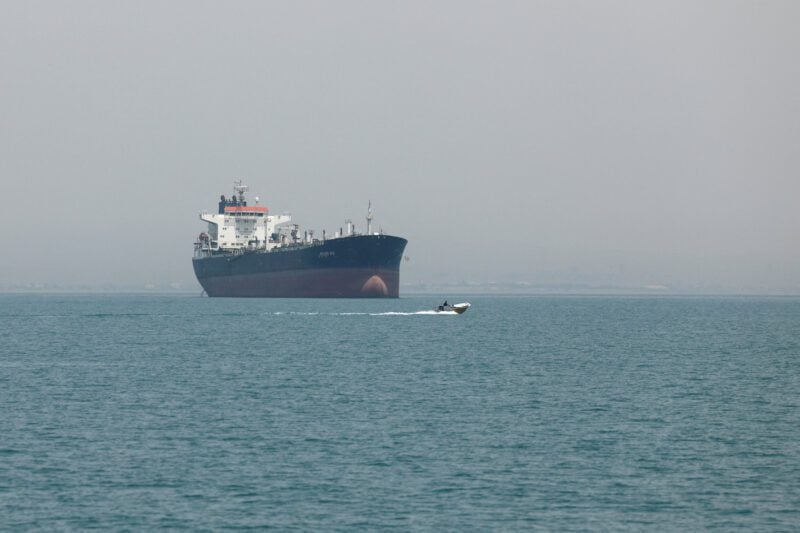
- It is very likely that maritime access will remain constrained over the next 14 days, but it is unlikely that the Strait of Hormuz will be completely closed. UKMTO assesses the threat as SEVERE, records 22 AIS-derived outbound and 23 inbound passages over seven days, and reports that overall traffic is roughly 20% of the pre-conflict norm. This contrasts with 108 outbound and 102 inbound passages when US-facilitated movements are included, reports of crude flows above 10 million barrels per day, and Saudi exports moving under US CENTCOM protection. Confidence is medium because the reporting uses different counting methods and conflicts over whether Iran or the United States is imposing the blockade. (Confidence: medium · ASSESSED)
- I&W: Confirming indicator: a new seven-day UKMTO report records fewer than 30 AIS-derived passages in either direction and retains a SEVERE threat assessment. (0-14 days)
- I&W: Breaking indicator: AIS-derived traffic approaches 100 inbound and 100 outbound passages over seven days without a comparable increase in reported attacks. (0-14 days)
- It is likely that Saudi oil supply and export routes will remain under pressure for the next one to three months. Saudi Arabia temporarily suspended the East-West Pipeline after drone attacks, only two Saudi cargoes reportedly passed through Bab el-Mandeb in the previous week, and the IEA reported August Saudi crude supply at 6 million barrels per day after a 2.3 million barrel-per-day fall. Crude prices exceeded 100 dollars per barrel and VLCC freight rates reached record levels. Confidence is medium because the duration of the pipeline shutdown is unresolved, Saudi and IEA production figures differ, and some reporting records substantial Gulf crude flows despite the disruption. (Confidence: medium · ASSESSED)
- I&W: Confirming indicator: Saudi Arabia's Ministry of Energy reports the East-West Pipeline remains shut after 14 days and Kpler records no more than two Saudi cargoes through Bab el-Mandeb in a subsequent week. (0-14 days)
- I&W: Breaking indicator: the pipeline reopens and Kpler records a sustained increase in Saudi cargoes through Bab el-Mandeb, while VLCC rates and crude prices decline for two consecutive reporting periods. (1-3 months)
- It is likely that the 30 September Iraqi militia disarmament deadline and the withdrawal of remaining US-led coalition forces will increase pressure on Baghdad and raise the risk of further attacks on US personnel or Saudi infrastructure. Baghdad has linked the Saudi pipeline attack to a launch site in Maysan, dismissed the Maysan Operations Commander and opened investigations, while Kata'ib Hezbollah and four other named Iran-aligned groups resist integration and Kata'ib Hezbollah has rejected the deadline. Confidence is medium because the Popular Mobilization Forces deny involvement in the pipeline attack and the provided reporting does not establish which group operated the drones. (Confidence: medium · ASSESSED)
- I&W: Confirming indicator: by 30 September, Kata'ib Hezbollah or another named militia publicly rejects disarmament, or a new drone attack is traced to Maysan and targets a Saudi energy site or a US facility. (0-14 days)
- I&W: Breaking indicator: Baghdad completes the Maysan investigation and all five named resisting groups publicly accept integration into Iraq's state security structure before the deadline. (0-30 days)
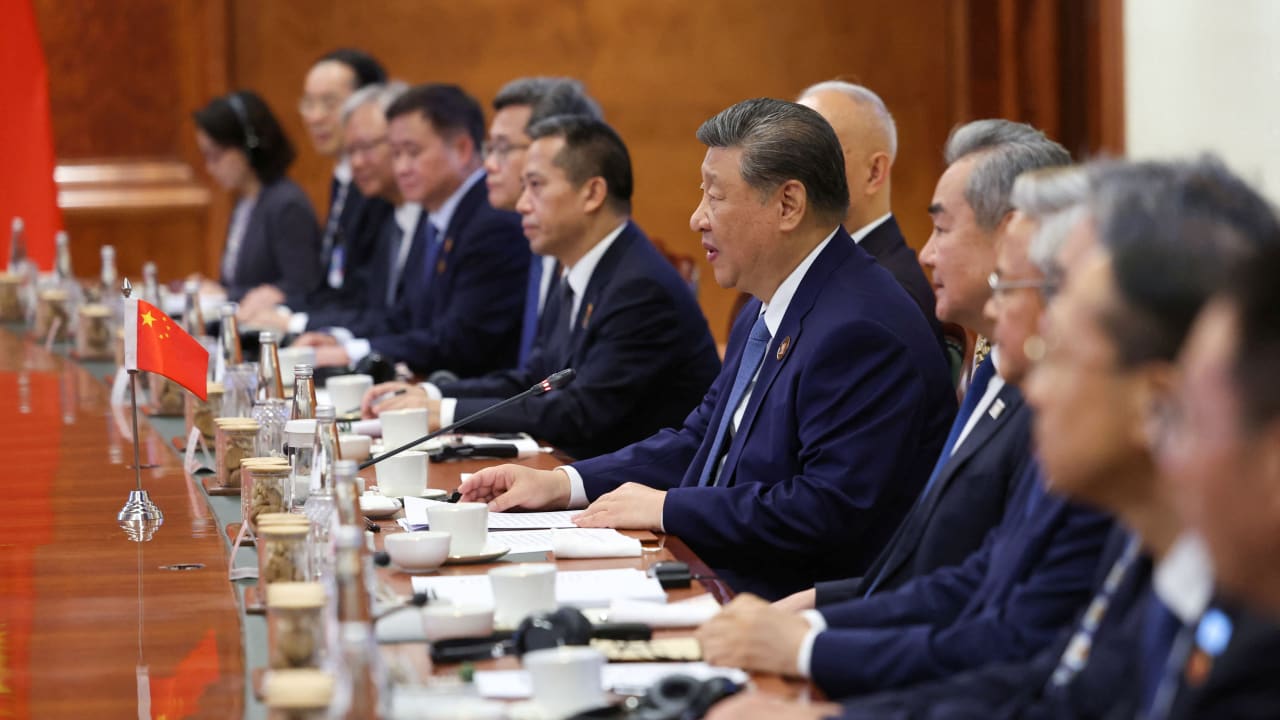
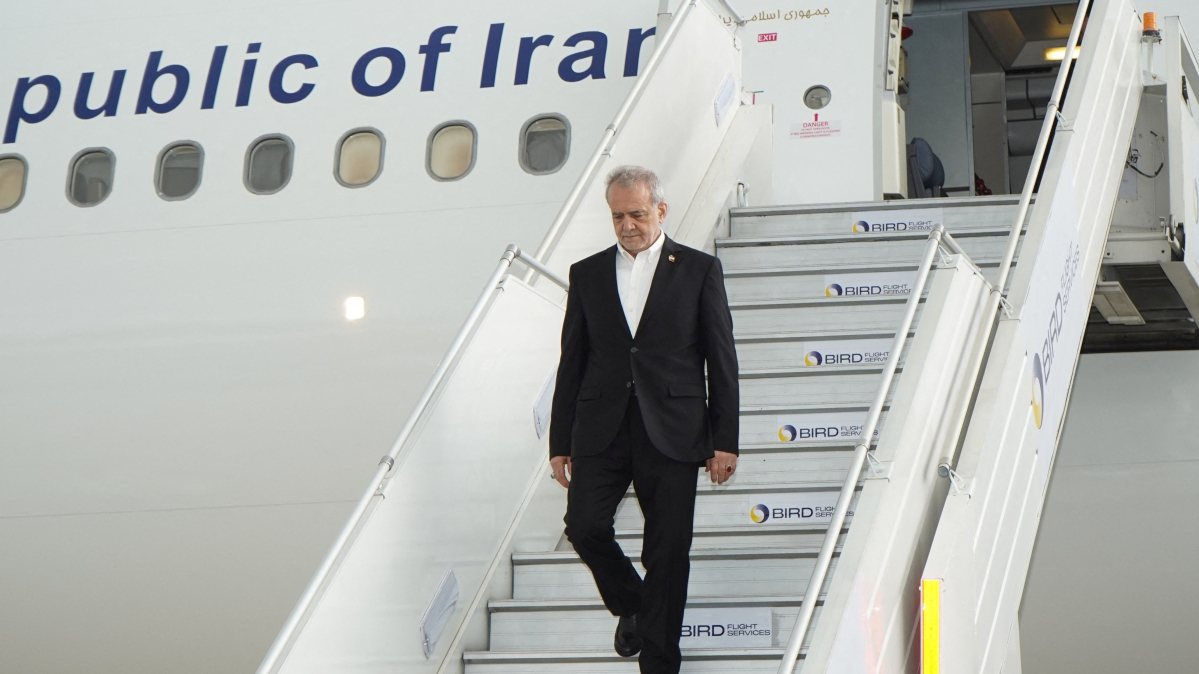
- It is roughly even chance that the 14 September Iran-Gulf meeting in Oman produces a limited, temporary shipping arrangement, but it is unlikely that the meeting produces durable regional de-escalation within 14 days. Iran and Oman have discussed temporary routes, mine clearance and short-term waterway management, while Iran, Iraq and Gulf representatives are scheduled to meet. However, a senior Iranian official does not expect a signed Hormuz agreement, Bahrain says it will not hold talks with Iran before diplomatic ties are restored, and the reported Iran-Oman reopening deal conflicts with reporting that an agreement remains to be signed. Confidence is medium because the meeting and its agenda are well reported, while its attendance, venue and outcome remain disputed. (Confidence: medium · ASSESSED)
- I&W: Confirming indicator: the 14 September meeting produces a signed shipping arrangement, notifies the International Maritime Organization and is followed by a measurable rise in AIS-derived Hormuz traffic. (0-14 days)
- I&W: Breaking indicator: the meeting ends without a signed arrangement, Bahrain remains absent and UKMTO reports continued SEVERE risk with no increase in AIS-derived passages. (0-14 days)
- It is unlikely that public signalling alone will produce a durable pause in Iran-Israel hostilities over the next 14 days. Iran has threatened more intense counterstrikes, Israeli Defence Minister Katz has warned of an unrestricted response to an Iranian attack, and Lebanese President Aoun says no Israel-Lebanon negotiations are under way. BRICS restraint appeals and the Iran-UAE discussion of de-escalation provide diplomatic pressure but no verified ceasefire mechanism. Confidence is medium because the judgement rests on public statements and the absence of reported negotiations, while the planned Oman meeting creates a limited alternative pathway. (Confidence: medium · ASSESSED)
- I&W: Confirming indicator: Iran conducts another attack against Israel or Israel conducts a new strike against Iran after the latest public threats, without a parallel announcement of direct talks. (0-14 days)
- I&W: Breaking indicator: Iran, Israel and Lebanon establish direct talks and maintain a verified seven-day halt in attacks across the relevant fronts. (0-14 days)
Outlook & scenarios
Continued multi-front attrition (55%)
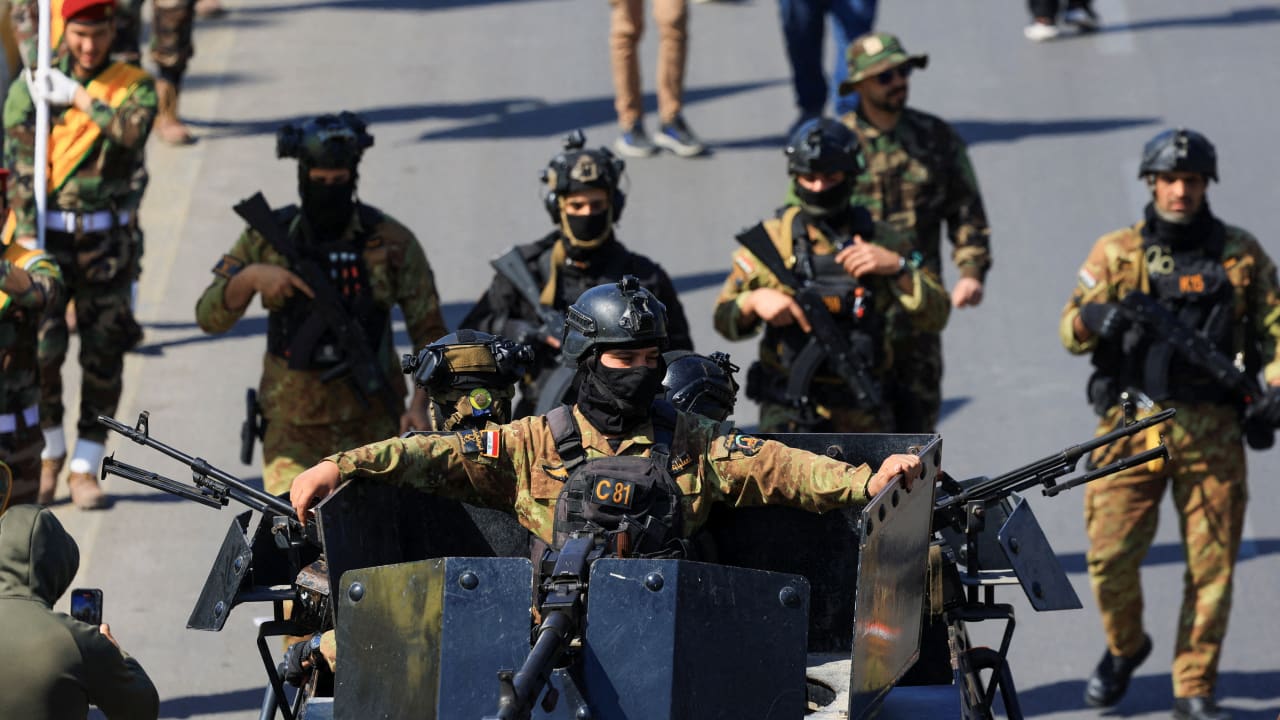
Iran continues targeting US positions, the Houthis consolidate their positions around Mocha and the Bab el-Mandeb, and Iraq-based armed networks sustain pressure on Saudi infrastructure. Hormuz remains partially open through US-facilitated movements, but AIS-derived traffic stays low and energy freight costs remain elevated.
Limited maritime deconfliction (35%)
The 14 September Oman meeting produces a temporary route or notification arrangement for commercial shipping. Hormuz traffic increases from current AIS levels, while the Houthis continue restricting Saudi-linked shipping and the East-West Pipeline remains a separate source of supply risk.
Partial diplomatic thaw without a general ceasefire (25%)
Iran and the UAE sustain their de-escalation channel, BRICS pressure continues and Oman obtains a limited shipping understanding. Israel-Iran military signalling and Houthi pressure in the Red Sea continue, preventing a broader halt in hostilities.
Iraq-linked escalation and direct US involvement (15%)
Low-probability, high-impact wildcard: a new attack from Maysan or another Iraqi launch area kills US personnel or causes wider Saudi energy damage. Saudi Arabia abandons its current restraint, Baghdad fails to enforce the 30 September deadline and Washington expands beyond intelligence and targeting support.
Recommendations
- Track the 14 September Oman meeting against observable outputs: attendance, venue, a signed route arrangement, notification to the International Maritime Organization and changes in AIS-derived traffic. Keep Iranian, US-facilitated and UAE-facilitated transit counts separate.
- Maintain separate attribution lines for the Saudi pipeline attack. Record the Iraqi government finding that drones originated in Maysan, the US assessment of Houthi involvement and the Popular Mobilization Forces denial without merging them into a single confirmed attribution.
- Prioritise warning collection on the 30 September Iraqi militia deadline. Monitor statements and movements by Kata'ib Hezbollah, Harakat Hezbollah al-Nujaba, Kata'ib Sayyid al-Shuhada, Ansar Allah al-Awfiya and Saraya Awliya al-Dam, alongside the status of US forces and air defences leaving Iraq.
- Use two maritime baselines in all reporting: AIS-derived movements and US-facilitated passages. Avoid describing Hormuz as fully closed unless commercial movements cease across both measures.
- Update energy risk modelling weekly with the East-West Pipeline operating status, Saudi cargo counts through Bab el-Mandeb, IEA supply estimates, Brent and WTI settlements, and VLCC freight rates.
- Treat public restraint statements as intent indicators rather than evidence of a ceasefire. Require confirmation of a sustained halt in attacks and direct negotiations before lowering the regional escalation assessment.
Confidence & uncertainty
Overall confidence is high for the central judgement that the conflict is widening across Iran, Israel, the United States, Iraq, Saudi Arabia, Yemen and adjacent sea lanes. The principal military and infrastructure developments are corroborated by major-media, wire-service and trade reporting, including the Saudi pipeline shutdown, Houthi territorial gains and severe maritime risk. Confidence is lower on the extent of Houthi control over Perim, responsibility for the pipeline attack, the true level of Hormuz traffic and the outcome of the 14 September talks. These uncertainties affect the scale and timing of escalation, not the direction of the current trend.
Intelligence gaps
- [EEI 1.1 · PARTIAL] Number, type, launch times, and trajectories of ballistic missiles, cruise missiles, armed UAV strikes, and combat-air sorties launched by Iranian or Israeli forces toward the other's territory or forward bases within a 72-hour window. Recommended collection: signals/intel
- [EEI 1.2 · PARTIAL] Observable changes in Israeli and Iranian force posture: mobilization or reserve call-up orders, unit road/rail movements, dispersal or sortie rates of air squadrons, redeployment of air-defense batteries, and activation of civil-defense alerts or sirens in major population centers. Recommended collection: open-source/media
- [EEI 1.3 · PARTIAL] Indications of strike authorization or targeting preparations in Iranian or Israeli command chains: authenticated public orders by senior commanders, detected increases in encrypted communications consistent with targeting, or visible movement of strike munitions to launch/storage sites. Recommended collection: signals/intel
- [EEI 2.1 · UNCOVERED] Counts, launch locations (coordinates), weapons types, and assessed damage from rocket/missile/drone strikes originating from Lebanon into northern Israel attributed to Hezbollah or allied groups. Recommended collection: open-source/media
- [EEI 2.2 · PARTIAL] Reported attacks by Iranian-backed militias in Iraq and Syria: rocket/IED strikes on bases hosting US/coalition or Israeli personnel, documented militia unit movements toward borders, and captured movement or transfer of weapons systems to forward militia positions. Recommended collection: human
- [EEI 2.3 · PARTIAL] Maritime harassment or attacks by proxies (e.g., Houthis): incidents of missile/rocket strikes against commercial vessels, small-boat swarm attacks, discovery or detonation of naval mines, and corresponding AIS anomalies in the Red Sea, Gulf of Aden, or southern Arabian Gulf. Recommended collection: maritime/AIS
- [EEI 3.1 · UNCOVERED] Movements and arrival dates of foreign military assets into the region: carrier strike groups, amphibious ships, surface combatants, strategic airlift/tanker deployments, and air/sea patrol patterns by US, European, Russian, or regional militaries. Recommended collection: imagery/satellite
- [EEI 3.2 · PARTIAL] Concrete diplomatic and political actions: emergency UN/Arab League meetings called, official embassy evacuation orders, public declarations of intent to interpose or protect shipping/airspace, and newly announced sanctions or arms-transfer approvals tied to the conflict. Recommended collection: diplomatic
Red cell review: CONCUR WITH COMMENT
TLP:CLEAR