TLP:CLEAR · Disclosure is not limited.
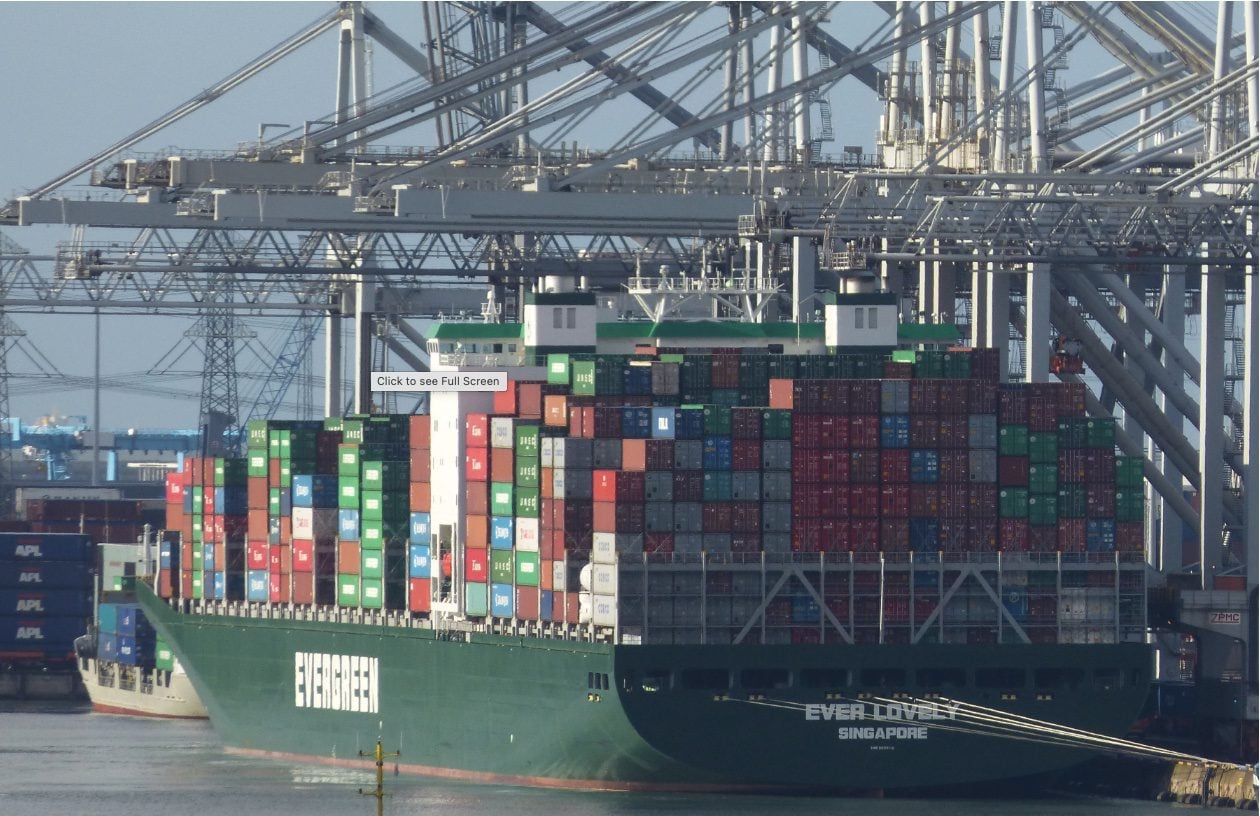
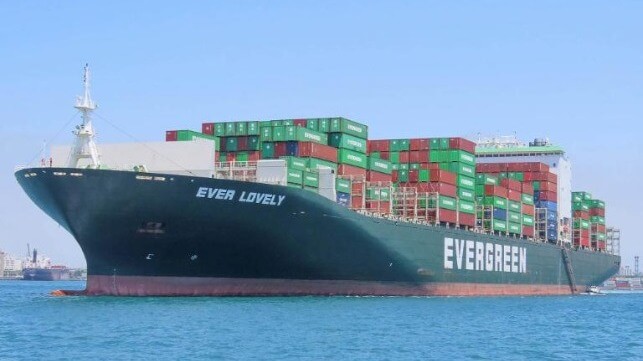
Iran's Ever Lovely drone strike tests US-Iran memorandum of understanding
Time window: Last 1 day · Audience: General analyst · Type: Situation report · DTG: 2026-06-26 23:09Z · Overall confidence: MEDIUM
BLUF
Iran's drone attack on the Ever Lovely has suspended IMO-led humanitarian evacuations, undermined the US-Iran memorandum of understanding, and exposed fragile compliance mechanisms despite resumed oil transit. Energy markets and regional stability remain vulnerable to further violations as evacuation suspension prolongs seafarers' exposure to hazards in the Strait of Hormuz.
Executive summary
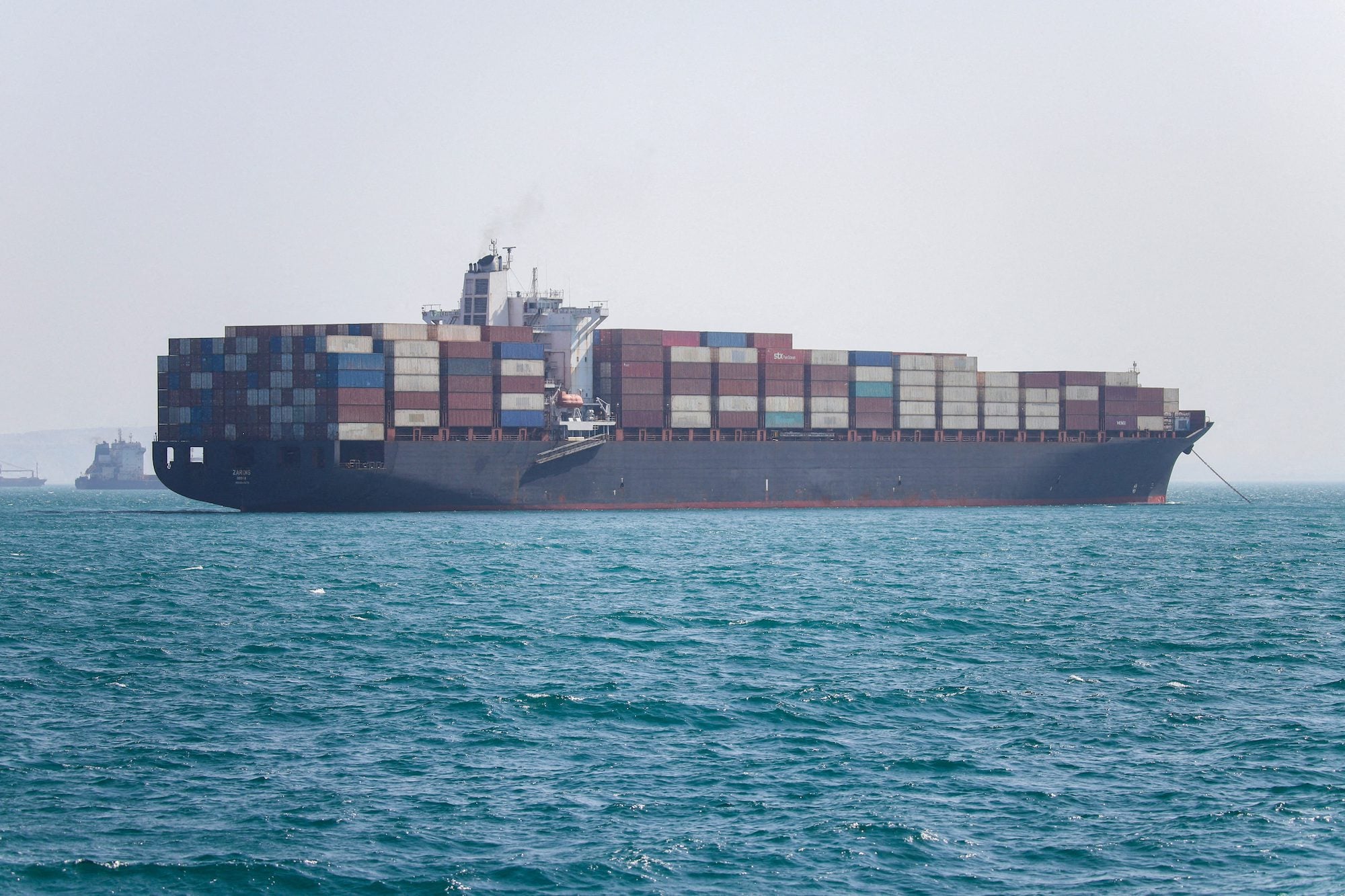
Iran's one-way drone strike on the Taiwanese-operated container ship Ever Lovely near Oman on 25 June has temporarily suspended the International Maritime Organization's evacuation framework for stranded seafarers while raising serious questions about Iran's adherence to the recently signed US-Iran memorandum of understanding. US officials attributed the attack to Iran's Islamic Revolutionary Guard Corps Navy, with President Trump characterising it as a violation of the ceasefire agreement. Though petroleum transit through the Strait of Hormuz has resumed at prewar volumes in recent days, the suspension of evacuation efforts has left over 11,000 seafarers trapped in the Persian Gulf amidst confirmed mine hazards and ongoing security risks.
Change from previous assessment
The prior 24 June brief anticipated fragile stability in southern Lebanon and hazardous Hormuz transit conditions, but new Iranian violation of the ceasefire agreement through the Ever Lovely strike has fundamentally altered the risk calculus. The signed US-Iran memorandum of understanding has proven more fragile than anticipated, with the suspension of IMO evacuation efforts directly contradicting earlier hopes that the deconfliction mechanism would facilitate safe passage. Previously stable oil transit rates have now been disrupted by the attack despite pre-strike indications of returning normalisation, representing a significant deterioration in the situation.
Key judgments
- Very likely Iran deliberately targeted the Ever Lovely to exploit political divisions between Israeli officials, as evidenced by simultaneous restrictions reported by southern Lebanon troops and public denials by Prime Minister Netanyahu and Defense Minister Katz, revealing command friction that hardliners likely sought to exploit through the strike. (Confidence: medium · ASSESSED)
- I&W: Israeli Cabinet holds emergency session specifically to address command structure conflicts between political leadership and field commanders (0-7 days)
- I&W: Iranian officials publicly reference internal Israeli command disputes following the strike (0-14 days)
- Likely Iran retains strategic interest in keeping the Strait of Hormuz partially disrupted to strengthen its negotiating position with the United States regarding sanctions relief, given its control of transit routes and explicit warnings that vessels without Iranian permission transit at their own risk. (Confidence: medium · ASSESSED)
- I&W: Iranian officials link Hormuz security guarantees to progress on sanctions relief in public statements (0-14 days)
- I&W: New Iranian vessel tracking requirements emerge that would give Iran greater control over navigation routes (1-3 months)
- The US-Iran memorandum of understanding faces significant implementation challenges due to contradictory statements from Iranian officials regarding nuclear inspection access and mine clearance responsibilities, indicating internal divisions between hardliners and negotiators that threaten the agreement's viability. (Confidence: medium · ASSESSED)
- I&W: IAEA reports concrete steps demonstrating Iranian cooperation on nuclear inspections (0-21 days)
- I&W: Iran publicly acknowledges progress on mine clearance operations in the Strait of Hormuz (1-3 months)
- Reported: Iran launched at least four one-way attack drones at the Strait of Hormuz on 25 June 2026, with one striking the Ever Lovely and three intercepted by U.S. forces. (Confidence: medium · REPORTED)
- I&W: Iranian authorities publicly acknowledge drone launch operation (0-7 days)
- I&W: Physical evidence of Iranian drone type recovered from Ever Lovely (0-14 days)
- Reported: The International Maritime Organization suspended its evacuation framework for over 11,000 seafarers stranded in the Persian Gulf following the Ever Lovely attack, after having already moved only 13 tankers through the Strait of Hormuz before the incident. (Confidence: high · REPORTED)
- I&W: IMO resumes evacuation framework and issues new coordinated movement plan (0-21 days)
- I&W: Daily tanker transits return to 25+ through Strait of Hormuz (1-2 months)
Outlook & scenarios
MOU collapse (35%)
Iran continues limited strikes while hardliners block nuclear inspections and mine clearance, prompting Trump to withdraw from the memorandum within 90 days. The Strait of Hormuz remains unstable with persistent security threats, evacuations stay suspended, and oil prices surge over $120/bbl as alternative shipping routes remain congested. Saudi Arabia mediates a separate Iran-GCC security arrangement.
Fragile implementation (50%)
Both sides selectively comply with the memorandum through October: Iran partially cooperates on mines and inspections while continuing low-level asymmetric operations. Evacuations resume under US Navy protection by mid-August, but insurance premiums remain elevated. Israeli-Lebanon negotiations continue with limited progress, resulting in piecemeal security agreements that prevent wider conflagration.
Accelerated de-escalation (10%)
Netanyahu faces political pressure and US demands to withdraw from southern Lebanon, while Iranian reformists gain leverage to secure sanctions relief. By September, verified mine clearance enables full IMO operations, oil transit normalises, and joint US-Iran security cooperation begins. The Panama Canal reroutes some traffic permanently even after Hormuz fully reopens.
Houthi resurgence (5%)
Iran persuades Houthis to resume Red Sea attacks by August, drawing the United States back into broader regional conflict. Combined with Israeli-Houthi clashes, this undermines the US-Iran memorandum and leads to complete collapse of the evacuation plan. Shipping rates double as global supply chains face renewed disruption despite temporary Panama Canal relief.
Recommendations
- Direct CENTCOM to establish an immediate escort mechanism for evacuated vessels with 72-hour advance notification
- Request State Department to accelerate bilateral naval coordination between Oman and the UAE covering the southern Hormuz corridor
- Urge Treasury Department to create conditional sanctions relief tranches tied directly to mine clearance verification
- Dispatch intelligence liaison team to coordinate with BIMCO on crew safety protocols during vessel movement resumption
Confidence & uncertainty
The overall confidence level is assessed as medium due to multiple corroborated reports from major media and government sources regarding the Ever Lovely incident and MOU suspension, though several claims lack independent verification. Contradictions exist between US claims of Iranian responsibility and Iran's silence on the attack, while internal Israeli command disputes complicate assessment of Iranian motives. Source reliability is generally medium as most reporting comes from multiple major media outlets with limited official government confirmation beyond US attributions. The low confidence on certain nuclear inspection aspects and mine clearance timelines reflects insufficient corroborating evidence from reliable sources.
Intelligence gaps
- [EEI 1.1 · UNCOVERED] Observed repositioning, sustained increases, or new forward basing of Iranian conventional or IRGC forces (armored units, missile batteries, aircraft, naval vessels) toward borders or regional launch points. Recommended collection: IMINT/satellite
- [EEI 1.2 · UNCOVERED] Hezbollah or other Iran-aligned proxy forces conducting mass mobilization, visible rocket/artillery emplacements, cross-border firing incidents, or preparations for cross-border operations from Lebanon, Syria, Iraq or Yemen. Recommended collection: HUMINT/ground ISR
- [EEI 1.3 · UNCOVERED] Detection of increased missile/rocket/torpedo launch events attributable to Iran, Israel, or proxies (launch signatures, trajectories, impact points) indicating a sustained campaign rather than isolated strikes. Recommended collection: SIGINT/IMINT/air-defense radar
- [EEI 1.4 · UNCOVERED] Interdicted or observed shipments (air, sea, land manifests, seizures, satellite imagery of transfers) of advanced weapons or missile components from Iran toward proxy groups or forward staging points. Recommended collection: maritime/AIS
- [EEI 2.1 · UNCOVERED] Satellite or on-the-ground imagery showing fires, damage, or operational shutdown at major oil export facilities, refineries, storage terminals, or key pipeline infrastructure in the Gulf and Red Sea. Recommended collection: IMINT/satellite
- [EEI 2.2 · UNCOVERED] Commercial vessel incidents: AIS transponder shutdowns, distress signals, reported hull/engine damage, boardings, or confirmed attacks on tankers/merchant ships transiting the Strait of Hormuz, Bab al-Mandeb, or eastern Mediterranean. Recommended collection: maritime/AIS
- [EEI 2.3 · UNCOVERED] Significant and sustained reductions or rerouting of tanker transits through the Strait of Hormuz (ship traffic counts, pilot reports, port call cancellations) and announcements of closure or restricted navigation zones (NOTAMs, maritime advisories). Recommended collection: maritime/NOTAMs
- [EEI 2.4 · UNCOVERED] Rapid increases in war-risk insurance premiums for Middle East routes, shipping company advisories to avoid region, or major charter cancellations tied to the conflict. Recommended collection: financial/open-source
- [EEI 3.1 · UNCOVERED] Movement/arrival of major foreign military assets into the region: U.S. carrier strike groups, amphibious ready groups, strategic bomber flights, Russian/Chinese naval taskings, or allied expeditionary units (visible in AIS, NOTAMs, satellite imagery, official releases). Recommended collection: IMINT/satellite
- [EEI 3.2 · UNCOVERED] Official expedited arms transfers, basing/overflight agreements, or declarations of operational support (formal government announcements, defense ministry releases, logistics flight manifests). Recommended collection: open-source/diplomatic
- [EEI 3.3 · UNCOVERED] Embassy evacuations, large-scale personnel movements, issuance of government travel bans/advisories, or multinational security alerts affecting foreign nationals and diplomatic posture in the region. Recommended collection: diplomatic/open-source
- [EEI 3.4 · UNCOVERED] High-level diplomatic/UN activity: scheduled or emergency Security Council meetings, published ceasefire proposals, or multilateral statements committing support/condemnation that precede changes in military posture. Recommended collection: open-source/diplomatic
Cited sources
[1] gcaptain.com · Trump Says Iran Violated Ceasefire With Drone Attack on Ship (B) · sha256:d823e1cd6a6e [2] The Jerusalem Post · Cabinet clashes over claims IDF operations restricted in southern Lebanon (B) · sha256:f0af37ab2f82 [3] jpost.com · Israel-Lebanon talks continue under US mediation despite deadlock over Hezbollah disarmament (B) · sha256:44dbd0033555 [4] maritime-executive.com · Strait of Hormuz Volumes are Rising, But Iranian Attack Adds Uncertainty (B) · sha256:f5d281b97ed1 [5] The Times of India · US To Relocate 5th Fleet HQ In Bahrain To Israel; Bombshell Reveal After Direct Iranian Hits A new Wall Street Journal report claims the Pentagon is reassessing its military posture after Iranian missile and drone attacks reportedly damaged key U.S. facilities during the recent conflict. The report says the U.S. Navy's Fifth Fleet headquarters in Bahrain—one of Washington's most important military hubs in the Gulf—was among the sites hit, raising fresh questions about the vulnerability of American bases near Iran. | The Times of India (B) · sha256:254331c5b2f7 [6] gcaptain.com · Drone Strike on Ever Lovely Exposes the Fiction of a Free Strait (B) · sha256:d7e3a25c7c0a [7] Wikipedia · Reactions to the 2026 Iran war (B) · sha256:42d3d4c4bb5b [8] haaretz.com · Netanyahu says Israel has free rein in Lebanon but crumbles under pressure from Trump (B) · sha256:4b431824d0eb [9] haaretz.com · Hope or Fear: how will Netanyahu's rivals use Trump's Iran deal? (A) · sha256:f1ec5333d7df [10] foxnews.com · Iran nuclear deal hinges on IAEA access to long-blocked atomic weapon sites, experts say (B) · sha256:fd647ccc2bfd [11] gcaptain.com · IMO Estimates There Are 80 Mines in Hormuz’s Shipping Lanes (B) · sha256:fdc4b9125ea5 [12] gcaptain.com · Ship Attack Off Oman Derails IMO's Hormuz Evacuation Effort (A) · sha256:b1d4694f3f37 [13] United Nations · From Lebanon to the Strait of Hormuz, a Middle East hanging on fragile peace talks (A) · sha256:d0d950f95951 [14] gcaptain.com · Traffic Through Strait of Hormuz Slows After Attack on Ship (A) · sha256:35908e9708bb
Source content hashes were computed at collection time; the cited text is preserved unmodified for the life of this product.
TLP:CLEAR