TLP:CLEAR · Disclosure is not limited.
Iran Tightens Maritime Pressure as Hormuz Traffic Remains Constrained
Time window: Last 7 days · Audience: General analyst · Type: Situation report · DTG: 2026-08-25 12:11Z · Overall confidence: MEDIUM
BLUF
Iran is very likely to sustain a coercive transit regime in the Strait of Hormuz, while more than 80% of reported liquids traffic uses the Omani-side route or dark navigation. The immediate risk is prolonged disruption, higher shipping costs and further incidents involving Saudi-linked, UAE-linked or otherwise non-compliant vessels, although negotiations retain a roughly even chance of producing a partial reopening.
Executive summary
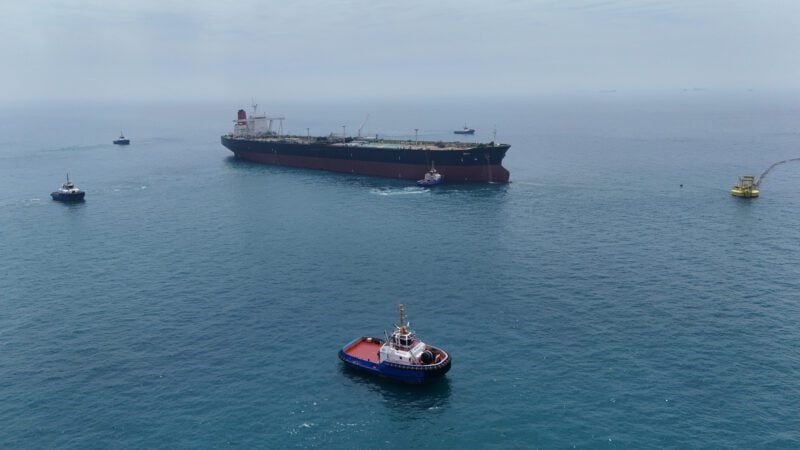
During the 18-25 August 2026 reporting window, Iran maintained pressure on commercial shipping through the Strait of Hormuz by asserting control, threatening penalties and publishing lists of vessels it considers non-compliant. Shipping data indicates that more than 80% of liquids traffic is using the Omani-side route or dark transits, while traffic through Hormuz remains well below pre-war levels. A ship was struck by a projectile while exiting the Strait on 18 August, and a tanker was later struck west of Yanbu by an unidentified projectile. The disruption is sustaining global fuel and freight pressure and is adding to humanitarian stress in Somalia and Ethiopia. Diplomatic signals remain mixed: Iran, Oman, Egypt and Qatar support arrangements to restore traffic, while US sanctions and reported suspension of negotiations reduce confidence in a durable settlement.
Key judgments
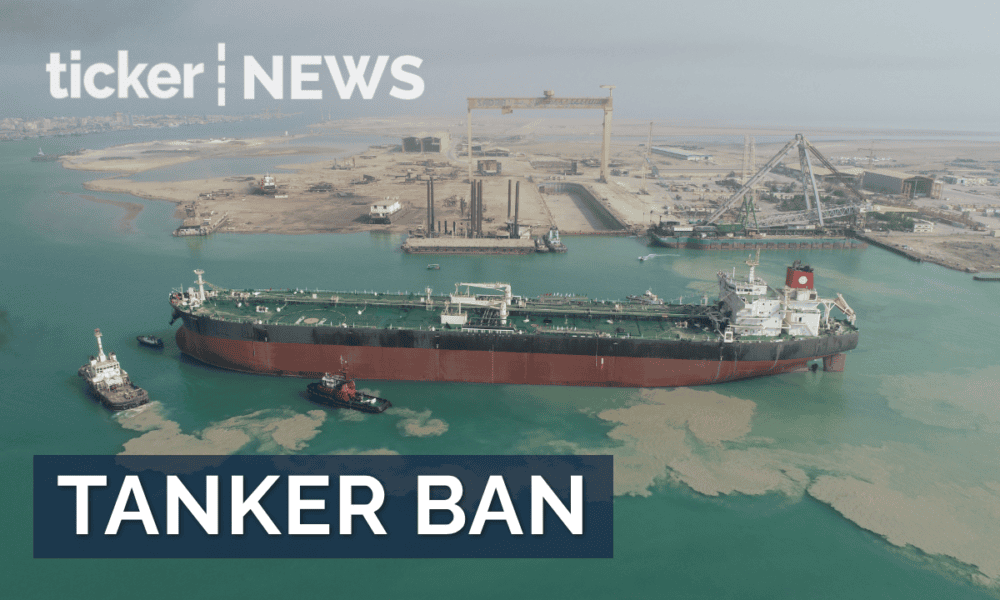
- Iran is very likely to continue enforcing a controlled transit regime in the Strait of Hormuz over the next 0-14 days, using a blacklist of 45 tankers, a separate list of 46 vessels and threatened fines, detention, seizure or cargo confiscation against vessels that breach its arrangements. The reporting is consistent on the warnings and vessel lists, but not on whether the waterway is restricted or fully closed, which lowers confidence. (Confidence: medium · ASSESSED)
- I&W: Confirming: Iran publishes additional vessel names, announces a penalty or detains a vessel for using the Omani-side route or conducting a ship-to-ship transfer. (0-14 days)
- I&W: Breaking: Iran withdraws the 45-tanker and 46-vessel designations and publicly removes penalties or transit restrictions. (0-14 days)
- Shipping traffic is very likely to remain heavily diverted from the Iranian side of the Strait of Hormuz over the next 1-3 months. Kpler-linked reporting places more than 80% of liquids traffic on the Omani-side route or in dark transits, while other reporting places traffic into the Gulf of Oman at a fraction of pre-war levels. Confidence is medium because the traffic share is supported by converging reports, but the available comparisons use uneven dates and are not fully independent. (Confidence: medium · REPORTED)
- I&W: Confirming: Kpler or equivalent shipping data keeps the Omani-side and dark-transit share above 80% for at least seven consecutive days. (0-14 days)
- I&W: Breaking: reported traffic through Hormuz returns towards pre-war levels and the Omani-side and dark-transit share falls below 50%. (1-3 months)
- Commercial vessels in the Strait of Hormuz, the Gulf of Oman and the southern Red Sea face a likely elevated risk of attack or coercive interference over the next 1-3 months. The evidence includes a projectile strike on a ship exiting Hormuz on 18 August, an unidentified projectile strike on a tanker 63 nautical miles west of Yanbu and the Houthi attack on the Saudi-flagged, Bahri-owned VLCC AMZAN. Attribution for the Yanbu incident remains unresolved, and some reporting is single-source, so confidence is medium. (Confidence: medium · ASSESSED)
- I&W: Confirming: another projectile strike, boarding, detention or seizure involves a Saudi-linked, UAE-linked or Iranian-designated vessel in Hormuz, the Gulf of Oman or the southern Red Sea. (0-14 days)
- I&W: Breaking: 30 consecutive days pass without a reported commercial-vessel incident and Iran removes penalties for vessels using alternative routes. (1-3 months)
- Global fuel and freight costs are likely to remain above pre-war levels through the next 1-3 months if Hormuz traffic stays constrained. The closure has been linked to disruption of more than 20% of global oil supplies, the International Energy Agency has described the disruption as the largest in global oil-market history, and TotalEnergies has reported a shipping cost of about $20 million for an oil cargo on a supertanker through Hormuz. Confidence is medium because several economic figures are dated or drawn from contested reporting, while a reopening is reported to reduce prices only over a period of months. (Confidence: medium · ASSESSED)
- I&W: Confirming: Brent futures remain above $90 and reported supertanker shipping costs remain near $20 million while Hormuz traffic stays at a fraction of pre-war levels. (0-14 days)
- I&W: Breaking: a verified reopening produces a sustained return of traffic towards pre-war levels and oil and gas prices move near pre-conflict levels. (1-3 months)
- The maritime and fuel shock is likely to compound humanitarian pressure in Somalia and Ethiopia, with further food and fertiliser effects likely into the 2027 planting seasons. UNICEF reports that the conflict is raising fuel and fertiliser costs in Somalia, where severe acute malnutrition admissions have risen by 32% and more than 200 health and nutrition facilities have closed. Ethiopia has reported more than 180,000 tonnes of undelivered fuel in recent weeks. The direct causal link between Hormuz disruption and all of these outcomes is not fully established, so confidence is medium. (Confidence: medium · ASSESSED)
- I&W: Confirming: fuel deliveries to Ethiopia remain below requirements and Somalia reports further facility closures or increased admissions for severe acute malnutrition. (1-3 months)
- I&W: Breaking: fuel deliveries normalise, Somalia reopens closed health and nutrition facilities and food and fertiliser prices retreat after a sustained Hormuz reopening. (1-3 months)
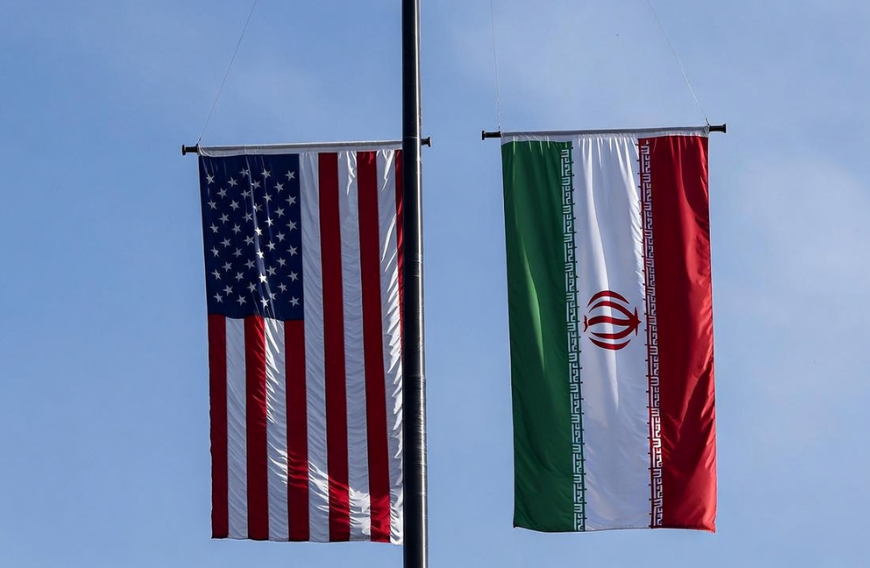
- A durable reopening of the Strait of Hormuz on terms approaching pre-war traffic is a roughly even chance through September-November 2026. Iran and Oman are reported to be discussing control of the Strait, Egypt and Qatar support a sustainable agreement, and a separate forecast describes a September binding deal involving Iran, Oman and the US. Countervailing evidence includes the reported expiry of the June arrangement, a US assessment that no active negotiations with Tehran exist and continued US sanctions. This is a low-confidence judgement because the future deal reporting is single-source and the diplomatic record is contradictory. (Confidence: low · ASSESSED)
- I&W: Confirming: Iran, Oman and the US announce and sign a binding transit arrangement, followed by a sustained increase in regular ship traffic through Hormuz. (0-3 months)
- I&W: Breaking: the US announces further shipping sanctions or Iran adds vessels to its non-compliant lists while no formal Iran-Oman-US talks resume. (0-14 days)
Outlook & scenarios
Negotiated partial reopening (45%)
Iran, Oman and the US reach a binding arrangement in September 2026 that permits regular ship traffic approaching pre-war levels, with limited transit fees for Tehran. Oil and gas prices decline towards pre-conflict levels over subsequent months, but commercial operators retain route and insurance concerns.
Prolonged constrained passage (55%)
Iran maintains its vessel lists and penalty threats, while more than 80% of liquids traffic continues to use the Omani-side route or dark navigation. Hormuz remains open to selected traffic but operates well below pre-war levels, sustaining elevated fuel, freight and humanitarian pressure.
Renewed maritime escalation (25%)
Iranian forces sustain pressure on commercial shipping after further US sanctions, while the Houthis continue attacks on Saudi-linked vessels in the Red Sea. Additional strikes or detentions push operators towards wider diversions and produce a fresh increase in fuel and freight costs.
Wildcard: multi-theatre shipping insecurity (10%)
Hormuz disruption coincides with renewed Houthi attacks in the Red Sea and further Somali pirate seizures off Somalia. The combination creates overlapping security problems for vessels using alternative routes and intensifies pressure on fuel, food and humanitarian supply chains.
Recommendations
- Maintain a 0-14 day maritime watch that separates total vessel counts, oil volumes, Omani-side traffic and dark transits. Reconcile Kpler-linked reporting with available AIS data before treating a change as a genuine shift in traffic.
- Create a daily watchlist for the 45 tankers and 46 vessels identified by Iran. Track any new additions, route changes, ship-to-ship transfers and reported penalties, detention or cargo action involving listed vessels.
- Prioritise incident monitoring around the Strait of Hormuz, the Gulf of Oman, Yanbu and the southern Red Sea. Flag attacks or coercive actions involving Saudi-linked, UAE-linked or Iranian-designated vessels, including the AMZAN case pattern.
- Track three diplomatic tripwires separately: resumption of Iran-US negotiations, progress in Iran-Oman talks and any Egypt-Qatar coordination on a sustainable agreement. Treat a signed Iran-Oman-US arrangement and sustained traffic recovery as the threshold for upgrading the reopening scenario.
- Prepare a sanctions-impact assessment for entities involved in Iranian oil shipping, including shipowners, insurers, brokers and ship-to-ship transfer operators. Distinguish announced measures from implemented designations and monitor for secondary sanctions affecting China, the UAE and Singapore-linked maritime firms.
- Add Somalia and Ethiopia to the humanitarian watch. Report changes in Ethiopian fuel deliveries, Somali health and nutrition facility closures, severe acute malnutrition admissions and food and fertiliser prices against the maritime traffic picture.
Confidence & uncertainty
Overall confidence is medium. The strongest findings draw on UNICEF and other multilateral reporting, Kpler-linked shipping data reported by established maritime and major media outlets, and repeated reporting on Iran's vessel lists and transit warnings. Confidence is reduced by conflicting descriptions of Hormuz as restricted or closed, uneven dates in several traffic and economic claims, unresolved attribution for some attacks and single-source or lower-reliability reporting on future diplomatic outcomes.
Cited sources
[1] tickernews.co · Iran blacklists 45 tankers for rule violations (B) · sha256:eedf19dcdccd [2] gcaptain.com · Iran Blacklists 46 Ships On Hormuz ‘Non-Compliant’ List (B) · sha256:142278d275ba [3] eciks.org · Diesel fuel hits record August high at $5.47 per gallon amid Iran war (B) · sha256:65bd7bcc9854 [4] gulfnews.com · Is Iran losing its grip on the Strait of Hormuz? (B) · sha256:5e3a4e645d8e [5] chosun.com · Tankers Evade Iran’s Strait of Hormuz Control Amid Weakening Grip (B) · sha256:f8d8c2743ee2 [6] gcaptain.com · Malacca Strait States Will Keep Waters ‘Free, Open and Safe’ (B) · sha256:b2a6ecefef30 [7] gcaptain.com · Houthis Escalate Saudi Shipping Campaign With VLCC Strike (B) · sha256:50ba17298af0 [8] Wikipedia · 2026 Iran war fuel crisis (B) · sha256:e54d757efc07 [9] gcaptain.com · Cost to Ship a VLCC Through Hormuz Hits $20 Million, TotalEnergies CEO Says (A) · sha256:333d64e679d8 [10] Atlantic Council · Four scenarios for a looming global food crisis (C) · sha256:1ec9ad793bff [11] United Nations · Somalia: Humanitarian aid cuts leave millions of children vulnerable to hunger (A) · sha256:2a8c20f6ae5a [12] americanbazaaronline.com · Trump administration threatens to impose ‘economic D-Day’ sanctions on Tehran (B) · sha256:193f781f59e9 [13] tribune.com.pk · You are either with us or against us on Iran economic isolation US treasury secretary to allies (B) · sha256:7458ddb9498e [14] tmgm.com · WTI holds ground around $84.50 as supply risks increase due to US-Iran peace uncertainty (B) · sha256:cc831d464bde [15] gcaptain.com · Trump Administration Launches Sweeping New Iran Sanctions Campaign Targeting Shipping and Oil Trade (B) · sha256:14cd890b2d6a
Source content hashes were computed at collection time; the cited text is preserved unmodified for the life of this product.
TLP:CLEAR