TLP:CLEAR · Disclosure is not limited.
Iran-US Escalation: Hormuz Pressure and Strike Risk, 15 October 2026
Time window: Last 1 day · Audience: General analyst · Type: Situation report · DTG: 2026-10-15 16:39Z · Overall confidence: HIGH
BLUF
Attacks on commercial shipping in the Strait of Hormuz are likely to continue over the next 14 days, but responsibility for individual incidents and the cause of the GFS Pride sinking remain unresolved. US forces are enforcing a naval blockade, and reports of planning for possible strikes on Iranian targets raise concern without confirming authorisation.
Executive summary
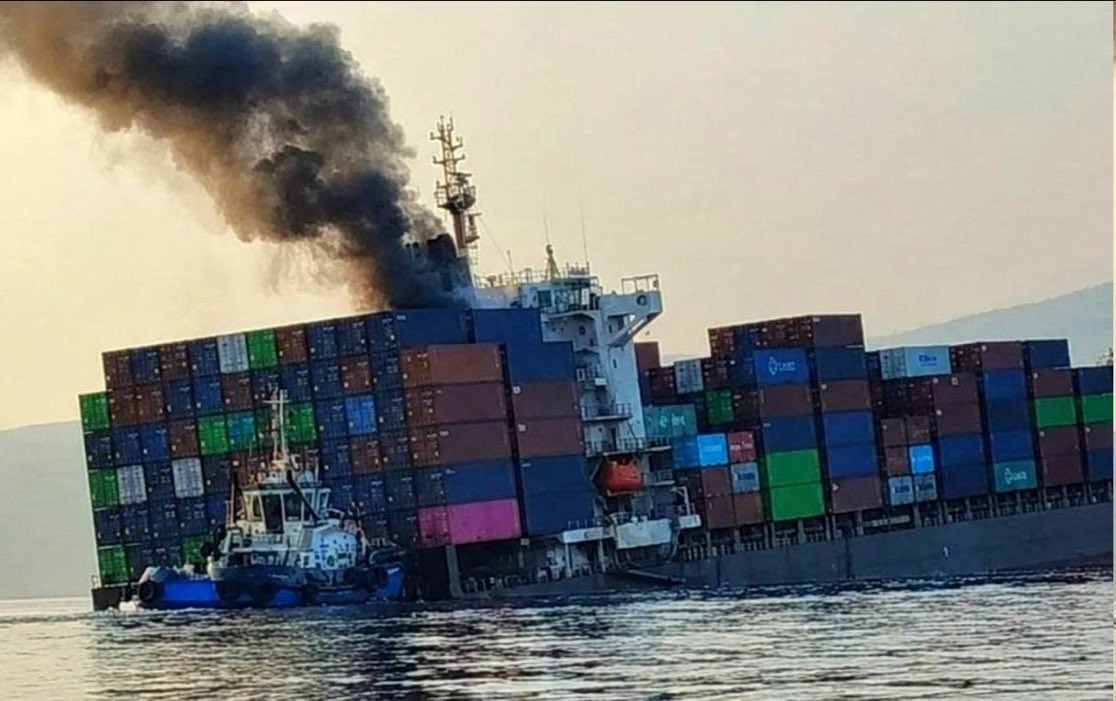
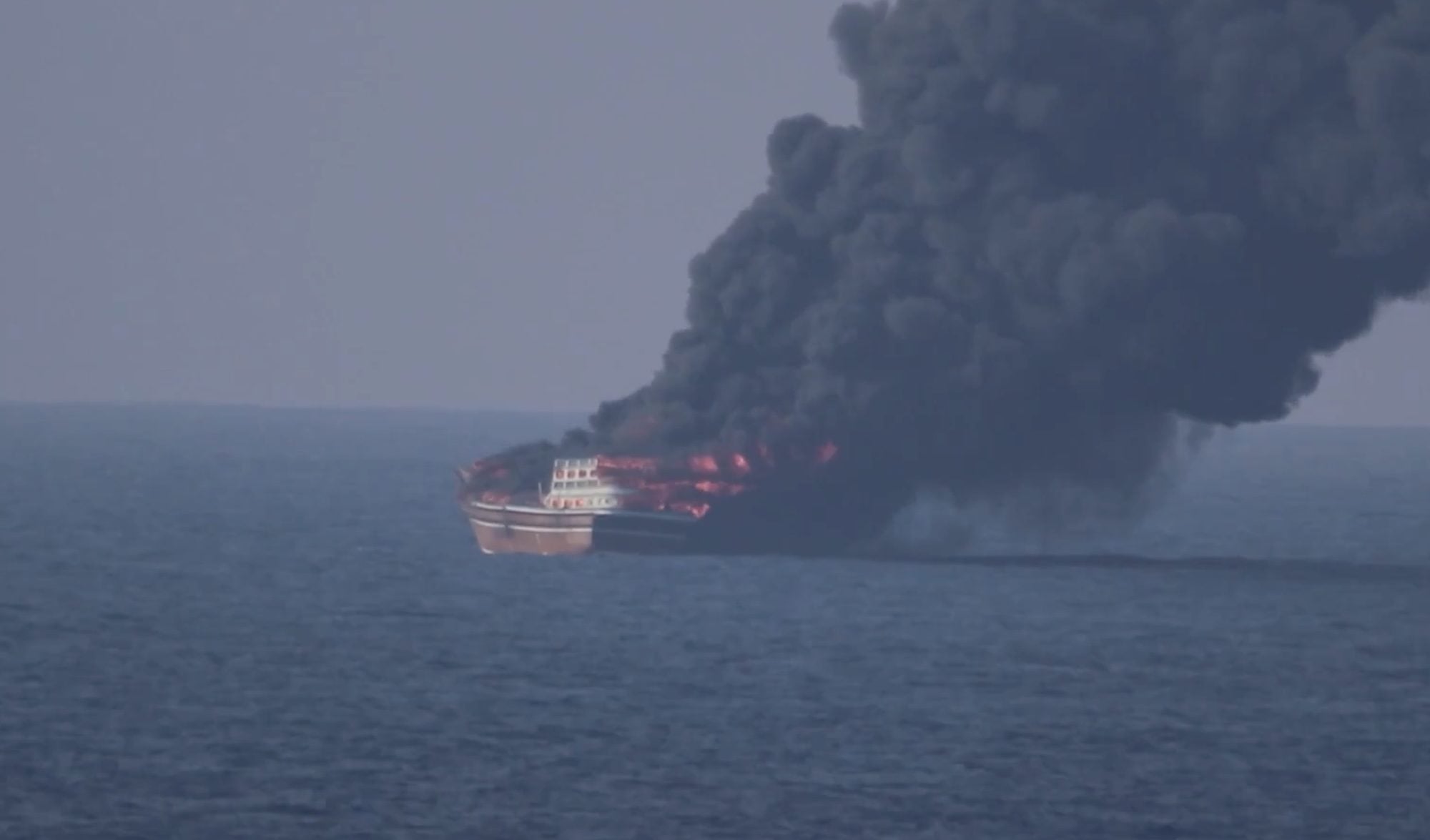
Commercial shipping around the Strait of Hormuz remains under pressure. At least six vessels were struck on 11 October, UKMTO reported four verified attack warnings for 13 October, and the Singapore-flagged GFS Pride sank after an attack reported on 13 October; its 21 crew members were evacuated safely. The Antigua and Barbuda-flagged Cape Dao also sank after a projectile strike on 23 September, while the GFS Giselle was reported damaged on 14 October. Reporting conflicts over whether the GFS Pride was hit by a projectile or struck a mine, and does not establish who carried out the attacks. US forces report enforcing a blockade, destroying an Iranian-affiliated dhow on 6 October and disabling the Ocean Molica on 10 October. Iran has set out conditions for ending the war and the IRGC has warned ships against using sea lanes it considers illegal. Separate reports say Donald Trump ordered strike options prepared and the US administration is studying further military plans, but neither establishes that a strike has been authorised.
Change from previous assessment
Since the 14 October brief, the assessment retains the likelihood of further attacks on commercial shipping and the judgement that a new US strike before 3 November is unlikely. New reporting adds UKMTO's four verified warnings for 13 October, the GFS Giselle damage report, further detail on the Cape Dao sinking, US blockade actions and reports of US strike-option planning. The strike forecast remains low confidence, but the new planning reports raise the assessed risk. Iran's conditional war-ending proposal is a new development; it is not yet matched by evidence that the IRGC has eased its shipping restrictions. The prior brief's Houthi threat to Saudi targets is outside this Iran-US and Hormuz-focused update, not assessed here as having diminished.
Key judgments
- Attacks on commercial shipping in the Strait of Hormuz are likely to continue over the next 14 days, while attribution for individual incidents remains unresolved. Singapore's Maritime and Port Authority confirmed the GFS Pride sinking, and UKMTO issued four verified warnings for attacks on 13 October. Reporting also records at least six vessels struck on 11 October and damage to the GFS Giselle on 14 October. Iran's mine claim conflicts with reporting that the GFS Pride was struck by a projectile; the available reports do not establish who carried out the attacks. Confidence is medium: the incidents are supported by maritime authority and wire-service reporting, but weapon, incident matching and attribution remain contested. (Confidence: medium · ASSESSED)
- I&W: A new UKMTO verified attack warning for a commercial vessel in the Strait of Hormuz would confirm continued attacks. (0-14 days)
- I&W: No new verified UKMTO attack warnings for 14 days, alongside reported transit levels returning towards the prewar range of 130 to 140 vessels per day, would break this assessment. (0-14 days)
- US involvement in the maritime confrontation is operational: CENTCOM reports blockade enforcement, and reporting says US forces destroyed an Iranian-affiliated dhow on 6 October and disabled the Ocean Molica on 10 October. Confidence is medium because the actions are reported by CENTCOM or trade and wire-service outlets, with limited independent corroboration of the operational details. (Confidence: medium · REPORTED)
- I&W: A further CENTCOM announcement of a vessel interception, disabling or destruction under blockade enforcement would confirm continued active enforcement. (0-14 days)
- I&W: A public US announcement suspending or ending blockade enforcement would break this assessment. (0-14 days)
- A new US strike on Iranian targets before 3 November is unlikely, but the risk is higher than in the prior brief because new reports describe Donald Trump ordering strike options and the administration studying plans that include energy and nuclear sites. The reporting describes planning, not an authorised attack. Confidence is low because the planning accounts rely on media reporting and no supplied claim confirms authorisation or execution. (Confidence: low · ASSESSED)
- I&W: A public White House or Pentagon confirmation that strikes have been authorised, or a reported US strike on an Iranian target, would break this assessment. (0-14 days)
- I&W: No public authorisation or strike reported by 3 November would support this assessment. (0-19 days)
- Iran has proposed conditional terms for ending the war while the IRGC is still warning commercial vessels against using sea lanes it calls illegal; the proposal therefore does not yet show a shift to de-escalation. The reported conditions include reopening the Strait of Hormuz, halting fighting, lifting the naval blockade on Iranian ports, releasing frozen assets and lifting sanctions on oil exports. Confidence is medium: the proposal is reported by one major-media source, while Iran's military statements and the IRGC's navigation warnings are also reported statements rather than independent evidence of a negotiated outcome. (Confidence: medium · ASSESSED)
- I&W: A formal Iranian announcement lifting the IRGC's shipping restrictions would break the assessment that Tehran has not shifted towards de-escalation. (0-14 days)
- I&W: A public US response addressing Iran's listed conditions and an Iranian confirmation that negotiations have begun would confirm movement towards de-escalation. (0-14 days)
Outlook & scenarios
Continued maritime pressure without a new US strike (60%)
Likely. The IRGC maintains its shipping warnings, further attacks or damage are reported around the Strait of Hormuz, and US forces continue blockade enforcement. Shipping operators keep diverting some voyages and seeking fuel at alternative ports. Neither side initiates a new direct strike on Iranian targets during the period.
Conditional negotiations produce a limited pause (25%)
Unlikely. Iran's proposed terms lead to discussions with the US, and both sides reduce pressure on commercial shipping without resolving the blockade, sanctions or frozen assets. A pause in attacks would ease immediate maritime risk but would not establish a durable settlement.
US strike prompts Iranian retaliation (15%)
Unlikely but high impact. The US authorises a strike on an Iranian energy or nuclear site, followed by Iranian counter-strikes against US interests. Iran's stated readiness to retaliate and the reported US strike planning make this a relevant contingency, but the available reporting does not establish an authorised attack.
Recommendations
- Keep confirmed vessel incidents separate from claims about responsibility. Reconcile incident dates, vessel identities, locations and reported weapons against UKMTO notices, Singapore's Maritime and Port Authority statements and IMO records before updating attribution.
- Track US strike planning and authorisation as separate indicators. Do not treat reports that options are being prepared or studied as evidence that an attack has been approved.
- Monitor UKMTO verified warnings, reported ship transits through the Strait of Hormuz, and vessel calls at Fujairah and Singapore. Use these observable changes to assess whether maritime risk and rerouting are easing or worsening.
- Track whether Iran formally reiterates its proposed terms, whether the US responds to them, and whether the IRGC lifts its warnings to tankers and cargo ships. These developments would help distinguish a negotiating pause from continued coercive pressure.
Confidence & uncertainty
Overall confidence is high for the broad picture of sustained maritime danger and active US involvement. The GFS Pride sinking is confirmed by Singapore's Maritime and Port Authority, while UKMTO warnings and wire-service reporting document additional vessel incidents; official US and Iranian statements establish the positions each side has declared. Confidence is lower on attribution for individual attacks, the cause of the GFS Pride sinking and whether US strike planning will lead to authorisation. The strike-planning reports do not confirm an authorised operation.
Alternative analysis (red cell)
Iran's conditional proposal is evidence of a possible diplomatic track, even if its demands are unlikely to be acceptable as written. The concurrent warnings in 0f3e070d-de01-4b9b-a568-2c51c846815c and military statements in 81d2d427-9121-472d-9ca6-24c8624fa8ed and 82904287-4e4f-4e8e-8ef4-e88c73f15179 indicate continued coercive signaling, but they can coexist with exploratory de-escalation. The evidence therefore supports an ambiguous or dual-track Iranian posture rather than a conclusion that the proposal does not represent a shift toward de-escalation.
Intelligence gaps
- [EEI 1.1 · UNCOVERED] Movement, dispersal, or emplacement of Iranian conventional or IRGC heavy assets (ballistic missile launchers, Khoramshahr/Toofan-class missile transporters, ground-to-ground TELs, air defense batteries, amphibious units) from garrison areas toward forward bases or coastal launch sites. Recommended collection: satellite/IMINT
- [EEI 1.2 · PARTIAL] Authenticated Iranian military orders, NSC/IRGC operations directives, or senior leadership statements explicitly directing strikes against Israel or US forces or authorizing cross-border operations. Recommended collection: human/diplomatic
- [EEI 1.3 · PARTIAL] Changes in Israeli and US force posture indicating anticipation of direct large-scale conflict, elevated readiness levels, mobilization notices, pre-positioning of munitions, or public/private orders to prepare offensive strikes. Recommended collection: open-source/diplomatic
- [EEI 2.1 · UNCOVERED] Observable pre-launch preparations for missile/rocket/cruise missile strikes (fueling, warhead mating, launcher orientation, support vehicle congregation) and abnormal munitions handling at known launch sites. Recommended collection: satellite/IMINT
- [EEI 2.2 · PARTIAL] Indications of proxy arms shipments and weapons transfers (truck convoys, small boat transfers, container movements from Iran to proxies, new stockpiles in Lebanon, Iraq, Yemen, Syria). Recommended collection: maritime/AIS
- [EEI 2.3 · UNCOVERED] Evidence of cyber attack planning or active exploitation campaigns targeting Israeli or US military/critical infrastructure (emergence of new command-and-control servers, spear-phishing campaigns against defense personnel, successful intrusions). Recommended collection: cyber
- [EEI 3.1 · UNCOVERED] Movements and posture changes of US regional platforms (carrier strike groups, amphibious ready groups, B-52/B-1/B-2 or fighter deployments, missile defense assets repositioning) and associated armament loadouts. Recommended collection: satellite/IMINT
- [EEI 3.3 · UNCOVERED] Changes in US base force-protection measures and rules of engagement at regional facilities (base lockdowns, evacuation notices, flight restrictions, activation of Local Defense Forces or missile intercept systems). Recommended collection: open-source/local reporting
- [EEI 4.1 · UNCOVERED] Hezbollah-specific indicators: convoys and logistics movements toward Lebanon, Israel border, artillery/rocket emplacement in southern Lebanon, documented strikes-preparation activity, public mobilization orders or recruitment drives. Recommended collection: satellite/IMINT
- [EEI 4.2 · UNCOVERED] Houthi-attributed maritime attack indicators: AIS anomalies/loss of contact for commercial vessels, reports of missile/drone strikes or near-miss incidents in Bab al-Mandeb/Red Sea, Houthi claims paired with imagery of weapons launches. Recommended collection: maritime/AIS
- [EEI 4.3 · UNCOVERED] Militia cross-border attack evidence from Iraq/Syria: recorded rocket/mortar launch events into Israel or strikes against US facilities, movement of armed convoys toward border areas, and intercepted communications coordinating cross-border operations. Recommended collection: signals/ELINT
Cited sources
[1] gCaptain · Containership Sinks as Hormuz Attacks Spiral Out of Control (C) · 14 October 2026 · sha256:3d26cc4befe7 [2] Reuters (republished by gCaptain) · Bulk Carrier Sinks Weeks After Deadly Strait of Hormuz Strike (A) · 14 October 2026 · sha256:2b3df83932f6 [3] Euronews (Arabic) · إيران تتحدى تهديدات ترامب بـ"الردع المستدام". وترفع جاهزيتها العسكرية تحسبا للتصعيد (A) · 15 October 2026 · sha256:a1c0d9e67ab2 [4] gCaptain · U.S. Forces Destroy Iranian-Linked Dhow Accused of Targeting Navy Ships (C) · 14 October 2026 · sha256:d5780f21061b
Source content hashes were computed at collection time; the cited text is preserved unmodified for the life of this product.
Red cell review: PARTIAL DISSENT
TLP:CLEAR