TLP:CLEAR · Disclosure is not limited.
Iran-US Escalation Raises Gulf and Regional Risks
Time window: Last 1 day · Audience: General analyst · Type: Situation report · DTG: 2026-11-27 14:27Z · Overall confidence: HIGH
BLUF
Iranian restrictions and reported attacks are keeping Strait of Hormuz shipping costs high, while Tehran’s claim that an IRGC air-defence unit forced a US F-16 to retreat remains unverified. President Donald Trump’s stated expectation of renewed strikes after the new year raises the risk of further US-Iran escalation; the supplied reporting does not establish a new direct Iran-Israel exchange.
Executive summary
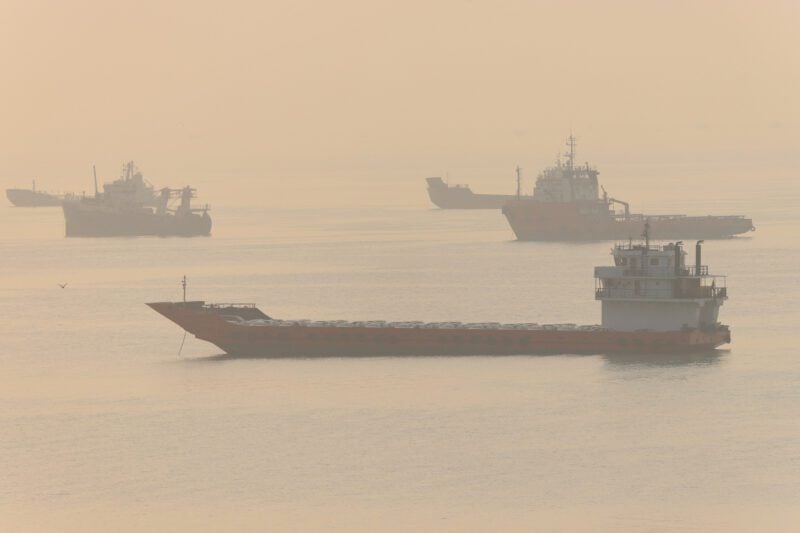
Reporting on 26 and 27 November points to continued pressure across the Gulf. Iran has widened its stated Strait of Hormuz restrictions to include tugboats, and the IRGC reported that a tanker exploded after striking a naval mine east of the strait. Vortexa data showed more than 26 ships carrying crude, fuels and LNG transiting on a seven-day average through 19 November, while shipping and insurance costs were near wartime highs. The IRGC also claimed that warning shots forced a US F-16 to retreat southeast of Hengam Island; this account lacks independent corroboration. Trump said he expects to renew strikes on Iran soon after the new year and threatened to strike Jabal al-Fa's if Iran takes any step. Separately, Kuwait and Italy blamed Iran for a 26 November drone attack that killed two Italian technicians, while Tehran denied responsibility and offered a joint investigation. Israeli reporting describes a senior-level dispute over a possible strike on Iran, but does not establish an operational decision. The IDF announced a strike on Hezbollah rockets and launch platforms at Ain al-Tineh in Lebanon, not an attack on Iran. Reporting also conflicts over whether a US naval blockade and full Iranian closure of the Strait of Hormuz are in effect.
Change from previous assessment
Since the prior brief, the reporting adds an IRGC claim that warning shots forced a US F-16 to retreat near Hengam Island, an IRGC account of a tanker explosion east of the Strait of Hormuz, and a wider stated Iranian transit restriction that includes tugboats. Trump has now publicly threatened a strike on Jabal al-Fa's and said he expects US strikes on Iran to resume soon after the new year. These developments raise the assessed risk of renewed US-Iran escalation, while the likelihood of a unilateral Israeli strike remains low and rests on a single report of leadership disagreement. Reporting now gives more detail on the Kuwait attack, naming the two Italian technicians and describing their work on Kuwait’s Skyguard system, but attribution remains disputed. The supplied reporting still does not establish a new direct Iran-Israel exchange.
Key judgments
- There is a roughly even chance that the US will resume strikes on Iran by 31 March 2027. Trump said this week that he expects to renew strikes soon after the new year and, on 27 November, threatened to strike Jabal al-Fa's if Iran takes any step. These statements signal intent, but the supplied reporting does not establish an operational order or timetable. The forecast has medium confidence because it rests chiefly on reported presidential statements, alongside reporting that the US last acknowledged a strike on Qeshm Island on 17 November. (Confidence: medium · ASSESSED)
- I&W: The White House or US Department of Defense announces a renewed strike plan, or US forces strike a named site in Iran. (0-3 months)
- I&W: The White House publicly rules out strikes through 31 March 2027 and no further US strike on Iran is reported by that date. (0-3 months)
- Iranian restrictions and reported vessel incidents are likely to keep Strait of Hormuz transit costly and uneven over the next 14 days, while some commercial traffic continues. Iran has said its restrictions cover tugboats and has tied reopening the strait to seven conditions. Vortexa recorded a seven-day average above 26 ships carrying crude, fuels and LNG through 19 November, but warned that signal interference, spoofing and unreported transits affect its tally. The IRGC’s account of a tanker striking a mine and catching fire east of the strait is not independently confirmed. Confidence is medium because trade data and cost reporting support continued but pressured traffic, while claims of a full closure and a US blockade conflict with the recorded transits. (Confidence: medium · ASSESSED)
- I&W: Updated Vortexa data continue to show crude, fuel and LNG vessels transiting while reported shipping or insurance costs remain near wartime highs. (0-14 days)
- I&W: Iran announces removal of its transit restrictions and subsequent reporting records a sustained fall in shipping and insurance costs. (0-14 days)
- A further close encounter between IRGC air defences and US aircraft near Hengam Island in the next 14 days is unlikely, but the reported warning-fire incident raises the risk of miscalculation. The IRGC said its air defences fired warning shots at a US F-16 southeast of Hengam Island and forced it to retreat. The account is carried by Iranian sources and is not independently corroborated, so confidence is low and the incident should not be treated as established fact. (Confidence: low · ASSESSED)
- I&W: The US Department of Defense confirms an encounter involving a US F-16 near Hengam Island or another US-Iranian aircraft encounter in the Strait of Hormuz. (0-14 days)
- I&W: The US Department of Defense directly denies the reported F-16 encounter and no independent account corroborates warning fire near Hengam Island. (0-14 days)
- A unilateral Israeli strike on Iran in the next 14 days is unlikely, although the option remains under discussion. Yedioth Ahronoth reported a dispute between Mossad chief Roman Gofman and IDF Chief of Staff Eyal Zamir over strike timing and whether Israel might act without US participation. This judgement rests on one report and contains no operational evidence, so confidence is low. (Confidence: low · ASSESSED)
- I&W: Israeli officials announce that the cabinet has authorised a strike on Iran or that Israel will act without US participation. (0-14 days)
- I&W: The Israeli government publicly denies that a strike is authorised and the report of a leadership dispute is corrected or denied by the named principals. (0-14 days)
- The 26 November drone attack on a Kuwaiti military site very likely killed two Italian technicians, but Iran’s responsibility remains unresolved. Kuwaiti and Italian reporting identified the technicians as Rheinmetall Italia employees servicing Kuwait’s Skyguard air-defence system; Italy’s foreign minister said the drones were of Iranian origin. Iran denied involvement and proposed a joint investigation. The incident and deaths are reported by multiple major-media sources and officials, but the competing official accounts leave attribution unsettled. Confidence is medium. (Confidence: medium · REPORTED)
- I&W: Kuwait and Iran publish findings from a joint investigation identifying the drone’s origin and operators. (0-14 days)
- I&W: A joint investigation or revised official account disputes the Iranian attribution or changes the reported casualty details. (0-14 days)
Outlook & scenarios
Continued coercion without a new direct Israel-Iran exchange (40%)
This is the most likely near-term path. Iran maintains maritime restrictions and public threats, commercial vessels continue to transit at uneven rates, and the US and Iran avoid a new sustained strike cycle. The reported Israeli leadership dispute remains unresolved without an announced strike decision.
US strikes resume after the new year (40%)
A less likely but plausible path is that the US acts on Trump’s stated expectation and renews strikes on Iran in early 2027. Iranian retaliation against US bases or maritime targets would raise the risk of further exchanges and deepen shipping disruption.
The Strait of Hormuz moves from restricted transit to full closure (12%)
This is an unlikely, high-impact scenario. It would align with reporting that Iran declared the strait closed and that the US imposed a naval blockade, rather than with Vortexa’s record of continued vessel transits through 19 November. A verified halt in commercial crossings would sharply worsen the regional risk picture.
Israel conducts a unilateral strike on Iran (8%)
This is an unlikely, high-impact wildcard. The reported disagreement between Roman Gofman and Eyal Zamir shows that the option is being discussed, but the supplied reporting contains no evidence of an Israeli authorisation or imminent operation.
Recommendations
- Track White House and US Department of Defense statements for changes from Trump’s stated expectation of renewed strikes to a specific decision, order or target.
- Maintain a daily Strait of Hormuz incident and transit log. Separate confirmed vessel movements from IRGC claims, and retain Vortexa’s stated caveats on signal interference, spoofing and unreported transits.
- Treat the F-16 warning-fire account and tanker mine report as unverified until US, Kuwaiti or independent reporting corroborates the incidents.
- Seek updates on the proposed Kuwait-Iran joint investigation before assessing responsibility for the 26 November drone attack; keep Iranian attribution separate from the confirmed report of two Italian deaths.
- Watch for an Israeli government announcement authorising a strike on Iran or for named Israeli officials to confirm or deny the reported dispute over acting without US participation.
Confidence & uncertainty
Overall confidence is high for the broad picture of active regional military pressure, maritime restrictions and heightened public threats, drawing on major-media reporting, official statements and Vortexa shipping data. Confidence is lower for specific operational claims and intent: the F-16 encounter rests on Iranian accounts without independent corroboration, the Israeli leadership dispute comes from one report, and responsibility for the Kuwait drone attack is contested. Strait of Hormuz reporting also conflicts over whether restrictions amount to a full closure and whether a US blockade is in effect.
Alternative analysis (red cell)
The available reporting does not establish a reliable baseline for the probability of another US-Iranian air encounter near Hengam, so the event should be treated as indeterminate rather than unlikely. Likewise, the single report in claim 47207b65-86eb-4ed8-aeca-e1c4d2114696 demonstrates that unilateral Israeli action is under discussion but does not show that it is unlikely. Both judgments therefore risk converting acknowledged evidentiary weakness into a directional probability assessment.
Intelligence gaps
- [EEI 1.1 · UNCOVERED] Observed repositioning, sustained increases, or new forward basing of Iranian conventional or IRGC forces (armored units, missile batteries, aircraft, naval vessels) toward borders or regional launch points. Recommended collection: IMINT/satellite
- [EEI 1.2 · PARTIAL] Hezbollah or other Iran-aligned proxy forces conducting mass mobilization, visible rocket/artillery emplacements, cross-border firing incidents, or preparations for cross-border operations from Lebanon, Syria, Iraq or Yemen. Recommended collection: HUMINT/ground ISR
- [EEI 1.4 · UNCOVERED] Interdicted or observed shipments (air, sea, land manifests, seizures, satellite imagery of transfers) of advanced weapons or missile components from Iran toward proxy groups or forward staging points. Recommended collection: maritime/AIS
- [EEI 2.1 · PARTIAL] Satellite or on-the-ground imagery showing fires, damage, or operational shutdown at major oil export facilities, refineries, storage terminals, or key pipeline infrastructure in the Gulf and Red Sea. Recommended collection: IMINT/satellite
- [EEI 2.4 · PARTIAL] Rapid increases in war-risk insurance premiums for Middle East routes, shipping company advisories to avoid region, or major charter cancellations tied to the conflict. Recommended collection: financial/open-source
- [EEI 3.1 · UNCOVERED] Movement/arrival of major foreign military assets into the region: US carrier strike groups, amphibious ready groups, strategic bomber flights, Russian/Chinese naval taskings, or allied expeditionary units (visible in AIS, NOTAMs, satellite imagery, official releases). Recommended collection: IMINT/satellite
- [EEI 3.2 · UNCOVERED] Official expedited arms transfers, basing/overflight agreements, or declarations of operational support (formal government announcements, defense ministry releases, logistics flight manifests). Recommended collection: open-source/diplomatic
- [EEI 3.3 · UNCOVERED] Embassy evacuations, large-scale personnel movements, issuance of government travel bans/advisories, or multinational security alerts affecting foreign nationals and diplomatic posture in the region. Recommended collection: diplomatic/open-source
- [EEI 3.4 · PARTIAL] High-level diplomatic/UN activity: scheduled or emergency Security Council meetings, published ceasefire proposals, or multilateral statements committing support/condemnation that precede changes in military posture. Recommended collection: open-source/diplomatic
Red cell review: PARTIAL DISSENT
TLP:CLEAR