TLP:CLEAR · Disclosure is not limited.
Iran-US Exchanges Raise Risks to Bahrain and Strait of Hormuz Shipping
Time window: Last 1 day · Audience: General analyst · Type: Situation report · DTG: 2026-11-22 12:41Z · Overall confidence: HIGH
BLUF
Iran's IRGC claimed a missile-and-drone operation against US positions in Bahrain, while Bahrain reported incoming attacks and a fire at a civilian industrial facility. Further tanker attacks near the Strait of Hormuz are likely over the next 14 days; claimed damage to Patriot radars and a US F-16 remains unverified.
Executive summary
Bahrain reported intercepting Iranian projectiles on 21 November and said an attack caused a fire and material damage at a civilian industrial facility. Its Interior Ministry later reported two people injured, although an earlier Bahraini military account said there were no casualties; reports also differ on whether the facility attack occurred on 21 or 22 November. The IRGC claimed it targeted US positions at Al-Riffa and Awali and hit two Patriot radars, but the supplied reporting does not independently establish damage to those systems. UKMTO reported tanker incidents near Khasab, Oman, while the number of vessels attacked and responsibility for the incidents remain unsettled. UKMTO-reported Strait of Hormuz traffic was 263 ships from 12 to 18 November, 15% below the previous week; a separate account put traffic about 65% below pre-conflict levels. Those comparisons use different baselines. Further shipping attacks are likely, while a complete closure of the Strait is not supported by the reported transit volume.
Change from previous assessment
Since the 21 November brief, reporting has added an IRGC-claimed missile-and-drone operation against US positions at Al-Riffa and Awali in Bahrain, a reported fire at a civilian industrial facility, and a later Bahraini report of two injuries. UKMTO also reported fresh tanker incidents near Khasab. The prior 14-day warning of further shipping attacks remains in force, with new incident reporting consistent with it but not resolving attacker attribution or vessel count. Drone claims remain low confidence, and the new F-16 claim is directly denied by CENTCOM.
Key judgments
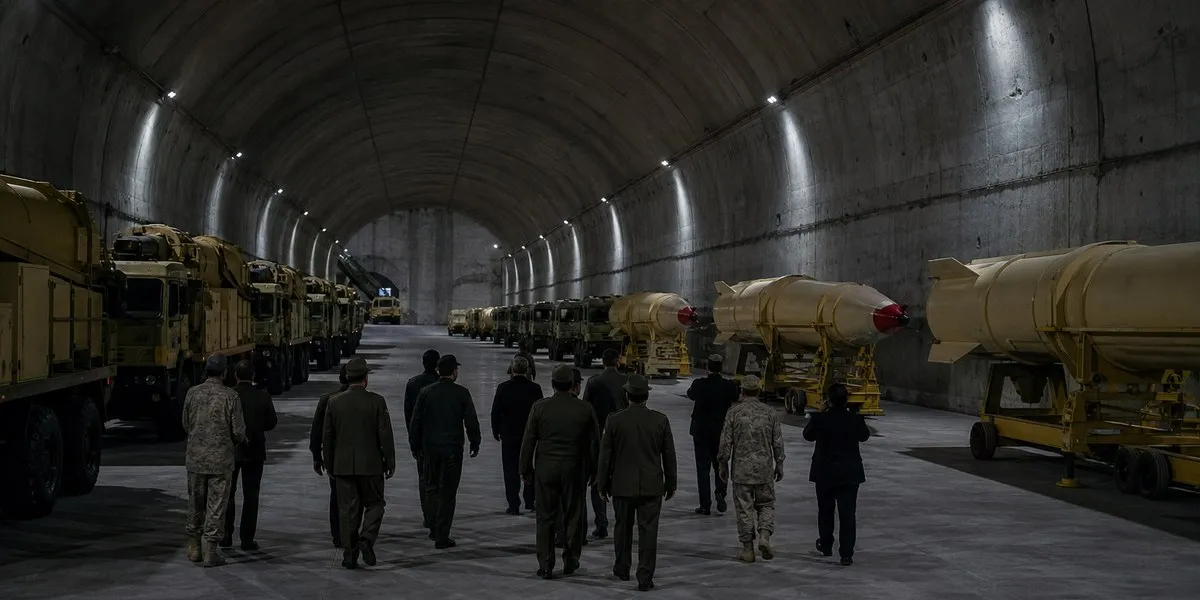
- Iran's IRGC likely launched a missile-and-drone operation directed at US military positions at Al-Riffa and Awali in Bahrain on 21 November, but its claim that two Patriot radars were hit is unverified. Bahrain reported incoming attacks and a fire with material damage at a civilian industrial facility. The Interior Ministry later reported two people injured, while an earlier Bahraini military account said there were no casualties. Reports also differ on whether the facility attack occurred on 21 or 22 November. (Confidence: medium · ASSESSED)
- I&W: Confirm or break the claim of Patriot radar damage through a US or Bahrain damage assessment, or independently geolocated imagery of the Al-Riffa and Awali sites. (0-14 days)
- I&W: A Bahrain Interior Ministry update that reconciles the civilian facility incident date and casualty count would clarify the reported sequence; a revised account inconsistent with the attack reports would weaken it. (0-14 days)
- Further direct US-Iran military exchanges are likely within 14 days. The IRGC has claimed attacks on US positions in Bahrain, the US military says its blockade of Iran has continued for 130 days, and Iranian officials have warned of an immediate response to US action. The supplied reporting does not establish a US retaliatory strike. (Confidence: medium · ASSESSED)
- I&W: Confirm if CENTCOM or Iranian forces publicly confirm a new strike against a named US or Iranian military site. No reported new strike by 6 December would break this forecast. (0-14 days)
- I&W: A Bahrain alert or air-defence report naming a fresh attack on Al-Riffa, Awali, or another US position would support the forecast; an official stand-down by both sides would weaken it. (0-14 days)
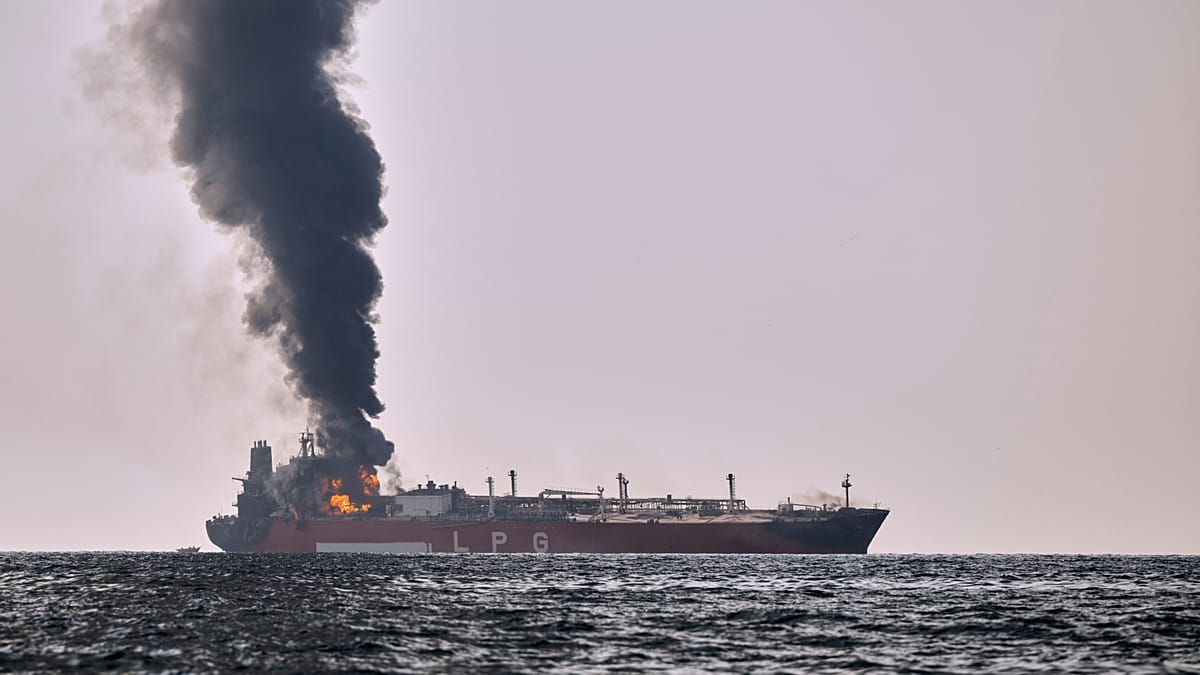
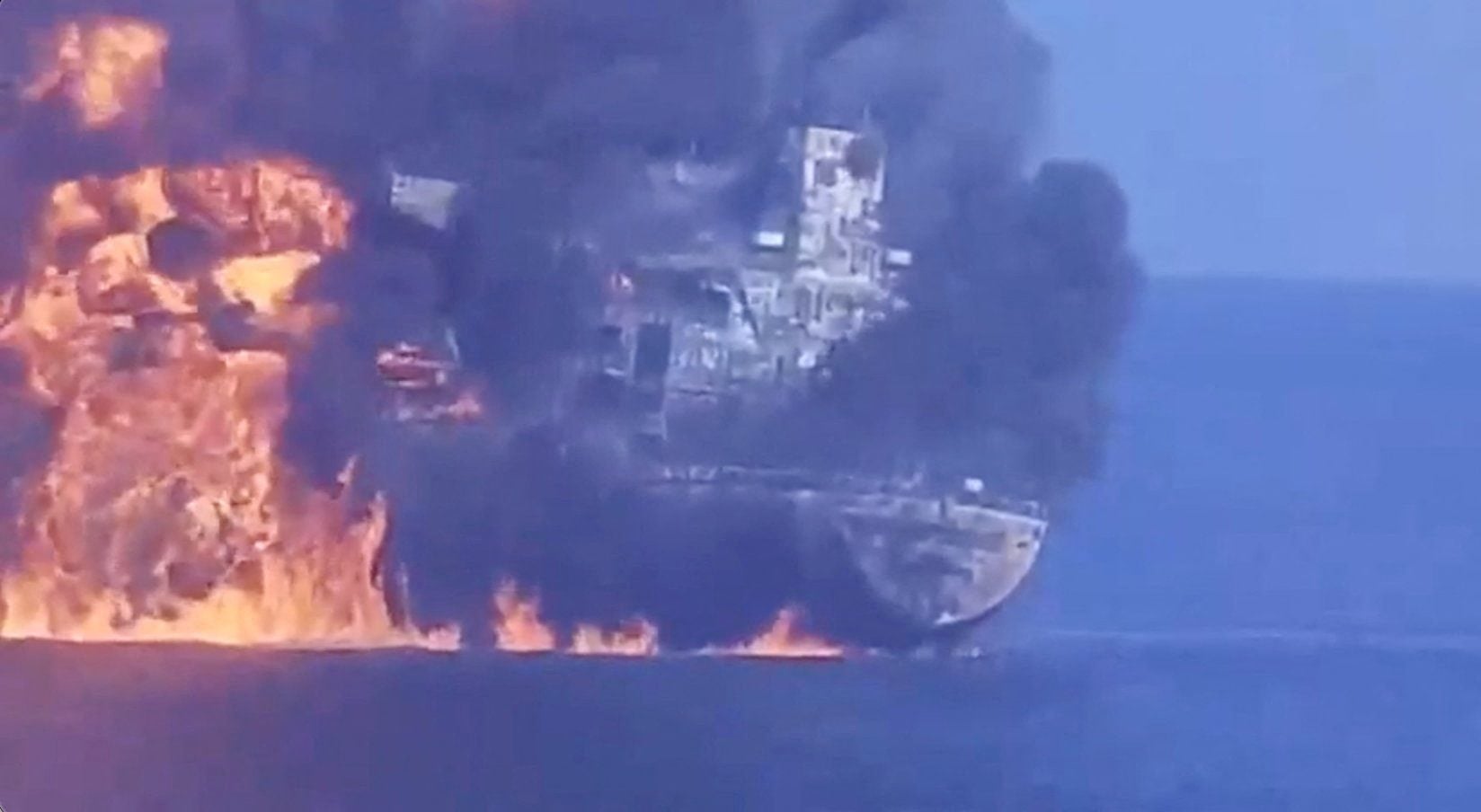
- Further attacks on commercial shipping near the Strait of Hormuz are likely within 14 days. UKMTO reported two tanker incidents near Khasab on 21 November, while separate reporting counted at least three tanker attacks that day. UKMTO did not identify the attacker, and Reuters could not independently verify the Iranian Navy's account that a tanker struck a mine. (Confidence: medium · ASSESSED)
- I&W: A new UKMTO notice naming a struck tanker, its location, and the reported damage would confirm continued attacks; no new UKMTO incident by 6 December would break the forecast. (0-14 days)
- I&W: A named tanker operator's suspension or rerouting notice for Strait of Hormuz transits would support continued shipping risk; resumed scheduled transits without new incident notices would weaken it. (0-14 days)
- The Strait of Hormuz remains heavily disrupted but is not completely closed, and traffic is likely to remain below pre-conflict levels over the next 14 days. UKMTO-reported data show 263 ships transited from 12 to 18 November. Iran's statement that unauthorized traffic is barred does not establish a full closure while those transits continue. (Confidence: medium · ASSESSED)
- I&W: Confirm the assessment if the next UKMTO weekly report records continued transits at a level well below its pre-conflict baseline. A reported weekly total near zero would break the assessment that the Strait is not fully closed. (1-3 weeks)
- I&W: A published UKMTO weekly count showing transit volumes recovering to the pre-conflict baseline would break the forecast of continued below-baseline traffic. (1-3 weeks)
- Iranian claims that its forces downed US MQ-1 drones and damaged a US F-16 remain unverified. Iranian accounts differ on the drone type, location, timing, and cumulative number; CENTCOM denied that Iran attacked the F-16. (Confidence: low · ASSESSED)
- I&W: Independent imagery or a US acknowledgement identifying a lost or damaged MQ-1 would confirm the drone claim; a US statement accounting for the aircraft as intact would weaken it. (0-14 days)
- I&W: A US or independent flight-status report confirming F-16 damage would contradict CENTCOM's denial; an official confirmation that the aircraft was undamaged would support the denial. (0-14 days)
Outlook & scenarios
Contained attrition continues (55%)
Iran continues intermittent attacks or claimed attacks on US positions and commercial shipping. US blockade enforcement continues, while both sides avoid a broader strike campaign.
A negotiated pause reduces activity (25%)
Washington and Tehran give diplomatic efforts time and address the blockade. Attacks decline and some shipping resumes, but the underlying dispute over control of the Strait remains.
A confirmed strike drives a wider exchange (15%)
A confirmed US or Iranian military loss prompts retaliation. Bahrain-based US positions and shipping near the Strait face additional attacks.
Low-probability, high-impact wildcard: lethal strike on civilian or maritime infrastructure (5%)
A further attack causes deaths at a Bahraini civilian industrial facility or on a tanker. The casualties prompt a regional response and a sharp reduction in Strait transits.
Recommendations
- Separate reported target claims from verified damage in all updates. Do not describe the Al-Riffa or Awali Patriot radars as destroyed unless US or Bahrain reporting, or independently assessed imagery, confirms it.
- Track Bahrain Interior Ministry updates on the industrial facility, injuries, and incident date. Keep the two-injury report distinct from earlier no-casualty statements until the discrepancy is resolved.
- Maintain a tanker incident log using UKMTO notices, including vessel, position, time, weapon description, damage, casualties, and attribution. Do not merge the Iranian Navy mine account with UKMTO incidents without verification.
- Report Strait transit figures with their comparison period. Keep the 15% week-on-week decline separate from the estimate of roughly 65% below pre-conflict levels.
- Seek official US reporting on the alleged MQ-1 losses and F-16 incident before treating either as confirmed. Record Iranian statements and CENTCOM's F-16 denial as competing accounts.
Confidence & uncertainty
Confidence is high in the broad picture because UKMTO incident reporting, Bahrain government statements, and separate major-media accounts converge on tanker incidents and attacks or interceptions in Bahrain. That corroboration supports the occurrence of a serious escalation, not every claim about target effects. The reported Patriot damage, aircraft losses, casualty count, and facility incident date remain unresolved; tanker totals also differ, and shipping reports use different traffic baselines.
Alternative analysis (red cell)
The available evidence establishes reported Iranian attacks and attempted interceptions, but it does not independently establish that the IRGC launched the operation against the named US positions. Bahrain's attribution and the IRGC's claim are both interested accounts, while the date and casualty discrepancies in, and b8ae5fce-4a4a-4515-832d-208306170989 indicate unresolved incident reconstruction. A lower-confidence alternative is that an attack occurred but its launcher, precise targets, and effects remain unconfirmed.
Intelligence gaps
- [EEI 1.1 · UNCOVERED] Concentrations or unusual movements of IRGC-Navy fast attack craft, small boat swarms, or escort vessels within 200 km of US/allied ships, including approach distances and formation changes. Recommended collection: maritime/AIS
- [EEI 1.2 · UNCOVERED] Detected pre-launch activity at coastal missile or rocket batteries (vehicle dispersal, fuel/warhead handling, radars powering up, transport erector launchers moving to firing positions). Recommended collection: imagery/signals
- [EEI 1.3 · PARTIAL] Increased launch/arming/positioning of armed UAVs (MALE/loitering munitions) or tactical aircraft at Iranian coastal bases with sortie generation rates and munitions loadouts. Recommended collection: air/ADS-B/imagery
- [EEI 1.4 · UNCOVERED] Command-and-control indications of attack orders or elevated rules-of-engagement from IRGC/General Staff (intercepted communications, internal order messages, force-wide alert messages). Recommended collection: signals/human
- [EEI 2.2 · UNCOVERED] Issuance of formal orders, mobilization directives, travel restrictions, or official internal communications within IRGC/Armed Forces indicating escalation posture or stand-down. Recommended collection: human/diplomatic
- [EEI 2.3 · UNCOVERED] Directives, logistics movements, or communications from Iranian commanders to regional proxy militias (Houthis, Iraqi Shia militias, Lebanese groups) that change their threat posture or task them with specific operations. Recommended collection: signals/human
- [EEI 3.4 · PARTIAL] Movements or posture changes of regional state navies/air forces (Saudi, UAE, Kuwait, Bahrain, UK) such as task group departures, airbase dispersals, or announced maritime patrols near choke points. Recommended collection: open-source/imagery
Red cell review: PARTIAL DISSENT
TLP:CLEAR