TLP:CLEAR · Disclosure is not limited.
Iran-US Military Exchanges Escalate with Direct Strikes on 14 July
Time window: Last 1 day · Audience: General analyst · Type: Situation report · DTG: 2026-07-14 14:47Z · Overall confidence: MEDIUM
BLUF
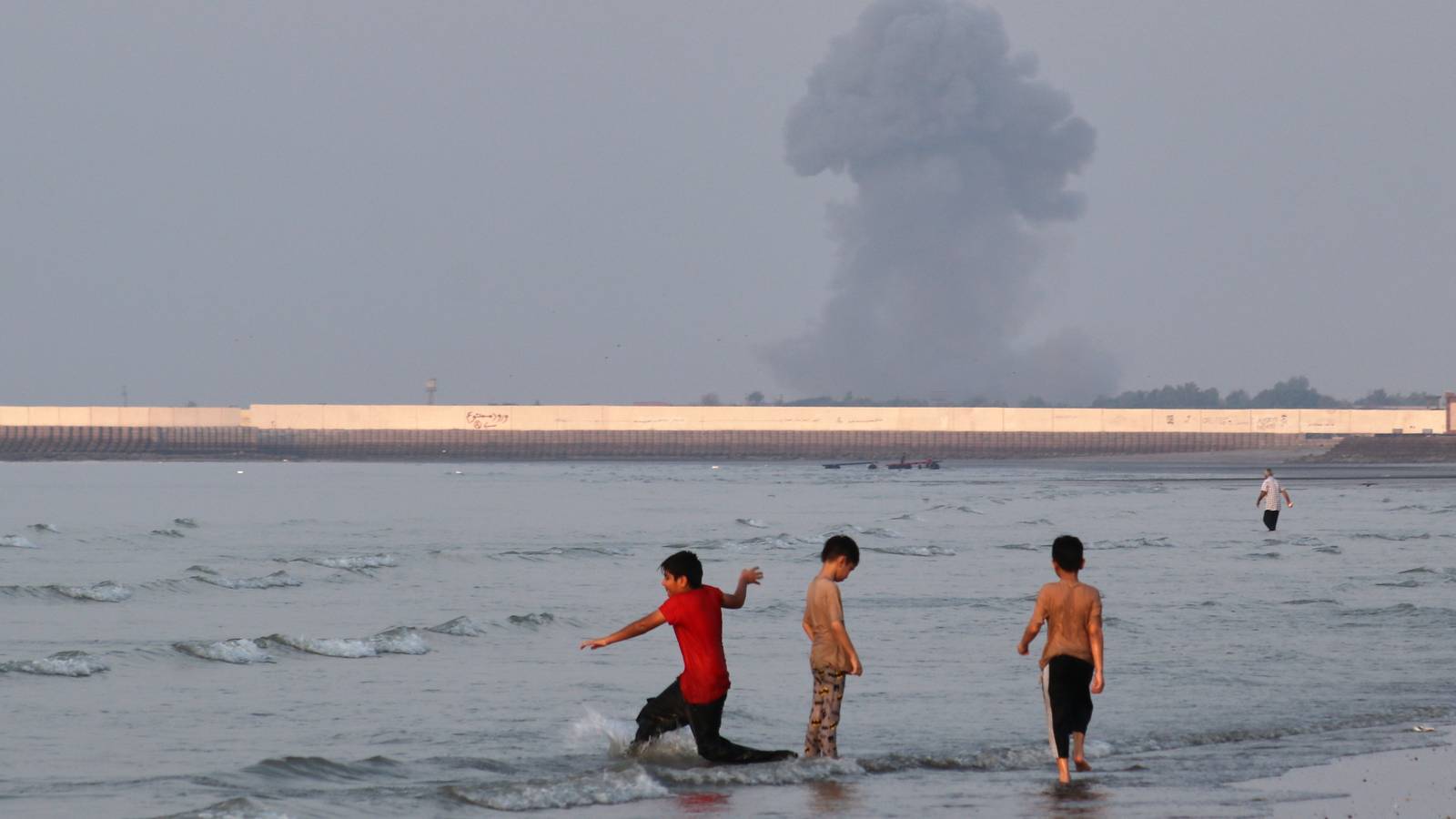
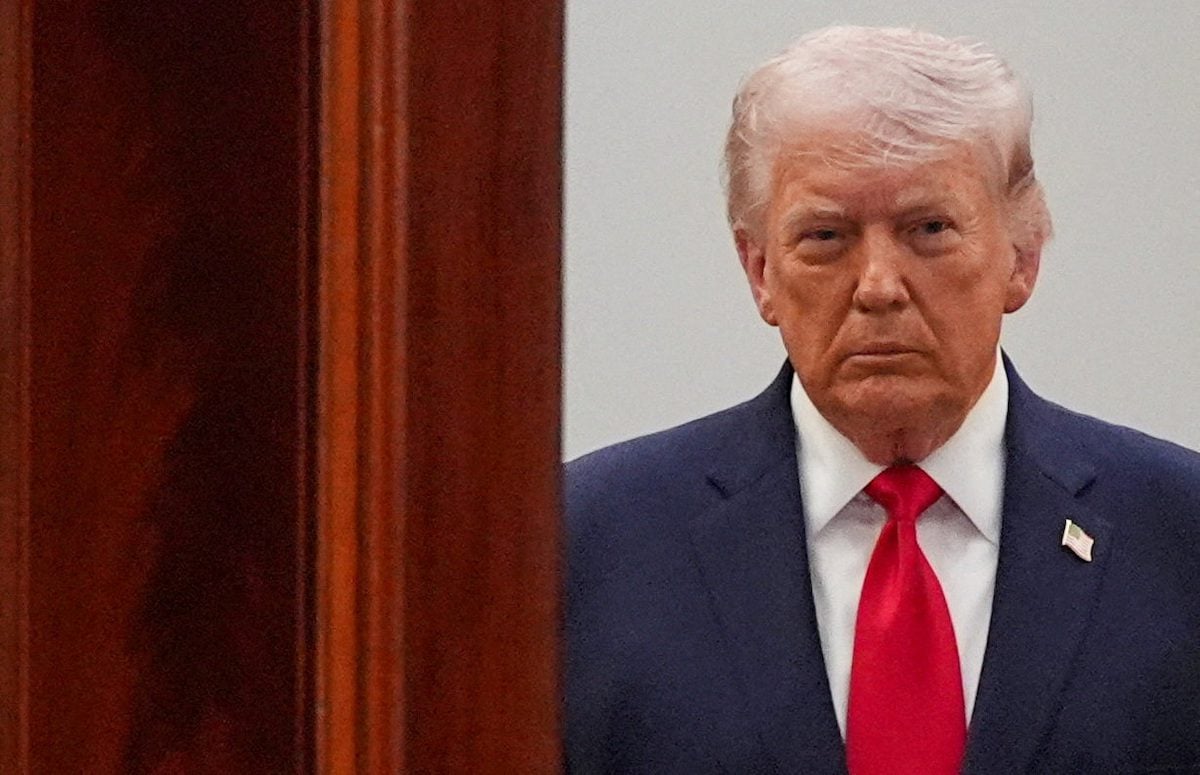
Iran conducted direct ballistic missile attacks against US facilities in Jordan and Emirati oil tankers transiting the Strait of Hormuz on 14 July 2026. The US responded with a five-hour wave of strikes against multiple Iranian military locations. President Trump reinstated the naval blockade of Iranian ports and proposed charging a 20% fee on commercial cargo transiting the Strait of Hormuz, escalating regional tensions and threatening maritime commerce.
Executive summary
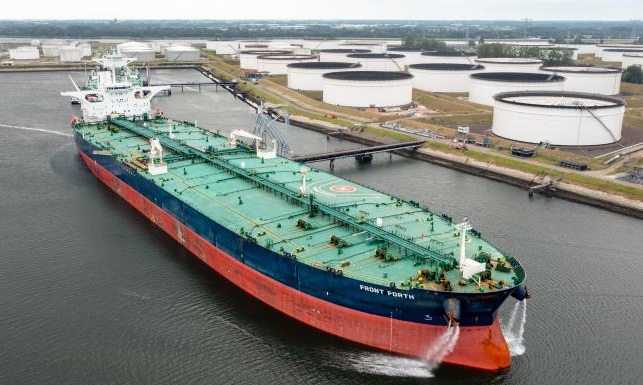
Iran's Islamic Revolutionary Guard Corps launched ballistic missiles against US military facilities in Jordan and Emirati oil tankers transiting the Strait of Hormuz on 14 July, killing one Indian crewmember and injuring eight others. Jordanian forces intercepted four missiles and Bahrain issued three missile alert sirens. US forces responded with five hours of strikes against Iranian military facilities across Bushehr, Chah Bahar, Jask, Konarak, Abu Musa and Bandar Abbas. President Trump reinstated a naval blockade of Iranian ports set to take effect 2000 GMT on 14 July and proposed a 20% fee on all cargo transiting the Strait of Hormuz. While commercial vessels continue limited transit through the Strait, observable traffic has fallen to near-zero with some AIS-dark sailings observed.
Change from previous assessment
Prior assessment on 13 July correctly identified Iranian strikes against US-linked facilities in Jordan, Bahrain and Kuwait, with regional intercepts reported. This update confirms direct Iranian attacks against US military facilities (not merely linked facilities) in Jordan, specifically targeting Al Udeid Air Base. The update adds details of Iranian strikes against UAE oil tankers with confirmed casualties, plus Bahrain issuing multiple missile alerts. Crucially, it confirms a direct US military response against Iranian territory with specific locations named, rather than proxy counterstrikes. While prior reporting noted disrupted Strait of Hormuz traffic, this update adds President Trump's reinstatement of a formal naval blockade with specific implementation timing and the unprecedented proposal of a 20% transit fee, raising risks to commercial maritime operations.
Key judgments
- Iran very likely conducted direct ballistic missile strikes against US facilities in Jordan and Emirati oil tankers transiting the Strait of Hormuz on 14 July 2026. (Confidence: high · REPORTED)
- I&W: Official Iranian government statement naming specific US facilities targeted in Jordan (0-48 hours)
- I&W: Detailed port records confirming Emirati tanker Mombasa B sustained structural damage from missile impact (1-7 days)
- US forces very likely conducted a five-hour wave of strikes against Iranian military facilities across Bushehr, Chah Bahar, Jask, Konarak, Abu Musa and Bandar Abbas on 13-14 July in direct response to Iranian attacks. (Confidence: high · REPORTED)
- I&W: Satellite thermal imaging confirming fresh damage at specified Iranian military locations (1-7 days)
- I&W: Official Iranian state media reports detailing specific facilities damaged (0-48 hours)
- President Trump very likely reinstated the naval blockade of Iranian ports effective 2000 GMT on 14 July and proposed charging a 20% fee on all commercial cargo transiting the Strait of Hormuz. (Confidence: high · REPORTED)
- I&W: US Navy-led Joint Maritime Information Center publishing updated blockade operational orders (0-24 hours)
- I&W: Commercial shipping agents reporting attempts to collect 20% fee at transshipment points (1-14 days)
- Iranian attacks against US military facilities in Jordan and commercial oil tankers on 14 July likely represent escalation from proxy operations to direct state military action. (Confidence: medium · ASSESSED)
- I&W: Iranian Revolutionary Guard acknowledging direct involvement in future strikes (0-7 days)
- I&W: Increased deployment of Iranian naval assets in Gulf of Oman (1-7 days)
- Oil prices likely rose further following the direct exchanges on 14 July, with Brent crude surpassing $86 per barrel. (Confidence: medium · REPORTED)
- I&W: Commercial futures contracts closing above $88 per barrel for next month delivery (0-24 hours)
- I&W: Physical crude trades in Asian ports showing $2-4 per barrel premium over futures (1-4 days)
Outlook & scenarios
Managed Escalation with Renewed Ceasefire (40%)
The US and Iran reach a temporary de-escalation agreement within 14 days, possibly brokered by Oman or Kuwait, halting direct strikes while maintaining naval operations. Oil prices moderate to $75-80 per barrel and commercial traffic gradually resumes through the Strait of Hormuz, though with higher insurance premiums and mandatory naval escorts.
Regional Conflict Expansion (30%)
Iranian attacks expand to Saudi Arabia and Iraq with increasing frequency, triggering US-led coalition airstrikes against Revolutionary Guard command centres and missile production facilities. The Strait of Hormuz remains closed to normal commercial traffic for more than 30 days, with Brent crude exceeding $100 per barrel and regional countries declaring states of emergency to ration energy supplies.
Protracted Low-Intensity Conflict (25%)
Direct clashes remain limited to specific areas with both sides avoiding full-scale conflict. The naval blockade persists with sporadic US strikes against Iranian capabilities, while Iran conducts intermittent attacks on tankers near Oman. Oil prices stabilise around $90 per barrel but remain volatile, and commercial shipping reverts to established alternative routes bypassing the Strait of Hormuz, increasing global logistics costs by 15-20%.
Wildcard: Internal Iranian Crackdown (5%)
Iranian domestic protests intensify following military losses, forcing the regime to shift focus inward while maintaining limited external operations. This creates an opening for rapid US-Iranian de-escalation within 21 days, with oil prices dropping sharply to pre-conflict levels and the US accepting reduced naval restrictions as Iran prioritises internal stability over external confrontations.
Recommendations
- Monitor Iranian naval deployments near the Bandar Abbas Naval Harbor for indications of enhanced capabilities, prioritising satellite imagery analysis of damaged facilities to assess Iran's ability to project maritime power.
- Track insurance underwriters' premium adjustments for vessels transiting Gulf waters within 24 hours, using broker communications to identify alternative routing patterns that reveal practical commercial traffic workarounds.
- Coordinate with maritime industry contacts to verify implementation timelines for the US-proposed 20% cargo fee, specifically identifying which commercial carriers challenge the new levy through legal channels or alternative ports.
- Conduct source validation on conflicting casualty reports from the UAE tanker attack to establish precise injury numbers and nationalities, focusing on Indian and Ukrainian embassy communications.
Confidence & uncertainty
Overall confidence is medium due to multiple high-reliability media sources corroborating Iranian and US military actions on 14 July, consistent with CENTCOM statements and regional government notifications. Discrepancies exist regarding exact casualty figures among different outlets and the precise implementation timeline for the naval blockade fee, reflected in medium confidence for economic impact assessments. Thin sourcing affects understanding of Iranian command structures and internal decision making, creating uncertainty about potential escalation patterns.
Intelligence gaps
- [EEI 1.1 · UNCOVERED] Concentrations or unusual movements of IRGC-Navy fast attack craft, small boat swarms, or escort vessels within 200 km of U.S./allied ships, including approach distances and formation changes. Recommended collection: maritime/AIS
- [EEI 1.2 · UNCOVERED] Detected pre-launch activity at coastal missile or rocket batteries (vehicle dispersal, fuel/warhead handling, radars powering up, transport erector launchers moving to firing positions). Recommended collection: imagery/signals
- [EEI 1.3 · UNCOVERED] Increased launch/arming/positioning of armed UAVs (MALE/loitering munitions) or tactical aircraft at Iranian coastal bases with sortie generation rates and munitions loadouts. Recommended collection: air/ADS-B/imagery
- [EEI 1.4 · UNCOVERED] Command-and-control indications of attack orders or elevated rules-of-engagement from IRGC/General Staff (intercepted communications, internal order messages, force-wide alert messages). Recommended collection: signals/human
- [EEI 2.1 · UNCOVERED] Public statements or state-media broadcasts from Supreme Leader, President, Minister of Defense, or IRGC commanders indicating authorization, restraint, or conditions for retaliation. Recommended collection: open-source
- [EEI 2.2 · UNCOVERED] Issuance of formal orders, mobilization directives, travel restrictions, or official internal communications within IRGC/Armed Forces indicating escalation posture or stand-down. Recommended collection: human/diplomatic
- [EEI 2.3 · UNCOVERED] Directives, logistics movements, or communications from Iranian commanders to regional proxy militias (Houthis, Iraqi Shia militias, Lebanese groups) that change their threat posture or task them with specific operations. Recommended collection: signals/human
- [EEI 2.4 · UNCOVERED] Changes in Iran's diplomatic exchanges with key states (offers of negotiation, warnings, or coordination with Russia/China) or requests for deconfliction with maritime/naval actors. Recommended collection: diplomatic
- [EEI 3.1 · UNCOVERED] Incidents involving commercial vessels within the Strait of Hormuz or Persian Gulf: attacks, boarding attempts, near-misses, AIS spoofing or deliberate AIS outages, including vessel IDs and locations. Recommended collection: maritime/AIS
- [EEI 3.2 · UNCOVERED] Discovery or reporting of naval mines, unexploded ordnance, or damage to fixed maritime infrastructure (oil platforms, terminals, pipelines) with geolocated imagery or on-scene assessments. Recommended collection: imagery/open-source
- [EEI 3.3 · UNCOVERED] Commercial indicators of disruption: sudden increases in war-risk insurance premiums for Gulf transits, vessel re-routing decisions, port throughput reductions, or charter cancellations for Gulf shipments. Recommended collection: financial/commercial
- [EEI 3.4 · UNCOVERED] Movements or posture changes of regional state navies/air forces (Saudi, UAE, Kuwait, Bahrain, UK) such as task group departures, airbase dispersals, or announced maritime patrols near choke points. Recommended collection: open-source/imagery
Cited sources
[1] HuffPost · Iran And U.S. Stage New Attacks, Battle Over Control Of Strait Of Hormuz (B) · sha256:13a95acc5e6d [2] gcaptain.com · Iranian Missile Attacks Hit Three More Tankers as U.S. Expands Strikes, Seafarer Death Toll Rises (B) · sha256:aac2389d932a [3] insurancejournal.com · Iran and US launch New Missile Attacks, Battle Over Control of Strait of Hormuz (B) · sha256:05dcf720c08d [4] maritime-executive.com · Iran Attacks Two Emirati Tankers Off Oman, Killing One Crewmember (A) · sha256:646dd25a6e9e [5] gcaptain.com · UAE Says Iranian Missiles Struck Oil Tankers in Strait of Hormuz, One Sailor Killed (A) · sha256:2f9e5030762b [6] military.com · US Attacks Iran and Tehran Retaliates Across the Middle East, Threatening a Return to All-Out War (B) · sha256:aa6f2b403991 [7] worldoil.com · Oil surges as Trump reinstates Hormuz blockade, proposes transit fee (B) · sha256:d0ec59d360fc [8] Wikipedia · Middle Eastern crisis (2023–present) (B) · sha256:85fae8049b21 [9] Al Jazeera · US, Iran exchange attacks around Strait of Hormuz (A) · sha256:c195fba4dac6 [10] gcaptain.com · Trump Reinstates Iran Blockade, Declares U.S. 'Guardian of Hormuz,' And Calls for 20% Cargo Fee (B) · sha256:a5cce85c9069 [11] Wikipedia · Economic impact of the 2026 Iran war (B) · sha256:929a6366c455 [12] Office of Foreign Assets Control (OFAC) · OFAC - SDN List (A) · sha256:ece3cad3eeb1
Source content hashes were computed at collection time; the cited text is preserved unmodified for the life of this product.
TLP:CLEAR