TLP:CLEAR · Disclosure is not limited.
Iran War: US-Iran Exchange Deepens Hormuz and Regional Risks
Time window: Last 1 day · Audience: General analyst · Type: Situation report · DTG: 2026-08-31 18:12Z · Overall confidence: HIGH
BLUF
The regional conflict has entered a new direct US-Iran exchange: US forces struck two Iranian launchers on Larak Island on 30 August, and the IRGC launched missiles and drones at King Hussein and Al-Azraq air bases in Jordan early on 31 August. Iranian retaliation is very likely to keep Jordan, Qatar, the UAE and the Strait of Hormuz under pressure over the next 0-14 days, while commercial traffic through Hormuz remains unlikely to return to normal.
Executive summary
US forces struck two Iranian launchers on Larak Island, which the IRGC said were being prepared for attacks involving the Strait of Hormuz. The IRGC then reported missile and drone attacks against King Hussein and Al-Azraq air bases in Jordan. Jordanian authorities said eight missiles were intercepted, while a US official reported no significant damage. Sirens were reported near Al Udeid Air Base in Qatar, and UAE air defences intercepted a drone over territorial waters. Shipping through Hormuz remains heavily impaired, although reported traffic figures vary by vessel type and tracking method. Tanker earnings, hire rates and route costs remain elevated. Washington is also sustaining sanctions pressure on Iran, while Tehran continues conditional diplomatic signalling.
Change from previous assessment
Since the 30 August brief, the assessment has shifted from a medium-confidence expectation of continued regional activity to a high-confidence judgement that the US-Iran exchange has resumed directly. The new reporting places greater weight on Jordan as an active target set, adds reported pressure near Al Udeid and UAE territorial waters, and provides sharper evidence of continuing Hormuz disruption. The Hormuz judgement is more precise rather than materially reversed because traffic counts remain contested. The Lebanon assessment is retained but confidence is lowered to low because the current reporting is mainly local and contradictory. The prior low-confidence judgement on sustained attacks across all six GCC states is not carried forward as a separate judgement.
Key judgments
- The US-Iran confrontation is very likely to remain active over the next 0-14 days, with the immediate exchange centred on Larak Island and Jordan. US forces struck two Iranian launchers on Larak Island on 30 August, and the IRGC then reported a ballistic-missile and drone attack on King Hussein and Al-Azraq air bases in Jordan. Jordan's Armed Forces reported eight interceptions, while a US official said all missiles were intercepted and no significant damage occurred. Confidence is high because the exchange is reported by US officials, Jordanian authorities, the IRGC and major-media or wire-service accounts. The IRGC's separate claim of heavy losses remains unverified. (Confidence: high · ASSESSED)
- I&W: A further Iranian missile or drone launch against King Hussein, Al-Azraq, Al Udeid or a Jordanian or UAE military or maritime site would confirm continued regional activity. (0-14 days)
- I&W: Fourteen days without another Iranian launch, confirmed impact or reported attack on those sites would break the assessment of sustained near-term activity. (0-14 days)
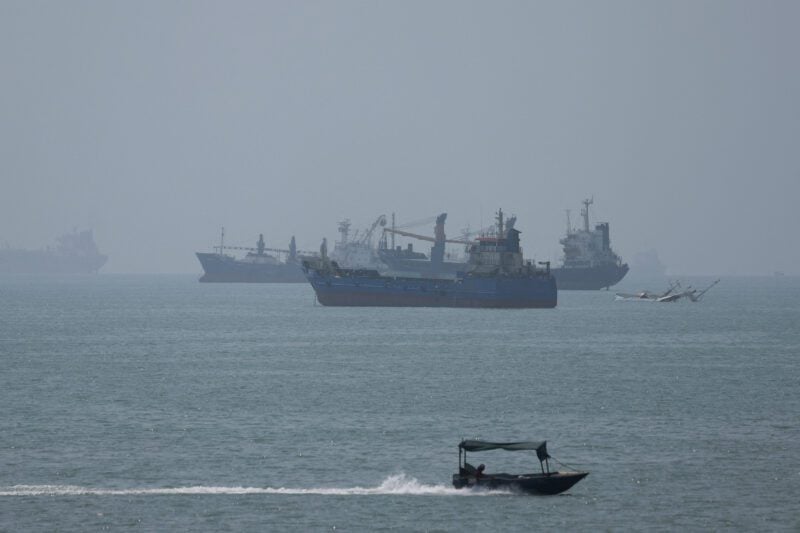
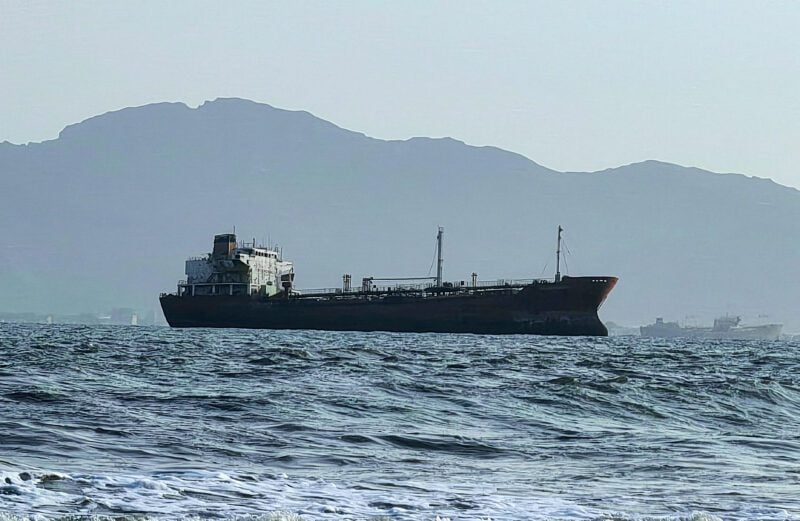
- Hormuz commercial traffic is very likely to remain well below the pre-war level over the next 0-14 days, while a complete closure is unlikely. Kpler recorded five visible commodity vessels per day over the weekend, another report recorded 14 vessels on Friday, and some vessels switched off their automatic identification systems. UKMTO also reported a tanker strike north of Khasab, Oman, as the third attack in the strait during the previous week. Confidence is medium because vessel counts conflict and AIS-dark shipping limits visibility, despite corroboration of disruption by shipping data and maritime reporting. (Confidence: medium · ASSESSED)
- I&W: Kpler and other vessel-tracking records showing daily traffic below half of the pre-war average of roughly 88 ships for seven consecutive days would confirm continued impairment. (0-14 days)
- I&W: A seven-day average at or near the pre-war level of roughly 88 ships, alongside no UKMTO-reported vessel attack for 14 days, would break the assessment. (0-14 days)
- Iran is likely to use threatened or actual maritime disruption in and around Hormuz as leverage over the next 1-3 months, but Iranian control of the waterway is unlikely to be complete. The IRGC has warned that its control of Hormuz will not weaken, while US reporting says Iranian forces were preparing rockets carrying sea mines and identifies Fajr-5 systems as capable of deploying them. The US military has reported clearing mines from shipping routes, and commercial vessels continue to transit, including a very large crude carrier carrying 2 million barrels of Qatari oil. Confidence is medium because the mine-deployment account is not independently corroborated and the attribution of the tanker strike remains unknown. (Confidence: medium · ASSESSED)
- I&W: A verified Iranian mine deployment, anti-ship missile launch or seizure of a named commercial vessel would confirm continued use of maritime pressure as leverage. (1-3 months)
- I&W: A sustained 14-day period of large-tanker transits without a mine, missile or vessel-seizure incident would break the assessment of effective Iranian maritime leverage. (1-3 months)
- Energy-transport disruption is very likely to persist over the next 1-3 months, even if Gulf exports continue to recover from their trough. Tanker earnings on Saudi Arabia-China routes reached US$656,000 per day on 28 August, ship hire from Oman to China rose to about US$220,000 per day from US$131,000 a month earlier, and TotalEnergies CEO Patrick Pouyanne put the cost of moving barrels through Hormuz at about US$20 million. Reported Gulf exports were about 3.6 million barrels per day in August against nearly 20 million before the war, although another report said volumes inside the Gulf were rising. Confidence is medium because the strongest volume data come from low-reliability social-media reporting and route-delay estimates range from 10-14 days to about 30 days. (Confidence: medium · ASSESSED)
- I&W: Oman-China hire rates remaining above US$220,000 per day and Saudi Arabia-China tanker earnings remaining near US$656,000 per day for 30 days would confirm persistent disruption. (1-3 months)
- I&W: Reported Gulf exports returning to within 20 per cent of the pre-war level near 20 million barrels per day for one month, with detour delays ending, would break the assessment. (1-3 months)
- US economic pressure on Iran is very likely to continue over the next 1-3 months, while rapid diplomatic de-escalation is unlikely. Washington intensified sanctions, proposed cutting Banque Misr's Emirati branches from the US financial system, and Treasury Secretary Scott Bessent said another bank would face sanctions that week. Iran rejected the pressure, while Foreign Minister Abbas Araghchi said Tehran remained open to diplomacy if Washington abandoned the pressure campaign. Confidence is medium because the sanctions announcements are corroborated by wire-service and major-media reporting, but Bessent's statement carries a one-day timing discrepancy and the diplomatic opening is conditional. (Confidence: medium · ASSESSED)
- I&W: Treasury formally announcing sanctions on the second bank and Iran repeating its rejection of US pressure would confirm parallel economic and military pressure. (0-14 days)
- I&W: Washington suspending the Banque Misr proposal while Abbas Araghchi or another Iranian official accepts talks without requiring an end to the US pressure campaign would break the assessment of unlikely rapid de-escalation. (1-3 months)
- The Lebanon front is likely to remain a secondary escalation channel over the next 1-3 months, while direct Israel-Hezbollah war is roughly even chance. An Israeli security source reported a tight siege around Ali al-Taher in southern Lebanon. Political sources said a new US-brokered Lebanon-Israel negotiation round would be scheduled by mid-September, while US officials characterised Hezbollah as unwilling to engage and Hezbollah-linked reporting set Israeli withdrawal south of the Litani River as a condition for dialogue and weapons handover. Confidence is low because this judgement rests mainly on local-media reporting and conflicting accounts of Hezbollah's willingness to negotiate. (Confidence: low · ASSESSED)
- I&W: Israeli operations expanding beyond Ali al-Taher, followed by a confirmed Hezbollah attack south of the Litani River, would confirm Lebanon's role as an escalation channel. (1-3 months)
- I&W: A new Lebanon-Israel negotiation round occurring by mid-September, accompanied by reduced Israeli activity around Ali al-Taher and Hezbollah acceptance of state control over weapons, would break the assessment. (0-14 days)
Outlook & scenarios
Managed exchange and constrained shipping (55%)
This is the most likely near-term path. The US and Iran conduct limited retaliatory strikes, Jordan continues intercepting Iranian missiles, and Hormuz remains open to a small number of vessels. Shipping costs stay high, while Qatar, Pakistan and Oman maintain communication efforts.
Maritime escalation and regional widening (30%)
Iran sustains mine or anti-ship pressure around Hormuz, followed by another tanker attack or an attack affecting Al Udeid, Jordan or UAE maritime space. US responses intensify, Egypt renews its condemnation, and commercial traffic falls below current visible levels.
Diplomatic pause and partial recovery (20%)
Qatar, Pakistan and Oman facilitate renewed US-Iran contact, Iran pauses attacks, and sanctions implementation slows. Hormuz traffic rises from its current depressed level, but normal traffic does not return quickly because insurers and ship operators retain elevated risk pricing.
Wildcard: direct US-Iran maritime confrontation (10%)
A mine deployment or anti-ship launch hits a US or commercial vessel, prompting the US to apply its stated zero-tolerance policy and Iran to respond. Hormuz traffic approaches a full halt, with a sharp further rise in freight and oil prices. This is a low-probability, high-impact outcome.
Recommendations
- Make the Larak Island to Jordan exchange the top near-term collection priority. Reconcile CENTCOM, Jordanian Armed Forces, IRGC and US official reporting on the two launchers, eight interceptions, damage and casualties. Keep the IRGC heavy-loss claim explicitly unverified.
- Build a daily Hormuz dashboard that separates visible commodity vessels, AIS-dark vessels, total vessel counts and UKMTO-reported incidents. Do not treat the five-vessel and 16-vessel figures as equivalent until their vessel classes and counting windows are reconciled.
- Set an immediate warning trigger for any verified mine deployment, anti-ship missile launch, tanker strike, vessel seizure or attack affecting Al Udeid, King Hussein, Al-Azraq or UAE territorial waters.
- Model two shipping-disruption cases using the reported 3.6 million and nearly 20 million barrels-per-day Gulf export baselines, with separate 10-14-day and 30-day rerouting assumptions.
- Track the proposed Banque Misr rule, the announced second-bank sanctions action and Abbas Araghchi's diplomatic conditions together. Report any shift from conditional contact to talks that continue despite US pressure.
- Maintain a separate low-confidence Lebanon warning line. Verify the timing of the next Lebanon-Israel negotiation round and Hezbollah's position through direct statements before raising the probability of a wider Israel-Hezbollah confrontation.
Confidence & uncertainty
Overall confidence is high because the central military sequence is corroborated by the IRGC, Jordanian Armed Forces, US officials, major-media reporting and wire-service accounts. Hormuz disruption is also supported by UKMTO reporting, Kpler data and multiple trade indicators, including vessel counts, tanker earnings and hire rates. The main uncertainties are the disputed IRGC claim of heavy losses in Jordan, the unconfirmed attribution of the tanker strike, inconsistent Hormuz traffic denominators and the uncorroborated claim that Iranian missiles targeted Aqaba or that Al Udeid was struck.
Intelligence gaps
- [EEI 1.1 · UNCOVERED] Observed repositioning, sustained increases, or new forward basing of Iranian conventional or IRGC forces (armored units, missile batteries, aircraft, naval vessels) toward borders or regional launch points. Recommended collection: IMINT/satellite
- [EEI 1.2 · UNCOVERED] Hezbollah or other Iran-aligned proxy forces conducting mass mobilization, visible rocket/artillery emplacements, cross-border firing incidents, or preparations for cross-border operations from Lebanon, Syria, Iraq or Yemen. Recommended collection: HUMINT/ground ISR
- [EEI 1.4 · UNCOVERED] Interdicted or observed shipments (air, sea, land manifests, seizures, satellite imagery of transfers) of advanced weapons or missile components from Iran toward proxy groups or forward staging points. Recommended collection: maritime/AIS
- [EEI 2.1 · UNCOVERED] Satellite or on-the-ground imagery showing fires, damage, or operational shutdown at major oil export facilities, refineries, storage terminals, or key pipeline infrastructure in the Gulf and Red Sea. Recommended collection: IMINT/satellite
- [EEI 2.4 · PARTIAL] Rapid increases in war-risk insurance premiums for Middle East routes, shipping company advisories to avoid region, or major charter cancellations tied to the conflict. Recommended collection: financial/open-source
- [EEI 3.1 · UNCOVERED] Movement/arrival of major foreign military assets into the region: US carrier strike groups, amphibious ready groups, strategic bomber flights, Russian/Chinese naval taskings, or allied expeditionary units (visible in AIS, NOTAMs, satellite imagery, official releases). Recommended collection: IMINT/satellite
- [EEI 3.2 · UNCOVERED] Official expedited arms transfers, basing/overflight agreements, or declarations of operational support (formal government announcements, defense ministry releases, logistics flight manifests). Recommended collection: open-source/diplomatic
- [EEI 3.3 · UNCOVERED] Embassy evacuations, large-scale personnel movements, issuance of government travel bans/advisories, or multinational security alerts affecting foreign nationals and diplomatic posture in the region. Recommended collection: diplomatic/open-source
- [EEI 3.4 · PARTIAL] High-level diplomatic/UN activity: scheduled or emergency Security Council meetings, published ceasefire proposals, or multilateral statements committing support/condemnation that precede changes in military posture. Recommended collection: open-source/diplomatic
Cited sources
[1] gCaptain (republishing Reuters reporting) · Vessels Crossing Strait Of Hormuz Drop To 5 Per Day (B) · Sun Aug 30 2026 23:42:52 GMT+0000 (Coordinated Universal Time) · sha256:fc3284ee1442 [2] CBS News · U.S. military strikes Iranian targets in first military action in a month (A) · Fri Aug 28 2026 10:39:00 GMT+0000 (Coordinated Universal Time) · sha256:a1ad1bcf534e [3] gCaptain (republishing Bloomberg) · US and Iran Exchange Attacks for First Time in About a Month (A) · Mon Aug 31 2026 07:48:20 GMT+0000 (Coordinated Universal Time) · sha256:fea2cd8c43a6 [4] RT Arabic (Russia Today) · الحرس الثوري الإيراني ينشر لقطات للحظة إطلاق الصواريخ والمسيرات باتجاه قاعدتين في الأردن. (فيديو) (B) · Sun Aug 30 2026 23:27:13 GMT+0000 (Coordinated Universal Time) · sha256:15db62cede73 [5] Defence Security Asia · [VIDEO] Iran Retaliates for Larak Strike, Targets America’s Regional Airpower Network - Defence Security Asia (C) · Mon Aug 31 2026 05:38:40 GMT+0000 (Coordinated Universal Time) · sha256:f6f05f32d102 [6] Bayan Uralbayeva (LinkedIn) · Two Chokepoints, One Flight to Scale (E) · Mon Aug 31 2026 08:46:19 GMT+0000 (Coordinated Universal Time) · sha256:ac97a3d138c8 [7] The Maritime Executive · US Pre-empts Iranian Rocket Deployment of Sea Mines in Strait of Hormuz (C) · sha256:933efdd159bc [8] gCaptain (republishing Bloomberg reporting) · Oil Tankers Make Fortunes During War as Sinokor Dominates (B) · Mon Aug 31 2026 16:13:10 GMT+0000 (Coordinated Universal Time) · sha256:ae3317bf341a [9] Ethiopian News Agency (ENA) · Wars, Humanitarian Crises, Economic Rivalries and Natural Disasters Shape the World (B) · sha256:dba8f4170bae [10] Al-Liwa (اللواء) newspaper · افتتاحية “اللواء”: مواجهة لبنانية للضغوط الإسرائيلية. تمسُّك بالمفاوضات واليونيفيل ومؤتمر دعم الجيش (D) · sha256:5b8715f6a9cb
Source content hashes were computed at collection time; the cited text is preserved unmodified for the life of this product.
TLP:CLEAR