TLP:CLEAR · Disclosure is not limited.
Israel, Gaza: Airstrikes persist as US, Iran exchanges strain Israel, Lebanon ceasefire efforts
Time window: Last 7 days · Audience: General analyst · Type: Situation report · DTG: 2026-07-09 13:13Z · Overall confidence: MEDIUM
BLUF
Israeli air operations in Gaza are very likely ongoing, with lethal strikes reported on 9 July and satellite thermal detections across the Strip. The US, Iran strike cycle on 8-9 July likely elevates the risk that cross‑border violence between Israel and Hezbollah resumes despite recent ceasefire frameworks. Displacement pressures on communities along the Israel, Lebanon frontier remain high.
Executive summary
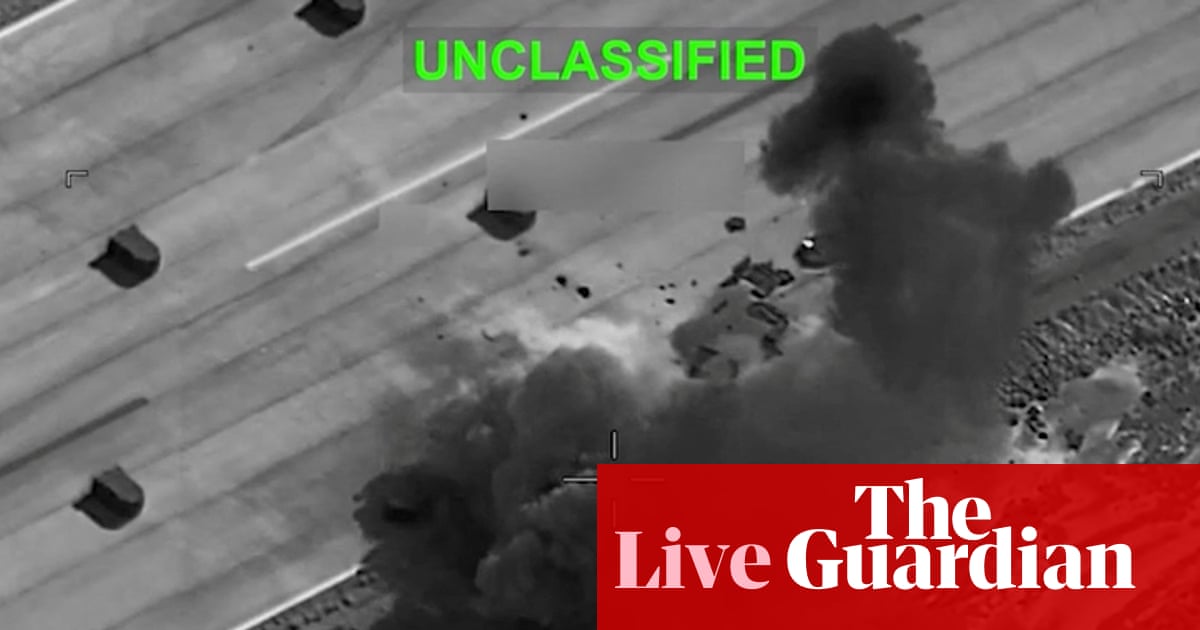
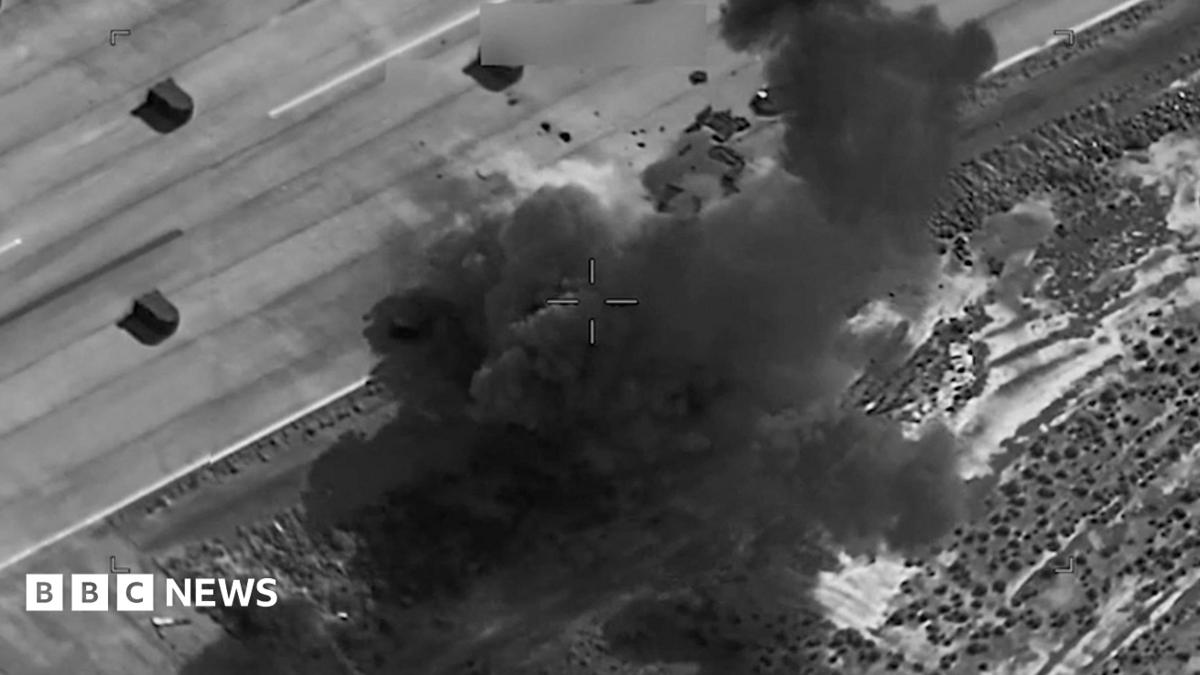
Israeli strikes in Khan Yunis and Gaza City on 9 July caused fatalities, while NASA recorded 38 fire or thermal detections across Gaza from 8-9 July. In parallel, the United States struck about 90 Iranian targets on 9 July after an earlier wave, and Iran claimed retaliatory attacks against US‑linked sites in Kuwait and Bahrain, with missile alerts and interceptions reported in Jordan and Kuwait. Mediators called for restraint, but public statements from Washington and Tehran point to a tense environment. Hezbollah has stated it will not halt attacks on Israel until Israeli operations in Gaza end, and Israel has said its attacks will continue until northern citizens can return safely, leaving the Israel, Lebanon ceasefire architecture exposed. Reporting indicates roughly 96,000 displaced from northern Israel and over 1.4 million displaced in Lebanon, underscoring persistent civilian risk.
Change from previous assessment
Since the prior brief, new reporting confirms Israeli strikes causing fatalities in Khan Yunis and Gaza City on 9 July and independent thermal detections across Gaza. The US conducted another night of strikes hitting about 90 targets in Iran and Tehran claimed retaliatory attacks in Kuwait and Bahrain, with missile alerts and interceptions reported in Jordan and Kuwait. We therefore raise the assessed risk that these dynamics undermine the Israel, Lebanon ceasefire architecture in the near term and narrow the expected space for diplomacy, while our displacement judgments are unchanged.
Key judgments
- Israeli air operations in Gaza are very likely ongoing, evidenced by lethal strikes in Khan Yunis and Gaza City on 9 July and 38 satellite‑detected fire or thermal anomalies across the Strip between 8 and 9 July. (Confidence: high · REPORTED)
- I&W: Additional fatal Israeli strikes reported by named locations in Gaza and corroborated by high‑confidence NASA FIRMS detections on the same dates (0-14 days)
- I&W: A 14‑day absence of lethal incident reporting from Gaza combined with a sustained drop in high‑confidence FIRMS detections (0-14 days)
- The risk of regional escalation spilling into the Israel, Lebanon front is likely elevated following reciprocal US, Iran strikes on 8-9 July, Iranian attacks against US‑linked sites in Kuwait and Bahrain, and regional missile alerts and interceptions in Jordan and Kuwait. (Confidence: medium · ASSESSED)
- I&W: Hezbollah increases cross‑border fire into northern Israel or the IDF publicly announces expanded strikes inside southern Lebanon (0-14 days)
- I&W: A verified pause in US, Iran strikes for at least two weeks and a public recommitment by Israel and Hezbollah to existing ceasefire terms (0-14 days)
- Sustained cessation of cross‑border hostilities in Lebanon is unlikely in the near term, given Hezbollah’s stated linkage of its attacks to ongoing Israeli operations in Gaza, the need for repeated ceasefire renewals since April, June, and heavy Lebanese casualties reported since March. (Confidence: medium · ASSESSED)
- I&W: Continued cross‑border incidents while Israeli strike activity in Gaza persists, accompanied by Hezbollah statements restating the Gaza linkage (0-14 days)
- I&W: A verified, incident‑free two‑week period on the Lebanon front alongside a Hezbollah statement decoupling its fire from Gaza operations (0-14 days)
- Humanitarian displacement pressures along the Israel, Lebanon frontier very likely remain high, with roughly 96,000 people displaced from northern Israel and over 1.4 million displaced in Lebanon. (Confidence: medium · REPORTED)
- I&W: Official reporting of phased returns to northern Israeli towns and Lebanese localities with quantified returnee figures (1-3 months)
- I&W: Municipal or national notices prolonging evacuation orders or restricting returns along the border (0-14 days)
- The diplomatic space for de‑escalation this month is likely constrained: mediators describe a very tense atmosphere, Qatar is engaging Tehran, and US statements declare the Iran ceasefire ‘over’ with warnings of further strikes, while regional actors urge restraint. (Confidence: medium · ASSESSED)
- I&W: Public scheduling and participant lists for new de‑escalation talks with readouts from mediators (0-14 days)
- I&W: Another round of US, Iran strikes and associated regional missile alerts without diplomatic announcements (0-14 days)
Outlook & scenarios
Managed containment: Gaza strikes continue, northern front stays below full‑scale war (50%)
Israeli air operations persist in Gaza while cross‑border fire with Hezbollah remains sporadic and contained by deterrence and back‑channel messaging. Mediators keep lines open despite a tense atmosphere and public hardening of positions. Israel maintains pressure until it assesses northern residents can return, and Hezbollah reiterates linkage to Gaza without major escalation.
Northern escalation: US, Iran dynamics trigger renewed Israel, Hezbollah clashes (35%)
Further US strikes on Iran and Iranian retaliation through Kuwait, Bahrain or elsewhere embolden Hezbollah or prompt Israeli pre‑emption. Cross‑border attacks intensify, Israeli strikes expand in southern Lebanon, and ceasefire arrangements unravel, driving new displacement on both sides of the border.
Patchy de‑escalation: ceasefire extensions hold tenuously (20%)
Third‑party engagement, including by Qatar and regional capitals urging restraint, secures extensions of existing ceasefire understandings. Hostilities drop to isolated incidents, but Hezbollah’s Gaza linkage and Israeli security conditions keep the truce fragile and easily reversible.
Recommendations
- Correlate Gaza strike reports with NASA FIRMS detections to validate incident timing and location and flag clusters for deeper review.
- Maintain a rolling timeline of US, Iran strikes, Jordanian and Kuwaiti air‑defence alerts, and any Hezbollah or IDF statements tying Gaza to the northern front to assess escalation pathways.
- Task collection to verify any announced extensions or modifications to Israel, Lebanon ceasefire terms and track compliance through incident logs.
- Update displacement baselines for northern Israel and Lebanon by collating official and humanitarian reporting; highlight any announced return programmes or prolonged evacuation orders.
- Establish an indicators board keyed to tripwires in this brief and assign thresholds for alerting when cross‑border incidents, missile alerts, or mediator announcements change the assessed trajectory.
Confidence & uncertainty
Overall confidence is medium. Gaza strike fatalities and NASA thermal detections rest on high‑reliability, mutually reinforcing sources. The US, Iran strike exchange is corroborated by multiple major media and official statements, though casualty figures vary. Assessments about the Israel, Lebanon ceasefire’s fragility and displacement rely on medium‑confidence sources and NGO or government tallies, and there are gaps on real‑time cross‑border activity this week. The diplomatic outlook is inferred from credible but qualitative statements, which narrows confidence.
Alternative analysis (red cell)
The evidence shows kinetic activity and heightened regional rhetoric, but key causal links are ambiguous or contradicted elsewhere in the ledger. Thermal detections and isolated strike reports do not uniformly establish actor attribution or sustained operational tempo; Gulf‑theatre exchanges do not by themselves prove imminent spillover to the Israel–Lebanon front; repeated ceasefire renewals, while fragile, indicate mechanisms that have intermittently held; and active Qatar‑Iran engagement suggests diplomatic channels remain open despite harsh public rhetoric. Additional corroborative sourcing on attribution, border force posture changes, and independent displacement and diplomatic metrics are required to firm these judgments.
Intelligence gaps
- [EEI 1.1 · UNCOVERED] Number, type and geolocated coordinates of projectiles (rockets, mortars, anti-tank guided missiles) fired from Lebanon into Israel in the last 24/72 hours, including time-stamped launch and impact locations. Recommended collection: signals/intel
- [EEI 1.2 · UNCOVERED] Satellite or aerial imagery showing movement, concentration, or forward displacement of Hezbollah-associated military assets (armored vehicles, artillery pieces, mobile rocket launchers, logistics convoys) to positions within 0–10 km of the Israel-Lebanon border. Recommended collection: satellite/imagery
- [EEI 1.3 · UNCOVERED] Intercepted or captured Hezbollah command-and-control communications or orders explicitly directing cross-border operations or coordinated strikes with Palestinian groups (time-stamped messages, unit identifiers, orders to fire/move). Recommended collection: signals/intel
- [EEI 1.4 · PARTIAL] Observable changes in Israeli northern-front posture within Israel (numbers and types of reinforcements deployed to northern brigades, activation of reserves, air defense redeployments, evacuation orders or shelter alerts in northern towns), including timestamps and unit IDs where available. Recommended collection: human/intel
- [EEI 2.1 · UNCOVERED] Official or corroborated reports of IDF reservist mobilization and unit-level deployment orders (number of reservists called, named brigades/units ordered to deploy, deployment timelines). Recommended collection: open-source/media
- [EEI 2.2 · UNCOVERED] Satellite or ground imagery showing concentrations of IDF heavy equipment (tanks, infantry fighting vehicles, engineering vehicles), staging areas, field hospitals or forward supply dumps within X km of the Gaza border and at known crossing points. Recommended collection: satellite/imagery
- [EEI 2.3 · PARTIAL] Change in strike patterns consistent with pre-ground-attack shaping: sustained high-frequency airstrikes on tunnel networks, command nodes, coastal launch sites, and known insurgent concentrations (strike counts, munition types, locations, times). Recommended collection: open-source/media
- [EEI 2.4 · UNCOVERED] Logistics indicators: verified convoys of fuel/ammunition entering staging areas, establishment of forward logistics or medical bases, or documented requisitioning orders for bulk combat supplies with timestamps and quantities. Recommended collection: human/intel
- [EEI 3.1 · PARTIAL] Number, participants and content of diplomatic contacts or negotiation sessions in the last 48 hours involving mediators (Egypt, Qatar, US, UN), including any proposed ceasefire text, prisoner/exchange lists, timelines or verification mechanisms. Recommended collection: diplomatic
- [EEI 3.2 · PARTIAL] Public statements, press releases or verified communiqués from Hamas and other Gaza armed groups specifying acceptance, rejection, or conditions for a ceasefire (explicit conditions such as prisoner release lists, withdrawal terms, lifting of blockades), with timestamps and speaker attribution. Recommended collection: open-source/media
- [EEI 3.4 · UNCOVERED] Operational evidence of a de facto pause: verified sustained reduction (e.g., ≥12 hours) in strikes or launches from either side in specific sectors, supported by strike/impact logs, radar tracks and incident reports. Recommended collection: open-source/media
Cited sources
[1] haaretz.com · Jordan intercepts 8 missiles launched from Iran, state news agency says (A) · sha256:96c2adac2c21 [2] NASA FIRMS · NASA FIRMS thermal detections — Gaza (2d) (A) · sha256:25731d8e2d74 [3] Al Jazeera · US strikes Iran for second night – is the peace process all over now? (A) · sha256:f789012665d9 [4] theguardian.com · Trump says truce ‘over’ as Iran reports US attack near nuclear plant – Middle East crisis live (A) · sha256:51eb2703ed5d [5] BBC · US and Iran trade strikes for second night in a row as Tehran aims at Kuwait, Bahrain, and Qatar (A) · sha256:fbdaa7cd6be4 [6] Al Jazeera · Mediator Pakistan says renewed US-Iran conflict is ‘in no one’s interest’ (A) · sha256:2ca24588c893 [7] ynetnews.com · Israel braces for renewed Iran fighting as Netanyahu, Katz cancel military ceremony (B) · sha256:37118a6b247a [8] Wikipedia · Hezbollah–Israel conflict (2023–present) (B) · sha256:c7a62262d9ac [9] Wikipedia · 2026 Israel–Lebanon ceasefire (F) · sha256:c0cc91cecd1b [10] منظمة العفو الدولية · لبنان: ينبغي التحقيق في الهجمات الإسرائيلية التي تقتل الأطفال، وتقضي على أسر بأكملها باعتبارها جرائم حرب (B) · sha256:993ddc13935a [11] Wikipedia · 2024 Israel–Lebanon ceasefire agreement (B) · sha256:ea1529c6f848 [12] bbc.co.uk · Bowen: For all his bluster, Trump has no better option than talks with Iran (A) · sha256:d22436d658df [13] CNN · ‘It’s over’: Trump on Iran ceasefire | CNN (A) · sha256:5b1265d97d15 [14] haaretz.com · Trump says Iran strikes are retribution for attacks on ships; warns of 'much worse' (A) · sha256:29c76f413b57
Source content hashes were computed at collection time; the cited text is preserved unmodified for the life of this product.
Red cell review: PARTIAL DISSENT
TLP:CLEAR