TLP:CLEAR · Disclosure is not limited.
Israel-Gaza and Lebanon: Ceasefire Strain and Localised Violence
Time window: Last 7 days · Audience: General analyst · Type: Situation report · DTG: 2026-10-06 13:11Z · Overall confidence: MEDIUM
BLUF
Likely the Gaza ceasefire will remain operationally degraded over the next 0 to 14 days, although the available reporting does not establish that it has formally ended. In southern Lebanon, reports indicate localised Israeli strike activity, but they do not establish a renewed Israel-Hezbollah campaign.
Executive summary
Reports during this period describe Israeli strikes and demolitions in Gaza, alongside rising ceasefire-period casualty figures reported by Gaza's Health Ministry. Hamas is reported to have refrained from firing at Israel since the ceasefire, while accounts describe internal disagreement over the movement's strategy and a reported July offer to disarm in exchange for Israeli withdrawal. For Lebanon, a June ceasefire reportedly eased fighting, but a nearby resident reported hearing repeated Israeli strikes and separate, weakly sourced reports described incidents near Mayfadoun and Majdal Zoun.
Change from previous assessment
Since the 5 October 2026 brief, the core assessment that the Gaza ceasefire is operationally ineffective is unchanged. New reporting adds casualty figures through 5 October, further specific strike reports and September satellite imagery showing demolition in named Gaza locations; confidence remains medium because counts and incident accounts are not fully reconciled. The current material also adds reporting on Hamas's no-fire posture, internal debate and a July disarmament-for-withdrawal position, but these claims rest chiefly on one media account. For Lebanon, the June ceasefire and recent reports of repeated strikes inform the assessment of localised activity; confidence in that near-term judgment is low because the reports are thin and partly based on social media. The current material does not newly corroborate the prior brief's Lebanese force-rotation or settlement assessments, so those judgments are not updated here.
Key judgments
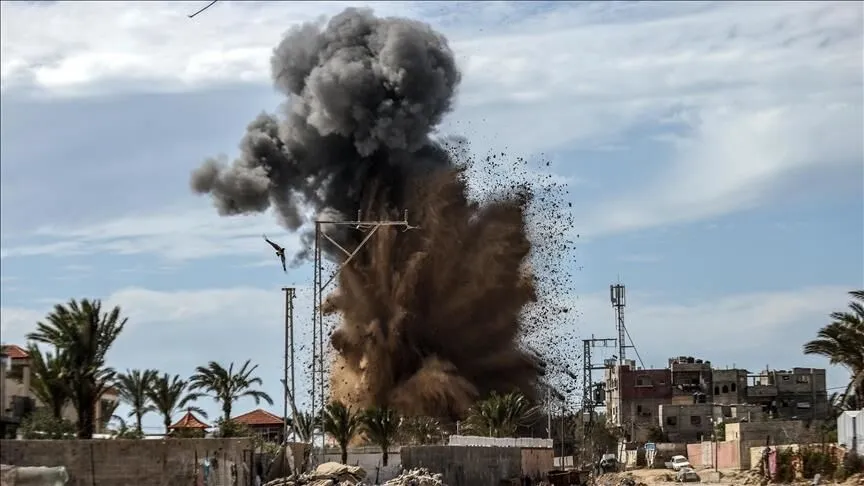
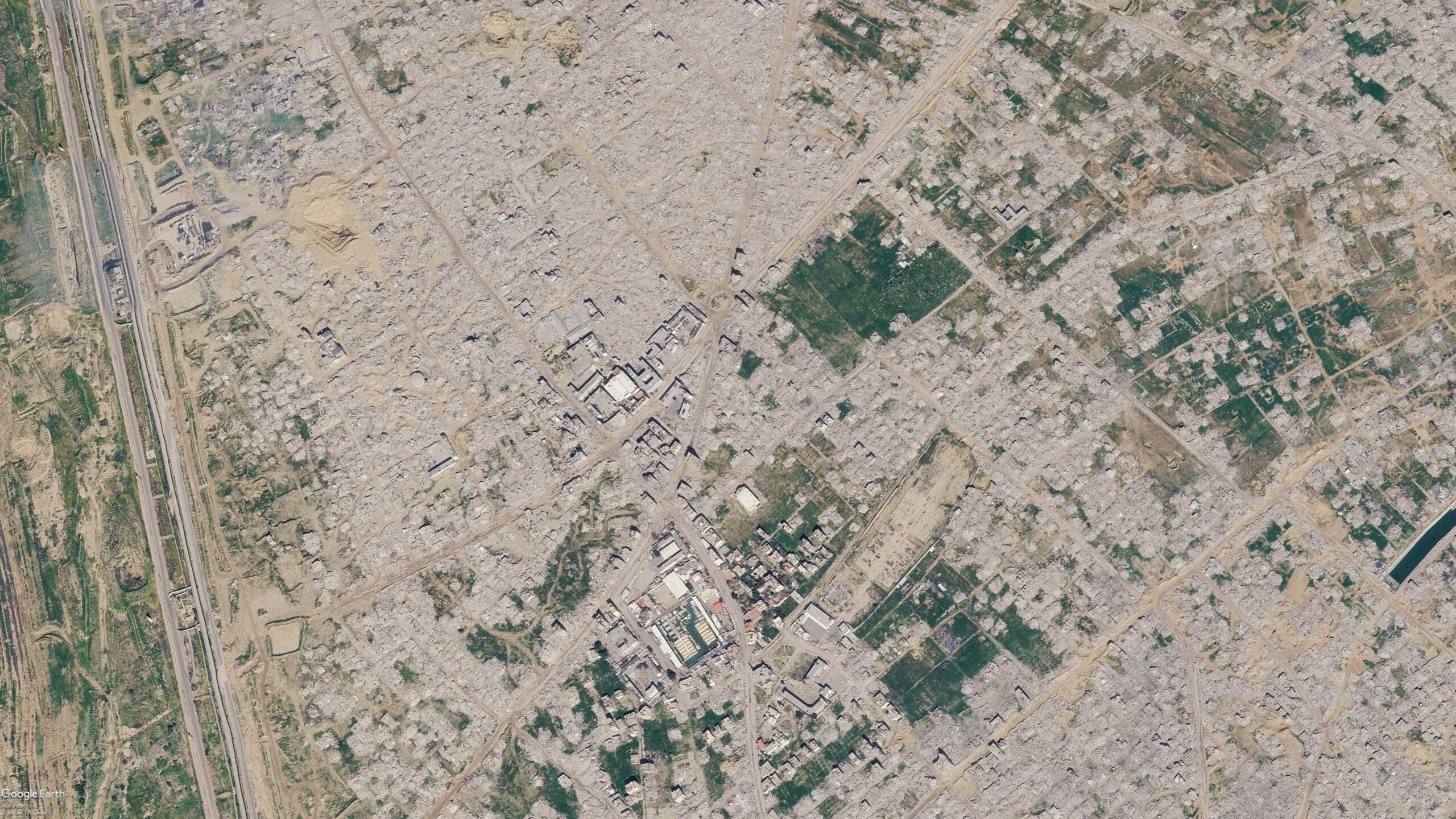
- Likely the Gaza ceasefire will remain operationally degraded over the next 0 to 14 days, although the available reporting does not establish that it has formally ended. Gaza's Health Ministry reported 1,460 deaths since the ceasefire by 5 October, up from 1,422 on 29 September; a separate report put the toll at 1,439 killed and 5,052 injured as of 1 October, leaving the precise count unreconciled. Reports describe a strike on a displaced people's tent in Khan Younis on 1 October that killed one person and injured three, a 30 September strike on a van in Tal al-Hawa that killed six, and a 3 October strike on the al-Asala building in Gaza City that killed five. The Israeli army also reportedly demolished buildings in eastern Al-Tuffah on 1 October. September satellite imagery shows further demolition in Shujaiya, Jabaliya and Bani Suheila, including an IDF outpost in Bani Suheila. Hamas is reported not to have fired bullets or rockets at Israel since the ceasefire; Israel has accused Hamas of violations, which Hamas denies. The incident reports and imagery support continued breaches and damage, but do not establish the ceasefire's formal status or resolve the competing accounts of violations. (Confidence: medium · ASSESSED)
- I&W: Confirmation: a further Israeli strike causing deaths or injuries is reported by a named Gaza hospital or the Gaza Health Ministry, or new demolition activity is visible in independently dated imagery from Shujaiya, Jabaliya, Al-Tuffah or Bani Suheila. (0 to 14 days)
- I&W: Break: 14 consecutive days pass without a reported Israeli strike or demolition in Gaza, with dated imagery showing no new damage in the named locations. (0 to 14 days)
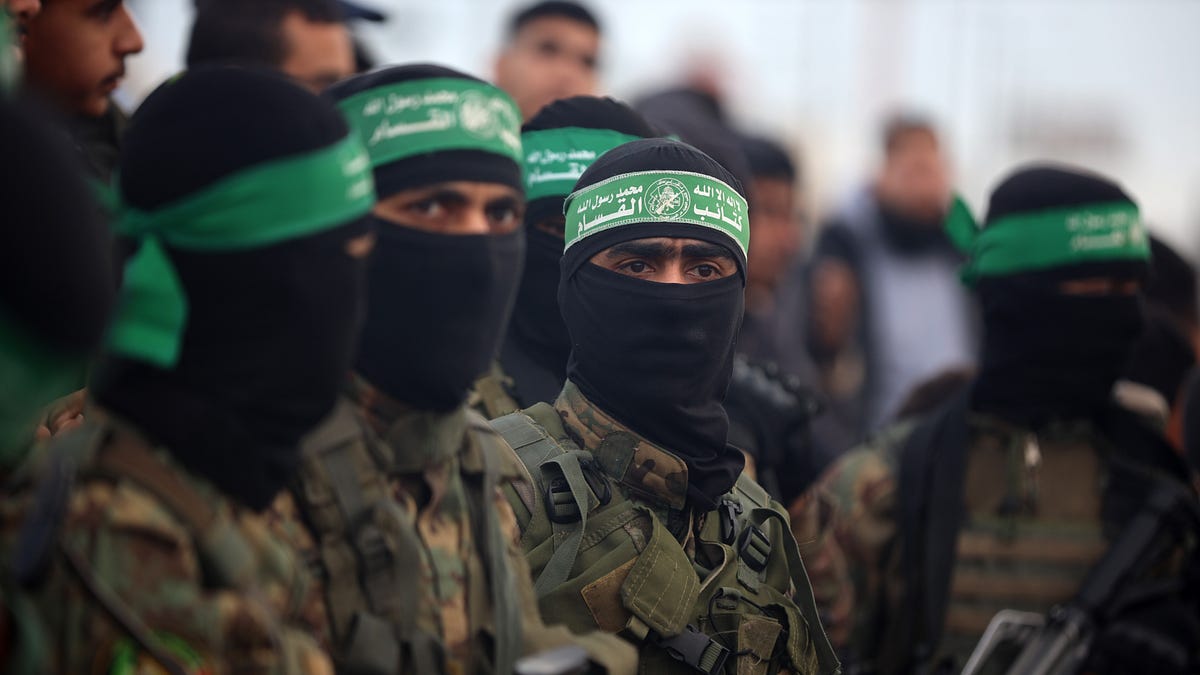
- Likely Hamas will maintain its reported no-fire posture towards Israel over the next 0 to 14 days, but this does not establish a unified political position or an agreed disarmament process. A 5 October account says Hamas is divided between figures who call 7 October a disaster or strategic mistake and those who invoke Yahya Sinwar's legacy; the same account says leaders' public statements have shifted towards survival. It also reports that Hamas agreed in July to lay down its arms in Gaza in exchange for Israeli withdrawal. These claims come chiefly from one media account and do not show that an agreement has been implemented. (Confidence: low · ASSESSED)
- I&W: Confirmation: Hamas issues a public statement maintaining its no-fire posture, and no independently corroborated projectile attack from Gaza is attributed to Hamas. (0 to 14 days)
- I&W: Break: a projectile attack from Gaza is independently corroborated and claimed by Hamas, or attributed to Hamas by multiple reliable reports. (0 to 14 days)
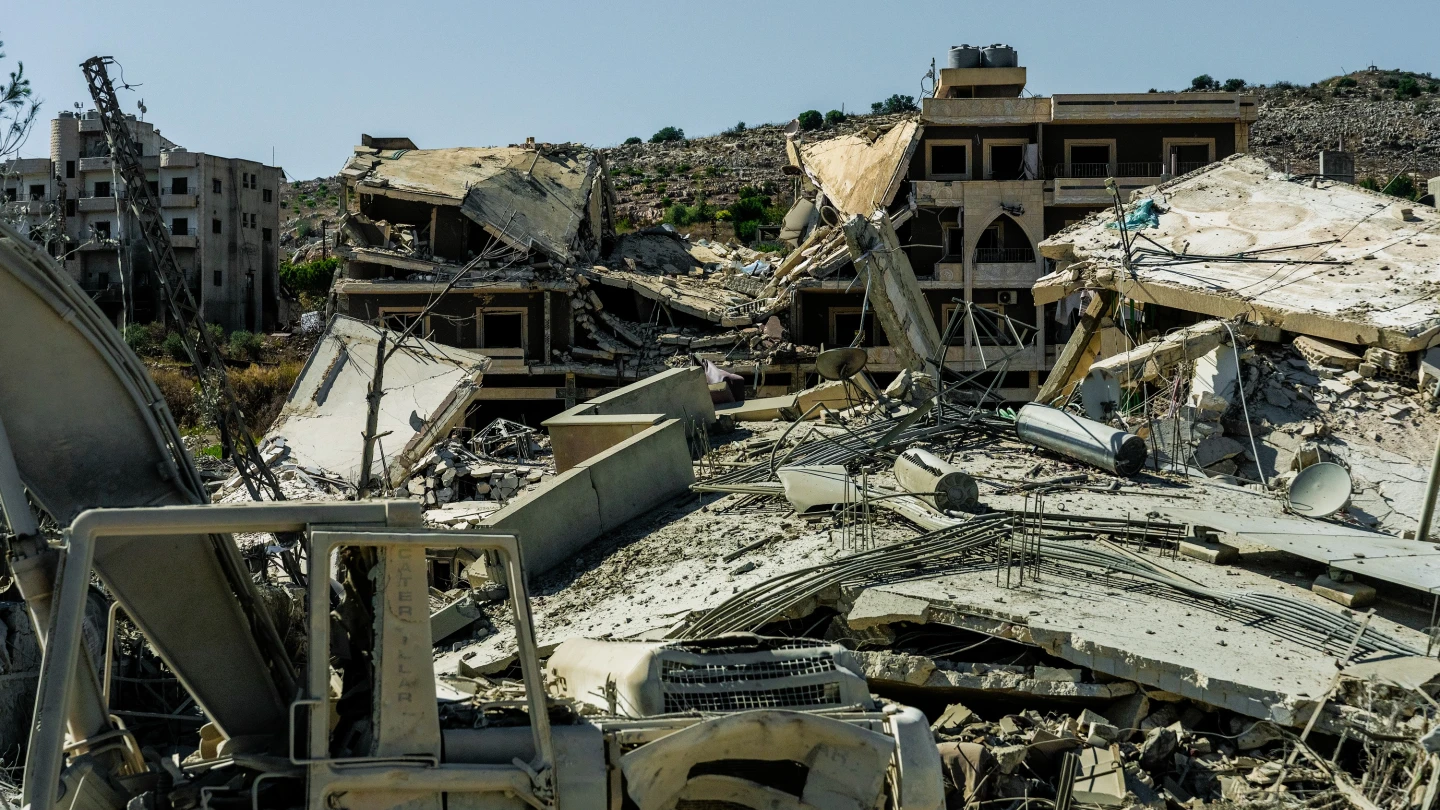
- There is a roughly even chance that localised Israeli strike activity will continue in southern Lebanon over the next 0 to 14 days; current reporting does not establish a renewed Israel-Hezbollah campaign or identify a Hezbollah response. A June ceasefire reportedly eased the fighting. An author writing from Kibbutz Dafna reported hearing repeated Israeli strikes in Lebanon over the preceding two weeks. Separate Lebanese social-media reports alleged an Israeli bombardment near Mayfadoun and two explosions in Majdal Zoun, but the reporting does not confirm whether these were separate incidents or verify their details. The strike reports rest on a single account and low-reliability social-media reporting. (Confidence: low · ASSESSED)
- I&W: Confirmation: an Israeli strike at Mayfadoun, Majdal Zoun or another named southern Lebanon location is corroborated by separate reporting or dated, geolocated imagery. (0 to 14 days)
- I&W: Break: both Israel and Hezbollah publicly reaffirm the June ceasefire and no strike in southern Lebanon is independently corroborated during the following 14 days. (0 to 14 days)
Outlook & scenarios
Gaza ceasefire remains nominal, with continued breaches (58%)
Over the next 0 to 14 days, Israeli strikes or demolitions continue in Gaza while Hamas maintains its reported restraint from firing at Israel. The agreement remains publicly in place, but casualty reports and physical damage continue to reflect a degraded ceasefire. Southern Lebanon sees localised incidents without a verified return to sustained Israel-Hezbollah fighting.
Contained violence and reduced incident rate (30%)
Israeli strike and demolition reports in Gaza decline over the next 0 to 14 days, and no Hamas projectile attack is independently confirmed. Public statements retain the ceasefire framework, while the reported July disarmament-for-withdrawal position remains a proposal rather than an implemented arrangement. No independently corroborated Israeli strike is reported in southern Lebanon.
Cross-border incident widens the Lebanon front (12%)
A lethal incident in southern Lebanon is followed by sustained Hezbollah attacks on Israel and expanded Israeli operations, ending the June ceasefire's reduction in fighting. This is a low-probability, high-impact pathway; the current reports do not establish that such an incident has occurred or that Hezbollah is preparing to resume sustained attacks.
Recommendations
- Track Gaza strike and demolition reports daily. Separate confirmed incidents from claims that rely on a single outlet, and compare dated satellite imagery with reporting from named hospitals and the Gaza Health Ministry.
- Maintain a dated casualty ledger that records the reporting organisation, whether figures refer to deaths or injuries, the stated reporting period and any later revisions. Do not merge the 1 October and 5 October totals without reconciling their dates and definitions.
- Treat the Mayfadoun and Majdal Zoun reports as unconfirmed until separate reporting or geolocated imagery verifies the location, date and nature of each incident. Do not infer a Hezbollah response from reports of Israeli strikes alone.
- Monitor public statements from Israel and Hamas for an explicit change in Gaza ceasefire status, and distinguish Hamas's reported July disarmament position from evidence of implementation.
Confidence & uncertainty
Overall confidence is medium. Gaza reporting includes ministry casualty figures, media accounts of specific strikes and commercial satellite imagery, but the counts differ by reporting date and many individual incidents lack independent corroboration. The Hamas assessment relies chiefly on one media account. Current Lebanon reporting is weaker: one author reported hearing strikes, while separate social-media reports remain unverified.
Alternative analysis (red cell)
The record supports reported Hamas restraint through 72dc60e0-61ee-4b2c-8599-47f87fdd257c, but 650d207c-778b-4377-b706-dd255bd026db and the limited evidence on internal cohesion prevent a reliable forecast of persistence. In southern Lebanon, 7e274225-f44e-45b4-8dd4-ae8fc1a7993c is a single B3 account and 2ede3a54-aaa4-4762-8fed-e9d4d1d90aa5 and 3b6d600d-5511-441b-a687-7ede4d30e2e2 are E6 reports with location ambiguity, so continued Israeli activity is possible but not meaningfully calibrable as a roughly even chance. The Gaza evidence indicates reported breaches, but the mixed reliability of, and 014cfab3-3cdb-4fd7-a5c7-103ce42f1f2a warrants low rather than medium confidence in the operational-degradation forecast.
Intelligence gaps
- [EEI 1.1 · PARTIAL] Number, type and geolocated coordinates of projectiles (rockets, mortars, anti-tank guided missiles) fired from Lebanon into Israel in the last 24/72 hours, including time-stamped launch and impact locations. Recommended collection: signals/intel
- [EEI 1.2 · UNCOVERED] Satellite or aerial imagery showing movement, concentration, or forward displacement of Hezbollah-associated military assets (armored vehicles, artillery pieces, mobile rocket launchers, logistics convoys) to positions within 0-10 km of the Israel-Lebanon border. Recommended collection: satellite/imagery
- [EEI 1.3 · UNCOVERED] Intercepted or captured Hezbollah command-and-control communications or orders explicitly directing cross-border operations or coordinated strikes with Palestinian groups (time-stamped messages, unit identifiers, orders to fire/move). Recommended collection: signals/intel
- [EEI 1.4 · UNCOVERED] Observable changes in Israeli northern-front posture within Israel (numbers and types of reinforcements deployed to northern brigades, activation of reserves, air defense redeployments, evacuation orders or shelter alerts in northern towns), including timestamps and unit IDs where available. Recommended collection: human/intel
- [EEI 2.1 · UNCOVERED] Official or corroborated reports of IDF reservist mobilization and unit-level deployment orders (number of reservists called, named brigades/units ordered to deploy, deployment timelines). Recommended collection: open-source/media
- [EEI 2.2 · UNCOVERED] Satellite or ground imagery showing concentrations of IDF heavy equipment (tanks, infantry fighting vehicles, engineering vehicles), staging areas, field hospitals or forward supply dumps within X km of the Gaza border and at known crossing points. Recommended collection: satellite/imagery
- [EEI 2.3 · PARTIAL] Change in strike patterns consistent with pre-ground-attack shaping: sustained high-frequency airstrikes on tunnel networks, command nodes, coastal launch sites, and known insurgent concentrations (strike counts, munition types, locations, times). Recommended collection: open-source/media
- [EEI 2.4 · UNCOVERED] Logistics indicators: verified convoys of fuel/ammunition entering staging areas, establishment of forward logistics or medical bases, or documented requisitioning orders for bulk combat supplies with timestamps and quantities. Recommended collection: human/intel
- [EEI 3.1 · UNCOVERED] Number, participants and content of diplomatic contacts or negotiation sessions in the last 48 hours involving mediators (Egypt, Qatar, US, UN), including any proposed ceasefire text, prisoner/exchange lists, timelines or verification mechanisms. Recommended collection: diplomatic
- [EEI 3.2 · PARTIAL] Public statements, press releases or verified communiqués from Hamas and other Gaza armed groups specifying acceptance, rejection, or conditions for a ceasefire (explicit conditions such as prisoner release lists, withdrawal terms, lifting of blockades), with timestamps and speaker attribution. Recommended collection: open-source/media
- [EEI 3.3 · UNCOVERED] Humanitarian indicators relevant to ceasefire: establishment and operation of agreed humanitarian corridors/checkpoints, number of aid deliveries admitted, civilian evacuations completed, and NGO/hospital reports of access denials or safe-passage violations. Recommended collection: humanitarian/NGO reports
- [EEI 3.4 · PARTIAL] Operational evidence of a de facto pause: verified sustained reduction (e.g., ≥12 hours) in strikes or launches from either side in specific sectors, supported by strike/impact logs, radar tracks and incident reports. Recommended collection: open-source/media
Cited sources
[1] aljazeera.com · Palestine weekly: Olive harvest opens under assault (F) · 6 October 2026 · sha256:5ffcc13db7a0 [2] Muslim Network TV · Palestinian killed, 3 injured in Israeli strike on displaced people’s tent in Gaza - Muslim Network TV (B) · 2 October 2026 · sha256:1030de4ed250 [3] bellingcat.com · Viral Google Maps Images Shared Widely This Week Show Gaza Ruins. We Obtained More Recent Satellite Imagery - bellingcat (F) · 1 October 2026 · sha256:2d0e4dc853e8 [4] Zeteo · Where Does Hamas Stand Three Years After Oct. 7 – and What Comes Next? (B) · 5 October 2026 · sha256:19fa12eb2245 [5] JNS · Two years after Nasrallah, Hezbollah no longer sets the rules (B) · 5 October 2026 · sha256:3adfffcf9868 [6] TeN News · #عاجل إعلام لبناني: قصف إسرائيلي يستهدف أطراف بلدة ميفدون وتفجيران في بلدة مجدل زون بالجنوب #TeNTV | TeN News (E) · sha256:8c3a696c62ba
Source content hashes were computed at collection time; the cited text is preserved unmodified for the life of this product.
Red cell review: PARTIAL DISSENT
TLP:CLEAR