TLP:CLEAR · Disclosure is not limited.
Israel-Gaza and Lebanon: Ceasefire Strains, 8 October 2026
Time window: Last 7 days · Audience: General analyst · Type: Situation report · DTG: 2026-10-08 13:08Z · Overall confidence: HIGH
BLUF
Likely Israeli strikes will continue in Gaza over the next 14 days. Reporting describes near-daily strikes during the ceasefire and more than 1,460 deaths reported by Gaza’s health ministry since the ceasefire began on 10 October 2025. Israeli activity in southern Lebanon is also reported, but available reporting does not establish a renewed Israel-Hezbollah campaign.
Executive summary
Reporting through 8 October describes continued Israeli strikes in Gaza during the ceasefire, with the Gaza health ministry reporting more than 1,460 deaths since it began. UN-attributed reporting places damage to Gaza’s structures at roughly 80-82 percent, although estimates of displacement differ. In southern Lebanon, reports describe Israeli strikes and IDF operations against Hezbollah infrastructure, but do not establish a Hezbollah response or a renewed campaign. The UK says its East Jerusalem consulate building remains operational as UK Mission, Jerusalem; Israel says consular operations have ended and describes a sharply restricted staffing arrangement.
Change from previous assessment
Since the 7 October brief, the core assessment is unchanged: reporting continues to describe a Gaza ceasefire under operational strain, and does not establish that it has formally ended. New reporting describes near-daily strikes and more than 30 deaths in the preceding week; the reported post-ceasefire toll remains above 1,460, so this is not a material revision to the prior casualty baseline. The brief adds detail on IDF activity in southern Lebanon, including the named 55th Brigade, 91st Division and Yahalom Unit, but confidence remains low because several accounts are undated and no Hezbollah response is established. It also adds a direct dispute between the UK and Israel over the East Jerusalem mission’s operation and staffing.
Key judgments
- Likely Israeli strikes will continue in Gaza over the next 0-14 days, keeping the 10 October 2025 ceasefire operationally degraded, although current reporting does not establish that it has formally ended. BBC reporting describes strikes almost every day during the ceasefire and more than 30 people killed in the week before 8 October. Medics reported at least three Palestinians killed in strikes in Beit Lahia and Khan Younis on 7 October; the Israeli military said it struck two Hamas operatives in northern Gaza and accused Hamas of ceasefire violations. The forecast rests on a continuing pattern, while individual casualty and strike accounts are not all independently corroborated. (Confidence: medium · ASSESSED)
- I&W: Dated reporting records Israeli strikes in Beit Lahia, Khan Younis or northern Gaza on at least two days, alongside new casualty reports from medics or Gaza’s health ministry. This would confirm continuation. (0-14 days)
- I&W: Israeli and Palestinian reporting records no strikes or strike-related deaths in Gaza for 14 consecutive days. This would break the assessment. (0-14 days)
- Gaza’s Hamas-run health ministry reports more than 1,460 people killed by Israeli attacks since the ceasefire began on 10 October 2025. The UN is reported to consider the ministry’s figures reliable, but the total remains a ministry-reported figure rather than an independently reconciled count. Other coverage uses the less specific figure of more than 1,400. (Confidence: medium · REPORTED)
- I&W: A new Gaza health ministry bulletin or subsequent report retains a post-ceasefire toll above 1,460. This would confirm the reported floor. (0-14 days)
- I&W: The ministry issues a correction placing the post-ceasefire toll below 1,460. This would break the reported floor. (0-14 days)
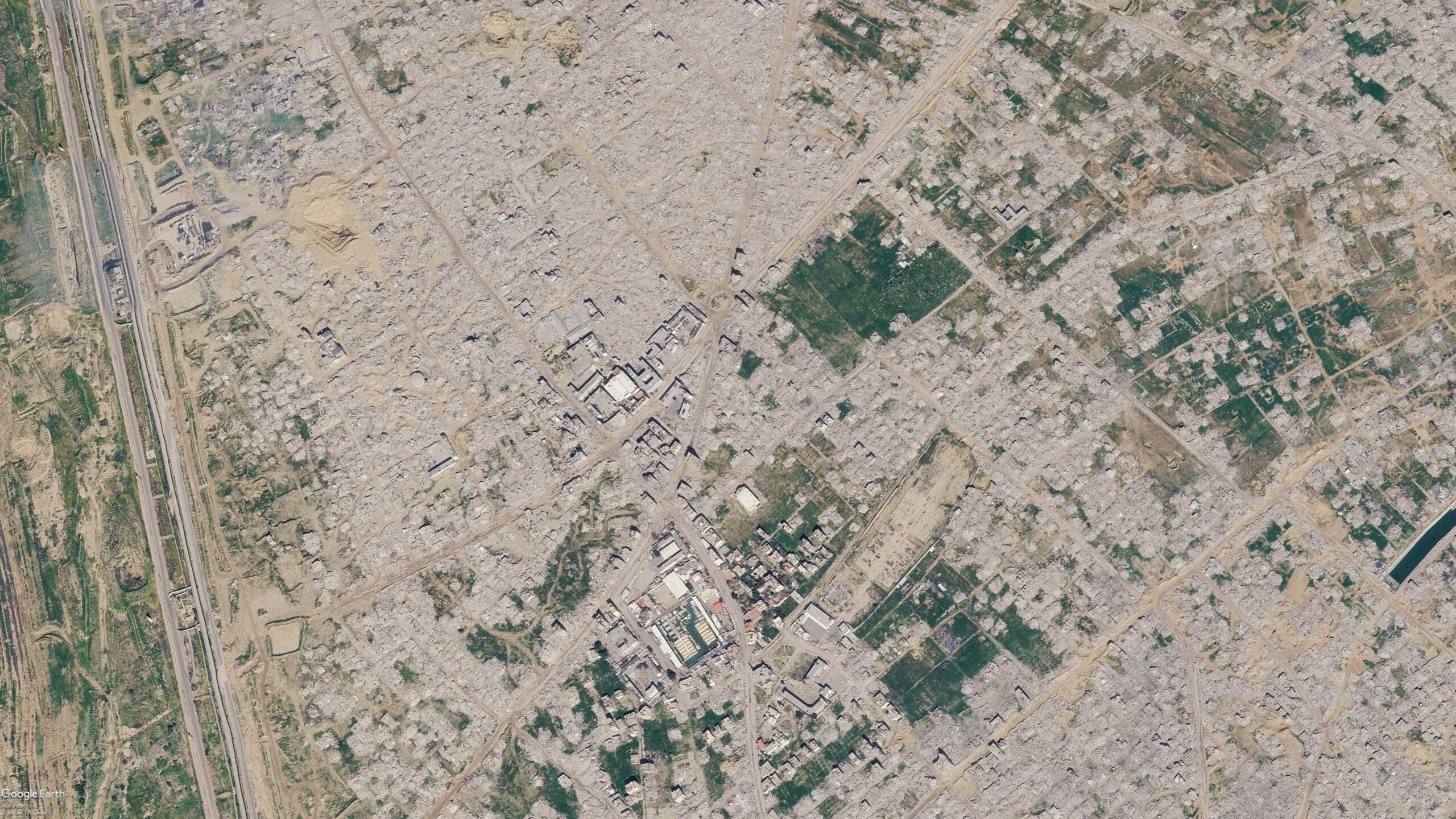
- Very likely severe humanitarian conditions in Gaza will persist over the next 1-3 months. UN-attributed reporting estimates that roughly 80-82 percent of structures are damaged, with one account stating that about two-thirds are destroyed and more than 60 million tonnes of rubble remain. Estimates of displacement are less consistent: one account puts 1.2 million people in tents or shelters, while another says nearly all of Gaza’s 2.1 million people remain displaced. (Confidence: medium · ASSESSED)
- I&W: A UN update continues to report more than 80 percent of structures damaged and more than one million people in tents or shelters. This would confirm continued severe conditions. (1-3 months)
- I&W: A UN update places the population in tents or shelters below one million and reports broad housing repairs. This would break the assessment. (1-3 months)
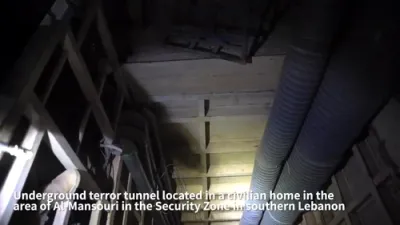
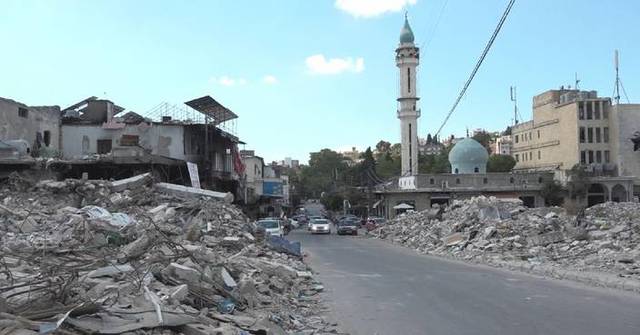
- Likely localized Israeli military activity will continue in southern Lebanon over the next 0-14 days, but the available reporting does not establish a renewed Israel-Hezbollah campaign or a Hezbollah response. Reporting describes Israeli strikes in Nabatieh and an Israeli military presence in part of Lebanese territory. IDF-attributed accounts describe the 55th Brigade under the 91st Division and the Yahalom Unit dismantling more than 600 sites and eight underground routes, and report a Hezbollah tunnel beneath a civilian home in Al-Mansouri. Those unit-level accounts are undated and not independently corroborated, so confidence in the forecast is low. (Confidence: low · ASSESSED)
- I&W: A dated report records a new Israeli strike, demolition or troop operation in Nabatieh or Al-Mansouri. This would confirm continued localized activity. (0-14 days)
- I&W: Israeli and Lebanese reporting records no strikes, demolitions or troop operations in southern Lebanon for 14 consecutive days. This would break the assessment. (0-14 days)
- Likely the UK will retain a diplomatic presence in the East Jerusalem consulate building over the next month, while its practical staffing and service scope remain contested. The UK says the building will operate as UK Mission, Jerusalem and describes the mission as independent and operational, while also confirming the temporary withdrawal of staff and families. Israeli Foreign Minister Gideon Saar says consular operations have closed, that the consul general and 20 diplomats will leave, and that Israel authorised only a seven-diplomat task force with limited activity. The opposing official accounts prevent a confident assessment of the mission’s actual operating capacity. (Confidence: medium · ASSESSED)
- I&W: The UK publishes evidence of in-person services or staff operating from the building under the UK Mission, Jerusalem name. This would confirm continued physical presence. (0-30 days)
- I&W: The UK announces that the building is inaccessible or that services there have ended. This would break the assessment that a UK presence will persist. (0-30 days)
Outlook & scenarios
Degraded Gaza ceasefire persists (62%)
Israeli strikes continue in Gaza, with further deaths reported and Israel continuing to cite Hamas ceasefire violations. The ceasefire remains formally in place in available reporting, while the scale of damage and displacement constrains civilian recovery. Israeli activity in southern Lebanon remains localized, without an established Hezbollah response.
Gaza ceasefire breaks down (28%)
Israeli strikes expand beyond the current reported pattern, and exchanges between Israel and Hamas become sustained rather than intermittent. The ceasefire no longer provides a meaningful limit on military activity, worsening civilian harm and reducing prospects for recovery.
Southern Lebanon becomes a second front (10%)
Low-probability, high-impact wildcard: Hezbollah responds to Israeli operations in southern Lebanon with attacks on Israeli forces, prompting a broader Israeli campaign. Fighting extends beyond localized activity around places such as Nabatieh and Al-Mansouri.
Recommendations
- Maintain a daily Gaza incident log for the next 14 days. Record event date, location, reported casualties, source and whether Israel or Hamas has made a public statement. Keep ministry and medic reports distinct from Israeli military claims.
- Treat satellite observations as corroboration of damage or heat, not proof of the cause of an individual incident. NASA FIRMS recorded 20 thermal detections in Gaza over two days, none at high confidence, and its own guidance says thermal signatures do not identify their cause.
- For Lebanon, seek dated confirmation of operations attributed to the 55th Brigade, 91st Division and Yahalom Unit, and track separately any reports of Hezbollah attacks. Verify the cited June 2026 truce date before using it in an account of the conflict timeline.
- Track the UK Mission, Jerusalem’s staffing, access and service delivery separately from the status of the building. Compare UK notices with Israeli statements before describing the mission as fully operational or closed.
Confidence & uncertainty
High confidence applies to the broad situation: BBC reporting describes near-daily Israeli strikes, Gaza health ministry casualty figures are reported as reliable by the UN, and UN-attributed data and Planet Labs imagery document extensive damage in Gaza. This does not establish every strike or casualty attribution independently. Displacement estimates differ, some Lebanon operational accounts are undated and IDF-attributed, and the UK and Israeli governments directly dispute the Jerusalem mission’s status and scope. NASA FIRMS thermal detections do not independently identify the cause of fires or heat signatures.
Intelligence gaps
- [EEI 1.1 · UNCOVERED] Number, type and geolocated coordinates of projectiles (rockets, mortars, anti-tank guided missiles) fired from Lebanon into Israel in the last 24/72 hours, including time-stamped launch and impact locations. Recommended collection: signals/intel
- [EEI 1.2 · UNCOVERED] Satellite or aerial imagery showing movement, concentration, or forward displacement of Hezbollah-associated military assets (armored vehicles, artillery pieces, mobile rocket launchers, logistics convoys) to positions within 0-10 km of the Israel-Lebanon border. Recommended collection: satellite/imagery
- [EEI 1.3 · UNCOVERED] Intercepted or captured Hezbollah command-and-control communications or orders explicitly directing cross-border operations or coordinated strikes with Palestinian groups (time-stamped messages, unit identifiers, orders to fire/move). Recommended collection: signals/intel
- [EEI 1.4 · UNCOVERED] Observable changes in Israeli northern-front posture within Israel (numbers and types of reinforcements deployed to northern brigades, activation of reserves, air defense redeployments, evacuation orders or shelter alerts in northern towns), including timestamps and unit IDs where available. Recommended collection: human/intel
- [EEI 2.1 · UNCOVERED] Official or corroborated reports of IDF reservist mobilization and unit-level deployment orders (number of reservists called, named brigades/units ordered to deploy, deployment timelines). Recommended collection: open-source/media
- [EEI 2.2 · UNCOVERED] Satellite or ground imagery showing concentrations of IDF heavy equipment (tanks, infantry fighting vehicles, engineering vehicles), staging areas, field hospitals or forward supply dumps within X km of the Gaza border and at known crossing points. Recommended collection: satellite/imagery
- [EEI 2.3 · PARTIAL] Change in strike patterns consistent with pre-ground-attack shaping: sustained high-frequency airstrikes on tunnel networks, command nodes, coastal launch sites, and known insurgent concentrations (strike counts, munition types, locations, times). Recommended collection: open-source/media
- [EEI 2.4 · UNCOVERED] Logistics indicators: verified convoys of fuel/ammunition entering staging areas, establishment of forward logistics or medical bases, or documented requisitioning orders for bulk combat supplies with timestamps and quantities. Recommended collection: human/intel
- [EEI 3.1 · PARTIAL] Number, participants and content of diplomatic contacts or negotiation sessions in the last 48 hours involving mediators (Egypt, Qatar, US, UN), including any proposed ceasefire text, prisoner/exchange lists, timelines or verification mechanisms. Recommended collection: diplomatic
- [EEI 3.2 · UNCOVERED] Public statements, press releases or verified communiqués from Hamas and other Gaza armed groups specifying acceptance, rejection, or conditions for a ceasefire (explicit conditions such as prisoner release lists, withdrawal terms, lifting of blockades), with timestamps and speaker attribution. Recommended collection: open-source/media
- [EEI 3.3 · UNCOVERED] Humanitarian indicators relevant to ceasefire: establishment and operation of agreed humanitarian corridors/checkpoints, number of aid deliveries admitted, civilian evacuations completed, and NGO/hospital reports of access denials or safe-passage violations. Recommended collection: humanitarian/NGO reports
- [EEI 3.4 · PARTIAL] Operational evidence of a de facto pause: verified sustained reduction (e.g., ≥12 hours) in strikes or launches from either side in specific sectors, supported by strike/impact logs, radar tracks and incident reports. Recommended collection: open-source/media
Cited sources
[1] BBC · 'Every day there is killing': Gazans face Israeli strikes despite ceasefire as peace deal stalls (A) · 8 October 2026 · sha256:b0d7e29ef407 [2] BBC · Gazans face near-daily Israeli strikes a year into ceasefire (A) · 8 October 2026 · sha256:6ba801eb0fe5 [3] bbc.co.uk · Israelis mourn 7 October attack victims as Gaza lies in ruins three years on (F) · 7 October 2026 · sha256:0d43512c7e68 [4] Bellingcat · Viral Google Maps Images Shared Widely This Week Show Gaza Ruins. We Obtained More Recent Satellite Imagery - bellingcat (B) · 1 October 2026 · sha256:2d0e4dc853e8 [5] Bastille Post · Spillover of Gaza conflict turns life upside down in Lebanon (B) · 8 October 2026 · sha256:74eb0302ee58 [6] ABL.news (ahblicklive.com) · TUNNEL UNDER HOME: IDF Finds Hezbollah Terror Passage Inside Civilian House in Southern Lebanon - ABL.news (E) · sha256:8b353917f1c7 [7] UK Government (Foreign, Commonwealth & Development Office) · Foreign Secretary statement on the UK's diplomatic presence in Jerusalem (A) · 8 October 2026 · sha256:b42df6c106b2 [8] bbc.co.uk · Most UK diplomats to leave East Jerusalem consulate, Israel says, as Miliband says 'vital services' to remain (F) · 8 October 2026 · sha256:c8e9c2308823
Source content hashes were computed at collection time; the cited text is preserved unmodified for the life of this product.
Red cell review: CONCUR
TLP:CLEAR