TLP:CLEAR · Disclosure is not limited.
Israel-Gaza and Lebanon: Ceasefires Under Strain
Time window: Last 7 days · Audience: General analyst · Type: Situation report · DTG: 2026-11-22 13:11Z · Overall confidence: HIGH
BLUF
Israeli military activity is continuing in Gaza and Lebanon, while the Gaza ceasefire and the Israel-Lebanon framework face unresolved disputes over attacks, withdrawal and Hezbollah’s disarmament. A further expansion into sustained, high-intensity Israel-Hezbollah fighting is unlikely over the next 30 days, but recent activity in Haddatha and the Bekaa, alongside reports of Hezbollah reorganisation, raises concern compared with the 21 November brief; evidence of Hezbollah’s intentions remains thin.
Executive summary
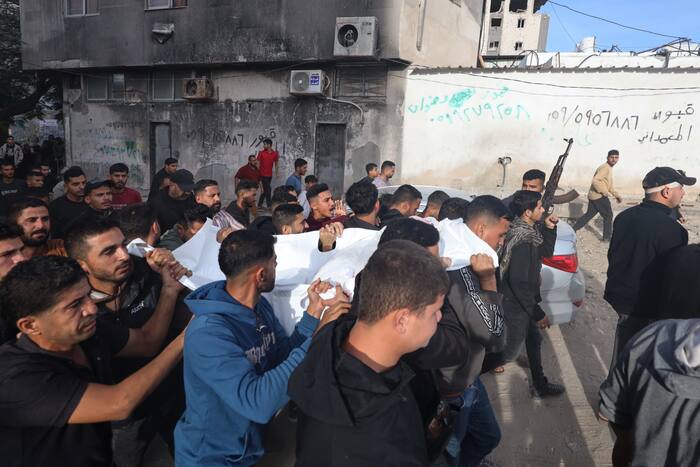
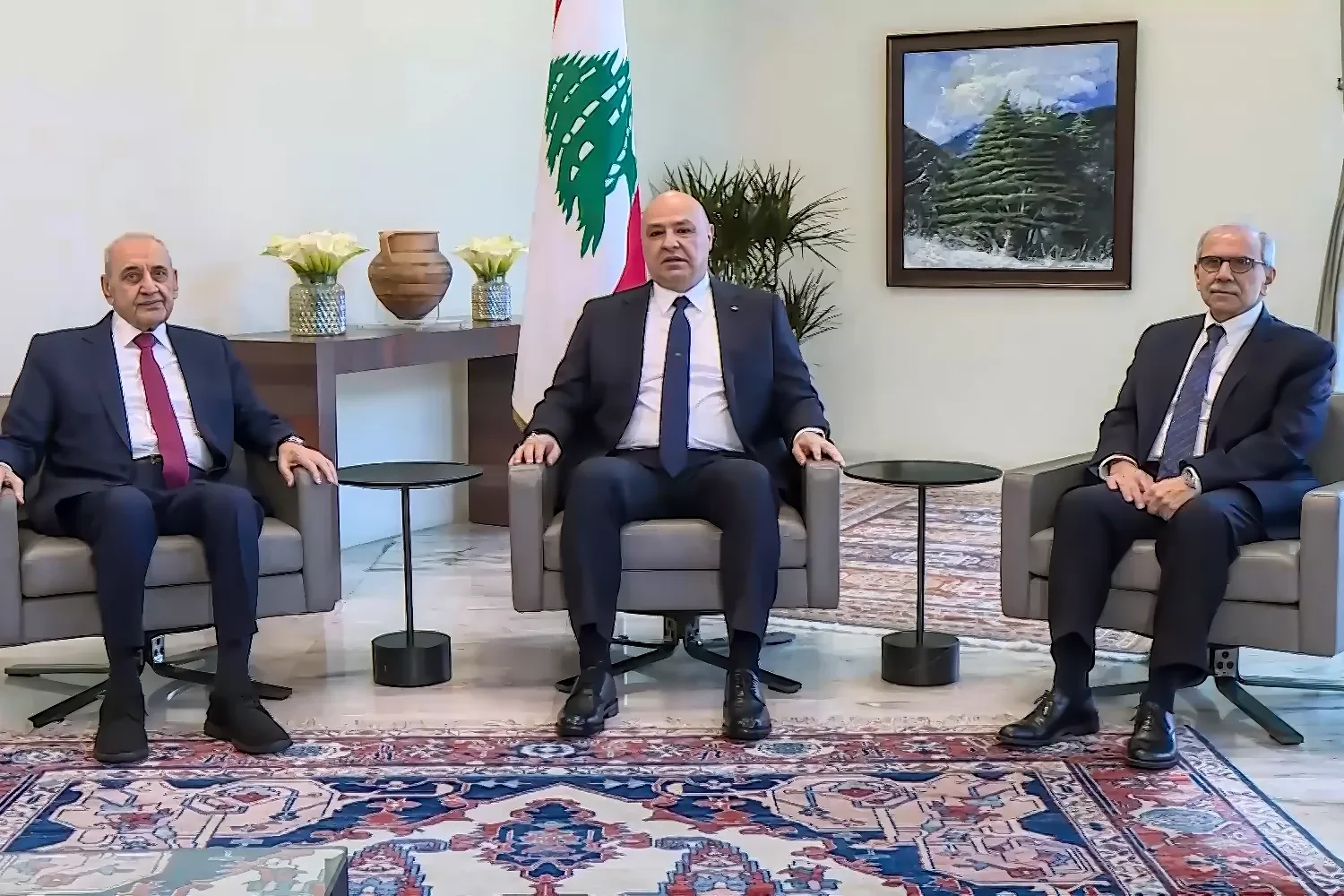
On 21 November, a strike in Gaza City’s Tel al-Hawa district killed three men, according to Shifa Hospital’s director. The Israeli military said it had targeted Islamic Jihad members travelling in a vehicle used to transport supplies, leaving the vehicle’s role and the men’s status disputed. In Lebanon, Israeli activity included a reported strike on a Hezbollah site in Yanta on 19 November and reported operations in Haddatha and other southern locations. Lebanese President Joseph Aoun called for Israeli withdrawal and for weapons to come under state control; Israel has said it will not withdraw before Hezbollah is disarmed. The June framework remains stalled, while UNIFIL has begun transferring some positions to the Lebanese Army ahead of the mandate’s end on 31 December.
Change from previous assessment
Since the 21 November brief, new reporting adds the 19 November Israeli strike in Yanta, reports of Israeli entry and airstrikes in Haddatha, and a 21 November strike in Tel al-Hawa with conflicting Israeli military and hospital accounts. The assessment that Gaza and Lebanon ceasefires remain under strain is unchanged. The reports of activity near Haddatha, Hezbollah reorganisation and stalled disarmament raise concern about a wider Israel-Hezbollah conflict, but do not establish Hezbollah’s intent; the judgement that sustained high-intensity expansion is unlikely remains low confidence. This brief adds an assessment that the Israel-Lebanon framework is unlikely to resolve its disarmament and withdrawal terms before UNIFIL’s mandate ends on 31 December.
Key judgments
- The Gaza ceasefire is very likely to remain under acute strain through 6 December. On 21 November, Shifa Hospital director Mohamed Abu Selmiya said an Israeli strike on a food truck in Tel al-Hawa killed three men; the Israeli military said it struck Islamic Jihad members using a vehicle to transport supplies. The Gaza Health Ministry reports more than 1,650 deaths from Israeli strikes since the ceasefire began in October 2025. The conflicting accounts of the Tel al-Hawa strike lower confidence in the details of that incident, but both accounts describe an Israeli strike. (Confidence: medium · ASSESSED)
- I&W: Confirms: another Israeli strike is reported at a named Gaza location within 0-14 days, with accounts from both a hospital or other local medical authority and the Israeli military. (0-14 days)
- I&W: Breaks: 14 consecutive days pass without a reported Israeli strike or new Israeli territorial move in Gaza, with the pause reflected in public Israeli statements and independent reporting. (0-14 days)
- Israeli military activity in southern Lebanon and the Bekaa Valley is very likely to continue through 6 December. Israel’s military said its Air Force struck a site in Yanta on 19 November that it described as a Hezbollah missile-production and weapons-storage facility. Other reports describe Israeli troops entering Haddatha and repeated shelling and strikes across southern locations. Reporting differs on the extent of Israeli control in Haddatha, so the reported seizure of the town is not established. (Confidence: medium · ASSESSED)
- I&W: Confirms: a new Israeli airstrike, artillery strike or ground entry is reported in Yanta, Haddatha, Kfar Tibnit or another named southern Lebanese location. (0-14 days)
- I&W: Breaks: the Israeli military announces a withdrawal from its southern Lebanon positions and the Lebanese Army or UNIFIL confirms the handover. (0-3 months)
- A further expansion into sustained, high-intensity Israel-Hezbollah fighting is unlikely over the next 30 days, although the risk is higher than the 21 November brief assessed. Israel’s stated conditions for withdrawal and Hezbollah’s rejection of disarmament leave the sides at odds. Lebanese reporting also describes Hezbollah reorganising into small autonomous groups and Israel providing the US with imagery it says shows Hezbollah activity near the Israeli-established yellow line. Those claims are not independently corroborated in the available reporting, and the reporting does not establish Hezbollah’s current intent to broaden the fighting. (Confidence: low · ASSESSED)
- I&W: Confirms: Hezbollah publicly claims a coordinated attack on Israeli forces in response to an Israeli operation, and the claim is reported by an additional independent outlet. (0-30 days)
- I&W: Breaks: the Israeli military announces a pullback from Haddatha and its southern Lebanon positions, with the Lebanese Army or UNIFIL confirming the withdrawal. (0-3 months)
- A verified settlement of the Israel-Lebanon framework’s disarmament and withdrawal terms is unlikely before UNIFIL’s mandate ends on 31 December. The framework has stalled, Hezbollah has refused to surrender its weapons, and Israel has conditioned withdrawal on disarmament. UNIFIL has started transferring some positions to the Lebanese Army. Reporting that none of the first pilot zones passed verification by early November supports the assessment, but the implementation details rely partly on Lebanese media reporting. (Confidence: medium · ASSESSED)
- I&W: Confirms: no pilot zone passes agreed disarmament verification and Israeli forces remain in southern Lebanon when the mandate ends. (0-39 days)
- I&W: Breaks: the Lebanese Army or UNIFIL verifies at least one pilot zone’s disarmament and confirms an Israeli withdrawal from the associated area before the mandate ends. (0-39 days)
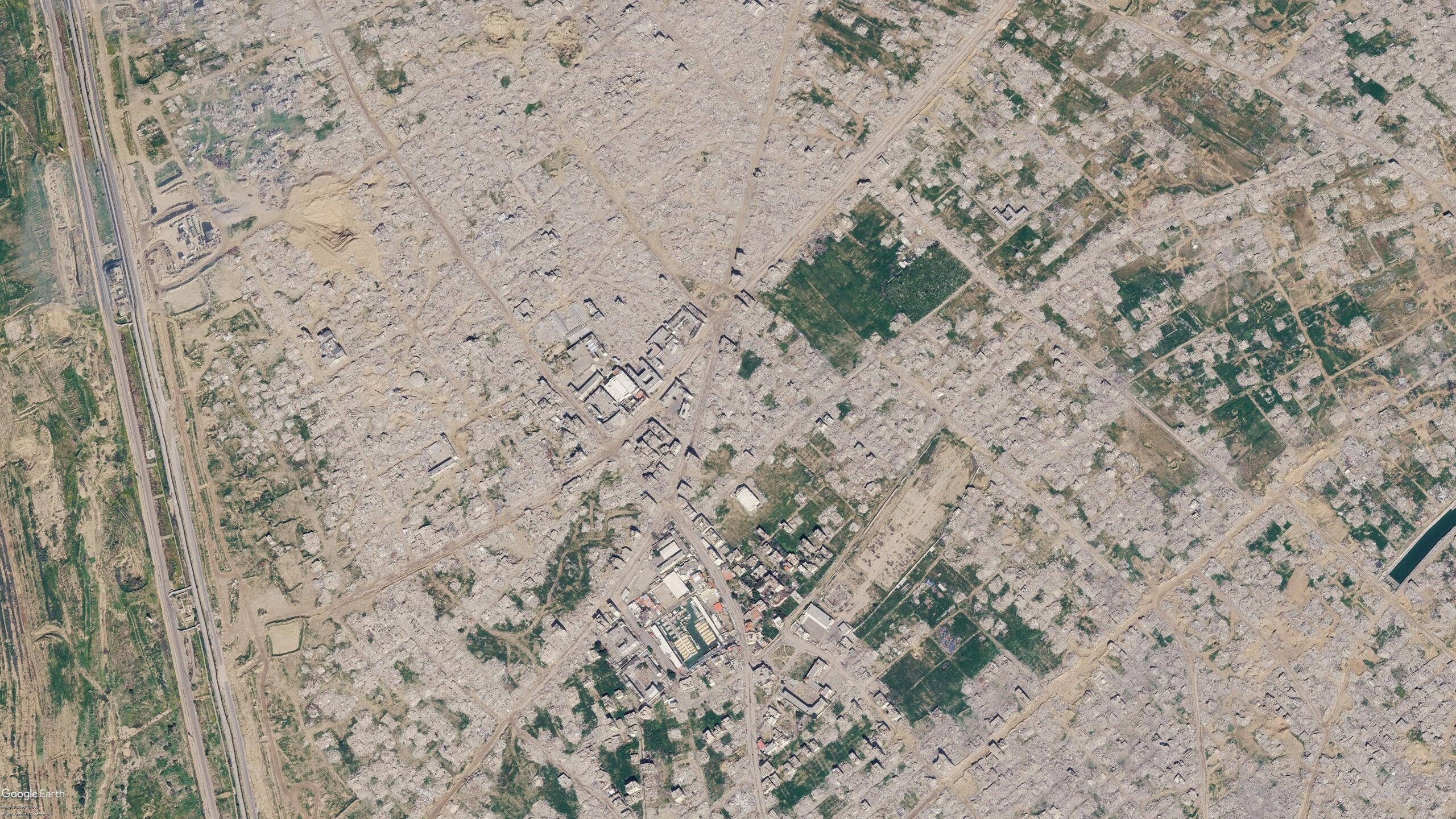
- Gaza’s reported civilian harm and physical damage are very likely to remain severe over the next one to three months. The UN reports that about 82 percent of structures in Gaza are damaged, with two-thirds destroyed; the Gaza Health Ministry reports more than 1,650 deaths from Israeli strikes since the October 2025 ceasefire. The death figure is attributed to the ministry and is not independently reconciled here, while the structural damage assessment dates from October. (Confidence: medium · ASSESSED)
- I&W: Confirms: a new UN structural assessment within the next three months still finds at least 80 percent of Gaza’s structures damaged. (1-3 months)
- I&W: Breaks: a new UN structural assessment within the next three months finds fewer than 70 percent of structures damaged. (1-3 months)
Outlook & scenarios
Continued strikes and contained escalation (65%)
Israeli strikes and ground activity continue in Gaza and Lebanon at a pattern similar to the reporting in this brief. The Gaza ceasefire remains under strain, while the Israel-Lebanon disarmament and withdrawal dispute remains unresolved. Fighting does not expand into a sustained, high-intensity Israel-Hezbollah campaign.
Expanded Israel-Hezbollah fighting (20%)
A further Israeli strike or incursion prompts Hezbollah to claim attacks on Israeli forces. Israel then expands operations beyond the current strike pattern, consistent with Israel Katz’s stated readiness to seize additional territory if fighting flares up. This is the lower-probability, high-impact scenario.
Limited de-escalation through the Lebanon framework (15%)
Israel and Lebanon make verifiable progress on a pilot zone, the Lebanese Army takes over additional positions, and Israeli forces withdraw from the associated area. The Gaza ceasefire remains under strain, but the Lebanon track avoids a wider confrontation.
Recommendations
- Maintain separate daily incident logs for Gaza and Lebanon. Record the date, named location, reported actor, source type and whether the account is attributed to a hospital, the Israeli military, Lebanese media or another party.
- For the Tel al-Hawa strike, keep the Israeli military’s account and Shifa Hospital’s account distinct in reporting. Do not present the vehicle’s purpose or the men’s status as settled without additional corroboration.
- Prioritise monitoring of Yanta, Haddatha and the named southern Lebanese locations for repeat strikes or changes in Israeli ground presence. Treat reports of Israeli control in Haddatha as unconfirmed until corroborated.
- Track Hezbollah statements and independently reported attacks alongside Israeli ground movements. Use a confirmed Hezbollah-claimed attack followed by expanded Israeli operations as a threshold for revising the wider-conflict assessment.
- Before the end of UNIFIL’s mandate on 31 December, verify whether any pilot zone has passed disarmament checks and whether the Lebanese Army has taken over positions transferred by UNIFIL.
- Attribute Gaza casualty totals to the Gaza Health Ministry and structural damage figures to the UN. Do not combine them into a single independently verified measure.
Confidence & uncertainty
Overall confidence is high in the broad pattern of continuing Israeli military activity in Gaza and Lebanon. Recent reporting from major media, wire services and local outlets describes activity at named locations, while statements from the Israeli military, Shifa Hospital and Lebanese officials provide identifiable accounts to compare. Confidence is lower on the purpose and casualties of the Tel al-Hawa strike, the extent of Israeli control in Haddatha, Hezbollah’s intentions, and implementation details drawn from Lebanese reporting.
Alternative analysis (red cell)
A more cautious reading is that sustained high-intensity Israel-Hezbollah fighting may be at least as plausible as containment over the next 30 days. Israeli statements and reporting indicate readiness to expand territorial control in claims 2b58722d-646e-48b2-bf08-2a40f79b5cb2 and 36fe3695-501a-4c17-8749-1aefdae22184, while the unresolved disarmament and withdrawal conditions in claims 312ca2e9-550e-4d15-baf7-35e72a291bc7 and 38aa996f-8655-4aec-bdc2-94c23fe14170 provide a persistent escalation pathway. The weak D1 sourcing of claims 8ccd6083-cc13-4837-8c69-059ef396486a and 48990cb7-3574-4ba8-84cc-f19eb52825b7 limits confidence in the mechanism, but does not justify a firm unlikely judgment.
Intelligence gaps
- [EEI 1.1 · UNCOVERED] Number, type and geolocated coordinates of projectiles (rockets, mortars, anti-tank guided missiles) fired from Lebanon into Israel in the last 24/72 hours, including time-stamped launch and impact locations. Recommended collection: signals/intel
- [EEI 1.2 · UNCOVERED] Satellite or aerial imagery showing movement, concentration, or forward displacement of Hezbollah-associated military assets (armored vehicles, artillery pieces, mobile rocket launchers, logistics convoys) to positions within 0-10 km of the Israel-Lebanon border. Recommended collection: satellite/imagery
- [EEI 1.3 · UNCOVERED] Intercepted or captured Hezbollah command-and-control communications or orders explicitly directing cross-border operations or coordinated strikes with Palestinian groups (time-stamped messages, unit identifiers, orders to fire/move). Recommended collection: signals/intel
- [EEI 1.4 · UNCOVERED] Observable changes in Israeli northern-front posture within Israel (numbers and types of reinforcements deployed to northern brigades, activation of reserves, air defense redeployments, evacuation orders or shelter alerts in northern towns), including timestamps and unit IDs where available. Recommended collection: human/intel
- [EEI 2.1 · UNCOVERED] Official or corroborated reports of IDF reservist mobilization and unit-level deployment orders (number of reservists called, named brigades/units ordered to deploy, deployment timelines). Recommended collection: open-source/media
- [EEI 2.2 · UNCOVERED] Satellite or ground imagery showing concentrations of IDF heavy equipment (tanks, infantry fighting vehicles, engineering vehicles), staging areas, field hospitals or forward supply dumps within X km of the Gaza border and at known crossing points. Recommended collection: satellite/imagery
- [EEI 2.3 · PARTIAL] Change in strike patterns consistent with pre-ground-attack shaping: sustained high-frequency airstrikes on tunnel networks, command nodes, coastal launch sites, and known insurgent concentrations (strike counts, munition types, locations, times). Recommended collection: open-source/media
- [EEI 2.4 · UNCOVERED] Logistics indicators: verified convoys of fuel/ammunition entering staging areas, establishment of forward logistics or medical bases, or documented requisitioning orders for bulk combat supplies with timestamps and quantities. Recommended collection: human/intel
- [EEI 3.1 · PARTIAL] Number, participants and content of diplomatic contacts or negotiation sessions in the last 48 hours involving mediators (Egypt, Qatar, US, UN), including any proposed ceasefire text, prisoner/exchange lists, timelines or verification mechanisms. Recommended collection: diplomatic
- [EEI 3.2 · UNCOVERED] Public statements, press releases or verified communiqués from Hamas and other Gaza armed groups specifying acceptance, rejection, or conditions for a ceasefire (explicit conditions such as prisoner release lists, withdrawal terms, lifting of blockades), with timestamps and speaker attribution. Recommended collection: open-source/media
- [EEI 3.3 · PARTIAL] Humanitarian indicators relevant to ceasefire: establishment and operation of agreed humanitarian corridors/checkpoints, number of aid deliveries admitted, civilian evacuations completed, and NGO/hospital reports of access denials or safe-passage violations. Recommended collection: humanitarian/NGO reports
- [EEI 3.4 · PARTIAL] Operational evidence of a de facto pause: verified sustained reduction (e.g., ≥12 hours) in strikes or launches from either side in specific sectors, supported by strike/impact logs, radar tracks and incident reports. Recommended collection: open-source/media
Red cell review: PARTIAL DISSENT
TLP:CLEAR