TLP:CLEAR · Disclosure is not limited.
Israel-Gaza and Lebanon: Gaza strikes persist as Rome pilot-zone plan nears implementation
Time window: Last 7 days · Audience: General analyst · Type: Situation report · DTG: 2026-07-17 13:12Z · Overall confidence: MEDIUM
BLUF
Gaza strikes continued into 16-17 July while Israel, Lebanon and the United States moved toward implementing pilot zones for initial IDF withdrawal in southern Lebanon within days. Verification arrangements remain unsettled and Hezbollah signals rejection, keeping the truce fragile amid concurrent US-Iran escalation and disrupted shipping around Hormuz.
Executive summary
In Gaza, hostilities persisted through 16-17 July, with the IDF announcing an air strike killing a Hamas Nukhba figure and satellite thermal detections indicating multiple heat events across the strip. Reporting continues to point to acute humanitarian conditions in Gaza, including near-universal displacement and extensive infrastructure damage, alongside targeted efforts by UN agencies to support shelter and farming. On the Israel-Lebanon front, Rome talks produced agreement on the structure and principles of pilot zones and officials expect final details and initial IDF pullbacks in the coming days, with Lebanese Armed Forces deployments to follow. The verification mechanism is not yet assigned and the United Nations will not take that role, while Hezbollah has stated it will not abide by the agreement. UNIFIL records a relative decrease in cross-border fire and has stepped up support as some families return, even as ordnance clearance continues. Regionally, US-Iran military exchanges intensified around 16-17 July and observable shipping patterns at Hormuz are subdued, with multiple tankers pausing or manoeuvring atypically and US forces conducting boardings, heightening spillover risk.
Change from previous assessment
Since the 16 July brief, we note: 1) fresh evidence of ongoing Gaza strikes via an IDF-reported Nukhba target and 22 satellite thermal anomalies over 16-17 July; 2) Rome talks advanced, with agreement on pilot-zone structure and indications that final details and initial IDF withdrawals are expected within days, alongside confirmation that verification is unsettled and the UN will not serve in that role; 3) UNIFIL reports a relative decrease in fire and has stepped up return support; and 4) US-Iran military exchanges around 16-17 July coincided with subdued Hormuz traffic and tanker diversions. Taken together, we slightly increase our expectation of near-term pilot-zone implementation while keeping confidence at medium due to unresolved verification and Hezbollah’s stated non-compliance. Initial assessment of the Lebanese government’s reported decision to end Hezbollah’s military presence has been added, pending further corroboration.
Key judgments
- Very likely Israeli air operations and fighting in Gaza continued through 16-17 July, including an IDF-reported strike killing a Hamas Nukhba operative and 22 thermal anomalies detected across Gaza over 48 hours. (Confidence: high · REPORTED)
- I&W: IDF communiques and local reports announce additional Gaza air strikes with geolocated impacts in the next 0-2 weeks (0-14 days)
- I&W: A 72-hour period with near-zero FIRMS thermal detections over Gaza and official announcements of a tactical pause (0-14 days)
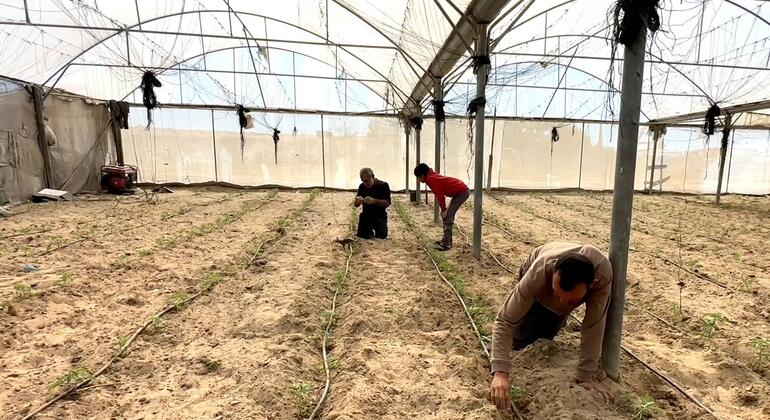
- Almost certainly Gaza’s humanitarian conditions remain acute, with nearly all 2.3 million Palestinians displaced and about 90 percent of civilian infrastructure damaged or destroyed; since 7 October 2023 more than 21,000 children have been killed, and since the 10 October 2025 ceasefire 274 children are among 1,127 Palestinian fatalities, while aid actors mount limited shelter and agricultural assistance. (Confidence: medium · REPORTED)
- I&W: Multilateral or health authority updates maintain near-universal displacement and similar infrastructure damage estimates (1-3 months)
- I&W: Verified reporting of substantial returns to named districts coupled with restoration of core services, reducing displacement below 80 percent (1-3 months)
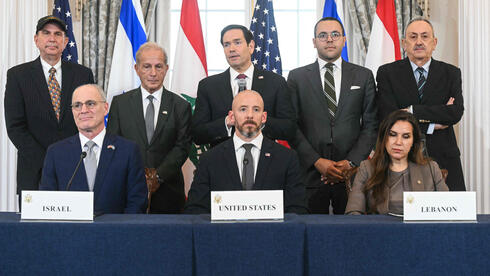
- Likely the Israel-Lebanon ceasefire track is progressing toward initial IDF withdrawals from two pilot zones within days with Lebanese Army deployments to follow, but the absence of an agreed verifier and Hezbollah’s stated rejection keep the truce fragile despite a relative reduction in fire. (Confidence: medium · ASSESSED)
- I&W: Official announcements and imagery confirm IDF pullback and Lebanese Army entry into the first two designated pilot zones (0-14 days)
- I&W: Sustained uptick in recorded projectiles to prior peak rates or Hezbollah units publicly block LAF deployments into pilot zones (0-14 days)
- Reportedly, the Lebanese government decided to end Hezbollah’s military presence and aims to extend Lebanese Army authority nationwide. (Confidence: medium · REPORTED)
- I&W: Publication of a cabinet decision or enabling legislation and Lebanese Army directives operationalising disarmament steps in specified areas (1-3 months)
- I&W: Senior Lebanese officials publicly deny the decision or halt implementation, and armed Hezbollah formations continue overt operations south of the Litani (0-3 months)
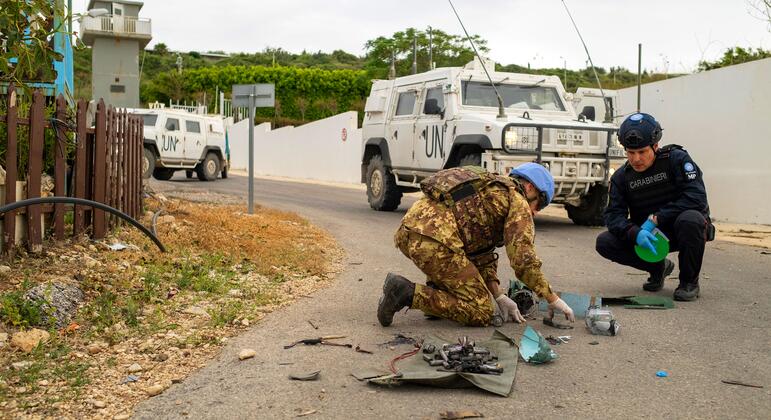
- Very likely cross-border fire in south Lebanon has decreased relative to earlier periods but remains non-zero, while UNIFIL and the Lebanese Army expand support and clearance activity as some families return. (Confidence: high · REPORTED)
- I&W: UNIFIL daily logs continue to record only dozens of projectiles with ongoing LAF and UNIFIL EOD tasks in named localities (0-14 days)
- I&W: A marked surge in rocket and artillery exchanges to prior peak levels that halts returns and UNIFIL field activities (0-14 days)
- Likely the concurrent US-Iran confrontation around the Strait of Hormuz has intensified since 16 July, depressing traffic and prompting tanker diversions and boardings, which raises overall regional escalation risk for the Israel-Lebanon track. (Confidence: medium · ASSESSED)
- I&W: Additional US or Iranian strikes publicly acknowledged and further AIS-visible tanker U-turns or zig-zagging near Hormuz (0-14 days)
- I&W: Public de-escalation statements by Washington and Tehran accompanied by a rebound in transits and fewer diversions (0-14 days)
Outlook & scenarios
Pilot zones implemented within days and truce holds locally (50%)
Final details are agreed, the IDF withdraws from the first two pilot zones and the Lebanese Army deploys, with a still-limited but reduced level of cross-border fire. Verification arrangements are improvised pending a named third party, and UNIFIL continues return support and EOD tasks.
Verification impasse and Hezbollah resistance stall the plan and increase fire (30%)
Disagreement over the verifier and Hezbollah’s rejection prevent LAF entry into the pilot zones, prompting a gradual increase in exchanges along the Blue Line and pausing civilian returns. Public statements on both sides harden and the truce’s longevity into late July erodes.
Gaza strike tempo ticks up and humanitarian pressure deepens (40%)
IDF air operations continue with intermittent spikes in activity and casualty reporting, while displacement and infrastructure damage constrain relief. Limited shelter and agricultural programmes scale only marginally, leaving conditions acute across the strip.
Gulf escalation disrupts shipping and derails Lebanon implementation timeline (25%)
Further US-Iran exchanges and tanker incidents depress transits at Hormuz, absorb diplomatic bandwidth and delay sequencing of pilot-zone withdrawals and deployments. The truce endures but planned steps slip beyond July.
Recommendations
- Stand up a daily indicator dashboard for Gaza using FIRMS thermal data, IDF strike communiques and health authority casualty updates to track strike tempo and corroborate events.
- Task collection on Rome pilot-zone implementation: obtain area boundaries, sequencing, and LAF unit movements; archive official statements from the U.S. Embassy in Beirut and participating delegations.
- Engage UNIFIL and LAF reporting streams to monitor projectile counts, ordnance clearance logs and family return patterns at the locality level.
- Map verification pathway options for the pilot zones, noting that the United Nations will not serve in that role; identify likely third-party candidates and required capabilities.
- Monitor maritime AIS for Iran-linked tankers and boarding events near Hormuz; correlate with advisories to crew managers and shipping insurers to anticipate reroutings affecting regional supply chains.
- Pre-brief humanitarian planners on potential Gaza access disruptions and northbound movement constraints, aligning contingency stockpiles with areas reporting intermittent returns or agricultural restarts.
Confidence & uncertainty
Overall confidence is medium because multiple independent, reliable sources corroborate key developments, including UN and official statements on Rome talks and cross-border fire levels, NASA detections and IDF strike reporting for Gaza, and major-media reporting on US-Iran strikes and shipping behaviour at Hormuz. Some judgments rely on single-source or politically contested claims, such as Beirut’s decision to end Hezbollah’s military presence and casualty baselines that draw on different time windows, which introduces uncertainty and lowers confidence.
Alternative analysis (red cell)
While reporting indicates fighting, severe humanitarian conditions, diplomatic talks, and regional maritime friction, several key numeric and causal inferences rest on single-origin or medium-admiralty claims and unresolved contradictions. Many core assertions (precise casualty totals, the 90% infrastructure damage figure, imminent pilot-zone withdrawals, and cross-theater escalation linkages) are not yet well corroborated. A more cautious estimate would note that high-level trends are likely but that specific quantitative and causal claims remain uncertain pending the corroborating collection listed above.
Intelligence gaps
- [EEI 1.1 · PARTIAL] Number, type and geolocated coordinates of projectiles (rockets, mortars, anti-tank guided missiles) fired from Lebanon into Israel in the last 24/72 hours, including time-stamped launch and impact locations. Recommended collection: signals/intel
- [EEI 1.2 · PARTIAL] Satellite or aerial imagery showing movement, concentration, or forward displacement of Hezbollah-associated military assets (armored vehicles, artillery pieces, mobile rocket launchers, logistics convoys) to positions within 0–10 km of the Israel-Lebanon border. Recommended collection: satellite/imagery
- [EEI 1.3 · UNCOVERED] Intercepted or captured Hezbollah command-and-control communications or orders explicitly directing cross-border operations or coordinated strikes with Palestinian groups (time-stamped messages, unit identifiers, orders to fire/move). Recommended collection: signals/intel
- [EEI 2.1 · UNCOVERED] Official or corroborated reports of IDF reservist mobilization and unit-level deployment orders (number of reservists called, named brigades/units ordered to deploy, deployment timelines). Recommended collection: open-source/media
- [EEI 2.2 · UNCOVERED] Satellite or ground imagery showing concentrations of IDF heavy equipment (tanks, infantry fighting vehicles, engineering vehicles), staging areas, field hospitals or forward supply dumps within X km of the Gaza border and at known crossing points. Recommended collection: satellite/imagery
- [EEI 2.3 · PARTIAL] Change in strike patterns consistent with pre-ground-attack shaping: sustained high-frequency airstrikes on tunnel networks, command nodes, coastal launch sites, and known insurgent concentrations (strike counts, munition types, locations, times). Recommended collection: open-source/media
- [EEI 2.4 · UNCOVERED] Logistics indicators: verified convoys of fuel/ammunition entering staging areas, establishment of forward logistics or medical bases, or documented requisitioning orders for bulk combat supplies with timestamps and quantities. Recommended collection: human/intel
- [EEI 3.1 · PARTIAL] Number, participants and content of diplomatic contacts or negotiation sessions in the last 48 hours involving mediators (Egypt, Qatar, US, UN), including any proposed ceasefire text, prisoner/exchange lists, timelines or verification mechanisms. Recommended collection: diplomatic
- [EEI 3.2 · UNCOVERED] Public statements, press releases or verified communiqués from Hamas and other Gaza armed groups specifying acceptance, rejection, or conditions for a ceasefire (explicit conditions such as prisoner release lists, withdrawal terms, lifting of blockades), with timestamps and speaker attribution. Recommended collection: open-source/media
- [EEI 3.3 · PARTIAL] Humanitarian indicators relevant to ceasefire: establishment and operation of agreed humanitarian corridors/checkpoints, number of aid deliveries admitted, civilian evacuations completed, and NGO/hospital reports of access denials or safe-passage violations. Recommended collection: humanitarian/NGO reports
- [EEI 3.4 · PARTIAL] Operational evidence of a de facto pause: verified sustained reduction (e.g., ≥12 hours) in strikes or launches from either side in specific sectors, supported by strike/impact logs, radar tracks and incident reports. Recommended collection: open-source/media
Cited sources
[1] The Jerusalem Post · Live Updates: Latest from Israel, Iran, and Middle East | The Jerusalem Post (B) · sha256:c80ca97c14ac [2] NASA · NASA FIRMS thermal detections — Gaza (2d) (A) · sha256:abf5667ce893 [3] Wikipedia · Gaza war (B) · sha256:b7b2ac74c6f6 [4] anews.com.tr · Israel continues killing Gaza children as 'matter of routine': Haaretz (B) · sha256:cc8b07048a85 [5] UN News · Gaza farmers battle to rebuild as WFP warns of West Bank settler violence (A) · sha256:ae6fcced02bf [6] ynetnews.com · IDF withdrawal from Lebanon pilot zones could begin within days, officials say (B) · sha256:1dc6c110c030 [7] haaretz.com · Israel agrees to withdraw military from two Lebanon pilot zones, U.S. official says (A) · sha256:d89efe0b8937 [8] military.com · Lebanon and Israel Move Toward Implementing Withdrawal Agreement, US Officials Say (A) · sha256:d504c2dd54d6 [9] United Nations · Peacekeepers step up support as families return to south Lebanon (A) · sha256:8d5081ea329f [10] aljazeera.net · لبنان. قرار حكومي بنزع سلاح حزب الله وترقب لانسحاب إسرائيلي (A) · sha256:6055a40b3be7 [11] haaretz.com · U.S. strikes around Tehran for first time since Trump declared end of cease-fire (A) · sha256:b6a82928d6d4 [12] aljazeera.com · US attacks southern Iran, as Tehran hits Gulf countries: What’s the latest? (A) · sha256:85688c6fc108 [13] Al Jazeera · Gulf states come under Iranian fire as US strikes intensify (A) · sha256:d87cf150e57b [14] gcaptain.com · Iran-Linked Tankers U-Turn, Zig-Zag as US Enforces Blockade (B) · sha256:49fee7965127 [15] The Guardian · Iran reports fresh strikes near Qeshm Island and accuses US over ‘barbaric’ hospital attack – as it happened (A) · sha256:f1d1db6678eb [16] maritime-executive.com · Video: U.S. Marines Board Falsely-Flagged Tanker in Gulf of Oman (B) · sha256:e281c23f780e
Source content hashes were computed at collection time; the cited text is preserved unmodified for the life of this product.
Red cell review: PARTIAL DISSENT
TLP:CLEAR